Kill My Sins is worth watching when you want revenge led by a woman who cannot claim perfect innocence. Ye Ping'an is clever, theatrical and often several moves ahead, but the story becomes meaningful only when her strategy does not erase her guilt. The drama's best idea is not that a woman outsmarts powerful men. It is that she must use the same gift that once helped destroy other women to answer what happened to them.
Kill My Sins makes revenge answer to guilt
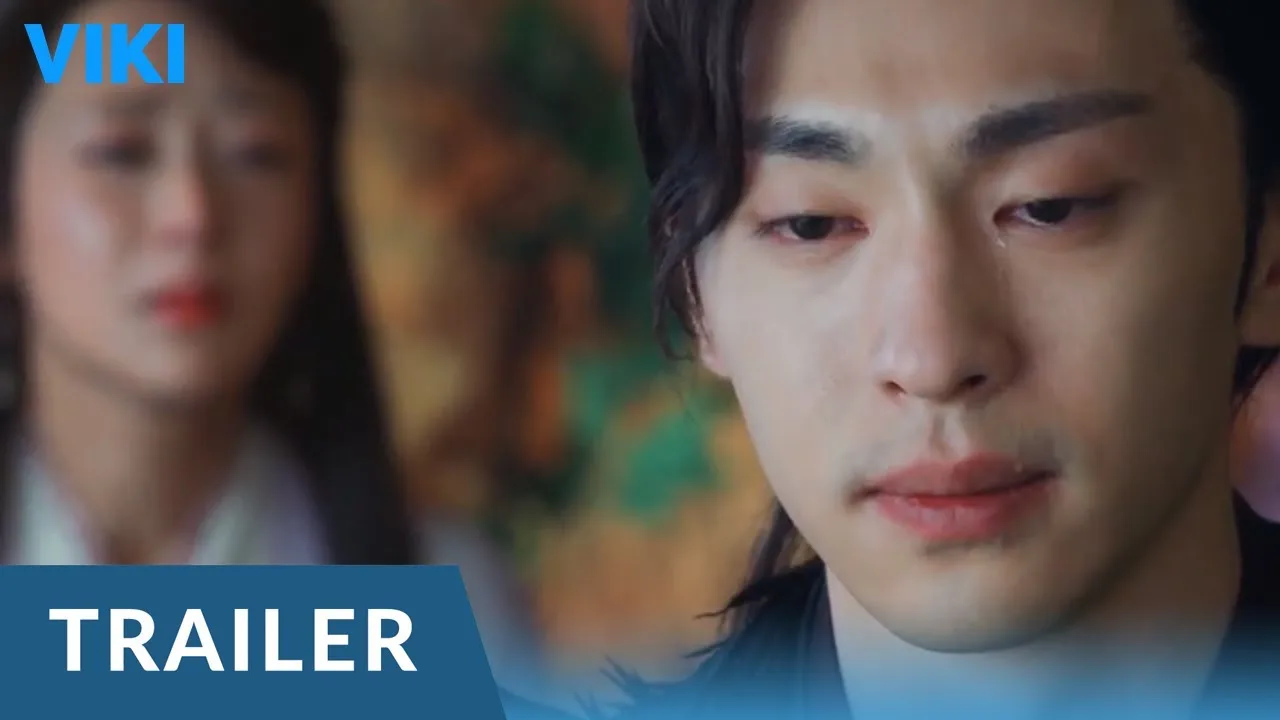
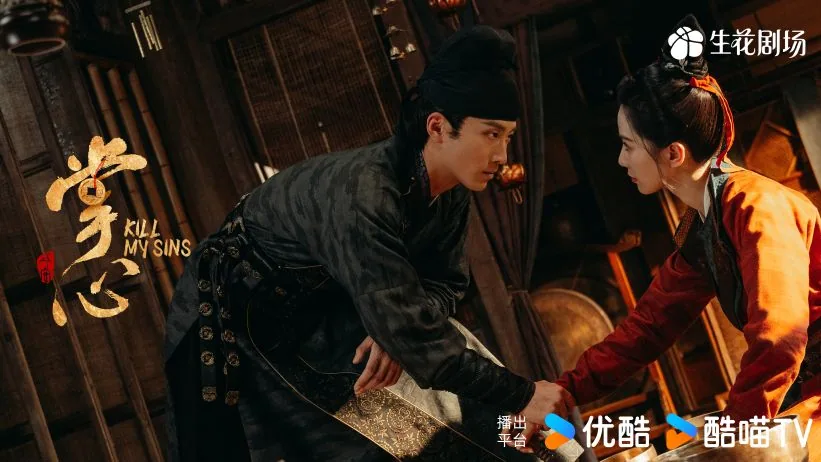
Kill My Sins (掌心) is a 2025 Chinese historical suspense drama starring Liu Shishi as Ye Ping'an and Shawn Dou as Yuan Shaocheng. It has 30 episodes and streams internationally through YOUKU and Rakuten Viki. The free official YOUKU trailer establishes the essential premise: a mysterious “heart doctor” arrives in Shengdu, becomes the suspect in an official's murder, and quietly begins a revenge plan tied to an old case.
The fast answer is yes, with conditions. Watch it for a morally complicated heroine, female alliances, court intrigue and two leads who recognize the ambition in each other. Do not watch it expecting a rigorous detective procedural, an accurate history of the Tang or Zhou court, or realistic psychotherapy. The opening episodes throw names, factions, illusions and reversals at the viewer faster than the emotions can settle. If that density feels exciting, the series will pull you forward. If it feels like the script keeps announcing intelligence without letting you observe it, the frustration is real.
| Search question | East Moment answer |
|---|---|
| Chinese title | Zhang Xin (掌心), literally “palm” or “in the palm of the hand” |
| Genre | Historical suspense, revenge, political drama, restrained romance |
| Episodes | 30 |
| Main cast | Liu Shishi, Shawn Dou, Zheng Yecheng, Xuan Lu and Xu Jiao |
| Best quality | Ye Ping'an's revenge is also an attempt at atonement |
| Main weakness | Early information overload and twists that sometimes hide causality |
| Romance | Important but not the main engine; built on wary recognition |
| Ending | Conclusive and broadly hopeful, with real losses; full explanation below |
The opening asks for trust before it earns clarity

The first episodes deliberately make Ye Ping'an difficult to read. She uses suggestion, staged visions, bells, scent and other theatrical devices around people who already fear her as a witch. Yuan Shaocheng sees that the murder case is not simple, yet he is willing to turn her into his ladder toward office. Both arrive wearing a performance.
That setup should create productive uncertainty: who is using whom, and what does each person know? Sometimes it does. At other times the editing removes so much connective tissue that confusion replaces suspense. I understand the urge to stop around episode nine. A mystery can withhold the answer, but it still needs to let the viewer form a useful question.
This is my dividing line between a good reversal and a hollow one. A good reversal changes the meaning of a clue we were allowed to see. A hollow reversal reveals that the heroine secretly prepared another layer the camera never gave us a fair chance to test. Kill My Sins contains both. The pace is addictive when plans collide; it is exhausting when every collision is followed by an explanation of the plan we could not have inferred.
Ye Ping'an is not powerful because the script calls her brilliant

Ye Ping'an works when her intelligence is visible in how she reads a room. She notices shame, desire, grief and ambition, then decides which feeling can move a person. She rarely dominates through physical force. Her weapons are timing, story, sensory detail and the other person's need to believe.
The title's “sins” matter here. As a child known as Gu Qing, she was manipulated into helping lure women toward danger. She survived, but survival did not make her innocent. The adult “heart doctor” uses her knowledge of the mind to expose the system that used her knowledge against victims. Revenge and treatment therefore share an uncomfortable method: entering another person's vulnerability.
I value this far more than a spotless avenger. A perfect victim can punish villains and leave the moral world unchanged. Ye Ping'an must face the fact that harm can travel through someone who was also harmed. Her most important victories are not the moments when everyone learns she predicted the next move. They are the moments when she refuses to use guilt as an excuse to stop choosing.
The “heart doctor” should remain inside the drama's fictional vocabulary. Bells, dream induction and rapid psychological control are narrative devices, not medical practice. The show uses the mind as a stage for power, memory and confession; it does not provide a model of therapy.
The women are not a slogan; they pay different prices

The phrase “female revenge alliance” makes the drama sound tidier than it is. Ye Ping'an, Lu Danxin, Ni Chang and the women connected to the old crimes do not enter the plan with identical wounds or equal freedom. Some can disguise themselves. Some can gather information. Some become the visible blade. The division of risk is not fair merely because the cause is shared.
Lu Danxin gives the story its sharpest cost. Her relationship with Ye Ping'an matters more to me than any “women supporting women” label because love between them includes anger, debt and knowledge neither can speak safely in public. When their apparent rupture is later reframed, the emotional force comes from what both women already understand—not from the cleverness of fooling the audience.
The drama weakens this alliance whenever a woman's death or suffering becomes proof that Ye Ping'an is destined to win. Sacrifice should not be a decorative receipt for the heroine's pain. The strongest scenes preserve the lost woman's agency: what she chose, what she refused, and what future she knew she would not receive.
This is where Kill My Sins differs from The Double. The Double builds pleasure through public repayment: humiliation is reversed in front of the people who witnessed it. Kill My Sins is darker. Its revenge asks whether repayment can mean anything when the women who paid first cannot all return to see it.
Yuan Shaocheng is an accomplice before he is a romantic answer

Yuan Shaocheng comes from Mangou, a stigmatized poor district, and has learned that official rank can protect him from contempt. This does not make his ambition noble. It makes it legible. Early on, he is willing to use Ye Ping'an's death as a credential even while suspecting she may be innocent.
That moral ugliness is why the pairing has energy. He does not rescue a pure woman from a corrupt world. She does not heal a misunderstood good man. Each recognizes the other's appetite for control, and each gradually learns where strategy stops being self-protection and becomes complicity.
Shawn Dou gives Yuan a useful physical restraint. His stillness looks less like virtue than calculation: a man trained to reveal no need before people who can exploit it. Liu Shishi's performance is more divisive. Her poised neck, controlled gaze and measured speech make sense when Ye Ping'an is baiting a room. The same control can become distance when grief needs to interrupt the plan.
I do not think the performance is either a triumph in every scene or the disaster its harshest criticism claims. The exact context matters. When Ye holds leverage, Liu's elegance becomes menace. When Ye loses someone, the performance is strongest if the mask visibly costs effort. The role fails only when composure and emotional absence become indistinguishable.
Their romance remains persuasive because it is not the final prize of revenge. The quieter scenes—sitting side by side, sharing food, noticing when the other has lied for protection—carry more intimacy than a declaration. They imagine a home neither person expected to deserve.
This is invented court drama, not a history lesson
The world resembles the Wu Zetian era, but the drama fictionalizes the state, royal house and political events. That choice gives the writers freedom to stage a female ruler, marriage diplomacy, official investigations and salt reform without claiming documentary accuracy.
It also creates a test. Historical freedom should deepen the power structure, not excuse whatever twist is convenient. Who controls grain, salt, military supply, legal testimony and access to the ruler? Those material questions make court intrigue credible. A villain's private cruelty matters, but institutions explain why cruelty survives.
For denser political revenge built through evidence and patience, compare Nirvana in Fire. For a different portrait of women reading danger inside an imperial system, Empresses in the Palace is the stronger reference. Kill My Sins moves faster than both and sometimes mistakes speed for depth, but its atonement premise gives the spectacle a real moral center.
Kill My Sins ending explained: freedom requires a death on paper
Full spoilers begin here.
The old case and the larger political conspiracy are exposed, but the victory is not clean. Lu Danxin dies after taking poison and completing the action she chose against those responsible. Prince Kangping's rebellion collapses. Wu Xian'er, trapped inside ambition and illusion, ignites the explosives at Qianqiu Pavilion. Yuan Shaocheng pulls Ye Ping'an into the water, and both survive.
Ye then refuses to return to court. Yuan reports that she died in the fire. The official lie gives her something official recognition never could: the chance to stop being a useful instrument in the ruler's hand. Yuan declines elevation to Right Chancellor, recommends Ji Qingtian and secures reforms including a change to the salt system.
The official YOUKU Episode 30 confirms these final events. The ending is hopeful without becoming a conventional romantic coronation. Ye and Yuan survive, but the conclusion does not pretend the dead women were restored by political reform.
I like the final logic more than I like every mechanism used to reach it. Ye Ping'an wins only when the state accepts her absence. The “heart” in the title has moved through several owners: the doctor who reads it, the official who manipulates it, the ruler who claims it, and finally the woman who chooses to disappear from their records. Her freedom is not a promotion. It is the right to become unavailable.
Where to watch Kill My Sins now
As reviewed in August 2026, all 30 episodes are listed on Rakuten Viki with English and several other subtitle languages. YOUKU International also lists the series in its catalog, and YOUKU English hosts official trailers and episodes on YouTube. Region, membership and free-episode access can change, so confirm the title page before subscribing.
Start with the official trailer if you are unsure about the tone. Then give the drama six or seven episodes, not only one: the first case needs time to reveal which apparent supernatural events are staged. If the storytelling still feels like information thrown faster than character, stopping is reasonable. A strong female lead does not obligate every viewer to enjoy the way her intelligence is edited.
My verdict
Kill My Sins is not the cleanest mystery or the most convincing historical court drama. It is valuable because Ye Ping'an's revenge never fully releases her from responsibility. She is healer, manipulator, survivor and participant in the same body. That contradiction gives Liu Shishi more to play than another flawless strategist.
I recommend it to viewers who can accept speed, theatrical psychology and uneven causality in exchange for a heroine whose guilt changes the meaning of victory. The best reversal is not the one that proves she knew everything. It is the one that forces her to decide what knowing obligates her to do.
Continue through the Chinese TV shows guide. In the comments, choose one reversal and put it on trial: what clue prepared it, who paid for it, and what choice did it reveal? Bring that scene to the East Moment community so disagreement can begin from evidence rather than a star rating.