The Double is worth watching if you want revenge with visible emotional payment. It is not rigorous realism. It is a melodrama that understands viewers will forgive coincidence, speed and excess when humiliation is answered clearly and soon enough.
The Double turns revenge into a public transaction
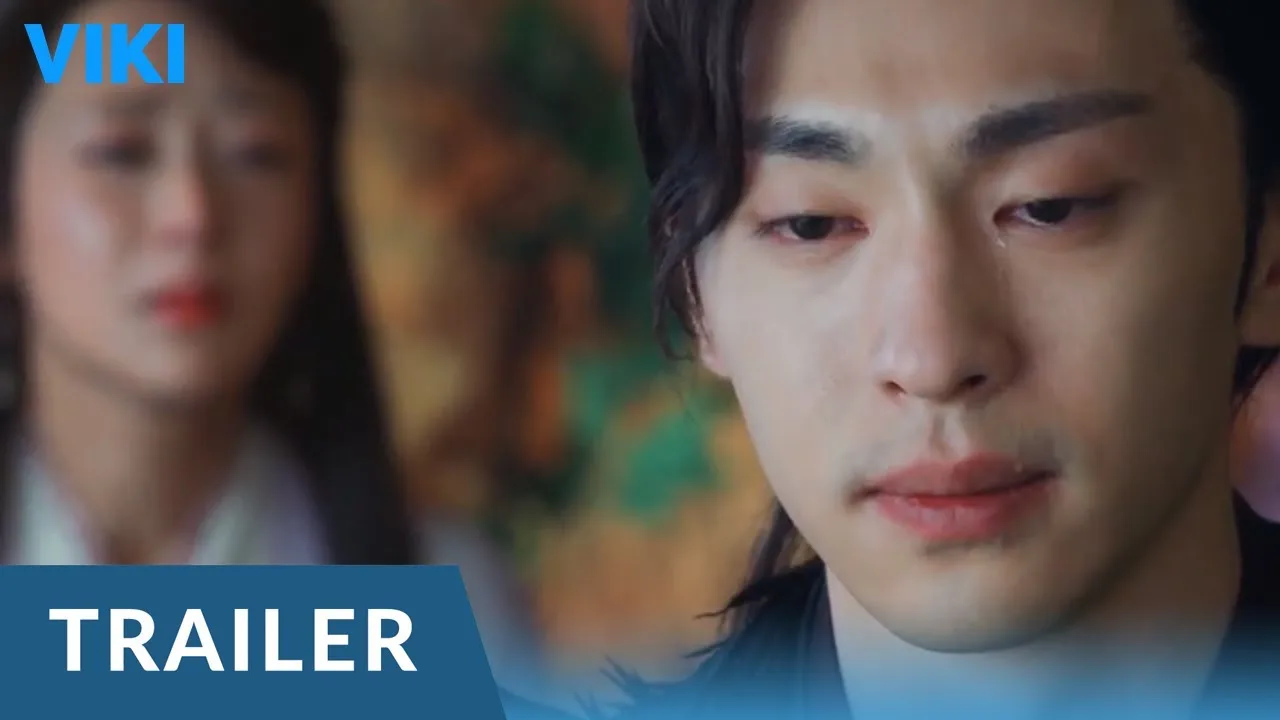
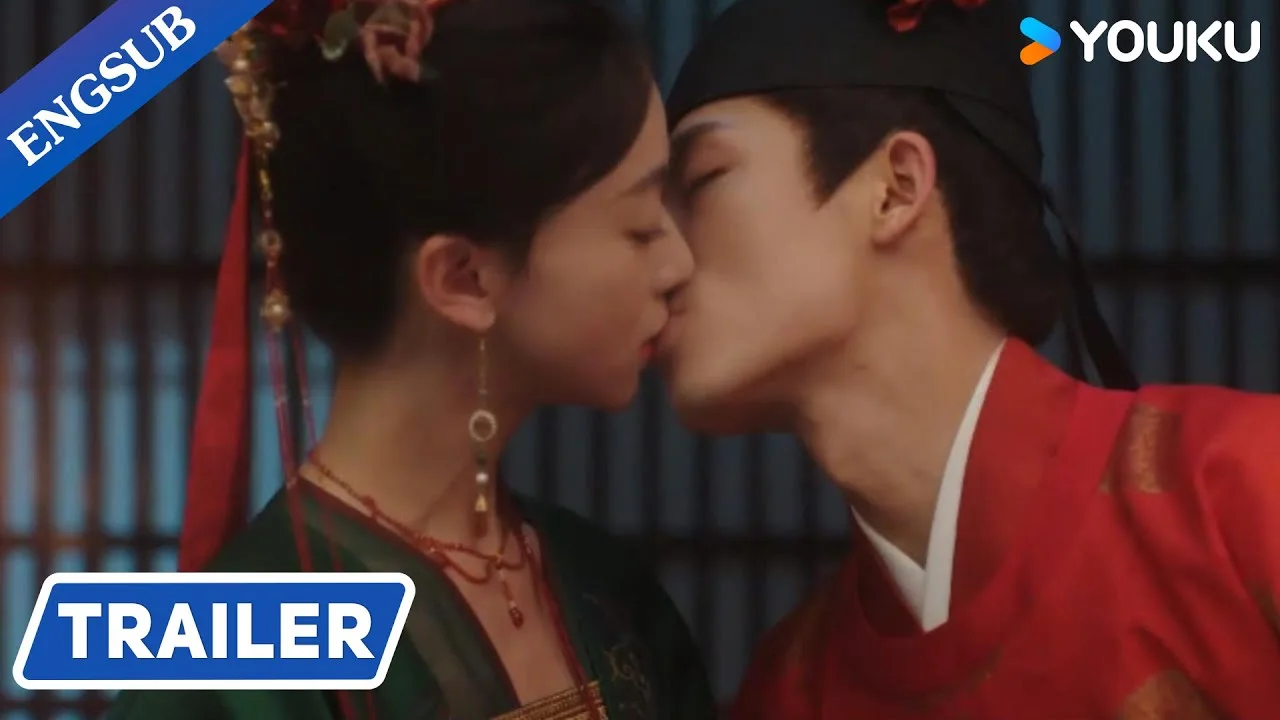
YOUKU English's official trailer identifies the revenge premise, lead pair and heightened visual contract. I do not ask that contract to behave like documentary realism; I ask whether each excess pays back the humiliation that set it in motion.
The Double (墨雨云间) is a 2024 Chinese costume revenge drama led by Wu Jinyan and Wang Xingyue. The premise follows a woman who survives betrayal, enters another identity and returns to a social world where recovering truth requires performance as much as evidence.
The key word is public. Private innocence is not enough in this world. Reputation was destroyed before witnesses, so repair must also be witnessed. Every successful reversal converts hidden knowledge into a room full of people finally seeing what the heroine already knows.
Why it becomes “addictive”
The drama is “上头” (addictive), “爽” (emotionally satisfying) and full of “拉扯” (charged push-pull). Rewatching that extreme tension also makes me ask why I am unusually forgiving of its weaknesses.
The answer is pacing with moral clarity. The show identifies an emotional debt, delays payment just long enough to create appetite, then stages a reversal that other characters must witness. It does not ask viewers to admire revenge abstractly. It lets them feel social oxygen return to a person who was denied it.
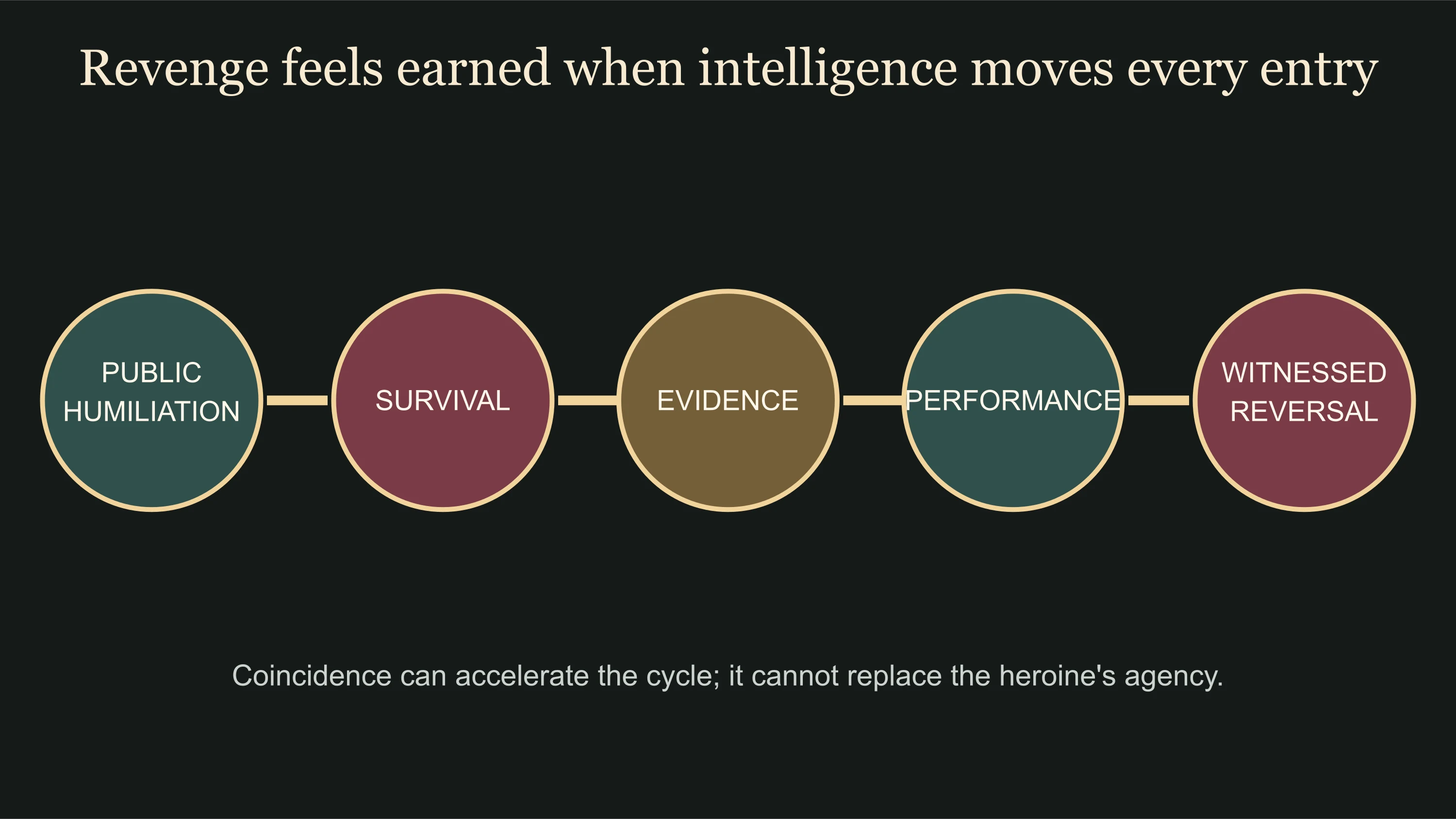
I think of each arc as a revenge ledger. Humiliation creates a debt; survival gives the heroine time; evidence and performance convert private truth into public suspicion; a witnessed reversal produces the emotional payment. The cycle is satisfying when Xue Fangfei's observation and risk move every stage forward. It feels hollow when coincidence supplies the evidence or an antagonist voluntarily remains in the perfect room for punishment.
The camera is part of the appetite
The close framing, sudden movement, saturated costume and theatrical entrances can feel excessive. That excess is not accidental decoration. It turns glances into threats and distance into flirtation. Duke Su often appears as if he already knows the scene is theatre; Xue Fangfei survives by learning to direct attention without revealing the full script.
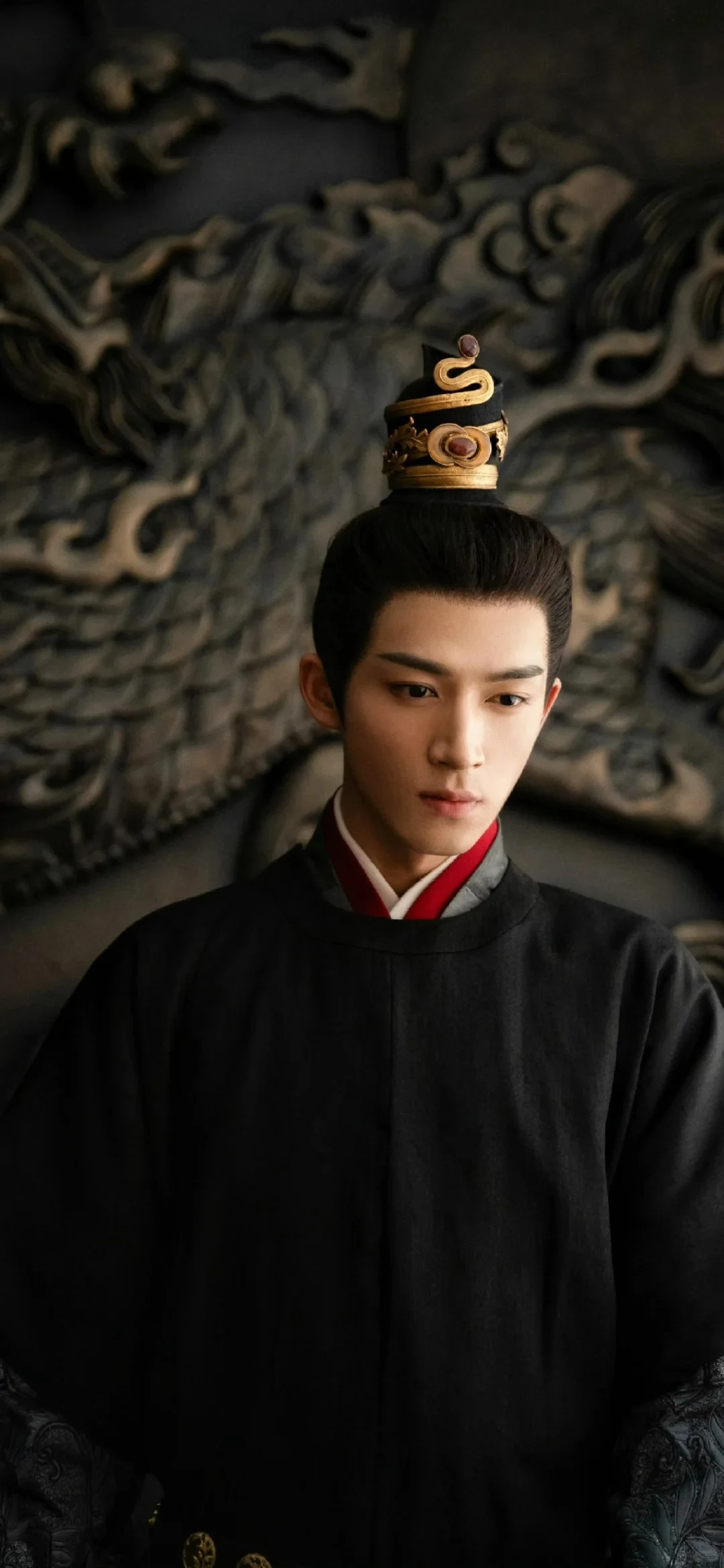
This portrait explains Duke Su faster than a cast biography can. The rigid black-and-red silhouette, squared shoulders and dragon relief announce sanctioned power before he acts. Wang Xingyue does not need to push the expression; the costume and architecture have already raised his social volume. That instant legibility is one reason the character accelerates the drama. It is also a warning: a magnificent entrance can make authority feel earned before the script has shown what he will do with it. I enjoy the image, but I still judge him by whether he reads Xue Fangfei's strategy without stealing authorship of it.
This is why the romance works best as alliance before confession. Their attraction is built from recognizing performance in the other person. Each sees the intelligence behind the pose.
What the drama asks you to forgive

The same machine that produces pleasure can flatten consequence. Coincidences arrive helpfully. Antagonists sometimes remain on stage long enough to receive the exact humiliation the audience wants. Later violence and the ending can feel as if the drama is collecting emotional taxes after spending freely on triumph.
This is where my excitement hits its limit: the drama is compulsively watchable, but watchability does not cancel structural shortcuts. My judgment is that the series earns many of its liberties through momentum and performance, but not all of them.
Cast and viewing route
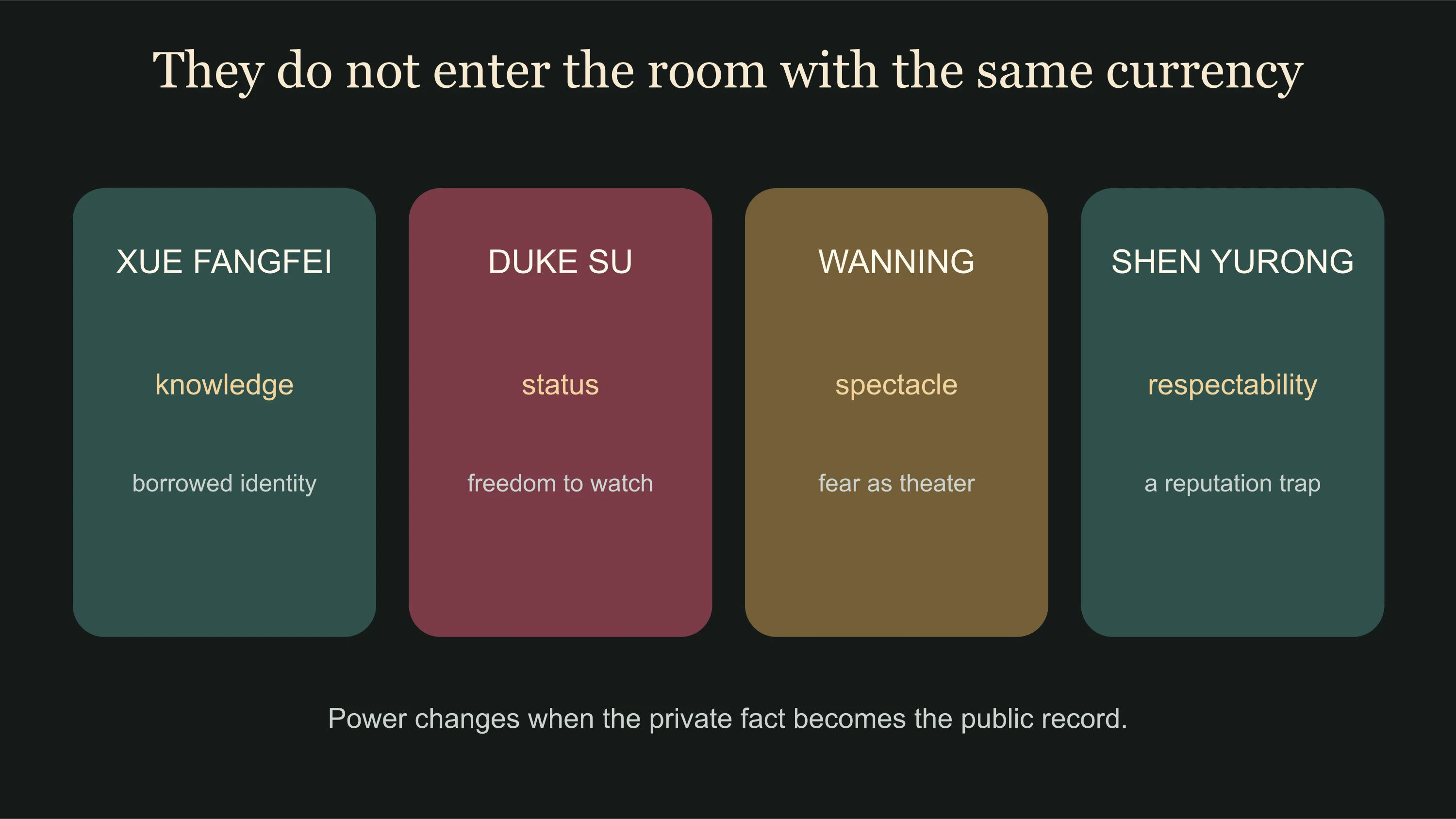
The characters do not possess the same kind of power. Xue Fangfei accumulates knowledge while borrowing an identity. Duke Su begins with status and the freedom to watch. Princess Wanning weaponizes spectacle and unpredictability. Shen Yurong possesses institutional respectability but becomes trapped by what that respectability requires him to hide. Reading those currencies separately explains more than asking who is “strongest.”
Before choosing a favorite performance, notice how the drama distributes different kinds of power. Xue Fangfei survives by controlling information and timing. Duke Su can change the temperature of a room because his status is already understood. Princess Wanning turns spectacle into intimidation. The pleasure comes from watching these methods collide, not from pretending everyone begins with equal freedom.
That is also why the romance works best as recognition rather than rescue. Duke Su is attractive when he sees the intelligence of Xue Fangfei's maneuver and leaves her enough space to complete it. If every danger were solved by his arrival, her revenge would become borrowed authority. Their push and pull has heat because both can withhold, test and revise; the relationship loses heat whenever the plot confuses male protection with female victory.
My recommendation is specific: watch the drama for emotional accounting. It remembers insults, stages repayment and lets costume, posture and public space make a reversal legible. Do not use it as a model of law, investigation or historical marriage. Its truth is melodramatic: humiliation changes the body, and justice feels incomplete until the person who was silenced can control the room in which the answer is heard.
For an overseas viewer, the opening episodes also require patience with identity, household rank and public reputation. A subtitle can tell us that someone has been accused; it cannot automatically carry why one elder's recognition, one courtyard audience or one change in form of address alters survival. I watch who is seated, who may interrupt and whose version becomes record. Those small permissions are the machinery beneath the flamboyant revenge.
- Wu Jinyan as Xue Fangfei / Jiang Li: watch how grief becomes social strategy rather than a permanent expression.
- Wang Xingyue as Duke Su: watch the fan, posture and amused distance; authority becomes a spectator before it becomes an ally.
- The antagonists: judge whether theatrical cruelty reveals the system or merely keeps revenge fuel available.
- The ending: watch first without spoilers, then return to the final trailer and ask whether closure matches the emotional contract.
My verdict
The series also understands that revenge has a visual audience. Xue Fangfei does not merely need an antagonist to suffer in private; she needs the social meaning of the accusation to be reversed. Courtyards, ceremonies and gatherings become theaters where reputation is taken apart in front of the people who once accepted it. That public scale is emotionally satisfying and ethically dangerous: spectacle can expose power, but it can also make pain valuable only when others applaud.
I keep both reactions. I enjoy the exact entrance, controlled look and reversal the drama has prepared. Then I ask what life is possible after the room goes quiet. The best payoffs answer both questions—who witnessed justice, and what the survivor can now choose. The weaker ones deliver applause and move directly to the next wound.
The Double succeeds because it knows revenge drama is not a court transcript. It is an emotional accounting system. The series is strongest when intelligence produces the reversal and weakest when coincidence performs it.
Continue through the Chinese TV shows guide and compare its public revenge with Kill My Sins, where the heroine's own guilt makes repayment less clean, or follow a different romantic-fantasy engine in Love Between Fairy and Devil. In the comments, mark spoilers and name one payoff the drama earned. Join the East Moment community to compare the shortcuts you accepted and the ones you did not.
The Double treats revenge as a fight over witnesses
Revenge is not complete when the protagonist knows the truth. The truth must survive performance, evidence and a public willing to recognise it. That makes the series less a simple punishment fantasy than a struggle over who can control the scene in which guilt becomes visible.
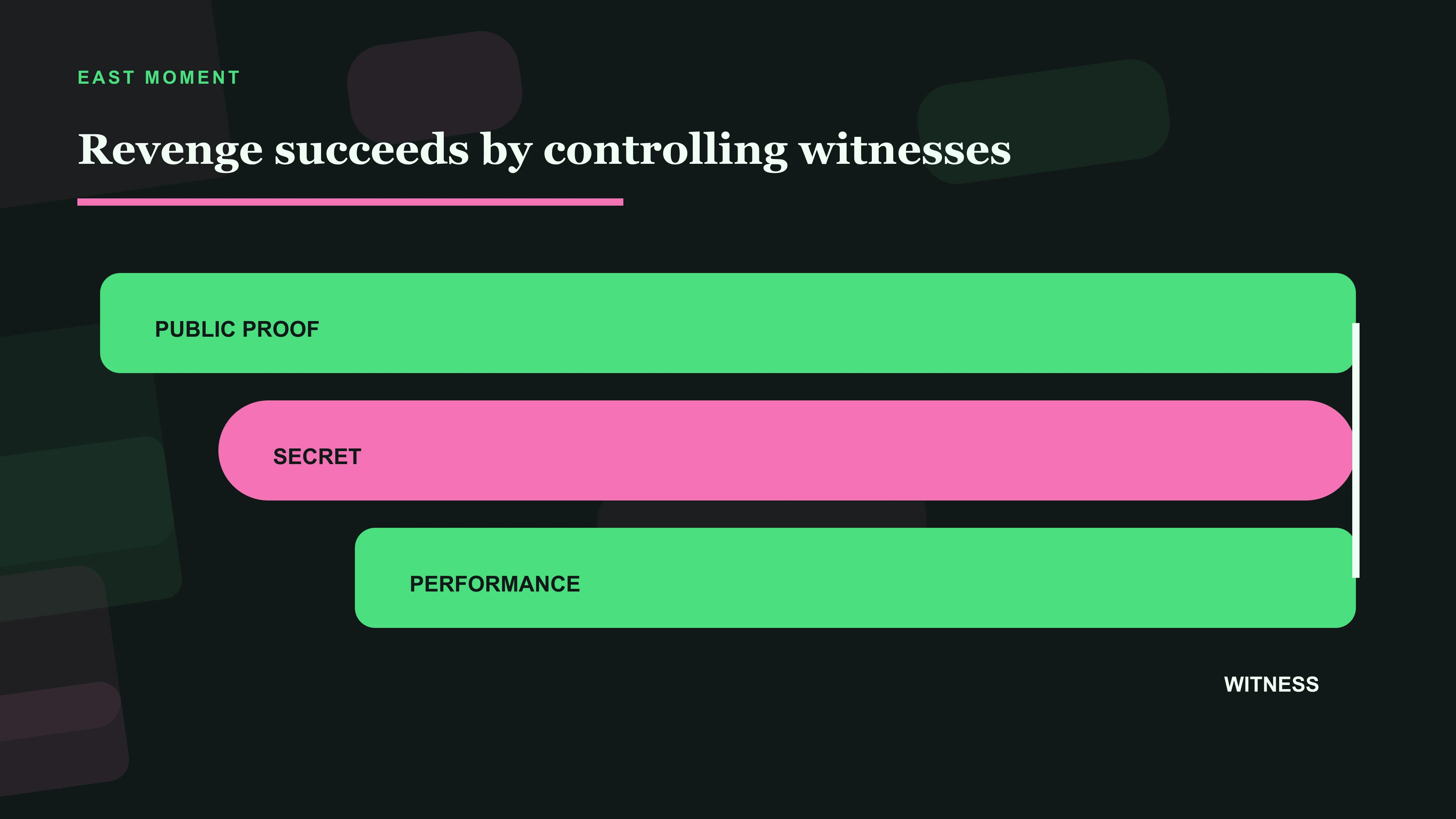
Jiang Li's borrowed identity intensifies that problem. She cannot simply announce herself and expect justice. She has to inhabit a role convincingly enough to enter spaces where evidence and enemies are protected.
Spectacle is useful when it changes the record
The series loves entrances, costumes, music and staged reversals. I do not treat excess as a flaw by default. Melodrama can make a hidden power relation visible faster than realism.
But spectacle must produce consequence. A public performance matters when it recruits a witness, exposes a contradiction or removes an opponent's ability to control the story. If it only gives the heroine another glamorous victory pose, revenge stops accumulating and becomes repetition.
Duke Su is most valuable as a reader of strategy
His attraction becomes credible when he recognises capability without claiming ownership of it. Protection is useful; rescue can become a narrative shortcut. The better scenes let him supply access or pressure while Jiang Li retains authorship of the plan.
This is also the relationship's ethical boundary. Shared danger is not automatic equality. Who knows the complete plan? Who may withdraw? Who bears the consequence if the performance fails?
The victim must remain more than a revenge instrument
A revenge plot can consume the harmed woman twice: first through violence, then by turning every remaining emotion into fuel. Moments of grief, friendship, humour and uncertainty are not distractions. They prove that justice serves a life rather than replacing it.
The official Youku platform establishes the licensed drama context. Historical law, costume and procedure require separate verification; dramatic satisfaction is not documentary accuracy.
My limitation: reversals can inflate until nothing feels risky
When every trap contains another trap, surprise loses force. The series needs moments where information remains incomplete and a choice cannot be guaranteed. Otherwise intelligence becomes omniscience.
My verdict: The Double works when revenge changes the public record and returns agency to the person who was erased. It weakens whenever visual triumph replaces evidence. Compare Nirvana in Fire for a colder justice machine, or Love's Ambition for another woman fighting over authorship of her public image.
Identity performance has a bodily cost
Borrowing another name requires more than remembering facts. Gesture, speech, grief and anger must be regulated in rooms where recognition would be fatal. Wu Jinyan's performance is most interesting when the mask nearly fails but the character chooses what can safely escape.
The viewer therefore watches two scenes at once: the public role other characters receive and the private calculation the camera allows us to see. Melodrama makes this split vivid rather than subtle, and that is part of its pleasure.
Evidence needs a chain, not a revelation
A document, witness or object becomes persuasive only when its origin and survival are credible. Revenge dramas often hide evidence until a perfect public moment. The stronger reversals show how it was protected and why the opponent could not simply destroy it.
This is where supporting characters stop being helpers and become the infrastructure of justice. Someone carries the message, risks testimony or creates access. Jiang Li may author the strategy, but the public record changes collectively.
The emotional ending must outlive the enemy
If the heroine's identity exists only in opposition to the people who harmed her, victory leaves an empty character. The final movement should show desire not organised by revenge: work, friendship, home or a future she chooses without surveillance.
That future does not weaken the anger. It proves the anger served a life. My strongest test for The Double is what remains after the triumphant music stops.