Siu mai is an open-topped dumpling whose exposed filling is the point, not a missing lid. In the familiar Cantonese dim-sum form, a thin wheat wrapper gathers around a savory filling and leaves the top visible. That opening creates a harder problem: wrapper and filling must steam together with nowhere to hide.
People recognize siu mai by color before structure. Yellow skin, orange dot, round body: done. I think that reading is too lazy. A dyed wrapper can be dry. A bright topping can be decorative. A large filling can be dense and exhausting. The open top is an engineering constraint, not a logo. It tells you where to look, but only the bite tells you whether the parts cooperate.
It also creates a language trap. Siu mai, shumai and shaomai can point toward related dumpling traditions, but not one fixed Chinese recipe. The compact Cantonese tea-house version is globally famous. It should be described precisely, not promoted into the only form China has ever made.
What is siu mai?
In Cantonese dim sum, siu mai (烧卖) commonly means a small steamed dumpling with a thin wheat wrapper gathered around a pork-based filling that may include shrimp and mushroom. The top remains open and may carry diced carrot, roe, pea, mushroom or another garnish. Exact formulas vary across restaurants, price levels and kitchens.
The Hong Kong Tourism Board describes a familiar Hong Kong form made with pork, shrimp and mushroom, wrapped in yellow skin and finished with visible toppings. That is a useful beginner's recognition guide. It is not a constitutional definition. Street versions, banquet versions and regional Chinese shaomai can depart from it.
Hong Kong's intangible-cultural-heritage inventory records Chinese dim-sum making as a local food technique. This context matters because siu mai is not only an object. It is part of a restaurant craft built for repeated small-batch steaming, shared ordering and tea-house time.
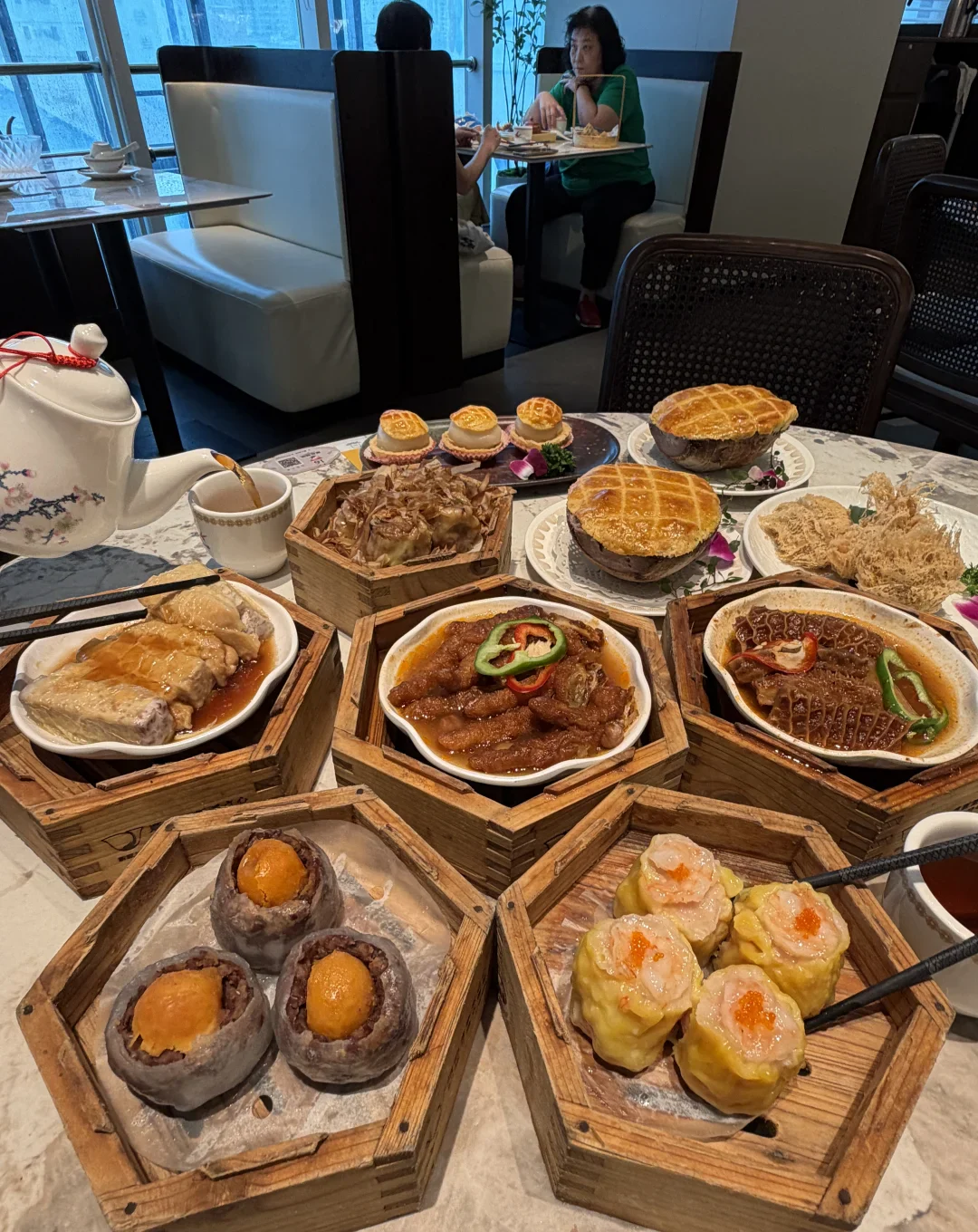
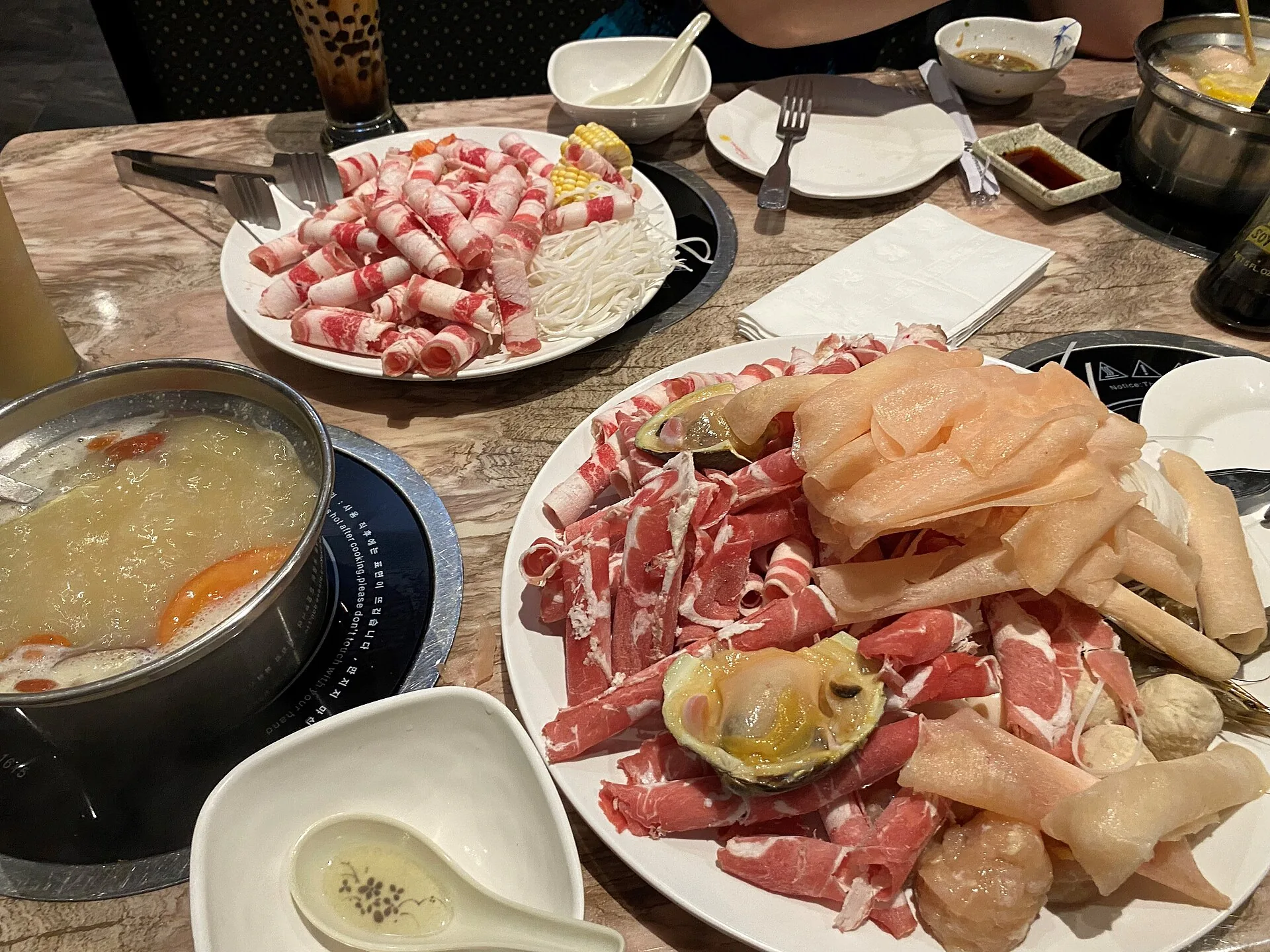
This is the social scale of siu mai: two open steamers sit inside a much larger order while diners eat at the next booth. The current Guangzhou photograph proves a real tea-house table, visible shaomai forms and meal variety; it cannot prove the dumplings' ingredients, temperature or texture.
Start at the opening, then read downward
A sealed dumpling can conceal the filling until the bite. Siu mai shows its hand immediately. Read it in five parts.
1. The exposed top
The filling should look moist and cohesive, not flooded with liquid or dried into a dome. Visible pieces of shrimp, mushroom or pork can signal texture, but appearance cannot verify ingredient quality. An orange topping may be roe or diced carrot; color alone cannot decide.
2. The gathered collar
The wrapper should cling to the filling without forming a leathery rim. A dry, pale fringe often means the exposed edge lost moisture or sat too long. A wrapper pasted flat against the meat may have no independent texture at all.
3. The side wall
The side supports the filling during steaming and lifting. It should be thin enough to yield easily but complete enough to prevent the dumpling spreading. Look for splits, collapsed folds and wet patches.
4. The base
The bottom must carry the full weight. If it sticks to the liner and tears, the dumpling loses filling before the first bite. An overly thick base creates the opposite failure: a gummy disk underneath an otherwise tender dumpling.
5. The center
This is where photographs stop helping. The filling should be fully cooked, juicy and structured. It should not be a rubber ball, a crumbly meatball or a wet paste.
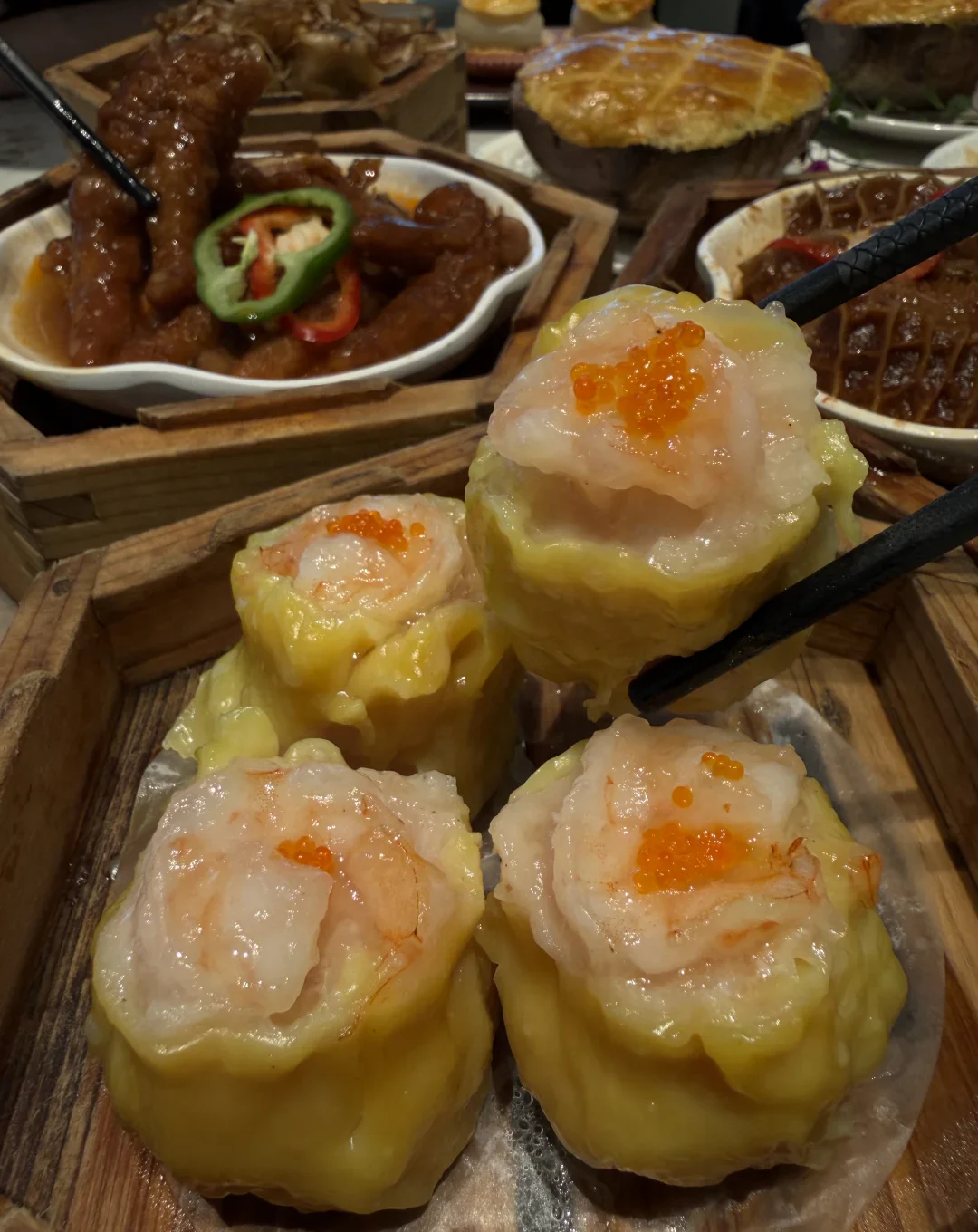
The lift exposes what a static overhead view hides: this dumpling remains upright, its wrapper clings to the side and the open shrimp-topped crown keeps its shape. The image cannot reveal the center's doneness, exact ingredients or tenderness, but it gives the bite a precise structural question to answer.
Filling texture is a question of cut, mix and restraint
The familiar Cantonese filling often depends on pork for richness and cohesion, shrimp for sweetness and snap, and mushroom or seasoning for aroma. The ingredients may be chopped to different sizes. Mixing develops a bind that helps the filling hold its open shape.
That bind is useful until it becomes the whole personality. Some siu mai rebounds so aggressively that the mouth learns nothing about the ingredients. Other versions barely cohere and release oily liquid into the wrapper. The ideal sits between: the filling holds when lifted and separates under the teeth into recognizable textures.
Size complicates the test. A giant siu mai looks generous, but a larger mass steams differently. The center needs enough time to cook while the thin wrapper remains supple. A kitchen can compensate through portioning and temperature control, but scale is not free. Bigger is not automatically more luxurious; sometimes it is simply more difficult to finish gracefully.
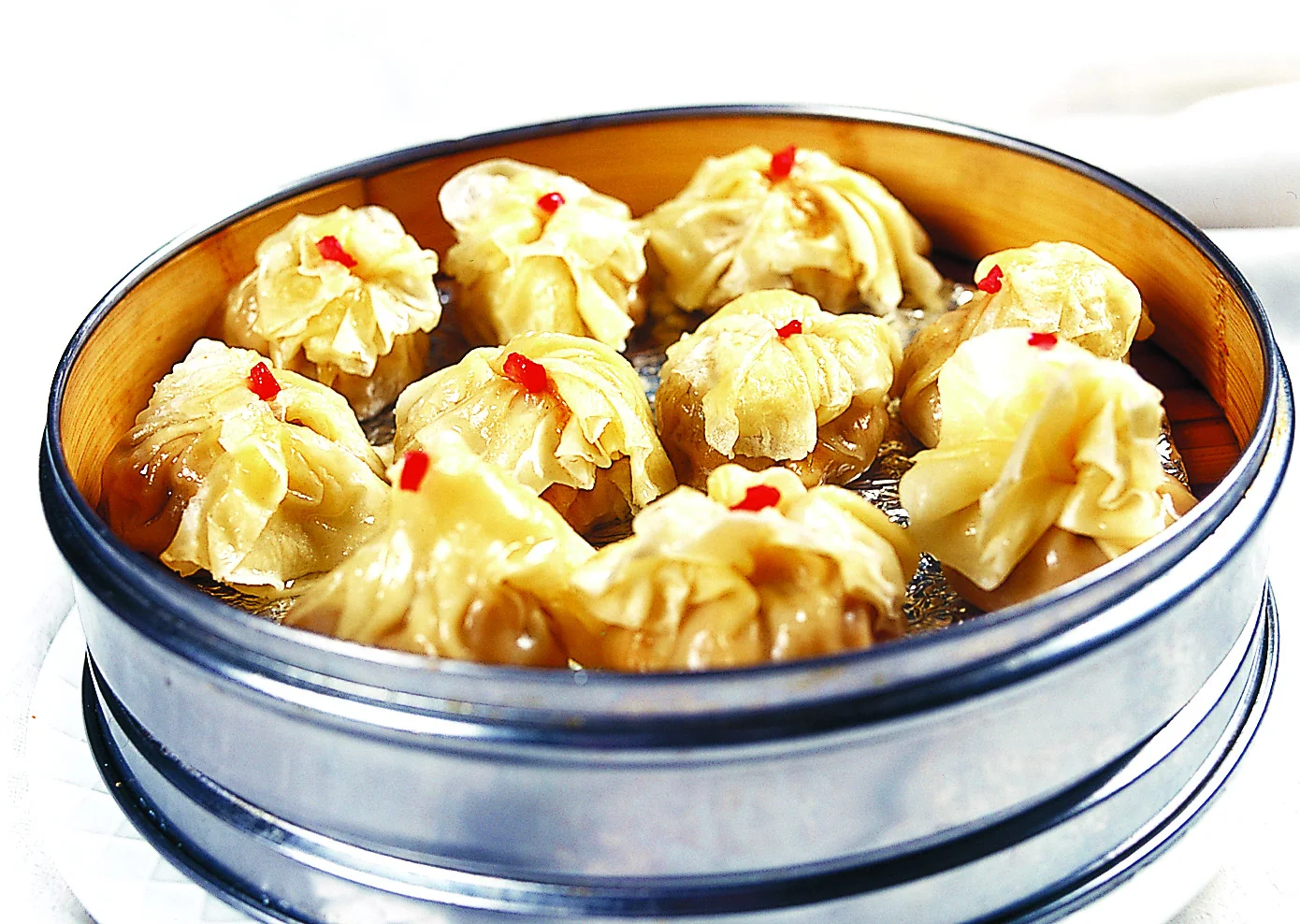
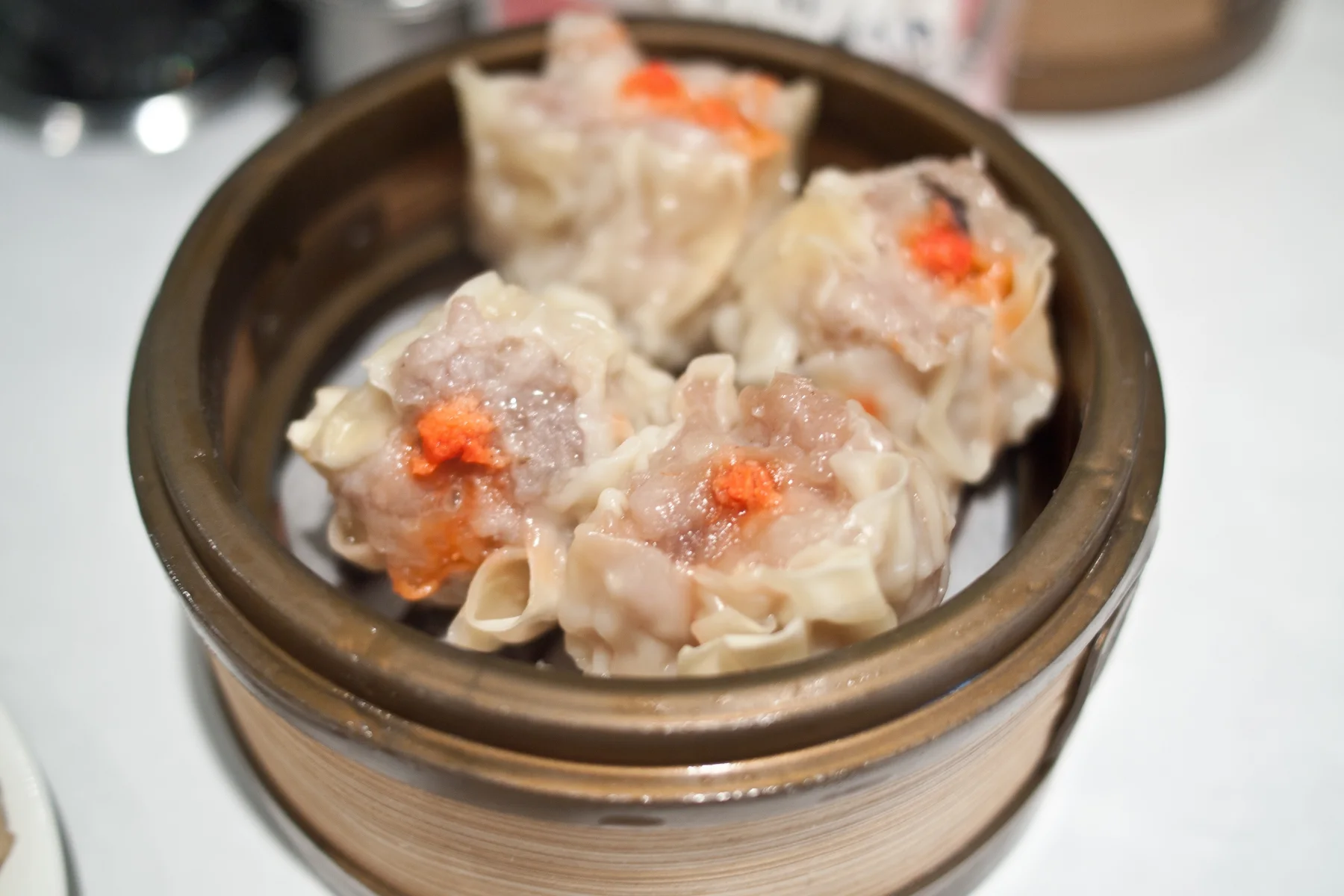
This real basket makes size, cap geometry, surface shine and liquid at the liner visible. It does not tell us whether that shine is water, oil or sauce, and it cannot diagnose the center. That is precisely the limit: a photograph can direct the first questions, but the bite has to answer them.
My preferred filling is neither perfectly smooth nor theatrically chunky. It has a clear pork structure, shrimp that still feels like shrimp and seasoning that finishes before the next sip of tea.
Yellow skin does not prove Cantonese craft
Commercial siu-mai wrappers may be yellow because of egg, coloring or product formulation. A handmade wrapper can also be yellow. The hue identifies a visual convention, not a production method.
This matters because restaurant marketing loves visible shortcuts. Yellow becomes "traditional." Roe becomes "premium." A larger crown becomes "more filling." None answers whether the wrapper is tender or the center is balanced.
The better question is functional: does the wrapper stay attached from basket to mouth? Can you feel it without fighting it? Does it support the filling instead of drying into a paper cup?
The yellow collar is attractive when it frames the food. It becomes a costume when the kitchen expects color to do the work of texture.
Cantonese siu mai is one branch of a wider shaomai family
Names travel through languages. Cantonese siu mai, Mandarin shaomai and Japanese shumai are related labels encountered on different menus, but English search often collapses the foods into one standard image.
Across China, shaomai can be larger, more openly flowered, more tightly bunched or filled with combinations that move far beyond the familiar Cantonese pork-and-shrimp profile. Some northern and northwestern forms emphasize mutton. Some Jiangnan forms use glutinous rice. Wrapper thickness, top geometry, garnish and meal context change.
The point is not to build a complete provincial encyclopedia around one dumpling. It is to protect the reader from a false universal. A Hong Kong tea-house siu mai and a rice-filled regional shaomai share a name history without being interchangeable experiences.
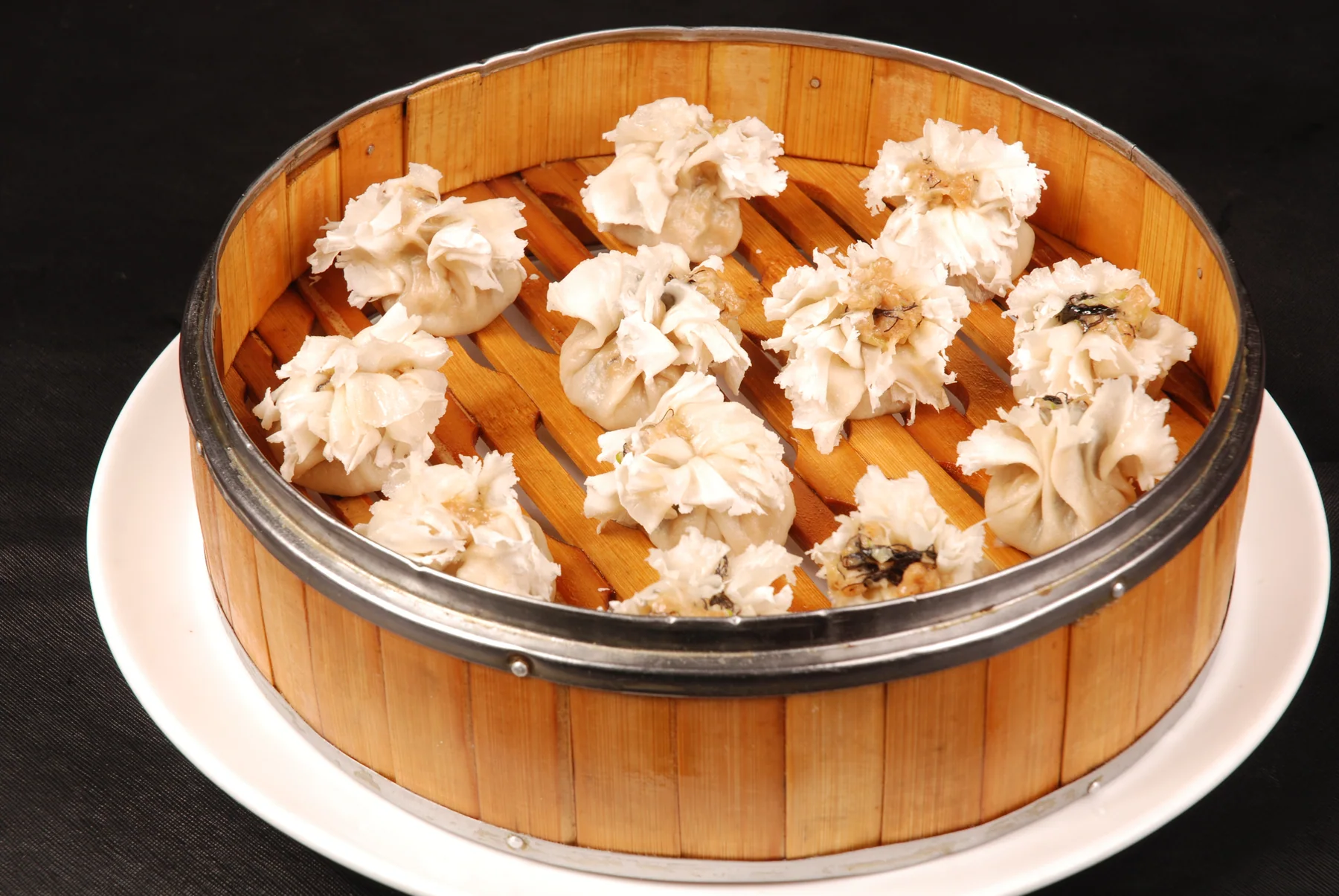
Here the wrapper is not a neat yellow cylinder. It rises into a pale shredded collar around a narrower body. The archive photograph proves a radically different wrapper geometry, not a precise province, filling or lineage. It is enough to break the idea that one global silhouette owns the name.
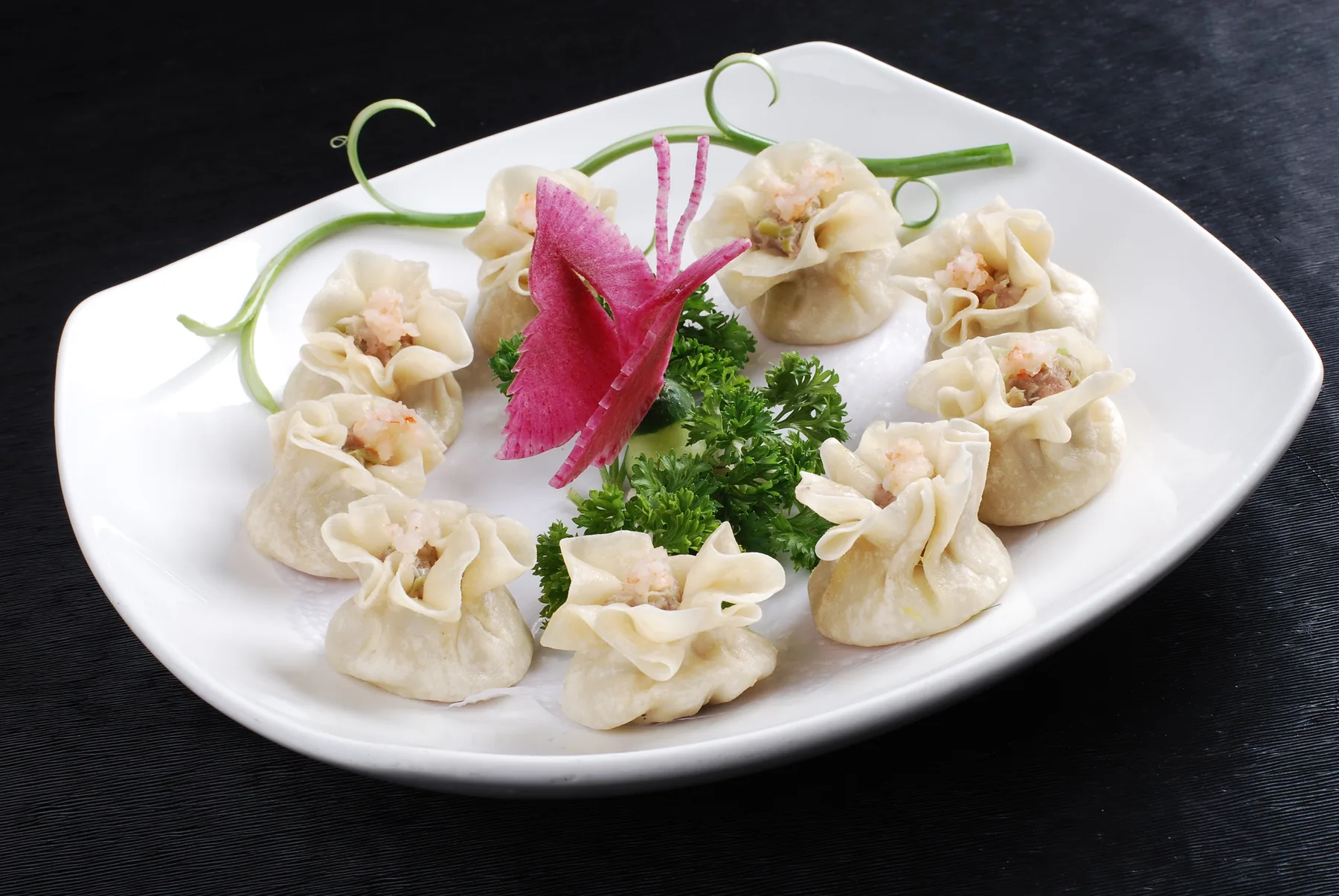
This archive image proves that an open-topped shaomai form can use pale, wide folds and visible shrimp instead of the compact yellow Cantonese silhouette. The filename does not establish a precise regional tradition or recipe.
The comparison changes how I see the Cantonese version. Its straight sides and compact top are not the natural default. They are a specific solution: maximum filling in a small vertical parcel that can be repeated across a busy service.
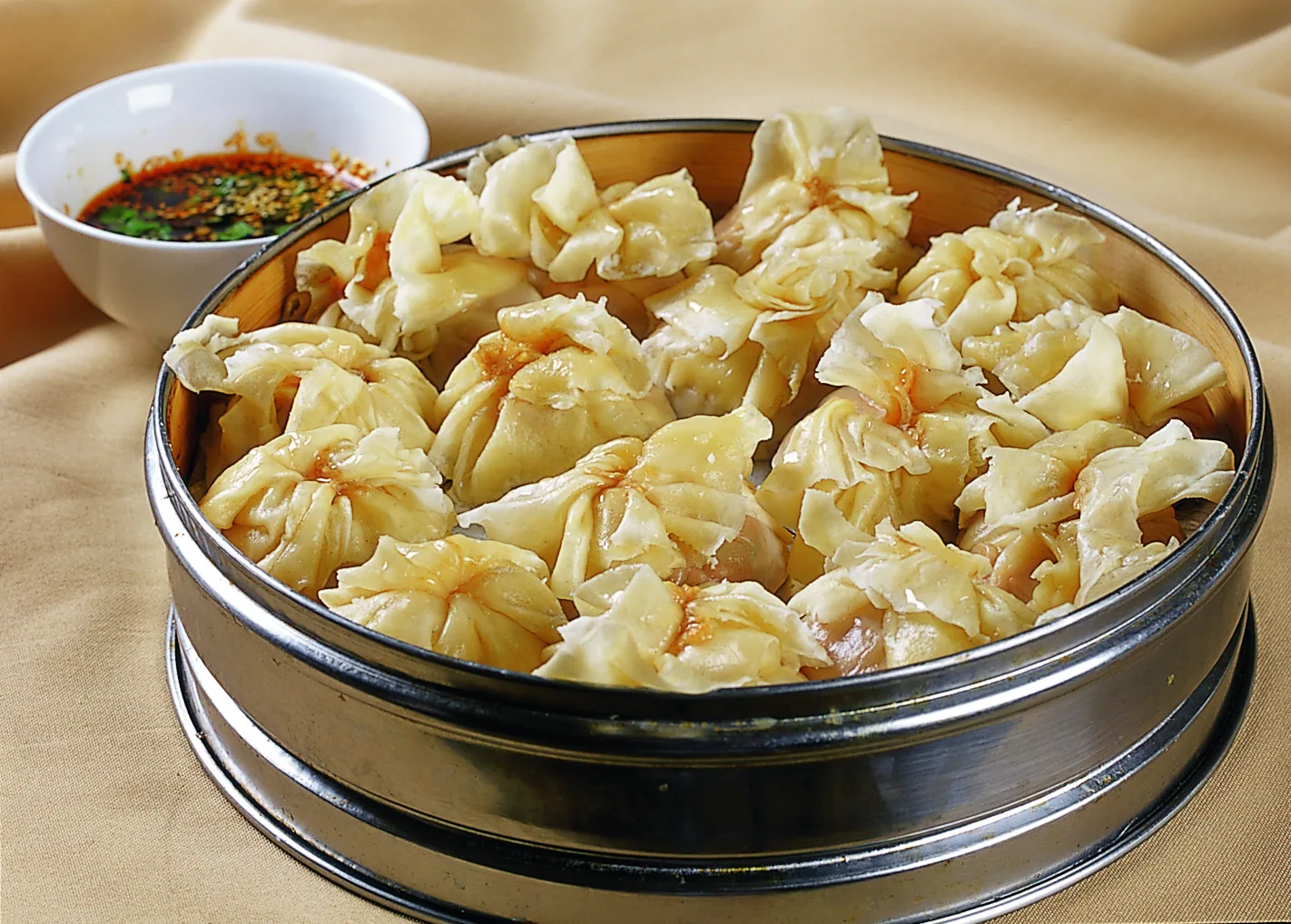
The looser bunched geometry visibly departs from the familiar Cantonese open cylinder. The photograph cannot identify exact filling, origin or historical lineage, so it remains a structural comparison rather than a regional label.
Once these forms sit beside each other, wrapper color becomes the least interesting fact. Geometry, filling and service reveal much more.
Siu mai and har gow should not be judged by the same standard
The classic pairing with har gow is useful because the dumplings expose opposite problems.
Har gow asks a translucent starch wrapper to enclose wet shrimp and survive a lift. Siu mai asks a thin wheat wrapper to hold the sides while the filling remains open to steam. Har gow is ruined by gumminess and tearing. Siu mai is ruined by a dry collar and dense center. Har gow displays filling through the skin. Siu mai displays it through the missing roof.
Order both before a fried course. Eat one while the basket is hot, drink tea, then eat the other. The contrast makes the dim-sum system legible: the meal is not a collection of cute shapes but a sequence of different material problems solved by specialized hands.
Sauce is optional; temperature is not
Siu mai often arrives with chili oil, mustard or soy-based condiments. Taste the first dumpling plain. If the filling lacks aroma without sauce, more sauce hides the evidence rather than fixing it.
Mustard can cut pork richness. Chili oil can add fragrance. Soy can intensify savoriness, but the filling is already seasoned and the Centre for Food Safety's dim-sum study is a reminder that portions and nutrient profiles vary across items. Condiment enthusiasm can flatten those differences.
Eat siu mai hot but not dangerously hot. Cooling firms the filling and dries the exposed wrapper edge. The open top makes the change visible: shine dulls, the collar tightens and the aroma retreats. This is another reason to order in rounds instead of filling the table at once.
If you need ingredient or allergy information, ask the restaurant. Pork, shrimp, mushroom, wheat, egg, soy and garnishes can vary, and appearance is not a safe ingredient list.
How to order siu mai at yum cha
Begin with one basket for the table. Add har gow for wrapper contrast, cheung fun or a steamed bun for a different softness, and a crisp item such as spring rolls later. The wider Cantonese food guide explains why freshness, restraint and specialist preparation recur across the cuisine, while Guangzhou food places tea-house eating inside city life rather than treating it as a tourist tasting set.
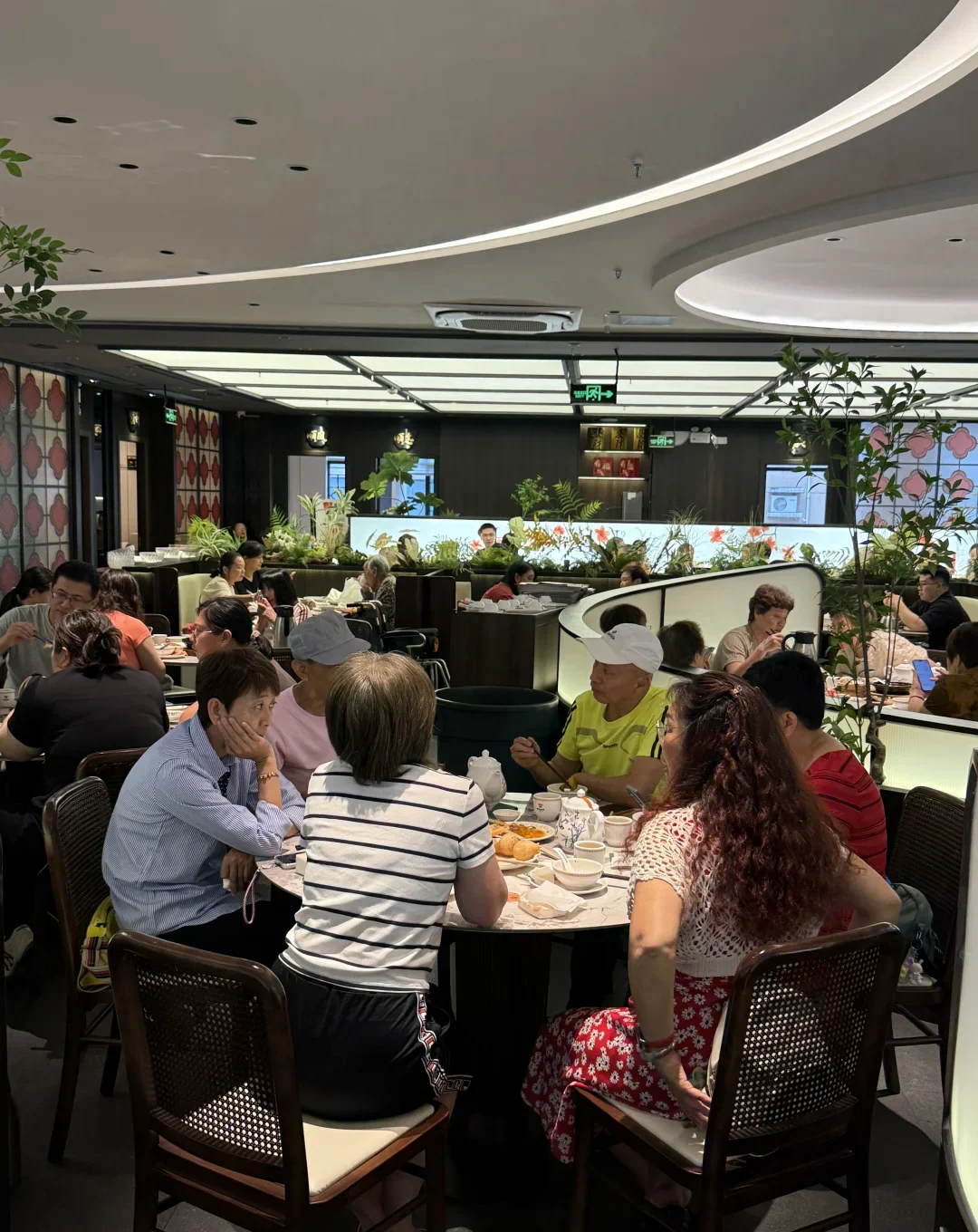
This is the context a product close-up removes. Yum cha is conversation, shared rounds and tables moving at different speeds. The photograph proves one busy contemporary Guangzhou dining room and real groups eating together; it does not prove what any table ordered or make this room universal.
When the basket arrives, compare dumplings before adding sauce:
- Are the tops equally moist?
- Do the wrappers rise to a similar height?
- Has liquid pooled at the base?
- Does the dumpling remain upright when lifted?
- Can you distinguish filling pieces after one bite?
These checks do not require insider vocabulary. They reward attention.
The open top should make the kitchen more accountable
I love siu mai because it refuses complete concealment. The cook cannot hide every decision under a sealed skin. Filling texture, moisture, garnish and wrapper edge face the diner at once.
That exposure should make us more demanding, not more obedient to a yellow silhouette. A famous shape is only the beginning. The dumpling earns another basket when the wrapper stays tender, the filling remains juicy without becoming bouncy paste, and the steam has joined them rather than forcing one to wait for the other.
The name can travel. The form can change. What must remain is a coherent answer to an open-top problem.
The reader-built Siu Mai Open-Top Atlas in East Moment Moments becomes useful when each field note shows both an overhead and a side view, then reports whether the visible clues predicted the bite. One contribution helps a first-time diner ask better questions. A growing set can reveal where wrapper color misleads and where geometry genuinely predicts texture.