Har gow is a Cantonese dim-sum dumpling built around shrimp and a translucent starch-rich wrapper. Its decisive test is not how many pleats you can count. Pick one up while it is hot. The skin should hold, bend and release from the basket without turning tough or spilling the filling. If it cannot survive that short journey, the beauty was only surface.
Har gow looks calm: a pale half-moon, a blush of shrimp, a few folds. But it is one of the least forgiving objects on a dim-sum table. The wrapper has to be thin enough to reveal the filling and strong enough to contain it. The shrimp must feel lively without becoming a rubber ball. Steam must finish both at nearly the same moment. Then the clock starts.
This is why I resist the familiar obsession with pleat count. Seven, nine or twelve folds can display discipline, but a geometrically perfect dumpling that tears on contact or chews like plastic has failed. Har gow is a test of controlled fragility. The craft is making something delicate that still works.
What is har gow?
Har gow, also written ha gow and called xia jiao (虾饺) in Mandarin, is a steamed shrimp dumpling associated with Cantonese dim sum and yum cha. A typical form uses chopped or whole pieces of shrimp inside a smooth, translucent wrapper made from starches rather than the ordinary wheat dough many readers expect from boiled northern Chinese dumplings.
The Hong Kong Tourism Board's dim-sum introduction identifies the translucent wrapper, pleats, generous prawn filling and hot service as defining features. Hong Kong's 2024 intangible-cultural-heritage inventory also records Chinese dim-sum making as a living technique in the city's food culture. Those sources establish cultural context. They do not give one restaurant ownership of the form or turn every photogenic basket into excellent eating.
The English phrase "crystal shrimp dumpling" is descriptive but slippery. "Crystal" should mean that steam has made the wrapper luminous enough to show the filling. It does not mean glass-clear, and it certainly does not guarantee tenderness.
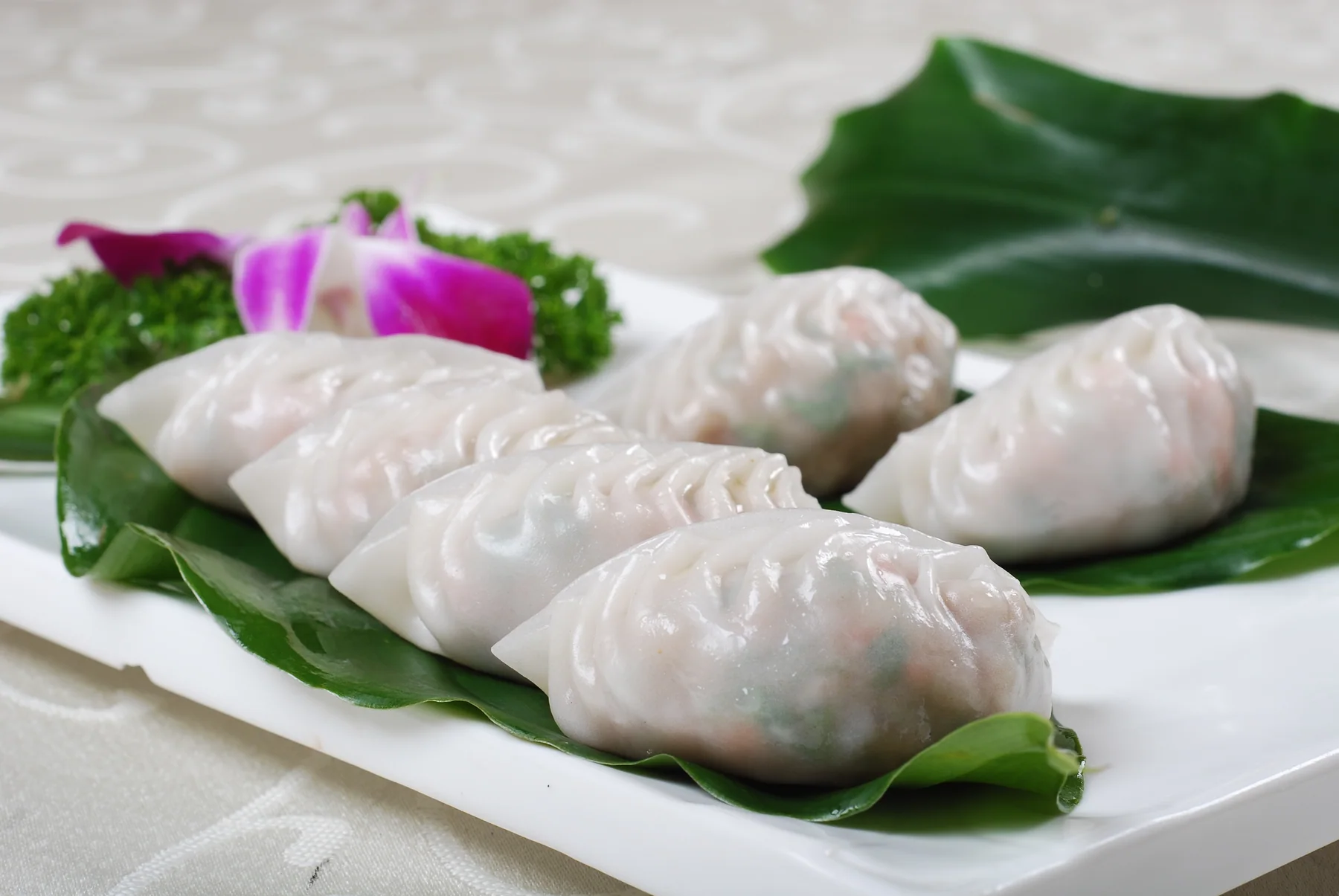
This is the first visual trap to learn. These archive-labeled coriander crystal dumplings share har gow's pale, translucent crescent language, but visible wrapper and shape do not prove a shrimp filling or Cantonese har gow identity. For a first-time diner, the menu name and the cut or bite still matter.
The lift is the first honest test
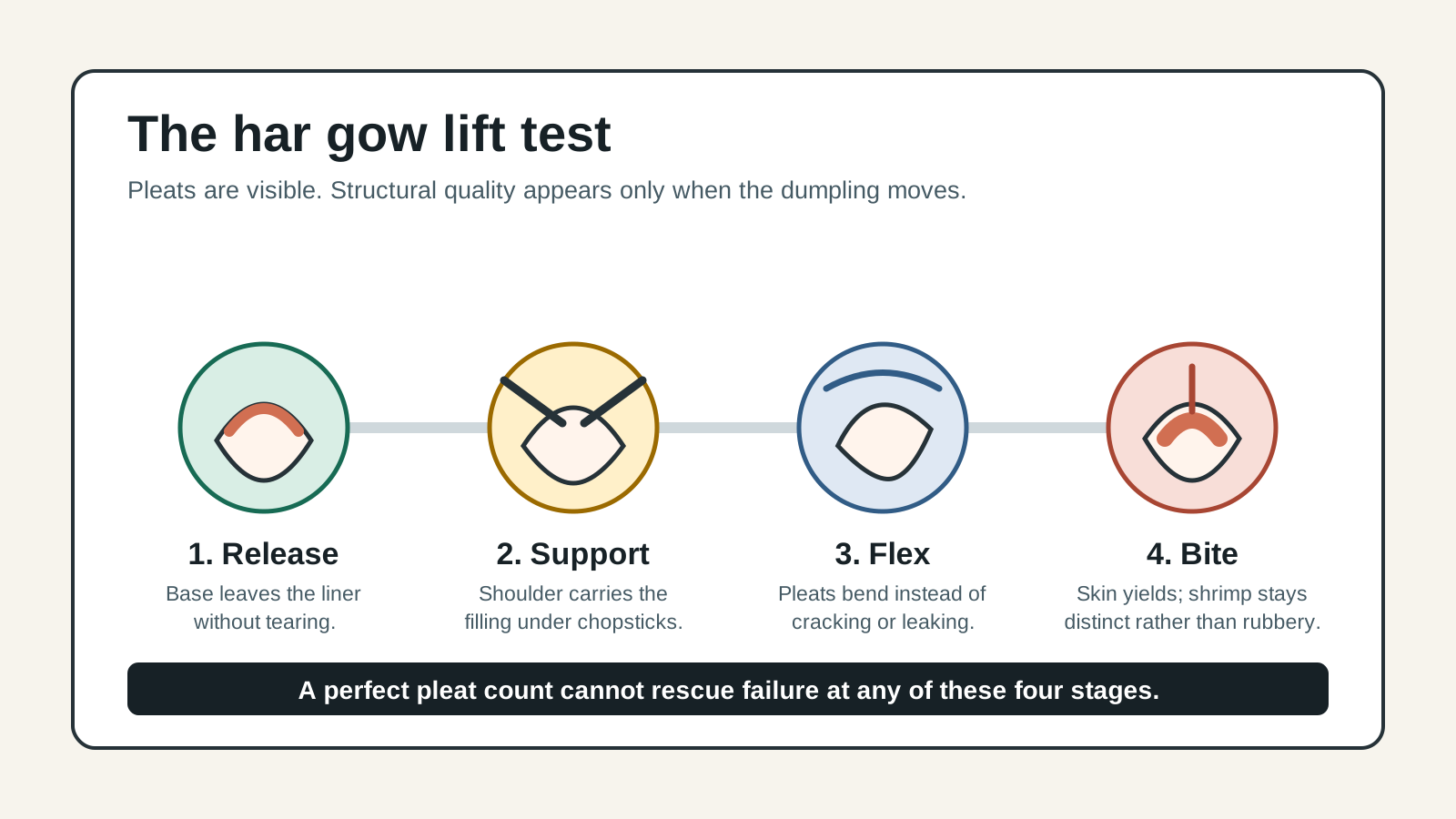
A har gow arrives on perforated paper, a steamer liner or a lightly oiled surface. The wrapper may cling as it cools. That first lift therefore compresses several quality questions into one movement:
- Does the base release without leaving a patch behind?
- Can the side support the weight of the shrimp filling?
- Do the pleats bend rather than split?
- Does the wrapper remain tender after reaching the bowl?
Do not stab it through the center. Use chopsticks gently at the thicker shoulder, or support it with a spoon if the wrapper is visibly fragile. This is not cheating. Dim sum is lunch, not an examination in chopstick masculinity.
A tear does not always condemn the kitchen. The dumpling may have sat too long, another diner may have damaged it, or the basket liner may be dry. But a whole basket glued down or splitting at identical seams points to a structural problem.
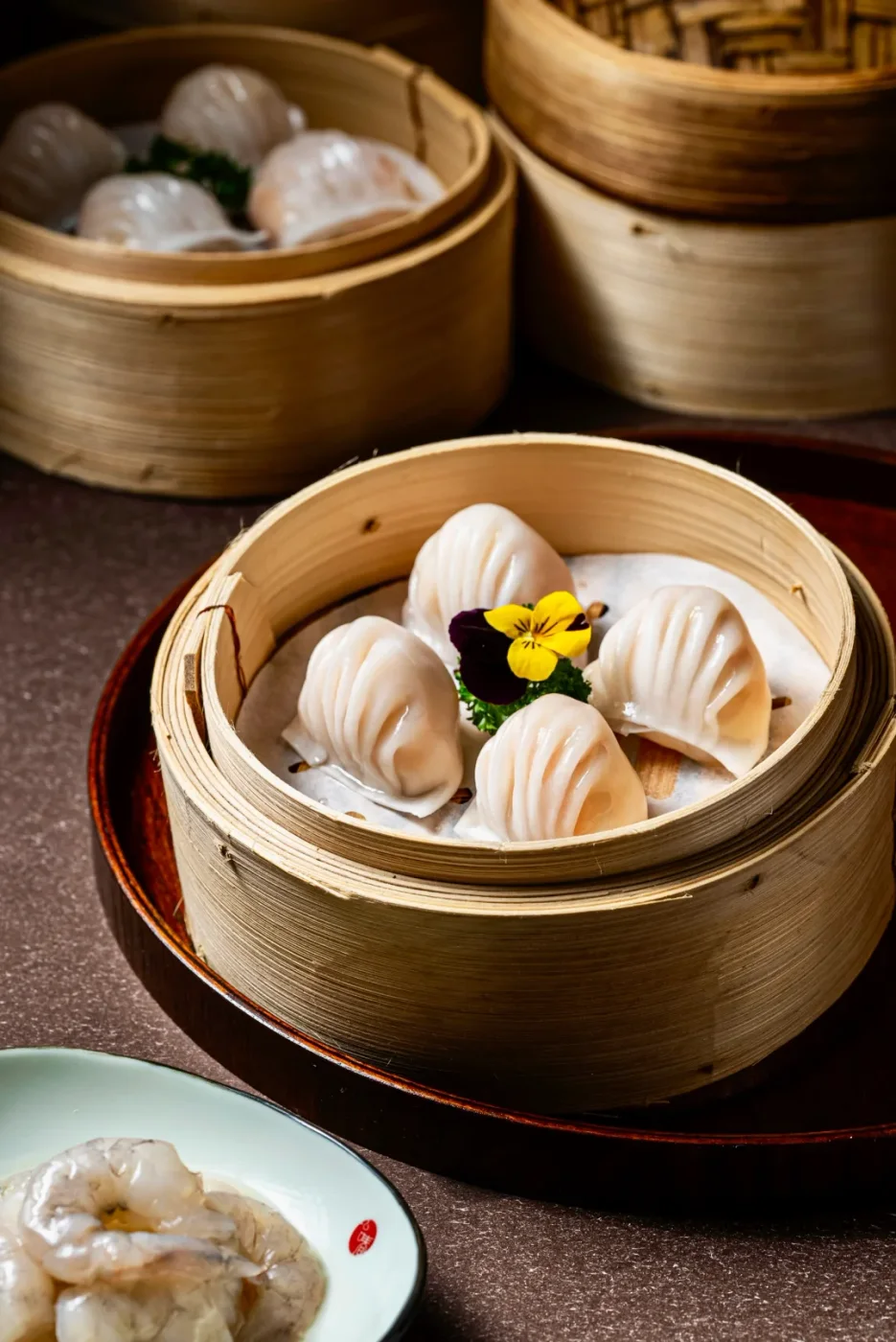
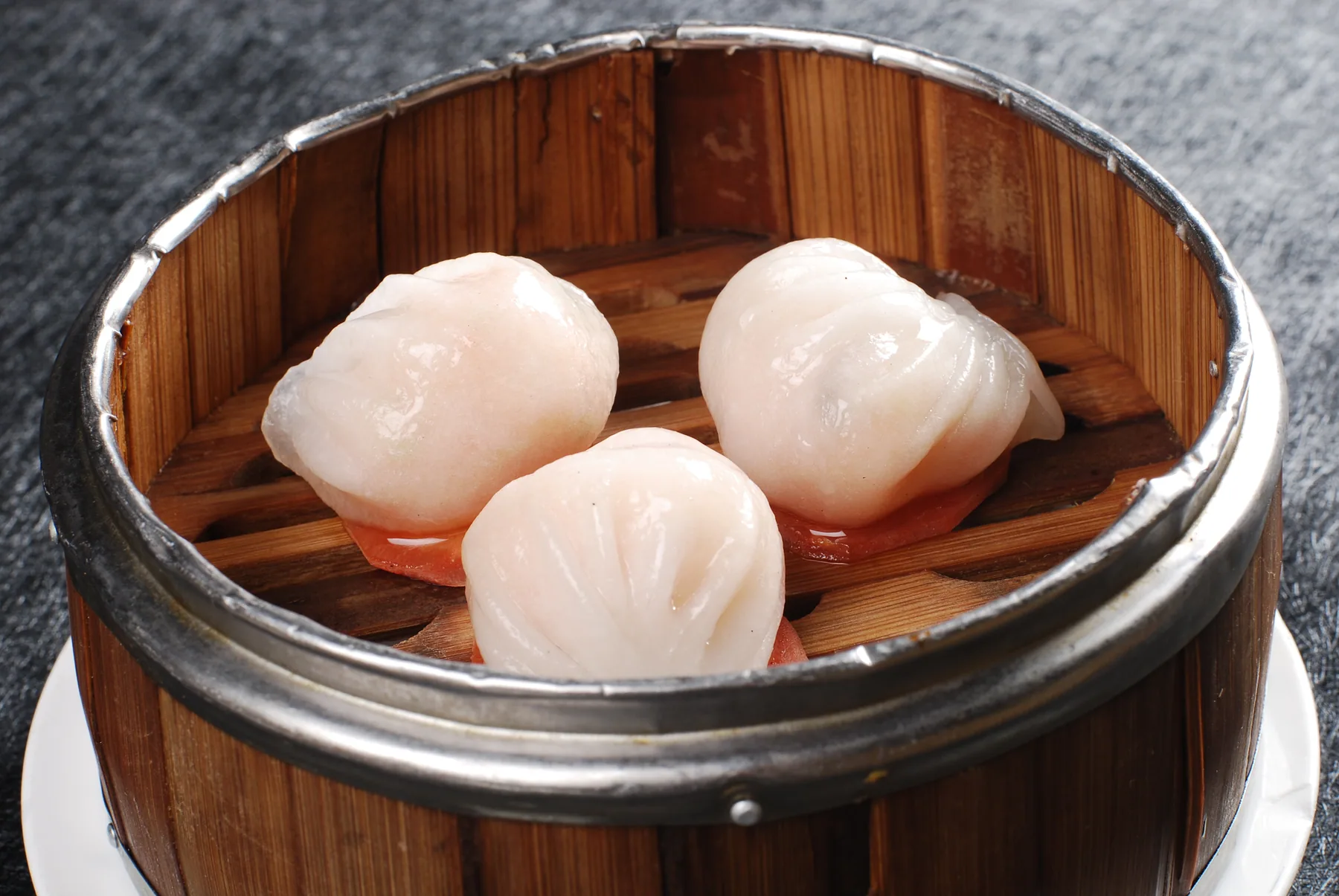
This authorized photograph from an image-and-text post gives us an honest starting point: four har gow in a bamboo steamer, with pleats, translucency and table context visible. It does not show a lift, release from the liner, tenderness or a failure. Those are precisely the observations the Lift Atlas still needs from a matched reader sequence.
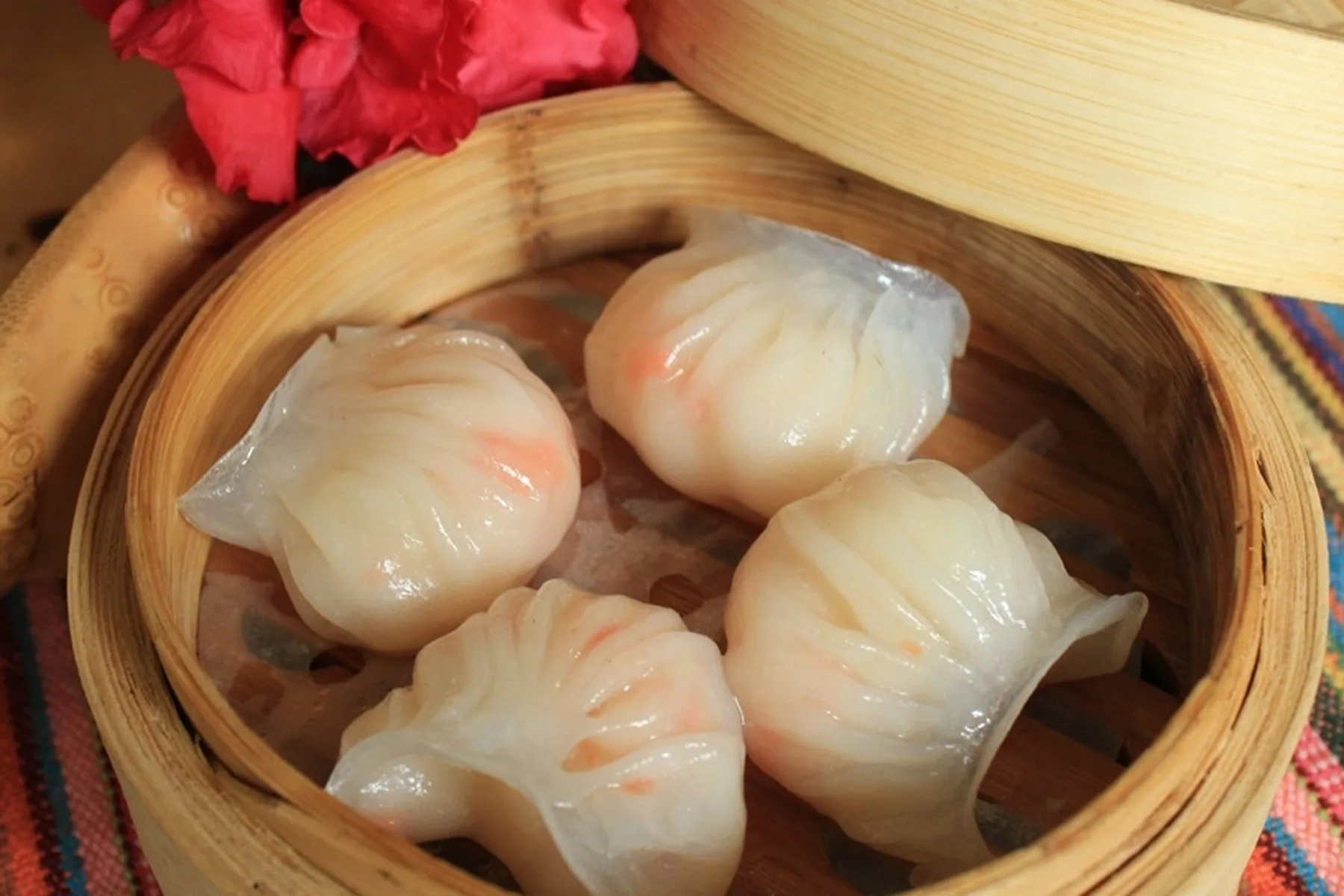
The wrapper edges and pleats vary even within one basket. The photograph can show shape, translucency and surface condition. It cannot tell us the starch formula, temperature or tenderness.
A translucent wrapper is not ordinary dumpling skin
The most important visual difference between har gow and many wheat-skinned dumplings is the wrapper. Har-gow dough commonly relies on wheat starch, often combined with another starch such as tapioca, and is mixed with hot water and fat in a process that behaves differently from gluten-forming wheat-flour dough.
That distinction changes the craft. A wheat dough can develop elasticity through gluten. A starch-rich har-gow wrapper depends on gelatinization, hydration, temperature and handling. It is less forgiving as it cools and dries. Roll it too thick and the bite becomes gummy. Push it too thin and shrimp or bamboo shoot can break through. Let exposed edges dry and the folds crack before steaming.
I do not publish one "authentic" ratio because restaurants adjust for flour supply, kitchen temperature, holding time, desired translucency and handling method. A ratio without those conditions creates false confidence. The useful principle is clearer: the wrapper must be judged as a working membrane, not a white decoration.
The best version is not invisible. It has a soft presence: a slight resistance at first contact, then a clean yielding bite. If the skin disappears completely, it may not protect the filling. If it dominates the chew, the shrimp becomes cargo inside a starch coat.
The shrimp should feel alive, not processed into bounce
Har-gow filling often combines shrimp with restrained seasonings and may include bamboo shoot or other texture-giving ingredients. Recipes vary. The goal I care about is contrast: discernible shrimp pieces held together well enough to eat as one dumpling.
"Springy" is useful until it becomes an excuse. Shrimp has natural firmness. Chopping, mixing and salt can help proteins bind, producing cohesion and bounce. But an aggressively elastic filling feels manufactured rather than fresh. At the other extreme, a loose wet filling leaks liquid, weakens the wrapper and falls apart after the first bite.
Look through the skin before eating. Uneven pink and pale areas can reveal real pieces. A perfectly smooth uniform mass may still taste good, but it promises a different texture. Then bite once and notice whether the shrimp separates into juicy pieces or rebounds as one dense plug.
The seasoning should not erase the ingredient. Sesame oil, white pepper, sugar, salt and other additions may appear, but har gow is not improved by tasting like a seasoning packet. The pleasure is the small shock of sweet shrimp inside a wrapper that looks almost too delicate to hold it.
Pleats measure handwork, not the whole dumpling
Pleats matter. They distribute extra wrapper around a curved filling, help close the seam and give the dumpling its recognizable crescent. Consistent pleating can reveal speed and practiced hands. But the internet turns a visible feature into an easy ranking because counting is simpler than tasting.
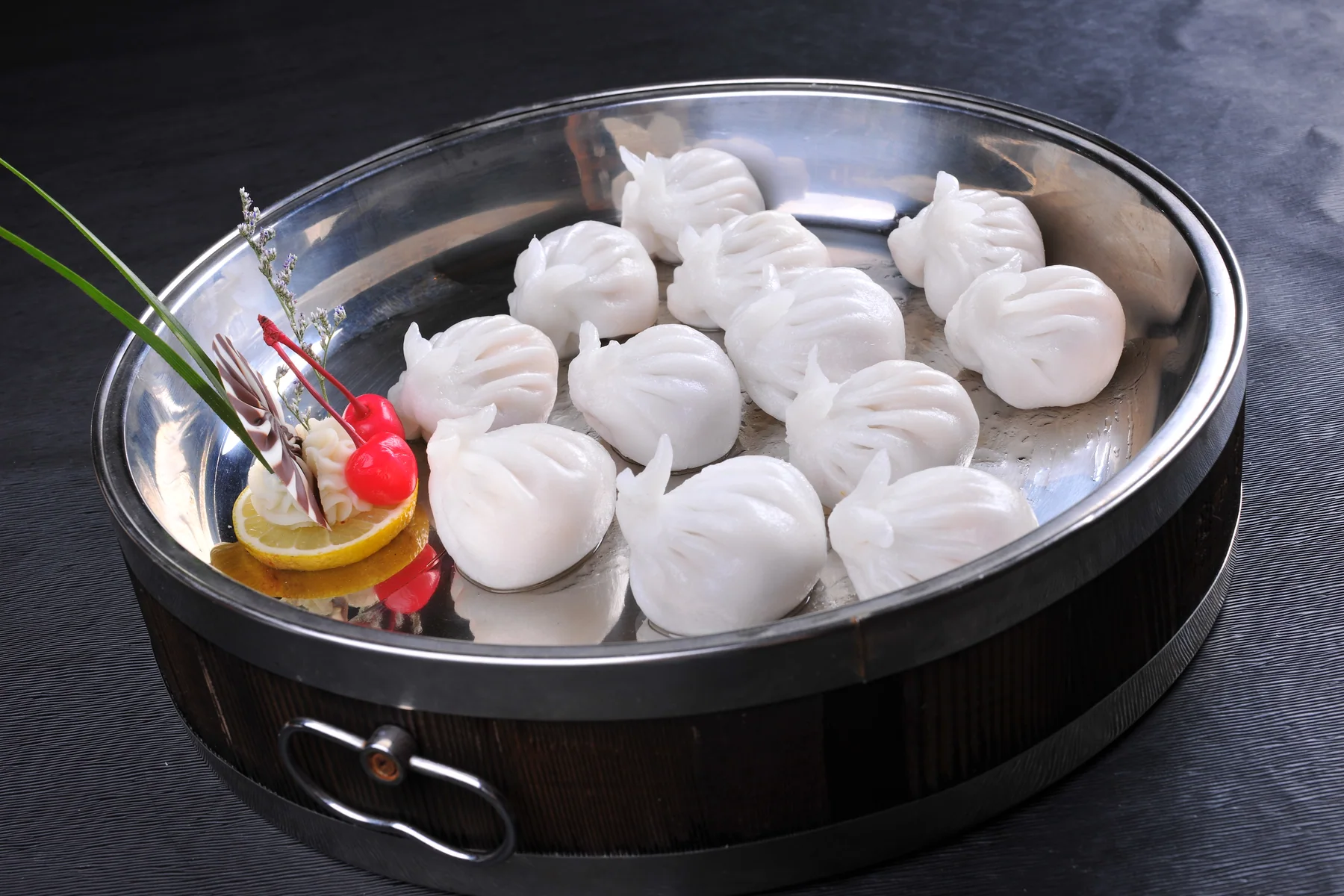
Novelty shaping can turn the same translucent visual vocabulary into ears, tails and rounded bodies. The photograph proves deliberate shaping and an opaque-white finish; it cannot prove the filling, tenderness or whether the base will survive lifting. A memorable silhouette is a design choice, not a quality score.
That shortcut fails for three reasons.
First, more pleats can create a thick ridge. Second, a beautiful top cannot repair a weak base. Third, the dumpling still has to steam evenly. The Hong Kong Tourism Board uses at least seven pleats as part of its beginner description. Treat that as recognition, not a universal scorecard.
My ranking is blunt:
| What you notice | Strong har gow | Weak har gow |
|---|---|---|
| Wrapper | Translucent, tender, intact and thin enough to show filling | Chalky, gummy, cracked, watery or stuck to the liner |
| Seam | Closed without a heavy rope of dough | Decorative folds over a thick or leaking ridge |
| Filling | Distinct shrimp texture with cohesion and juice | Rubbery paste, watery fragments or overpowering seasoning |
| Steam | Wrapper and filling finish together | Raw-looking skin with cooked filling, or tough skin around dry shrimp |
| Service | Hot enough to be supple, cool enough to eat safely | Left until the wrapper dries and firms |
Pleats belong in the first column only when they help the structure.
Har gow has a short temperature window
Steam gives the wrapper its translucency and flexibility. Cooling takes both away. That is not a minor service issue; it is part of the dish's design.
Eat har gow early in the meal, especially before conversation turns the basket into table furniture. Let it rest just long enough not to burn your mouth. Then move it. A dumpling that is superb at minute one may feel tighter and more adhesive several minutes later.
This short window also explains why takeaway and frozen har gow can disappoint even when the filling is respectable. Condensation wets one surface, refrigeration firms the wrapper, and reheating can produce tough edges before the center is hot. Home steaming can recover more tenderness than a microwave, but package instructions and equipment matter. Do not improvise cooking guidance for a product whose size, filling and frozen state are unknown.
The same timing logic shapes the larger dim-sum meal. Baskets are ordered in rounds because steamed, fried and baked pieces do not share one perfect holding time. Har gow makes that rhythm impossible to ignore.
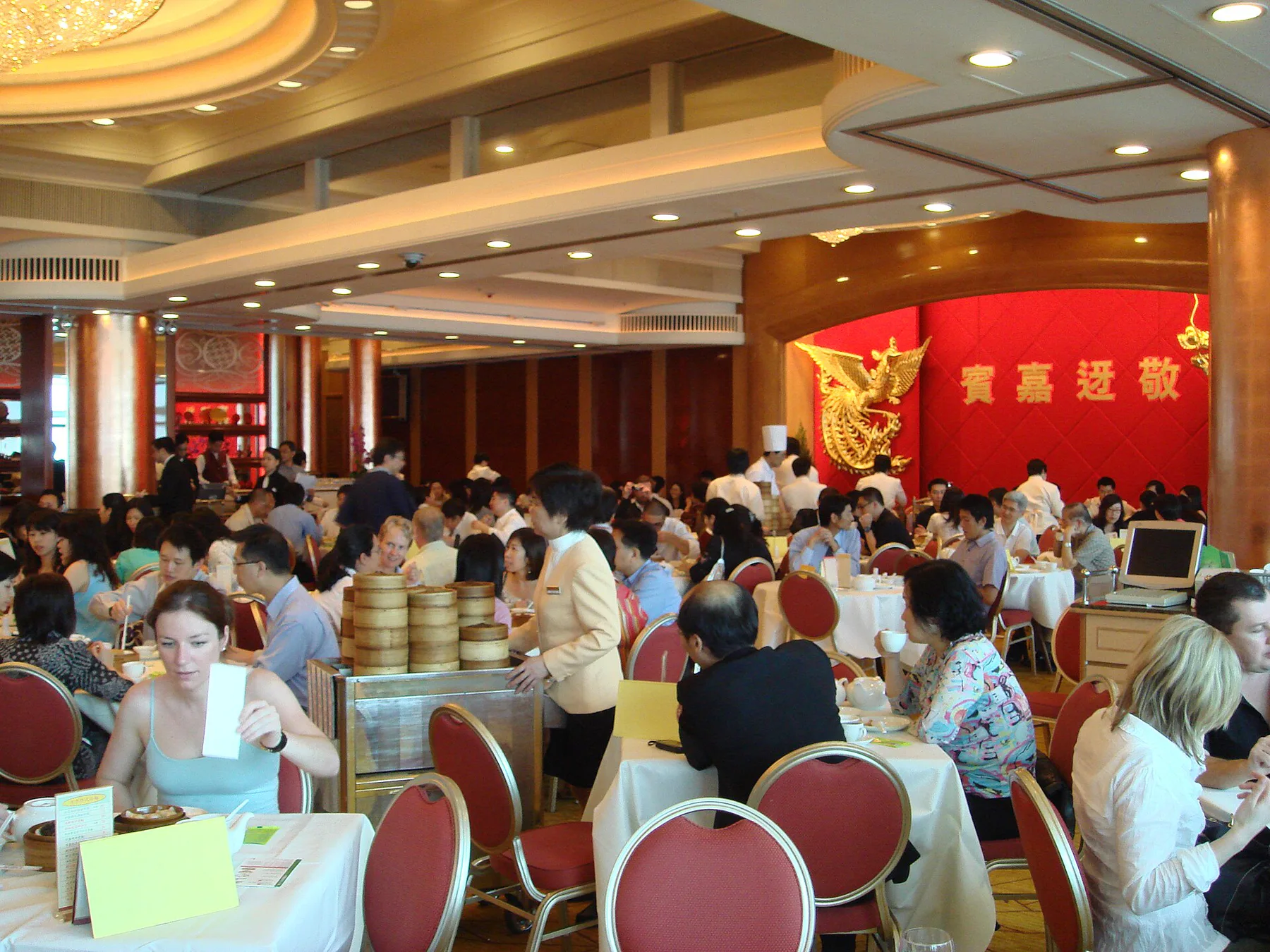
Har gow belongs to this moving room, not to an isolated product shot. Diners talk, staff circulate and stacked steamers reach different tables at different moments. The photograph proves the shared service rhythm of one Hong Kong yum-cha room; it cannot identify which baskets contain har gow or how any dumpling tasted.
Har gow and siu mai reveal opposite wrapper problems
Har gow and siu mai are often ordered together, which makes them excellent comparison partners.
Har gow hides the filling inside a translucent, sealed starch wrapper. Siu mai exposes the filling through an open top and asks a thin wheat skin to support the sides. Har gow risks tearing and gumminess. Siu mai risks a dry collar and dense filling. One makes the wrapper visible through light; the other makes the filling visible through architecture.
Neither is "better for beginners." Order both. Alternate bites. You will understand more about dumpling construction in ten minutes than a list of twenty fillings can teach.
For the wider map, the Chinese dumplings and buns guide separates starch wrappers, wheat skins and leavened doughs instead of placing every enclosed food in one basket. The Cantonese food guide returns har gow to a cuisine shaped by fresh ingredients, specialist technique and social restaurant life.
Sauce should rescue neither wrapper nor shrimp
Good har gow needs little intervention. A small amount of chili oil or mustard may add contrast, but drowning the dumpling makes its two main tests harder to read. Taste the first one without sauce.
Soy sauce is especially easy to overuse. The filling is already seasoned, and the thin wrapper picks up liquid quickly. If a restaurant provides sauce, touch one edge rather than soaking the base.
Also remember the obvious facts that beautiful food photography tends to hide: har gow contains shellfish, and restaurant seasoning can contribute sodium. The Hong Kong Centre for Food Safety's dim-sum nutrient study is a useful reminder that dim sum varies by item and portion. A generic visual description cannot answer an allergy, ingredient or nutrition question. Ask the restaurant directly and treat cross-contact seriously.
How to order har gow without turning yum cha into a checklist
One basket for two to four people is a reasonable first round, depending on basket size and appetite. Pair it with contrasting structures: open-topped siu mai, a steamed bun, a rice-noodle roll and one fried item such as a spring roll. Tea refreshes the mouth, but it also slows the table enough to notice which basket is fading.
Order another basket only if the first earned it. Dim sum menus reward curiosity, but duplication is valuable when you want to test consistency. Did the second basket release better? Was the shrimp cut the same way? Did a busier service improve turnover and temperature?
These are more interesting questions than whether the kitchen reached a mythical pleat number.
Har gow is successful when delicacy becomes dependable
The most moving thing about har gow is not luxury. It is repeatability. A dim-sum cook shapes fragile hot-water dough around wet filling, seals it, steams it and sends out basket after basket. The finished dumpling looks almost weightless, but it carries the evidence of pressure, timing and practiced touch.
That is why I judge the lift so seriously. The dumpling should be delicate, but it should not make the diner afraid to touch it. Craft has turned fragility into confidence.
Count pleats if you enjoy the handwork. Then pick one up. The journey from basket to bowl tells the truth.
After eating, add the result to the reader-built Har Gow Lift Atlas in East Moment Moments. The useful contribution is not a beauty shot alone. Show the basket, the lifted or broken dumpling and the exact point where the wrapper held or failed. One honest field record can help the next first-time diner order with better eyes; a collection of them can show patterns no single restaurant photo can.