Chinese spring rolls are a family of wrapped foods, not one universal cylinder. Thin or thicker skins can enclose vegetables, meat, seafood or sweet fillings; rolls may be fried, pan-fried or prepared through another local method. The crisp fried version succeeds for one reason above all: the cook controlled moisture from the filling to the final minute on the plate.
A spring roll can leave the fryer looking perfect and arrive three minutes later as a damp tube. That collapse is often blamed on "bad oil" or a weak wrapper. Sometimes those are responsible. Often the real culprit began much earlier: hot wet filling enclosed before cooling, vegetables that released water, a loose seal, crowded frying, trapped steam or a long wait under a lid.
This is my central judgment: crispness is not a surface effect. It is a moisture chain. The shell, filling, seam, heat and holding time are one system. Ignore any link and the crackle becomes a short-lived costume.
What are Chinese spring rolls?
Chinese spring rolls, often called chunjuan (春卷), are rolled wrappers enclosing a filling. They appear in different regional, restaurant, festival, home and diaspora contexts. The English name may describe thin fried rolls on one menu, larger vegetable rolls on another and sweet-filled rolls somewhere else.
That variation is not a modern corruption of one pure original. Chinese food names frequently organize families rather than laboratory specifications. Flour type, wrapper thickness, filling, size, folding pattern and cooking method can all vary while the roll remains recognizable through its wrapped elongated form.
In Cantonese restaurants, fried spring rolls can appear within dim sum among steamed dumplings, buns, rice rolls, braised plates and sweets. Hong Kong's intangible-cultural-heritage inventory describes dim-sum making as a broad craft containing savory, sweet and bun items. It does not claim that every Chinese spring roll belongs only to Cantonese yum cha.
The useful definition stays open enough for regional truth and precise enough for menu decisions: a Chinese spring roll is a rolled Chinese wrapper-and-filling preparation, commonly but not always fried.
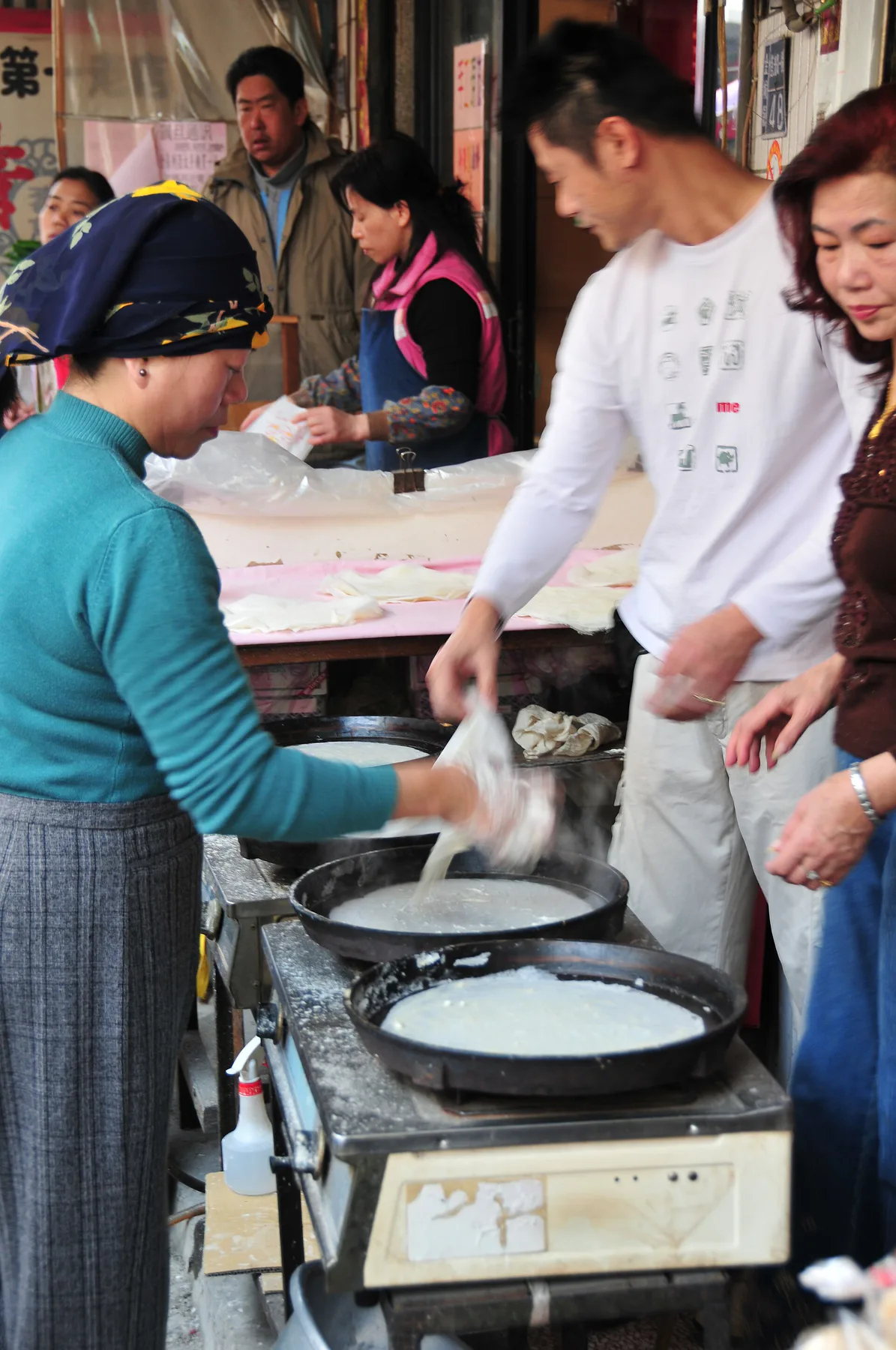
At this Jincheng street stall in Kinmen, wrapper making is fast public work: batter meets the hot plate while customers stand close enough to watch the next sheet form. This is a popiah-style wrapper process. It proves one living Kinmen preparation scene, not the wrapper, filling or method of every fried Chinese restaurant spring roll.
The crispness clock starts before frying
Most advice begins at the oil. I begin at the filling.
Vegetables hold water. Salt, heat and time release it. Mushrooms absorb and release liquid. Meat can shed juices. A filling that tastes perfect in a bowl may be too wet to survive inside a sealed wrapper. If it is enclosed while hot, trapped steam attacks the skin from within before frying begins.
The chain looks like this:
- Cut: large pieces puncture the wrapper or create hollow spaces; tiny pieces can collapse into paste.
- Cook or season: the method changes how much water leaves the ingredients.
- Drain: free liquid must not become cargo.
- Cool: warm filling continues producing steam inside the wrapper.
- Portion: too much filling stretches the skin and thickens the center.
- Seal: an incomplete seam admits oil and releases juice.
- Cook: heat must crisp the wrapper before the filling turns dry.
- Vent: finished rolls need somewhere for steam to escape.
- Serve: every covered minute softens the shell.
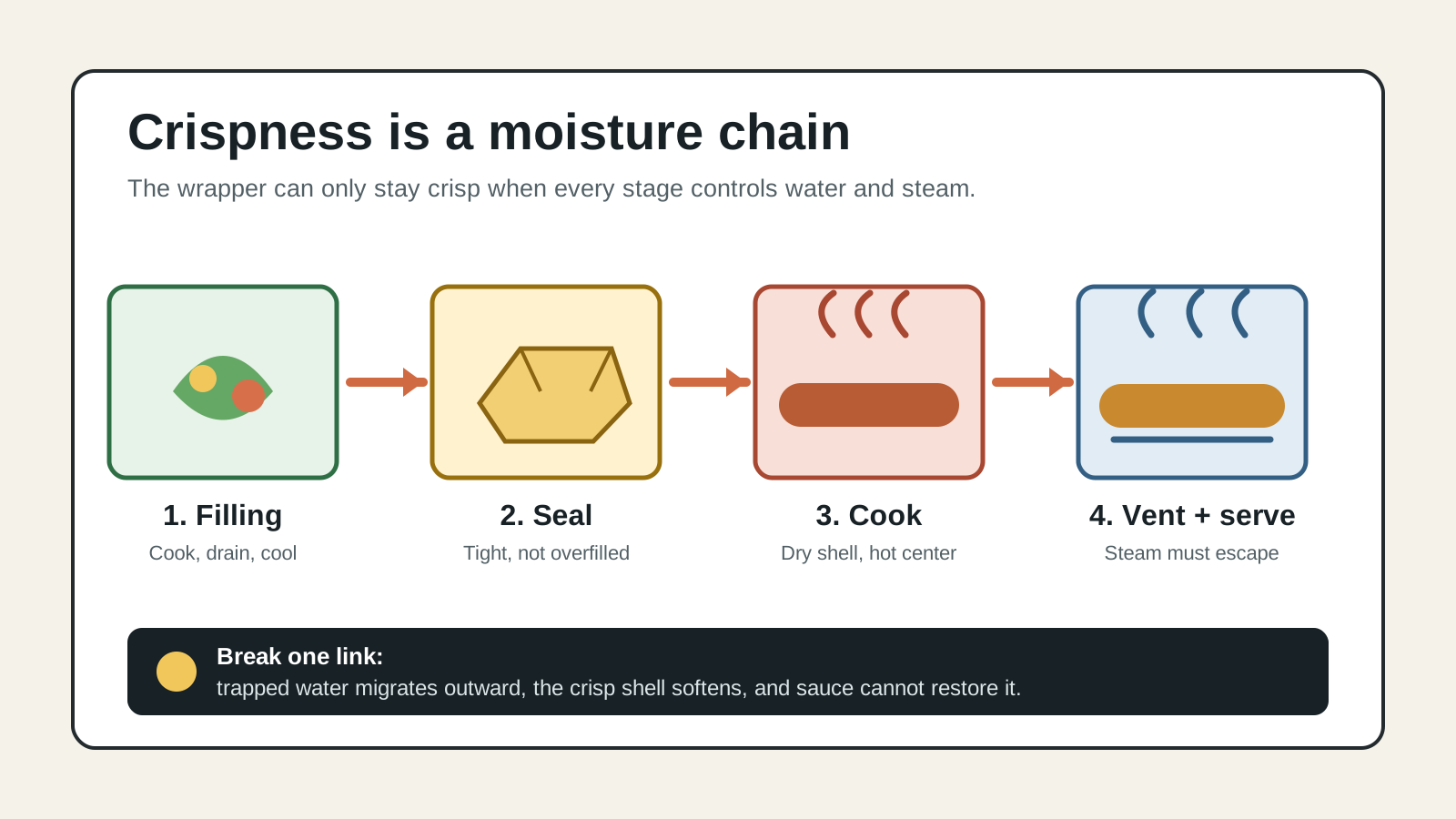
This explains a common disappointment. The first bite cracks; the second side, which rested against the plate, bends. Moisture did not enter from nowhere. Steam migrated from filling to wrapper and became trapped at the contact point.
Wrapper thickness changes the kind of crispness
Not every crisp shell should behave like the same material.
A thin spring-roll wrapper can fry into delicate flakes and sharp cracks. It shows browning quickly and may reveal the filling's outline. That elegance comes with risk: wet filling and rough folds can break it.
A thicker wheat wrapper gives more chew and structural insurance. It may blister or form a substantial crust. That can suit a large or dense filling, but it produces a different eating experience. Calling one thin wrapper "authentic" and every thicker wrapper "wrong" ignores regional and diaspora histories.
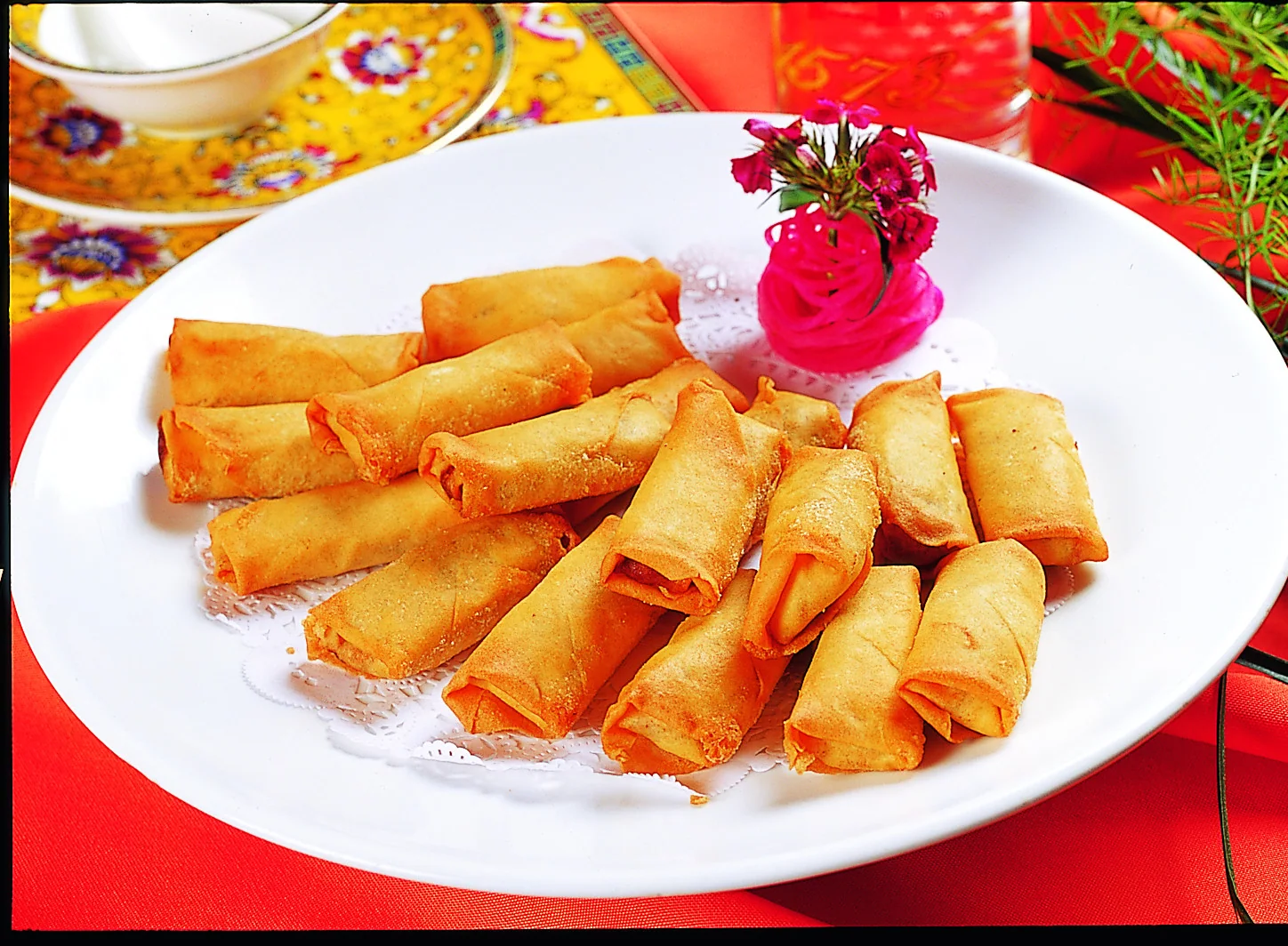
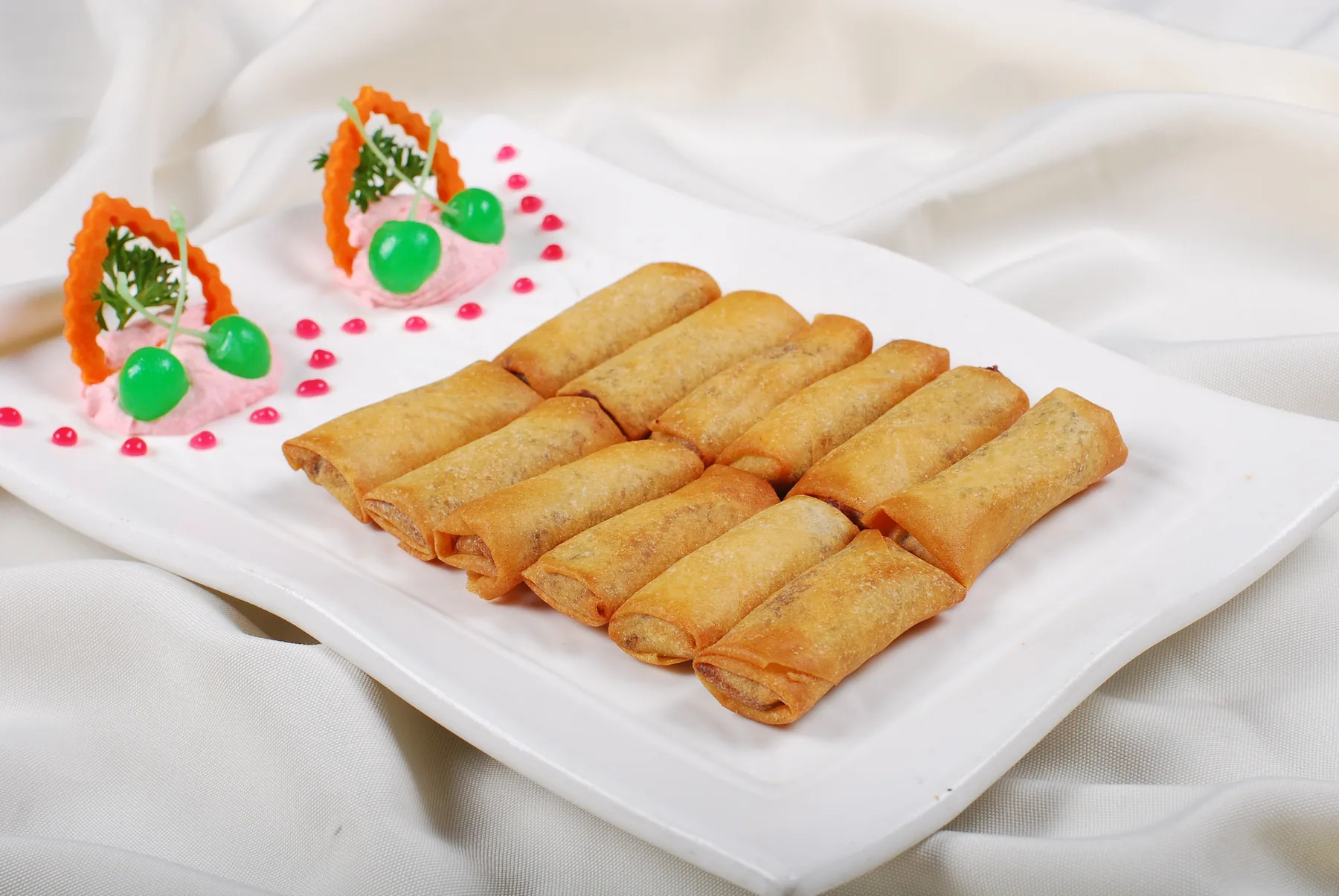
These real rolls show what a whole-roll photograph can establish: relative thinness, folded seams, batch variation and surface browning. It cannot reveal filling distribution or retained crispness. Notice how the seams brown differently from the centers; folding changes the shell before filling enters the argument.
Rice paper creates another confusion. Some fried rolls use rice-based sheets, while the fresh translucent rice-paper rolls many English speakers know are strongly associated with Vietnamese cooking. Those fresh rolls are not simply uncooked Chinese spring rolls. The wrapper, hydration, filling and eating logic differ.
Judge the wrapper by its job:
| Wrapper result | What it suggests | What still needs a bite |
|---|---|---|
| Thin, even blisters | Moisture escaped and the surface fried quickly | Whether the shell is brittle or pleasantly crisp |
| Dark seams, pale center | Folded areas browned faster than the body | Whether the seam is too thick or merely more layered |
| Smooth, heavy crust | Thicker wrapper or lower visible blistering | Whether the chew suits the filling |
| Split side | Overfilling, a puncture, weak seal or steam pressure | The photograph cannot identify the single cause |
| Glossy, soft patch | Oil or trapped moisture on the surface | Whether it was undercooked or softened during holding |
A color chart cannot replace touch. Golden is not a texture.
The cross-section tells the truth the whole roll hides
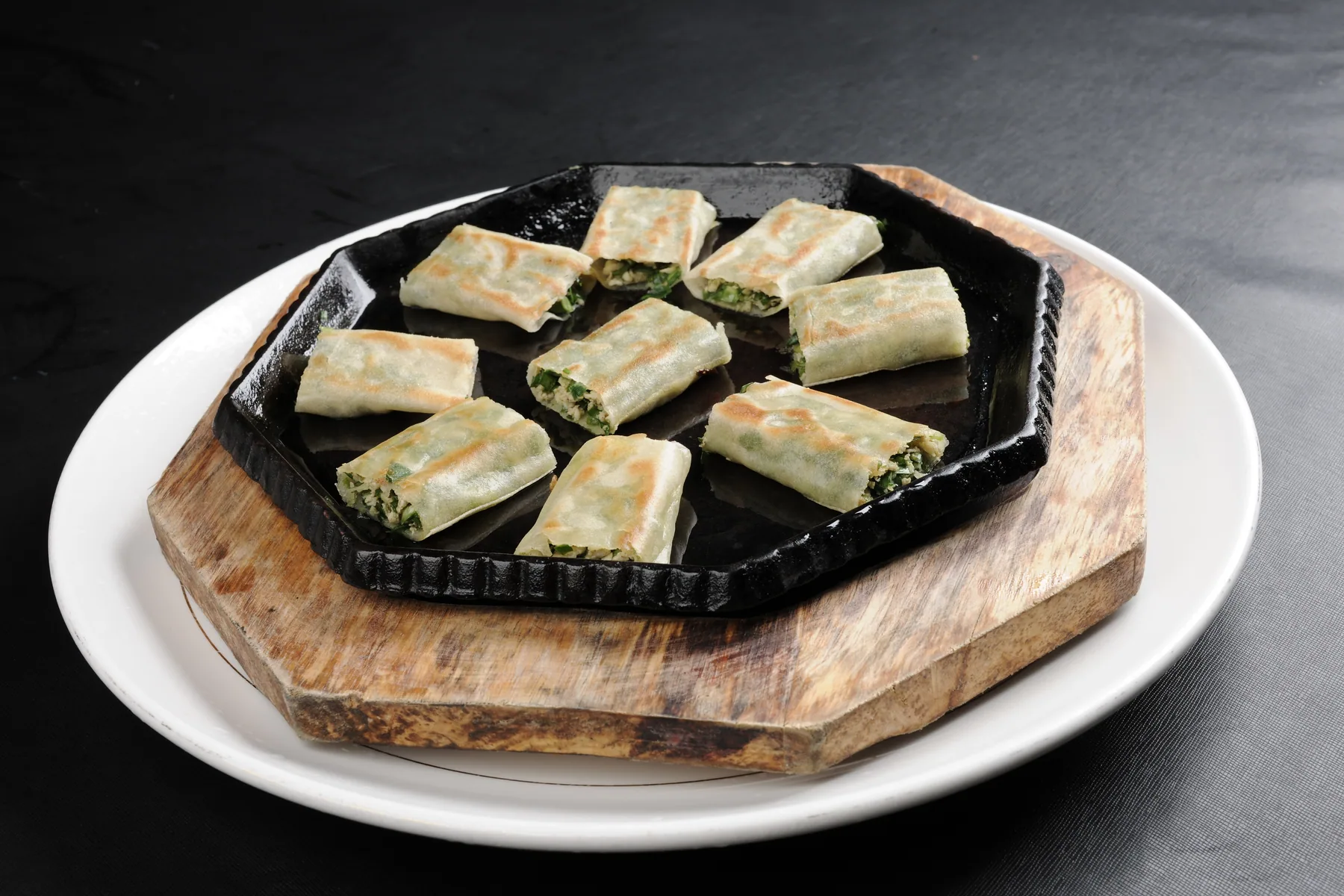
This real cross-section shows a thin wrapper, light pan browning and a visibly moist chopped filling. It cannot tell us the exact ingredients, cooking sequence, oil or how long the surface stayed crisp.
The whole roll is packaging. Cut it and the design becomes visible.
Look at the gap between filling and wrapper. A huge hollow may mean the filling shrank or was rolled loosely. No gap at all can mean a compact filling that steams the wrapper continuously. The ideal space depends on ingredients, but the roll should not feel like a fried envelope around one damp spoonful.
Then examine distribution. Does every bite receive filling, or has it collected at one end? Are long vegetable pieces aligned with the roll, or do they punch across the skin? Is liquid soaking the inner layer?
I care about the cross-section because it turns "crispy" from advertising into evidence. A restaurant photograph usually shows the browned exterior. The cut face shows whether structure continues inward.
Spring rolls, egg rolls and fresh rolls are not synonyms
English menu language is inconsistent, especially across countries. Use these distinctions as practical expectations, not laws enforced by every restaurant.
Spring roll
Often smaller or slimmer, with a relatively thin wrapper and a filling that may emphasize vegetables, meat or seafood. Many Chinese restaurant versions are fried, but the family is broader than one recipe.
Chinese American egg roll
Often larger, with a thicker, more substantial wheat-based wrapper that may blister during frying. Fillings commonly include cabbage and meat. The Chinese American food guide owns the deeper diaspora story: adaptation is not evidence of inferiority, and the American form should not be judged as a failed copy of a Cantonese roll.
Fresh rice-paper roll
Usually soft, translucent and unfried, with hydrated rice paper around herbs, noodles, vegetables and protein. The globally familiar version is associated especially with Vietnamese cuisine. Its success depends on supple wrapping and fresh contrast, not fried crispness.
Menus can use these names differently. When the distinction matters, ask about wrapper and cooking method instead of arguing with the label.
Spring Festival meaning should not become a national food commandment
The word "spring" invites an easy story: Chinese people eat spring rolls for Lunar New Year because the rolls look like gold bars, therefore the food is a universal prosperity symbol. That sentence is tidy enough for a greeting card and too tidy for China.
Spring rolls and spring pancakes have seasonal associations in parts of China, and fried golden foods can attract auspicious interpretations. But festival practice varies by region, household, generation and migration history. UNESCO's inscription for the Spring Festival recognizes a broad field of social practices, not a compulsory menu.
A family can celebrate the Chinese New Year without serving spring rolls. Another family can fry them on an ordinary weekend. Seasonal meaning becomes stronger when it is named locally and honestly, not inflated into "all Chinese people always do this."
I still understand the emotional appeal. A tray of newly fried rolls feels abundant because it is made in batches and disappears in conversation. The sound of the first bite announces freshness more convincingly than a printed symbol ever could.
Deep-fried and pan-fried rolls solve different problems
Deep frying surrounds the wrapper with hot oil, encouraging fast, even surface dehydration when the batch size and heat are controlled. Pan frying uses contact heat, so flat sides brown while upper surfaces may remain lighter. It can produce a crisp-tender contrast rather than a uniformly brittle shell.
Neither method is inherently more Chinese. The method should match wrapper, filling and desired texture.
The archive cross-section above is especially useful because it refuses the stereotype that every spring roll must be a narrow deep-fried cigar. Those pieces are broader, lightly browned and visibly filled with greens. They belong in the same conversation without being used to define every spring roll.
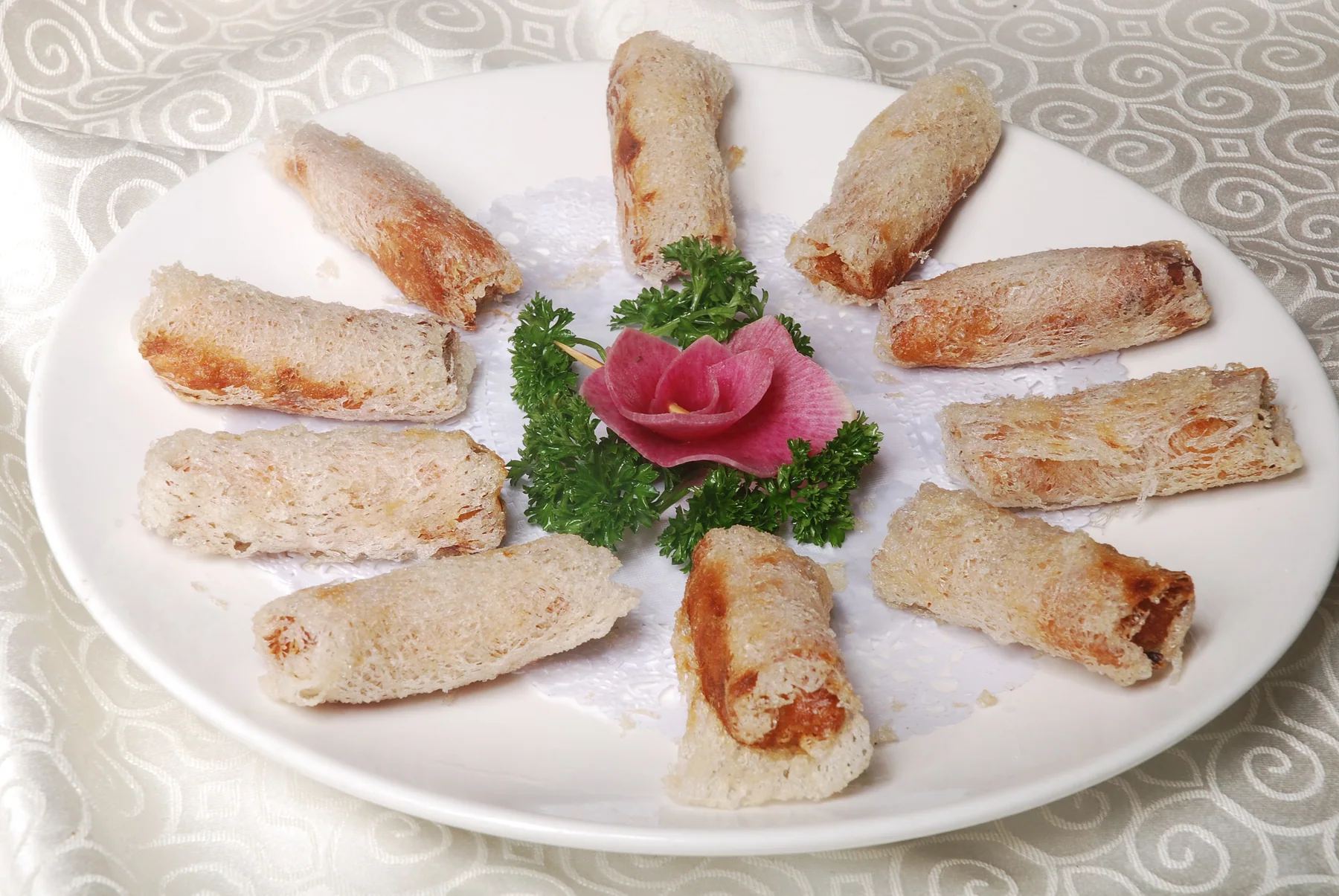
A net-like wrapper creates a visibly different surface from the smooth folded sheets above. This photograph proves the open mesh, short format and patchy contact browning. The archive filename suggests a shrimp roll, but the uncut photograph cannot verify the filling, so East Moment does not ask it to.
At home, follow a tested recipe and the product's instructions. Hot oil, wet filling and sealed food create real burn and splatter risks. This guide explains the system; it does not prescribe a universal oil temperature or cooking time for unknown wrappers and fillings.
How to keep spring rolls crisp long enough to eat
The best strategy is service, not rescue.
- Do not close hot rolls inside a tight container where steam condenses.
- Keep them in a single layer when possible; a pile traps heat and moisture.
- Use a rack or absorbent surface appropriate to the cooking method so one side does not sit in oil.
- Serve in small batches rather than asking one batch to wait through an entire meal.
- Keep wet dipping sauce outside the roll until the bite.
- Reheat according to a reliable recipe or package direction; repeated heating can dry the filling while leaving the shell oily.
Sauce should provide acid, heat or savoriness, not soak the wrapper into surrender. Dip one end immediately before eating. A sweet-and-sour sauce, vinegar-based dip, mustard or chili sauce may fit different restaurant styles, but there is no single mandatory partner.
The Hong Kong Centre for Food Safety's work on dim-sum nutrients and sodium also supports a practical caution: small pieces are easy to multiply, and fillings, sauces and portion sizes vary. "Vegetable spring roll" does not automatically mean light, low-sodium or suitable for a particular diet. Ask about ingredients and allergens rather than reading health claims from shape.
Order spring rolls for contrast, not obligation
At yum cha, I would not open with a table full of fried items. Start with a steamed structure such as har gow or siu mai, then bring in spring rolls while the palate can still hear the crackle. That contrast teaches more than ordering three versions of the same wrapper.
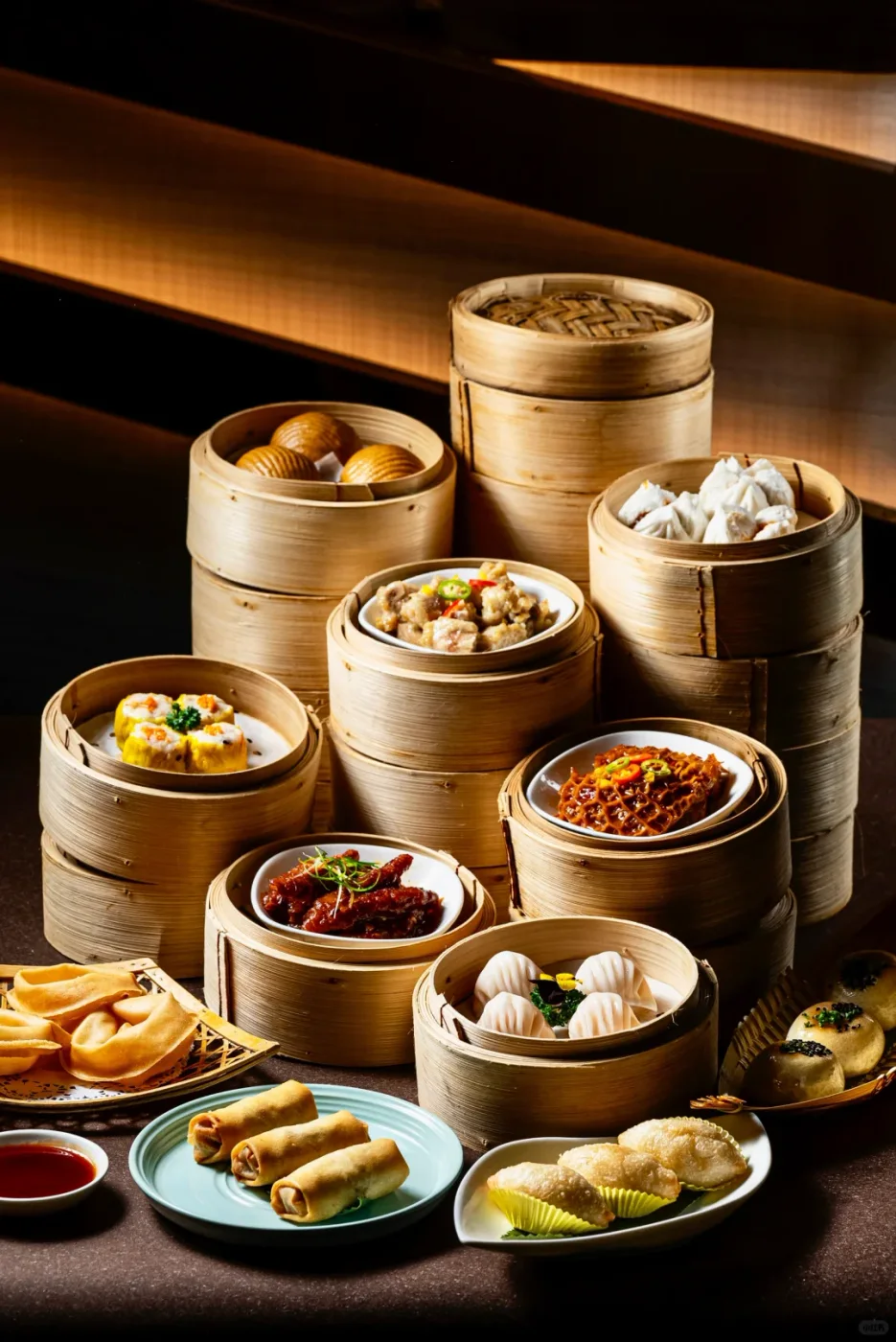
This authorized image-and-text photograph places several whole spring rolls inside a wider dim-sum meal. It proves their visible size, browned wrapper and shared-table context. It does not reveal the cut face, filling, crispness or elapsed time, so it is a baseline for the Cross-Section Atlas rather than a completed record.
Within the wider Cantonese food system, freshness and timing often matter as much as seasoning. Spring rolls make the principle audible. The kitchen may have done everything correctly, but the dining room can still erase the result by letting the plate wait.
If a roll arrives soft, diagnose before condemning:
- Is the whole shell soft, suggesting holding or trapped steam?
- Is only the base soft, suggesting plate contact?
- Is the seam heavy but the center crisp, suggesting fold thickness?
- Does liquid run from the filling, suggesting moisture control?
- Does the wrapper taste stale or oily even where crisp, suggesting an ingredient or frying problem?
Specific disappointment is useful. "Soggy" alone is not.
A good spring roll makes time visible
Har gow reveals whether a wrapper survives lifting. Siu mai reveals whether an open filling and its collar finish together. The spring roll reveals time. It records the interval between filling and wrapping, between frying and draining, between kitchen and table, between first roll and last.
That is why the perfect exterior can be dishonest. A photograph freezes the roll before steam wins. Eating restores the clock.
My ideal spring roll is not the most uniformly gold or the loudest crunch. It is the one whose shell breaks cleanly, whose filling remains distinct rather than wet paste, and whose last bite still carries some of the first bite's contrast. The cook managed water without drying away life.
The reader-built Spring Roll Cross-Section Atlas in East Moment Moments can turn that private bite into comparable evidence. Match one whole roll with one cut face, then record wrapper, cooking method and how many minutes passed before the photograph. One field note can rescue a future diner from judging by color alone. Over time, the collection can build a truer map of Chinese spring rolls than another list of "authentic" fillings.