Shaolin kung fu is a living training and cultural tradition attached to a real place. It is also a global movie image: shaved heads, bare feet, impossible endurance and a mountain monastery that seems to contain the origin of every Chinese punch. The first statement is history. The second is myth. Both shaped what the world thinks it sees.
Shaolin kung fu is rooted in Songshan, not in a universal origin story
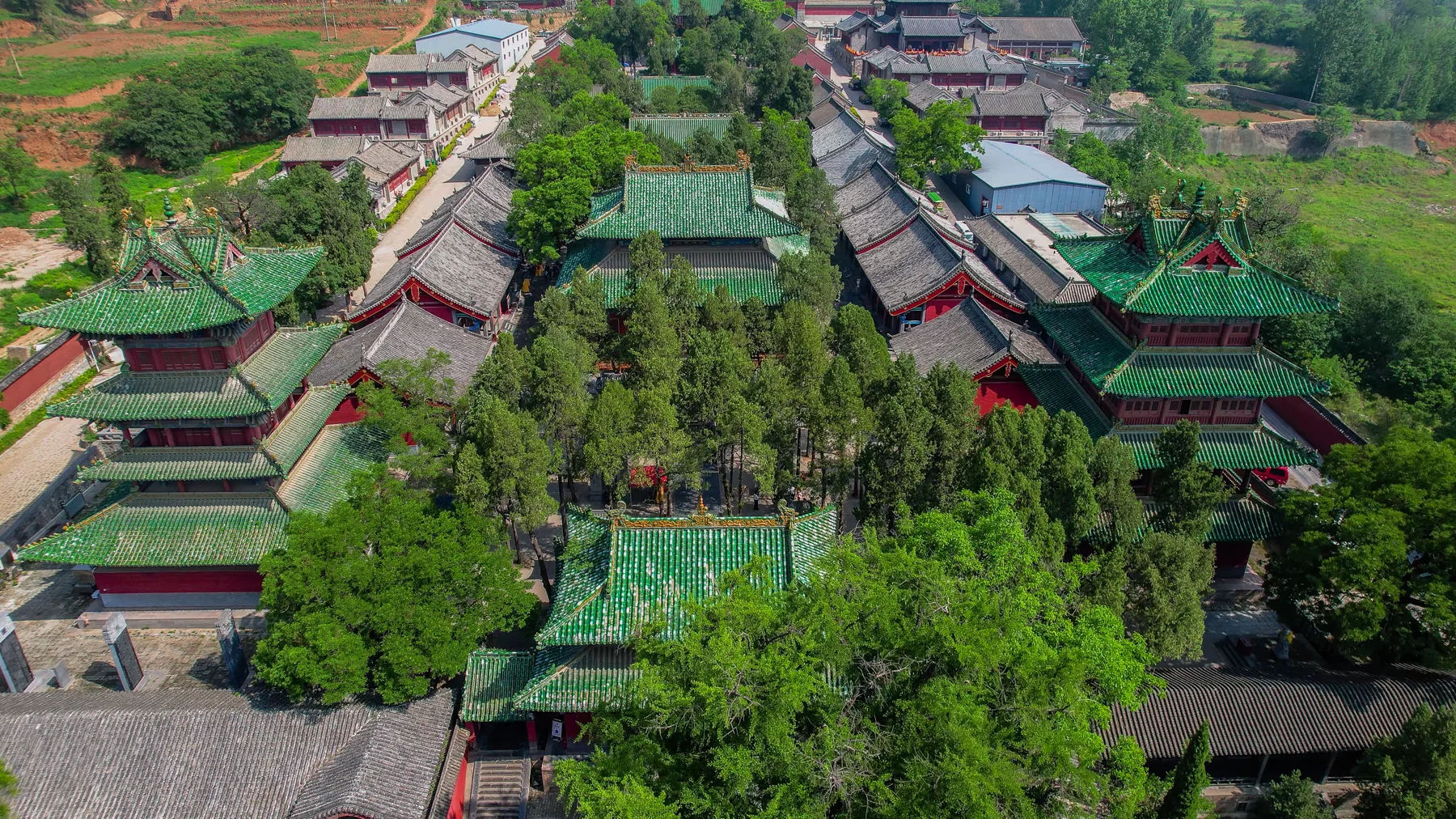
Shaolin Temple sits in the Songshan landscape of Henan. The place matters because practice, pilgrimage, religious memory, tourism and public performance meet there. A temple is not simply a backdrop for a fight scene.
The UNESCO World Heritage Centre record helps anchor the site in documented heritage rather than internet legend. The Songshan Shaolin Temple's official site represents the institution's own living voice. Neither source proves every popular claim about Damo, secret manuals or a single unbroken martial lineage.
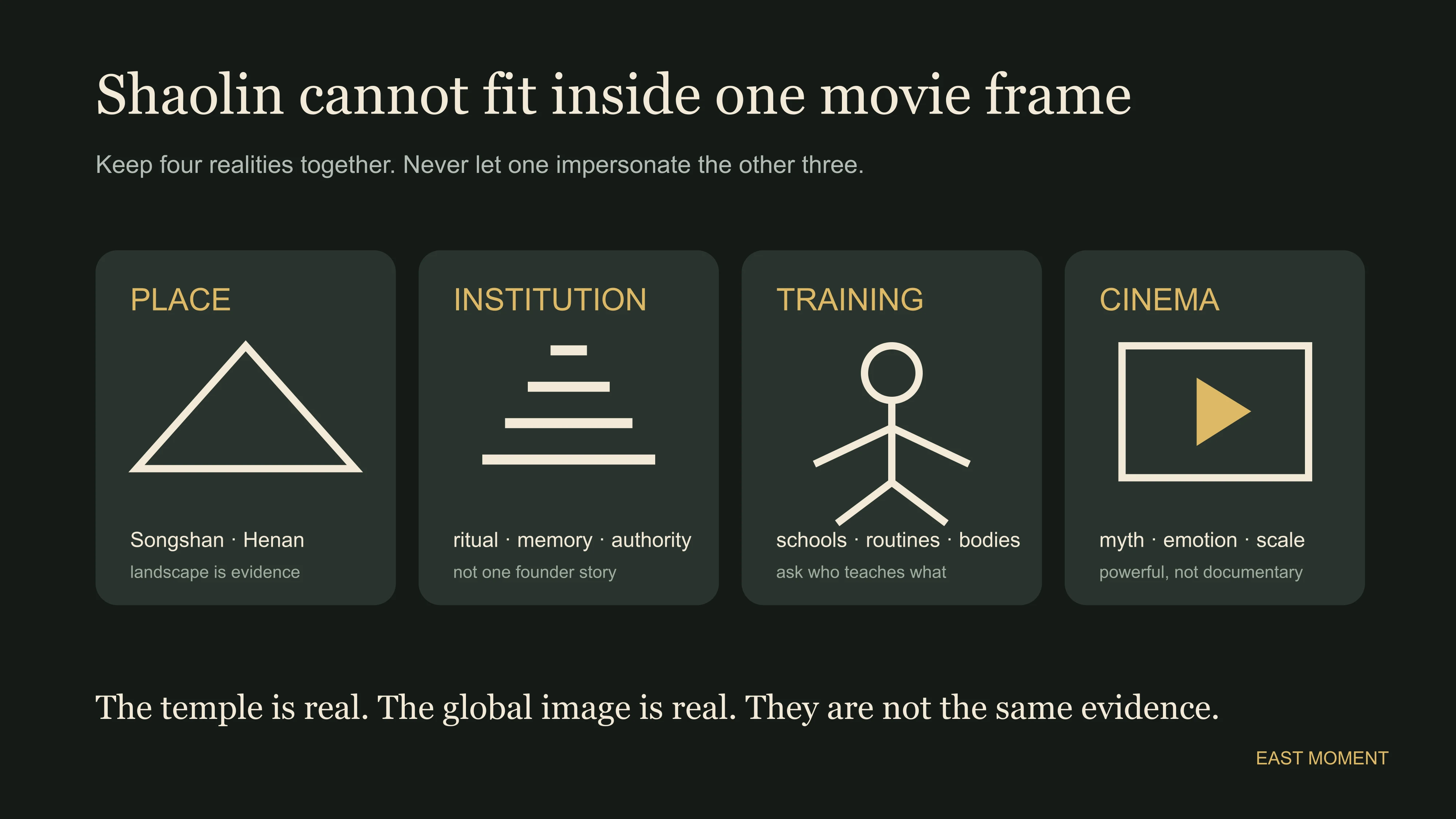
Shaolin makes sense only when place, institution, training and cinema remain visible together. Let one frame impersonate the other three and the story collapses.
The wider Chinese martial arts collection explains the national and global field. This page stays at Songshan because Shaolin loses meaning when it becomes a floating logo. Henan's mountain geography, temple compounds, memorial structures, nearby schools and visitor economy are not background decoration. They are the conditions through which a religious institution became a martial symbol and then had to live inside that fame.
What does Shaolin kung fu actually include?
“Shaolin kung fu” can refer to temple-associated traditions, modern teaching schools, public demonstrations, forms, conditioning, weapons training and performance curricula. It is not one short routine that every monk performs identically.
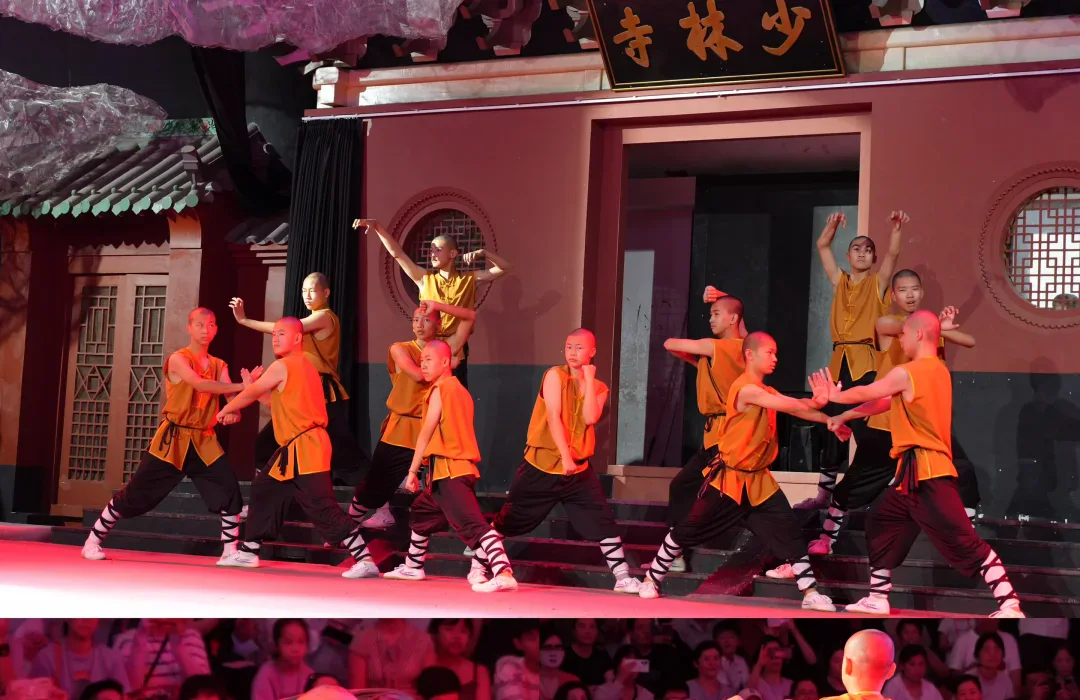
This first-hand performance sequence is valuable precisely because it is not a secret courtyard. The stage, coordinated costumes and audience-facing composition tell us what kind of encounter we are seeing. It proves that Shaolin imagery is taught, rehearsed and performed for a public audience; it does not prove monastic identity, an ancient lineage or the normal rhythm of daily training. I would rather name a strong performance honestly than flatter it with a false claim of hidden authenticity.
The practical distinction is important for visitors and viewers. A spectacular demonstration may show flexibility, conditioning and stage timing. It does not automatically show how a historical monastic community trained, nor does it make a performer a spiritual representative of every Shaolin tradition.
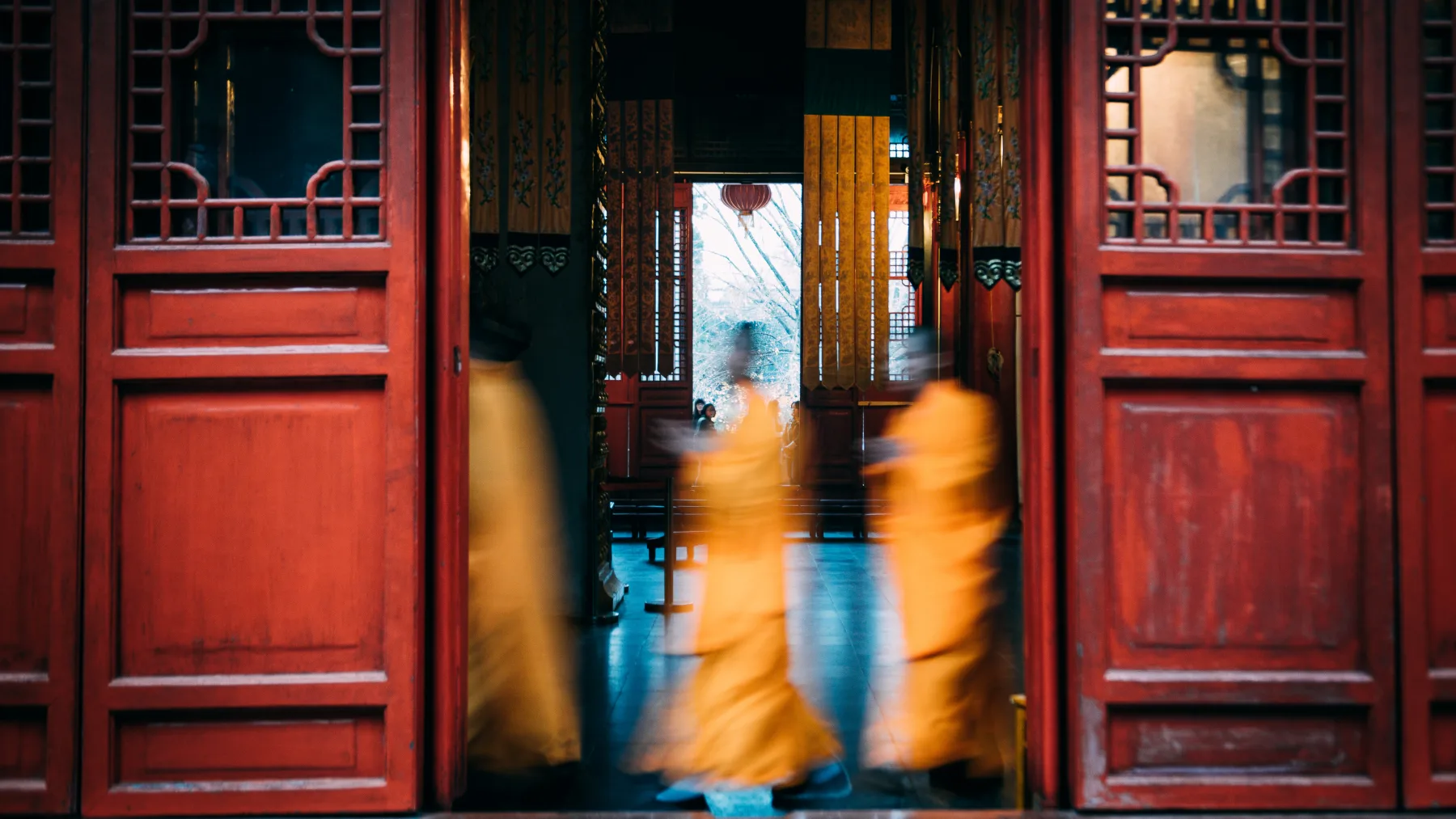
“Monk” is not a costume I assign from a shaved head and robe. A temple monastic, a student at a surrounding martial school, a professional demonstration performer and an actor can produce similar images while holding different institutional relationships. The respectful question is not “Is this real Shaolin?” shouted from a thumbnail. It is: who is this person, where are they training or performing, and what does the named institution actually claim?
I distrust the fantasy that one punishing feat proves the whole tradition. Finger stands, hard conditioning and spectacular flexibility attract cameras because they compress discipline into a visible shock. Daily repetition, teaching, ritual time and ordinary correction are less dramatic and more important. The body that returns tomorrow tells me more than the stunt designed to end a promotional clip.
Buddhism and fighting are not a simple contradiction
The popular question—how can Buddhist monks practise martial arts?—assumes Buddhism requires passivity in one universal way. Temple history is more complicated. Monastic communities have had to protect people, manage property, teach bodies and negotiate political power. The ethical question is not erased by training; it becomes more visible.
That is why the most interesting Shaolin stories do not treat violence as instant enlightenment. Discipline can support restraint, health, labour and performance, but skill can also serve ego or commercial spectacle. A shaved head cannot answer the moral question for a person.
That tension is the page's real center. Martial capacity does not automatically become Buddhist virtue. Discipline can reduce vanity; it can also feed it. Public performance can sustain an institution and transmit culture; it can also encourage outsiders to treat religious life as an action franchise. I reject the easy solution that declares Buddhism and martial practice either perfectly harmonious or obviously hypocritical. The serious question is how a living community negotiates force, livelihood, restraint and representation.
The phrase “Zen and martial arts” needs the same patience. Chan Buddhist language can shape how people narrate attention and discipline, but a calm face does not prove enlightenment, and a difficult posture is not a shortcut to wisdom. Religious meaning belongs to practice, teaching and institution—not to the aesthetic mood of a photograph.
Damo, legends and the need for honest boundaries
Bodhidharma, called Damo in Chinese tradition, is often credited in popular stories with creating Shaolin kung fu. The tale is powerful because it connects meditation, body training and the monastery into one memorable origin. It is not a licence to present every later legend as established history.
I prefer the honest sentence: Shaolin traditions accumulated stories that connect Buddhist practice and martial training, while the exact origins of particular forms and lineages require specific evidence. That sentence is less cinematic and more respectful to a living place.
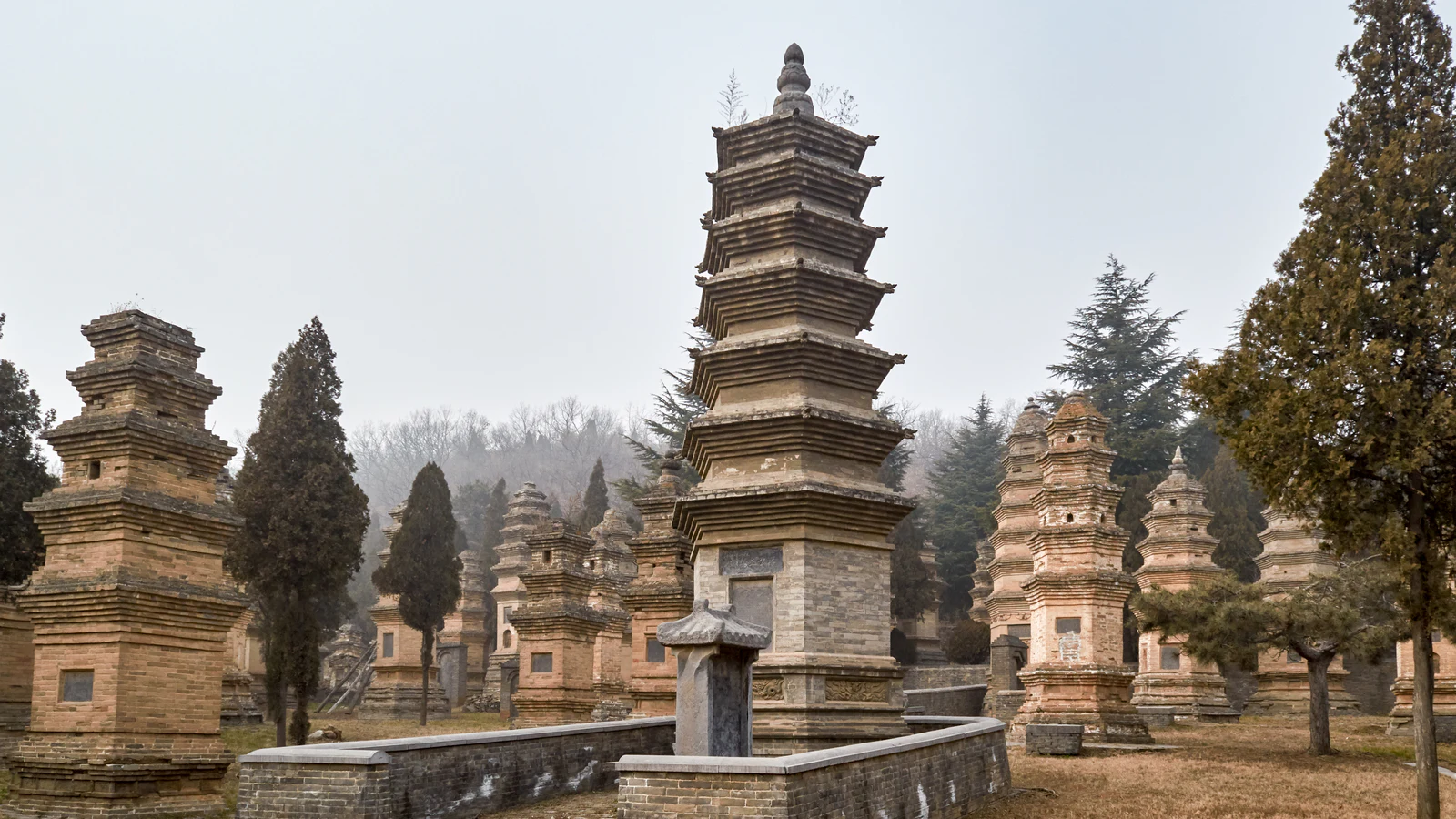
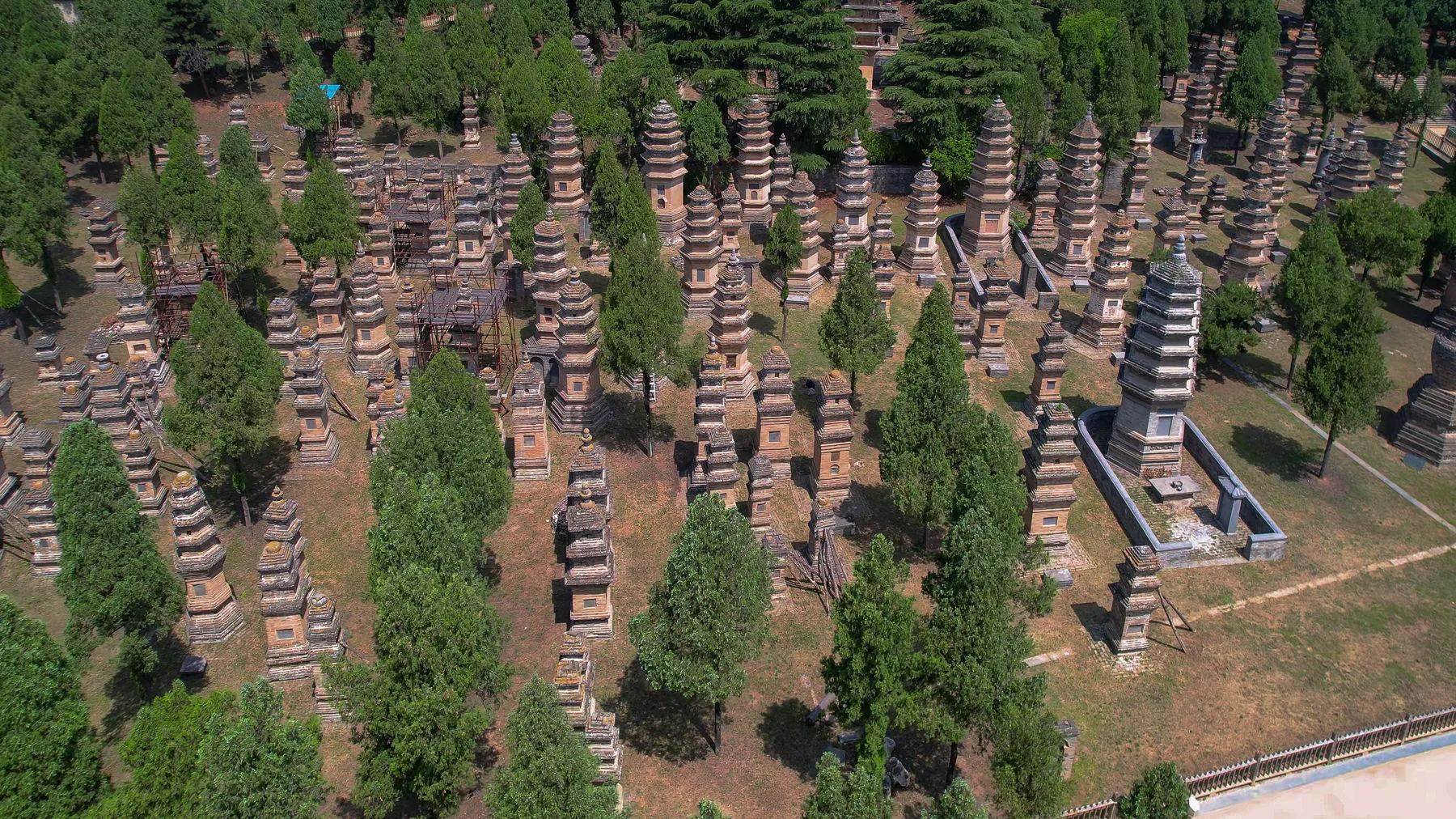
The Pagoda Forest is a useful correction to the lone-founder myth. It makes institutional time visible: generations, memorial practice and a community larger than one heroic biography. The stones do not authenticate every martial claim, but they prevent the monastery from collapsing into one origin legend.
The physical site argues against the internet's preferred chronology. Online, everything wants to begin with one founder and one revelation. The pagodas instead accumulate difference: individual memorials, changing periods, rebuilding and institutional continuity that no single biography can contain. I find that slower evidence more moving than the perfect legend. It lets Shaolin be old without pretending every current routine arrived unchanged from the beginning.
Training schools around Shaolin are part of the modern reality
Visitors encounter more than the historic temple. The wider area includes martial-arts schools, performance training, tourism businesses and students whose daily routines may combine forms, conditioning, academics and stage preparation. This ecosystem is real even when it does not match a movie fantasy of secret monastic instruction.
The distinction matters ethically. A child training in a commercial school, a monk participating in temple life and a professional demonstration performer should not be merged into one exotic image. Clothing and location do not erase different institutions, purposes and degrees of religious commitment.
For an overseas visitor, the respectful question is not “Where are the real monks?” Ask what institution you are seeing, what the demonstration is designed to show and how the performers describe their own training.
This modern ecosystem is not a fake layer pasted onto a pure past. It is part of how Shaolin fame now operates. Families send children for discipline or athletic training; schools build public reputations; performers tour; visitors arrive because cinema taught them what to hope for. Money, aspiration and heritage meet in the same valley. Pretending commerce is absent is naïve. Pretending commerce erases every serious practice is equally lazy.
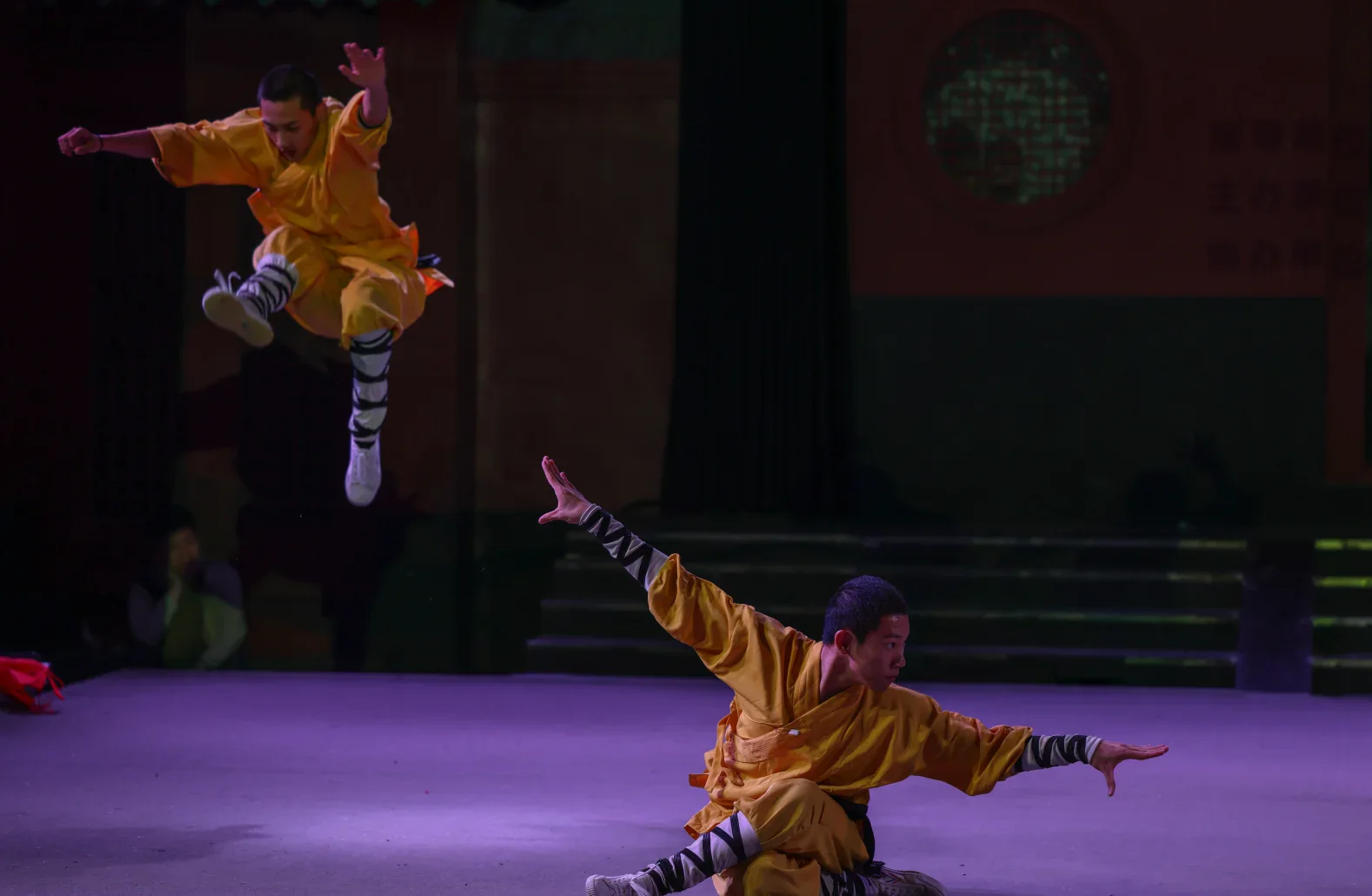
The photograph makes another point that a heroic portrait hides: difficult movement depends on spacing, timing and trust between bodies. One performer is airborne while another holds a low line; both are working inside a rehearsed visual contract. Calling this merely “a stunt” misses the training. Calling it proof of combat effectiveness misses the stage. The honest reading can admire the leap and still name the conditions that made the image possible.
That distinction also protects students from a cruel expectation. They do not owe a visitor pain, danger or superhuman endurance to make their practice seem real. Repetition, recovery, coaching and safe progression are less viral than a breaking demonstration, but they are the infrastructure beneath any durable skill.
The useful distinction is institutional honesty. A school should say what it teaches, who teaches it, how students progress and whether its curriculum is sport, performance, traditional practice or a mixture. “Near Shaolin” is geography, not automatic authorization. “Shaolin” in a business name is not proof of monastic status.
Why film made Shaolin global
Hong Kong cinema, television and later global action movies turned Shaolin into a portable symbol of discipline. Kung Fu Hustle uses the memory of old masters and hidden power to make comedy feel affectionate rather than empty. Shaolin Soccer carries the same love into ridiculous athletic fantasy.
Those films are not documentary evidence. They are cultural evidence: they show how audiences remember a monastery as a promise that training can rebuild dignity.
The 1982 film Shaolin Temple matters because popular cinema can change the fate of a place without becoming a documentary about it. Its landscape, Jet Li's physical presence and the promise of disciplined transformation made the temple imaginable to a generation. Later films translated Shaolin into revenge, comedy, football, fantasy and national memory. That influence is real cultural history even where the plots are invented.
Stephen Chow's joke works because the emotional promise remains sincere. The bodies are ridiculous, the football physics are impossible and the old skills return in exaggerated form—but the fantasy still asks whether neglected discipline can find a place in modern life. That is a cultural afterlife, not a lineage chart.
I love that cinema sent curiosity back toward Songshan. I reject the moment curiosity becomes entitlement—the assumption that every monk must perform, every courtyard is a set and every resident owes the visitor proof of secret skill. A movie ticket purchased elsewhere does not grant access to another person's religious or working life.
How to visit or read the image responsibly
- Treat the temple, pagoda forest and surrounding mountain as a real heritage landscape, not a theme-park prop.
- Ask whether a demonstration is religious practice, school curriculum, sport wushu or stage performance.
- Do not photograph or repeat private training claims as universal Shaolin history.
- Use the official temple and UNESCO records for place and heritage facts.
- Let film provide emotion and memory, not proof of an ancient technique.
When visiting, lower the camera before raising expectations. The Zhengzhou guide explains the regional route, but the ethical rule is simpler: this is a religious and heritage site before it is your personal casting call. Follow current access rules, distinguish the historic complex from surrounding schools, and do not turn prayer, work or children in training into free spectacle.
For reading an image, label four things: the documented place, the named institution, the visible action and the remaining boundary. Is this ritual, training, performance, tourism or only a pose? What history, lineage or spiritual status remains unproved? That discipline does not drain wonder. It gives wonder a real address.
My verdict
Shaolin kung fu remains compelling because it is both more ordinary and more complicated than the myth. It is people training, teaching, travelling, performing and negotiating a place whose name has become larger than its walls.
The temple does not need the false honor of being declared the birthplace of every Chinese martial art. Its actual achievement is larger: a real institution at Songshan survived, accumulated memory, became entangled with martial practice and learned to live under the enormous image cinema projected onto it.
That is also why I will not ask Shaolin to choose between “ancient truth” and “tourist spectacle.” A living place can contain worship, institutional memory, serious training, commercial schools, staged performance and souvenir fantasy on the same day. The responsible visitor does not erase the contradiction. We learn to identify which layer we are seeing, then resist using one photograph to pronounce judgment on all the others.
Shaolin deserves curiosity precise enough to protect the difference between devotion, training, livelihood and entertainment. Wonder becomes deeper when it stops demanding one convenient answer.
The image is still beautiful: a monk crossing a courtyard, a staff turning through cold air, the pagodas holding generations of memory. But the image becomes valuable only when we ask what it can prove. Bring one Shaolin scene or photograph to East Moment's community with that distinction intact.