Chinese kung fu is not one fighting system, one Shaolin legend or one movie look. It is a search term with several doors behind it: training, history, style, cinema, performance and travel. The useful first step is not to pretend those doors lead to the same room.
Chinese kung fu is a question with more than one honest answer
When I hear someone say “I want to understand kung fu,” I no longer rush to give them a name, a founder or a famous kick. I ask what has caught them: a person moving in a park, a monk in a temple courtyard, an Ip Man scene, a school nearby, or the feeling that a body can become more deliberate through repetition.
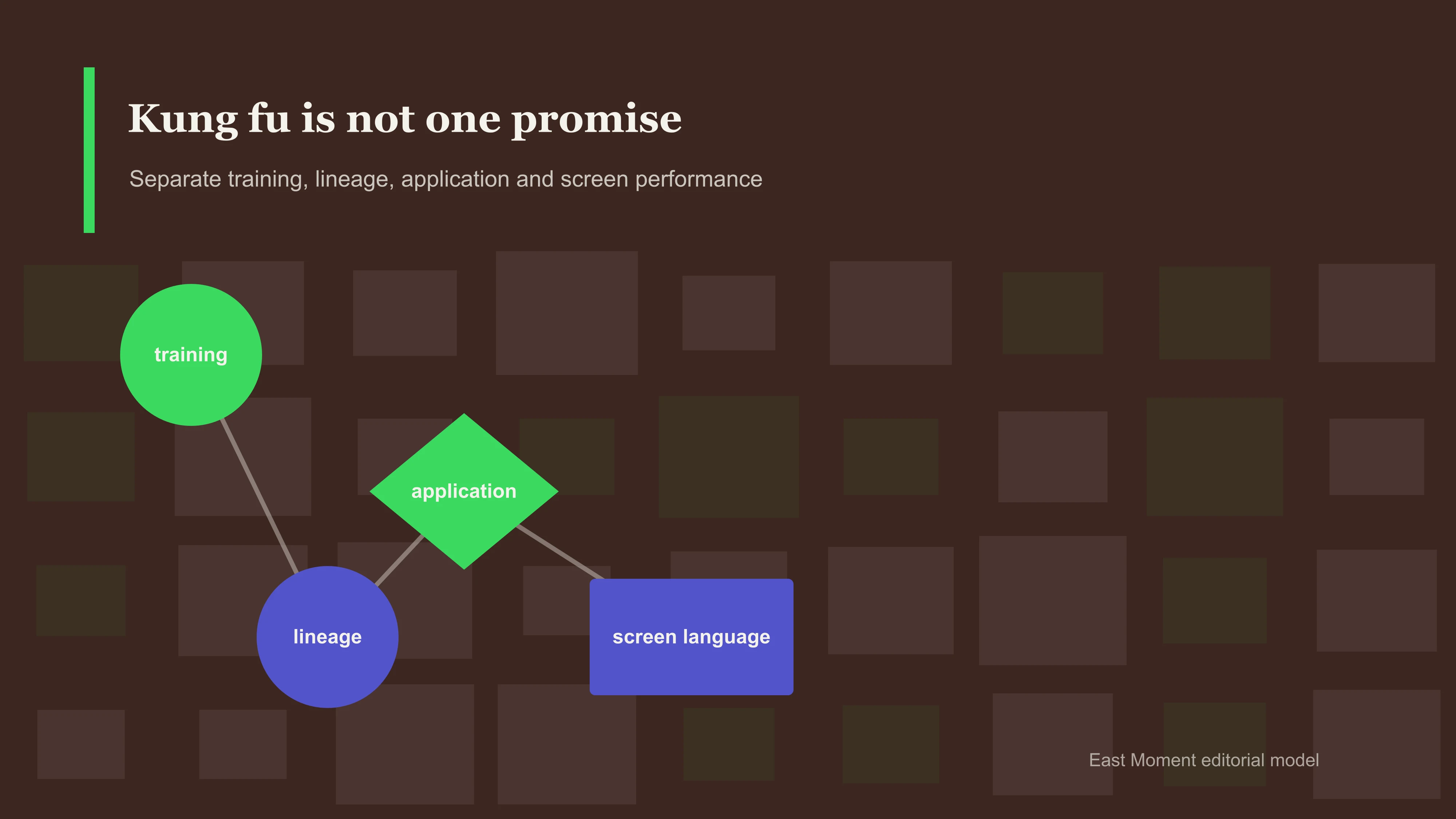
Those beginnings are all real. The confusion starts when a film fan expects a temple to answer a combat question, or when a visitor treats a competition routine as a family lineage, or when a beginner asks whether all Chinese martial arts are “effective” without naming the situation they mean. Kung fu gets reduced whenever one doorway is asked to carry the whole house.
The wider Chinese martial arts collection is the map of that house: history, styles, weapons, philosophy, cinema and living practice each keep their own job. This page begins one level closer to the reader—with the door that first made you care.
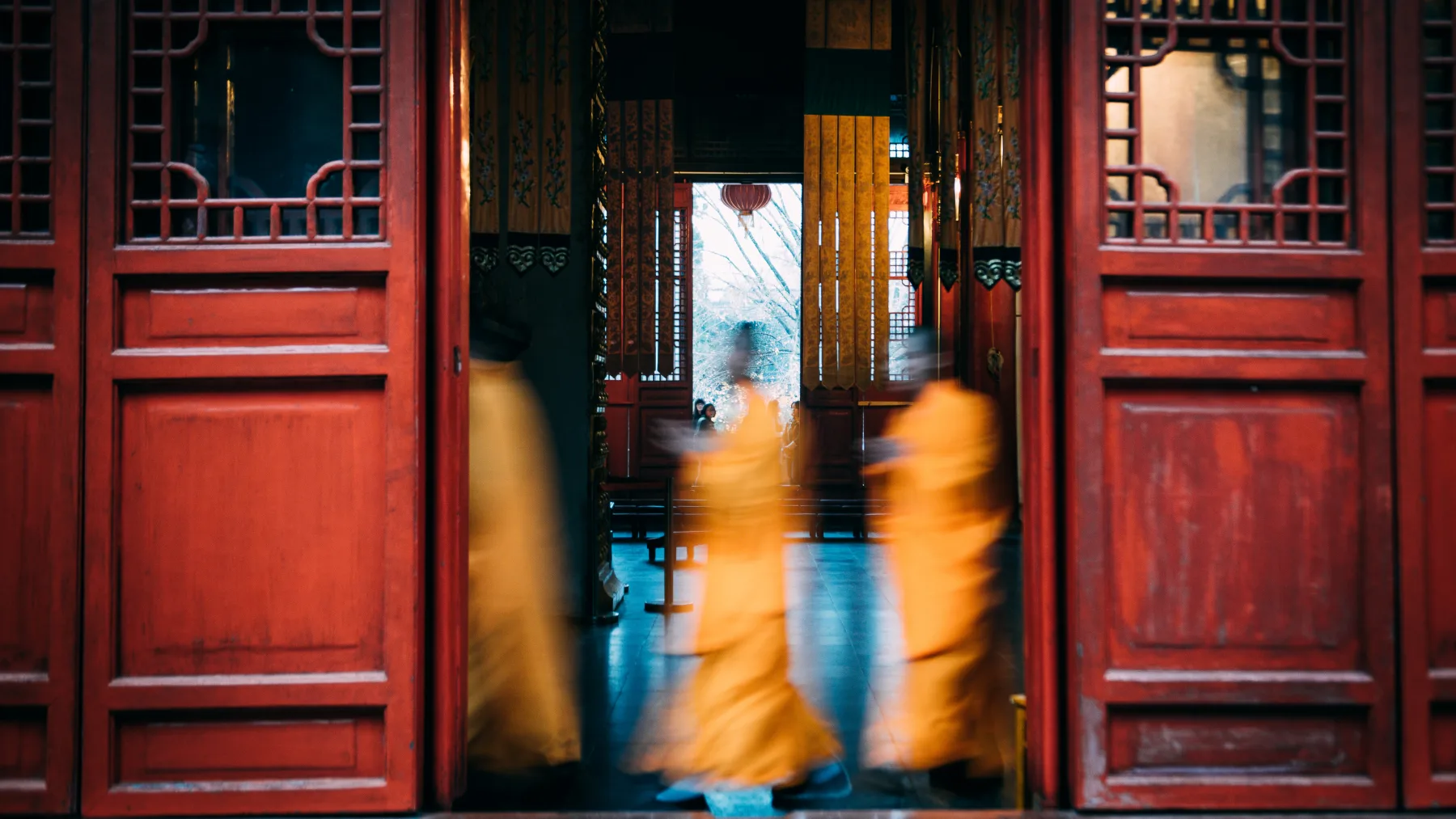
This image gives me the feeling that matters most: not a frozen master pose, but practice as a rhythm shared with a place. It is evidence of a temple atmosphere and moving bodies, not proof that every story attached to Shaolin is literally true. That distinction does not make the image less moving. It lets it stay real.
The four things people often collapse into “kung fu”
| If you are looking for… | The useful question | Start here |
|---|---|---|
| A history | How did a Chinese word for earned skill become a global martial-arts term? | Kung fu history |
| A practice or style | What does a school actually prioritise in distance, balance, timing or form? | Kung fu styles |
| Shaolin | What belongs to a living monastery, its heritage landscape and its modern training ecosystem? | Shaolin kung fu |
| Screen imagination | Why do a sword, an inn or a leap carry emotional meaning beyond realistic combat? | What wuxia means |
The Chinese term gongfu (功夫) is broader than fighting: it suggests skill made through time and attention. English-language “kung fu” became closely tied to Chinese martial arts through Cantonese-speaking communities, teachers and cinema. That is an important cultural journey, but it is not a shortcut around details.
Modern competitive wushu has its own rules, judging and institutional world; the International Wushu Federation is the right place to understand that world. A temple tradition, a neighbourhood school and a movie set have different reasons for moving beautifully. I find the difference much more interesting than forcing them into a contest for the single word “real.”
What Chinese martial arts are not promising you
Kung fu is not automatically a self-defence guarantee, an ancient secret or a universal origin story. It is also not fair to look at one elegant solo form and demand that it settle every question about pressure, contact or competition. Form, partner work, conditioning, performance, sport and lineage preservation can ask the body for different things.
The sentence “does kung fu work?” sounds direct, but it usually hides several separate questions: work for a ruleset? for a performance? for a particular school’s long-term practice? for watching oneself move with greater care? The online argument gets ugly when people use one answer to erase every other purpose.
My own test is gentler and stricter: a school or teacher should be able to name its purpose without belittling every other tradition. I value that clarity more than a lineage claim designed to end the conversation. A good introduction makes a student curious enough to ask better questions; it does not sell them a shortcut to invincibility.

Travel is another doorway, and it needs the same honesty. A person standing before Songshan may be looking for the movie image of Shaolin, the religious landscape, an architectural encounter or a martial-arts school. The UNESCO record for Dengfeng's historic monuments anchors the place as heritage; it does not turn every visitor’s expectation into history.
Why the screen version still matters
I refuse the easy correction that says films are simply “fake,” so they do not matter. A good kung fu film teaches a viewer how to notice a pause before force, a difference in rhythm, a teacher’s restraint, or the embarrassment and dignity at stake in a fight. That is emotional literacy, not technical certification. Our kung fu movies route compares five screen languages by the dramatic work their bodies perform, rather than pretending the genre needs one winner.
In Kung Fu Hustle, Stephen Chow turns remembered masters, crowded courtyards and comic timing into a love letter to an older screen vocabulary. In wuxia, a weapon can be an inheritance, a debt or a promise before it becomes an object. None of this proves a method works outside the frame. It explains why the frame can stay with us for years.
The healthy direction is from enchantment to context, not from enchantment to contempt. Let a film give you a feeling; then use a history, a place and a teacher to find out what the feeling is reaching toward.

The Pagoda Forest changes the scale of the question for me. It makes institutional time visible: many lives, memorial practices and a community that cannot be contained by one heroic founder. That makes the famous lone-master story feel smaller, but it gives the living tradition more dignity.
A school is a relationship before it is a brand
For someone considering actual practice, the first responsible step is not to copy a clip. Watch how a school describes what it teaches, who teaches it, how students are treated, and whether questions are welcome. A clear training purpose and an environment where people can say “I do not understand” are better signals than theatrical certainty.
I am wary of any sales pitch that turns every other school into a fraud or makes injury, toughness or obedience sound like proof of seriousness. Discipline should make attention sharper, not make a person easier to silence. The more a school relies on mystery, humiliation or claims that cannot be questioned, the less interested I become in its branding.
This is not a technical buying guide, and it cannot replace a qualified local instructor. It is a cultural instinct: the work is carried through people. Lineage may matter deeply, but it should be a path into responsibility, not a shield against ordinary questions.
The body behind the tourist picture

Kung fu has a habit of being photographed at its loudest: a leap, a staff, a shaved head against a mountain. I am drawn to the quieter material around those images—the doorway, the floor worn by passing feet, the room where a visitor has to lower their voice. It keeps the practice inside a social world.
That is also why Tai Chi deserves its own route rather than being used as a generic “slow kung fu” symbol. Its public pace can make balance and continuity visible, but its cultural and training questions are specific. Continue to Tai Chi for that conversation, and to Chinese martial arts weapons when an object’s length, weight and relationship to a body are what you want to understand.
Traditional wushu, sport wushu, self-defence and screen kung fu are related—but not interchangeable
The word kung fu often creates a false argument because people use it to mean four different things, then insist that only their meaning counts. The International Wushu Federation describes traditional wushu as the root of sport wushu and stresses its geographic, cultural and philosophical variety. That is a helpful institutional starting point: it recognizes continuity without pretending that every practice now has the same purpose.
Traditional wushu can preserve forms, family systems, weapons, partner work, local identity and ways of teaching that developed in particular communities. A form may contain combat vocabulary, but its present practice may also be about memory, body mechanics, health, ritual, performance or disciplined attention. The honest question is not “is it old?” but “what does this school actually practise, test and pass on?”
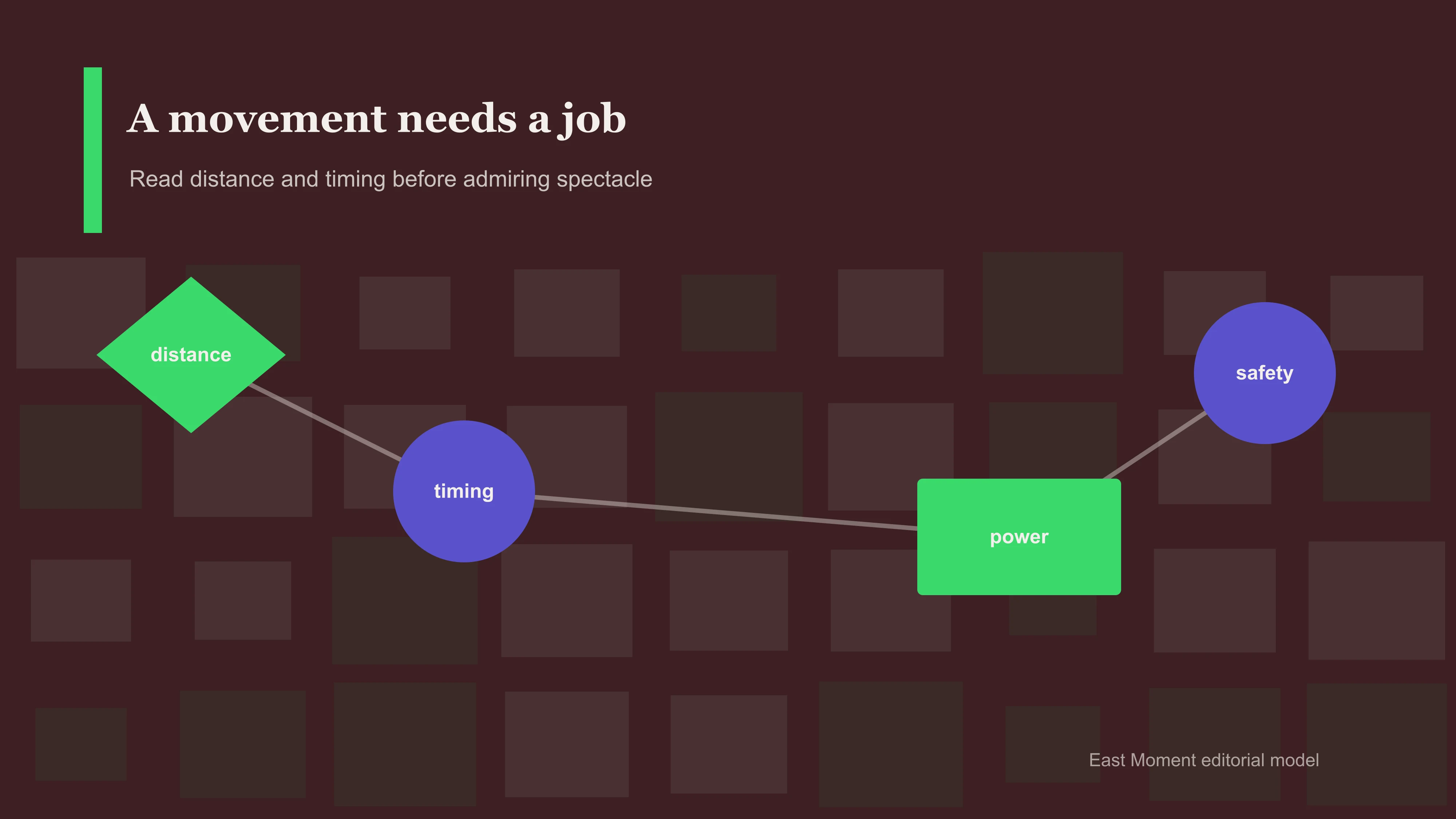
Sport wushu has a different promise. It makes timing, flexibility, power, balance and line visible inside a modern competitive framework. A competition routine deserves to be judged as an athletic and aesthetic performance; it should not be dismissed because it is judged, and it should not be used as proof of every historical combat claim. Its clarity is a virtue when the viewer understands its frame.
Self-defence is a context, not a costume. A responsible teacher can explain which drills involve distance, contact, resistance, escape, fitness or rule-bound sparring, and which do not. I do not trust a page that uses a dramatic temple photograph to promise personal safety. Competence comes from patient teaching, realistic boundaries and the willingness to say what a student has not learned yet.
Screen kung fu is an art of emotion. Cinema turns a stance, a ladder, a crowded courtyard or a weapon into character. It can make justice feel physically legible and teach a viewer to love rhythm, sacrifice and comic timing. Its truth is not a certification of a move; it is the meaning it gives the move. Once we keep these four frames distinct, there is no need to humiliate any of them.
If you are choosing a first school, look for clarity before mythology
The first visit should leave you with more information than the first trailer. Ask what a beginner class actually does in the first three months: solo basics, partnered drills, conditioning, forms, sparring, performance preparation, or a mixture. Ask how instructors adapt a task for different bodies and experience levels. Notice whether students can pause, ask a question and decline something that feels unsafe without being shamed.
You do not need a grand lineage debate to make a good first decision. You need a teacher who can describe their method plainly, a group whose atmosphere does not turn obedience into a virtue, and enough time to discover whether the practice makes your attention wider rather than narrower. That is a more human standard than chasing the school with the loudest claim to authenticity.
The same humility applies to visitors at Dengfeng. UNESCO’s World Heritage listing places the Shaolin architectural complex inside a wider landscape of ritual, learning, astronomy, religious life and imperial patronage around Mount Songshan. That context is more generous than a tourist fantasy: it allows Shaolin to be a living, changing place without demanding that every courtyard be a proof of one cinematic origin story.
My verdict: choose a doorway, then stay long enough to notice
Chinese kung fu becomes meaningful to me when it stops being a single signature pose. It lives in repeated attention, in the relationship between a teacher and a room, in a place that has outlasted the story we tell about it, and in films that make us care enough to seek context.
Choose the door that brought you here. If it is a movie, follow the feeling into history. If it is Shaolin, see the monastery as a living place rather than a universal stamp. If it is training, let a school’s honesty matter more than its mythology. Then bring that first question to East Moment's community—not to declare which style wins, but to say what you are trying to see more clearly.
For the modern competition distinction, continue to the wushu guide. It separates taolu, sanda, traditional practice and screen choreography so each one is judged by the promise it actually makes.