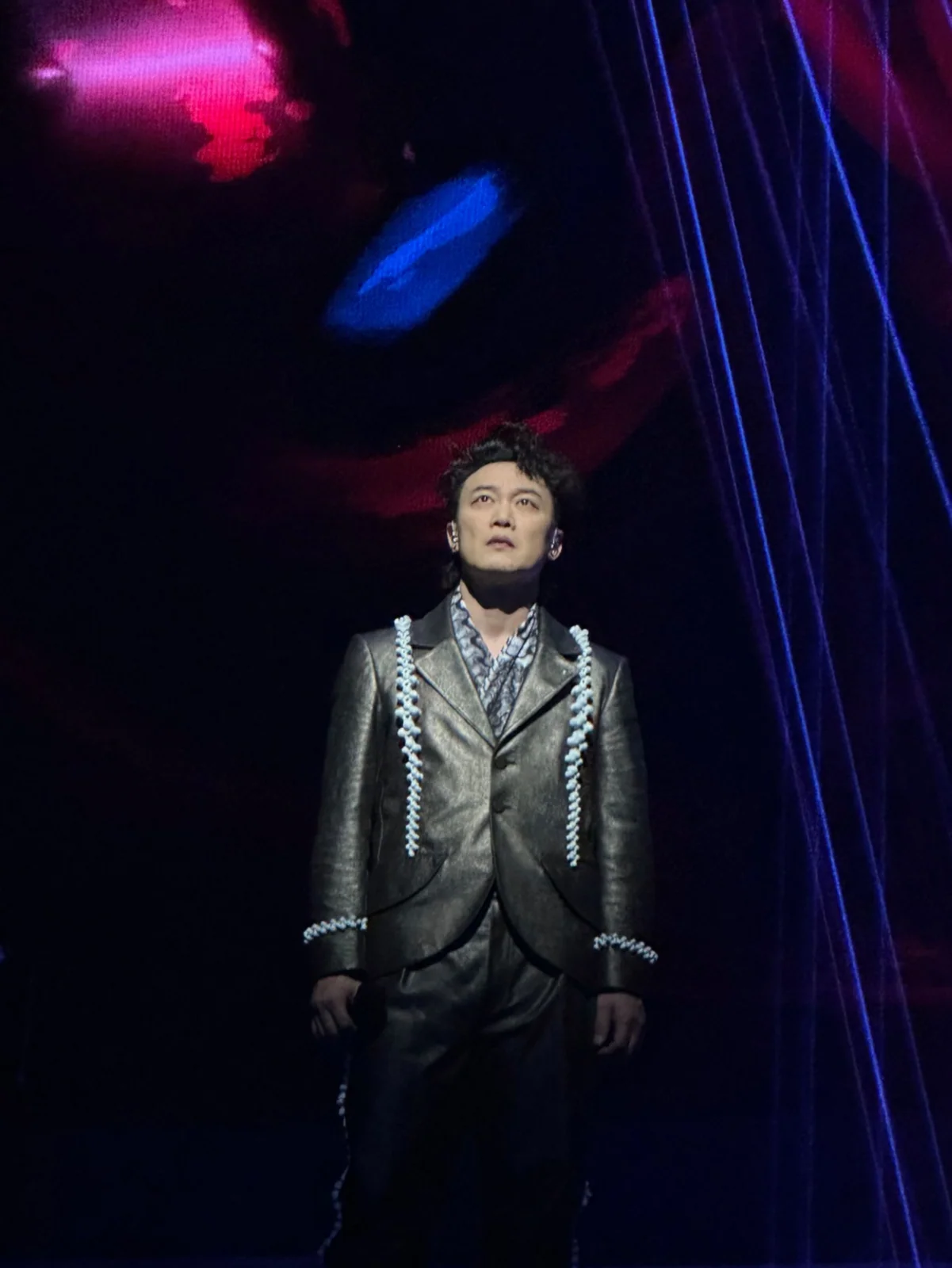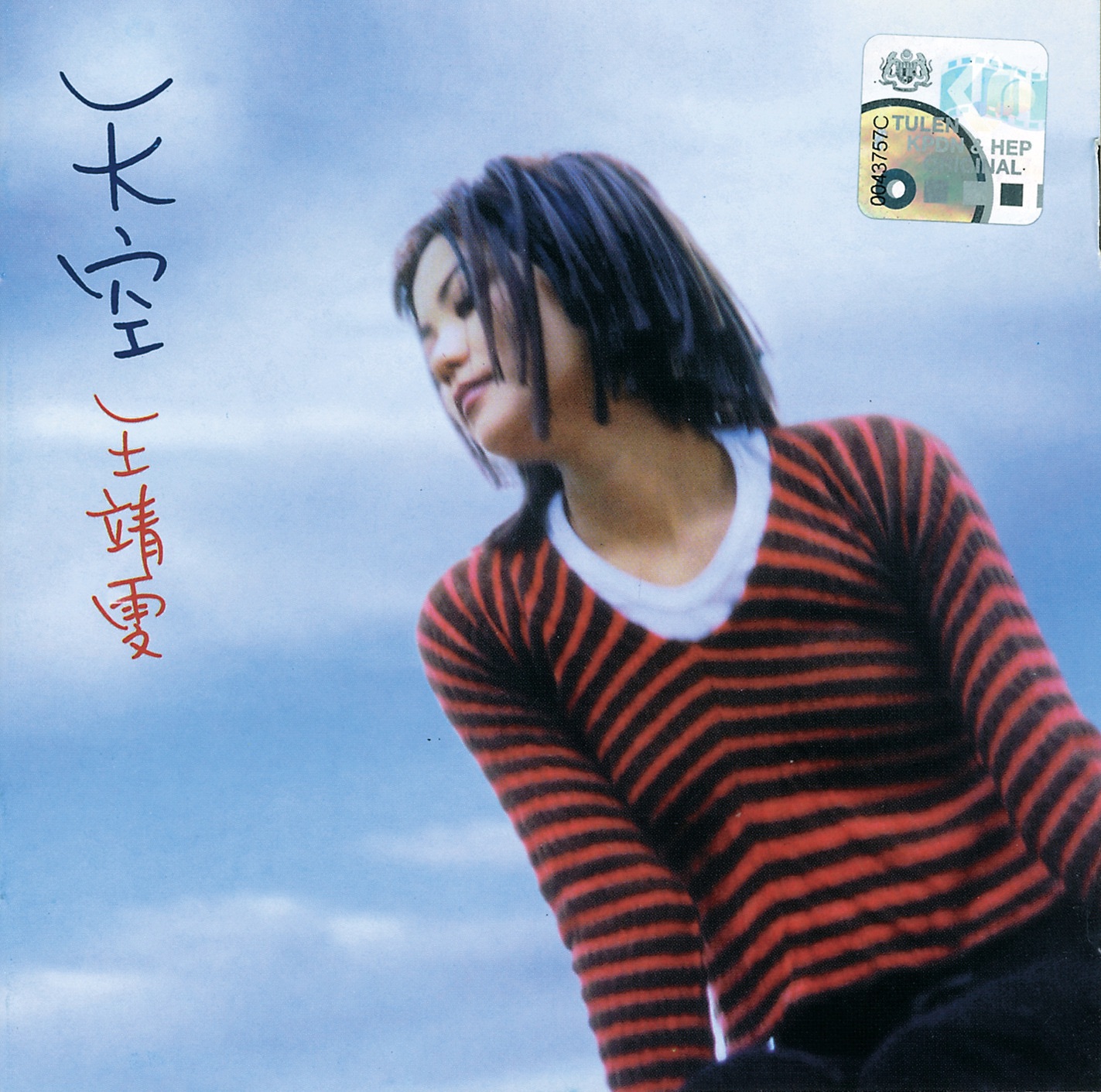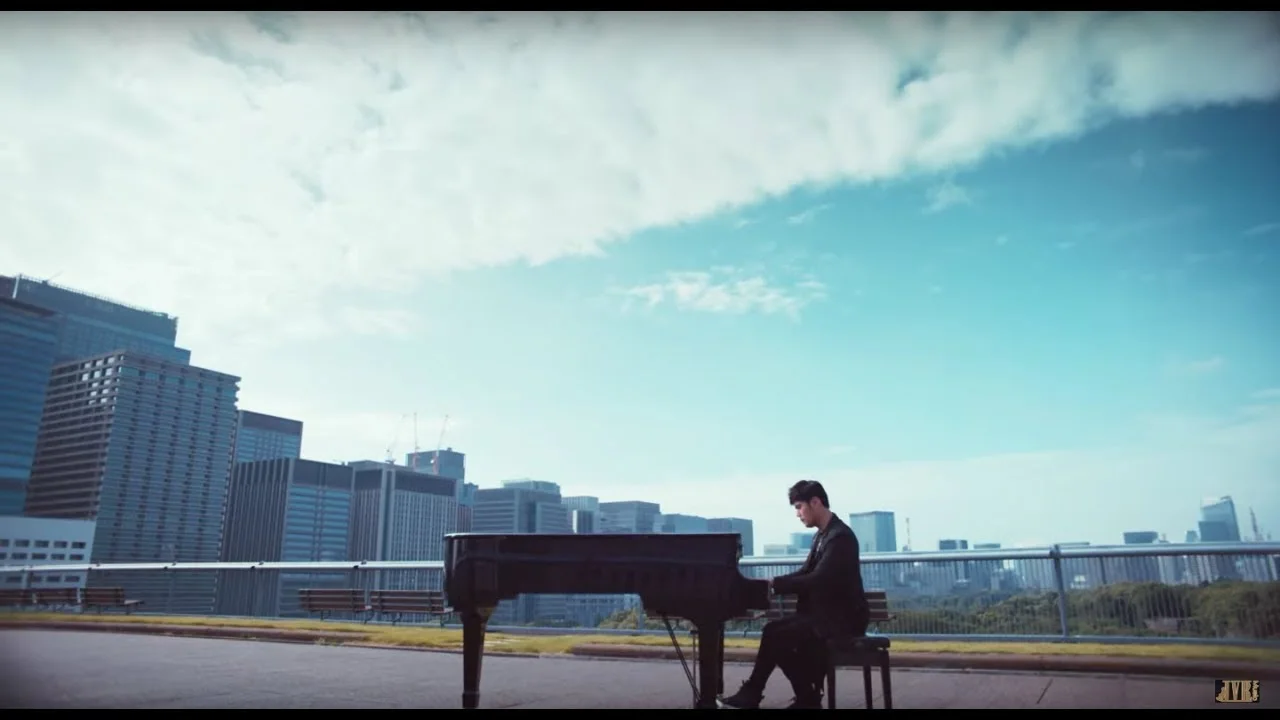
Jay Chou matters because he did not stay inside music. He changed how Mandarin could sit on a beat, then followed a generation from phone ringtones to cinemas, milk-tea shops, family television and stadiums. His catalogue became the soundtrack of our youth and kept finding new rooms in our lives.
Jay Chou entered my life through a phone ringtone
I started liking Jay Chou (周杰伦) in fifth grade, when I was eleven. Mobile phones were only beginning to feel ordinary around me. They were small machines with loud personalities: everyone wanted a ringtone that announced who they were before they answered.
Mine was My Territory (《我的地盘》). It was one of the hottest ringtones at the time.
That memory explains Jay Chou better than a list of awards. His music arrived exactly when a new consumer technology was turning songs into public identity. A track no longer waited at home inside a CD player. It rang on buses, in classrooms and across shop counters. A few seconds of rhythm could make a cheap phone feel personally owned.
The young listener did not need to understand every word. The compressed beat, the clipped phrasing and that immediately recognizable voice were enough. Jay's much-mocked diction was not simply poor enunciation; it made Mandarin behave like part of the percussion. Consonants softened, syllables slid behind the beat, and meaning arrived through texture before it arrived through transcription.
That is why a conventional biography misses the point. Jay Chou was not first encountered as a date of birth or a debut story. He was encountered as a sound coming from somebody's pocket.
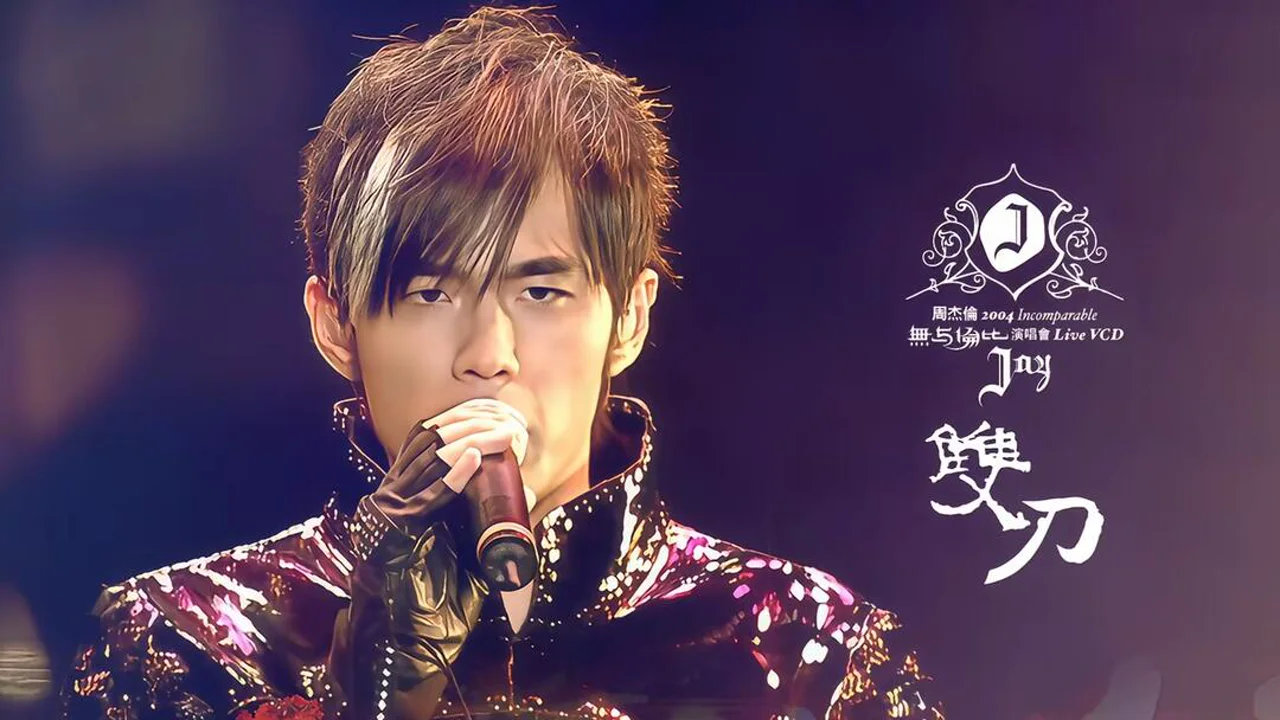
He made hip-hop grammar feel native to mass Chinese pop
Calling Jay Chou a Chinese hip-hop leader needs precision. He was not the organizer of an underground crew, and he did not build the independent scene by himself. His achievement was different and larger in scale: he became one of the defining mainstream leaders who taught a mass Mandarin-speaking audience how rap phrasing, R&B production and rhythm-first writing could belong inside Chinese pop.
Before that shift, rap could be treated as a borrowed section added to an otherwise conventional song. In Jay's strongest early work, rhythm governs the whole composition. The verse leans, doubles back and withholds a clean melodic release. Traditional pop instruments, turntable scratches, piano figures and synthetic drums do not politely take turns; they live in the same room.
The collaboration with lyricist Fang Wenshan added another layer. Their so-called "Chinese style" songs are often reduced to antique objects and elegant costumes. That description is too shallow. The real craft lies in making inherited imagery move at contemporary speed. Porcelain, rain, distance, old architecture and classical allusion are placed inside production designed for headphones, karaoke rooms and mobile speakers.
This is Jay Chou's deepest contribution to Chinese hip-hop culture: not that he made every listener a rap fan, but that he removed the feeling that Mandarin had to imitate English to sound rhythmic. Later rappers could reject his polish, push harder into dialect or return to the street, but they were working in a culture whose ears he had already changed.

The Havana streets and brass players in Mojito also prevent the phrase "Chinese style" from becoming a cage. Jay's method has never depended on one costume or one historical palette. The stable element is his confidence that Mandarin phrasing can enter another rhythmic world without apologizing for its accent.
For a direct comparison, move from this profile to the Chinese hip-hop guide. Listen for the difference between building a scene and changing the mainstream language that surrounds it.
From My Territory to Love Confession, the songs escaped the fan base
Years later, Love Confession (《告白气球》) seemed to be playing everywhere: streets, shopping areas, cafes and especially milk-tea shops. It is easy for serious listeners to dismiss that level of repetition as commercial overexposure. I think it proves something more interesting.
A song becomes culturally large when people who never chose the album still know its temperature. Love Confession became part of China's everyday commercial soundscape: sweet, immediate, romantic and easy to recognize through background noise. It could accompany a date, a queue for a drink or a shop employee's tenth replay of the afternoon. Private love-song language had become public infrastructure.
CCTV's official archive records Jay performing the song at the 2018 Spring Festival Gala. He had appeared on the gala more than once, but the important fact is not a tally. The gala is watched as a family ritual across generations. When the same artist moves from school-age ringtones and youth fashion into that national living-room setting, he has crossed a cultural border few pop innovators manage to cross.
Jay's songs attach themselves to school years, weddings, KTV rooms, old phones and people no longer present. Hearing Stranded anew can make twenty years pass in an instant while the song remains. These memories show what the catalogue is used for more clearly than a popularity score ever could.
Jay Chou's songs survive because they are useful. They let people date a memory without writing the date down.

Initial D gave his reserve a body
Jay's acting works best when a role does not ask him to become verbally expansive. In Initial D, he plays Takumi Fujiwara with lowered eyes, compressed speech and an almost stubborn lack of display. That restraint, sometimes criticized as limited acting, fits a character whose real fluency appears behind the wheel.
The film connected Jay to a different youth vocabulary: mountain roads, tuned cars, arcade speed and the fantasy that an apparently ordinary boy might possess a private mastery nobody around him fully understands. It also gave his public image a physical logic. The same artist who tucked emotion behind a beat now played a driver who tucked ability behind silence.
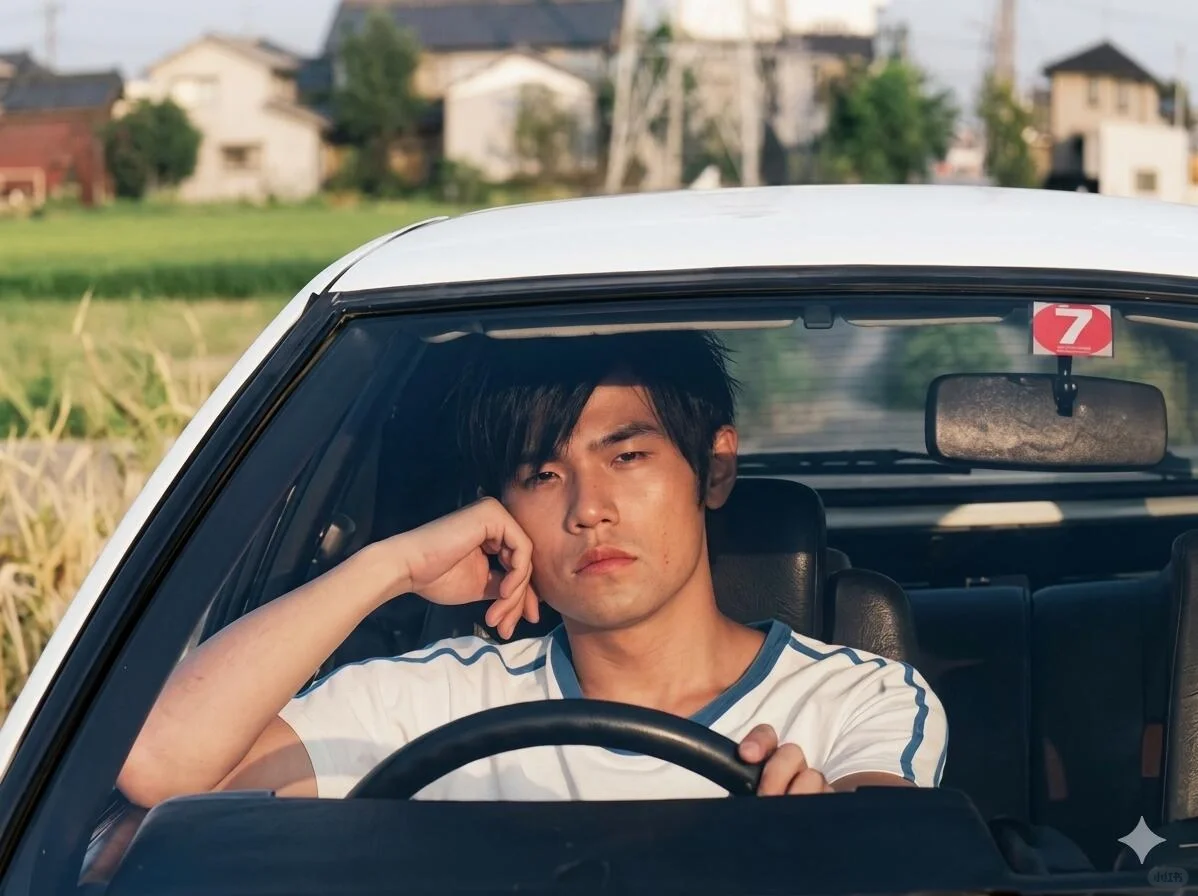
The photograph catches the relationship the film sold: Jay is a quiet figure whose identity becomes legible through the machine beside him. That image still circulates because Initial D became more than a film role. It taught a generation to picture coolness without loud self-explanation.
Secret revealed the builder behind the pop star
If Initial D used Jay's reserve, Secret (《不能说的秘密》) revealed his appetite for construction. He directed, co-wrote, starred in and shaped the music of the 2007 film. The result is not valuable because every plot mechanism is flawless. It is valuable because music is not pasted onto the romance; music controls time, recognition and the possibility of return.
The piano duel is remembered as spectacle, but the film's more revealing decision is to make musical performance a form of narrative knowledge. Characters can hear what other people cannot yet understand. A melody carries a secret across time more efficiently than exposition could.
That instinct connects the director to the songwriter. Jay repeatedly trusts an object or sound to hold emotion that a character will not explain: a piano, a cassette, a car, a photograph, a few blurred syllables. The films can be sentimental, but they are rarely embarrassed by sincerity. That willingness matters in a pop culture increasingly trained to protect itself with irony.
J-Style Trip shows the man his albums keep hidden
J-Style Trip (《周游记》) is not essential because Jay Chou became a great travel host. It is useful because the show's mixture of travel, friendship, magic and celebrity encounters loosens the controlled distance of his albums and films.
On a record, Jay often turns feeling into atmosphere. On the travel show, small social gestures become the content: how he jokes with friends, how long-running relationships carry their own rhythm, how magic functions as both performance and a way to break awkwardness. The destinations matter, but companionship is the real format.
That makes the program a better personality entrance than a formal interview. It shows why his public image can hold apparently contradictory traits at once: intensely competitive yet playful, technically controlling yet dependent on familiar company, globally famous yet attached to boyish hobbies. A complete Jay Chou profile needs this ordinary texture. Otherwise the person disappears behind the discography.

The Taipei special reconnects the apparently casual travel format to the scale of his live career. Friendship and backstage play are not side content added around the star; they are part of the social structure that lets the star remain recognizable across decades.
Basketball and tennis keep the superstar at human scale
Jay Chou's public image is often discussed through songs, cars, fashion and concert machinery. I also remember the sports side: basketball, tennis and the competitive energy that makes him feel less like a sealed pop monument and more like a person who still wants to play.
That detail matters to my reading of him. Sports are not a biography shortcut, and a celebrity game is not evidence of professional ability. They are a different kind of screen test. Music lets Jay control the beat. Basketball and tennis make him respond to another body, another bounce, a missed shot and a changing score. The appeal is not that he wins every time. It is that the body briefly escapes the perfect music-video frame.
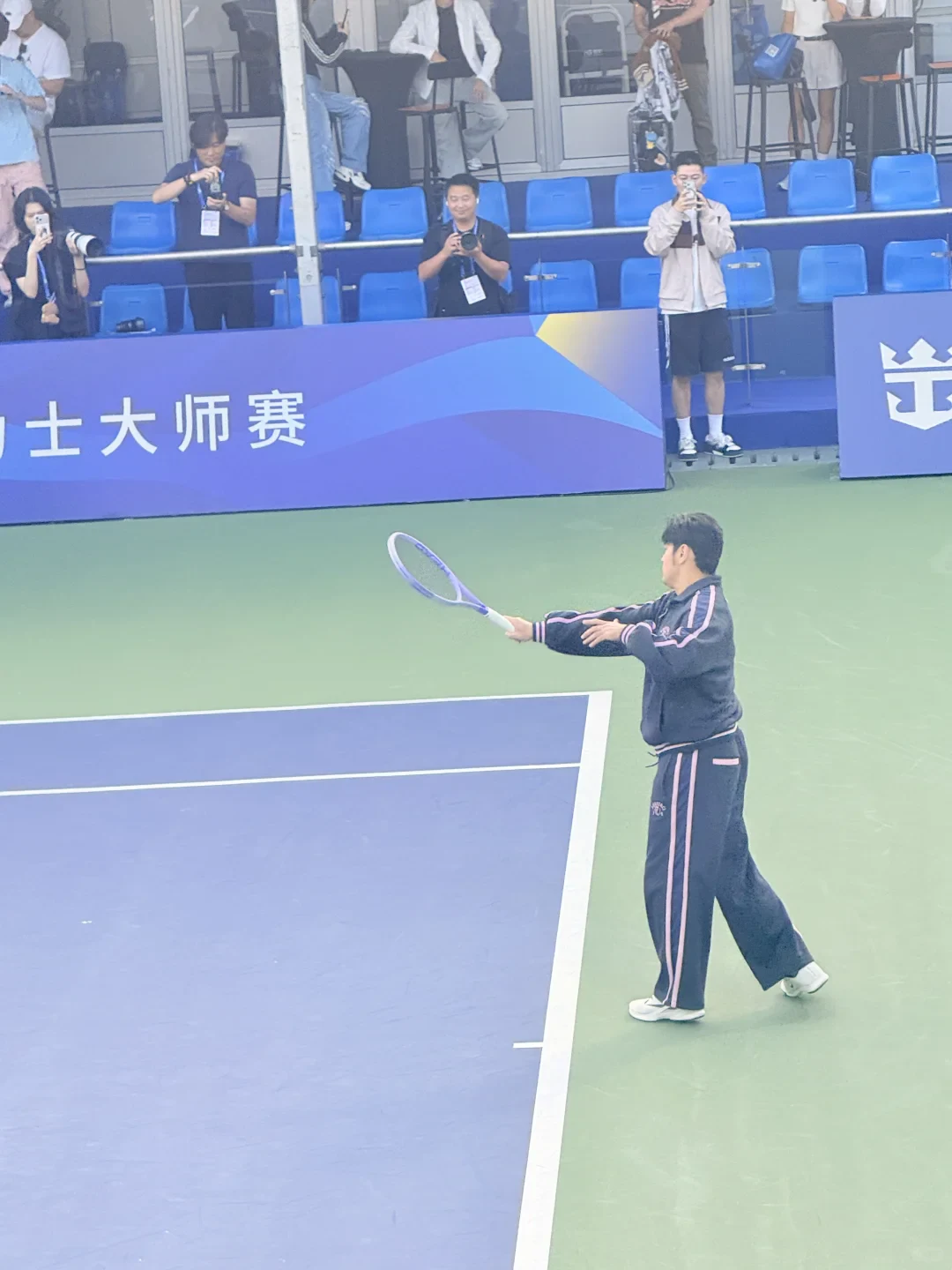
The Shanghai Masters photograph is exactly the kind of evidence I want here: Jay is not posing beside a generic ball or borrowing an athlete's image. He is on the court, racket in hand, caught in the slightly awkward scale of a real public appearance. The frame is vertical and imperfect, which makes it more useful than another polished promotional portrait. It shows the hobby as an activity, not as a keyword.

The second image is more composed, but it still keeps the racket and court in the same frame. Together they create a small internal bridge: from the music page to tennis, from tennis to variety-show play, and then back to the larger question of how a star stays recognizable when the body has to do something unscripted. I do not need to pretend Jay is a professional athlete. I want the more honest detail that he enjoys entering the game.
This is also why Jay's variety appearances matter. A performance can be polished; a game contains delay, teasing and small failures. The same boyish competitiveness that makes J-Style Trip enjoyable also connects him to the younger actors I follow now. When I move from this page to Dylan Wang, I am not claiming they are the same kind of celebrity. I am following a shared question: what happens when a star's body is asked to do something the promotional image cannot fully control?
Sun Child and Carnival II make this a present-tense Jay Chou story
Jay Chou's profile cannot end in 2007, 2016 or a greatest-hits stadium. In 2026 he returned with Sun Child (《太阳之子》), his first new album in almost four years, then opened the new Carnival II world tour in Hangzhou. JVR Music's official report says the first show introduced seven new songs alongside the established catalogue. That decision matters more than another attendance superlative: the new work was forced to stand inside the same room as twenty-five years of memory.
The album also reconnects the supposedly casual J-Style Trip world to songwriting. JVR's account of the Aegean Sea MV traces the song to three days filming the travel program in Greece, where a guitar, a landscape and conversation with Liu Genghong became a track and video. The story is revealing because Jay's mature creative identity now operates as a mobile workshop. Travel, friendship, visual collecting, magic and composition no longer sit in separate boxes.
I do not think newness should be granted automatic respect because a legend finally released an album. The real test is harsher: do Sun Child, Aegean Sea, I Do and the other new songs create a need that the old catalogue cannot already satisfy? Some listeners will hear refreshed craft; others will hear a familiar palace receiving new furniture. Both reactions belong in the room, but neither can pretend Jay has stopped working.
The 2026 Carnival II production makes the argument physically. The opening used new music, enormous mechanical imagery, water effects, fashion and city-specific concert names. Spectacle is not proof of songwriting quality. It does prove that the current Jay Chou is still trying to turn catalogue, technology and visual culture into one live world rather than simply standing in front of nostalgia.
The scale is real, and so is the repetition
Recent concert images make the stadium production feel almost architectural: giant mechanical figures, fireworks and elaborate costumes turning a pop concert into a moving city. The excitement and the frustration of getting tickets can exist in the same picture, alongside the harder question of whether later work relies too heavily on an established legend.
I keep returning to the concert memory because it puts the whole argument back into a human body. The stage can become enormous, but the audience still watches one person hold a microphone and carry an old song into a new year. That is the bridge between the eleven-year-old who heard My Territory through a phone and the adult who still recognizes Jay when the lights, costumes and machinery become almost too large to take in at once.
That disagreement belongs in the profile. Jay's later releases face an archive so dominant that a familiar chord, vocal turn or antique image can feel comforting to one listener and self-imitation to another. Both responses can be honest.
My test is simple: a signature is not a problem until nostalgia starts doing the composition's work. When an old grammar meets a new emotional situation, the language is still alive. When only the recognizable surfaces return, the catalogue is quoting itself.
The unevenness does not shrink the achievement. It makes the person more complete. Jay Chou is not important because every late song is a masterpiece. He is important because even disappointment with a new song is measured against a musical world he made unusually large.
Where should a new listener begin?
Do not begin with a ranking of one hundred Jay Chou songs. Choose the door that matches what you want to understand.
| If you want to understand... | Begin here | Listen or watch for... |
|---|---|---|
| His rhythmic revolution | My Territory and other early rhythm-led tracks | how Mandarin leans into the beat instead of sitting neatly above it |
| His work with Fang Wenshan | one early "Chinese style" collaboration | objects and landscapes doing emotional work that dialogue avoids |
| His melodic vulnerability | a piano ballad, then Stranded | the tension between a direct melody and a guarded voice |
| His public-scale pop instinct | Love Confession | why a simple hook survives streets, shops and family television |
| His screen presence | Initial D | reserve becoming character rather than absence |
| His authorship beyond albums | Secret | music functioning as plot, memory and time |
| His social personality | J-Style Trip | friendship, play and magic loosening the controlled star image |
Then return to the Chinese musicians collection or follow the city context through Taipei. Compare his rhythmic opacity with Eason Chan's conversational fatigue and Teresa Teng's controlled proximity: three voices can make Chinese-language pop intimate without sharing one vocal method. If rap is your entry point, continue to C-BLOCK and GAI to see how the mainstream language Jay helped widen keeps changing.
The useful question is no longer "What is Jay Chou's best song?" It is "Where did his music first become part of your life, and what else did it teach you to notice?" My answer still begins with an eleven-year-old hearing My Territory as a ringtone, then expands through films, television, sport and the feeling that a celebrity can remain connected to ordinary hobbies.
For me, the answer is still an eleven-year-old's phone ringing with My Territory. For someone else it will be an AE86, a piano room, a KTV microphone, a Spring Festival Gala television or a milk-tea shop playing Love Confession again. Add your song, year and place in the comments, then bring the memory into the East Moment community. Together those ordinary locations explain his cultural scale better than another chart ever could.