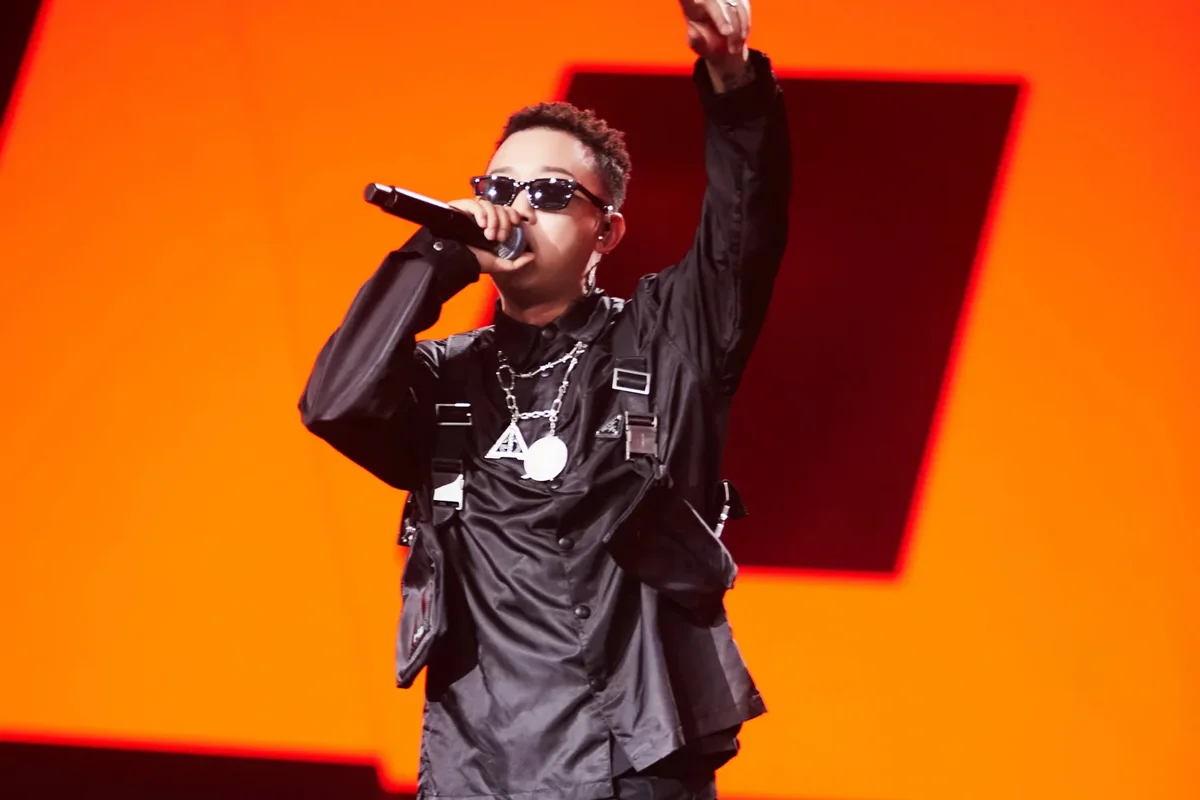
Lexie Liu is easiest to misunderstand when a profile succeeds in placing her inside one genre. Rap introduced her to a huge Chinese television audience. R&B shaped her early ambition. Electronic pop, club music, science fiction, fashion and bilingual writing kept moving the border. The refusal to settle is not confusion around the artist. It is the artistic identity.
For an overseas listener, Lexie can look like the obvious “global Chinese pop star.” That description is accurate only at the surface. Her real advantage is stranger: she understands that international music does not require a neutral voice. Mandarin can remain sharp, English can remain intimate, a synthetic beat can feel bodily, and a pop hook can carry a character who may not be trustworthy.
I am not interested in praising her merely for looking export-ready. China has produced enough immaculate campaigns with nothing urgent underneath. I stay with Lexie when the beautiful surface starts arguing with the song: when a language switch changes who holds power, when a club beat turns cold, or when the character she built suddenly sounds less certain than the costume.
Lexie Liu in 60 seconds
| What you want to know | The short answer |
|---|---|
| Chinese name | Liu Boxin (刘柏辛) |
| Home city | Changsha, Hunan |
| Major breakthrough | Finalist on The Rap of China season two in 2018 |
| International launch | Signed with 88rising in 2018 and released 2030 in 2019 |
| What hits first | Mandarin-English movement, cool vocal control and constantly changing electronic frames |
| Start with | Manta, Like a Mercedes, MAGICIAN, FFFFF and POP GIRL |
| Projects to know | 2030, Meta Ego, GONE GOLD, The Happy Star and TEENAGE RAMBLE |
| Current release | POP GIRLS CLUB, released in July 2026 |
That table shows a career. The songs show an artist who keeps changing the rules that made the previous chapter successful.
Rap is one instrument in the system
In a 2018 RADII interview, Lexie said rap was not her only focus and described herself as more centered on R&B while trying to connect the two. That direct statement remains the cleanest way to resist a false choice.
She raps when rhythm needs a harder edge, when a character requires distance or when language switching can create a new internal pattern. She sings when a phrase needs suspension, seduction or ambiguity. Later records add spoken fragments, processed voices and club-oriented repetition.
The important point is not range as a résumé item. It is control of function. Lexie usually knows why a section is rapped, sung, whispered or digitally altered.
That control is also the test I apply most harshly. I do not reward a genre change just because it looks adventurous on a track list. If rap, R&B and electronic pop leave the emotional position unchanged, the movement is styling. When the delivery changes the speaker's distance from us, it becomes authorship.
Five songs that unlock Lexie Liu
1. Like a Mercedes: the early engine is already visible
Like a Mercedes arrived before the full 2030 world. It presents the early Lexie with a clean combination of rap attitude, R&B smoothness and luxury-machine imagery.
The title can sound like standard aspiration, but the track matters because the voice is already mobile. She does not commit to one delivery long enough for the listener to reduce her to it. The song announces the method before the later visuals made it unmistakable.
2. Manta: the persona becomes nonhuman
Manta is the most efficient introduction to Lexie's futurist imagination. The manta ray offers a body that moves differently from a human pop star: smooth, underwater, difficult to capture and almost alien when seen from below.
The production is sleek, but the song is not merely “futuristic” because it uses synthesizers. Voice, image and motion all support the same transformation. Lexie sounds less interested in telling us who she really is than in testing what a self can become inside sound.
This is the track to play for someone who thinks her rap-show history is the main story.
3. MAGICIAN: pop becomes an occult interface
MAGICIAN belongs to The Happy Star, a record filled with symbols, altered states and electronic environments. The song works like a spell made from club rhythm, command and theatrical image.
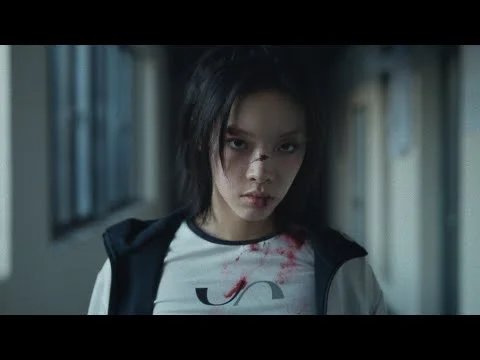
Watch the official MAGICIAN video. Costume, architecture, gesture and production are not separate decorations; they construct the same unstable authority.
The controlled delivery is crucial. A more exaggerated vocal would make the concept collapse into costume drama. Lexie leaves enough emotional distance for the listener to wonder whether the magician is powerful, trapped or both.
4. FFFFF: the polished surface gets scratched
FFFFF opens a rougher 2025 chapter. The title looks like an error, an outburst or a file that refused to load correctly. The music carries that impatience.

The official FFFFF video replaces some of the celestial elegance of earlier work with confrontation, repetition and physical mess.
This change matters because a highly designed artist can become trapped by polish. FFFFF lets friction return. It does not abandon the concept-driven Lexie; it makes the concept less comfortable.
5. POP GIRL: the label becomes material
POP GIRL takes a category that could be used to contain Lexie and turns it into a performance. The title is direct, almost generic. The song and video make that generic surface unstable.

Watch the official POP GIRL video. It is less a declaration that Lexie has become pop than an experiment with what the pop-girl image can absorb.
The question is no longer “rapper or singer?” It is who controls the category once everyone recognizes it.
Mandarin and English do different jobs
Lexie's bilingual writing is often praised as proof of global appeal. That is true but incomplete. Language switching changes the music itself.
Mandarin offers compact syllables, tones and consonant-vowel shapes that can make a line feel sharply segmented. English can stretch differently across R&B melody or create familiar pop phrasing for international listeners. Moving between them can change distance: one phrase addresses home, another reaches outward, and a third keeps part of the meaning private from one side of the audience.
Literal translation cannot preserve all of that. Our Chinese language guide explains why sound, tone and rhythm remain part of meaning. With Lexie, language choice is also production choice.
I hear Mandarin as more than the proof that she remains Chinese, and English as more than a passport stamped for the global market. Each language creates a different physical route through the beat. I want a listener to notice the mouth, the pause and the social distance before reducing the switch to a marketing strategy.
Changsha is the origin, not a compulsory rap uniform
Lexie was born in Changsha, a city with one of China's most visible rap cultures through CSC and artists such as Sheng Yu. Yet she does not sound like a standard representative of that scene.
That difference is valuable. A city can produce several artistic routes. Changsha gave Lexie a home context, but her early Korean television experience, brief study in New York, Chinese rap television and international release network widened the working environment quickly.
Our Changsha culture guide explains the city beyond rap. Place matters here not because every beat has to sound local, but because “global” artists still begin somewhere specific.
2018 created visibility and a problem
Lexie became a finalist on the second season of The Rap of China in 2018. RADII's interview, conducted during filming, captures an artist already thinking beyond the program. She discussed the pressure placed on women in the industry, her interest in international audiences and the limits of being classified only through rap.
The show was useful because it proved she could operate under competitive pressure and hold attention in a male-dominated field. It also created a label that later music had to outgrow.
Her signing with 88rising that year helped launch the 2030 era internationally. Dazed described the cyberpunk vision around the project in 2019. That relationship is historically documented; it should not be automatically converted into an unverified statement about her current 2026 contract.
The projects keep changing the central question
2030 introduced a sleek rap-and-R&B futurism. Meta Ego (無限意識) followed later in 2019, expanding the split-self and synthetic-consciousness ideas already visible in Manta.
GONE GOLD arrived in 2021 with a more compact and metallic emotional temperature. Then The Happy Star in 2022 became her most complete conceptual album: mysticism, club production, transformation and visual ritual held together as one world.
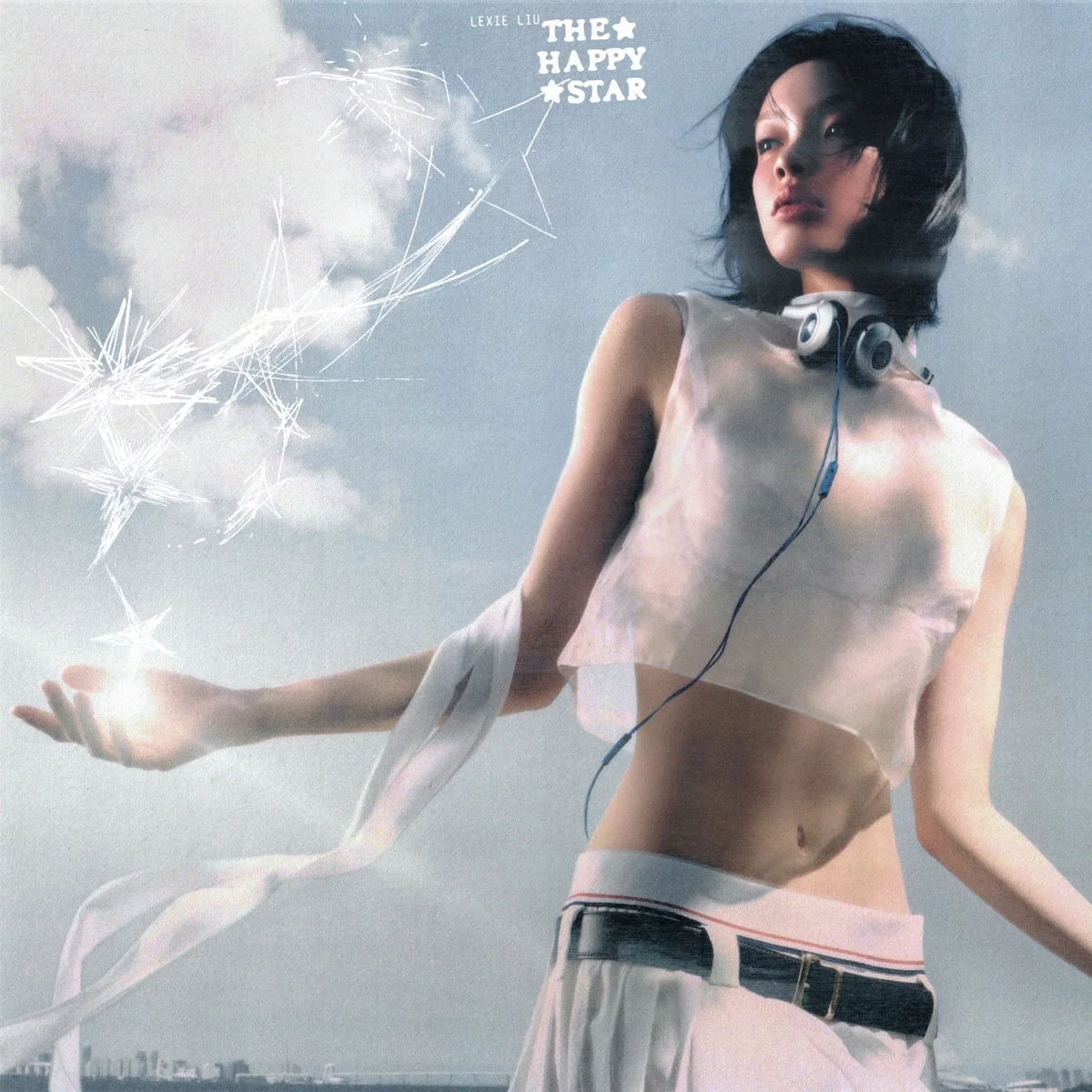
The The Happy Star album is the best full-length route into Lexie's union of electronic pop, character and symbolic world-building.
The achievement is not that every project sounds unrelated. Certain instincts remain: cool control, bilingual movement, transformation and distrust of a stable persona. The production language changes around those instincts.
TEENAGE RAMBLE chooses friction over perfection
Apple Music lists TEENAGE RAMBLE as an EP released in October 2025. The format is important to state accurately. It is not another full-length album, but it marks a distinct chapter.
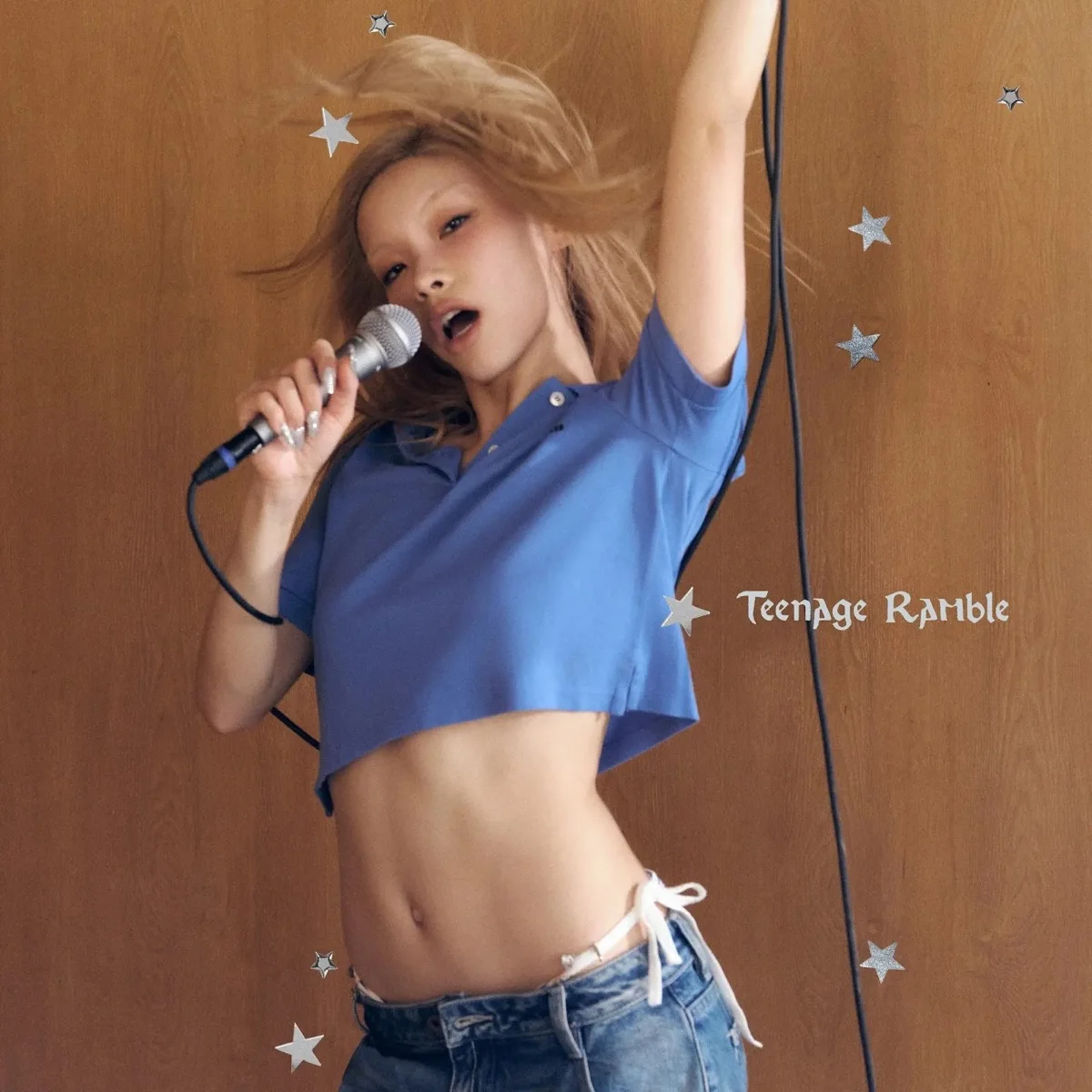
The TEENAGE RAMBLE EP turns adolescence into noise, memory and unfinished motion rather than a clean nostalgic story.
The project lets abrasion, pop shorthand and unruly repetition challenge the immaculate futurism associated with earlier Lexie. That is a healthy artistic move. Once an artist becomes known for control, loss of control can become the more difficult craft.
This is the turn I prefer. The polished cyber-future had become so easy to admire that admiration risked replacing feeling. A scratch in the surface gives us something to push against. I would rather hear one imperfect decision with consequence than another gorgeous world whose doors never open.
POP GIRLS CLUB is the current international room
On July 22, 2026, Lexie joined Yves, BAYLI and Isabella Lovestory for POP GIRLS CLUB. The lineup places artists with different languages, markets and approaches to alternative pop inside one collaboration.
It is tempting to call this proof that Lexie “crossed over.” Her career crossed multiple borders years earlier. The more interesting point is that she can now enter a shared international pop space without simplifying the prior catalog into one exportable genre.
Treat every genre shift as a decision
Do not ask which genre Lexie Liu “really” belongs to. Mark what each shift accomplishes. Rap can sharpen character, electronic production can destabilize the room, R&B can change intimacy and bilingual writing can divide an idea between two emotional temperatures.
Listen once for sound before translating language. Then return to the words and ask why a phrase remained in Mandarin or English. My judgment is that genre fluidity becomes meaningful only when every border crossing changes the song's perspective. Movement by itself is branding; movement with consequence is authorship.
Use a three-song sequence instead of one representative hit. Choose an early rap-facing track, an electronic conceptual record and a recent pop experiment. Track what remains: vocal coolness, distance, bilingual tension or a recurring idea about identity. Continuity makes transformation credible.
The point is not to prove versatility like a talent-show score. It is to hear one artistic mind ask different genres to solve different emotional problems.
Current listener searches expose the danger of getting that reading backward. Makeup imitation, photographs, wallpapers, styling clips and industry-image discussion can push the songs below the fold, even while a bilingual Adam Lambert conversation demonstrates how naturally Lexie moves through an international room. I accept the visual world as part of the authorship, but not as proof of it. Mute the image and ask whether language, production and vocal character have already built the world. If the song collapses without the outfit, fashion was carrying music that had not finished its work.
Control becomes interesting when it nearly breaks
Lexie rewards listeners who enjoy following change. Her albums do not repeat one winning formula, and her videos add real interpretation rather than generic glamour. She is also unusually skilled at making bilingual music feel structurally necessary.
The tradeoff is emotional distance. Concept, styling and controlled delivery can make the person harder to reach. Some listeners will admire the world before they feel attached to a song. At times, a new aesthetic arrives faster than the writing can make it consequential.
Her strongest tracks solve that problem by giving the designed surface a crack: desire in Manta, uncertainty inside MAGICIAN, frustration in FFFFF or self-awareness in POP GIRL. The future becomes interesting when someone vulnerable is still living in it.
That is why I remain convinced by Lexie Liu even when a particular experiment misses. She is not simply assembling fashionable references. She keeps testing whether a Chinese pop artist can move through several global rooms without sanding away the accent, the ambiguity or the right to be difficult. I do not need every crossing to succeed. I need it to cost something.
Enter through the bilingual fault lines
- Manta for the defining futurist transformation.
- Like a Mercedes for the early rap-R&B engine.
- The Happy Star as a complete album and visual world.
- FFFFF for the rougher 2025 turn.
- POP GIRL and POP GIRLS CLUB for the current pop argument.
Then return to the 2018 performances. They will sound less like the origin of everything and more like one demanding room she learned to pass through.
Continue with Vinida Weng for another artist connecting local identity with global production, Capper for music built as a visual system, VaVa for the first-season television-to-album route, or the Chinese musicians directory for the broader map.
Why Lexie Liu matters
Lexie Liu makes genre instability useful. Rap, R&B, electronic pop and club music do not appear as proof that she can do everything. They are tools for asking how language, body and identity change under different kinds of pressure.
Her most important international quality is not that she sounds familiar outside China. It is that she can remain difficult to fix in place while making the movement itself clear.
Test one song twice: first mute the image, then read the translated words without the video. Post the timestamp where Mandarin, English or production changes the character as a Moment, and say whether the visual world strengthens an already complete song or rescues an incomplete one. Return with the result; Lexie's best work should survive both rooms and become stranger in the passage between them.