Taoist temples are not generic places of “Eastern calm.” They are living institutions: people maintain gates and halls, name deities, hold rituals, pass on texts, negotiate visitors and make a local religious world visible. The best way to visit is to read the place before trying to decode a symbol.
That begins with a small correction. Not every Chinese temple is Daoist, and not every cloud, dragon, incense burner or black-and-white diagram gives you a reliable answer. A temple has to be identified in its own context.
What are Taoist temples?
Taoist temples are places associated with Daoist religious communities, ritual, deities, scriptures and local practice. Depending on the site, a temple may be a working religious institution, a pilgrimage destination, a neighborhood landmark, a heritage site, a scenic attraction, or several of those things at once.
That mixed status is not a contradiction. A hall can be carefully maintained for worship and photographed by tourists on the same afternoon. The useful question is not “Is it authentic or commercial?” It is: what work is this place doing now, and which historical layer am I actually looking at?
This first-hand image records a named site at Mount Sanqing. It shows a temple in a mountain setting; it does not turn every mountain building into a Daoist temple or identify every practice inside. The name Sanqing points toward the Three Pure Ones, but a visitor should still read the particular site's signs and rules rather than arrive with a prewritten interpretation.
Begin with the name, not the atmosphere
Tourism language loves an atmosphere: mist, incense, red pillars, a roof under trees. Those details can be beautiful. They cannot tell you enough on their own.
Start with the name on the gate or posted site information. Is the place a guan (often rendered Daoist temple or monastery), a named palace, a shrine, a historic complex, or an attraction built around a religious site? Then look for the institution's own explanation, a heritage record or a locally specific source.
The broader Taoist symbols guide helps with another common mistake: a visible motif becomes Daoist through documented use and context, not merely because it looks ancient or Chinese. A temple is the same. Context is not an optional caption. It is the identification.
The route through a temple is part of the meaning
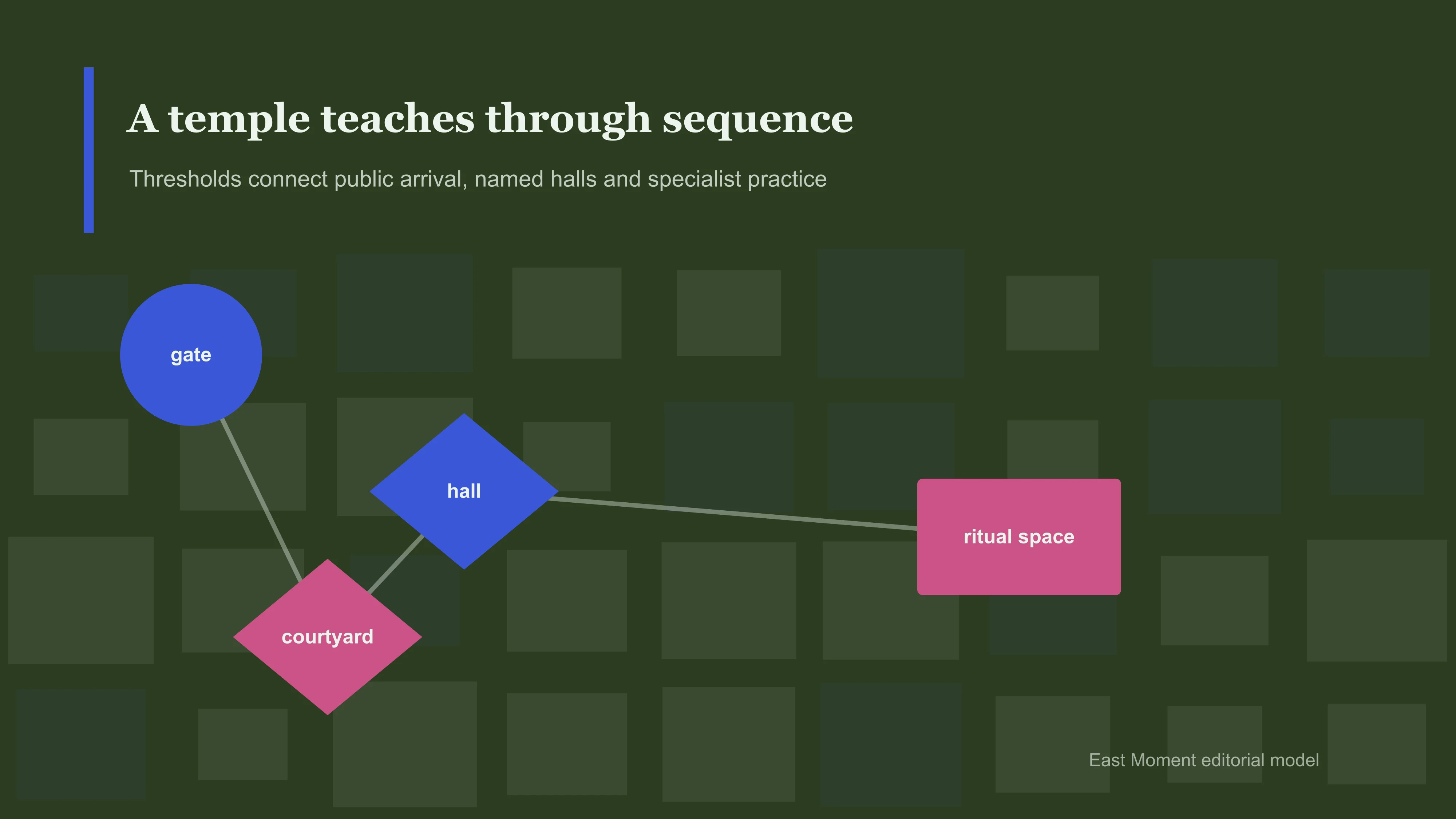
One way to see a Daoist temple well is to slow down at the threshold. Gates, courtyards, halls, incense burners, inscriptions and side spaces do not form a random collection of photogenic objects. They organize movement, attention and different kinds of access.
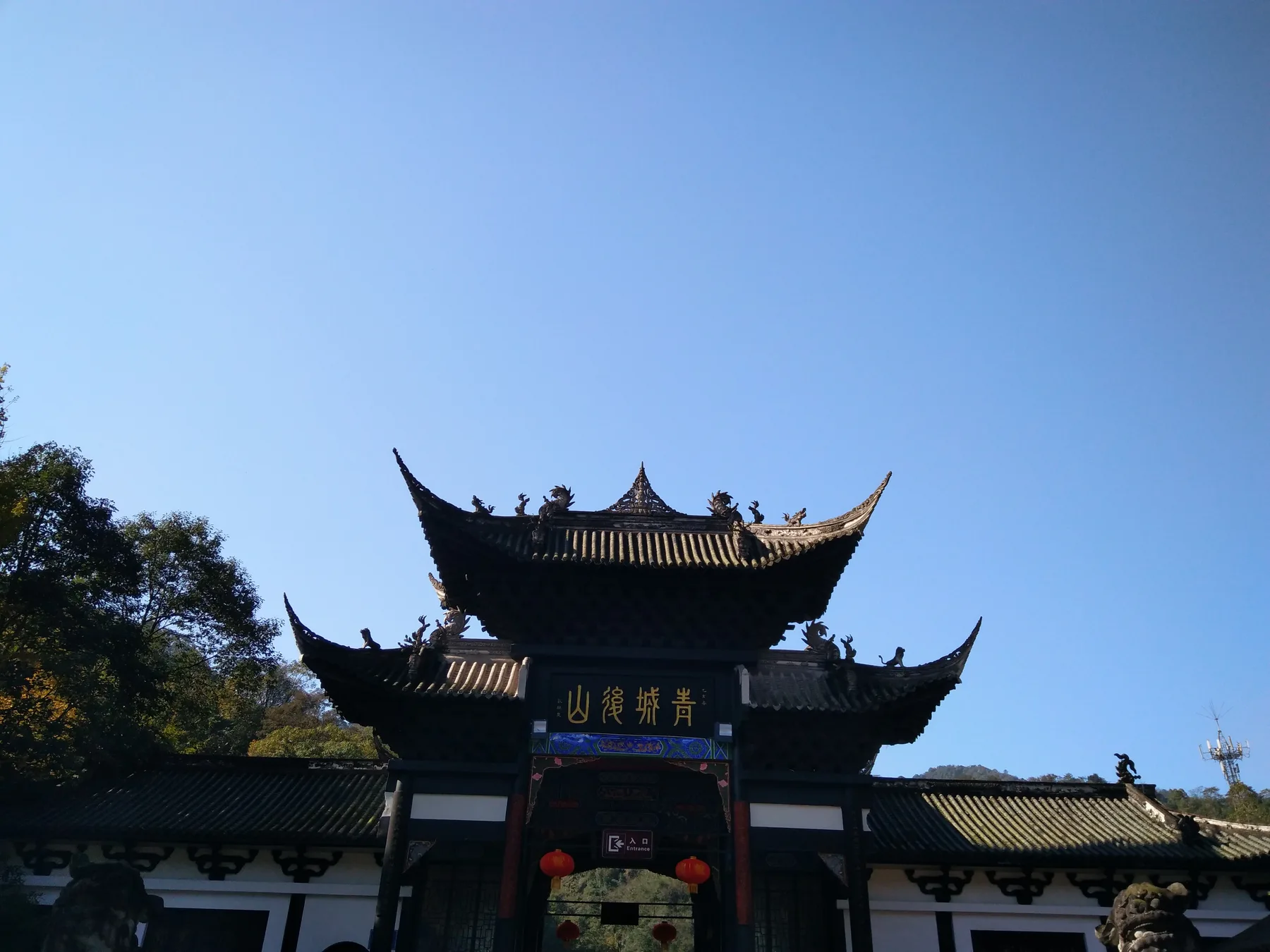
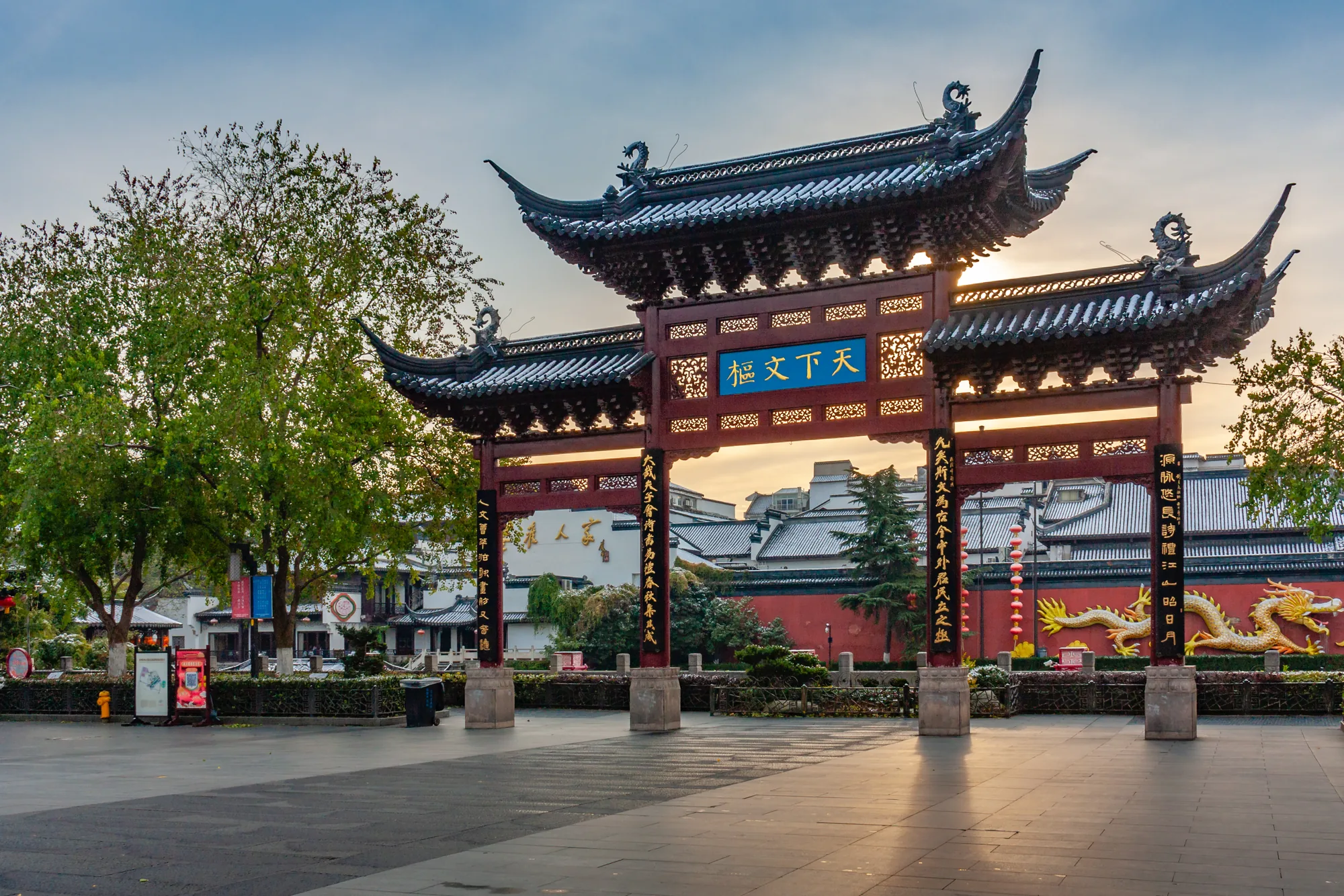
The mountain entrance at Mount Qingcheng makes the threshold legible before any hall appears. Roof, inscription, stone lions and the dark passage beneath the gate compress the route between open sky and wooded mountain. The image proves a named entrance in the Qingcheng landscape; it does not identify every institution beyond it or establish a universal temple plan. Its practical evidence is spatial. Entry is part of the site's language, so pause, read the sign and notice how the path directs a visitor before choosing a camera angle.
Inside, a principal hall may hold deities or ritual focus, while courtyards create transitions among more public, devotional and service spaces. Do not invent a universal floor plan from one visit. Different temples have different histories, local gods, lineages, renovation patterns and visitor rules. The shape of a temple is an invitation to ask better questions, not a codebook that eliminates them.
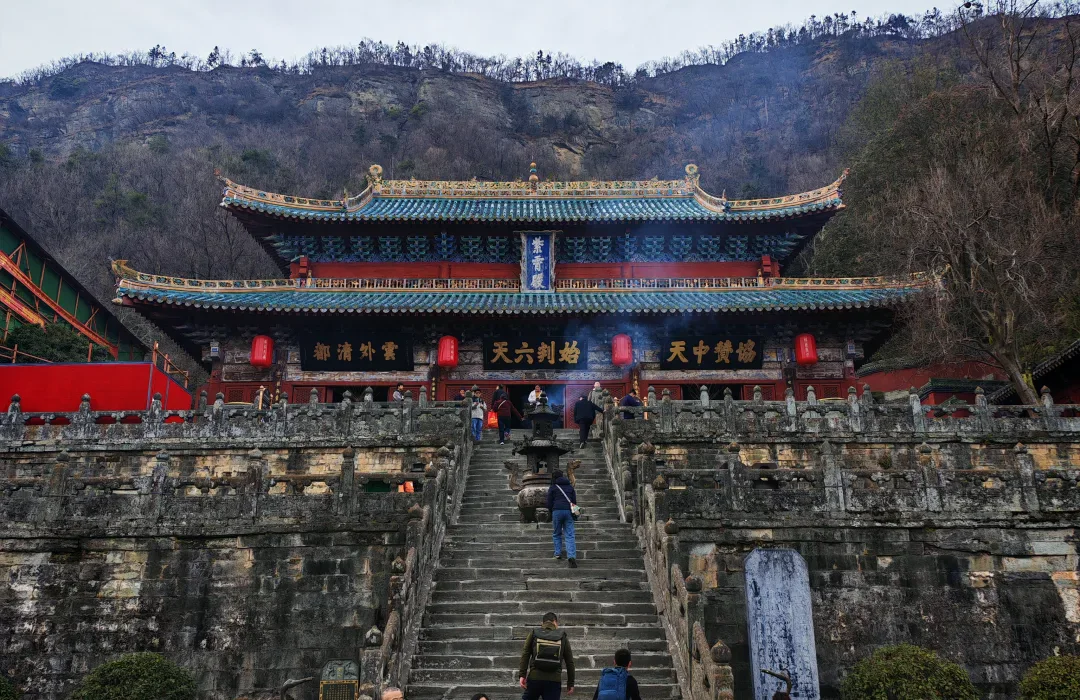
The opening field photograph at Purple Heaven Palace shows the threshold doing several jobs at once. The stairs slow the body; the terrace concentrates people; the mountain closes the horizon; smoke marks current devotional activity. None of that needs invented “energy” language. Architecture already changes pace and attention. I notice the visitors first because they stop the building from becoming an empty postcard: some climb, some descend, some pause, and the sacred route has to accommodate all of them.
A temple is where texts become people and schedules
It is easy to meet Daoism through the Daodejing and stay with a small library of elegant paradoxes. Temples make that picture larger. Texts are copied, interpreted, chanted, taught and placed within communities. Ritual needs participants, objects, timing, spaces and responsibilities. A named deity is not simply a decorative character in a symbol catalogue. The Stanford Encyclopedia of Philosophy's Daoism entry is a rigorous starting point for the traditions and terminological problems behind the simplified English label; the temple supplies the institutional life that no quotation page can replace.
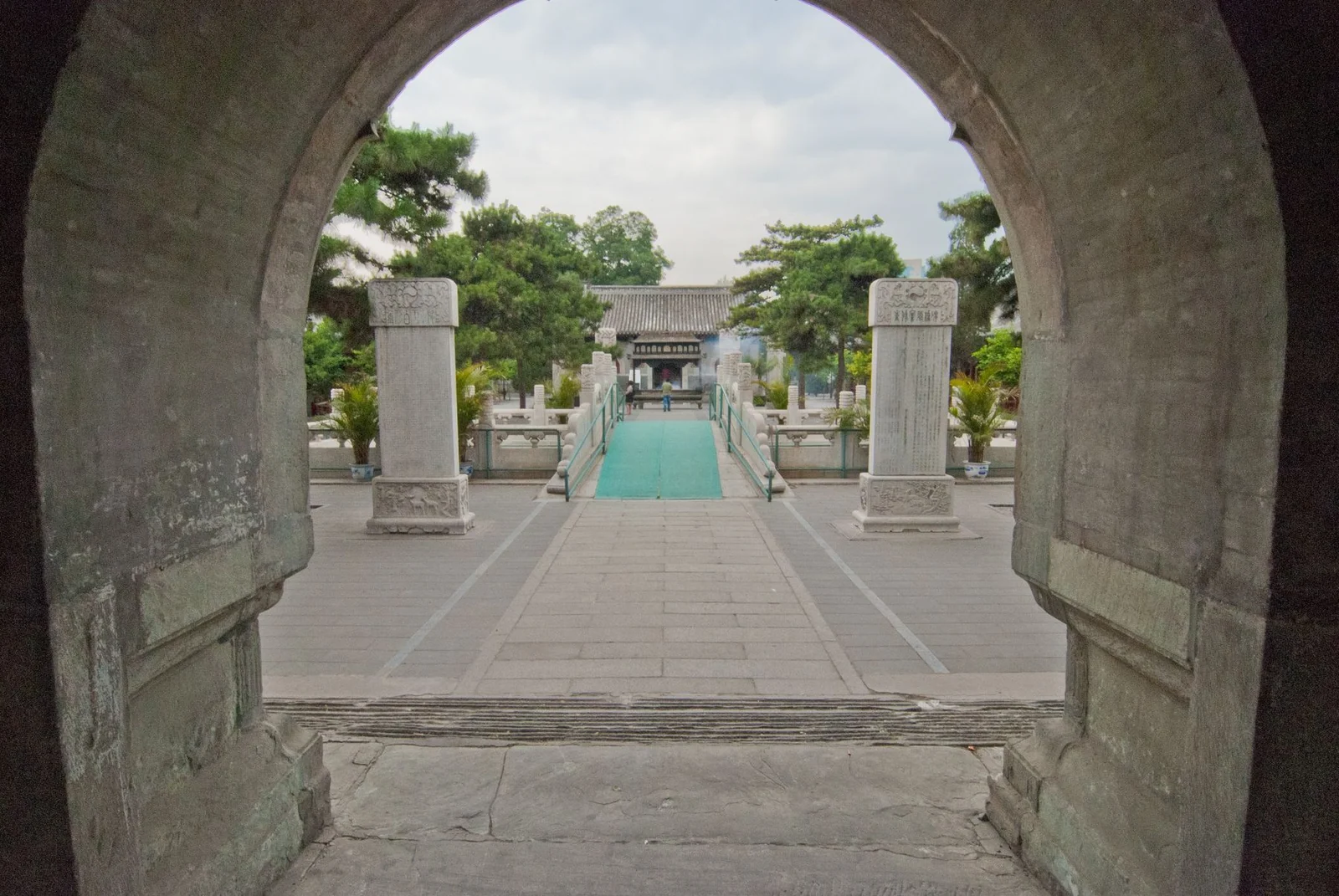
Beijing's White Cloud Temple shows why this matters even without borrowing its image here. A maintained compound, scheduled religious life and a sequence of spaces give Daoism institutional scale. They do not tell us what every Daoist believes. For that, read the Taoist beliefs guide with its necessary distinctions among texts, lineages, temples and periods.
This is the gap between a philosophy quote and a living religion. A phrase about softness may travel easily; an institution has to handle a gate, a roof, an altar, a calendar, visitors and a local community.
Heritage is one layer, not the whole experience
Some Daoist complexes are major heritage sites. UNESCO's Wudang Mountains record documents a large complex whose buildings are bound to Daoist religious and architectural history. That matters when you are making historical claims about a named place.
It does not make every temple museum-only. Nor does a later restoration make a place spiritually empty. Buildings are repaired because communities, states, donors, caretakers and visitors decide they should continue. What you see may combine old fabric, replacement work, heritage interpretation and current religious use. The honest response is not cynicism. It is precision.
When a guide calls something “ancient,” ask: ancient in origin, in surviving structure, in ritual continuity or in visual style? Those are different claims, and a good site can have one without automatically having all four.
How to visit respectfully without performing expertise
You do not need to know every deity or bowing convention before entering a Taoist temple. You do need the humility to let the place correct you.
- Read the posted rules first. Photography, incense, access and clothing expectations are site-specific.
- Do not interrupt a ritual for a better picture. A real ceremony is not a live prop.
- Ask before photographing people closely. A visitor, practitioner or staff member is not evidence you own.
- Name only what you can identify. “A Daoist hall at this site” is better than guessing the deity from an online image search.
- Let local practice be local. One temple's arrangement, festival or etiquette is not a national rule.
These habits are not stiff etiquette. They make the visit more interesting because they keep you from replacing a real institution with a story you brought in your luggage.
Read the labor, not only the architecture
A temple stays visible because someone opens a gate, sweeps incense ash, repairs rain damage, manages offerings, answers visitors and protects moments that are not meant for tourists. This labor is not background maintenance. It is the daily form of institutional continuity.
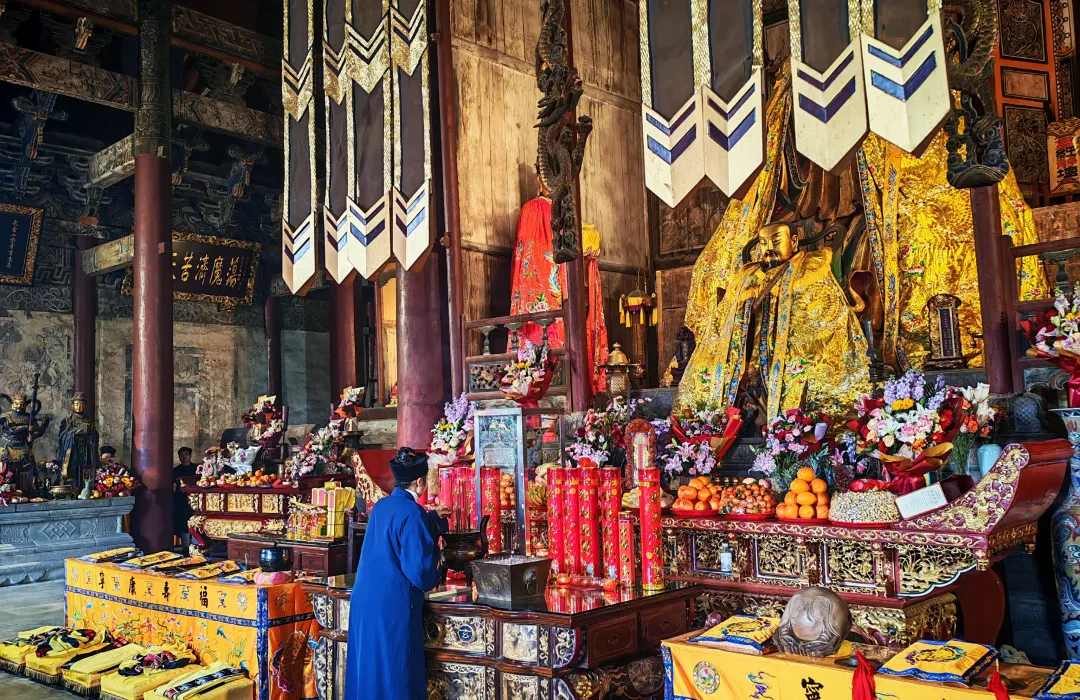
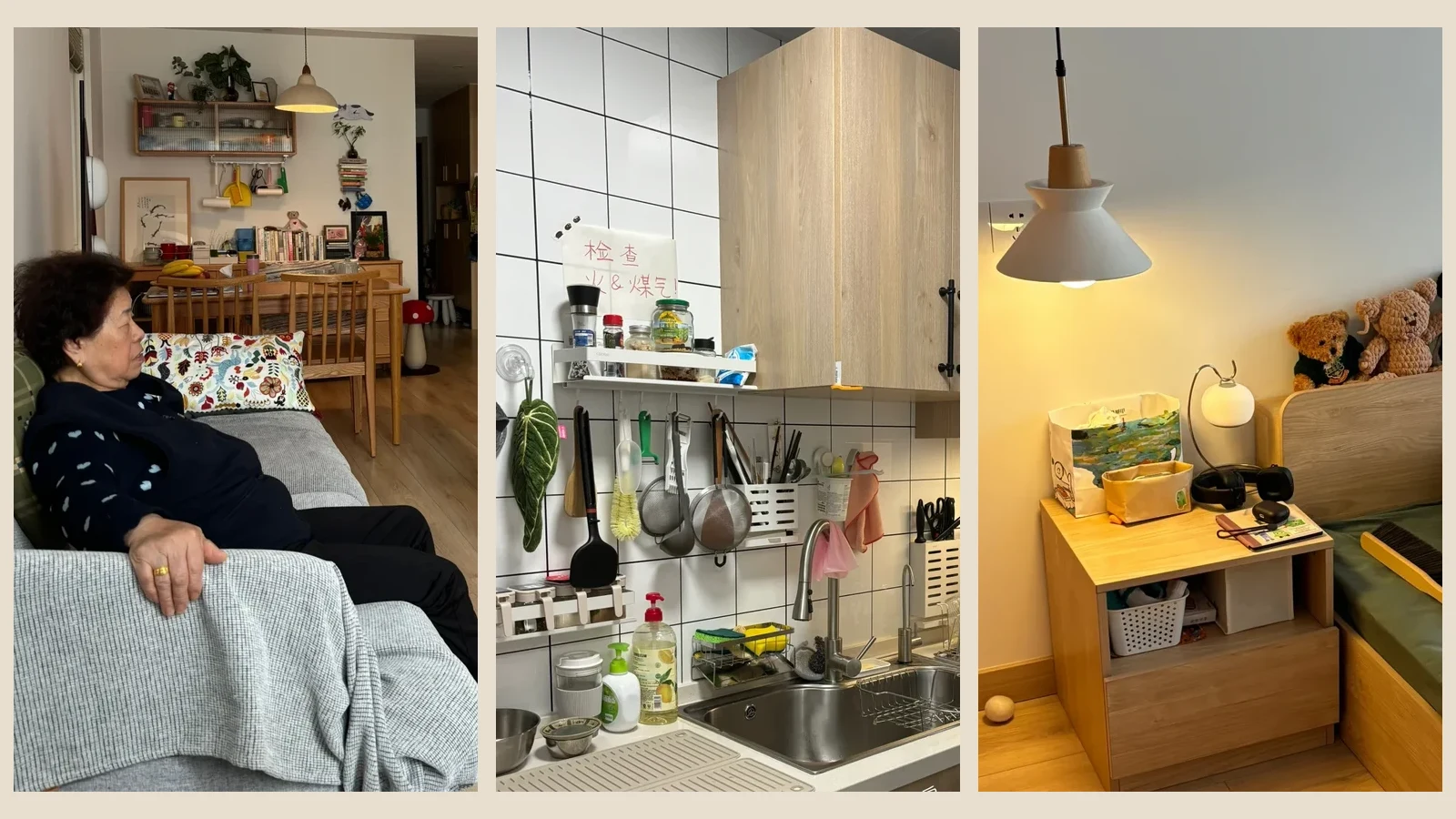
The interior refuses the empty phrase “peaceful temple.” It is dense, worked and specific. Hanging banners control the vertical space; fruit and ritual objects occupy the altar; embroidered cloth, cushions and furniture require constant arrangement; a practitioner stands inside a system of duties rather than posing against a neutral background. The image proves present use and visible material order. It cannot tell us the person's thoughts, the complete rite or what a visitor may photograph tomorrow.
This is the kind of picture I trust. It does not offer calm as a commodity. It shows responsibility. Every polished surface and replenished offering points to time, money and hands. A living temple is beautiful because people keep making it livable, not because tourists found an angle without people in it.
I find that more moving than the generic promise of “mystical calm.” Calm can be staged for a photograph. A repaired threshold, a clearly written rule and a staff member redirecting visitors reveal responsibility. They show that sacred space is negotiated every day between devotion, preservation, tourism and ordinary human impatience.
Look for the seams. New roof tiles beside older timber, a modern fire extinguisher near an altar, bilingual visitor signs and restricted doors tell you which pressures the institution is managing now. Do not mock those details as inauthentic. A building that survives must solve present problems.
Three identities can occupy one courtyard
A Taoist temple can be a religious institution, a heritage property and a tourist destination at the same time. Those identities do not blend without friction.
Heritage management may privilege visible architecture. Tourism may reward photogenic festivals. Religious specialists may need privacy, timing and spaces that do not fit a visitor route. Local residents may treat the complex as neighborhood memory rather than an exotic destination.
The honest visitor watches how those claims meet. A ticket does not buy access to every ritual. A heritage label does not freeze living practice. Religious use does not make every restoration historically original. The history of Taoism explains why continuity is layered rather than chemically pure.
A six-detail field note
After a visit, record six things before writing a grand interpretation:
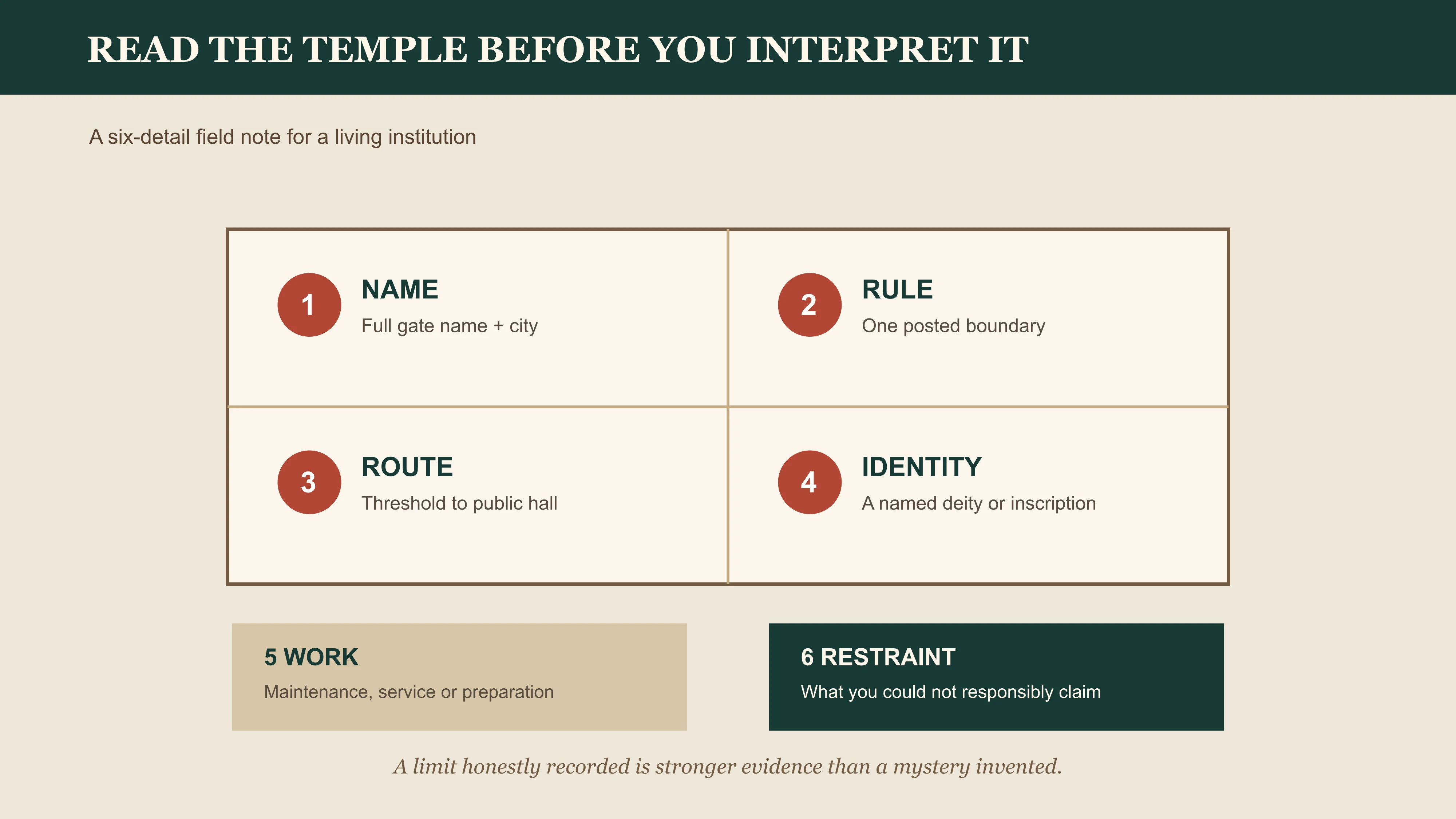
- the full name on the gate and the city;
- one posted institutional or visitor rule;
- the sequence from threshold to principal public hall;
- one deity or inscription identified by the site itself;
- one visible act of maintenance, service or ritual preparation;
- one boundary you could not responsibly cross or interpret.
That final boundary is crucial. It prevents curiosity from becoming extraction. It also gives another reader a reason to trust your description.
This note is deliberately harder than a list of “must-see halls.” A visitor can copy a hall name without understanding it. Recording work and restraint forces you to notice the institution in the present tense. It also leaves room for correction: a practitioner can clarify an inscription, a site record can revise a date, and another visitor can compare the same threshold without pretending that one afternoon settles the temple's whole history.
What not to conclude from incense
Incense confirms an action in a place. It does not identify a person's complete belief, guarantee that every visitor is Daoist or prove that one offering practice is universal. The same restraint applies to clothing, gestures and statues.
This is where the companion Taoist symbols guide becomes practical. Name, inscription, hall, grouping and institutional record are stronger than atmosphere. A cloud motif may be beautiful; a posted deity name is evidence.
The Chinese philosophy collection gives the larger intellectual network, but a temple should never be reduced to philosophy made scenic. It is a place where texts, people, deities, rules, money, repair and memory have to coexist.
What a good visit changes
The strongest reason to visit a Taoist temple is not to collect an aesthetic of quiet. It is to notice that Daoist life is built from relationships between text and place, formal worship and upkeep, mountain geography and city neighborhoods, private attention and public ritual.
The change should be visible in your language. Before the visit, you may say “a mystical Chinese temple.” Afterwards, you should be able to name the site, distinguish what the institution says from what you inferred, describe one present-day responsibility and admit one thing you still do not know. That is not less poetic. It is the difference between consuming an atmosphere and meeting a place.
Start with the history of Taoism if you want the long arc from early texts to organized communities. Start with Taoism if you need the broad vocabulary. Then return to a particular temple with one modest goal: identify what you are seeing before deciding what it means.
That restraint is not a failure of imagination. It is how a place finally becomes more interesting than a backdrop.
It is also a promise to the people who keep the place alive: their institution will not be reduced to our appetite for mystery, spectacle or certainty.
Carry that promise into your caption. Name the place, state what the image actually shows, and leave belief claims to evidence that can support them. Respect begins as accuracy long before it becomes etiquette.
The habit is small, repeatable and immediately visible to every reader.