Taoist texts are not one book with one voice. Begin with the Daodejing and Zhuangzi because they teach you how Daoist arguments move; then widen the shelf to scripture, commentary, ritual and the Daozang so “Taoism” does not shrink into a handful of calm quotations.
That is the reading problem in miniature. The famous short books are real entrances. They are not the whole house.
What are Taoist texts?
Taoist texts include early classics associated with Daoist philosophy, later commentaries, revealed scriptures, ritual writings, meditation and cultivation materials, hagiographies, liturgical collections and the vast Daozang (Daoist Canon). There is no single Taoist equivalent of a universally closed Bible.
For a first encounter, the Daodejing and the Zhuangzi are indispensable. But they answer different kinds of pressure. The Daodejing compresses political, ethical and cosmological thought into deliberately spare lines. The Zhuangzi destabilizes certainty with talking animals, useful uselessness, skilled butchers and dreams that refuse to keep identity fixed. One is not a pocket-sized instruction manual; the other is not merely a collection of whimsical fables.
The larger history gets more interesting when you stop asking “What is the Taoist holy book?” and ask: who needed this text, in what setting, to do what?
Start with the Daodejing—but do not turn it into a mood board
The Daodejing is short enough to fit on a poster and difficult enough to defeat a poster. Its style makes a reader slow down: softness can overcome hardness; empty space can make a vessel useful; attempts to control a world too tightly can produce their own failure.
Those are not permission slips for doing nothing. They are arguments about force, timing, language and the way confident intervention can make a situation worse. The focused wu wei guide takes up that question directly: non-forcing is a discipline of less coercive action, not an aesthetic for avoiding responsibility.
Read the text with passage numbers and at least one translator's notes. The Chinese Text Project edition is a useful bilingual point of reference, especially when an elegant English line feels too perfectly suited to a modern productivity crisis. Translation is not a neutral delivery service; it decides how much paradox, grammar and ambiguity will reach you.
This later metal figure, documented by the Met, does not show the historical author writing the Daodejing. It shows something else important: later Daoist worlds made Laozi into far more than the name on a short classic. A text can gather religious lives that its first English introduction never mentions.
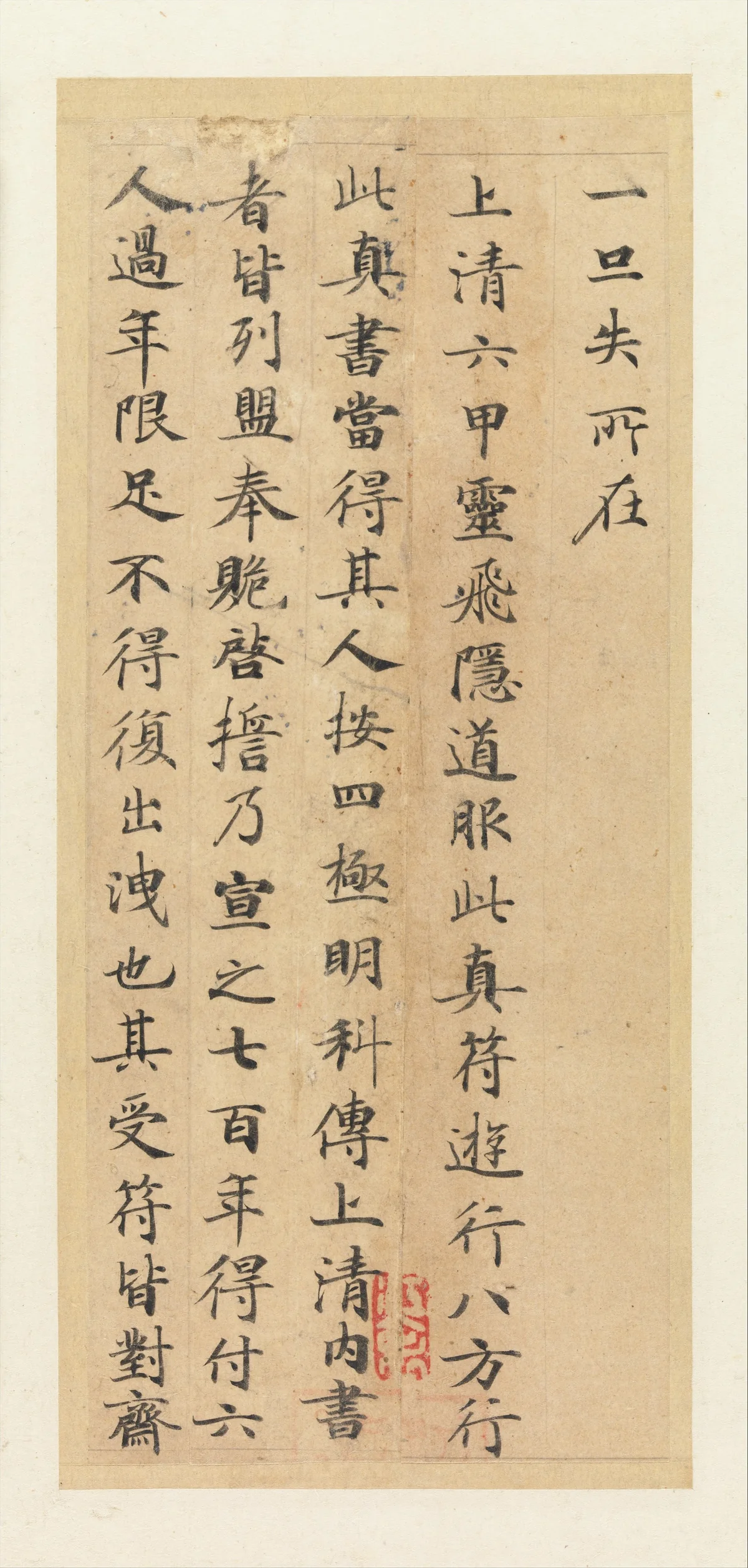
The Met identifies this leaf as part of the Classic of Spiritual Flight, an album dated to about 738. It is not a page of the Daodejing. Its ruled paper, vertical columns, ink, spacing and seal make a narrower point that a list of titles cannot: Daoist writing also survives as a made and transmitted object. The leaf does not establish who read it, how it functioned in a particular rite or what every Daoist scripture looked like; it gives one accountable object from which to begin asking those questions.
Read the Zhuangzi when certainty starts feeling too tidy
If the Daodejing often speaks in compressed pressure points, the Zhuangzi changes the temperature of the room. It makes an argument by making your ordinary categories wobble. Is the giant useless tree actually useless? Is the cook skilled because he forces the blade through the animal, or because he follows the spaces already there? Is the dreamer a man dreaming he is a butterfly, or a butterfly dreaming he is a man?
The point is not to collect clever paradoxes. The point is to catch yourself trying to make a fixed rule do work that only judgment can do. The Zhuangzi is at its best when it makes a reader embarrassed by a certainty they had been carrying too easily.
Use the Chinese Text Project's Zhuangzi as a passage-level reference, then choose a translation whose notes do not hide the cultural and textual difficulty. Read one complete story before deciding you understand its lesson. These stories do not owe us a motivational ending.
The Daoist Canon changes the scale of the question
The Daozang, often called the Daoist Canon, is the correction waiting for anyone who thinks Daoism is exhausted by two ancient books. It is a large, historically assembled library containing materials on ritual, revelation, ethics, meditation, cosmology, alchemy, sacred biography and institutional life.
That does not mean every Taoist reads every volume, or that every text carries the same authority in every lineage. It means the tradition cannot honestly be represented by a single universal reading list. The Stanford Encyclopedia of Philosophy's Daoism entry is a strong orientation before you make broad claims about what “Daoists believe” or which materials count as central.
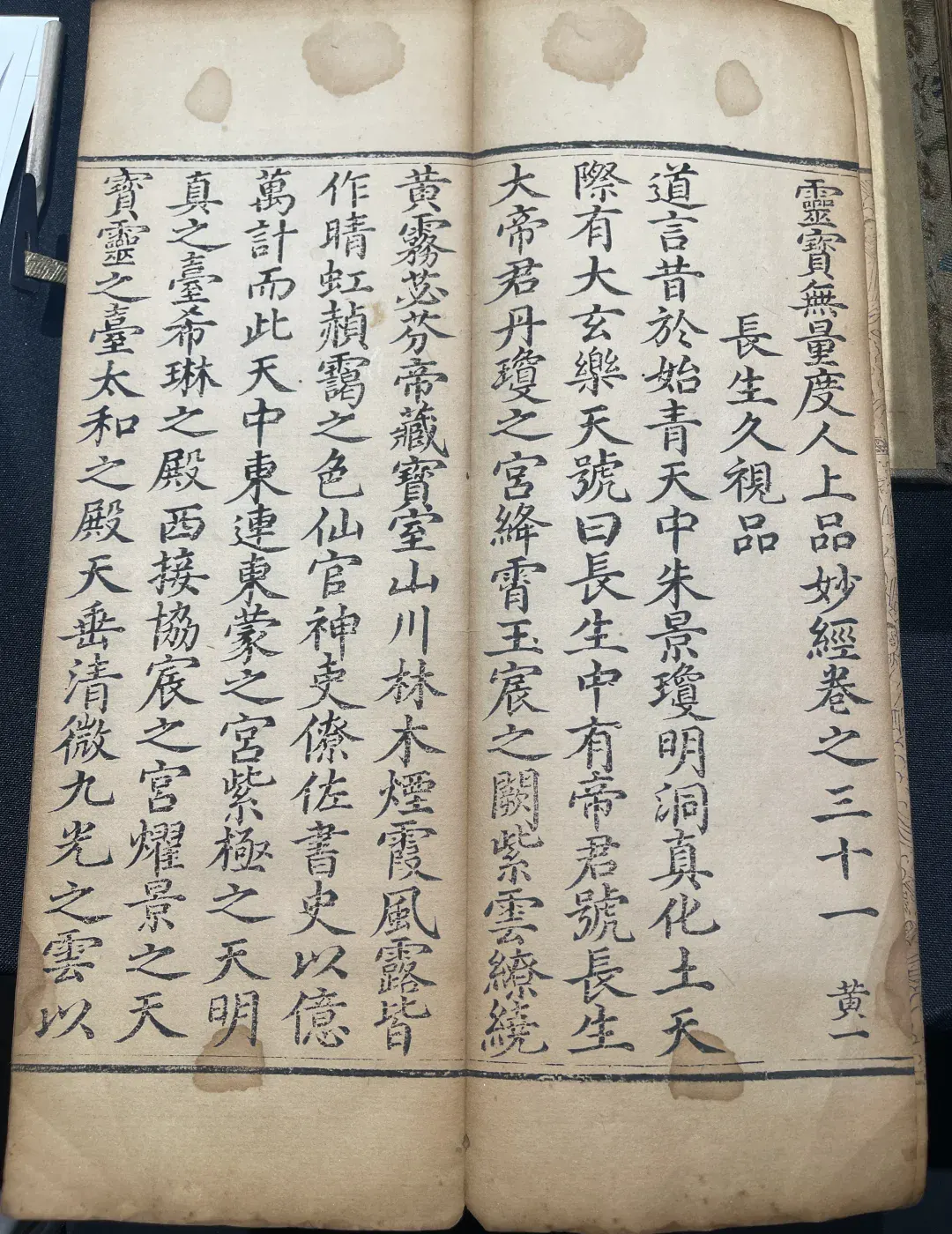
The photographed folio at the top of this page is a useful antidote to the phrase “Taoist holy book.” It has a title, sequence, material history and specific textual job; it is not a mystical texture. The stains and uneven paper do not prove continuous ritual use, and a photographed folio cannot identify every edition. What it does prove is simpler and more important: the canon arrived in discrete, handled, printed objects whose organization must be read before their sentences are harvested.
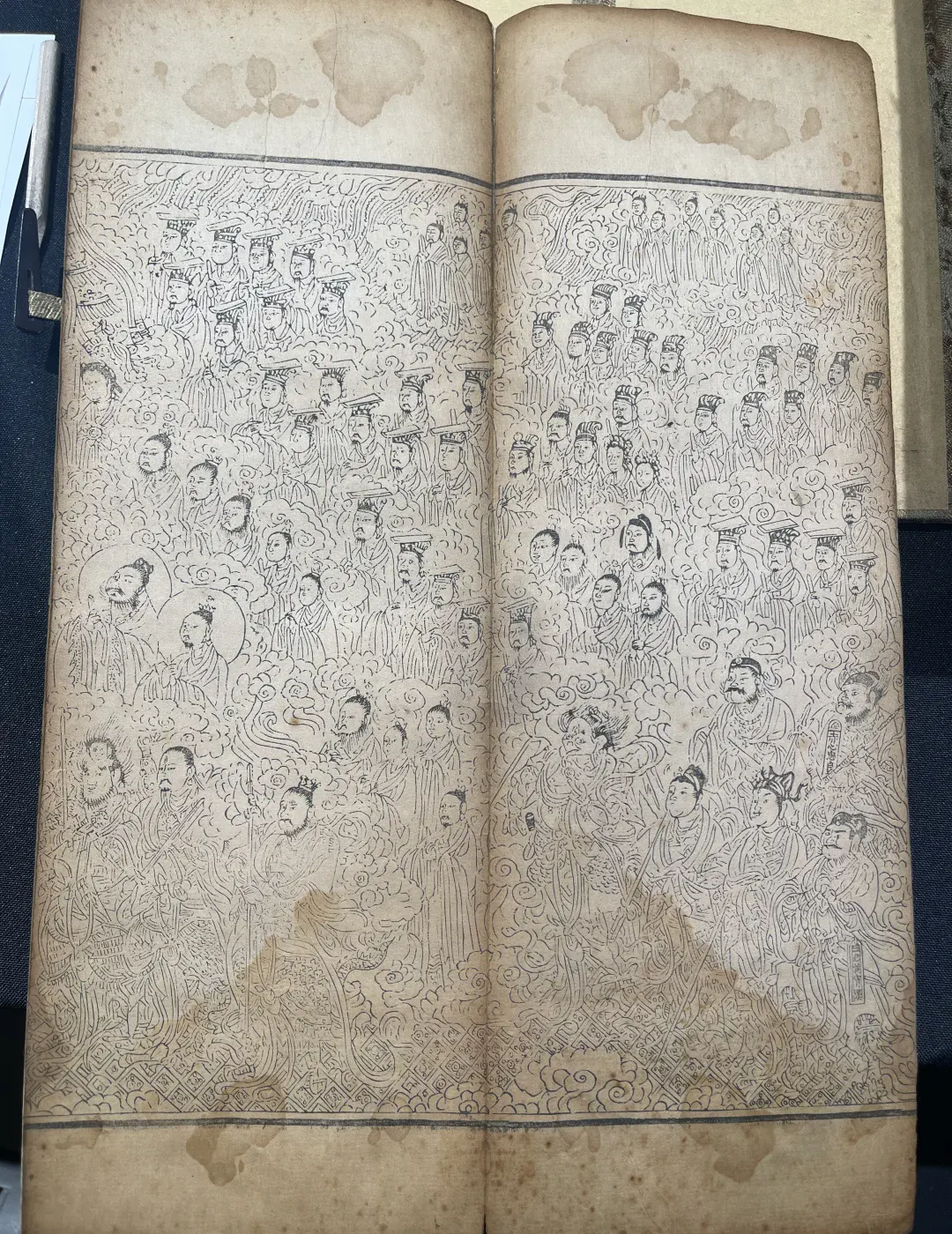
The woodcut changes the reading problem again. A reader who entered through the Daodejing may expect aphorism and abstraction; here the page presents a populated sacred order. I do not treat that difference as a decline from philosophy into superstition. It is evidence that Daoist texts perform different kinds of work—argument, revelation, liturgy, classification, visualization—and that the English word “text” hides how unlike those works can be.
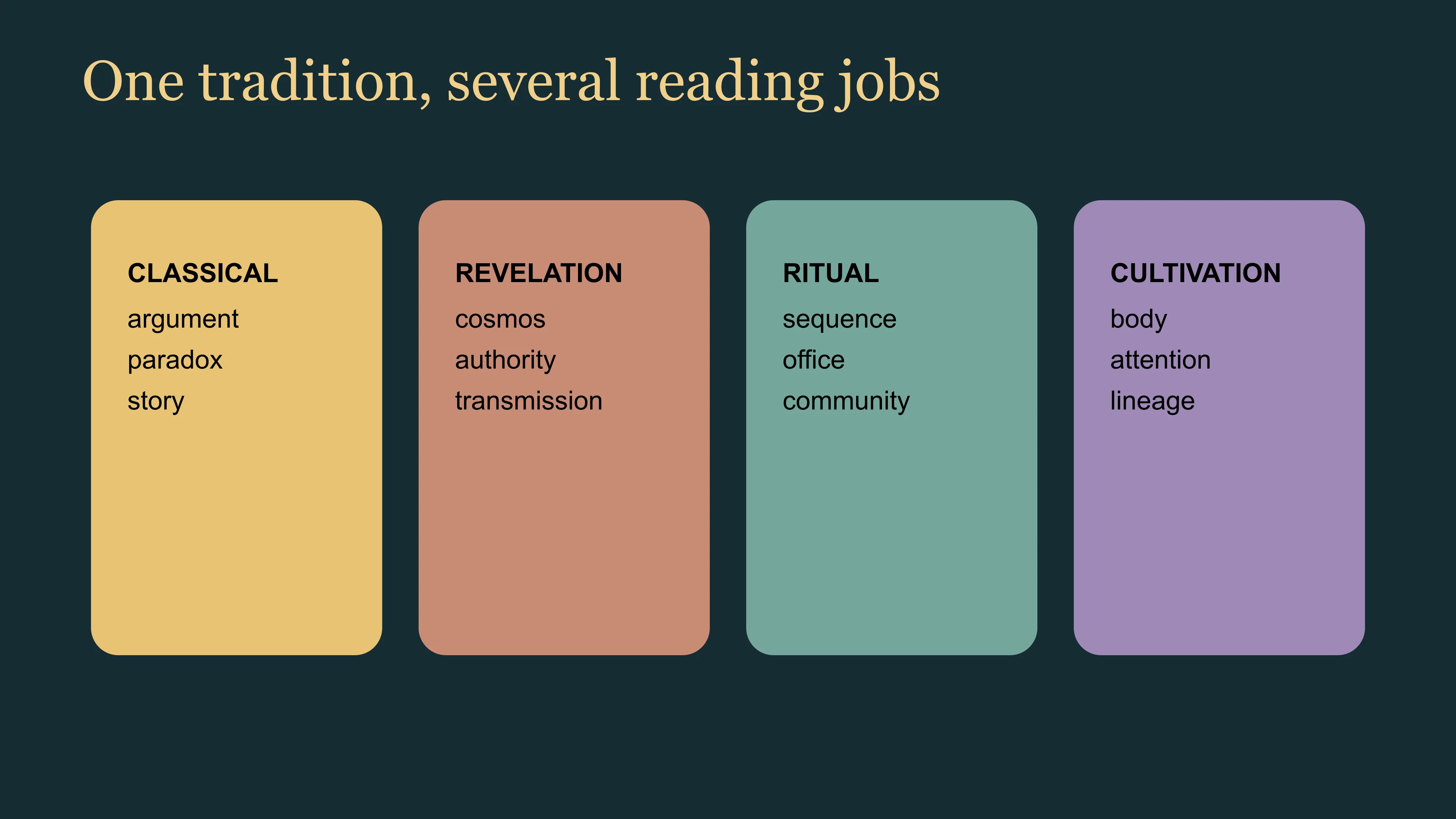
The four shelves are not a new canon and they are not a ranking. They make a narrower visual point: classical argument, revelation, ritual and cultivation ask different things of a reader. A two-book “philosophy” shelf cannot contain them, and religious Daoism cannot be treated as colorful decoration added to an otherwise complete classical doctrine.
Four shelves, four different reading jobs
| Start here when you want to… | Read | What it gives you | Do not mistake it for… |
|---|---|---|---|
| Question force, leadership and over-control | Daodejing | Compact arguments whose meaning changes with translation and context | A collection of stress-relief slogans |
| Loosen rigid categories and see skill differently | Zhuangzi | Stories, comedy and philosophical disorientation | A single systematic doctrine |
| Understand scripture, ritual and divine worlds | Daoist Canon and lineage texts | The scale of institutional and religious Daoism | One book every Daoist treats identically |
| See how texts become practice | Commentaries, liturgies and local teaching | The social life around a text | Private belief extracted from place and community |
This is not a ranking from “pure philosophy” to “later religion.” That old ladder has hidden as much as it has explained. Texts, communities and practices continually made one another. The history of Taoism maps the major turns in that relationship.
Why a temple belongs in a text guide
It can feel strange to move from a book to a courtyard. Yet texts do not preserve themselves. People copy them, teach them, chant them, argue over them, authorize them, carry them into rituals and give them a home in institutions.
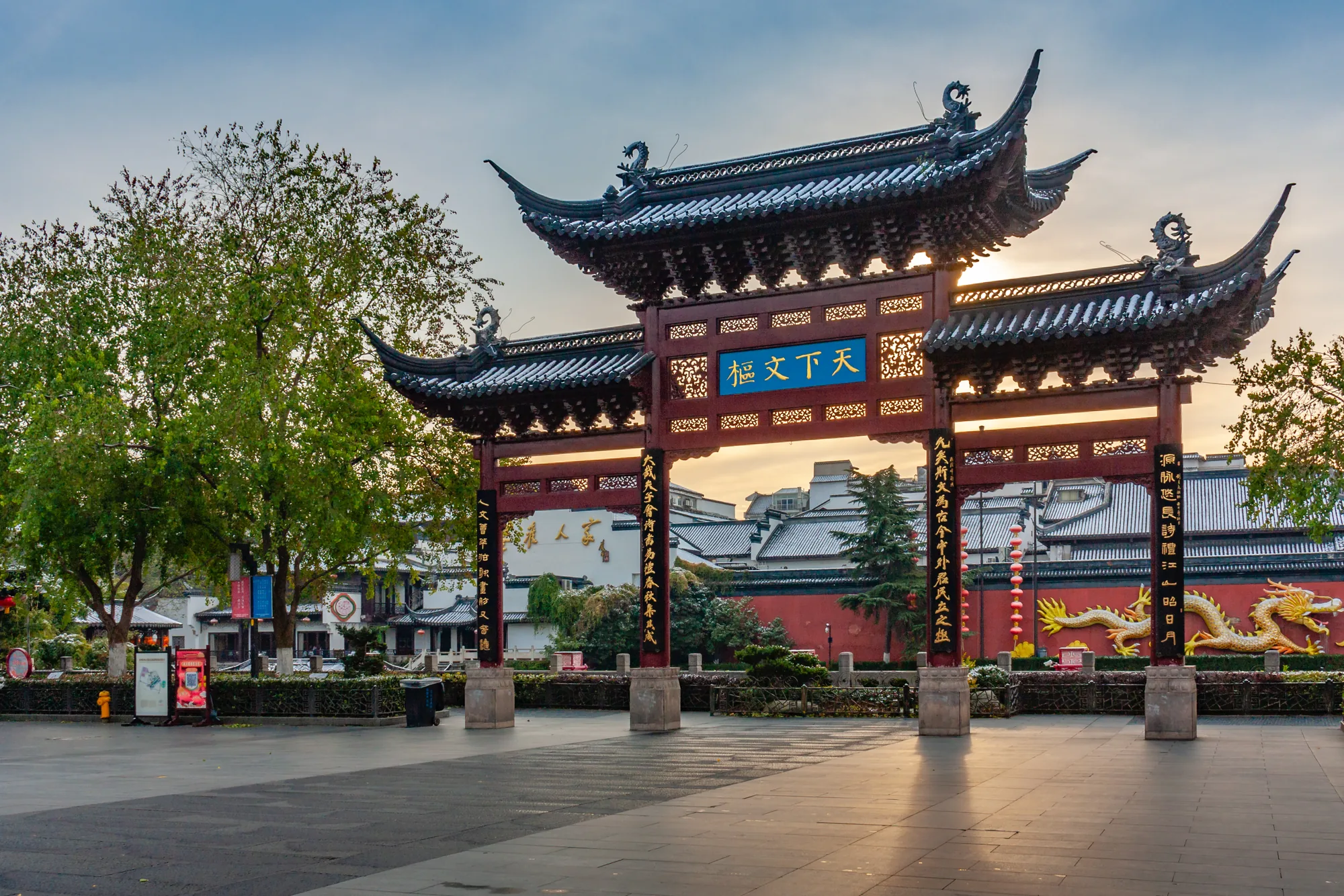
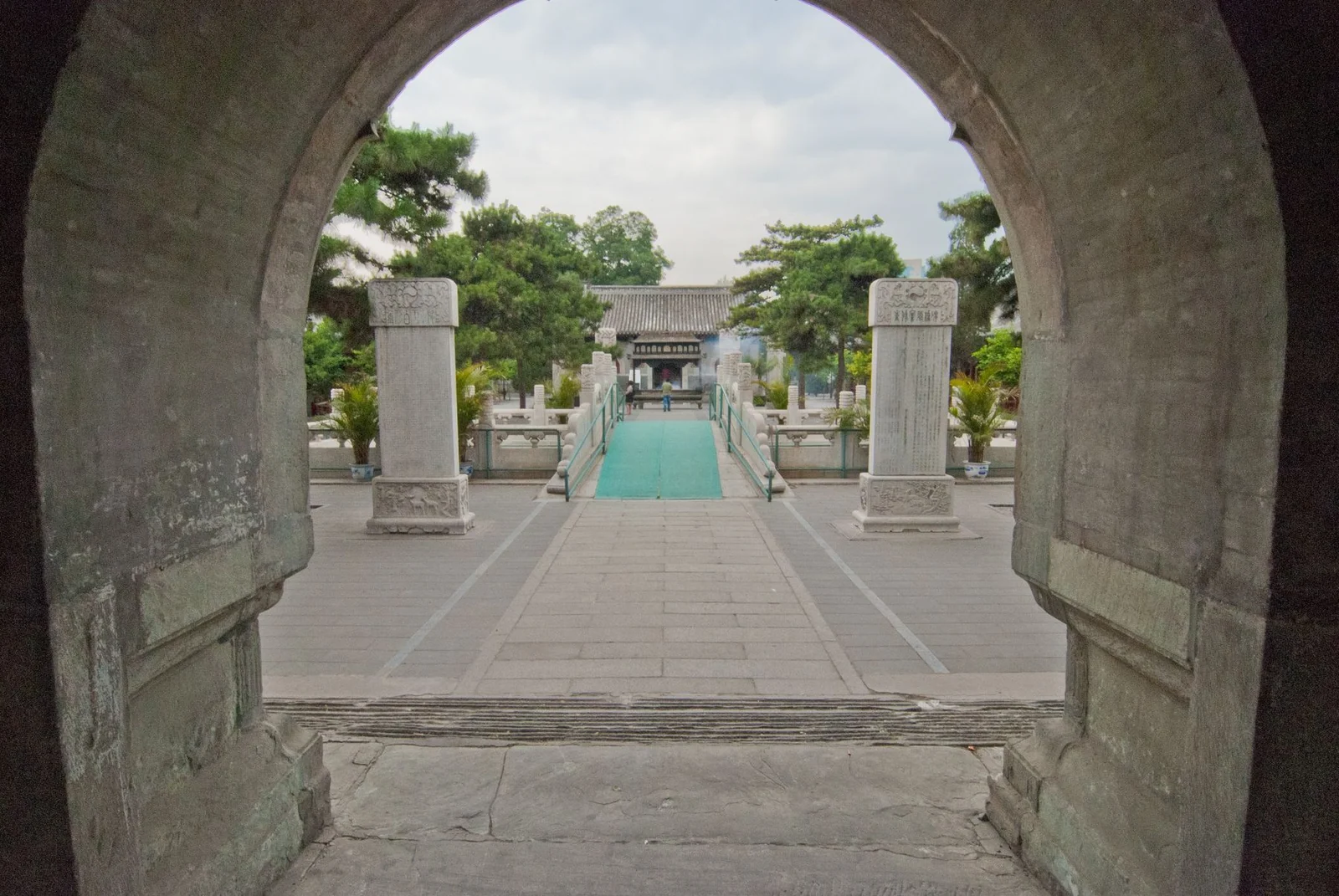
A temple courtyard cannot tell us the contents of a scripture. It can show the institutional setting that a book-only picture erases: Taoist transmission is also a question of communities, named places, disciplines and continuity. The Taoist beliefs guide explains why it is safer to ask which text, lineage, temple and period is in view than to announce one creed for everyone.
Translation is where easy wisdom is manufactured
The most suspicious Taoist sentence is often the one that slides perfectly into contemporary English. It may still be a responsible translation. But ease is not proof.
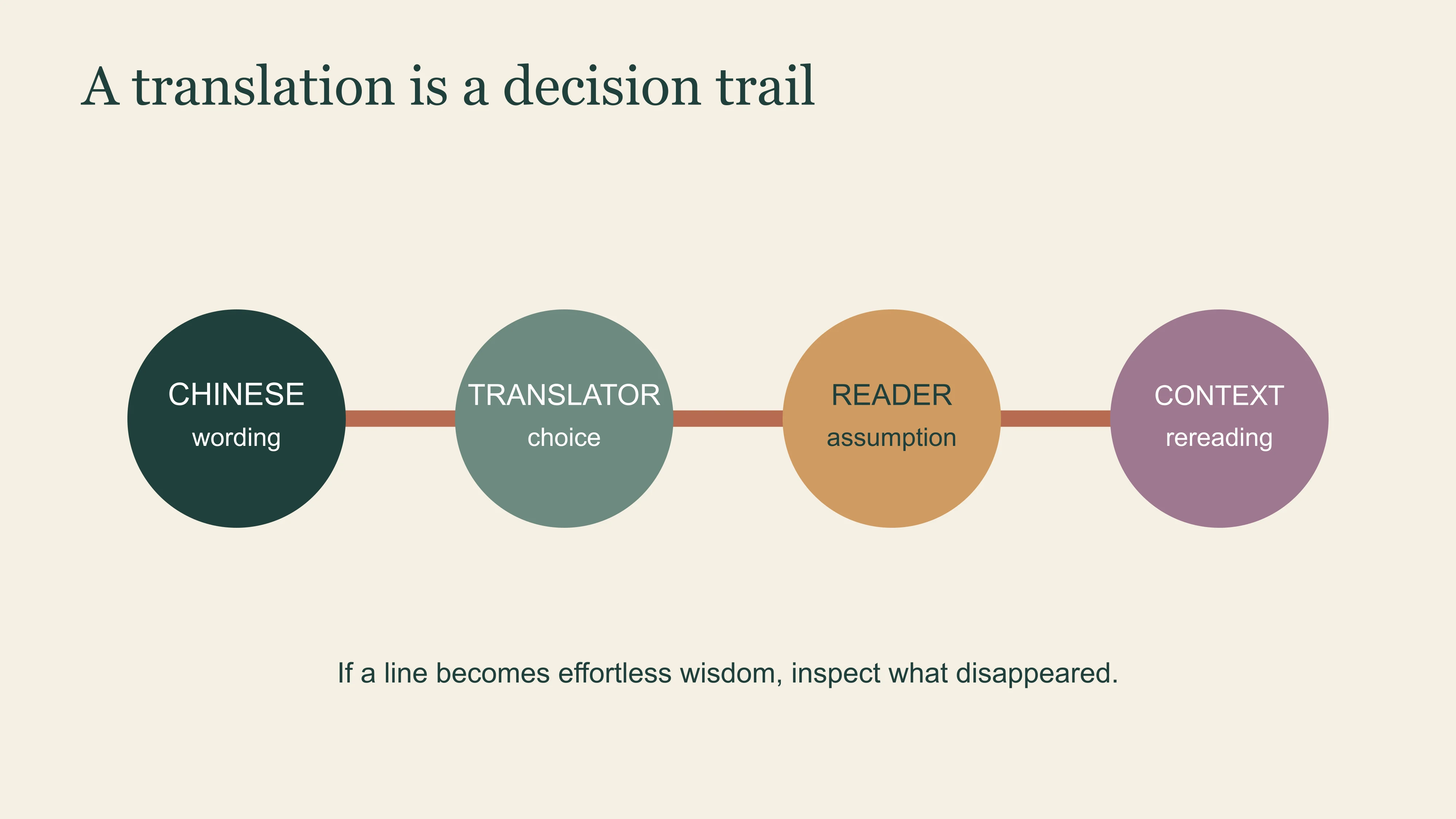
Chinese words such as dao, de, ziran and wu wei carry histories and grammatical possibilities that one English equivalent cannot preserve. A translator must choose. “Virtue” can make de sound moral in a narrow modern sense; “nature” can make ziran sound like forests; “non-action” can turn wu wei into inactivity. Notes matter because they reveal the decision instead of hiding it.
I do not want a translation that performs mystery, and I do not want one that removes every rough edge. The best first translation lets the sentence remain difficult in the right place. Compare two versions when a line becomes central to your argument. Then check the Chinese wording and commentary before building a life philosophy on six English words.
Do not read every shelf with the same posture
A classical argument invites interpretation. A revelation scripture also asks who received it and how authority was established. A ritual manual is incomplete without performers, sequence, objects and institutional competence. A cultivation text may use technical body language that cannot responsibly become medical advice or a self-directed exercise.
This is why the “Taoism holy book” search intent must end with a refusal. There is no one reading posture that makes all Taoist texts available to an isolated modern reader. Some texts reward solitary rereading; others point beyond the page to a teacher, lineage or ritual community.
That limit is not gatekeeping for its own sake. It is evidence about what the text is. A score is not merely a poem because both contain marks. A liturgy is not merely an essay because both contain sentences.
A first-month reading route
Week one: read a small group of Daodejing chapters in two translations. Mark where the translators disagree about action, rule or desire.
Week two: read complete Zhuangzi stories, including their comic and unsettling parts. Do not harvest one sentence before the story has changed its meaning.
Week three: read an accountable history of Daoist communities and revelations. The history of Taoism prevents the two-classics shelf from pretending to be the whole tradition.
Week four: choose one later text category—ritual, revelation, commentary or cultivation—and learn what kind of institution carried it. Your goal is not mastery. It is to discover which questions a book-only introduction never taught you to ask.
The Chinese philosophy collection then gives you comparison without forcing every Chinese text into the same genre.
Keep one page in your notebook divided into three columns: what the line literally seems to say, what the translator has decided for you, and what changes when you read the surrounding passage. That tiny discipline catches more distortion than collecting twenty floating quotations. It also makes disagreement productive. Two translations can diverge without one being fraudulent; the divergence shows where the Chinese wording carries more than one live possibility.
When a line feels instantly perfect for modern productivity, romance or leadership, slow down. Convenience is not evidence. Read backward and forward, name the text type, and ask whether polished English has removed a tension the original argument needs. The best Taoist texts do not merely decorate conclusions you already own. They make those conclusions unstable enough to examine.
A reading route that leaves room for surprise
Start with 10–15 chapters of the Daodejing, not the whole book at a sprint. Mark one line that feels clear and one that irritates you. Then read two or three complete Zhuangzi stories. Do not compare them too quickly; let the tonal difference teach you that Daoist thought is not one mood.
After that, return to the classical books with a harder question: what gets lost if the tradition is represented only by these? Read an introduction to the Daozang or the historical chapters in the Taoism guide. Notice the arrival of ritual communities, revelations, deities and body practices—not as a corruption of a clean original, but as historical worlds with their own texts and problems.
The most rewarding Taoist reading is not the kind that makes you feel instantly ancient. It is the kind that makes your categories less lazy.
It should also change what you refuse to share. I no longer pass along a polished “Laozi quote” merely because it sounds serene. I want a chapter, a translator and enough context to see whether the line is translation, paraphrase or invention. That refusal is not academic fussiness. Misquotation turns a difficult tradition into a vending machine for moods.
Bring one disputed line to the East Moment community with both translations attached. Explain which choice changes your reading and what remains unresolved. That is a better conversation than voting for the prettier sentence.