Recent Ox years are 1985, 1997, 2009 and 2021. The sign is usually praised for patience and hard work, but those traits only make sense when we remember what cattle labor changed: soil, transport, food production and the amount of work a household could perform.
Year of the Ox dates and exact boundaries
Ox years include 1925, 1937, 1949, 1961, 1973, 1985, 1997, 2009, 2021 and 2033.
| Ox year | Begins | Ends | Element |
|---|---|---|---|
| 1985 | February 20, 1985 | February 8, 1986 | Wood |
| 1997 | February 7, 1997 | January 27, 1998 | Fire |
| 2009 | January 26, 2009 | February 13, 2010 | Earth |
| 2021 | February 12, 2021 | January 31, 2022 | Metal |
January 2021 still belonged to the Year of the Rat. Use the full-date calculator for birthdays near Chinese New Year.
See the complete Chinese zodiac cycle to place Ox within the twelve animals and the underlying Earthly Branch sequence.
Why two people born in the same calendar year can have different signs
The boundary is the Lunar New Year, not January 1. Someone born on January 20, 2021 is still a Rat in the ordinary zodiac-year system; someone born on February 12, 2021 enters the Ox year. This is not a tiny technicality when a family is choosing a birth-year symbol, reading a wedding date or comparing a museum label with a birthday.
There is also a second layer of precision. Traditional calendrical specialists may use lichun (立春, the Beginning of Spring) as a boundary in some forms of astrological calculation, while popular zodiac charts use Lunar New Year. East Moment uses the Lunar New Year boundary for this public-facing zodiac guide and says so plainly. If a practitioner gives you a different result, ask which boundary system they are using instead of calling one answer a mistranslation.
Our conclusion: Ox symbolism records dependence on animal work
Calling Ox-born people “reliable” turns a material relationship into a personality compliment. Zooarchaeological pathology provides direct evidence of cattle traction in northern China by the early second millennium BCE. The animals supplied force for work such as plowing and transport; reliability mattered because food production and movement could depend on repeated labor.
The Ox represents labor that makes other systems possible. That is why steady force matters more than spectacle. The animal is culturally powerful not because it performs confidence, but because food and movement can depend on its repeated work.
This also makes the Great Race story sharper. The Rat reaches first place by using the Ox's carrying power. Strategy wins the ranking, but infrastructure gets everyone across the river.
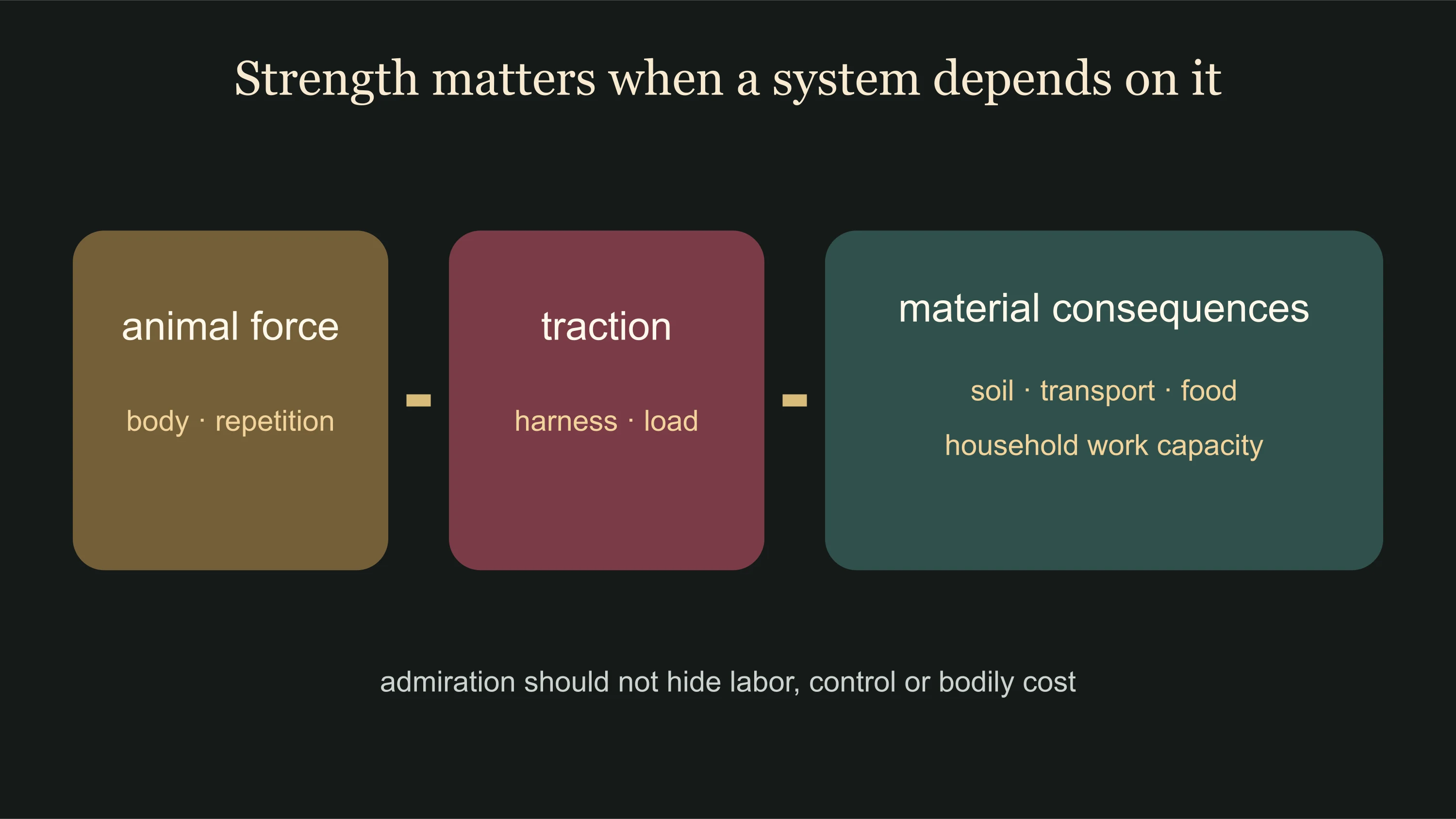
I resist the polished phrase “quiet strength” because it removes the cost. Traction means a body repeatedly transferring force through harness, ground and load. The cultural admiration is real, but so is dependence on animal labor. The Ox becomes meaningful where strength enters a system someone else needs.
Chou is the branch; niu is broader than ox
The Ox corresponds to 丑 (chou), the second Earthly Branch. The everyday cattle word is 牛 (niu). Chou is traditionally associated with roughly 1 a.m. to 3 a.m.
English “ox” usually implies an adult bovine used for work and often a castrated male. 牛 is broader and can refer to cattle generally, with compounds adding distinctions. “Year of the Ox” is the established English zodiac label, but it should not be treated as a perfect biological translation.
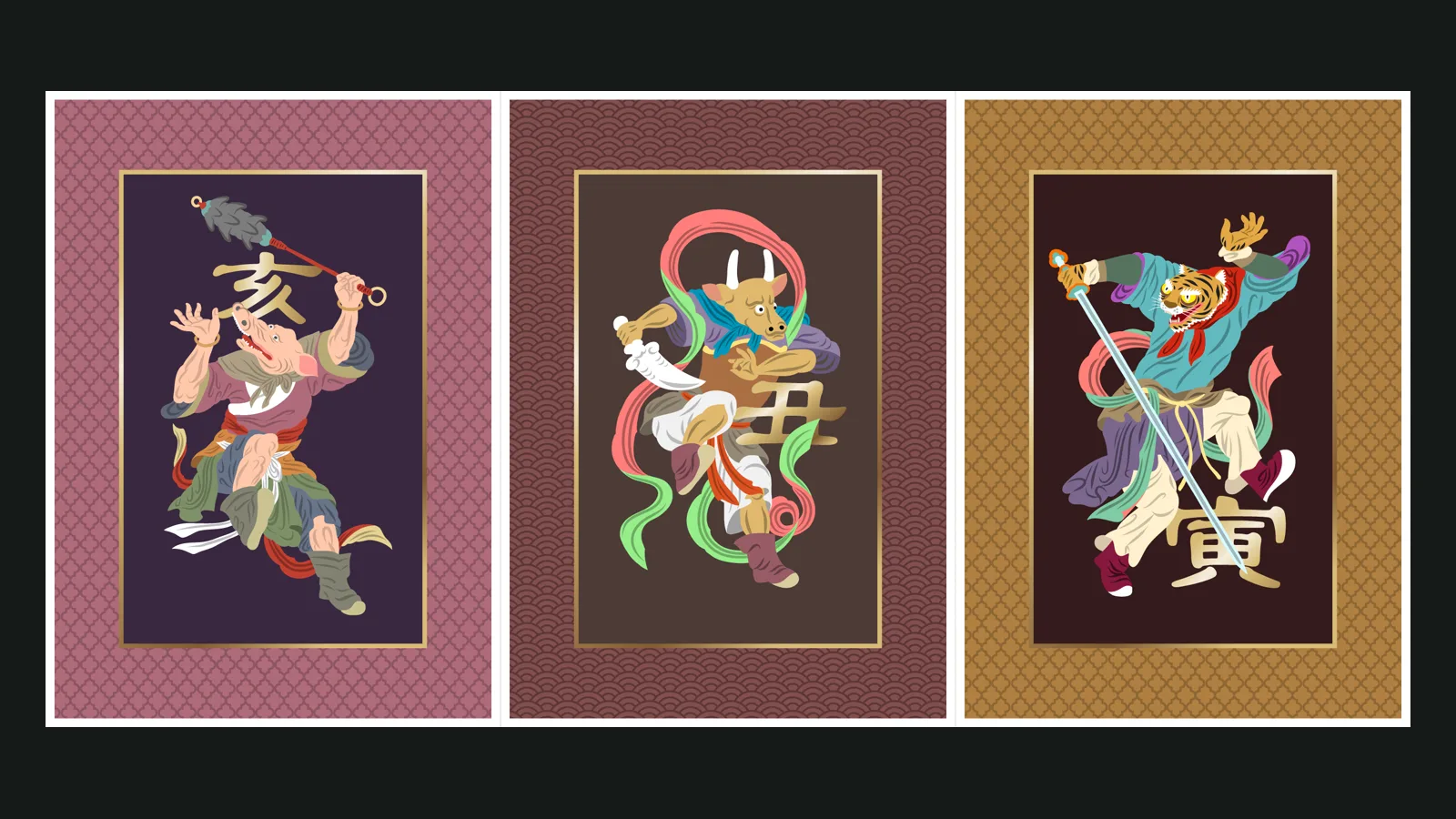
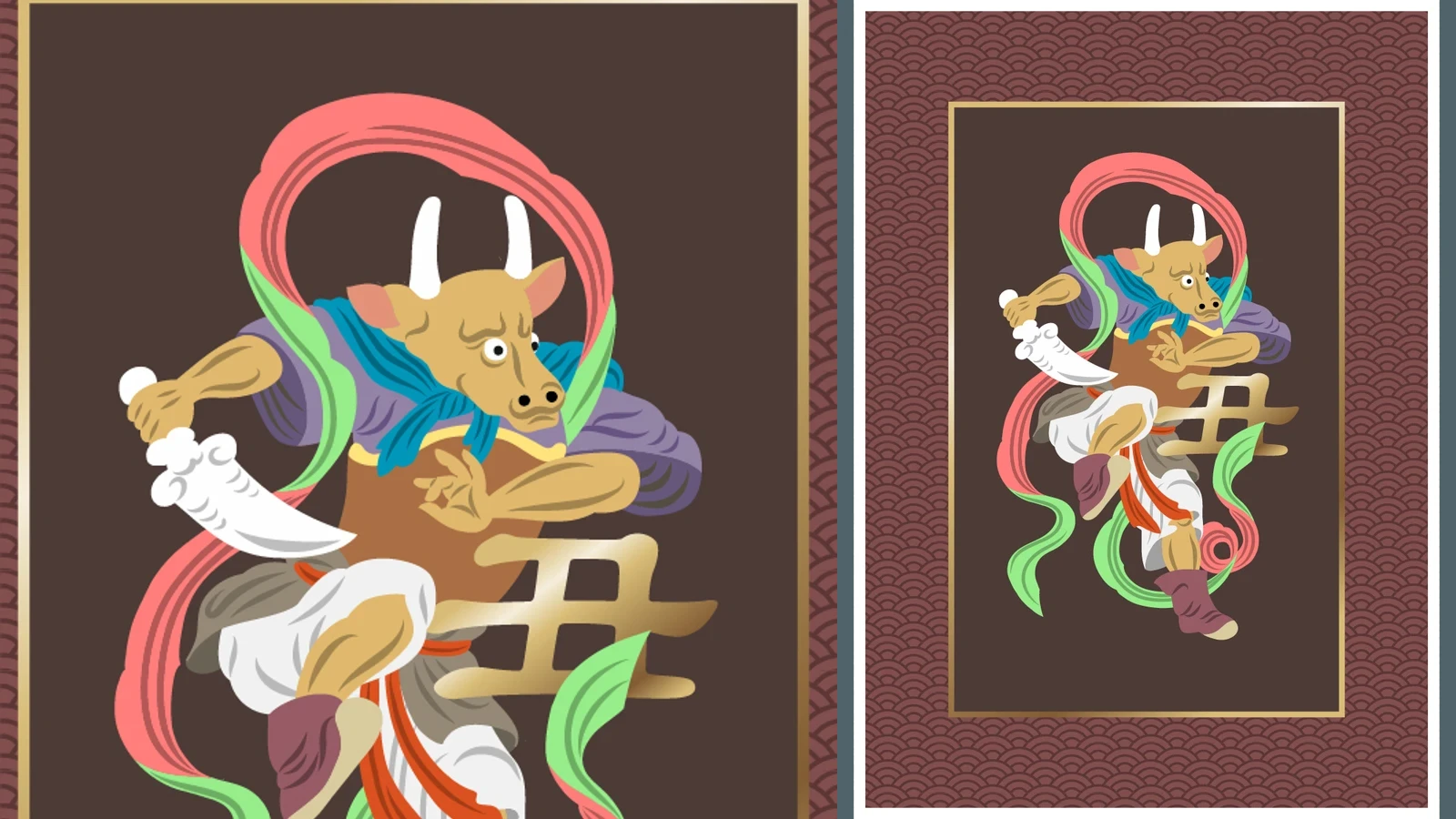
The artwork may show ox, bull, cow or stylized cattle features. Identify what is visible and preserve the source's wording instead of pretending one English term erases the whole category.
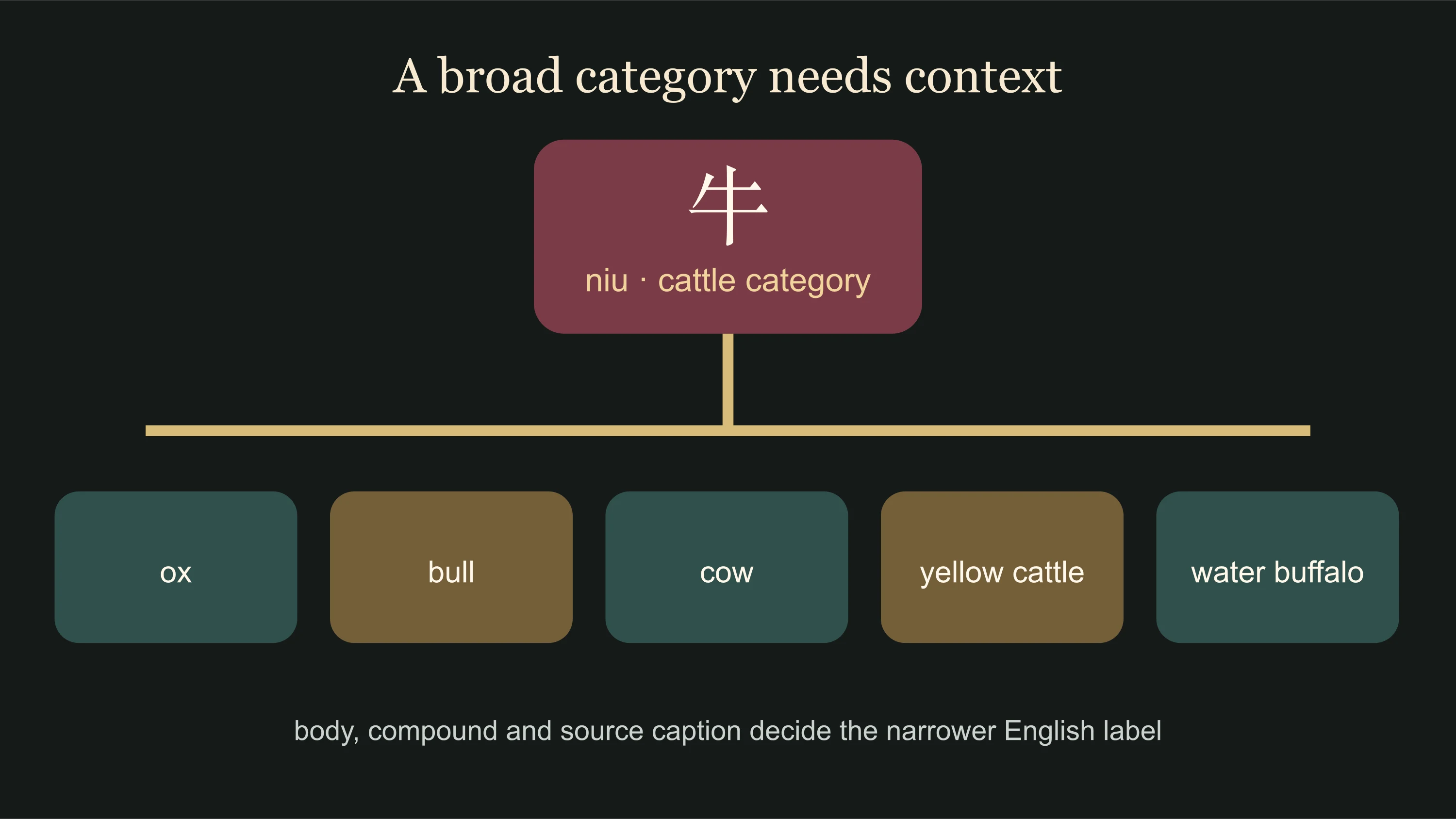
A small cattle vocabulary
| Chinese term | Useful English reading | What it adds |
|---|---|---|
| 牛 niu | cattle, bovine, ox in zodiac context | Broad base category |
| 公牛 gongniu | bull | Specifies male |
| 母牛 muniu | cow | Specifies female |
| 水牛 shuiniu | water buffalo | Specifies a different working animal |
| 黄牛 / 黃牛 huangniu | yellow cattle | Common cattle category, context-dependent |
This table is not a license to identify species from a stylized cartoon. Horn shape, body, environment and source caption still matter. Its purpose is to show why English “Ox” can be culturally conventional while biologically narrower than 牛.
A Yuan-dynasty Ox held as an attribute

The Metropolitan Museum of Art identifies this glazed stoneware object as a Zodiac Figure of an Ox from the Yuan dynasty (1271-1368). A robed human-form figure holds a small ox at the center of the body, where the animal works as the identifying attribute.
The contrast matters. Our contemporary hero turns the Ox into an animated protagonist beside 丑. The Yuan figure gives most of the physical scale to the robed holder and lets the compact animal determine the zodiac identity. One image leads with animal movement and branch character; the other asks the viewer to recognize a small attribute.
The Met's free-text object-date field is empty, but its period field explicitly assigns the figure to the Yuan dynasty. Reading the complete collection record matters: one blank metadata field does not erase the date range supplied elsewhere in the same institutional record.
Labor needs a landscape
An isolated Ox icon usually supports only a general claim about strength or zodiac identity. A field, plow, cart, yoke or human handler changes the argument. Those details locate strength inside a working system.
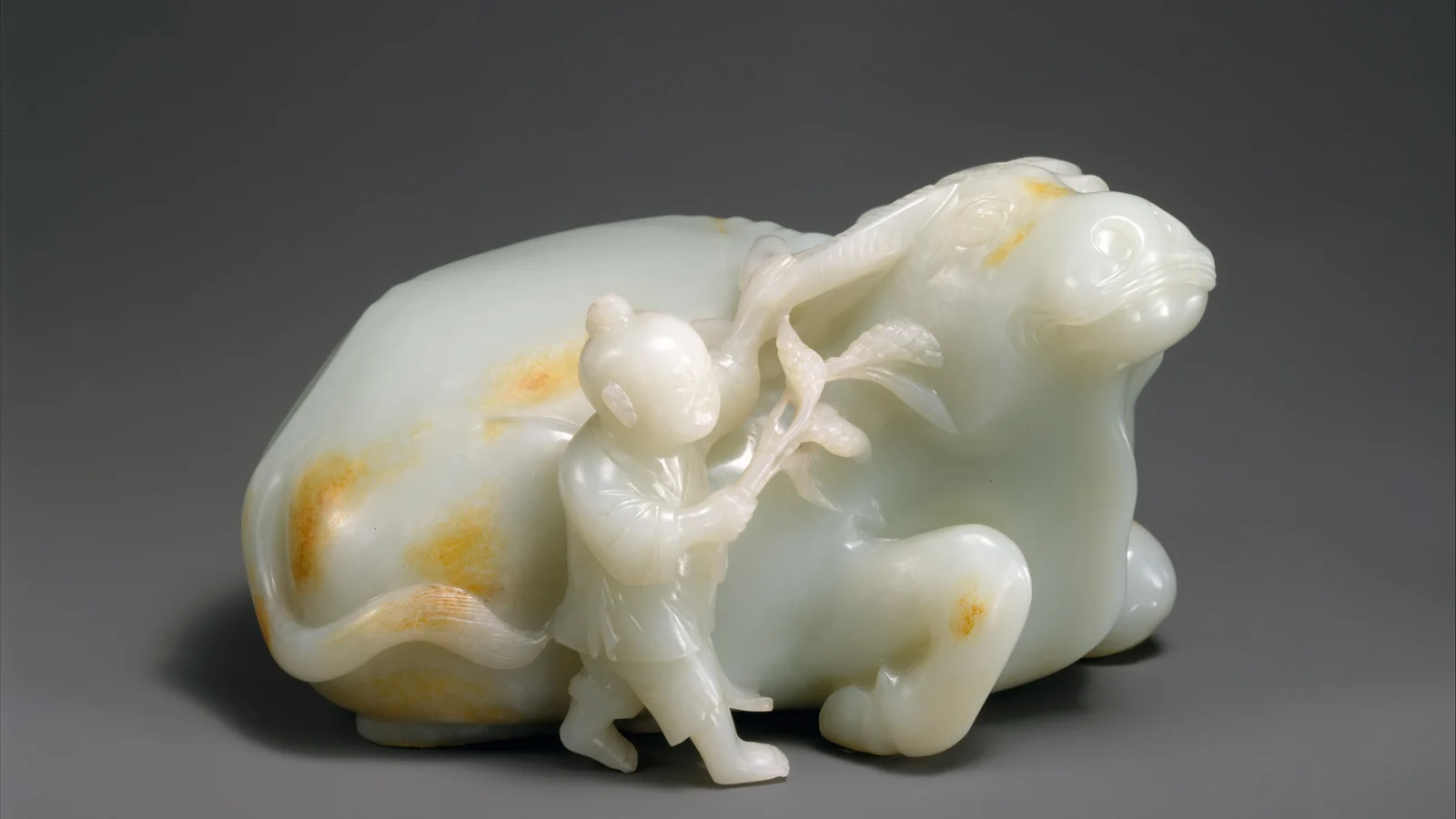
The Met's eighteenth-century Boy with water buffalo supplies the human-animal relationship missing from an isolated mascot. The child touches and leans into the much larger body; the buffalo is resting, not visibly plowing. The object therefore proves proximity, scale and dependence, but not traction in action. That honest limit makes it useful: cooperation is not only a heroic work pose, and a water buffalo should not be relabelled as a generic ox merely to fit the page title.
This is why archive context matters. A photograph of cattle near a field does not automatically prove plowing, and a decorative yoke does not identify a region or period by itself. The strongest captions describe what is visible first, then add historical interpretation from documentary sources.
Why 2021 was a Metal Ox
2021 combines Xin (辛) with Chou (丑). Xin is associated with yin Metal, producing the Metal Ox label.
The previous Xin-Chou year was 1961; the next will be 2081. Ordinary Ox years repeat every twelve years, while the same stem and branch return every sixty.
Metal is a calendrical classification. Claims that it creates a tougher or more disciplined personality are folklore, not measurement.
What “hard-working” hides
Work is not automatically virtuous. A romantic Ox image can hide who controlled the animal, who benefited from the labor and how demanding agricultural life was. Praising endurance is easier than asking why endurance was required.
That tension gives the sign depth. The Ox can symbolize persistence and social dependence at once. It can honor labor while reminding us that essential work is often least theatrical.
When reading Ox-year imagery, look for harness, field, cart, human partner, branch 丑 and body type. Those details tell you whether the image is about labor, abundance, strength, sacrifice or merely a friendly New Year mascot.
The Year of the Ox is not best explained by stubbornness. It is the zodiac's clearest reminder that civilizations rest on repeated work someone—or some animal—must actually perform.
My final test is simple: if the cattle disappeared from the image, what human activity would become harder or impossible? If the answer is plowing, carrying or transport, the page can discuss labor. If nothing changes because the animal is only a smiling mascot, “agricultural endurance” is an imported story, not visible evidence.
That distinction is why I would rather show one visible yoke than add ten adjectives. The yoke locates force, cooperation and control in a working arrangement. “Patient” merely invites readers to recognize themselves in a flattering description.
What an Ox year can explain—and what it cannot
The Ox is useful for reading calendars, art and family language. It is not a personality test. A birth year can tell you which animal is conventionally attached to a date; it cannot prove that a person is patient, obedient, financially conservative or suited to a particular job.
Use the sign as a cultural prompt instead. Ask what kind of work an image makes visible, which relationships distribute the load and whether the artist is praising cooperation or demanding submission. That reading works for a New Year paper-cut, a museum figure and a contemporary office mascot without pretending they carry the same message.
I would also avoid the popular promise that an Ox year is automatically good for career endurance or marriage. Those claims may belong to a horoscope service, but they are not established by the calendrical system or by the historical evidence on this page. The valuable answer is narrower: the Ox gives readers a way to discuss dependable force, dependence and the dignity of necessary work.
The Year of the Ox is about dependence before personality
Calling the Ox “hard-working” sounds respectful, yet it can hide the entire relationship. Cattle traction mattered because human communities depended on animal strength to change soil, move weight and extend the scale of work. The meaning is not located inside a naturally obedient personality. It sits between body, tool, land and the people receiving the result.
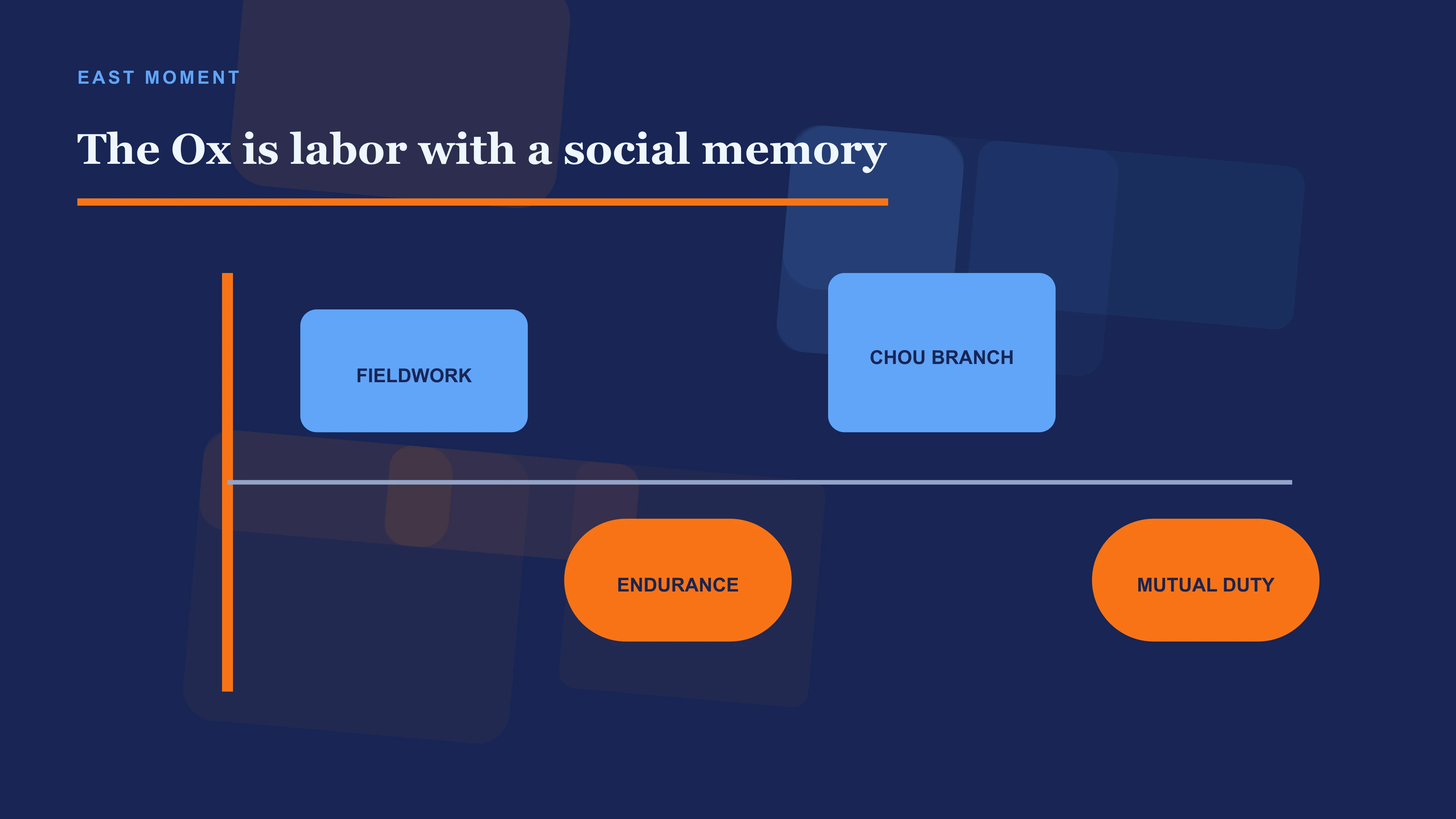
That distinction is why the harness matters more than a gold ingot added by a designer. Archaeological and pathological research on cattle traction in northern China gives physical evidence that animal labor was not an abstract virtue. Bodies carried the cost. When later culture praises the Ox for endurance, it is drawing on a material history of dependence, even if the praise forgets to name who depended on whom.
I dislike the modern management version of Ox symbolism that tells a worker to accept endless burden quietly. Endurance is admirable only when the relationship is just enough to deserve it. Otherwise “be like an Ox” becomes a beautiful way to demand labor without voice. A cultural symbol should sharpen our ethics, not anesthetize them.
Niu is broader than the English word ox
The Chinese animal term niu can cover cattle categories that English separates more aggressively. An “Ox year” translation is established and useful, but a specific object may show a bull, cow, buffalo or working ox. The image decides the species and role; the zodiac label alone does not.
The Met's Yuan-dynasty Zodiac Figure of an Ox handles the identity through an animal attribute. It does not teach modern breed identification or prove a farm scene. That boundary is a strength. The object shows how the zodiac could be embodied in a ritual or funerary figure while leaving agricultural history to different evidence.
When reading a painting, sculpture or New Year design, ask three questions: is the animal working, resting or confronting; is a human present; and what tool or landscape organizes the relationship? A plow scene makes cultivated land and cooperative force visible. A lone muscular animal may emphasize power. A calf beside an adult can redirect the image toward care. “Ox means diligence” cannot do this visual work.
What I would keep from the stereotype
Steadiness remains a useful idea if it is attached to method. The Ox advances by repeated force applied to a real obstacle. That is different from passive obedience. Steadiness chooses a line, responds to resistance and completes shared work. It can include refusal when the load is abusive.
For a person born in an Ox year, use the symbol as a question: what work do you carry well, what system depends on you and where should the load be redistributed? Do not convert it into a promise that the person will be patient, conservative or good with money. The calendar identifies the year. Character still belongs to experience and choice.
The zodiac elements guide explains why Metal Ox and Water Ox are not interchangeable year names. The calculator settles the New Year boundary. This page contributes the part a calculator cannot: a way to see labor without romanticizing submission.
Ox strength is measured by what the system asks it to carry
The Ox is praised for endurance so casually that endurance can sound like consent. A plough animal works inside a relationship of land, tool, handler, season and rest. If an image celebrates labour while hiding who benefits, it has turned the Ox into propaganda.
My reading keeps dignity and burden together. Strength is real; so is exhaustion. The strongest Ox-year story is not “work harder.” It is “make the load visible, then decide whether it deserves to be carried.”
Read the yoke, not only the horns
An Ox image changes when a yoke, plough or child appears. The tool shows directed labour. The field shows season and food. The handler shows authority. Without those relationships, “diligence” becomes a slogan floating above an anonymous body.
The Water Buffalo and cattle visible in Chinese art are also not one interchangeable species label. Regional agriculture, horn shape and museum identification matter. English “Ox” is the conventional zodiac name; it should not erase the actual animal depicted in a dated work.
The limitation is ethical as well as factual. Endurance can be admired, but it can also be exploited. In my reading, the Ox does not command readers to tolerate every burden. It makes work visible enough that we can ask whether the load sustains a household, serves a community or merely enriches the person holding the rope.
Agricultural nostalgia needs weather and soil
An Ox ploughing scene can become a sentimental image of “traditional China” if field conditions and regional practice vanish. Wet rice land, dry field, water buffalo and cattle are not decorative variants of one timeless countryside.
The responsible page uses a specific image to discuss the work it actually shows. It does not make one animal stand for every farmer or every period.
That precision strengthens the symbol of labour. Endurance stops being abstract and becomes a body moving through particular ground under particular conditions.
The contrast with the Year of the Rooster is useful: one animal makes a schedule audible, while the other makes the physical cost of sustaining that schedule impossible to ignore.