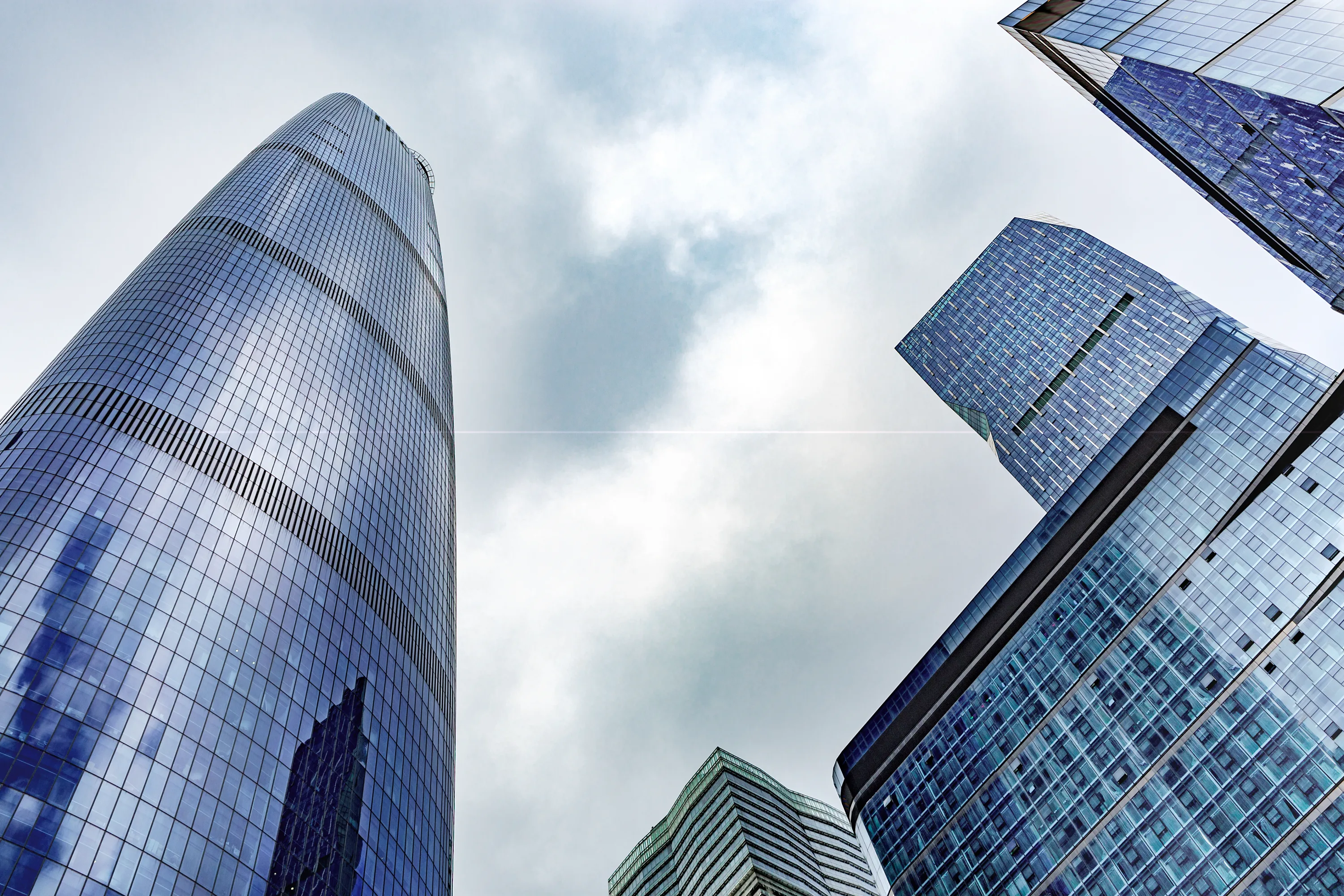
The most beautiful city in China is not a fair ranking. It is the city whose shape gives you a reason to keep walking. Choose Chongqing for stacked terrain, Hangzhou for water, Suzhou for designed intimacy, Lijiang for roofscape beneath mountains, Dali for horizon, Shanghai for river and skyline, Beijing for monumental order, or Guilin and Yangshuo for the way karst enters the urban region. Beauty becomes useful only when it helps you choose a trip.
The most beautiful cities in China, compared honestly
Most lists answer this question with a slideshow. Ten skylines appear, each gets two flattering sentences, and the reader still does not know where to go. I would rather make the differences sharp.
| City or city-region | The beauty comes from | Best for | The honest limitation |
|---|---|---|---|
| Chongqing | Rivers, steep slopes, bridges and stacked movement | Travellers who want spatial drama | Heat, haze, stairs and vertical transfers can exhaust a rushed itinerary |
| Hangzhou | West Lake, wooded edges and city-water balance | A calm first trip with landscape inside the city | Famous lakefront sections can feel crowded and over-programmed |
| Suzhou | Gardens, framed views, canals and controlled scale | Readers of architecture and detail | A garden cannot carry an entire visit if you race between ticketed sites |
| Lijiang | Tiled roofs, water lanes, mountain light and living commerce | Historic texture with a strong mountain threshold | The old town is intensely touristed; beauty and commerce coexist |
| Dali | Cangshan, Erhai and an unusually open horizon | Slower stays and outdoor rhythm | The most memorable views are spread across a region, not one compact center |
| Shanghai | Huangpu River, Bund sequence and old-new contrast | Urban energy, design and night views | A skyline-only visit misses most of the city's human scale |
| Beijing | Central axis, courtyards, walls and seasonal light | Monumental history and spatial order | Distances are large, and the city does not reward landmark sprinting |
| Guilin + Yangshuo | Karst forms entering roads, fields, rivers and settlements | Landscape-led regional travel | Yangshuo scenery is not downtown Guilin; transfers and weather shape the experience |
This page judges cities as places, not as containers for a distant day trip. A city earns its place when beauty changes the route through it: a hill alters the street, water controls the view, a garden teaches you to look through a frame, or an axis makes distance meaningful. National parks, remote lakes and highland scenery belong to a separate landscape decision. If you first need to choose by food, street life and pace, begin with the broader Chinese cities guide.
Chongqing: China's most dramatic terrain-led city
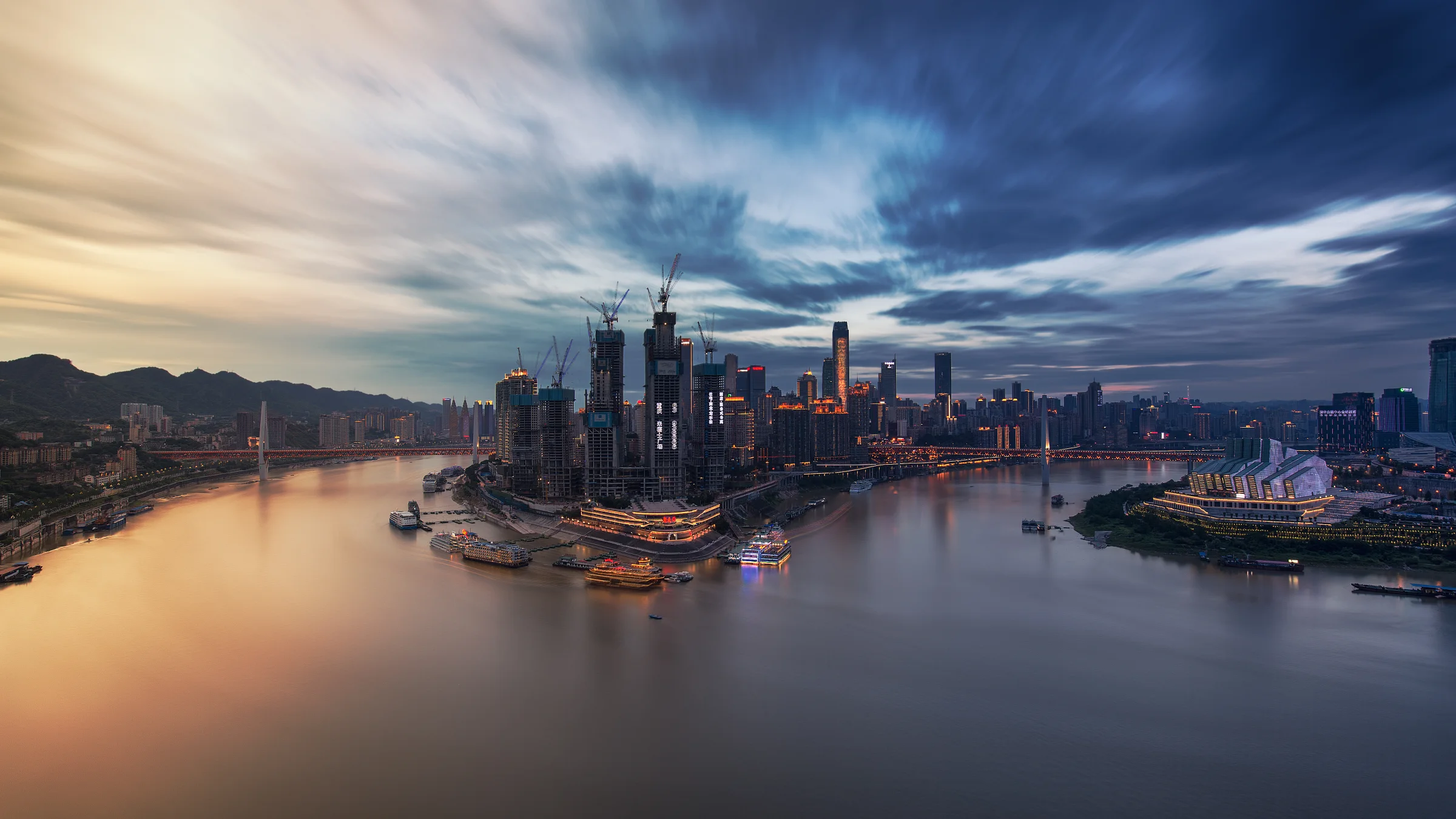
Chongqing is the city I would show someone who thinks a skyline must be read from one fixed viewpoint. Here, the ground keeps refusing to stay level. Roads pass above roads; towers rise from slopes; bridges pull separate banks into one visual system; a route that appears to be downstairs can end at another street.
The Hero makes that argument before the text does. The rivers and green edges establish the terrain, while the dense built form shows how the city occupies it. The image proves one broad Chongqing river-and-skyline relationship. It does not prove weather, visibility, traffic conditions or what any neighborhood feels like at street level.
Chongqing is beautiful because movement has to negotiate geography. That is more compelling than the familiar claim that it looks “cyberpunk.” Neon can make an exciting night photograph, but it is not the city's deepest structure. The real subject is vertical urbanism: lifts, stairs, river crossings, cliff-like building bases and multiple ground levels.
Read the Chongqing culture guide before reducing the municipality to one cinematic overlook. Give the city enough time to be confusing and then legible. The first day supplies spectacle. The second begins to teach orientation.
Hangzhou: the best city for water-led balance
Hangzhou is not beautiful because West Lake is a detachable attraction. It is beautiful because the lake changes how the city holds distance. Water creates long sightlines; causeways slow movement; wooded hills soften the edge; pavilions and bridges give the eye a place to stop.
UNESCO's record for the West Lake Cultural Landscape describes a landscape shaped through the interaction of natural setting, designed elements and cultural tradition. That matters more than calling the lake “picturesque.” Its influence comes from composition: island, shore, hill, reflection, built marker and changing light.
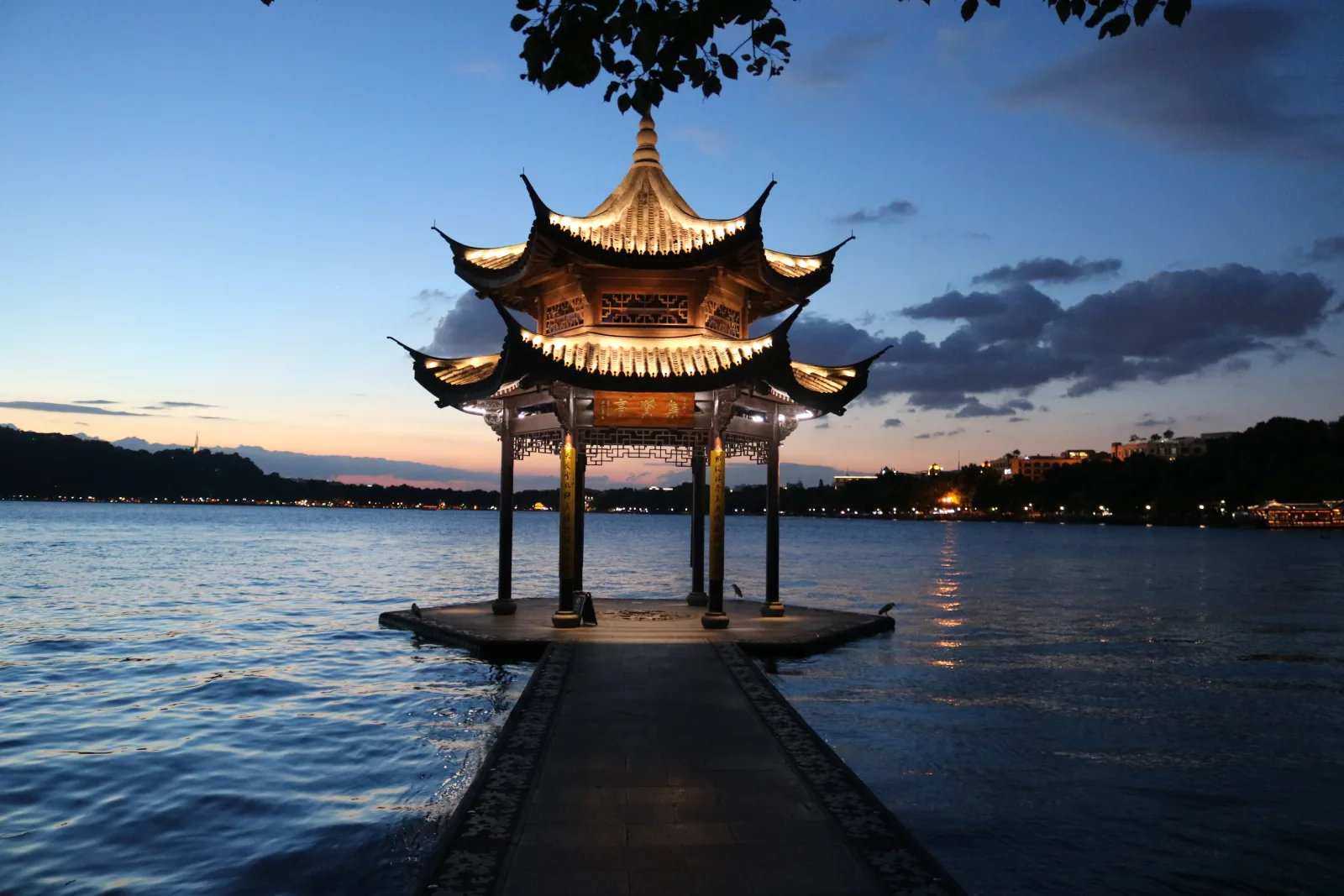
Jixian Pavilion gives the lake a human-scale marker at blue hour. The photograph proves one relationship among water, pavilion, trees and evening light; it cannot promise weather, quiet or the same illumination on a future visit.
My advice is to resist a checklist of named views. Walk one shore slowly, return at a different hour, and let the lake work as space rather than as a sequence of photo coordinates. The Hangzhou culture guide gives the wider city context. Hangzhou is the strongest first choice for a reader who wants scenery without leaving urban comfort behind.
Suzhou: beauty designed at the scale of attention
Suzhou's gardens do almost the opposite of Chongqing. Chongqing overwhelms through scale; Suzhou controls what you see. A wall blocks the complete view. A window borrows a tree. Rock, water and a turn in the path make a small area feel sequential rather than small.
The Classical Gardens of Suzhou are recognized by UNESCO as a group of designed landscapes, not as one generic “Chinese garden.” That distinction protects the reader from another weak list: the value lies in how individual gardens organize space, not in collecting similar-looking pavilions.
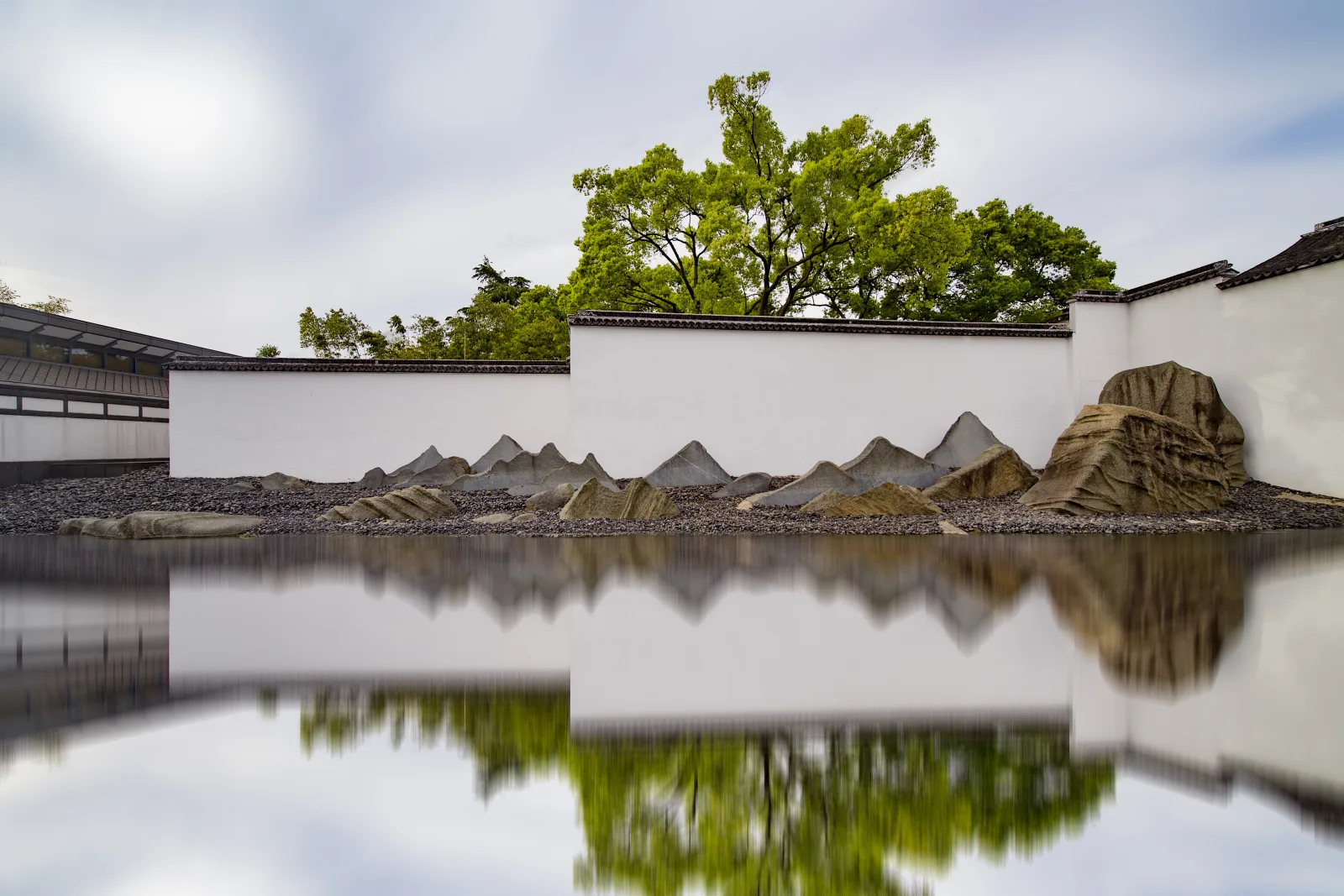
The white wall, stone and reflection show a contemporary Suzhou composition using restraint and framed contrast. This is Suzhou Museum, not proof that every classical garden looks the same or that the museum substitutes for them.
Suzhou rewards a traveller who can spend ten minutes with one threshold. It disappoints the visitor who treats each garden as a stamp. Use the Suzhou culture guide to connect the visual language to canals, crafts and contemporary city life. The beauty is not antique decoration. It is an argument about attention.
Lijiang: a roofscape with a mountain threshold
Lijiang's strongest view is not one famous lane. It is the way tiled roofs, water, courtyards, commerce and mountain weather keep entering the same day. UNESCO's Old Town of Lijiang record supports the historic settlement and water-system context; it does not tell you that every street is quiet or untouched.
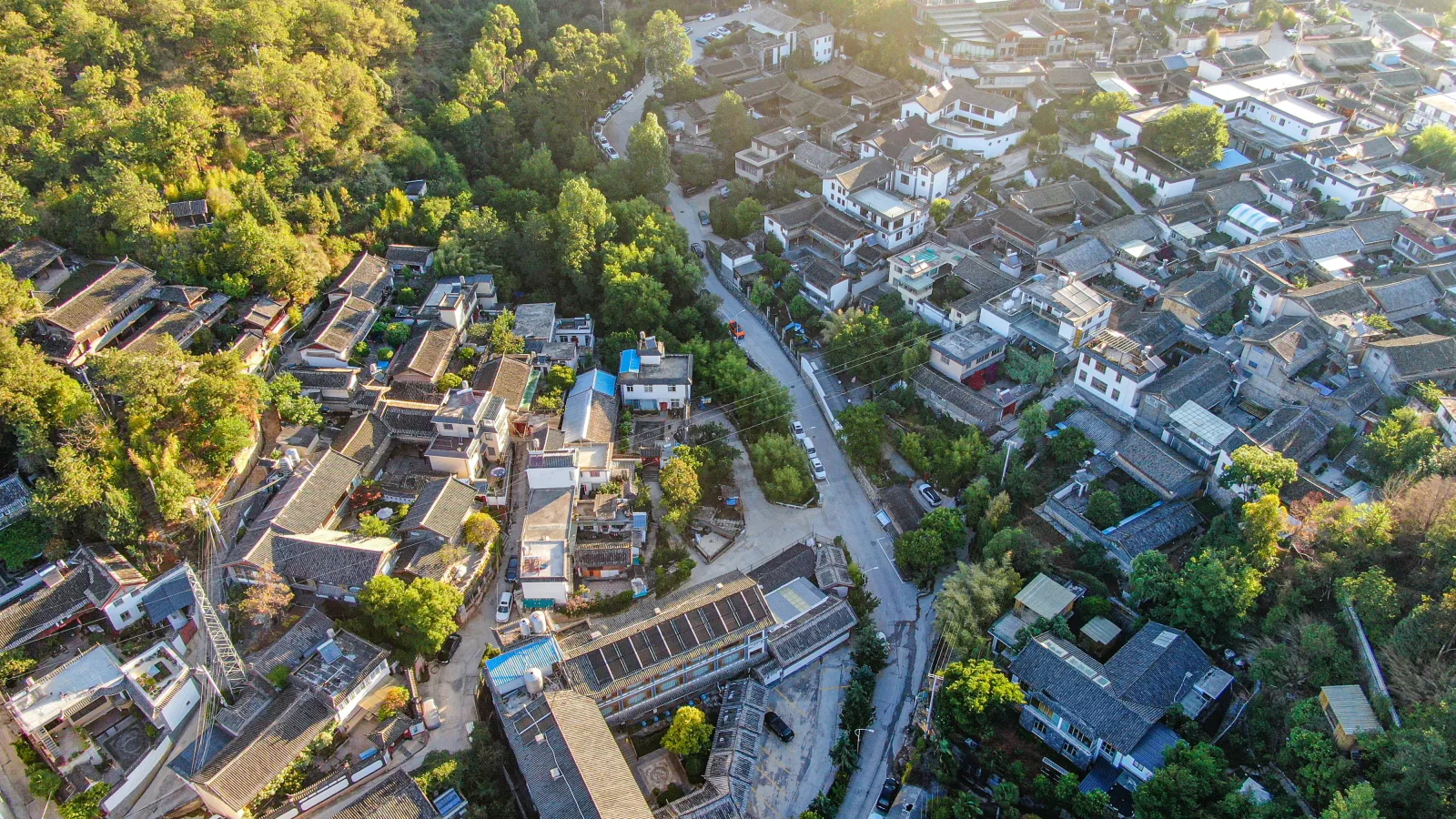
The aerial frame proves the density and continuity of one Lijiang roofscape beneath surrounding hills. It cannot show lane-level commerce, Naxi life, visitor pressure or the condition of a specific building.
That limit is important. Empty-lane nostalgia is a poor way to understand a living tourism city. Go early to see water, deliveries and the town's physical structure, then return when businesses are open and people occupy it. Beauty and commercialization are not mutually exclusive; they are the tension a responsible visitor has to read.
The Lijiang culture guide takes the next step without reducing the city to a preserved stage. Choose Lijiang when you want historic texture joined to mountain light, not when you want contemporary life edited out of the frame.
Dali: a city made beautiful by the horizon
Dali's gift is breathing room. Cangshan rises to one side; the Erhai basin opens to the other; the old city sits inside a wider geography rather than swallowing it. Even a built landmark can feel like a scale marker between settlement and mountain.
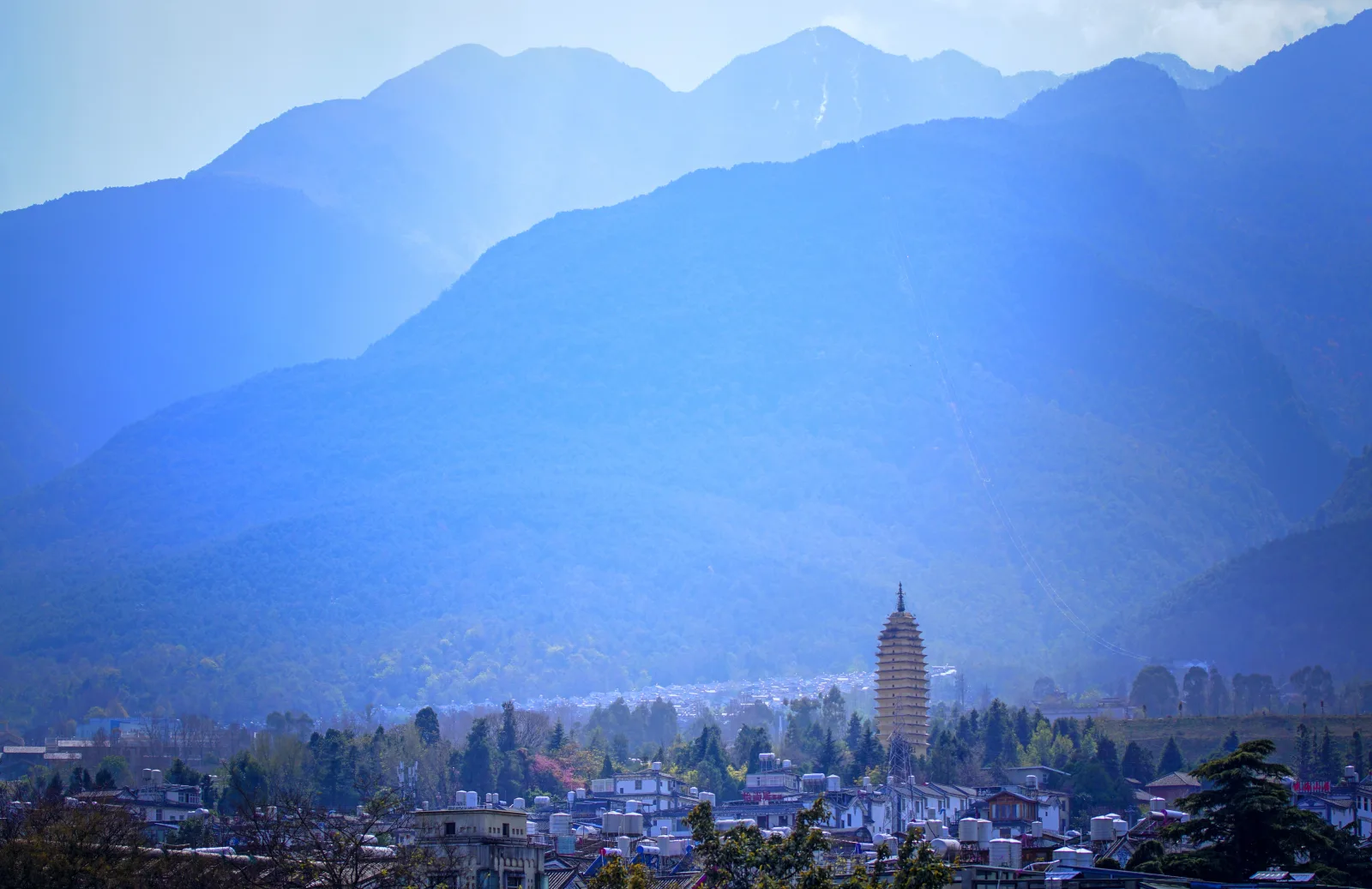
The photograph proves one relationship among built form, vegetation and the Cangshan backdrop. It does not identify current access, visibility, the whole old city or a universal Dali viewpoint.
Dali should not be planned as a single old-town stop. Its beauty is regional and directional: mountain, lake edge, villages, roads and open sky. The city works best for a slower stay because the space between places is part of the appeal.
Use the Dali culture guide to avoid turning that spaciousness into vague “bohemian” branding. Dali is a Bai cultural region and a contemporary home, not only a lifestyle backdrop for outsiders. Choose it if your ideal urban trip includes a long horizon and enough time to leave the center.
Shanghai: river, skyline and the beauty of contradiction
Shanghai is the easiest city on this list to photograph badly. Pointing a camera at Lujiazui proves that towers exist; it does not explain why the city is beautiful. The stronger experience is sequential: walk the Bund, read the older waterfront facades, cross or look across the Huangpu, then notice how scale and architectural language change.
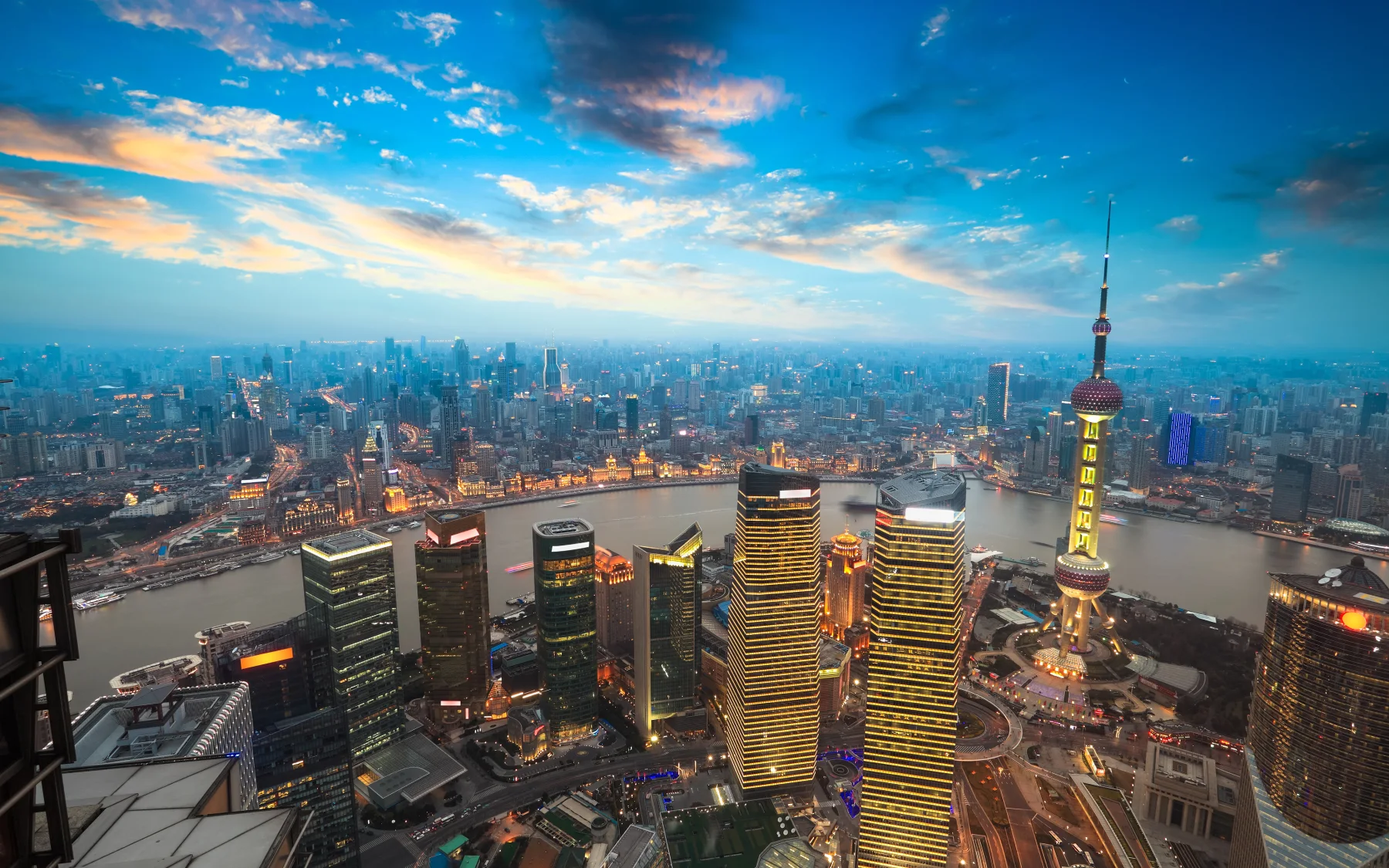
The wide blue-hour frame proves the Huangpu's role in separating and composing the skyline. It cannot prove a permanent lighting schedule, air quality or the street experience on either bank.
The municipal Shanghai overview is useful for orientation, but no official profile can replace walking. The city's beauty lives in contradiction: global scale and lane-level detail, polished waterfront and residential texture, speed and inherited street patterns.
The Shanghai culture guide supplies that closer reading. My recommendation is simple: give the skyline one evening, not the entire trip. Shanghai becomes more persuasive after you stop looking only upward.
Beijing: beauty built from order, distance and light
Beijing's beauty is less immediately flattering than Hangzhou's. It asks you to understand order. The Central Axis aligns monumental spaces and civic ideas across distance; hutong lanes compress that scale into walls, gates and courtyards; winter clarity and late light can make mass and color unusually legible.
UNESCO describes the Beijing Central Axis as a building ensemble expressing the ideal order of the Chinese capital. That designation supports the axis and its historical planning logic. It does not turn every stop into an equally rewarding visitor experience.
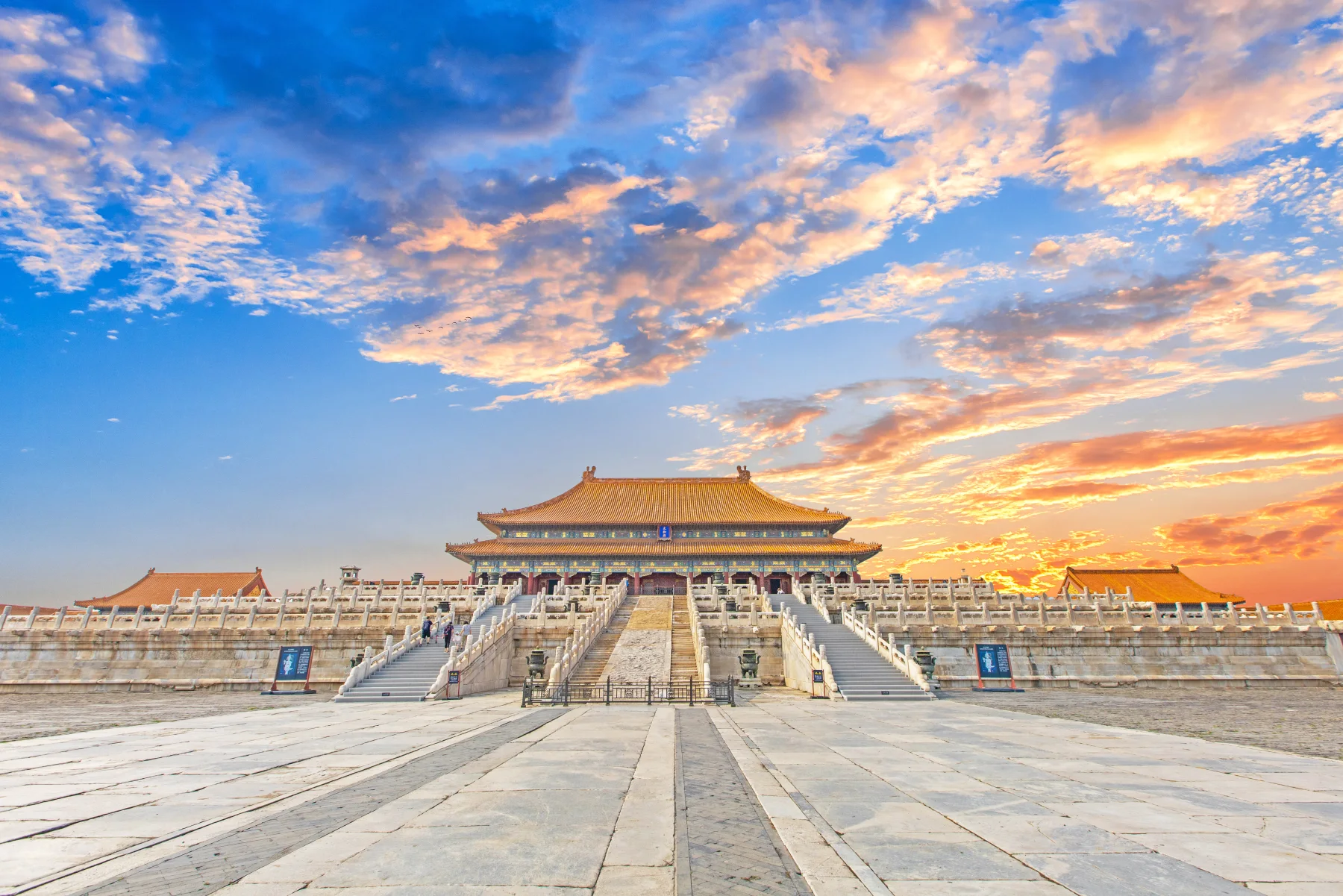
The late light reveals the mass, color and layered roofline of one Forbidden City view. It does not prove crowd levels, access, opening hours or the appearance of every season.
Do not rush Beijing. Large distances are part of its spatial argument, not a planning error you can eliminate. Choose one major ensemble and one neighborhood each day. The Beijing culture guide will help connect imperial scale to the lived city around it.
Guilin and Yangshuo: where the city opens into karst
Guilin belongs here only if we state the geography accurately. Guilin is the urban gateway and a city shaped by karst forms and rivers. Yangshuo is a separate county-level destination to the south, famous for the way peaks, fields, roads and settlements interlock. They make one strong regional journey, but they are not the same place.
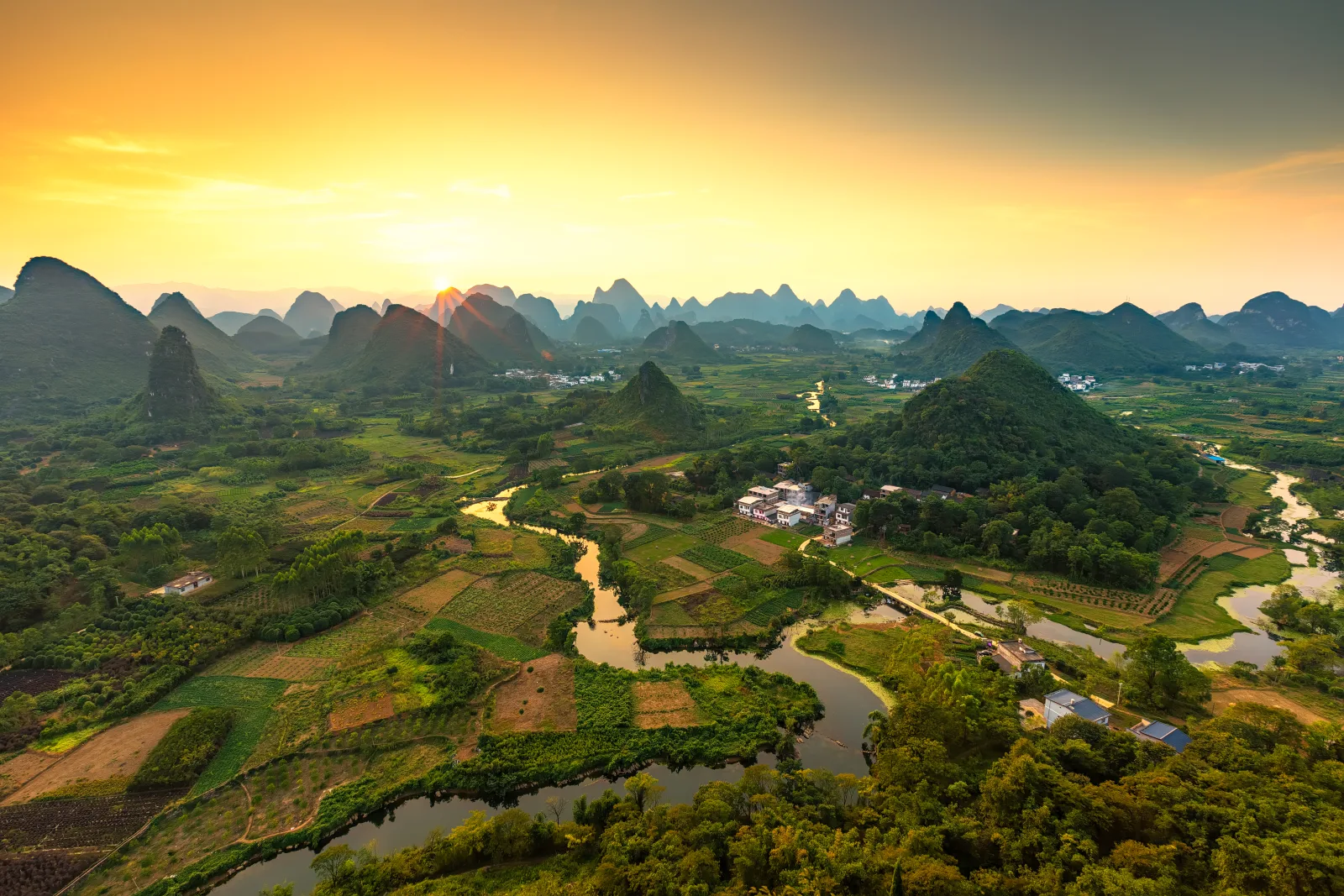
This authorized image shows Cuiping in Yangshuo at sunset. It proves the region's karst-and-cultivation relationship; it does not depict downtown Guilin or guarantee the same sunset, crop condition or visibility.
The broader South China Karst designation explains the international importance of these landforms, but it is not evidence that every viewpoint belongs to one city. The visual lesson is regional: rock does not sit outside human life as a remote backdrop. It enters roads, fields, river bends and settlement edges.
Choose this route if landscape is the main reason for the trip but you still want an urban gateway. Build weather flexibility into the plan. Mist can be atmospheric; sustained rain can also erase the view you crossed the region to see.
Four routes that make the cities more meaningful
The right route produces contrast without wasting attention.
First-time eastern China: Shanghai, Hangzhou and Suzhou
This is the most coherent ten-day beauty route. Shanghai supplies river scale and metropolitan contrast. Hangzhou changes the pace through water and hills. Suzhou brings the eye down to walls, windows, stone and gardens. The transfers are shorter than a national highlight reel, so more of the trip remains available for walking.
Monumental and modern: Beijing plus Shanghai
Choose this pair when the question is how two major cities stage power, history and global identity. Beijing works through axis, enclosure and distance. Shanghai works through riverfront sequence, vertical contrast and commercial energy. Four nights in each is more intelligent than inserting a third distant city for one photograph.
Terrain and karst: Chongqing plus Guilin and Yangshuo
This pairing is visually dramatic but physically demanding. Chongqing teaches vertical urban movement. Guilin and Yangshuo let geological form dominate the wider region. Give both weather buffers, and do not underestimate transfer fatigue just because the map looks manageable.
Slower southwest: Dali plus Lijiang
This route suits readers who want mountain thresholds, old-town texture and time outside a major megacity. The danger is treating both towns as interchangeable heritage backdrops. They are not. Dali is defined by the Cangshan-Erhai horizon; Lijiang by dense roofscape, water lanes and a different cultural history.
How to choose without being fooled by beautiful photographs
A photograph is evidence of one frame under one set of conditions. It is not proof of a whole city. Before choosing, ask:
- Does the beauty survive at street level? A skyline may be excellent from across a river but ordinary during a rushed taxi transfer.
- Is the view inside the city or hours away? Regional scenery can justify a trip, but name it honestly.
- Will the season support the experience? Heat, rain, haze, leaf color, lake levels and daylight change what is visible.
- Can your body enjoy the route? Stairs, altitude, long walks and vertical transfers are not footnotes.
- What happens after the photograph? The best city gives you a meal, a street, a second walk and a reason to return at another hour.
That last question is my real test. Beauty that survives the second walk is more valuable than a view that only performs for thirty seconds. The goal is not to prove you visited China's prettiest city. It is to choose a city whose physical form changes the way you pay attention.
Frequently asked questions
What is the most beautiful city in China?
There is no honest universal winner. Chongqing is the strongest terrain-led city; Hangzhou for water and landscape balance; Suzhou for designed intimacy; Lijiang for historic roofscape beneath mountains; Shanghai for river and skyline contrast; and Beijing for monumental order. Choose the urban form you want to experience, not a prestige ranking.
Which beautiful Chinese cities are best for a first trip?
Shanghai, Hangzhou and Suzhou make the easiest coherent beauty route because they offer three distinct urban forms within one eastern region. Beijing plus Shanghai is better if you want imperial scale contrasted with a modern river skyline. Check current transport, opening and entry information before booking.
Is Chongqing more beautiful than Shanghai?
They reward different eyes. Chongqing's drama comes from steep terrain, stacked roads, bridges and rivers; Shanghai's comes from the Huangpu, waterfront sequence and old-new skyline contrast. Chongqing feels spatially surprising, while Shanghai is easier to read as a composed river city.
Are Guilin and Yangshuo the same destination?
No. Guilin is a city and regional gateway; Yangshuo is a separate county-level destination to its south. They belong to the same broader karst travel region, but a Yangshuo countryside photograph should never be presented as downtown Guilin.
How many beautiful cities in China can I visit in ten days?
Two principal cities, or three closely linked eastern cities, is usually enough. A ten-day trip is stronger when it leaves time to revisit a neighborhood, see different light and understand the city's shape instead of collecting airports and stations.
Help us record beauty beyond the ranking
Which city became more beautiful after you understood how its streets, water, hills or public life worked? Submit one authorized city photograph and a precise field note: name the place, the time and what the frame can—and cannot—prove. A useful observation will outlast another unqualified top-ten list.