Asking whether Donnie Yen could defeat another action star in real life is the least useful way to understand him. His achievement is visible on screen: he turns distance, rhythm, impact and character into action the audience can read. The fight is not evidence beside the performance. It is the performance.
Donnie Yen in 60 seconds
| Question | Short answer |
|---|---|
| Chinese name | Yen Ji-dan (甄子丹) |
| Born | July 27, 1963, in Guangzhou |
| Main roles | Actor, action director, choreographer and filmmaker |
| Global character | Ip Man; later Chirrut Imwe and Caine expanded his reach |
| Signature quality | Fast, legible rhythm that adapts to character and genre |
| Best first film | Ip Man for performance; Flash Point for modern impact |
| Essential contrast | SPL versus John Wick: Chapter 4 |
| Wrong question | “Who would win for real?” |
The better question is: what information does each movement give us about space, intention and the person fighting?
I came to Donnie Yen through impact, but impact is no longer what keeps me watching. I stay for the instant a character changes the rhythm. In Flash Point, that change feels like rage finding a shorter route. In Ip Man, the same acceleration is held behind posture and moral refusal. I do not admire speed in isolation; I admire an actor who makes speed confess who the man is.
Who Donnie Yen is, and what he actually does
Donnie Yen (甄子丹, Yen Ji-dan) is a Hong Kong action actor, action director and filmmaker born in Guangzhou. “The actor who played Ip Man” is correct but incomplete. His importance comes from participating in how action is designed and performed, then carrying that knowledge into very different characters and production systems.
The phrase martial artist can also mislead searchers. Training history matters, but a screen fight is not an uncontrolled contest. Yen's observable achievement is cinematic: adapting movement to camera, collaborator, character and genre. This page does not rank private real-world fighting ability.
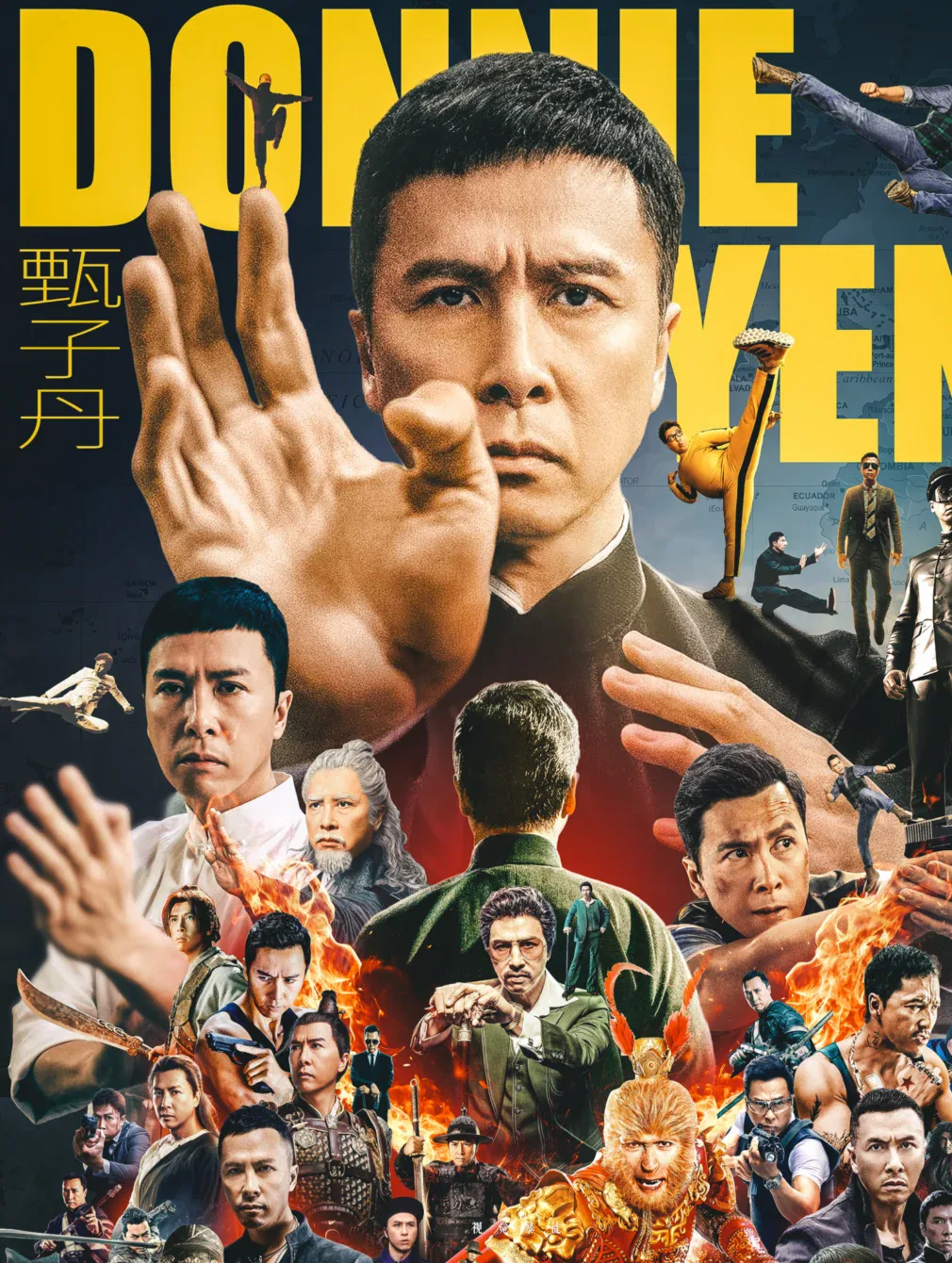
The poster above explains both the appeal and the trap of searching “Donnie Yen.” It makes the face look like a guarantee of impact before a scene has established distance, stakes or an opponent. I like the image as a fan-made index of recognition, but I would never use it as evidence that every pictured title has the same craft or that a collage can settle who is the greatest fighter. A career poster gives you names; the films have to give you decisions.

This controlled portrait is useful precisely because it is not a fight still. It shows the polished star image that now travels ahead of Yen into a film, but it cannot explain why his action works. A suit, direct gaze and clean studio light can establish presence in one frame; screen-combat authorship has to survive time. We have to watch how he measures distance, lets a partner's body remain legible and changes rhythm when the character changes. I refuse to confuse photogenic authority with action authority. Yen possesses both, but only the second explains the career.
Best Donnie Yen movies by what you want to see
| Your goal | Film | What to watch | Why start here |
|---|---|---|---|
| Understand the global icon | Ip Man | Economy, posture and moral restraint | Best union of character and readable action |
| See modern physical pressure | Flash Point | Range changes, throws and ground transitions | Clearest route to the harder modern vocabulary |
| Study weapon rhythm | SPL / Kill Zone | Baton versus blade, tempo and urban space | Shows opposition and danger without franchise polish |
| Watch him inside Hollywood scale | John Wick: Chapter 4 | Caine's tactical adaptation, humor and fatigue | Proves character can survive a crowded action system |
| See ensemble restraint | Rogue One | Chirrut's belief, timing and limited screen time | Movement serving a larger story rather than a star vehicle |
| See a different historical mode | Hero | Precision, color and formal composition | Useful contrast with the impact-driven modern films |
For one night, choose Ip Man. For a serious understanding, watch Flash Point immediately afterward. The body is recognizably the same; the moral and rhythmic language is not.
Screen fighting is designed truth
Film combat is made from trained bodies, choreography, rehearsal, lenses, editing, sound and performance. Calling it “fake” misses the craft; treating it as documentary misses the medium. Donnie Yen's value lies in designing a convincing relationship among those elements.
Watch the distance before a strike. A readable sequence tells you who controls the center, who is reacting and what changes when the rhythm breaks. Yen often accelerates without making geography disappear. Impact feels sudden because preparation was clear.
His career also resists one-style mythology. The screen language absorbs traditional forms, kickboxing, grappling, weapons and the needs of a specific production. Adaptability matters more than a fantasy of purity.
Flash Point: impact, grappling and modern pressure
Flash Point is the direct route to Yen's modern action vocabulary. The fights mix explosive striking with throws and ground transitions, but novelty alone is not the achievement. The camera preserves enough of the body for the viewer to understand leverage and momentum.

Watch Well Go USA's official Flash Point trailer. Look past hit count: notice when range collapses and how a standing exchange becomes a struggle for position.
The film's aggression fits the character. Yen is not demonstrating a neutral syllabus. He is making impatience and force visible through the way the body enters space.
This is the Donnie Yen scene I find hardest to imitate in words. The body does not simply attack faster; it makes the room feel smaller. I can feel range being taken away before I can count the technique, and that pressure is the character's temperament made physical.
Ip Man: restraint changes the same body
Ip Man reaches a much larger audience because action and moral image reinforce one another. The title character is composed, economical and reluctant to display power until circumstances demand it. Movement therefore reads differently from Flash Point: tight lines and repeated short strikes feel like disciplined pressure, not uncontrolled aggression.
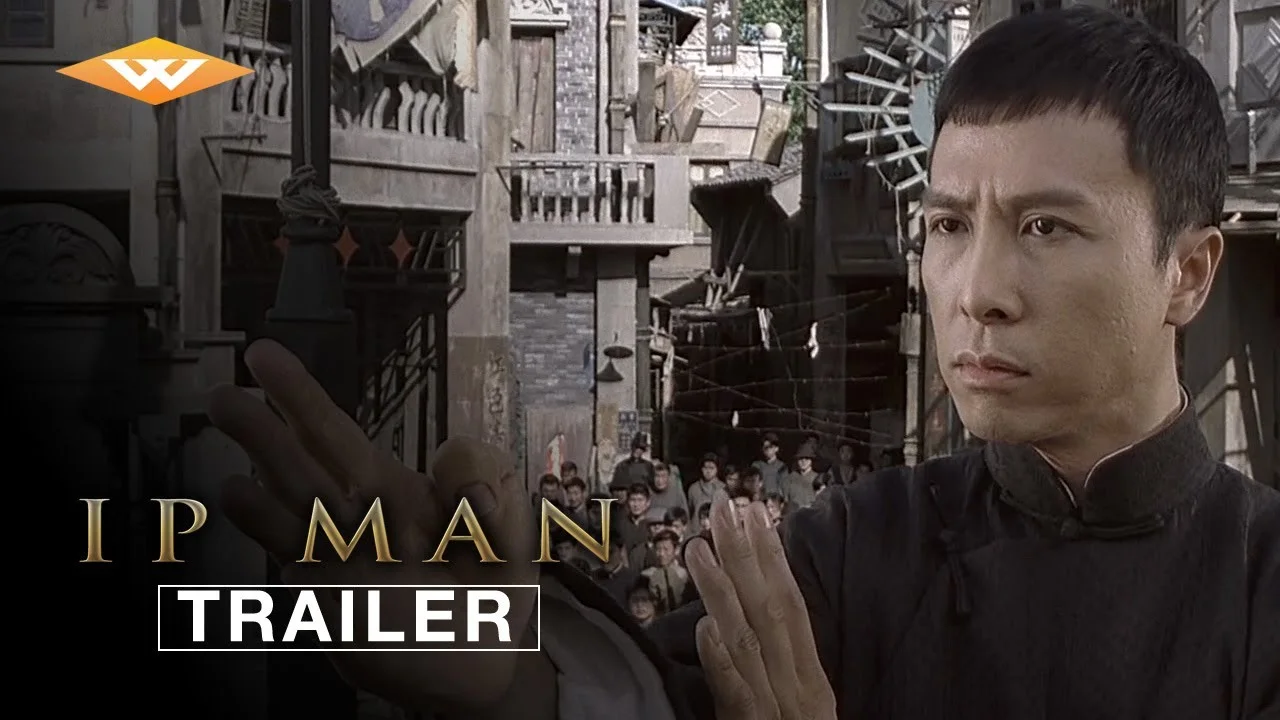
The official Ip Man US trailer, represented by the opening image, makes the contrast visible. Upright posture and compressed movement belong to the character construction as much as the choreography. The dedicated Ip Man movie guide separates that screen grammar from the real-person biography and explains why the ten-man fight changes its established rhythm.
The film is historical drama, not a substitute for historical documentation or martial-arts instruction. Its durable power comes from making an ethical ideal emotionally clear through performance.
I understand why this role swallowed so much of Yen's public image. The calm face and compressed hands created an icon in seconds. But I refuse to let the icon erase the uglier energy of SPL and Flash Point, because those films prove that restraint was a choice, not the only note he could play.
Four films form the right viewing route
- SPL / Kill Zone shows speed, weapons, opposition and the urban Hong Kong action frame.
- Flash Point pushes impact and grappling toward a harsher modern physicality.
- Ip Man converts restraint, lineage and moral authority into a popular dramatic language.
- John Wick: Chapter 4 shows Yen adapting to an international franchise while giving Caine humor, fatigue and tactical identity.
Add Rogue One for another useful constraint. Chirrut Imwe cannot be reduced to generic “martial arts mastery”; belief, blindness, timing and ensemble function determine how the action reads.
How to read a Donnie Yen fight step by step
- Establish the geography. Identify exits, obstacles, weapon reach and the distance between bodies before the decisive exchange.
- Find the rhythm change. Look for a new weapon, fall, range collapse or decision that breaks the established beat.
- Separate performance from edit. Longer visible movement exposes balance and leverage; faster cutting shifts force toward editorial rhythm.
- Read the consequence. Pain, fatigue or fear should alter movement if the fight is also a dramatic scene.
Use these four steps on Flash Point and Ip Man. They produce a defensible analysis without inventing a real-world league table.
The timeline that changes the screen language
- 1980s-1990s: early starring and action work develops speed, kicking range and a modern Hong Kong screen identity.
- 2005: SPL places Yen inside a hard urban action landmark.
- 2007: Flash Point makes the striking-and-grappling mixture a central international reference.
- 2008: Ip Man turns technical economy and moral restraint into a durable popular character.
- 2016: Rogue One introduces Chirrut Imwe to a global franchise audience.
- 2023: John Wick: Chapter 4 gives Caine enough wit, age and tactical identity to avoid becoming a generic imported master.
The career is not a straight improvement curve. It is a series of adaptations to changing bodies, markets, collaborators and cinematic rules.
Acting is what stops choreography becoming a reel
Yen's strongest later roles understand that perfect movement can be emotionally empty. Ip Man's pauses, Caine's weary humor and Chirrut's faith give the audience a reason to care where the body moves.
Caine is the later role I would defend most strongly. He is dangerous, tired, funny and already carrying the cost of the next exchange. I believe that fatigue does more for Yen's acting than another scene designed only to certify mastery. The body remains precise, but the person no longer looks untouched by precision.
He is not always equally subtle outside action. Some films rely on star authority and compressed emotion rather than complex dialogue. But judging the acting only between fights creates another blind spot: posture before conflict and reaction after impact are part of characterization.
The honest limitation
The Ip Man image became so successful that it can obscure the harder, stranger and more experimental parts of Yen's screen history. Repetition also risks turning moral restraint into a fixed icon. A viewer who watches only franchise installments may see refinement but miss reinvention.
There is also no reason to convert film achievement into unverifiable real-world ranking. Training background informs craft; it does not produce a scientifically meaningful league table across actors, rules, ages and imagined encounters.
For a productive contrast, compare the Jackie Chan guide. Chan's scenes often make vulnerability, objects and environmental failure the dramatic engine; Yen's strongest scenes more often clarify control through range, rhythm and impact. The comparison explains screen authorship without inventing a private fight.
Jet Li creates a closer technical contrast. Li's competitive-wushu clarity often begins with a fully organized silhouette before explosive release; Yen more often makes changing range and pressure the information. Use the Jet Li guide to compare Fist of Legend with Flash Point as film language, not as evidence of a private contest.
Why Donnie Yen matters
Donnie Yen helped update the visual language of Hong Kong screen combat while becoming a bridge to global franchises. He did not achieve that by repeating one traditional style untouched. He understood that cinema needs transformation: technique must become space, rhythm, sound and character.
My verdict is firm: Donnie Yen belongs among major filmmakers of action, not merely among famous bodies who perform it. I measure that authorship by what survives after the highlight reel ends—geography, character, consequence and the memory of when control finally broke.
Continue with the Chinese martial arts guide for cultural and practice context, the Chinese film collection for genre history and the Chinese actors directory for performance comparisons. Keep film evidence and real-world martial claims in their proper categories.
The community question below asks for a fight that reveals character. Name the exact scene and movement. Answers with clear evidence can become the starting set for a future reader-ranked scene study, while unsupported “who would win” claims will not.
Donnie Yen's authorship is visible in the information a fight gives us
Action analysis becomes empty when it only counts difficulty. A complicated move can still produce a confused scene. Donnie Yen's stronger sequences tell us who controls distance, when confidence breaks and what pain changes afterward.
In Flash Point, closing distance feels like collision because aggression is the character's chosen answer. In Ip Man, the same viewer is taught to notice compression and economy. Caine in John Wick: Chapter 4 adds another layer: age, blindness, humour and tactical listening stop the movement from becoming a replay of the grandmaster image.
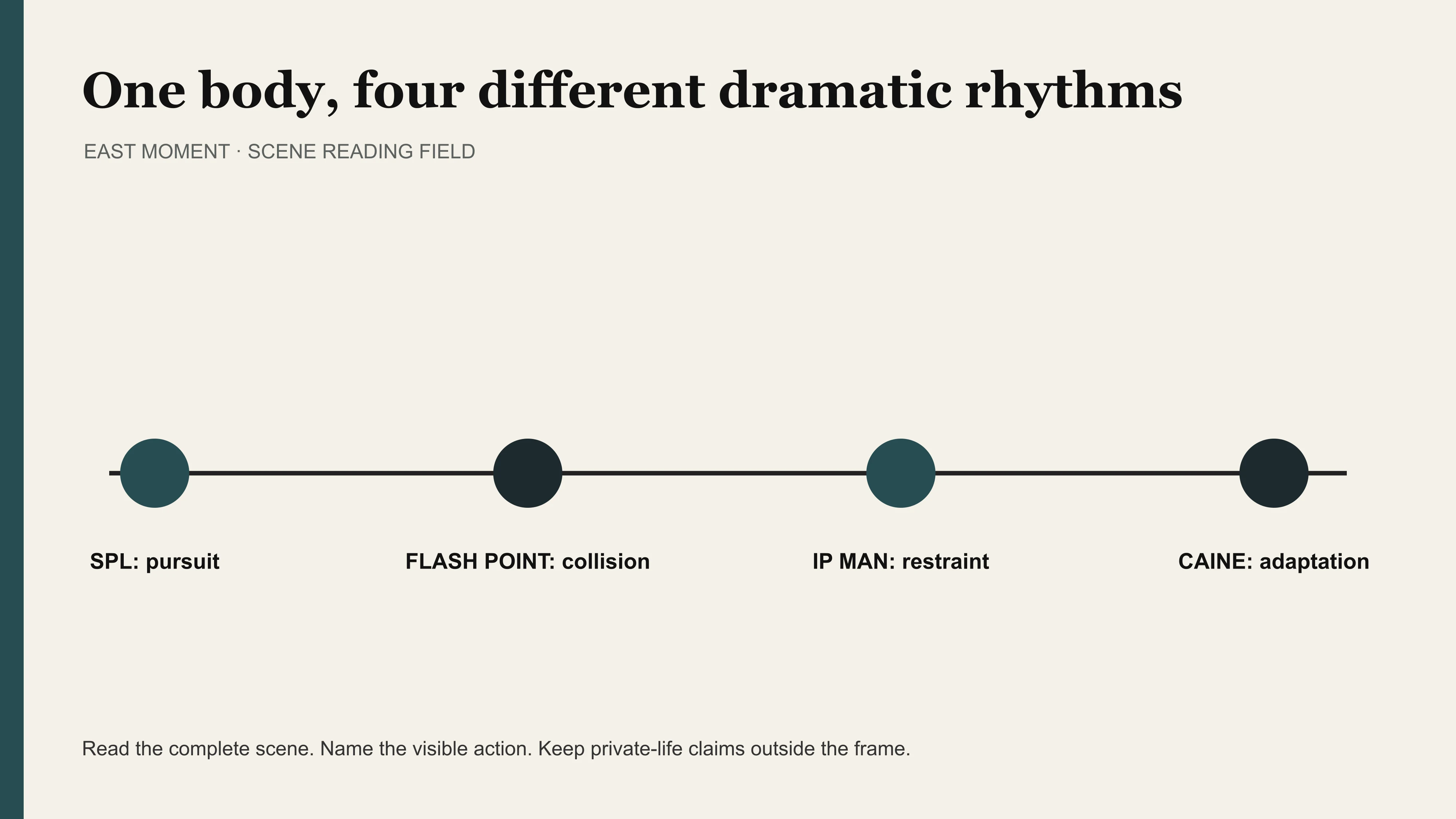
This is my firm judgment: Yen matters as a screen author, not as the winner of an imaginary tournament. The visible film can support claims about framing, balance, rhythm and character consequence. It cannot settle what would happen in an unscripted private fight across different ages and rules.
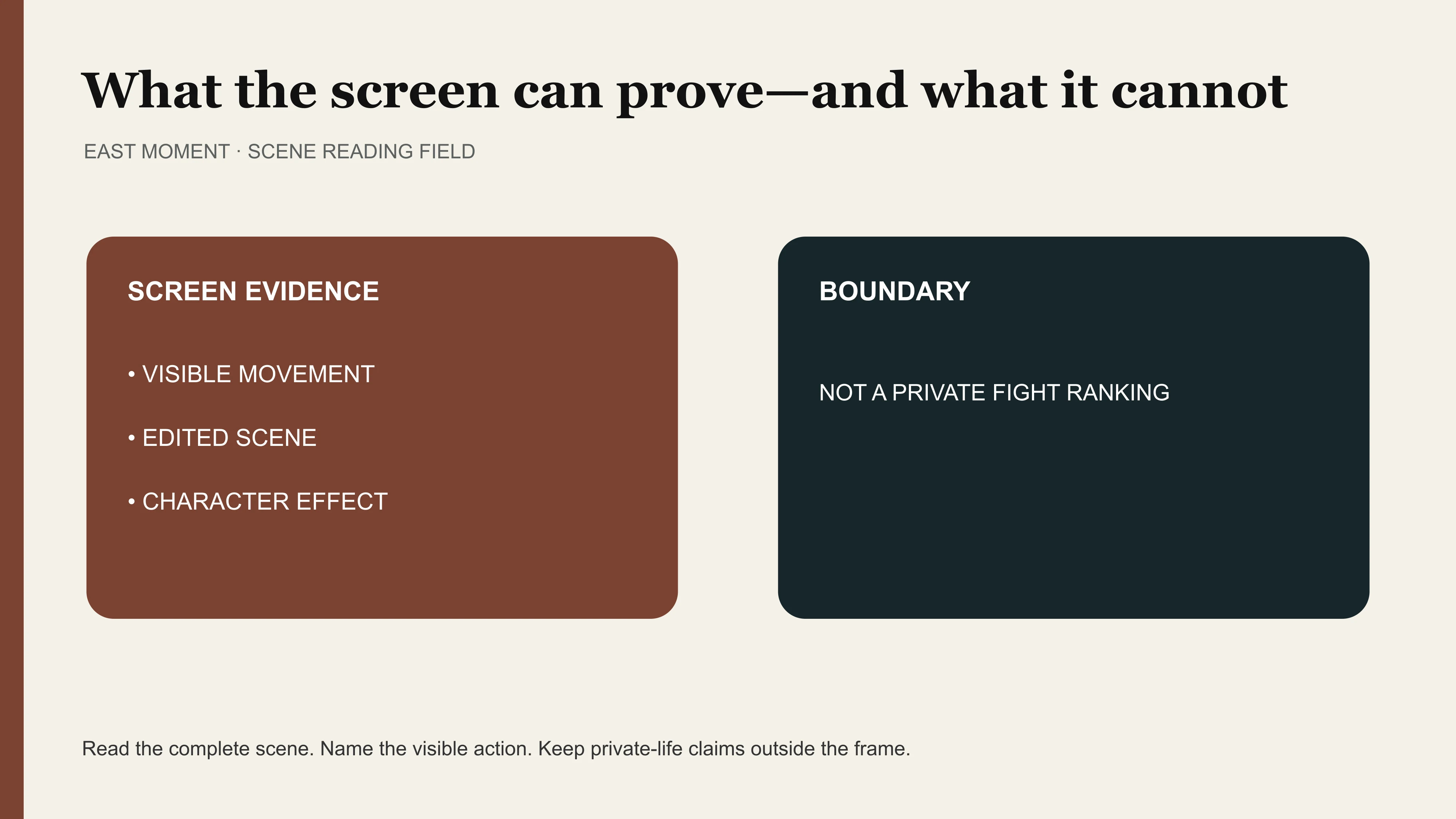
That boundary is not cautious filler. It protects the achievement that is actually his. A real body performs under designed conditions, collaborates with opponents and camera, and makes violence readable enough to carry a moral image. Compare this authorship with the environmental improvisation in Jackie Chan and the silhouette precision in Jet Li. The contrast reveals three film languages; it does not require a fabricated league table.
The collaboration point matters. A great exchange also belongs to the opponent who receives, interrupts and changes its rhythm, to the stunt team that makes risk repeatable, and to the editor who preserves or destroys geography. Star authorship is real, but it is never solitary.
Yen's later global roles prove this most clearly. He enters franchise systems with rules already established, then finds room for a specific gait, pause or joke. Adaptation is not surrender. It is the ability to remain legible without forcing every film to become an Ip Man sequel.
That is the page's final viewing rule: identify the production's existing action grammar, then notice what Yen changes. If the answer is only “he moves fast,” watch again. Speed is a measurement; authorship is a pattern of decisions.