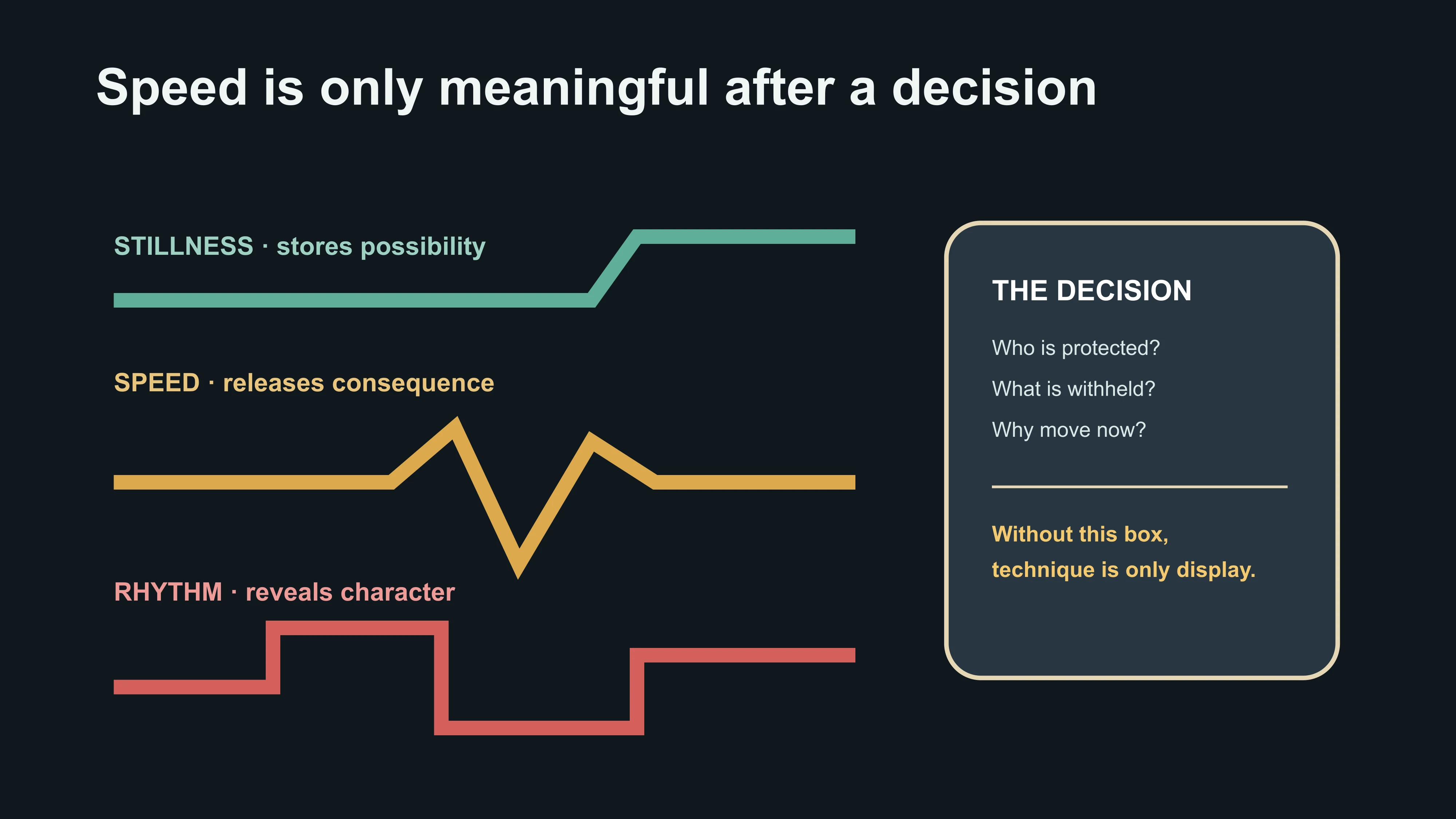
Jet Li's defining screen quality is not speed by itself. It is the ability to make a body look fully organized before it moves. The stance is already a decision; acceleration is only the release. His competitive wushu background supplied exceptional control, but cinema turned that control into several different people: a disciplined teacher, a playful folk hero, a modern nationalist, a silent Hollywood threat and, later, an older man openly reconsidering what strength means.
Jet Li in 60 seconds
| Question | Short answer |
|---|---|
| Chinese name | Li Lianjie (李连杰) |
| Born | April 26, 1963, in Beijing |
| Age | 63 as of August 13, 2026 |
| What he did before films | Competitive wushu athlete; the IWUF records five consecutive national all-around titles from 1975 to 1979 |
| Breakthrough | Shaolin Temple (1982) |
| Best first film | Once Upon a Time in China for the complete star image |
| Best pure action entry | Fist of Legend |
| Best playful contrast | Fong Sai Yuk |
| Best formal wuxia role | Hero |
| Wrong conclusion | Competitive wushu medals prove how he would perform in an uncontrolled fight |
The useful answer to “Is Jet Li a real martial artist?” is yes, but the category needs precision. He was an accomplished competitive wushu athlete. That record is real. A movie fight is also real work, but it is a designed screen event made with partners, choreography, cameras, editing, wire work, sound and character. Neither fact authorizes a fantasy league table.
Which Jet Li movie should you watch first?
Choose by the question you want answered.
| Your viewing goal | Start here | What to watch |
|---|---|---|
| Understand the complete Jet Li image | Once Upon a Time in China (1991) | Upright control, social duty and explosive release as Wong Fei-hung |
| See his cleanest modern action grammar | Fist of Legend (1994) | Rhythm changes, testing an opponent and technique that adapts rather than poses |
| Discover humor and elasticity | Fong Sai Yuk (1993) | Youthful vanity, family comedy and movement that can bend without losing precision |
| See stillness become spectacle | Hero (2002) | Small gestures held inside color, architecture and political narration |
| Understand the late martial-hero thesis | Fearless (2006) | Pride, consequence and the attempt to turn victory into ethical change |
| See the Hollywood breakthrough | Lethal Weapon 4 (1998) | How silence and speed package him as foreign threat before he becomes a lead |
| Find dramatic range beyond fighting | Ocean Heaven (2010) | Care, fatigue and fatherhood without action-star authority doing the work |
If you watch only one, choose Once Upon a Time in China. If you watch three, add Fong Sai Yuk and Fist of Legend. That route prevents the common mistake of reducing him to one expression, one tempo and one solemn heroic type.
Wushu explains the control, not the whole performance
The International Wushu Federation identifies Jet Li as a Beijing-born wushu athlete and records that he was national all-around champion for five consecutive years from 1975 through 1979. It also records Shaolin Temple as the 1982 film that brought broad fame.
That history matters because competitive taolu trains presentation as well as technique: line, balance, extension, rhythm, direction and a complete shape legible to observers. Those qualities transfer unusually well to a camera. Jet Li can finish a position without making it look like a pause inserted for applause. He can accelerate while keeping the route of a limb readable.
But the transfer is not automatic. A competition routine and a dramatic scene solve different problems.
| Competitive wushu asks | Film acting asks |
|---|---|
| Is the form controlled, difficult and clearly presented? | What does this movement tell us about the character now? |
| Can the athlete organize space and rhythm? | Can the performer share space, danger and consequence with another person? |
| Does the routine meet sporting criteria? | Do camera, edit, sound and performance create a coherent dramatic event? |
Jet Li's achievement is therefore not “a champion who happened to be filmed.” It is learning how to convert trained clarity into narrative information.
Once Upon a Time in China makes restraint visible
Wong Fei-hung could easily become a statue: morally correct, technically superior and permanently composed. Jet Li avoids that trap by making restraint active. The character is not still because nothing is happening. He is still because social order, responsibility and observation are determining when movement becomes necessary.
Play Fortune Star's restored trailer in place. Before counting kicks, watch the vertical posture, the delay before entering conflict and the instant when restraint becomes forward movement.
This is the first key to his screen speed: acceleration feels extreme because order existed before it. If a performer moves at maximum intensity from the first frame, speed becomes visual weather. Jet Li creates a baseline, then breaks it.
The film also places a traditional hero inside an era of foreign pressure and technological change. Do not treat Wong Fei-hung as a transparent historical record. He is a cinematic cultural argument: tradition must possess discipline, but it must also read a changing world. Jet Li's controlled body makes that argument emotionally immediate.
Fong Sai Yuk proves he is not only solemn
The standard international shortlist can make Jet Li look permanently severe. Fong Sai Yuk corrects that impression. The body remains precise, but the personality is lighter, more vain, more interruptible and more connected to family comedy.
Play 88 Films' official trailer in place. Notice how quickly a poised display can become embarrassment, improvisation or a reaction to another performer. Precision does not require emotional stiffness.
This film matters for more than variety. It reveals that Jet Li's lightness is a dramatic tool. His center can stay controlled while the scene around him becomes socially unstable. A raised eyebrow, sudden retreat or too-confident entrance tells us the young hero has not yet earned the dignity his body can imitate.
The relationship with Fong Sai Yuk's mother also prevents the hero from owning every source of intelligence. Family becomes part of the action system. Competence is shared, challenged and made funny rather than worshipped from a distance.
Fist of Legend is about adaptation, not a style winning
Fist of Legend is often recommended as Jet Li's best fight film, and the recommendation is sound. The wrong reason is that it supposedly proves one style, nation or performer can defeat all others.
The stronger reading is adaptation. Chen Zhen observes, tests range, changes rhythm and refuses to make inherited form a substitute for evidence. The action is exciting because the character thinks through the body.
Cine Asia's official restoration trailer identifies the film and its modernized physical language. The decisive viewing questions are concrete:
- When does Chen Zhen stop repeating his first solution?
- Which change of distance forces a new technique?
- How do clothing, room geometry and the opponent's timing alter what remains possible?
- What does the scene say about learning, not merely winning?
The comparison with Bruce Lee is unavoidable because both actors play Chen Zhen in works connected to the same cultural lineage. Do not reduce the comparison to speed or private fighting ability. Lee's screen presence often compresses anger until direct release; Jet Li's version makes analytical adaptation more visible. Two performances can carry historical grievance through different bodily arguments.
Hollywood first turned speed into foreign threat
Jet Li's American breakthrough in Lethal Weapon 4 uses his economy brilliantly and narrowly. Wah Sing Ku speaks little, wastes little movement and enters an established franchise as danger that cannot be read through the heroes' usual rhythm.
The role works because stillness makes the familiar protagonists uncertain. Yet the same design limits interiority. Hollywood can recognize a body as extraordinary while withholding a full person from it.
Later starring vehicles such as Romeo Must Die, Kiss of the Dragon and The One expand visibility but often package the star through a small group of exportable signals: speed, silence, discipline, mystical calm or lethal efficiency. These films can be entertaining without being the best explanation of his range.
The useful distinction is:
- Watch the Hollywood films to understand how an industry translated Jet Li for a global action market.
- Watch the Hong Kong films to understand how many different personalities his movement could carry before that translation narrowed the vocabulary.
This is not a simple “East authentic, West false” verdict. Every film constructs a star. The question is how much of the construction remains available for contradiction, comedy, social context and change.
Hero turns the withheld movement into the event
In Zhang Yimou's Hero, Jet Li's control enters a different system. Color, architecture, calligraphy, political narration and choreographed space can be more visually dominant than any individual strike. The Hero (2002) guide follows those contradictory color chapters through the “all under heaven” choice and ending rather than treating them as decorative palettes.
Play Miramax's official trailer and watch how little Nameless needs to move when framing, eye line and the possibility of violence already organize the image.
The performance is deliberately difficult to separate from the film's competing stories. Nameless is not presented once as a stable, fully accessible person. His body changes meaning as narration changes. Precision can signal truth, deception, sacrifice or political submission depending on which version controls the frame.
That ambiguity is why the film deserves more than “beautiful martial arts.” Its politics remain debatable, especially the relationship among unity, violence and individual sacrifice. Jet Li's stillness does not solve that debate. It gives the debate a body capable of appearing certain while the story underneath remains unstable.
Fearless tries to replace victory with responsibility
Fearless returns to the martial hero but organizes the arc around the cost of pride. The early Huo Yuanjia wants public victory to confirm personal worth. Consequence makes that equation untenable.
The film's ethical claim is more valuable than its status as a loose historical drama: technique without self-knowledge can enlarge harm. This is also where the title “martial artist” becomes more than a ranking category. Practice may concern conduct, community and limitation, not only the ability to dominate an encounter.
Do not use the film as a factual biography of Huo Yuanjia, and do not treat its final matches as scientific comparisons among national fighting systems. The scenes are dramatic arguments built from history, legend, genre and star image.
The role most people miss is Ocean Heaven
Readers searching “best Jet Li movies” are usually offered action milestones. Ocean Heaven belongs in the answer because it tests whether presence survives when speed is removed as the primary source of value.
As a father preparing his autistic adult son for life without him, Jet Li must make care, routine, helplessness and limited time visible. The performance is not important because an action star deserves praise for becoming serious. It is important because the familiar economy remains while its meaning changes. A small practical action can carry the emotional weight that a fight once carried.
The film also demands care from the critic. One performance cannot represent every autistic person or family. Its value lies in the particular relationship it dramatizes, not in becoming a universal medical or social explanation.
Jet Li, Jackie Chan, Donnie Yen and Michelle Yeoh solve different problems
| Viewing question | Jet Li | Jackie Chan | Donnie Yen | Michelle Yeoh |
|---|---|---|---|---|
| Core screen force | Organized stillness released as speed | Improvisation surviving objects, failure and pain | Range and rhythm revealing tactical control | Authority carrying physical cost and withheld feeling |
| Most useful contrast | Solemn control versus playful elasticity | Plans repeatedly interrupted by the room | Control altered by pressure and distance | Competence complicated by duty and emotion |
| Best first film | Once Upon a Time in China | Police Story | Ip Man | Crouching Tiger, Hidden Dragon |
| What to watch | What changes between the stance and release? | What object changes the plan? | What range change alters the exchange? | What does posture refuse to say? |
Use the Jackie Chan, Donnie Yen and Michelle Yeoh guides as a four-film study. The comparison is productive only when it remains about authored screen evidence. “Who wins in real life?” removes age, rules, purpose, collaborator and medium until nothing defensible remains.
How to watch one Jet Li scene closely
Choose Wong Fei-hung's entrance into conflict, a Fong Sai Yuk comic exchange, a Fist of Legend test of an opponent or Nameless before the king.
- Freeze the stance. Where is the center of gravity? What direction is already implied?
- Measure the delay. What information arrives before movement begins?
- Find the rhythm change. Does the character accelerate, soften, retreat or interrupt a completed pattern?
- Identify the collaborator. What does the opponent, camera, edit, wire team, costume or sound contribute?
- Read the aftermath. Does the body return to order, reveal cost or become emotionally different?
This method turns admiration into evidence. “He is fast” is an impression. “He waits until the opponent commits, removes one line and changes tempo on the counter” is a claim another viewer can test.
Aging changes the question
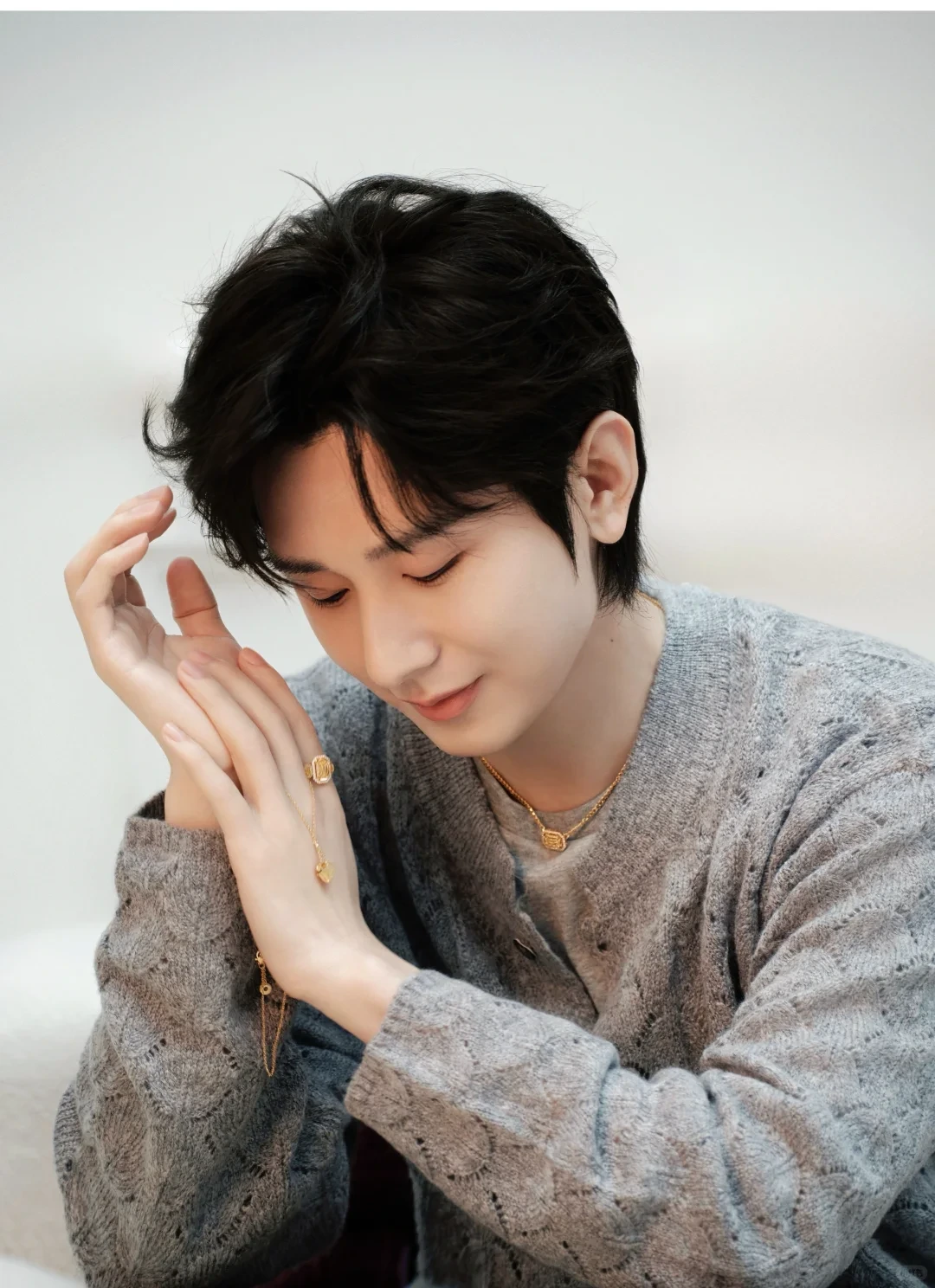
The opening image comes from Jet Li's official So Be It conversation about aging. He speaks with his daughter about change, health, appearance, acting and a lifetime in martial arts. The value of this current first-person material is that it refuses the internet's demand for a permanently preserved action body.
Play the official conversation in place. It is evidence of what Jet Li chooses to say now, not a license to diagnose his health from photographs or rumor.
An older Jet Li does not owe viewers proof that the 1990s body still exists. The more interesting question is whether the same discipline can produce a new screen presence: less display, more memory, teaching, doubt or ordinary life.
This also corrects a harmful search pattern. Comparing recent photos to old action images and announcing illness is not analysis. Appearance cannot establish a diagnosis. Current first-person speech and verified public information should take precedence over visual speculation.
Precision is easy to praise and easy to misread
Jet Li's clarity can become a trap when a film mistakes composure for complete characterization. A silent, perfectly balanced hero may look iconic while revealing very little that can change. Some international roles use his accumulated authority as a finished product rather than giving the character a present-tense problem.
His historical heroes also invite easy cultural certainty. Wong Fei-hung, Chen Zhen and Huo Yuanjia can be used to package tradition, national strength or moral virtue as if each were a stable fact. The films are more valuable when their constructed arguments remain visible.
Finally, the International Wushu Federation page provides a specific institutional record for his sport career, birth and ambassador role, but its current source code contains an unrelated hidden spam paragraph. East Moment therefore uses only the clearly presented Jet Li record and cross-checks the page with first-person and official film sources. Authority is not a reason to stop reading critically.
Final verdict: precision becomes meaningful only when it changes
Jet Li matters because the same controlled body can support incompatible meanings. Wong Fei-hung's stillness is ethical restraint. Fong Sai Yuk's balance can be youthful vanity. Chen Zhen's speed is analytical adaptation. Nameless turns control into political ambiguity. An older Jet Li can question the demand that strength remain visually unchanged.
Start with Once Upon a Time in China, then watch Fong Sai Yuk and Fist of Legend. Add Hero for formal restraint and Ocean Heaven to test what remains when action disappears. That sequence answers the search intent better than a list ranked by box office or fight count.
Continue through the Chinese actors collection, place the practice vocabulary inside the Chinese martial arts guide and follow the industry through the Chinese film collection. In the comments, name one exact pause, change of rhythm or release. Specific scene evidence can become a community archive; inherited claims about “real fighters” cannot.