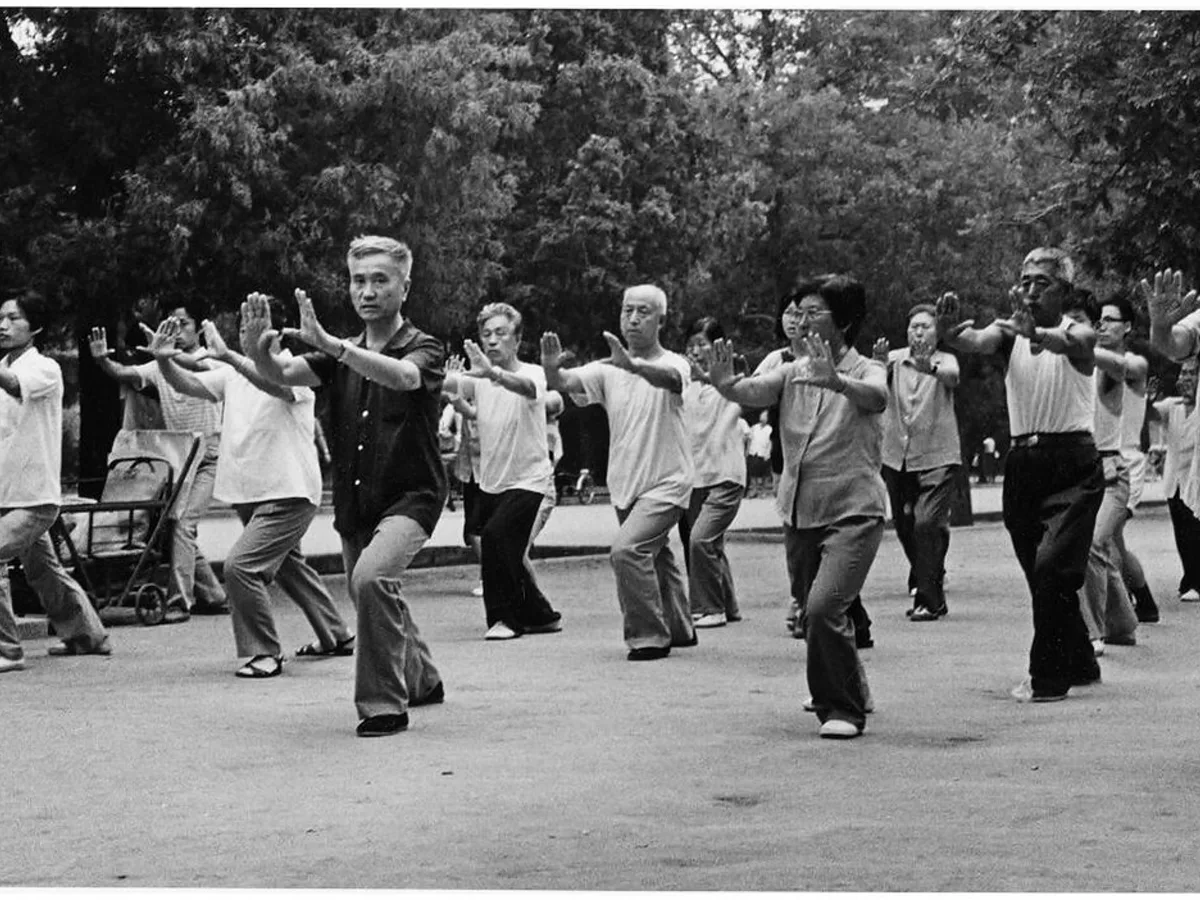
My verdict: Wong Fei Hung matters less as a perfectly recoverable nineteenth-century biography than as the moral body Hong Kong cinema kept rebuilding. Kwan Tak-hing made him a community elder. Jackie Chan made him an undisciplined young man who had to earn control. Jet Li made him a tradition-minded teacher forced to read modernity. None is the complete historical man. Together, they explain why his name traveled farther than the evidence about his life.
Wong Fei Hung is three people before he is one biography
An overseas viewer usually arrives through a face. It may be Jet Li standing upright in Once Upon a Time in China, Jackie Chan turning drunken boxing into rebellious comedy, or an older black-and-white image of Kwan Tak-hing as the grave Cantonese master. The mistake is to place those performances on one timeline and call the result a life.
There are at least three Wong Fei Hungs to keep separate:
- The historical martial artist and medicine practitioner, associated with Guangdong, Hung Gar and Foshan, whose surviving record is incomplete and sometimes contradictory.
- The postwar Cantonese screen elder, built through serial stories, radio, opera and a vast run of films starring Kwan Tak-hing.
- The internationally circulating action hero, reinvented by Jackie Chan, Jet Li and later performers for new genres, politics and audiences.
The boundaries matter. A memorial display proves that Foshan now preserves and presents a public memory of Wong. A movie proves what filmmakers wanted the hero to mean. Neither automatically verifies a flying kick, a duel or a line of dialogue as biography.
Wong Fei Hung in 60 seconds
| Question | Short answer |
|---|---|
| Who was he? | A Guangdong martial artist and medicine practitioner who became a much larger folk and screen hero after his death |
| Why two spellings? | Wong Fei Hung reflects Cantonese pronunciation; Huang Feihong reflects Mandarin pinyin |
| Was he from Foshan? | Foshan is central to his family, lineage and public memory, although accounts of exact birthplace and dates differ |
| Martial art | Hung Gar, a southern Chinese martial-arts tradition |
| Famous screen performers | Kwan Tak-hing, Jackie Chan, Gordon Liu, Jet Li, Vincent Zhao and Eddie Peng |
| Best first movie | Once Upon a Time in China (1991) for the complete modern myth |
| Best second movie | Drunken Master (1978) to see the hero turned young, comic and undisciplined |
| Best historical caution | The screen character is far better documented than many details of the real man's life |
The romanization is not an error to correct. Wong Fei Hung is the Cantonese name by which Hong Kong cinema carried him abroad. Huang Feihong is the Mandarin-pinyin form common in mainland Chinese institutions and newer English material. Using both helps search; preserving “Wong” helps preserve the Cantonese route through which the legend became global.
The honest true story begins with missing evidence
Biographical summaries often sound more certain than the archive allows. Different institutions and writers give different birth years. Stories about military appointments, famous students, signature techniques and medical achievement have passed through family memory, disciples, pulp writing and film retellings. Even the widely circulated portrait said to show Wong has been disputed.
That uncertainty is not an inconvenience to hide in a footnote. It is the central fact. Wong's cultural importance was produced partly because later communities had room to make him useful.
What can be stated cautiously is that Wong was associated with southern martial arts, medicine and lion dance in Guangdong; his family and disciples linked his name to Hung Gar; and his reputation expanded dramatically through twentieth-century popular media. The Hong Kong Film Archive's research on the cinematic legend is valuable precisely because it studies the screen tradition as a tradition, not as a transparent record of nineteenth-century fights.
This is my rule for the page: the thinner the historical evidence, the more clearly the screen invention must be labeled. “Folk hero” is not a polite synonym for “everything happened.” It names the social work a community asks a remembered person to perform.
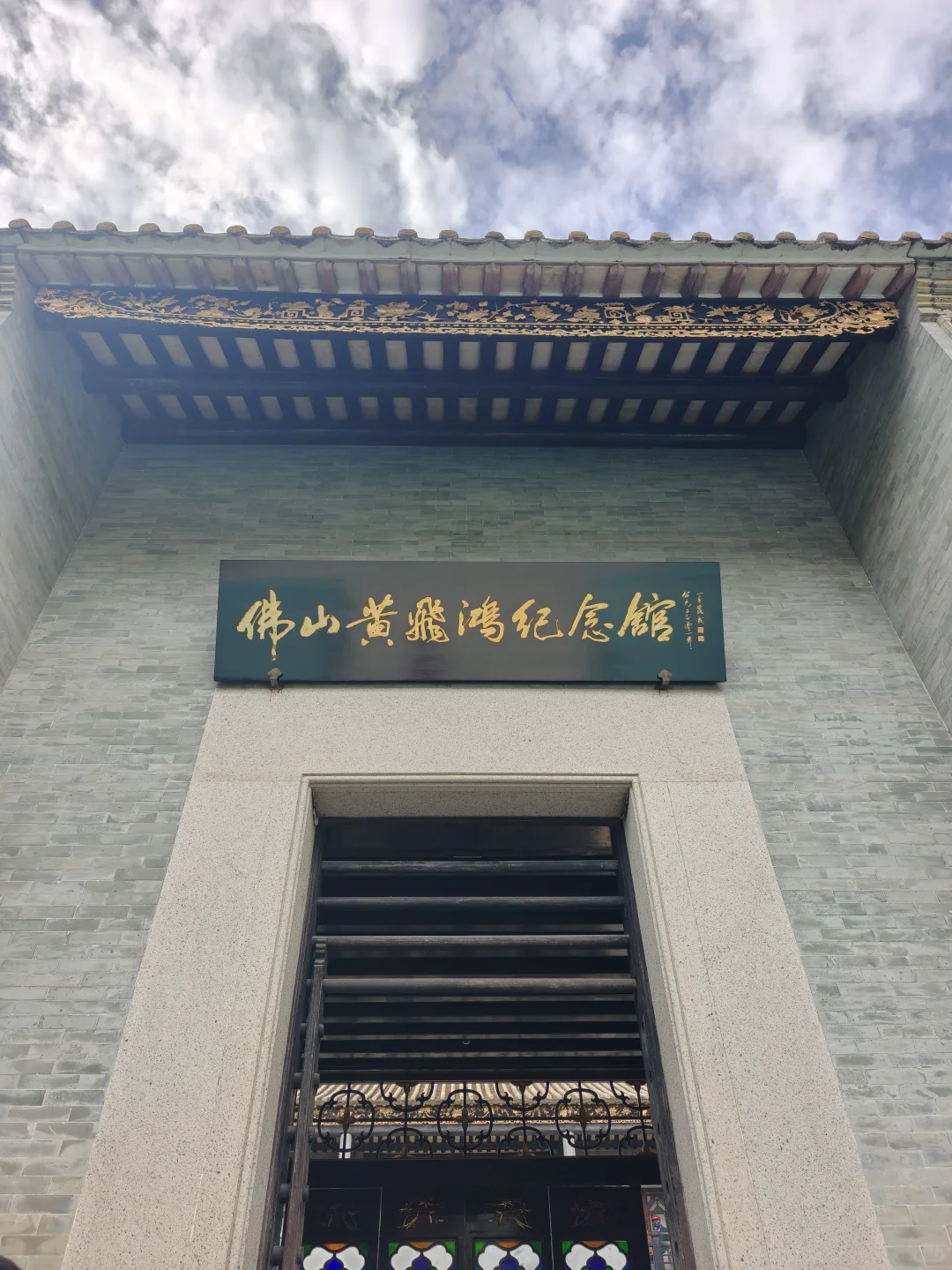
The entrance establishes a present-day institution dedicated to Wong's memory. It cannot settle his birth year, authenticate a movie duel or prove that every displayed story is contemporary evidence.
Kwan Tak-hing created the master later actors had to argue with
If Jet Li is the face many international viewers know, Kwan Tak-hing is the foundation beneath that face. Beginning in 1949, he played Wong across a remarkable run of Cantonese films. The exact count varies by filmography, but the important point is not a record-book number. Repetition made a behavioral code familiar.
Kwan's Wong is mature, controlled and socially embedded. He teaches, corrects, mediates and fights after moral authority has already been established. His body does not enter a scene as a teenager looking for identity. It enters as an institution the community recognizes. The films made martial virtue legible through a recurring person.
The 2025 China Perspectives study of the postwar series argues that these films were not merely old-fashioned action. They carried Cantonese cultural identity and a vernacular response to modern life for audiences in Hong Kong, Southeast Asia and the wider diaspora. That is the larger achievement. Wong became a portable Guangdong elder for people living through rapid urban, political and consumer change.
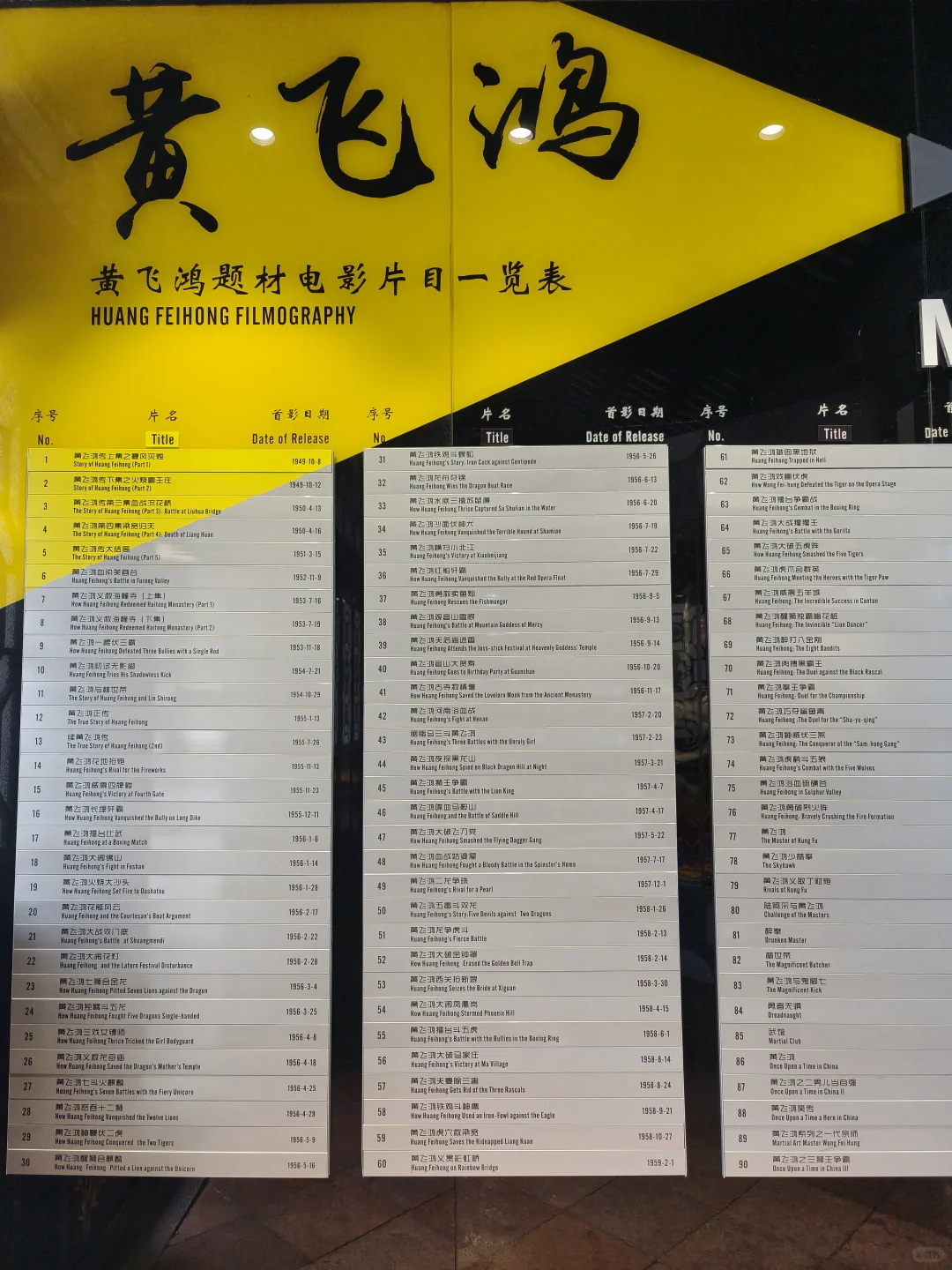
The wall demonstrates how extensive the institutionalized screen memory has become. It does not tell us which film plot is historically true or which actor is most accurate.
Without Kwan's authority, the later reinventions lose their charge. Jackie Chan's young Wong is funny because he has not become the master audiences expect. Jet Li's Wong is compelling because composure has to survive a world the old formula can no longer organize.
Jackie Chan's Wong must become the man whose name he carries
Drunken Master (1978) commits a productive act of disrespect: it makes Wong young, vain, impulsive and punishable. This is not a small tonal variation. It reverses the established direction of authority.
Jackie Chan's body is designed for embarrassment as well as triumph. He falls, reacts, cheats, suffers and learns in public. The film does not ask us to admire a finished moral order. It asks whether a gifted nuisance can accept discipline without losing invention.
That is why I would watch Drunken Master second, not first. Viewed alone, it can look like a comic origin story about a historical master. Viewed after the more formal Wong tradition—or after Jet Li's upright image—it becomes a deliberate argument with the legend. The movie strips the hero of inherited dignity so the performer can rebuild it through timing, pain and comic survival.
Do not use the film to learn what Wong's youth “was really like.” Use it to see what late-1970s Hong Kong action cinema wanted from a hero: less reverence, more physical personality, and a training process in which authority could be mocked before it was earned.
Jet Li turns discipline into a response to modernity
Tsui Hark's Once Upon a Time in China (1991) is the best first Wong Fei Hung film for an international newcomer because it makes several pressures visible at once. Jet Li's Wong is teacher, healer, patriot and uncertain observer of foreign technology and power. His composure is not passive. It is the form through which he decides what can be preserved and what must be understood anew.
The Criterion Collection's account of the series places the first film in Foshan and emphasizes how Jet Li's poise helped redefine the character for a new era. The official film description also makes the historical pressure explicit: local corruption, foreign encroachment and a society unable to treat tradition as a sealed room.
Jet Li does not simply play Wong faster. He plays him as a man whose vertical control is being tested by horizontal change—ships, guns, cameras, Christian institutions, foreign merchants, migrant labor and people who do not accept his authority. When he finally moves explosively, speed feels like a decision released from restraint.
This is where the series reaches beyond “Chinese master defeats foreign villain.” Its better question is harder: can a moral tradition learn the shape of a new danger without becoming either xenophobic or obedient? Wong does not always answer perfectly. That imperfection keeps the films alive.
Readers who want the actor's movement grammar can continue with our Jet Li guide. The important distinction here is that Jet Li is not evidence for Wong's real technique. He is the performer who made restraint, doubt and acceleration into a persuasive late-twentieth-century Wong.
The lion dance is not decoration around the legend
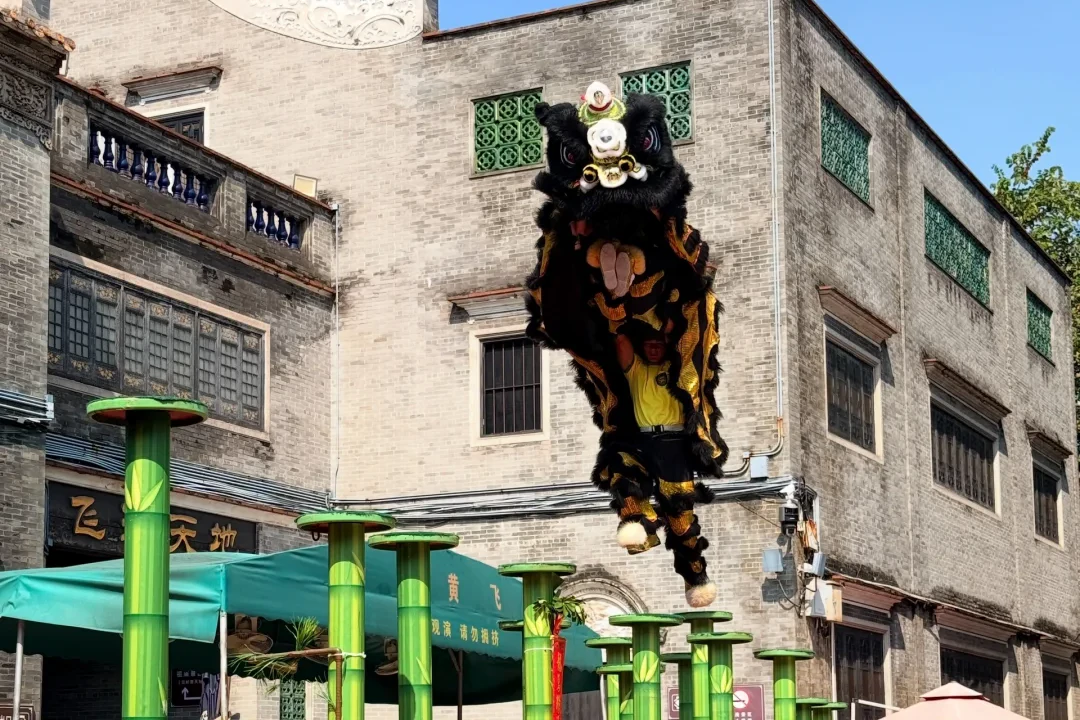
The lion in Wong Fei Hung films does more than announce “Chinese culture.” Southern lion dance joins martial training, public ritual, teamwork, craft, competition and neighborhood identity. It turns balance and risk into an event a crowd can judge together.
That is why the lion-dance sequences in the series matter. A private martial virtue becomes public. Poles make failure visible. Drums coordinate bodies. Rival teams can turn communal celebration into status competition. The lion head hides individual faces while making collective discipline spectacular.
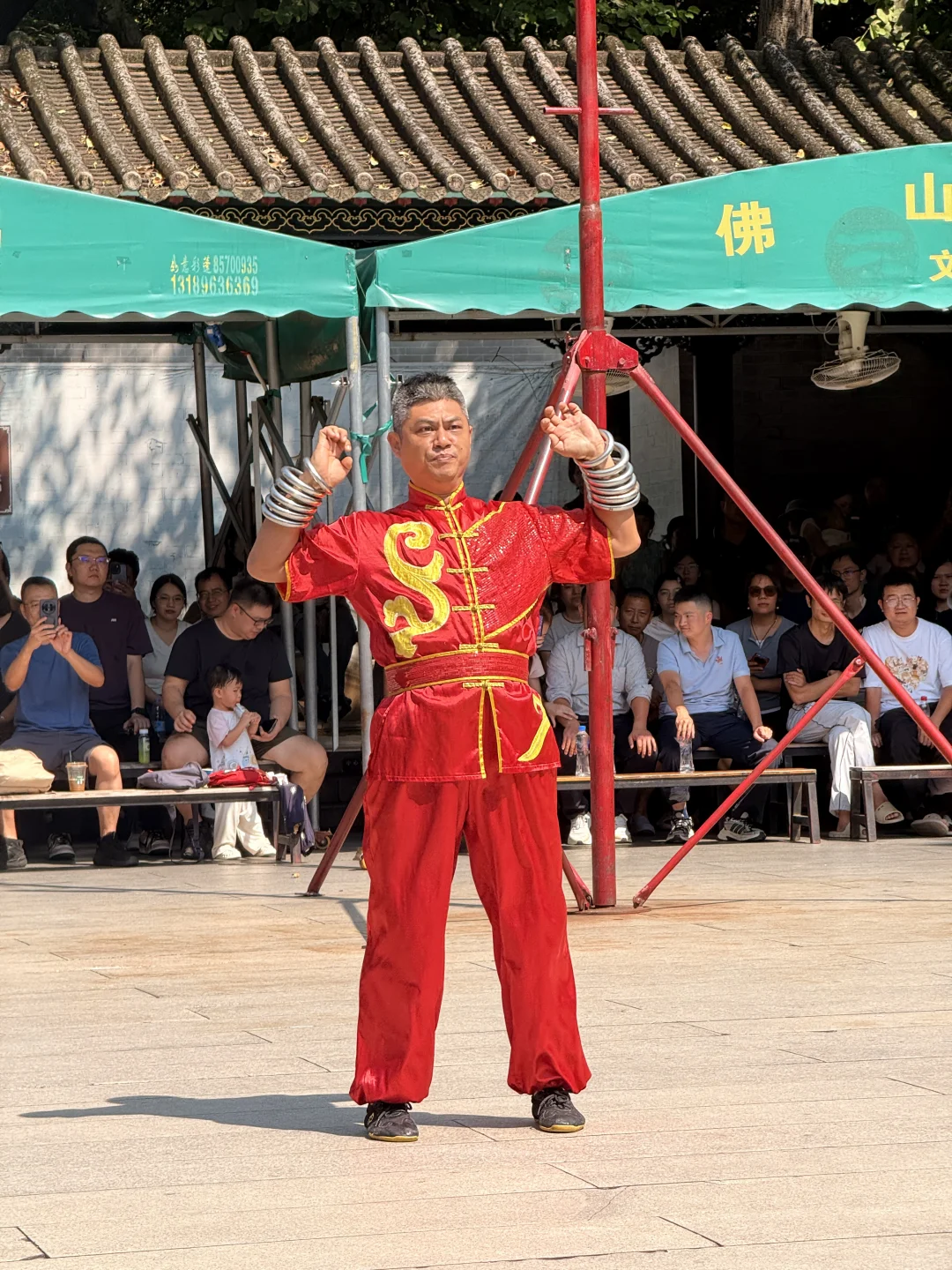
This contemporary performance makes stance, costume and a public martial-arts setting visible. It cannot identify the performer's lineage, prove Wong used the same sequence or establish combat effectiveness.
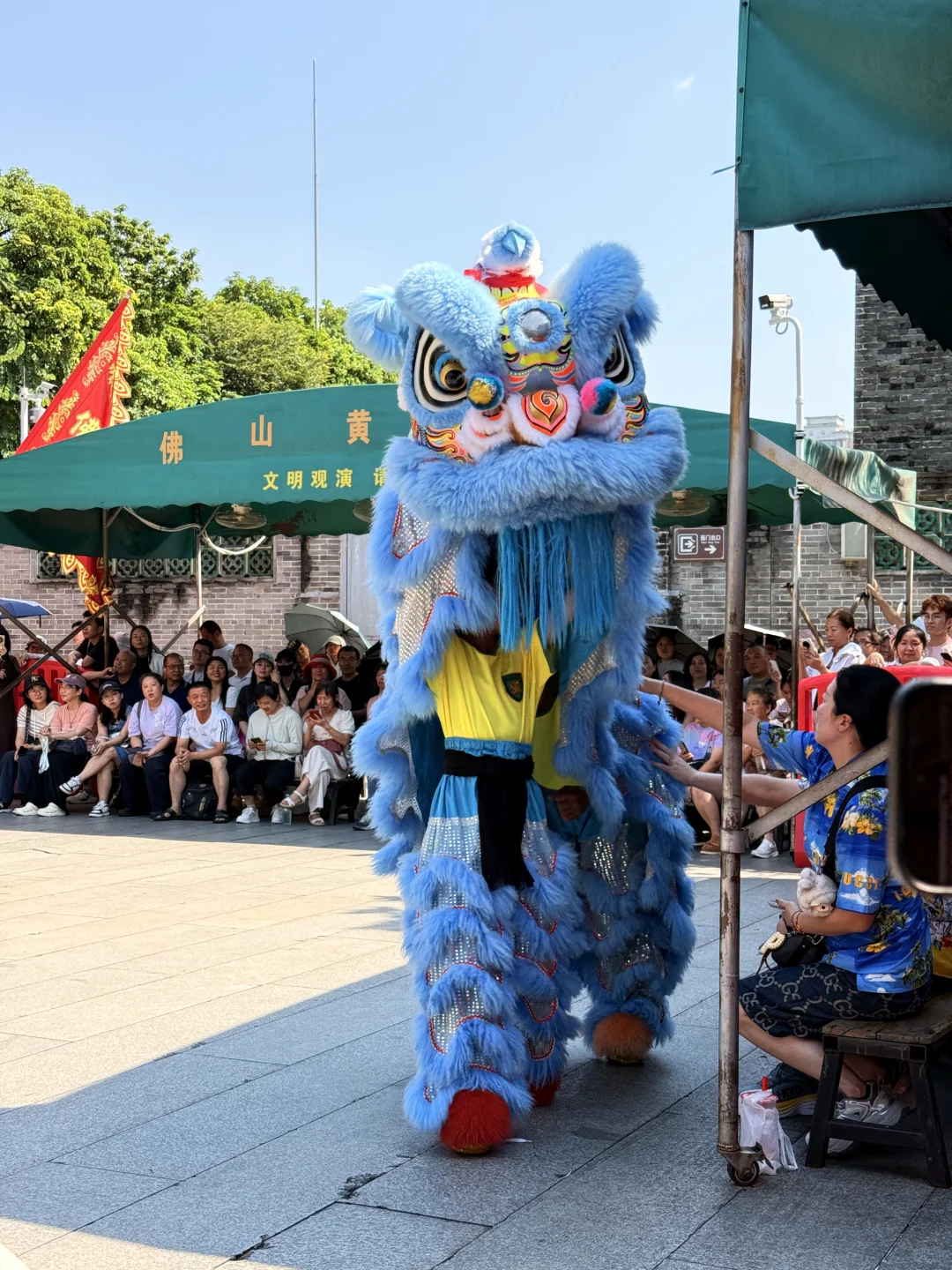
The photograph proves that southern lion dance remains a performed public culture at the memorial site. It cannot prove an unbroken lineage from one historical individual or describe every Foshan troupe.
Guangdong's official cultural reporting describes Foshan lion dance as a living practice passed through schools, families, craft and public performance—not a movie prop. Our broader lion dance guide follows that living system. The Wong connection matters because cinema helped bind the lion's public courage to one recognizable moral name.
Foshan does not prove the legend; it shows what the city chose to keep
Foshan's Ancestral Temple area now includes a Wong Fei Hung Memorial Hall, exhibitions, reconstructed Baozhilin imagery and live performance space. A visitor can see how the city organizes Wong's afterlife: historical person, novel character, radio voice, opera figure, film franchise, television hero and comic-book image.
That sequence is more honest than a room pretending only one uncontested biography exists. It reveals the actual subject: a person becoming media.
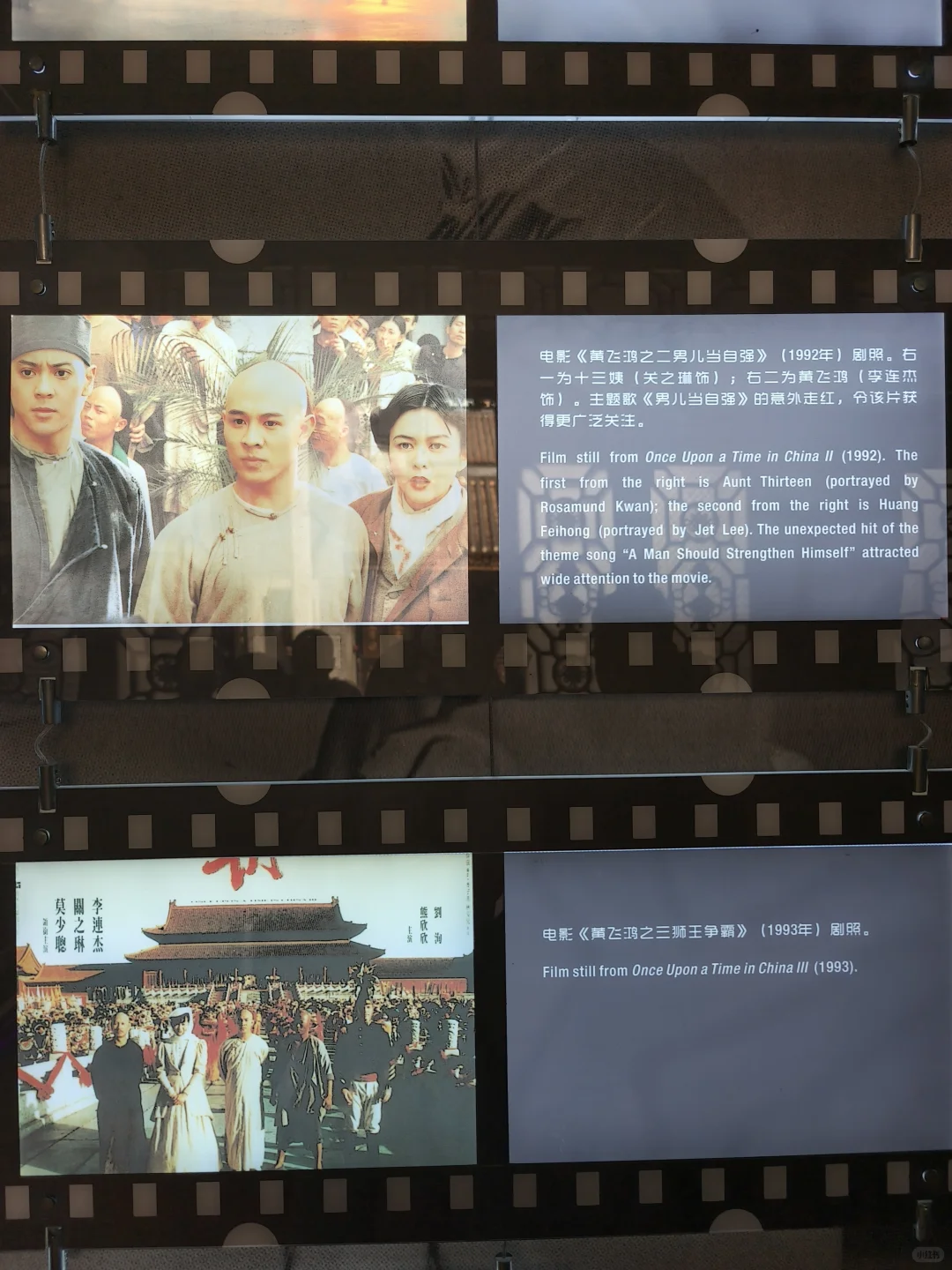
The gallery shows how film now structures public memory. Promotional stills and captions are evidence of representation, not independent evidence for the events represented.
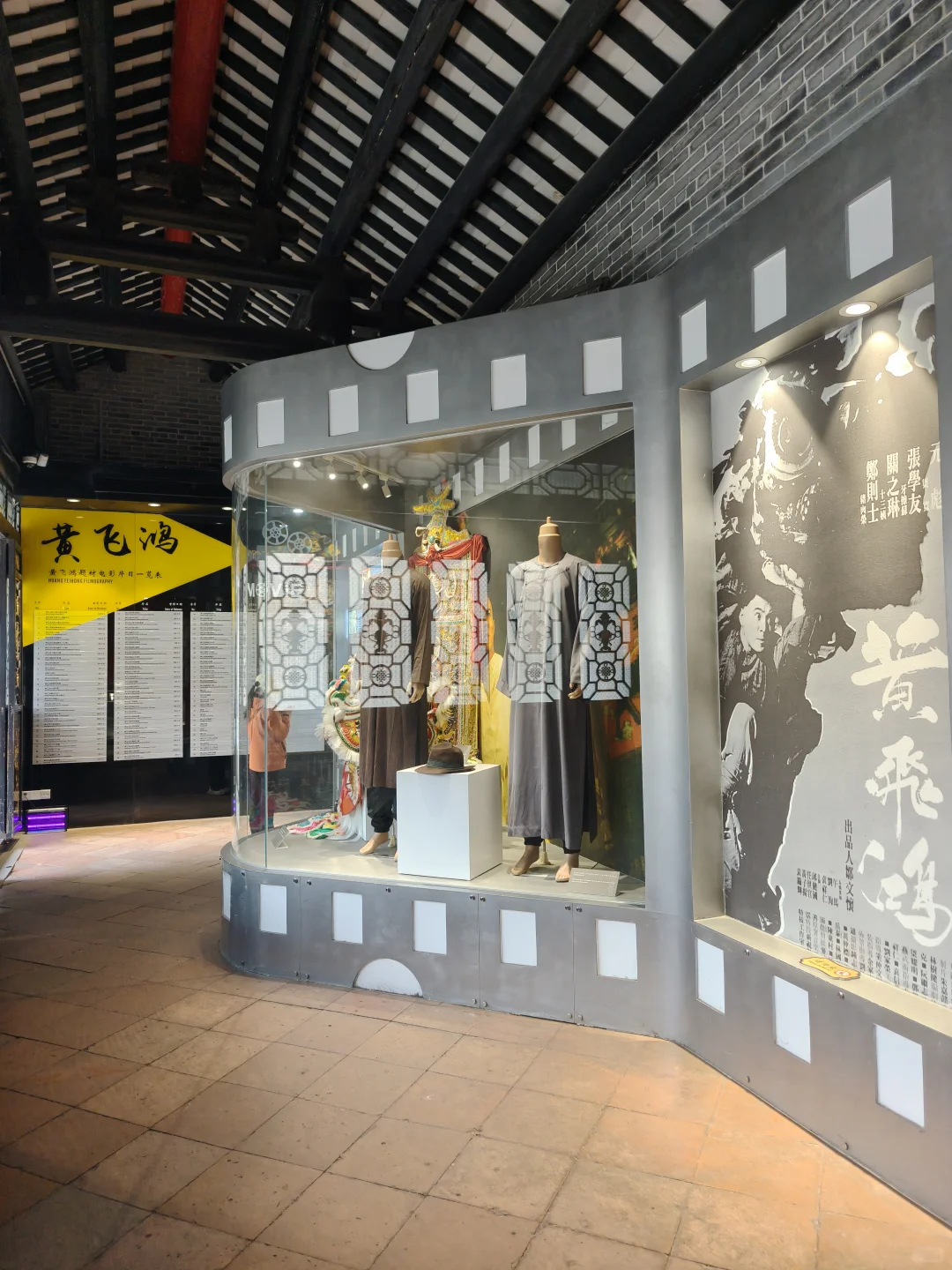
The costumes show how performance gives the legend a visible body. They cannot establish what the historical Wong wore in daily life.
The best way to read the memorial is therefore not “Which object proves the movie was true?” Ask instead: which medium gave Wong a new audience, and what changed when it did? The answer moves from local martial memory to Cantonese serial culture, Hong Kong cinema and global home video.
Our Foshan culture guide places this memory beside the city's food, workshops, furniture markets and other practiced skills. Wong should not flatten Foshan into “kung fu city,” but Foshan gives the legend a social ground that a generic movie list cannot.
Which Wong Fei Hung movie should you watch first?
Choose by the question you want answered.
| Your question | Start here—and what to watch |
|---|---|
| Why did Wong become globally recognizable? | Once Upon a Time in China (1991): Jet Li's restraint, Foshan as a pressured social world and tradition confronting modernity |
| How could the solemn master become comic? | Drunken Master (1978): Jackie Chan's youthful arrogance, training pain and improvised rhythm |
| What did the older Cantonese hero feel like? | A restored Kwan Tak-hing film from a reputable archive or distributor: community authority, moral instruction and the recurring ensemble around the master |
| Which sequel sharpens politics and action? | Once Upon a Time in China II (1992): xenophobia, revolutionary politics and the Donnie Yen confrontation |
| Which film makes lion dance central? | Once Upon a Time in China III (1993): public competition, spectacle and the danger of turning cultural pride into status theater |
| Want a darker modern origin reboot? | Rise of the Legend (2014): a younger hero redesigned through contemporary action-drama pacing |
My three-film route is Once Upon a Time in China → Drunken Master → a Kwan Tak-hing film. It runs backward historically but forward intellectually. First you meet the globally polished myth. Then you watch Jackie Chan break its dignity. Finally, you meet the older screen grammar both later versions were answering.
If only one film is available, choose Once Upon a Time in China. If you already know Jet Li's version, do not watch another sequel immediately. Switch actor and era. Contrast is where the page's central point becomes visible.
Wong Fei Hung is not the same kind of hero as a wuxia swordsman
English-language lists often place every Chinese martial hero under “wuxia.” That is convenient but imprecise. Wong's major film worlds are rooted in southern boxing, urban community, schools, medicine halls, lineage and late-Qing or Republican social change. A roaming sword hero in the jianghu carries a different narrative structure.
The larger Chinese martial arts guide separates living traditions, screen choreography and lineage claims before comparing styles. That boundary is especially important here: Wong's films made Hung Gar globally visible, but visibility is not a technical syllabus and a star performance is not lineage evidence.
The categories can overlap in ethics: both may ask how skill answers injustice. But Wong usually derives authority from being embedded in a local community. His school, patients, students and Foshan matter. He is less a stranger arriving from the mountains than a civic moral center whose city is being disrupted.
Read wuxia meaning for the distinction between martial skill and xia. Then return to Wong and notice what changes: the hero is not only keeping a personal promise. He is trying to hold together a neighborhood, a school and an idea of cultural dignity.
The comparison with the Ip Man movie is also useful. Both screen traditions turn a Foshan-associated master into controlled moral authority. Yet Ip Man builds its rupture around wartime occupation and family restraint, while Wong's many versions keep renegotiating modernity across decades of Hong Kong cinema. Similar posture does not mean identical myth.
My final judgment: accuracy is the wrong contest between the actors
The usual debate asks which actor portrayed Wong Fei Hung most accurately. The evidence cannot support that confidence, and the question wastes what the performances reveal.
Kwan Tak-hing tells us how a recurring Cantonese hero could stabilize community values. Jackie Chan tells us that the same name could survive irreverence and bodily comedy. Jet Li tells us that tradition remains persuasive only when it can look directly at historical change. Each performance is accurate to an era's need before it is accurate to a recoverable person.
That does not make history irrelevant. It makes historical caution essential. We should state what archives support, mark what remains disputed, and refuse to use choreography as biography. Then we can judge the films more sharply, not less.
Wong Fei Hung became globally durable because he is not one fixed hero. He is a test renewed by each generation: what should disciplined strength protect when the social world that gave it meaning is changing? The actors disagree. That disagreement is the inheritance.