2024 was the Year of the Dragon from February 10, 2024 through January 28, 2025. To understand why Dragon years carry unusual cultural weight, forget the fire-breathing cave monster. The Chinese dragon is most revealing when you follow it into clouds, water and rain.
Year of the Dragon dates and exact boundaries
Recent Dragon years are 1928, 1940, 1952, 1964, 1976, 1988, 2000, 2012, 2024 and 2036.
| Dragon year | Begins | Ends | Element |
|---|---|---|---|
| 1988 | February 17, 1988 | February 5, 1989 | Earth |
| 2000 | February 5, 2000 | January 23, 2001 | Metal |
| 2012 | January 23, 2012 | February 9, 2013 | Water |
| 2024 | February 10, 2024 | January 28, 2025 | Wood |
January 2024 still belonged to the Rabbit year. January 2025 remained part of the Dragon year until Chinese New Year on January 29. If a birthday is near the boundary, use the full-date calculator.
The complete Chinese zodiac guide places Dragon in the twelve-branch system and separates the calendar cycle from modern personality shorthand.
Our conclusion: rain explains the Dragon better than “power”
Most short explanations say the Dragon represents strength, luck and imperial authority. All three associations matter, but they can turn into a vague cloud of prestige.
Rain gives the symbolism a working structure. In an agricultural society, control over water is not decorative magic. Rain can sustain crops; flood can destroy them; drought can destabilize life. A being imagined as moving through clouds and waters therefore carries power because it is connected to forces on which communities depend.
The Chinese dragon is not powerful merely because it looks grand. It is powerful because it links sky, water, seasonal change and human survival. Imperial use later concentrates that authority, but the cultural imagination is wider than the court.
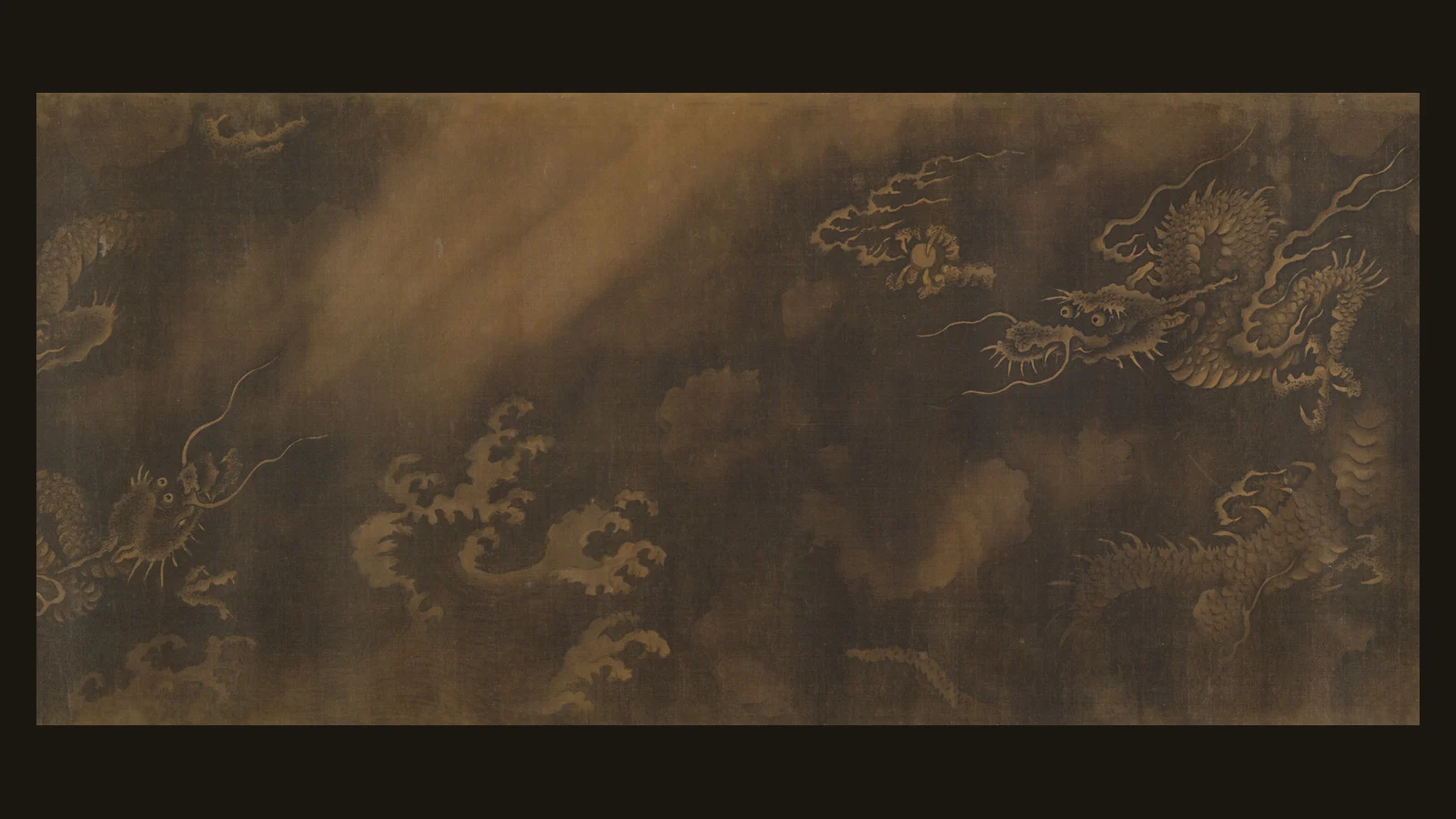
The late-thirteenth- or early-fourteenth-century handscroll Beneficent Rain makes that argument visible without a crown anywhere in the frame. The dragons are difficult to separate from vapor, darkness and weather; their bodies do not dominate a neutral background but emerge from the conditions they are believed to move through. The Met record identifies the work and date. It does not make the scroll a zodiac object. What it proves is narrower and more useful: Chinese dragon power could be pictured as weather before a modern slogan reduced it to personal ambition.
This is also why translating long (龙 / 龍) as “dragon” can mislead. The English word often activates wings, fire, treasure and an enemy to be defeated. The Chinese creature is commonly serpentine, associated with water and capable of transformation. The same English label points to different narrative ecosystems.
Chen is not the ordinary word for dragon
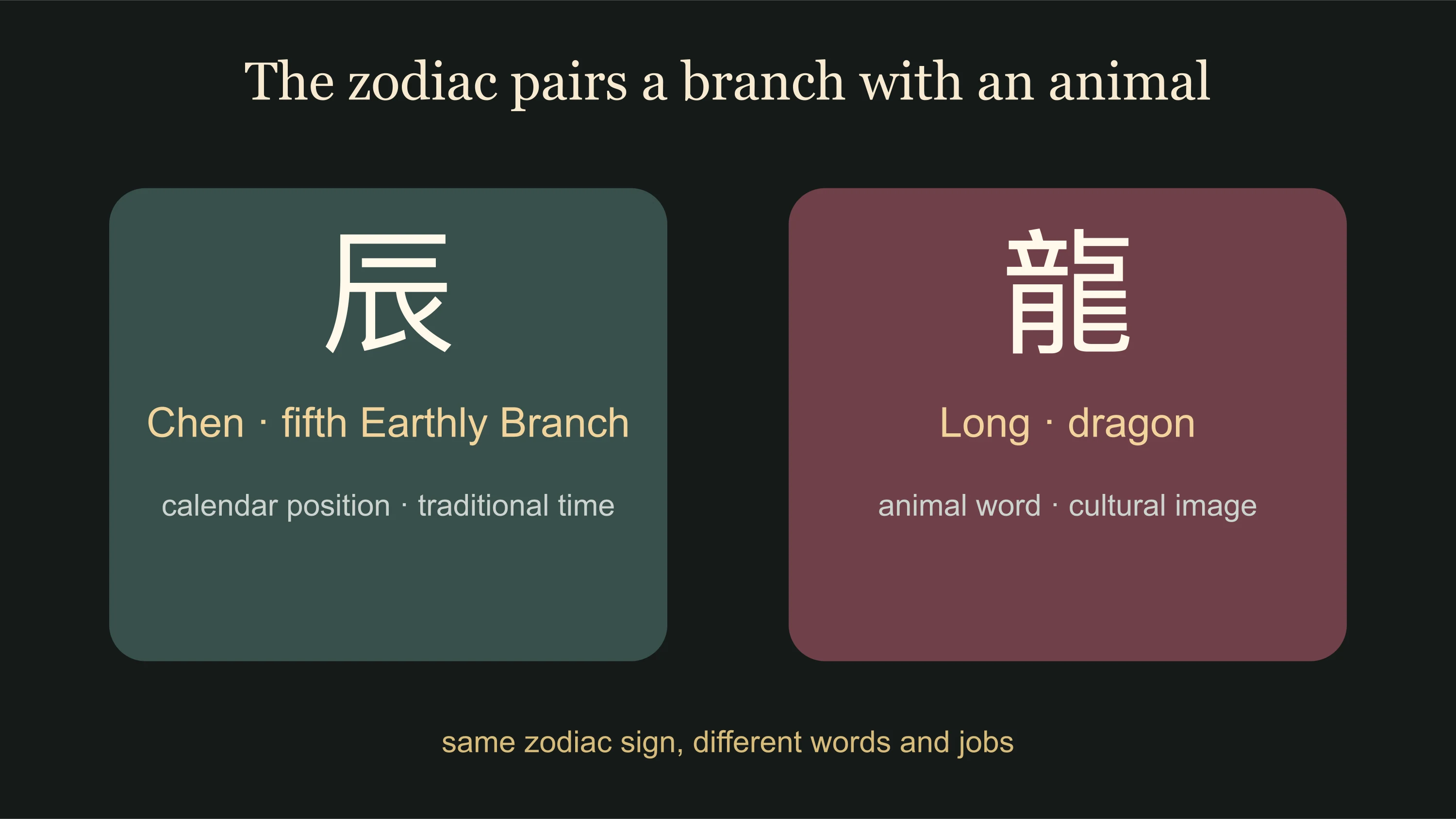
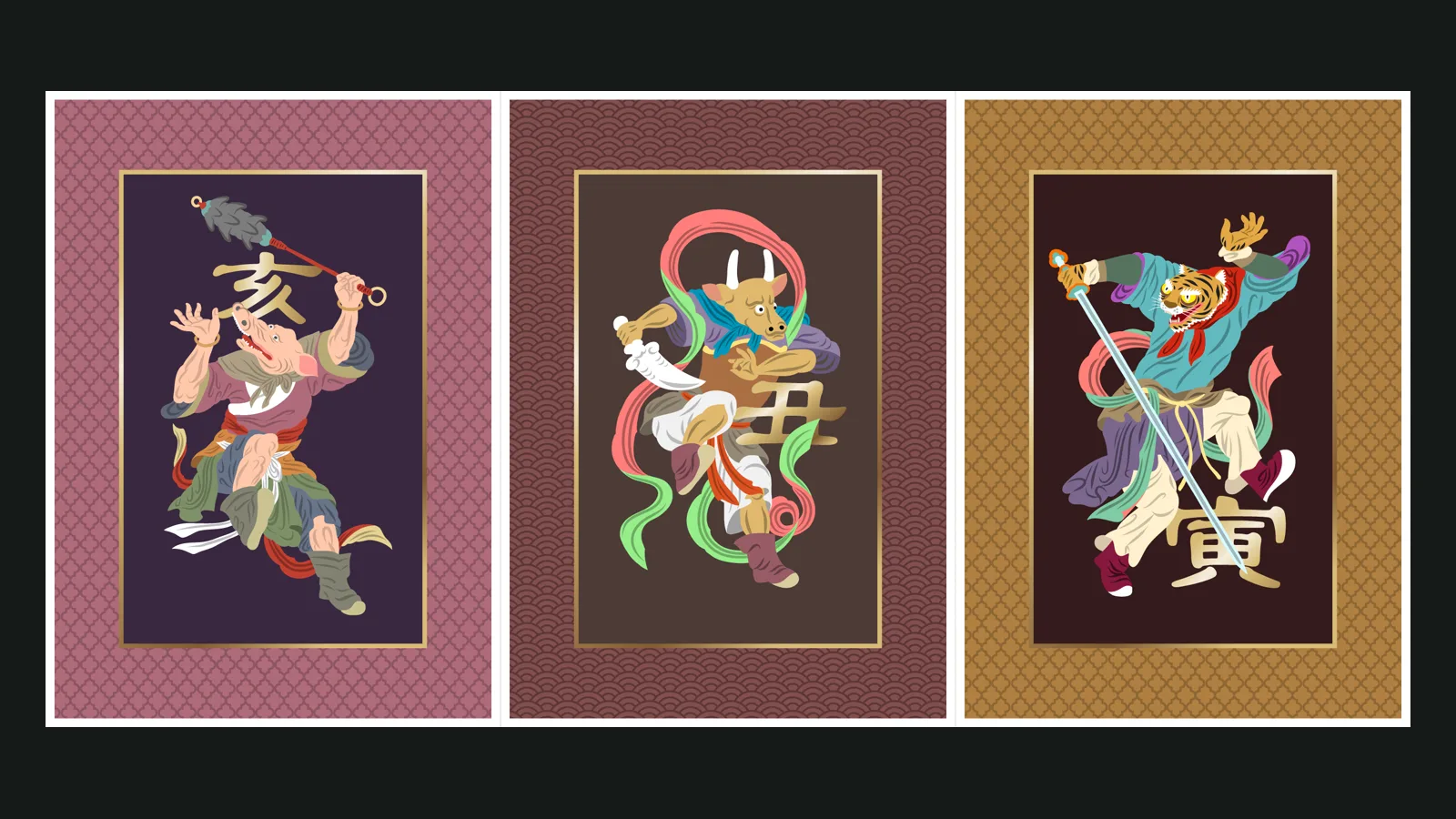
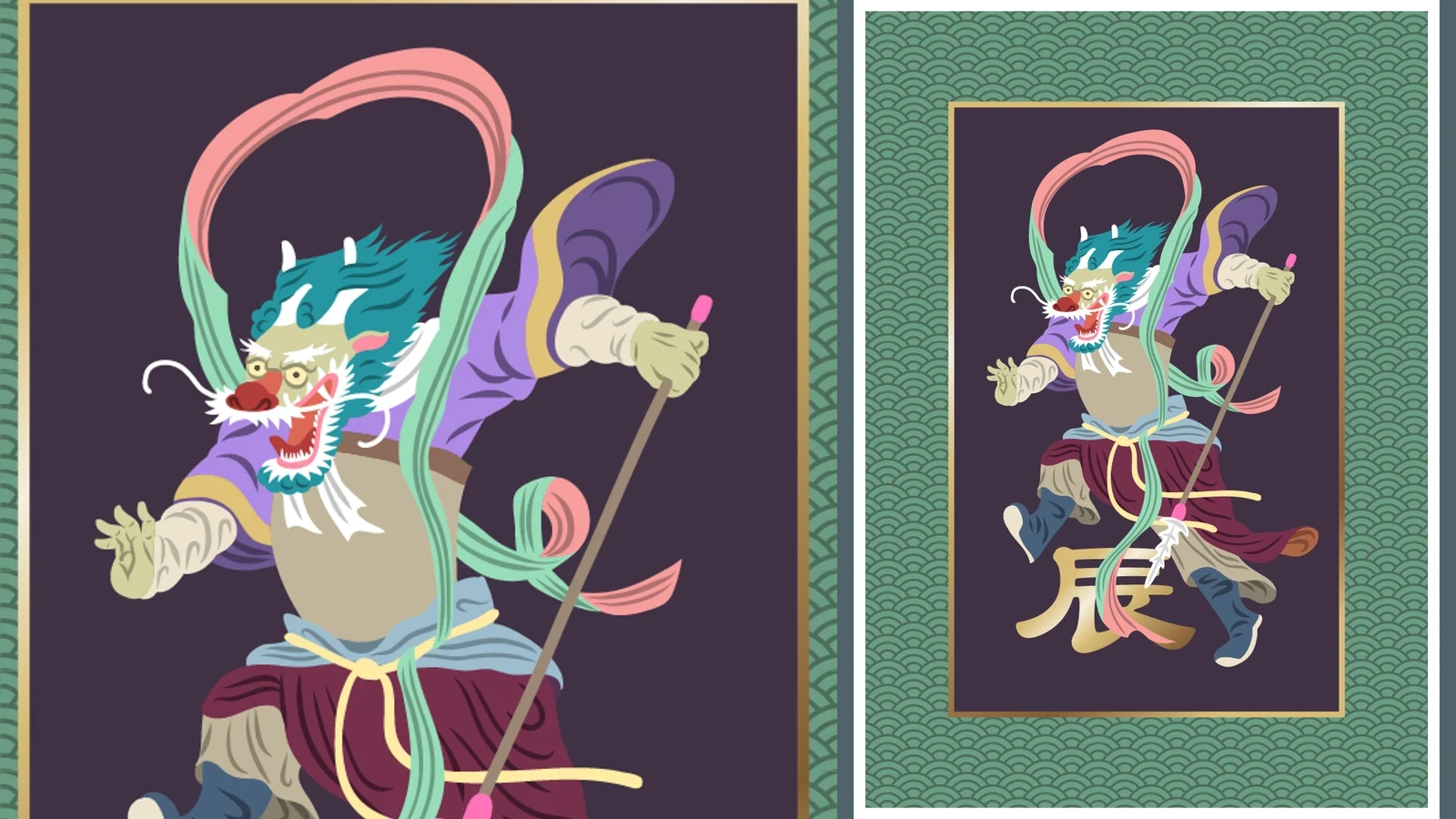
The Dragon panel in our authorized illustration carries 辰 (chen), the fifth Earthly Branch. The everyday Chinese word for dragon is 龙 / 龍 (long).
The zodiac pairs Chen with Dragon. Chen is traditionally associated with the double-hour from roughly 7 a.m. to 9 a.m. and holds a place in the twelve-part ordering system used for years and other cycles. It follows the Year of the Rabbit and precedes Snake. The animal makes that abstract position visible.
Our contemporary figure seems to rise while fabric and body pull across the frame. The artwork does not prove an ancient visual rule. It demonstrates a modern design decision: Dragon identity is made legible through upward motion, elongated form and the branch character.
The only zodiac animal not based on an observed species
Dragon is the sole mythic creature among the twelve zodiac animals. That fact changes its social role.
Rat, Ox, Tiger, Rabbit, Snake, Horse, Goat, Monkey, Rooster, Dog and Pig can all be connected to observed species, even when later stories reshape their behavior. Dragon arrives already assembled through imagination. It can combine features associated with several animals and exceed ordinary scale.
This makes Dragon a particularly flexible public symbol. It can appear in ritual, court art, architecture, festival performance, national imagery, branding and children's design without being tied to one biological model. Flexibility is part of its endurance.
Yet “mythic” does not mean imaginary in the sense of culturally unimportant. A symbol can organize real hopes, public performances and family decisions without being zoologically real.
Dragon year expectations and birth-year pressure
Dragon years are widely treated as auspicious, and some families regard a Dragon birth as especially desirable. Peer-reviewed research has observed Dragon-year effects on fertility and birth timing in some Chinese populations. This is evidence that zodiac preference can affect behavior in studied settings, not evidence that every Chinese family plans births around the calendar.
The important distinction is between a social effect and a personality fact. Belief in the Dragon's prestige can influence gifts, language and expectations; empirical birth-timing effects require a named population and study period. None of this causes a child to become ambitious, charismatic or successful.
That distinction lets us take the tradition seriously without turning it into biological destiny. Cultural belief matters precisely because people act on it, not because every horoscope sentence comes true.
What Wood Dragon meant in 2024
2024 combined the Jia (甲) Heavenly Stem with the Chen (辰) branch. Jia is associated with yang Wood, producing the Wood Dragon label.
The same stem-branch pairing returns every sixty years, so the previous Wood Dragon year was 1964 and the next will be 2084. Dragon years occur every twelve years; Wood Dragon years require the full sixty-year cycle.
“Wood” is a calendrical classification, not a promise that 2024 Dragons share one temperament. This is where precision improves the page: preserve the real structure and discard the fake certainty.
Dragon, emperor and the danger of one-story history
Imperial associations are impossible to ignore. Dragons appeared in court material culture, and regulated imagery could express rank and sovereign authority. But saying “the dragon means the emperor” is too narrow.
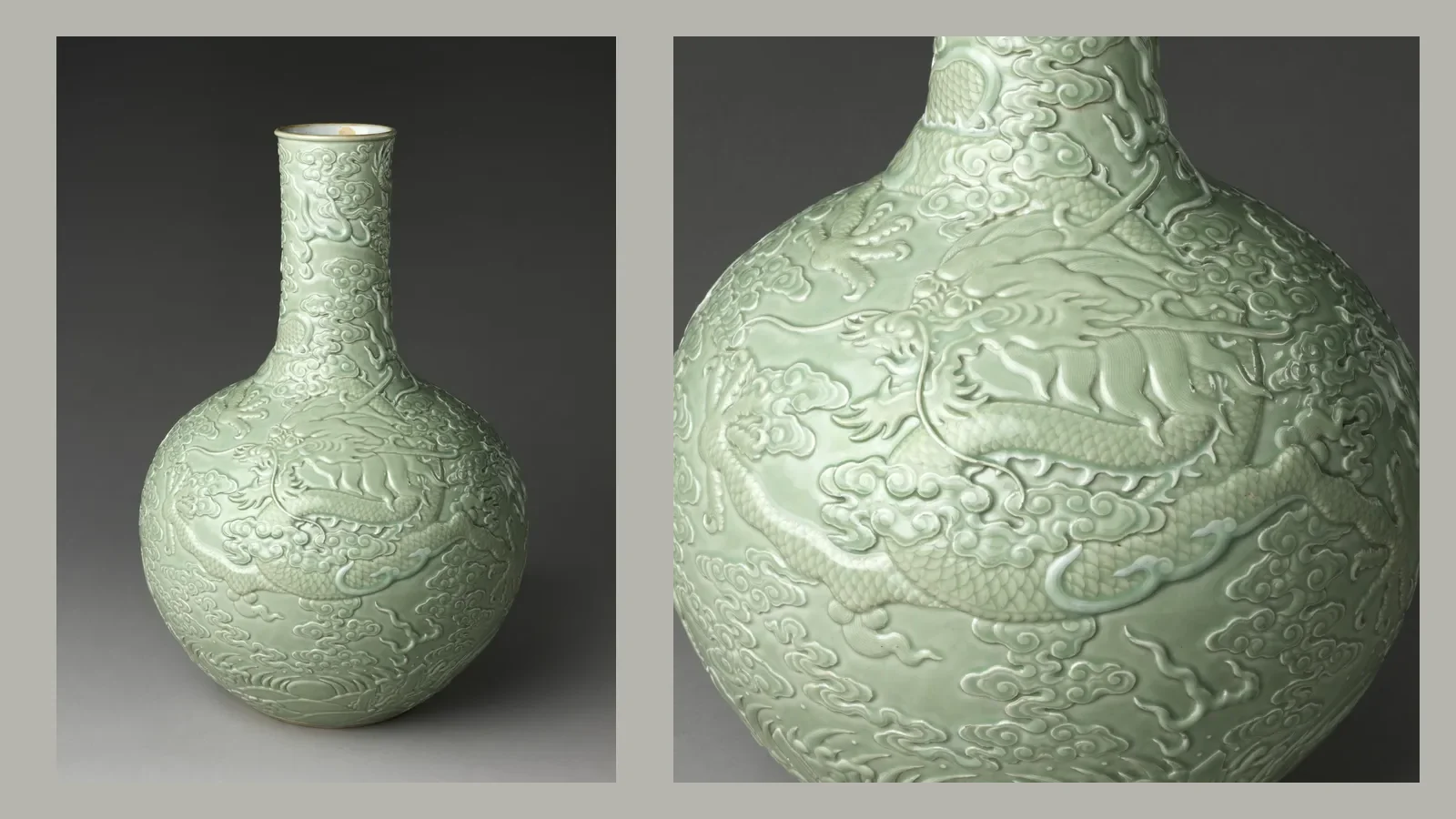
On this mid-eighteenth-century celadon vase, the dragon is not a printed badge. It is carved into the same pale surface as the clouds, so the motif appears and disappears with light. The museum record identifies a Jingdezhen vessel with a dragon amid clouds. It cannot tell us that the vessel marked a Dragon year. That missing branch or year is precisely the point: a dragon may carry courtly, cosmic or decorative meaning without becoming evidence for Chen.
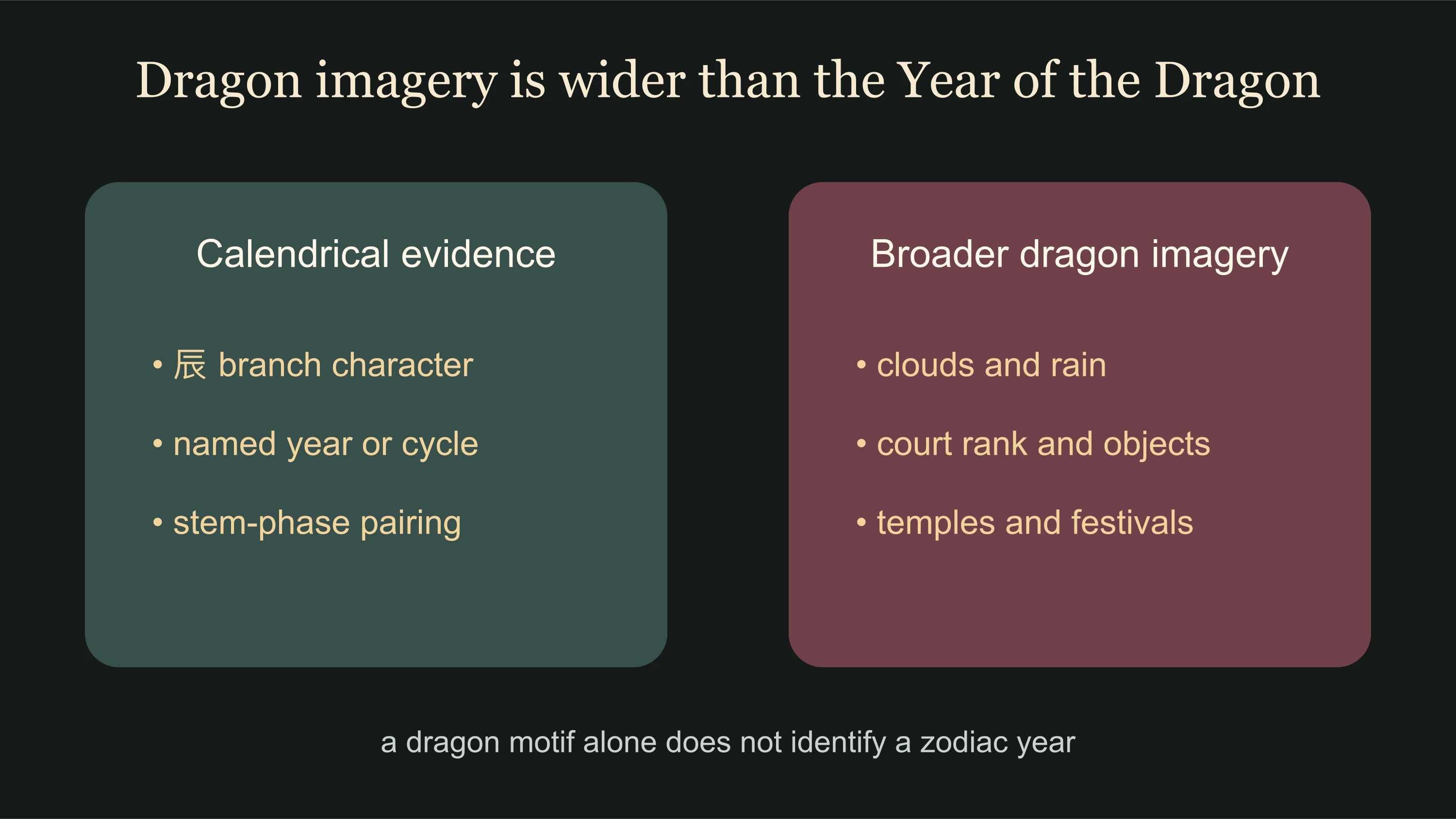
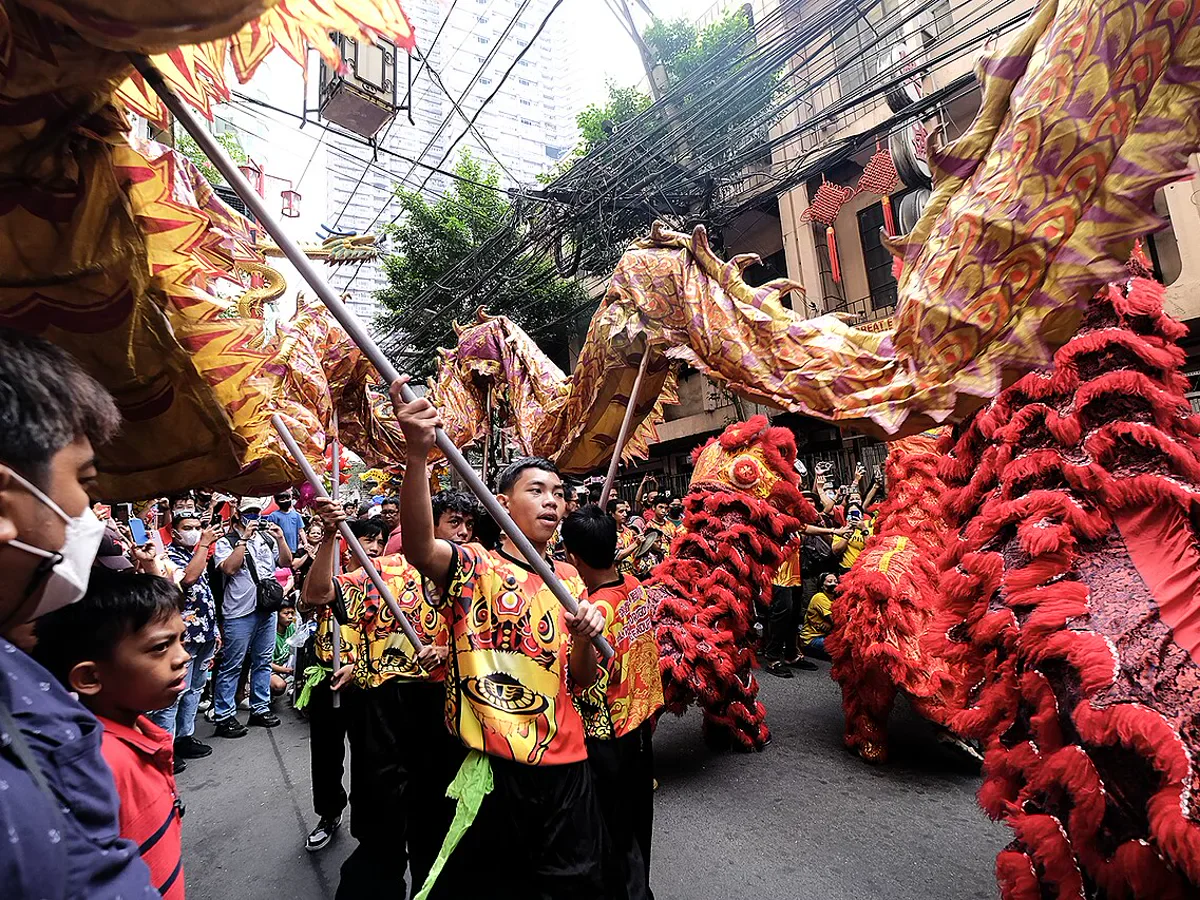
The branch character or a named year makes a zodiac claim. Clouds, court objects and festival bodies belong to the dragon's wider visual history; they cannot identify a Dragon year by themselves.
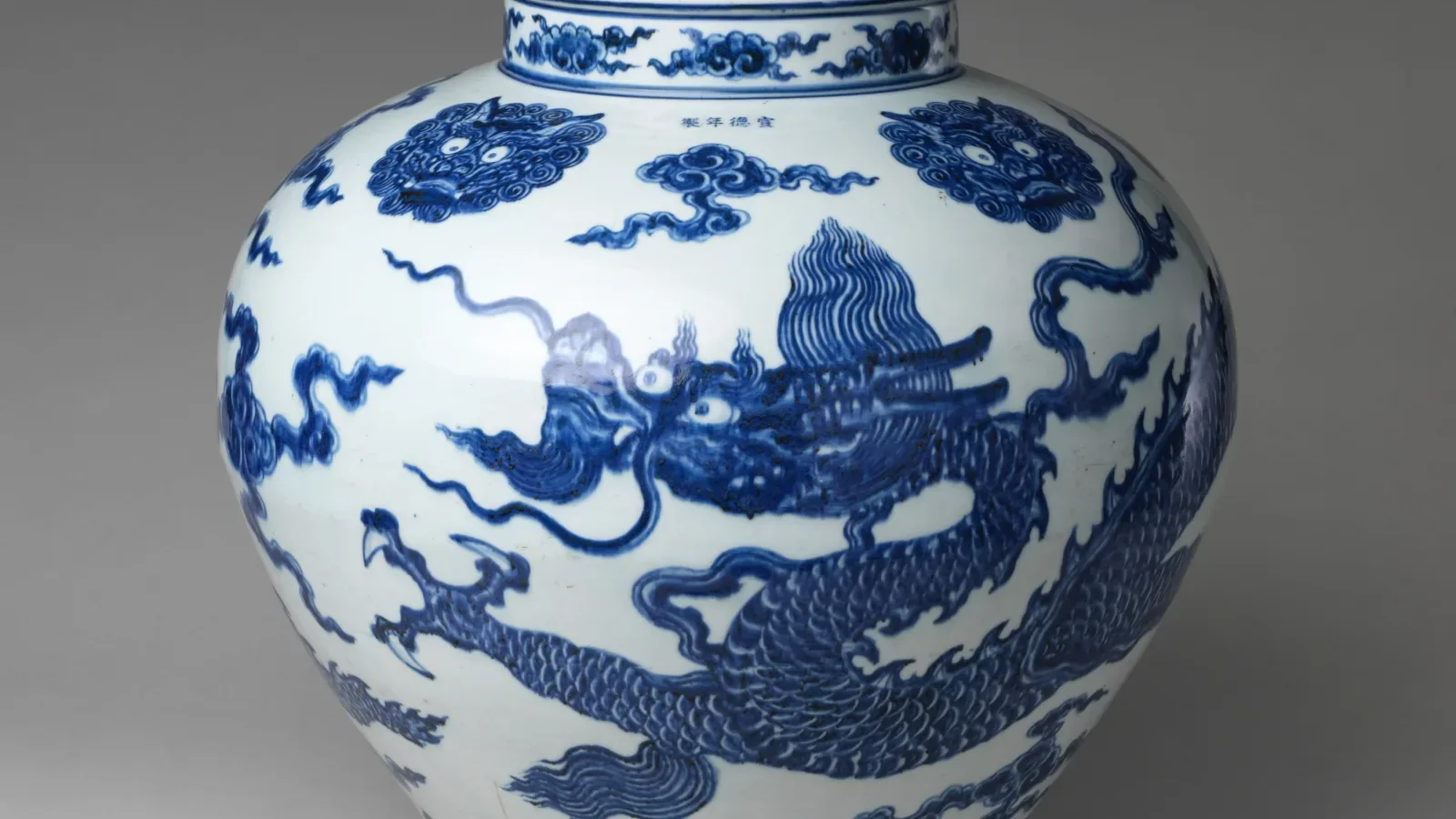
The Met's early-fifteenth-century jar makes the wider visual system concrete. The dragon does not sit inside a flat badge. Its body runs around a curved porcelain surface among cloud forms, so the viewer has to move around the vessel to follow it. The object supports the page's movement-and-cloud reading without proving that every dragon means rain or imperial rule.
It is also not a zodiac object: no branch character or year label identifies Chen. That boundary matters. The jar belongs to the broader history of dragon imagery, while the Year of the Dragon page explains the creature's specific calendrical role. Our blue-and-white porcelain guide examines how the same dragon works as brushwork on a three-dimensional ceramic form.
Dragon imagery existed across periods, regions and contexts beyond one throne. Rainmaking, water, directional systems, local worship, decorative arts and festival performance all complicate the simple equation. The emperor did not invent the dragon, and imperial symbolism did not exhaust it.
For the wider story world around rainmaking beings and transformation, continue into Chinese mythology. This zodiac page has a narrower job: explain why the Dragon occupies Chen's place in the annual cycle and why a Dragon year attracts heightened attention.
What to notice in Dragon-year imagery
When a Dragon fills New Year displays, look past color and scale.
- Where is the water? Clouds, waves, rain and pearls may carry more meaning than flames.
- Is 辰 present? The branch identifies the calendrical Dragon rather than generic dragon decoration.
- How is the body constructed? Serpentine movement separates much Chinese imagery from the heavy winged body common in European fantasy.
- What claim is the object making? A museum artifact, a festival costume and a commercial mascot belong to different evidence categories.
The Year of the Dragon is not important because a horoscope says its people are born leaders. It matters because one calendrical animal gathers water, imagination, authority and family expectation into a symbol people continue to use. Rain is the thread that makes those meanings cohere.
Year of the Dragon meaning begins with weather, not celebrity power
The Dragon is repeatedly sold as ambition with scales. That reading is easy because the animal has become a global shorthand for China, empire and exceptional force. Water gives us a more grounded entry. Rain, cloud and seasonal order connect dragon power to fields, rivers and the vulnerability of communities waiting for weather they cannot command.
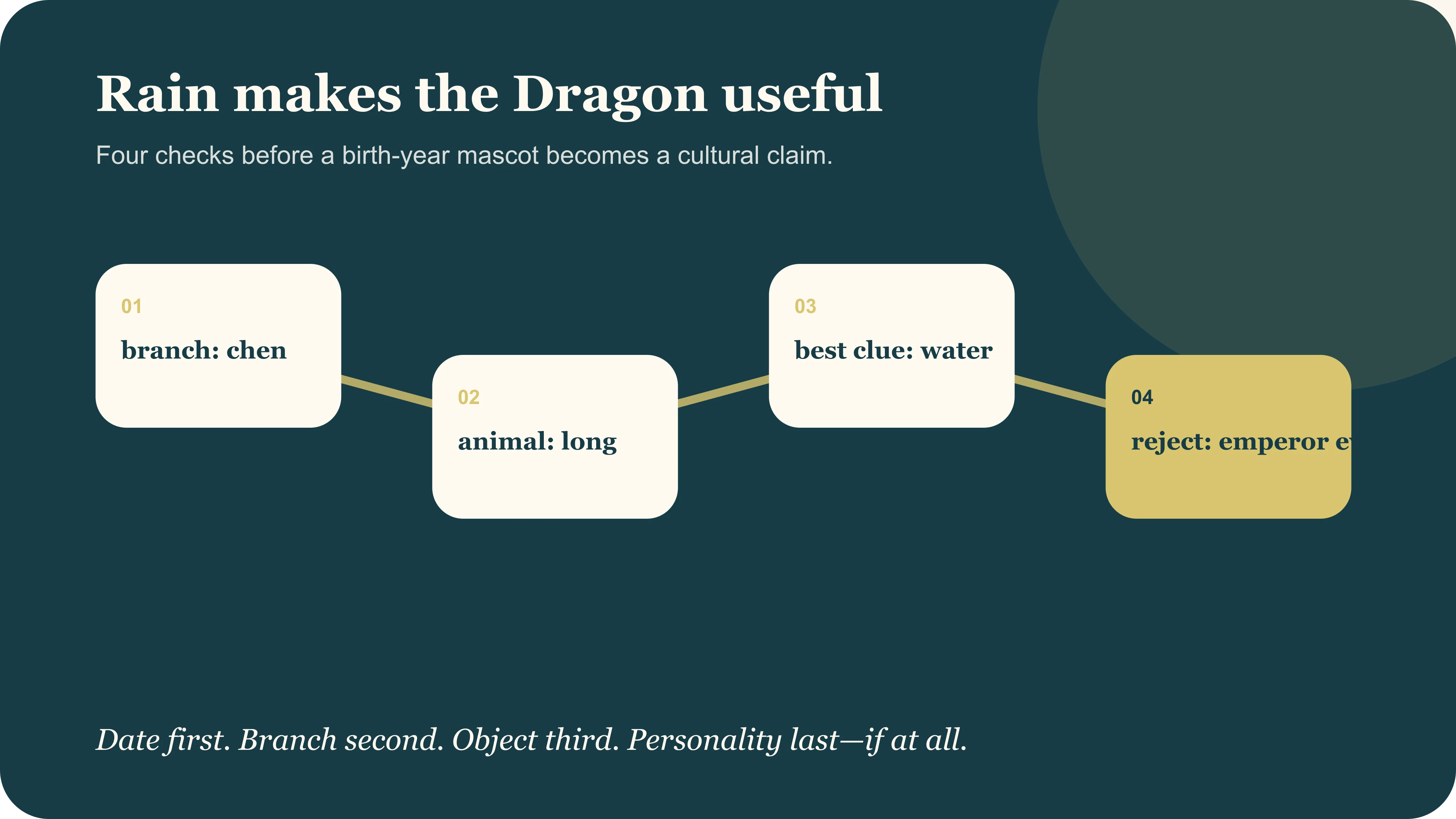
The Smithsonian National Museum of Asian Art's Dragon in Ancient China exhibition makes the historical range visible. Dragon forms and meanings changed across objects and periods; one imperial story cannot own all of them. When we restore water to the image, “power” stops floating as a personality compliment and becomes a relationship between human order and forces larger than the court.
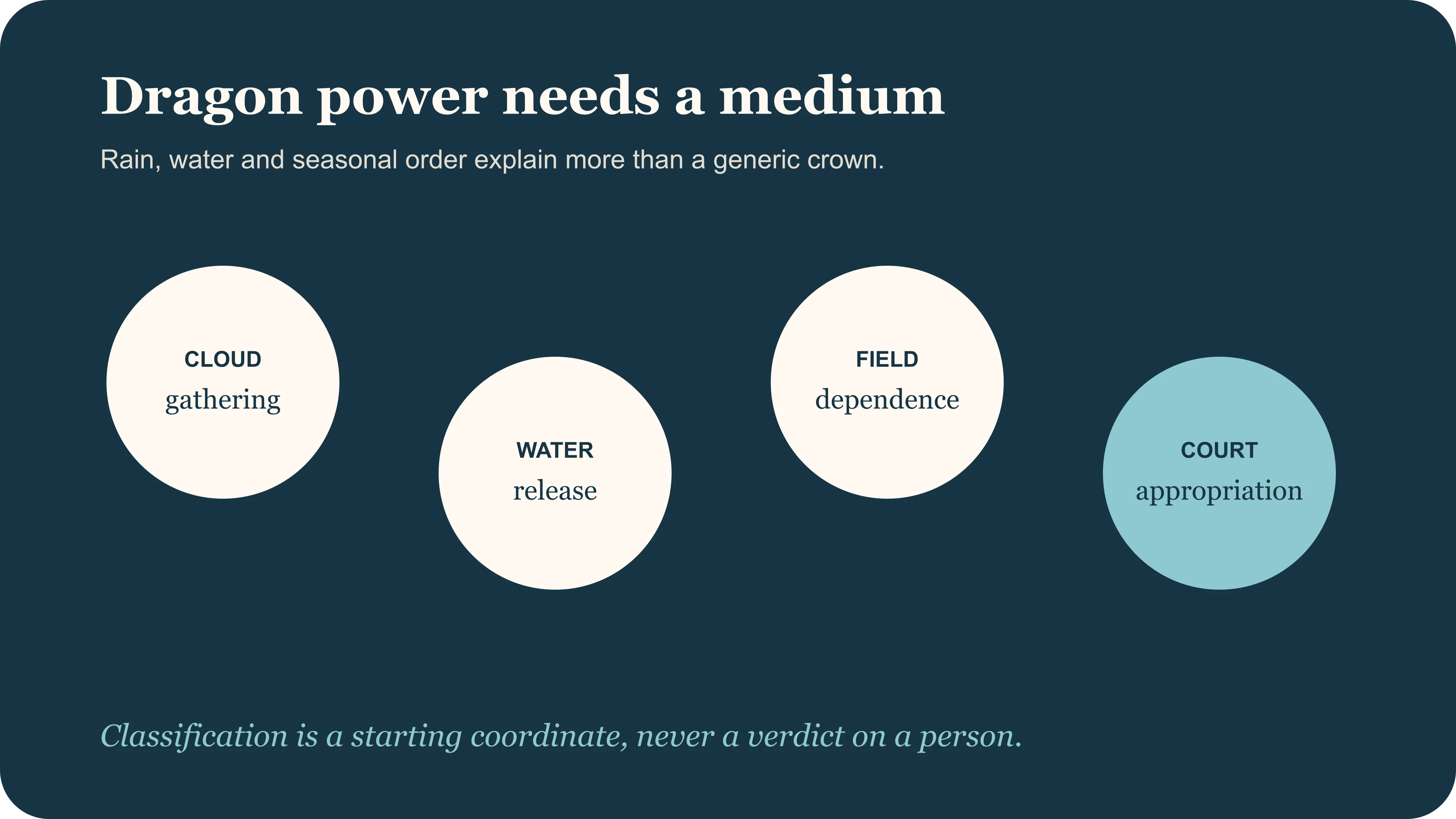
This also changes how I read a Dragon-year gift. Clouds curling around the body, waves beneath it or a vessel carrying the motif may matter more than the number of claws. The object may be asking for favorable conditions, protection or cosmic order rather than promising that its recipient will become dominant.
Imperial dragons are important, but they are not the beginning and end
Court regulation, robe design and imperial porcelain made the dragon a language of rank. That history is real. The mistake is to reverse it into “every dragon represents the emperor.” Folk festivals, temples, tomb objects, rain traditions and regional arts use dragon forms in other relationships. The same creature can organize authority in one context and communal movement in another.
The Met jar with dragon is useful because a vessel makes the body turn with the surface. You cannot understand it from a flattened logo. The dragon is encountered through movement around an object, and the ceramic function remains part of the experience. Our blue-and-white porcelain guide explains how motif and vessel construction work together.
Do not identify rank from one feature copied out of context. Claw counts are often discussed as if they were a universal barcode, yet date, medium, place and workshop practice matter. A confident online chart can turn a complicated history into costume trivia. Read the whole object.
Dragon-year birth pressure is culture acting on families
Dragon years have attracted expectations around auspicious births. Research has examined birth timing and outcomes, but a statistical pattern does not prove a Dragon child possesses superior ability or fate. What it reveals most clearly is behavior: symbols can change family decisions, medical timing and social pressure.
I am uncomfortable when auspicious language becomes a burden placed on a child. Being born in a celebrated year should not create a lifelong performance contract. The calendar can name a shared moment; parents and institutions still decide whether that moment becomes encouragement, competition or anxiety.
Use the zodiac calculator to verify the Lunar New Year boundary, especially for January and February births. Then treat personality claims as folklore, not diagnosis. The strongest Dragon meaning is not that one person is destined to rise. It is that power remains dependent on water, timing and the lives organized around it.
A dragon without context is only a silhouette
Count the claws only after checking period, object type and source record. Five-clawed dragons can carry imperial associations, but claw count alone is not a universal dating machine. Reproductions, theatre costumes, tourist decoration and later revival work can repeat older forms without preserving their original authority.
The same caution applies to colour. Yellow, blue, red and black dragons gather different associations across systems, yet a modern designer can choose a palette for contrast rather than cosmology. Inscription and use outrank a colour chart copied from the internet.
My Dragon-year test is relational: where is the water, what changes in the weather, who receives protection, and which institution identifies the object? A dragon that answers those questions belongs to a story. One that answers none may still be a striking ornament, but it cannot carry claims about empire, rain or birth-year destiny.
The same discipline works beyond dragons. The Year of the Monkey page shows how one animal can move among calendar, literary character and visual rebus without those systems becoming interchangeable.