Recent Rabbit years are 1987, 1999, 2011 and 2023. The useful conclusion is not that Rabbit-born people are “gentle.” It is that two different cultural systems often overlap in one image: the annual zodiac Rabbit and the Moon Rabbit of lunar mythology.
Year of the Rabbit dates and exact boundaries
Rabbit years include 1927, 1939, 1951, 1963, 1975, 1987, 1999, 2011, 2023 and 2035.
| Rabbit year | Begins | Ends | Element |
|---|---|---|---|
| 1987 | January 29, 1987 | February 16, 1988 | Fire |
| 1999 | February 16, 1999 | February 4, 2000 | Earth |
| 2011 | February 3, 2011 | January 22, 2012 | Metal |
| 2023 | January 22, 2023 | February 9, 2024 | Water |
January 10, 2023 still belonged to the Tiger year. Use the Chinese zodiac calculator for birthdays near Lunar New Year.
Use the complete Chinese zodiac cycle to compare Rabbit with all twelve animals without confusing the annual sign with separate lunar myths.
Our conclusion: do not let the Moon Rabbit swallow the zodiac Rabbit
Search results often mix every famous rabbit image into one explanation. A rabbit under the moon, a zodiac animal on a red envelope and the Jade Rabbit beside Chang'e may appear visually compatible, but they do different jobs.
The zodiac Rabbit marks Mao's fourth position in a repeating year cycle. The Moon Rabbit, often imagined pounding ingredients with a mortar and pestle, belongs to lunar mythology and Mid-Autumn storytelling. One organizes time by annual branch; the other inhabits the moon.
The traditions can meet in contemporary design. A Rabbit-year Mid-Autumn product may deliberately combine them. But connection is not identity. Good cultural reading begins by asking which Rabbit the object needs.
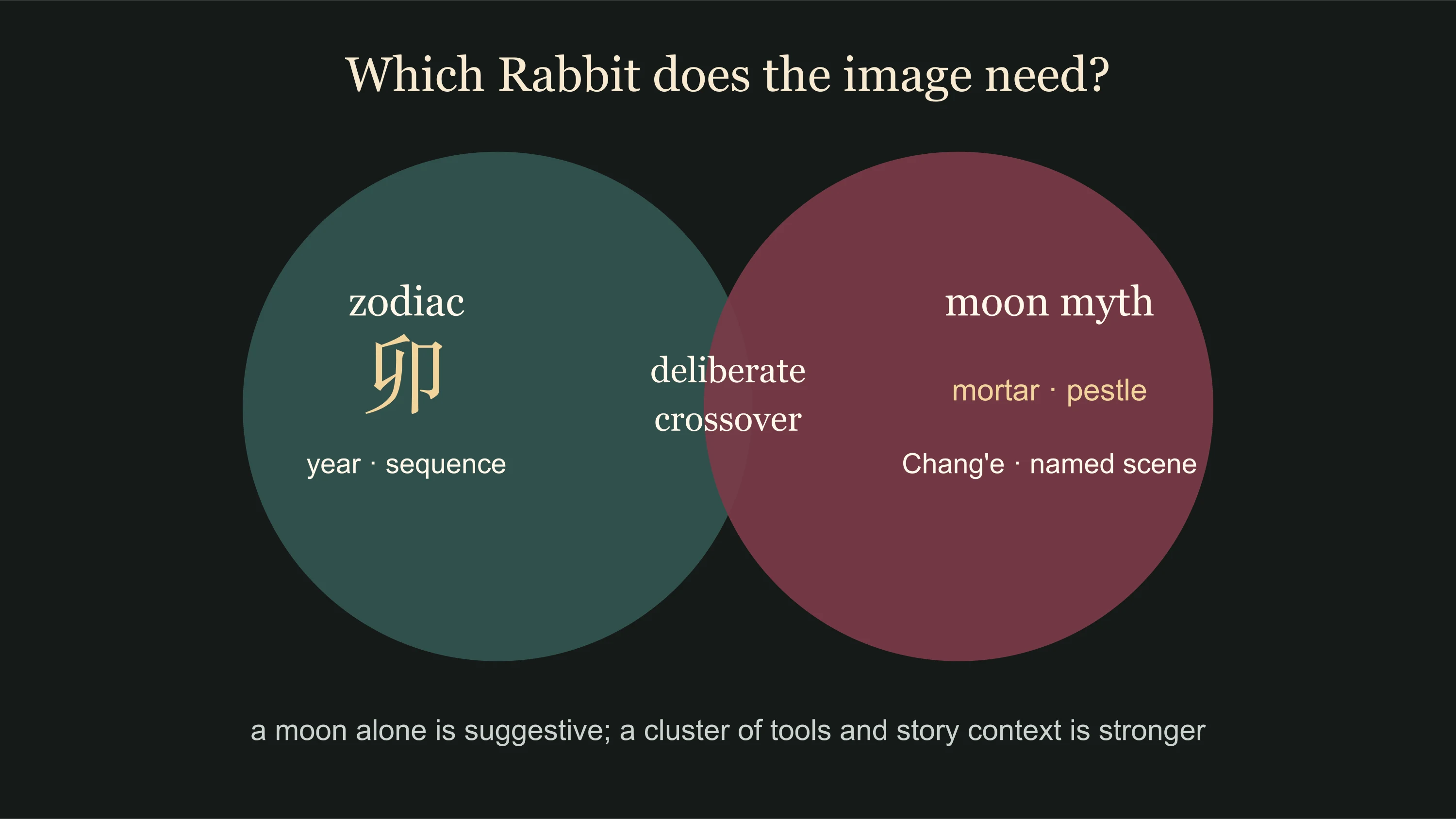
I used to read the moon as enough evidence. It is not. A round moon may simply provide an elegant night background for a Rabbit-year design. Mortar, pestle, Chang'e or an explicitly named lunar scene makes the mythic identification stronger. Precision comes from the cluster of clues, not one attractive circle.
Mao is the branch, tu is the animal
The Rabbit corresponds to 卯 (mao), the fourth Earthly Branch. The animal word is 兔 (tu).
Mao is traditionally associated with the double-hour from roughly 5 a.m. to 7 a.m. In the zodiac system, it follows the Year of the Tiger and precedes the Year of the Dragon. The branch character may appear beside a rabbit in New Year art even though 卯 does not mean “rabbit” in ordinary vocabulary.
English adds another choice: rabbit or hare. 兔 can cover animals across a broader leporid category than a casual English label may suggest. Translate according to the depicted species and the source record rather than insisting one English animal must fit every object.
Why 2023 was a Water Rabbit
The animal cycle combines with ten Heavenly Stems. In 2023, Gui (癸) joined Mao (卯). Gui is associated with yin Water, producing the Water Rabbit label.
The same Gui-Mao pairing last occurred in 1963 and will return in 2083. Ordinary Rabbit years recur every twelve years; Water Rabbit years recur every sixty.
This structure should not be converted into a claim that everyone born in 2023 is emotionally “watery.” Its value is calendrical precision. A design showing 癸卯 identifies the year more narrowly than 卯 or a rabbit image alone.
A porcelain Rabbit makes the category human

The Metropolitan Museum of Art identifies this Jingdezhen porcelain as a zodiac Rabbit from the late seventeenth to early eighteenth century. It is painted in enamels on the biscuit and gives the animal a dressed, upright body.
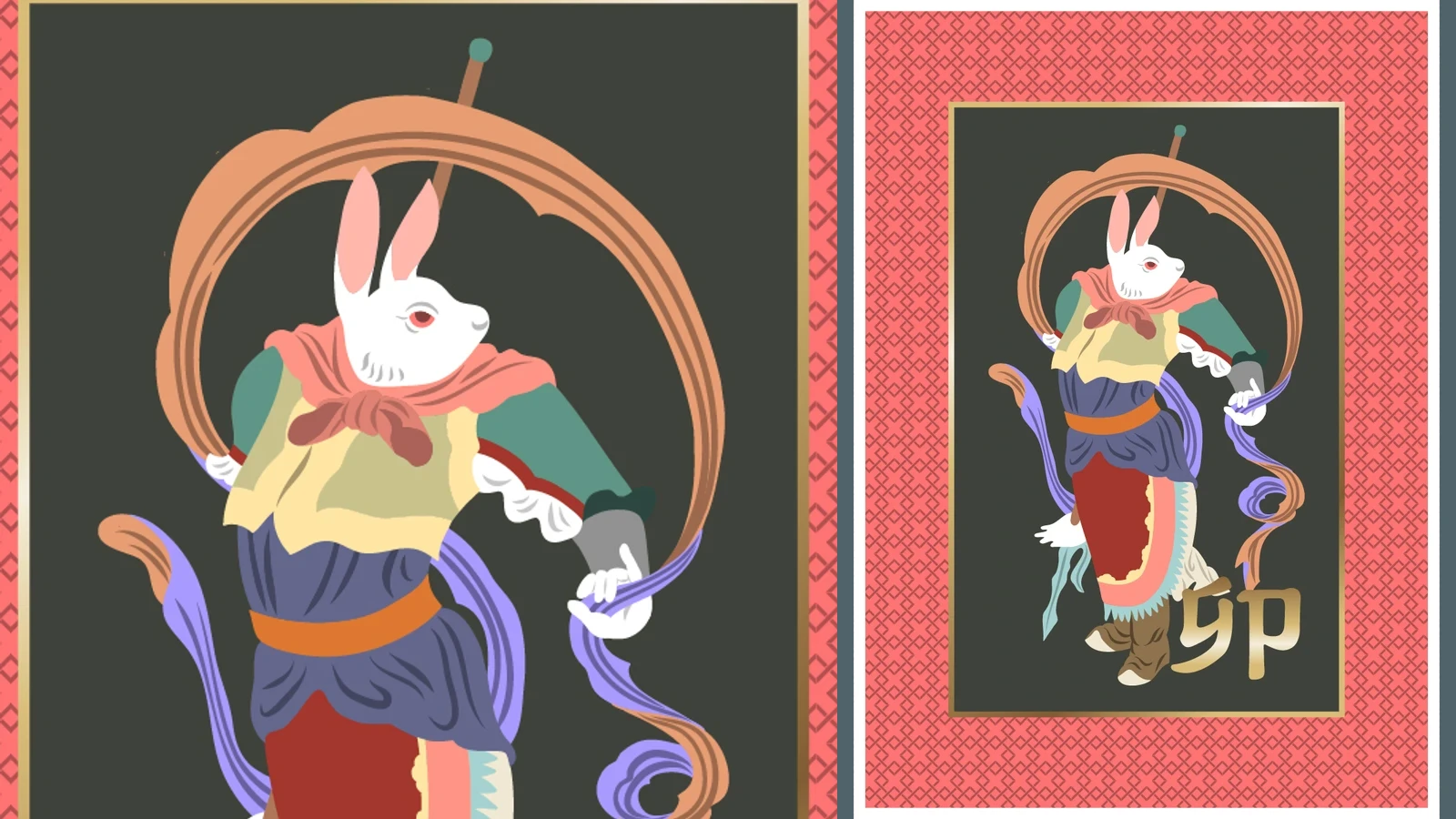
That combination is useful evidence. The Rabbit is not presented as a natural specimen in grass. It participates in a human visual world through clothing, stance and ceramic display. The contemporary first-party hero makes Mao legible through a large branch and theatrical movement; the porcelain figure makes zodiac identity legible through a humanized animal form.
Neither image proves that Rabbit symbolism has one fixed appearance. Together they show a stable category repeatedly redesigned.
The Moon Rabbit is a separate story system
Look at the full moon and many Chinese viewers know the invitation: find the rabbit shape. Smithsonian Libraries documents the lunar Rabbit beside Chang'e, pounding the pill of immortality with a mortar and pestle. Those tools are therefore better identifiers than softness or long ears alone.
This imagery becomes especially visible around the Mid-Autumn Festival and in the wider story world of Chinese mythology. A Moon Rabbit does not need a Rabbit zodiac year to appear, and a Rabbit zodiac decoration does not need the moon.
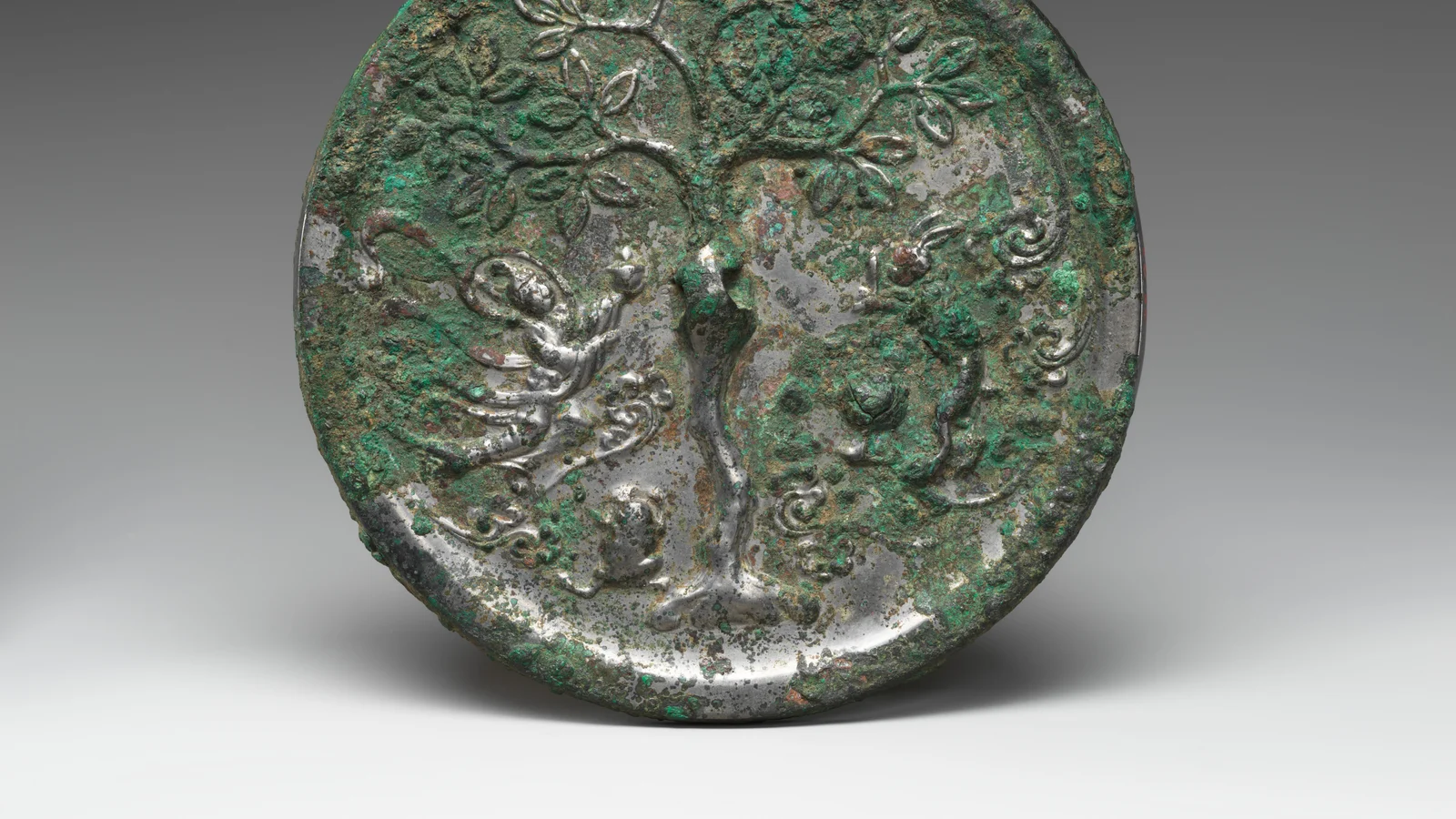
The Met's eighth- or ninth-century bronze mirror makes the lunar system materially visible. The rabbit shares the circular field with a moon goddess; corrosion has not erased the scene's organized relationship. Nothing on the object identifies Mao or a birth year. I would call this Moon Rabbit evidence immediately and zodiac evidence only if another inscription or documented context supplied the missing calendar layer.
The distinction improves visual interpretation:
| What you see | Most likely system |
|---|---|
| 卯, twelve animals or a birth year | Zodiac Rabbit |
| Full moon, Chang'e, mortar and pestle | Moon Rabbit mythology |
| Both sets of signs | Intentional crossover or context requiring closer reading |
Why “gentle” is too small a conclusion
Rabbit personality lists emphasize sensitivity, diplomacy and calm. They often erase the animal's speed and alertness. The Year of the Goat is flattened by the same lazy adjective, but the two pages expose different mistakes: Rabbit softness hides survival mechanics, while Goat gentleness hides a translation problem. A rabbit survives through attention, acceleration and directional change—not passive sweetness.
That matters because visual culture can choose between two Rabbits. One is soft, rounded and gift-friendly. The other is tense, mobile and watching the edge of the frame. Both are recognizable, but they support different arguments.
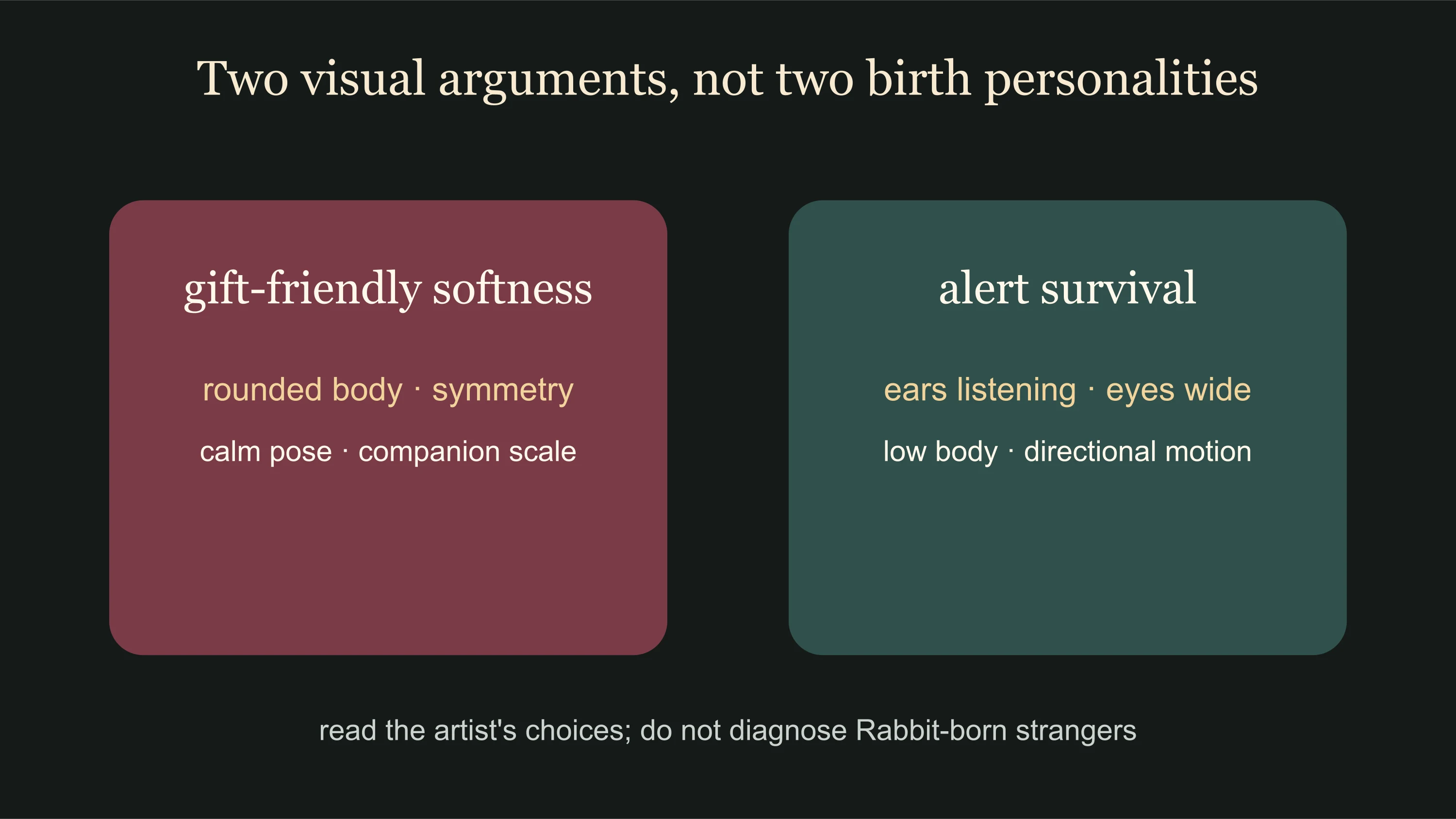
The second Rabbit interests me more because it restores survival to an animal commercial design often turns into pure sweetness. Long ears can be decorative, but they are also listening equipment. Large eyes can look cute, but they also widen attention. A body low to the ground may be cuddly in one composition and ready to accelerate in another.
Do not turn that observation into a diagnosis of Rabbit-born people. It is a guide to imagery, not evidence that millions of strangers share one nervous system.
My rule for reading Rabbit-year design
First locate the calendar evidence: year, branch 卯 or the twelve-animal sequence. Then check whether lunar signs have entered the design. Finally, notice whether the Rabbit is posed as gentle companion, alert survivor or mythic moon resident.
That three-step reading solves the page's central confusion. The Year of the Rabbit is a calendrical identity. The Moon Rabbit is a mythic one. Chinese visual culture is sophisticated enough to combine them; readers should be precise enough to notice when it does.
The purpose is not to police imaginative crossover. It is to make crossover visible. Once a caption identifies both 卯 and the lunar tools, the reader can see an artist joining annual time to mythic time. Calling everything merely “cute rabbit symbolism” would erase the design's actual intelligence.
The Year of the Rabbit should not borrow every rabbit in Chinese culture
The Moon Rabbit is so memorable that it can swallow the zodiac animal whole. The two systems can meet in modern design, but they begin with different jobs. One marks a position in a twelve-year calendar cycle. The other belongs to lunar stories, medicine-making imagery and Mid-Autumn imagination. A moon disc, mortar, cassia tree or Chang'e context points toward the second story.
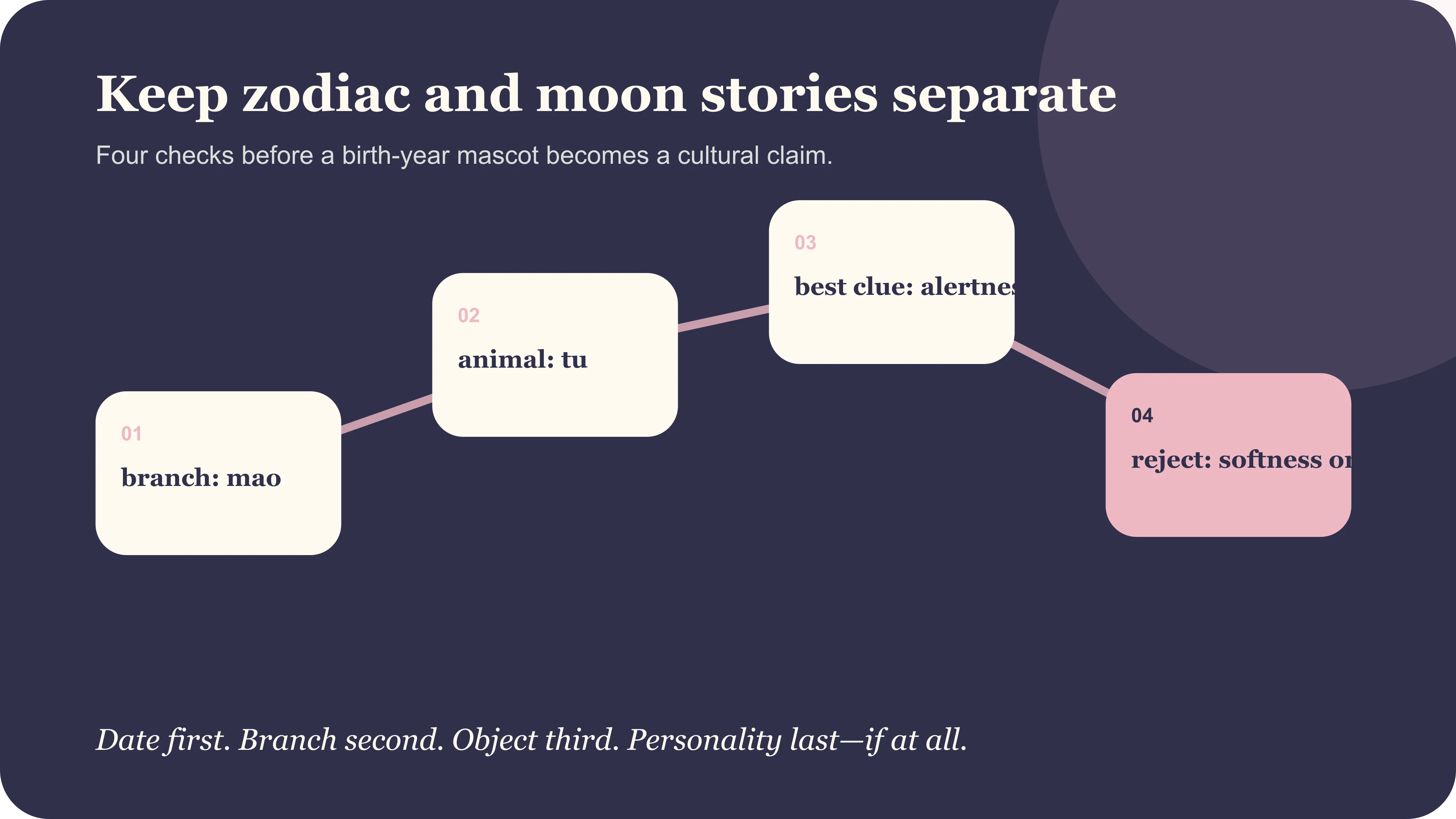
I insist on this separation because “rabbit means the moon” is attractive and incomplete. It teaches readers to collect associations instead of reading evidence. Start with date and use. A New Year poster naming 2023 can clearly be zodiac imagery. A rabbit pounding medicine beneath a moon has a different narrative identity even if it appears during a Rabbit year.
The Smithsonian Libraries discussion of the rabbit and moon supplies a route into that lunar tradition. The Met zodiac figure supplies another object type. Placing them beside one another shows why subject recognition alone is not enough: same animal, different system.
Gentleness is not the same as helplessness
Rabbit-year personality lists often praise sensitivity, elegance and peace while quietly making the animal passive. A living rabbit survives through attention, speed, hearing and immediate response to danger. Soft fur does not cancel alertness. The most useful symbolic tension is exactly there: a vulnerable body remains highly responsive.
That tension offers a better human question than “Are Rabbit people shy?” Ask how somebody notices changes in a room, what they do with discomfort and whether avoidance protects them or merely delays a decision. Those are behaviors. A birth year cannot answer them in advance.
The porcelain Rabbit discussed earlier also changes the emotional scale. A small held figure makes zodiac identity intimate rather than monumental. It belongs to the hand. This is one reason rabbit imagery works so well on gifts and domestic objects: the animal can carry attention and care without demanding spectacle.
Read the ears, setting and action before the color
Modern Rabbit designs often rely on pink, cream and rounded faces. Those choices make the animal cute, but cuteness is a market style, not the full cultural meaning. Look for action. Is the rabbit running, listening, pounding medicine, sitting beside plants or presented as a branch attribute? Look for setting. Is there a moon, a New Year inscription, a palace story or a child's room?
Color is the weakest clue. A white rabbit can belong to lunar imagery, laboratory imagery, a pet portrait or a zodiac campaign. Context makes the claim. The Chinese mythology collection carries the lunar and deity routes, while the zodiac years guide keeps the calendar sequence clear.
My final judgment is affectionate and strict: Rabbit symbolism becomes richer when we stop treating every soft animal as the same story. Keep the gentleness, restore the alertness and let the surrounding object tell us which rabbit has arrived.
Rabbit softness becomes meaningful only beside danger
The Rabbit is not compelling because it is cute. It is compelling because a small, exposed body survives through attention, speed, concealment and timing. Remove risk and the usual “gentle” description becomes decorative fog.
A Moon Rabbit image adds another system—lunar myth, medicine and immortality. Name that system when it appears. A zodiac Rabbit can meet the Moon Rabbit in a festival design, but the two should not be treated as interchangeable evidence.
The red-eyed white rabbit is not the only Rabbit-year image
Commercial zodiac art narrows Rabbit into one cute silhouette. Historical and regional images vary in colour, posture and narrative setting. A rabbit under cassia or beside a mortar may point toward the lunar Jade Rabbit. A rabbit among the full animal sequence may function as the zodiac sign. A naturalistic hare in a landscape can remain simply an animal study.
The source title does decisive work. If an institution identifies a moon-palace scene, use that context. If it identifies a zodiac figure, use the calendar context. Visual resemblance alone cannot bridge the categories.
I value Rabbit symbolism most when it refuses the false choice between softness and intelligence. Vulnerability can sharpen attention. Quiet can be a survival method rather than a lack of power. That is a cultural reading, not a personality test, and it is strong enough without pretending birth year measures anyone's character.
A family nickname can be meaningful without being evidence for everyone
Parents may call a Rabbit-year child quiet, quick or lucky, and the nickname can become part of family memory. That intimacy is real. It still does not establish a universal Rabbit personality.
Personal usage belongs on the page when it is framed as one relationship with the sign. It becomes misleading only when the local story is presented as a rule for millions of births.
I want the Year of the Rabbit to preserve that scale: close enough for a family to recognise itself, disciplined enough not to diagnose strangers.