The best first Chinese tea cups are neutral glazed cups whose comfortable drinking fill divides the brewer's measured liquor yield without reaching the rim. Ignore the poetic cup name until you have measured five things: working fill, full-cup weight, rim comfort, stability and cooling. A cup that fails those tests will not become useful because a seller calls it traditional.
I love a beautiful cup, but I reject the idea that beauty excuses bad drinking. My fingers should not burn so the photograph can look refined; the last guest should not receive half a pour because the set was bought by name instead of measured yield. I insist on water before romance. Fill the cup, lift it, pass it, wait, drink and wash it. The object must earn its place through the hand.
My favorite cup is never automatically the oldest or most expensive one. It is the cup I stop noticing because rim, weight, temperature and pace agree with the tea. A collector may reasonably choose another priority, but a daily cup should serve the drinker before it performs tradition for an audience.
Choose Chinese tea cups from the brewer, not the listing
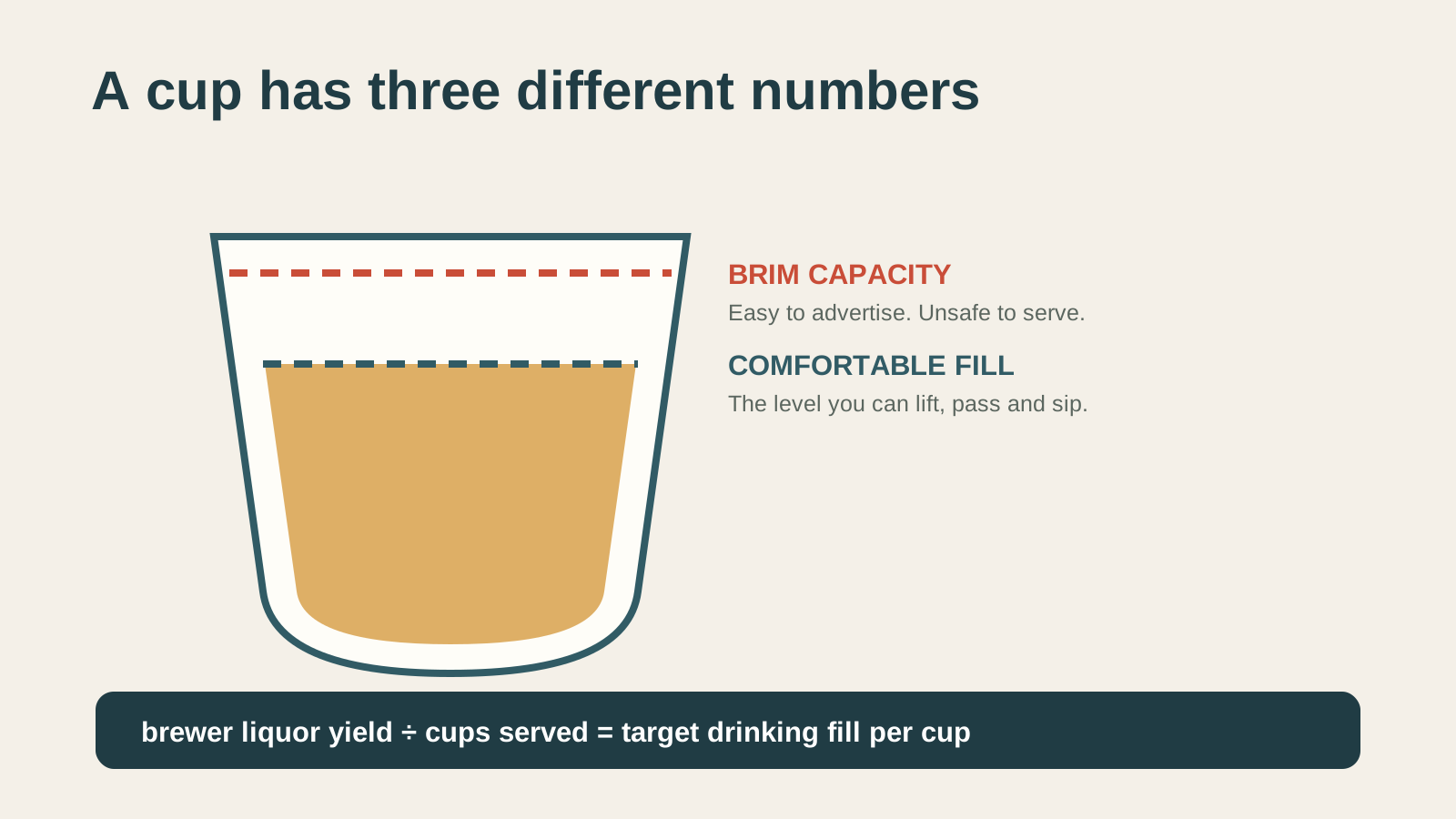
Chinese tea cups are often sold by maximum capacity: the amount a completely empty cup holds when filled close to overflowing. Tea is not served that way. The useful number is the comfortable drinking fill, the level that can be lifted, passed and sipped without tea reaching the rim.
Measure the liquor your gaiwan or Chinese teapot actually produces after the leaf has absorbed water. If you have not chosen the brewer yet, start with the tea-vessels collection. Then divide that yield by the number of people served in one round:
brewer liquor yield / cups served = target drinking fill per cup
If a gaiwan produces 88 ml of liquor and four people are drinking, the target is 22 ml per cup. A cup with a comfortable 25 ml fill works; a cup advertised as 25 ml but comfortable only at 18 ml does not. For two drinkers, the same brewer needs roughly 44 ml per cup or two pours into smaller cups.
These are arithmetic examples, not measurements of a reviewed product. Measure your own vessel because dry leaf, fill line, pouring completeness and strainer retention all change the yield.
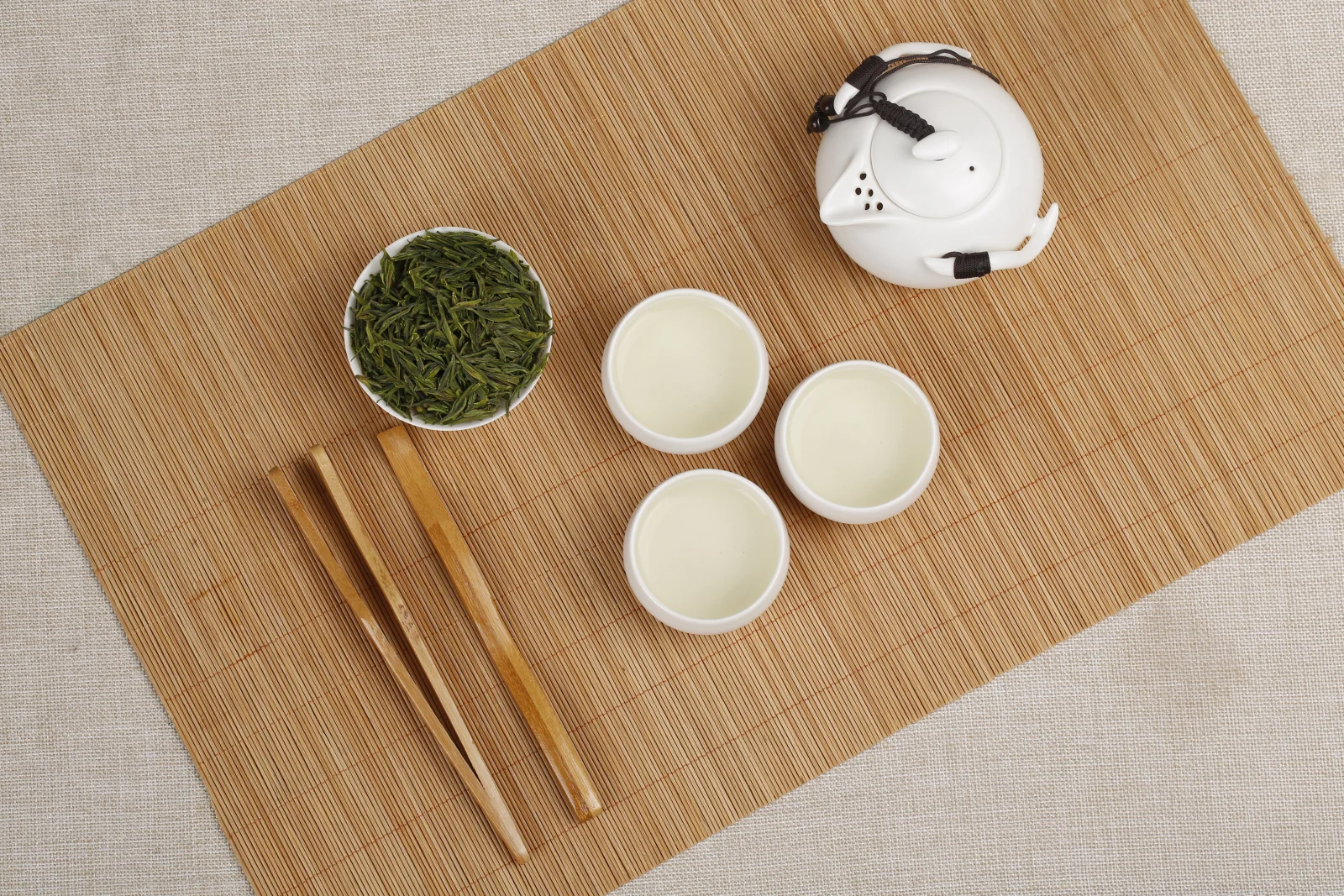
This real service scene shows the question a catalog photo usually hides: how much liquor must be divided, and among how many cups? The image does not establish the cups' capacity or the tea's identity; those require measurement.
Why Chinese tea cups are small, but not always tiny
Small cups fit repeated concentrated infusions. They divide a modest batch evenly, cool a small portion quickly and let every drinker finish before the next round. That is a service system, not proof that smaller is more authentic.
A glass used for green tea, a lidded mug at a desk, a family pot at a meal and a Chaozhou-style concentrated infusion solve different problems. UNESCO's record of China's traditional tea-processing techniques and associated social practices describes many communities and occasions, not one universal cup size or ceremony.
Use these ranges only to narrow a search. The measured service still decides.
| Intended use | Practical comfortable fill to investigate | What to verify |
|---|---|---|
| Concentrated small-vessel service | 15-35 ml | Does one brew divide evenly without overfilling? |
| General gongfu service | 30-55 ml | Does the cup cool enough before the next infusion? |
| Relaxed small-pot service | 50-90 ml | Can it be held securely at the intended fill? |
| Everyday solo drinking | 100-250 ml | Does the brewing method require a separate brewer at all? |
| Side-by-side tasting | Equal measured fills | Are geometry, starting temperature and timing controlled? |
Do not buy six cups merely because six looks like a complete set. Buy for the people who regularly sit at the table. Two well-matched cups are more functional than six cups whose combined fill cannot accept one complete brew.
Measure a cup in six minutes
Use a scale that reads to 1 g, room-temperature water and the same fill line you would use with hot tea. For this kitchen comparison, 1 g of water is close enough to 1 ml. Do not use the method for laboratory or legal claims.
- Dry the cup and record its empty weight.
- Put it on the scale, tare to zero and add water to the comfortable drinking line.
- Record the water mass as the working fill.
- Continue to the highest level you could carry without spilling; record that separately as maximum practical fill.
- Add empty weight and working water mass to get the normal lifted weight.
- Repeat the fill twice. If your chosen line varies widely, the cup is hard to portion consistently.
| Measurement | Result | Decision it supports |
|---|---|---|
| Empty cup | ___ g | Hand fatigue and perceived control |
| Comfortable water fill | ___ g / approximately ___ ml | Service calculation |
| Maximum practical fill | ___ g / approximately ___ ml | Spill margin, not normal serving volume |
| Cup plus comfortable fill | ___ g | Real lifted weight |
| Three comfortable fills | ___ / ___ / ___ ml | Whether portioning is repeatable |
The gap between comfortable and maximum fill matters. A 60 ml catalog cup that is pleasant at 42 ml belongs in a 42 ml service calculation. Catalog capacity is not dishonest if the seller defines it, but it is not the number your tea table needs.
Read geometry as function, not as a cup-name quiz
Names such as flared-rim cup, compressed-hand cup, bell cup, bamboo-hat cup and chicken cup can describe visual families, historical references or retail categories. They are not stable performance grades. Two cups sold under the same name may differ in diameter, wall thickness, weight and center of gravity.
Judge the measurable variables:
| Feature | Likely functional effect | What can go wrong |
|---|---|---|
| Wider opening | More exposed surface and easier liquor inspection | Faster cooling; aroma disperses sooner |
| Narrower opening | Less exposed surface near the top | Nose may not fit comfortably; cleaning access can narrow |
| Shallower body | Easy visual inspection and a shorter path to the rim | Spill risk when passed or tilted |
| Deeper body | More spill margin at the same fill | Bottom can be difficult to clean or inspect |
| Thin wall | Lower mass and a delicate mouthfeel | Hotter fingers, easier chipping |
| Thick wall | More robust feel and thermal mass | Heavy full cup and a bulky rim |
| Flared rim | Can meet the lower lip cleanly | An extreme flare dribbles if the pour breaks around the mouth |
| Broad foot | Larger support area | A badly finished foot can still wobble |
| High foot ring | Keeps the hot body away from the table and gives fingers a hold | Small contact ring can feel top-heavy |
These are mechanisms to test, not promises. Wall thickness alone does not determine cooling; cup mass, material, surface area, room temperature and fill all act together.
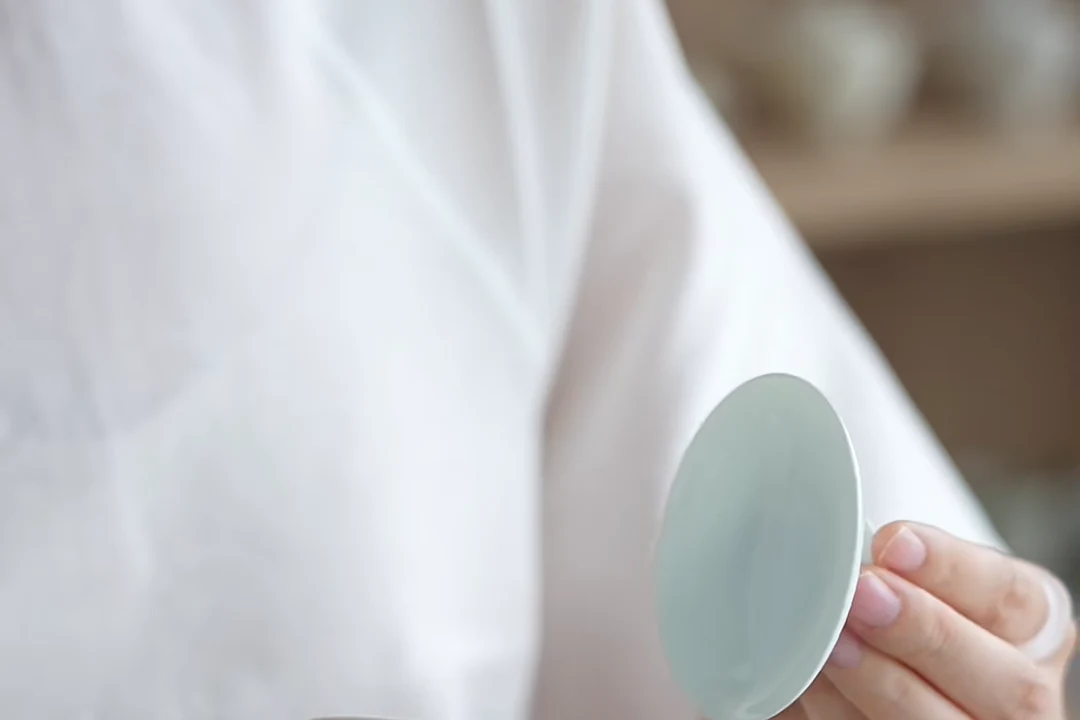
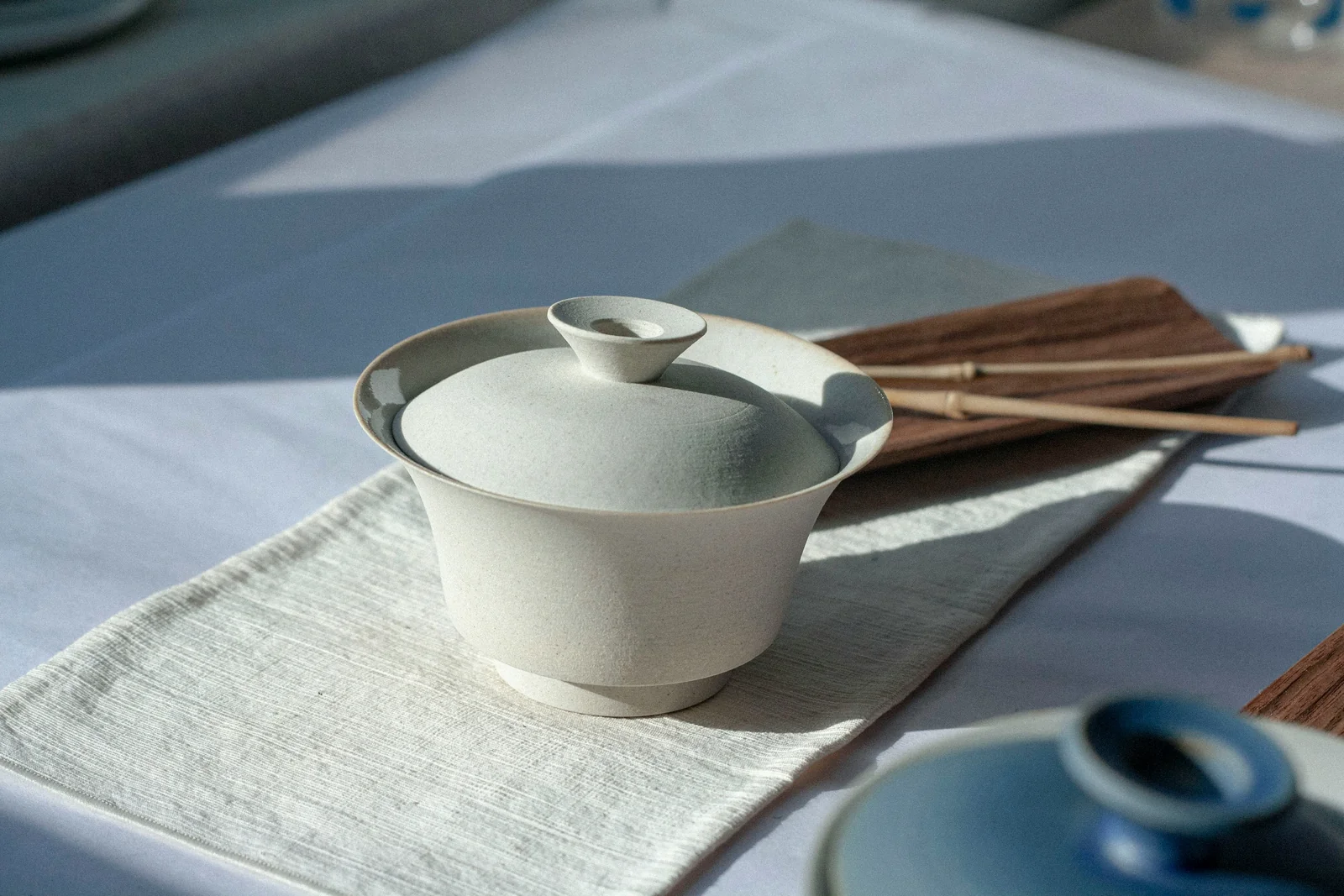
This close view makes the useful buying questions visible. Is the drinking edge even and fully glazed? Does the flare meet the lip naturally? Can the cup tilt without tea tracking down its outside? The photograph establishes visible rim geometry only. It cannot establish kiln, age, origin or food-contact safety.
Run the water test before using good tea
Fill the cup to its measured working line with water at the temperature you normally drink, not just freshly boiled water. Pick it up, hold for 30 seconds and take three ordinary sips.
Reject or return the cup if:
- fingers must move repeatedly to escape the heat;
- the full cup feels top-heavy or asks for a pinching grip;
- the rim leaves a persistent drip down the outer wall;
- the foot rocks on a known-flat surface;
- the cup rotates or slips when the hand is dry;
- decoration or roughness reaches the drinking edge uncomfortably;
- the interior cannot be reached and cleaned;
- chips, unstable repairs, unexplained residue or odor remain after rinsing.
A high foot, double wall or thick body may protect the hand, but each creates another tradeoff in weight, rim feel or cleaning. The correct result is not a style; it is a cup that remains secure at its real working fill.
Compare cooling instead of guessing from thickness
If heat is the reason for choosing between two cups, measure it. Use matching water masses, the same starting temperature, the same room and cups that have both reached room temperature. Place the probe in the center without touching the wall.
| Time | Cup A | Cup B | Observation |
|---|---|---|---|
| Pour | ___ C | ___ C | Confirm equal starting temperature |
| 1 minute | ___ C | ___ C | Record, do not taste yet if unsafe |
| 3 minutes | ___ C | ___ C | Compare normal first-sip timing |
| 5 minutes | ___ C | ___ C | Compare the later part of the serving |
Repeat the test three times and swap cup positions. A one-off difference can come from unequal water mass, preheated ceramic, probe placement or a draft. There is no universal ideal temperature curve: a cup for fast gongfu rounds has a different job from a cup kept beside a desk.
Never use your lips or fingers as a thermometer for near-boiling water. Let the water reach a safe drinking temperature before the sip and grip test.
Start with a pale glazed interior
For a first set, white or pale glazed porcelain is the strongest general choice. It does not need to be assigned permanently to one tea, it is easy to inspect for residue, and it lets liquor color and clarity remain visible. That makes it useful for learning and side-by-side comparisons.
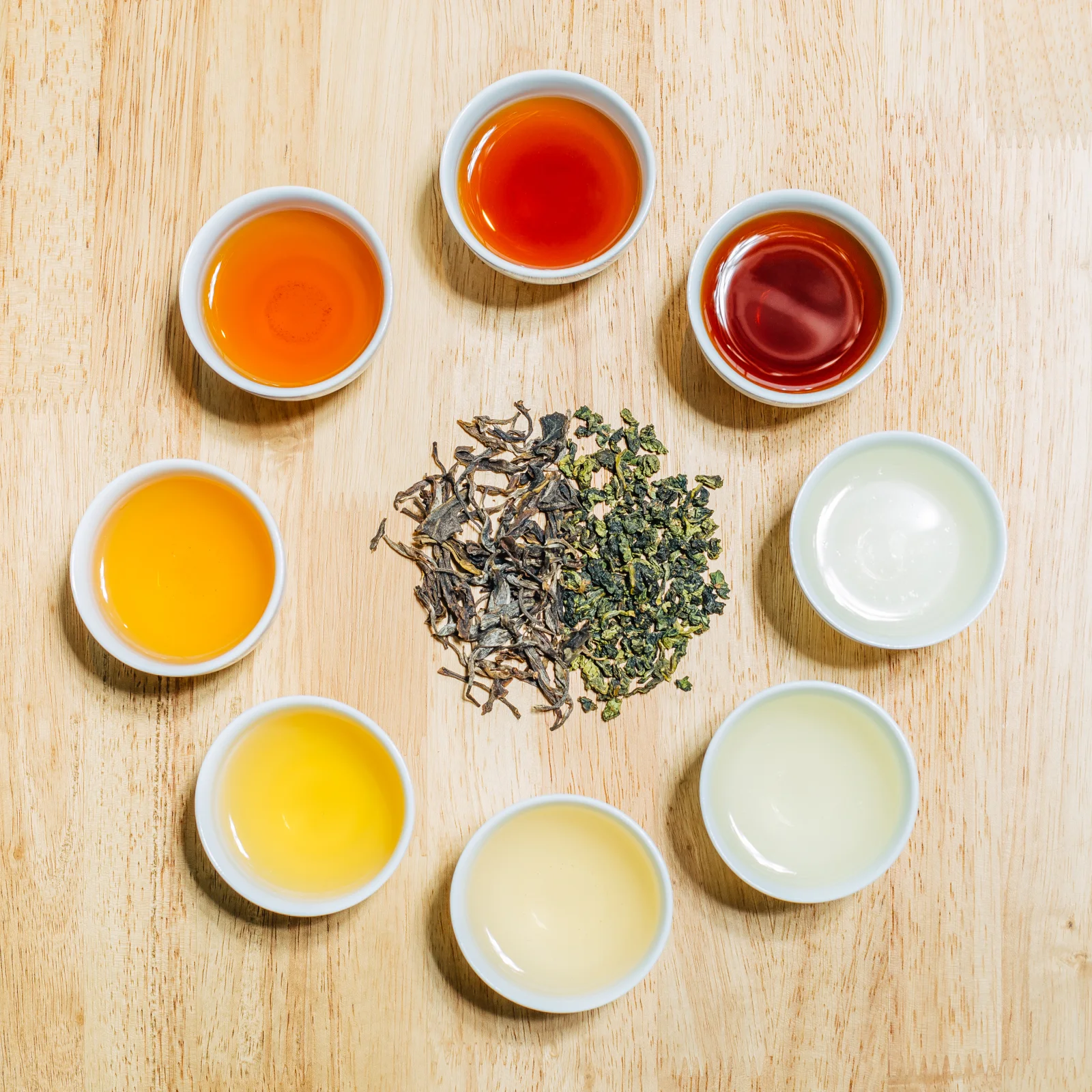
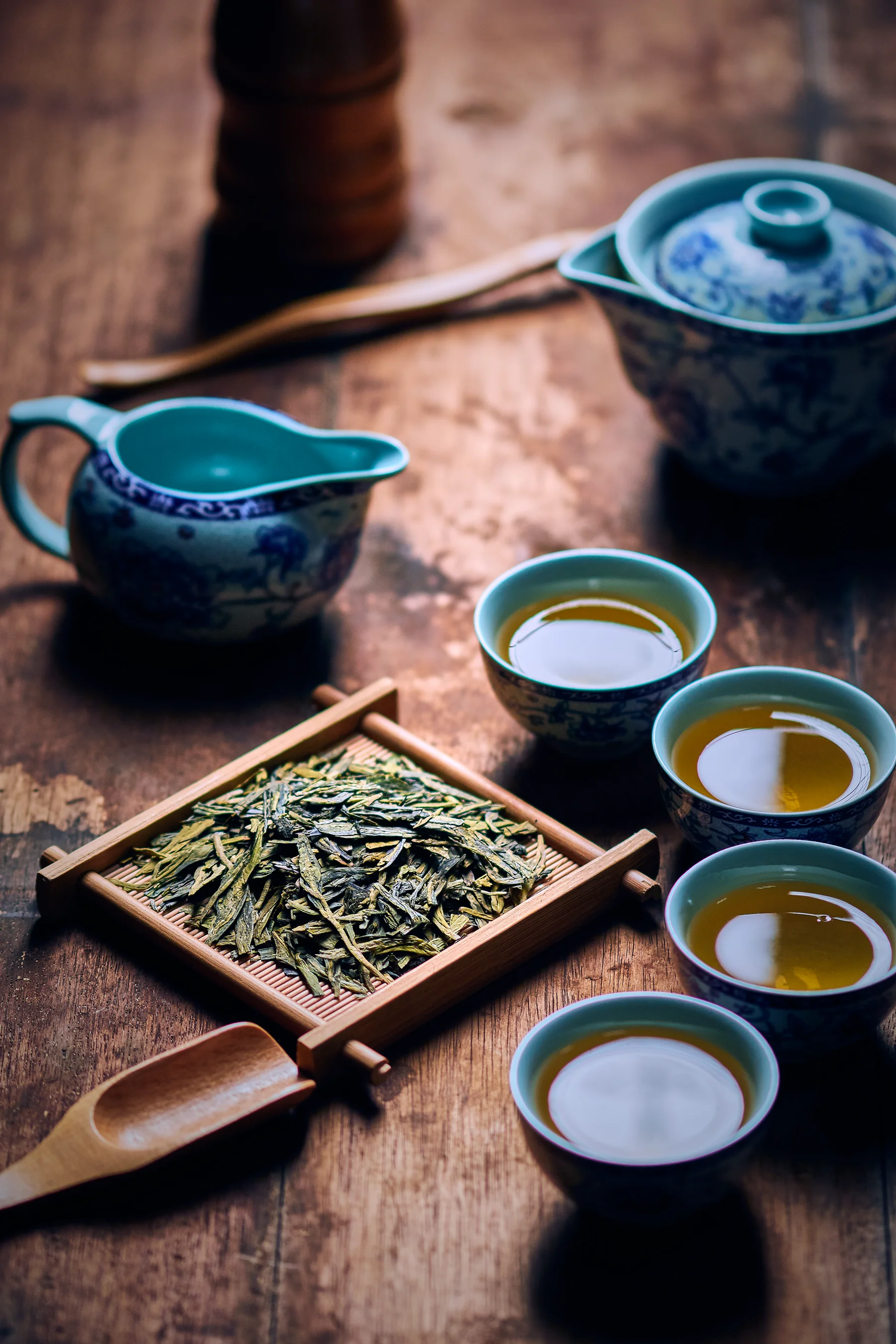
The pale interiors in this authorized first-hand photograph make visible differences in liquor easy to see. The setup is not a controlled experiment: color alone cannot identify a tea, prove quality, rank oxidation or show that one cup performs better.
Glazed stoneware may provide more mass and a different tactile feel. Clear glass gives excellent visibility but thin examples can expose fingers to heat, while double-wall glass can create a bulky rim. Unglazed cups are harder to evaluate because material identity, absorption, odor and cleaning all need separate attention. A first general-use set gains little from that uncertainty.
Do not diagnose ceramic safety from a photograph
Glaze color, crackle, painted decoration and an unglazed foot cannot by themselves prove that a cup is safe or unsafe. Online claims that one bright color is automatically toxic, or that one home trick proves the absence of lead, turn a legitimate concern into false certainty.
For a new daily cup, require identifiable product information, intended food-contact use, a responsible seller and the compliance documentation relevant to the market where it is sold. The U.S. FDA's current lead and foodwares page, for example, states that lead used in pottery may leach into food and links its ceramicware compliance program, import alert and industry guidance. It does not authorize buyers to diagnose a cup by color.
Treat these as separate buying categories:
| Cup category | Evidence required before hot-liquid use |
|---|---|
| New cup from a current maker | Maker or responsible seller, material/decoration disclosure, intended food-contact use and applicable compliance information |
| Used modern cup | The above plus condition, odor, residue, repairs and prior-use history |
| Claimed vintage or antique cup | Provenance, condition assessment and specialist advice appropriate to the object and intended use |
A reign mark proves only that a mark is present. Artificial crackle can be new; genuine age does not guarantee condition or suitability for daily tea. When history or material remains uncertain, preserve the object for study rather than forcing it into service.
Chinese tea cups were not always modern tasting cups
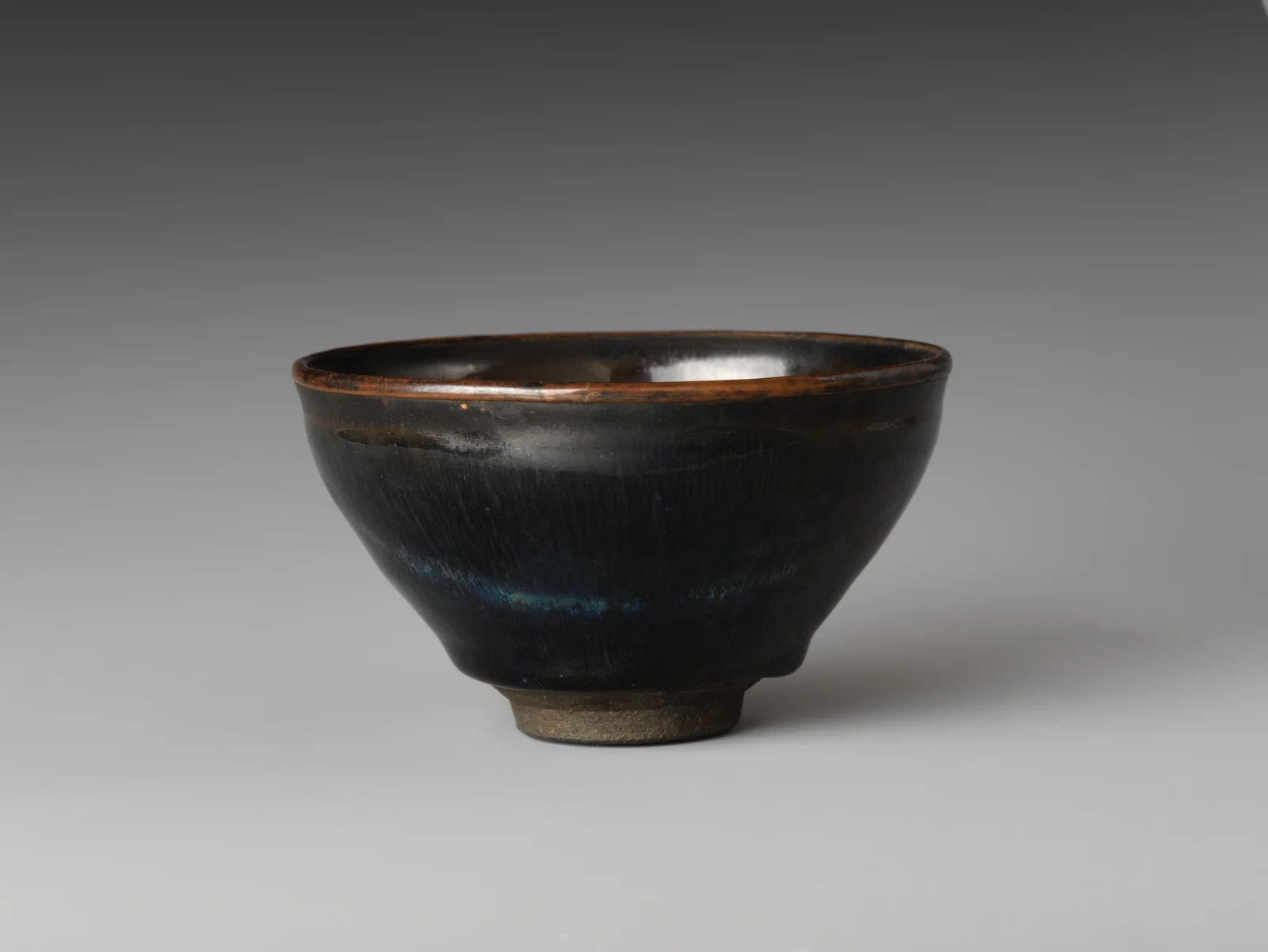
The Metropolitan Museum of Art records this Jian ware tea bowl as stoneware with a hare's-fur glaze from the 11th-12th century. Its recorded height is 7 cm and diameter 12.1 cm. The documented object is a direct correction to the idea that traditional Chinese tea cups have always been tiny white porcelain cups.
Its exterior dimensions do not reveal its working capacity, and visual resemblance cannot date or authenticate another bowl. Historical form should expand the questions we ask, not become a shortcut for buying claims.
Test two cups with one tea fairly
To learn whether cup shape changes your experience, brew one infusion into a fairness pitcher and divide equal measured masses between two clean cups. Keep the brewing constant; the cup is the only variable under review.
- Bring both cups to the same starting temperature.
- Weigh the same liquor mass into each cup.
- Alternate the left-right position between rounds.
- Smell and sip both at the same elapsed times.
- Repeat at least three rounds, then repeat once with plain water.
- Record temperature, rim flow, grip and aroma observation separately.
| Variable | Cup A | Cup B |
|---|---|---|
| Working fill | ___ ml | ___ ml |
| Full-cup weight | ___ g | ___ g |
| Temperature at first sip | ___ C | ___ C |
| Rim flow | clean / drips | clean / drips |
| Grip | secure / awkward | secure / awkward |
| Aroma observation | ___ | ___ |
| Preference after three rounds | ___ | ___ |
Do not turn the result into a universal law. A wide cup may seem softer because it cooled faster. A tall cup may seem more aromatic because it remained warmer. If liquor mass and drinking temperature differ, the comparison cannot isolate shape.
The buying decision
Buy the first set in this order:
- Measure the brewer's actual liquor yield.
- Decide how many cups one infusion must fill.
- Calculate the target comfortable fill per cup.
- Choose neutral glazed cups with a pale interior.
- Measure working fill, empty weight and full-cup weight.
- Test rim, grip, stability, pouring and cleaning with water.
- Compare cooling only when heat behavior matters to the method.
- Verify food-contact and provenance claims separately from appearance.
The right Chinese tea cups do not need an impressive name. They accept one complete brew without crowding the rim, cool at the pace of the service, meet the mouth cleanly and return to the table without wobbling. Once that system works, collect special forms for a reason you can name and test, not because a diagram declared one shape correct for one tea.