Is Love Like the Galaxy worth 56 episodes? Yes, if you want a family story in which the romance has to answer for the damage done before it begins. Cheng Shaoshang survived by becoming difficult because nobody stayed long enough to learn what she needed. The love story works when Ling Buyi recognizes that wound without trying to own it; it falters whenever protection becomes another way of deciding for her.
Love Like the Galaxy turns neglect into its real love story
| Reader question | Direct answer |
|---|---|
| What is it? | A 2022 Chinese costume drama released in two parts, with 56 episodes in total. |
| Who leads the cast? | Zhao Lusi as Cheng Shaoshang and Wu Lei as Ling Buyi. The Cheng family, imperial household and court rivals are essential rather than decorative support. |
| What is the story? | A neglected daughter learns to survive family discipline and social power while a celebrated general pursues revenge, recognition and a future with her. |
| Is it mainly romance? | No. Family injury supplies the emotional grammar of the romance; court power enlarges the consequences. |
| Is the ending happy? | Yes in outcome: the main pair reconcile after revenge, separation and accountability. The repair is earned more by changed behavior than by a final declaration. |
| Is it worth 56 episodes? | Yes if you enjoy ensemble families, long emotional consequences and flawed people who remain funny. Less so if you want fast court intrigue or uninterrupted romance. |
| East Moment verdict | One of Zhao Lusi's best roles because wit, abandonment and stubbornness belong to the same person. |
The scene that explains the entire drama is not a kiss or a battlefield rescue. It is a daughter asking her mother, “阿母可知我爱吃什么?” - “Mother, do you know what I like to eat?”
The line itself proves the dramatic problem. Cheng Shaoshang does not merely want fair rules. She wants evidence that the person correcting her has ever observed her closely enough to know her.
The house is the first battlefield
Shaoshang grows up without the parents whose authority later returns fully formed. Her mother, Xiao Yuanyi, sees the damage created by indulgent and manipulative relatives. She responds with discipline, comparison and correction. What she misses is that competence cannot substitute for attachment after the fact.
The domestic staging makes this visible. Who sits near whom? Who can enter a room without permission? Who is corrected in public? Who receives a question before a judgment? Architecture becomes emotional evidence because Shaoshang is always reading whether a space includes her or merely contains her.
Her tricks and refusals are not proof that she needs harsher control. They are the intelligence of someone who learned that rules arrive from people who may disappear. She trusts what she can build, test or outwit more readily than affection she cannot verify.
This does not make every decision wise. It makes the mistake specific.
Love Like the Galaxy cast: who can actually see Shaoshang?
The cast matters because this is not a two-person rescue fantasy. Each adult or suitor offers Shaoshang a different kind of attention, and the wrong kind can feel indistinguishable from love until she has to make a choice.
| Actor | Character | What to watch in their relationship with Shaoshang |
|---|---|---|
| Zhao Lusi | Cheng Shaoshang | The joke that lands before the hurt is allowed to show. |
| Wu Lei | Ling Buyi | Protection that can become secrecy and a decision made on her behalf. |
| Zeng Li | Xiao Yuanyi, Shaoshang's mother | Correction delivered before curiosity about the daughter in front of her. |
| Guo Tao | Cheng Shi, Shaoshang's father | Warmth that comforts her without always stopping the household's unfairness. |
| Li Yunrui | Yuan Shen | Admiration for her wit that takes longer to become understanding. |
The official WeTV series page confirms the 56-episode run and foregrounds Zhao Lusi, Wu Lei, Guo Tao and Zeng Li. The relationship descriptions above are my reading of what their scenes do, not claims about the actors' intentions.
The apology scene is a fantasy, and that is why it hurts
There is a later image that lands far beyond the plot: Shaoshang leaves, and her mother finally understands the damage, cries and apologizes. The scene touches a fantasy many East Asian children carry into adulthood—the parent recognizes the wound without first demanding gratitude, minimizing the memory or calling the child disloyal for remembering.
I do not find the scene comforting. I find it almost cruel in its accuracy. The child has to disappear before the parent becomes curious. Recognition arrives only after authority can no longer correct the person standing in front of it.
The drama also asks us to notice how convenient the apology is. The earlier Xiao Yuanyi would more plausibly defend her discipline, say the child was difficult, list everything a mother sacrificed and treat the remembered injury as proof of ingratitude. A late apology can satisfy the audience while bypassing the slower work of repair. Tears acknowledge pain; they do not automatically restore the years in which Shaoshang had to translate need into defiance.
This is where I refuse the easy “both sides were wrong” conclusion. A child can be exhausting and still be the child. The adult holds more power, more language and more responsibility for building the relationship. Shaoshang's survival tactics cause harm, but they did not appear from nowhere. The series is strongest when it lets that imbalance remain uncomfortable.
The question after an apology is not whether the mother feels bad. It is whether she becomes capable of learning something ordinary about her daughter—what she eats, what frightens her, how she solves a problem, when correction feels like abandonment all over again. Recognition must become behavior.
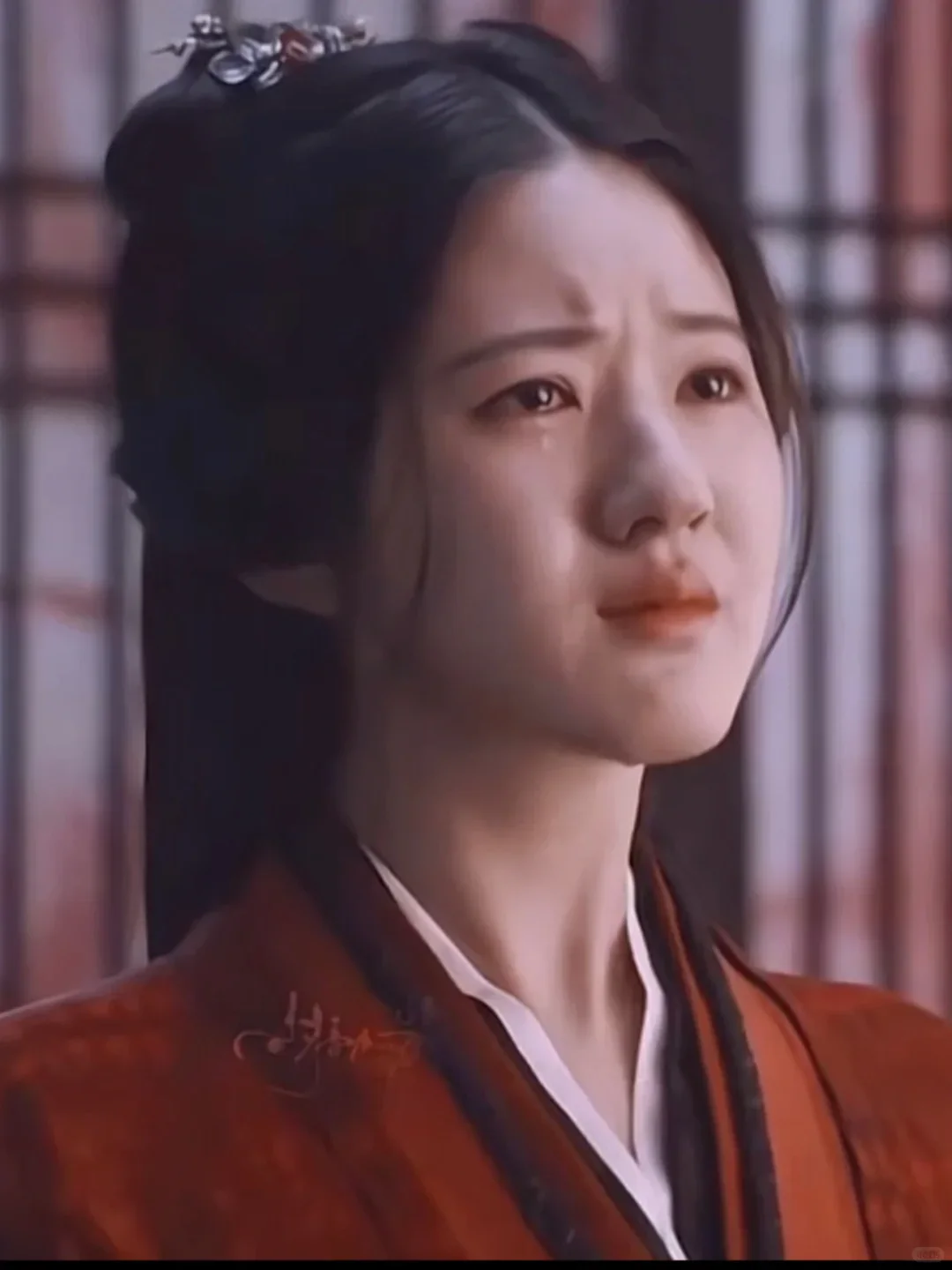
The image does not need an invented dialogue line to make the conflict visible. Shaoshang holds her expression together while the tears show what correction has failed to reach.
Zhao Lusi lets comedy and abandonment share one face
Zhao Lusi's comic speed is crucial. Shaoshang can answer too quickly, redirect embarrassment and turn observation into a weapon. The humor prevents neglect from becoming a single note of noble suffering.
Then the face settles.
That after-beat is where the performance becomes larger than a clever heroine. A joke protects the room from seeing need; silence reveals the cost after the social danger has passed. Shaoshang needs love more than correction, yet Zhao's mix of vulnerability, stubbornness and liveliness never asks us to confuse need with helplessness. The correct test is whether the performance can keep defiance from erasing need, and need from erasing intelligence.
The answer is yes often enough that Love Like the Galaxy becomes the best all-round role in our Zhao Lusi guide. Hidden Love makes intimate reaction easy to see; Shaoshang asks that skill to survive family noise, political danger and much longer consequence.
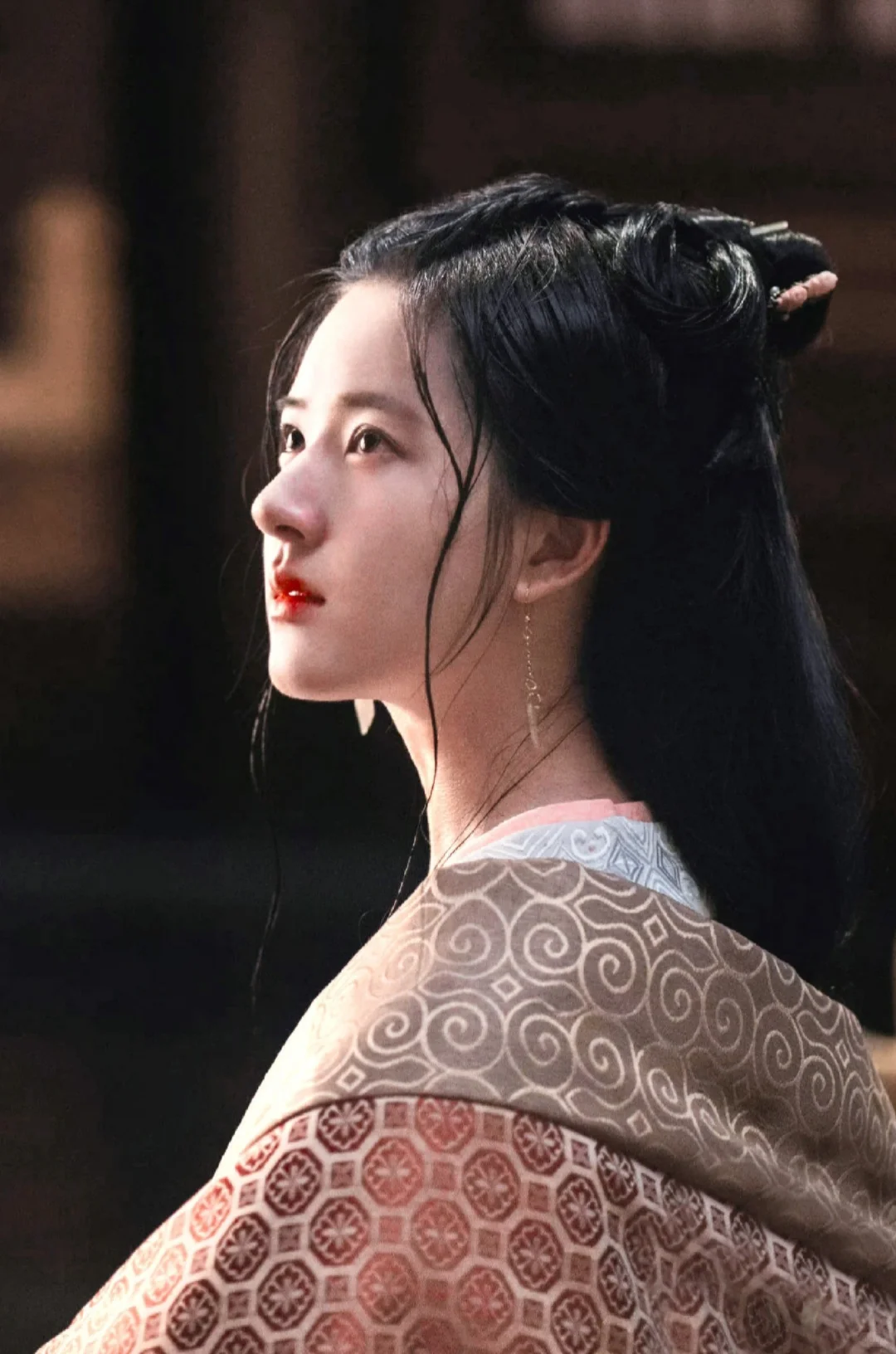
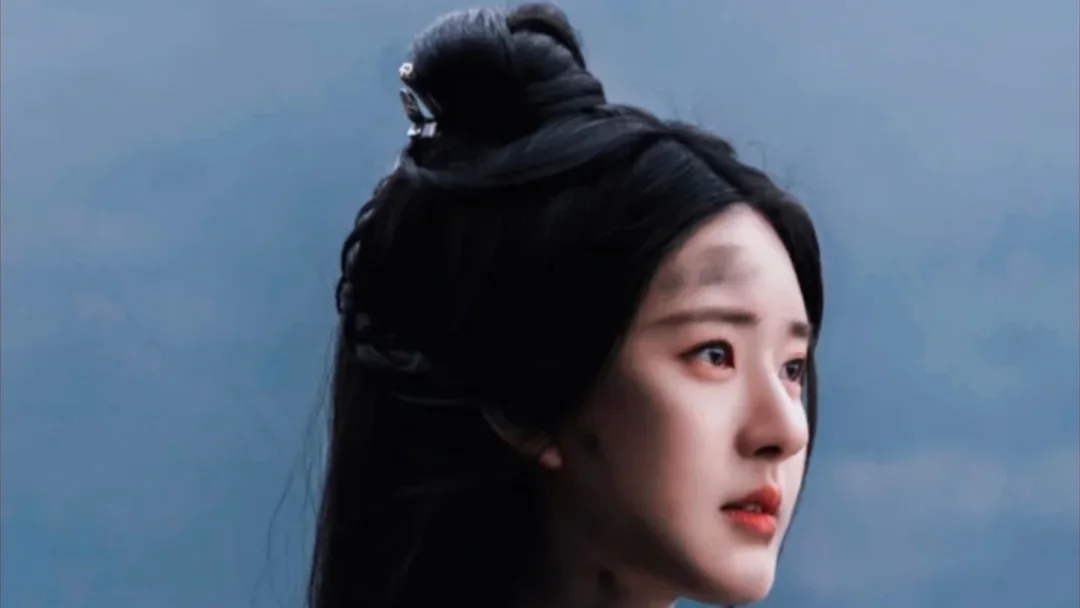
The still isolates the after-beat: blood is visible, but the expression refuses to collapse into helplessness. It supports the performance argument about hurt and control sharing one face; it cannot explain the cause of the injury on its own.
Her engineering instinct is not a cute character accessory
Shaoshang's interest in mechanisms, measurements and practical construction is one of the drama's smartest choices. She trusts systems she can inspect. A bridge carries weight or it does not. A device fails for a reason. Materials do not claim to love her and then punish her for remembering what happened.
That practical intelligence also changes how we should read her mischief. She is not only verbally quick; she is diagnostic. She looks for the load-bearing point in a social situation and presses it. Sometimes that becomes invention, sometimes retaliation. The same skill can build a solution or expose a weakness because nobody taught her that intelligence could be used without first defending herself.
This is the proof I want from a “smart heroine.” Not three scenes in which everyone else suddenly becomes foolish, but a consistent way of seeing the world. Shaoshang notices structure. Her emotional growth depends on learning that people cannot always be solved like mechanisms—and that trustworthy people must still make their workings visible enough for her to choose.
Ling Buyi enters like protection and carries the logic of revenge
Wu Lei's mounted entrance gives Ling Buyi an immediately legible body: upright, decisive, accustomed to rooms and roads clearing around him. The entrance works because physical language establishes authority before explanation arrives.
The attraction is obvious. Shaoshang has had to construct safety from scraps; Ling Buyi appears capable of imposing it on the world.
That is also the danger.
Protection can become another authority that decides she does not need full information. Ling Buyi knows what it means to live inside a family catastrophe and build a public identity around survival. Yet his revenge teaches him secrecy, control and unilateral action. He recognizes Shaoshang's intelligence while repeatedly making choices that deny her the chance to use it.
Their similarity creates the romance. Their methods create the rupture.
To see Wu Lei carry authority into a contemporary body, continue to Amidst a Snowstorm of Love. Billiards replaces cavalry: stance, restraint and repeated practice still matter, but the real question becomes whether professional discipline can remain visible after romance takes over the frame.
Love here is a problem of recognition, not rescue
The drama gives Shaoshang several possible relationships, but ranking suitors misses the structure. Each one offers a different answer to what a difficult young woman needs.
- Correction treats her as unfinished material.
- Protection values her but may still remove her agency.
- Admiration enjoys her intelligence while avoiding its consequences.
- Recognition learns what she wants, tells her what affects her and accepts that love does not guarantee obedience.
Ling Buyi is compelling because he moves among all four. The romance becomes mature only when protection stops being the final answer.
Yuan Shen, played by Li Yunrui, is useful precisely because admiration is not recognition. His polished intelligence can read the social game while arriving late to Shaoshang's actual need. That supporting limitation later makes Song Mo in Blossom a sharper comparison: attention finally changes the man's next decision.
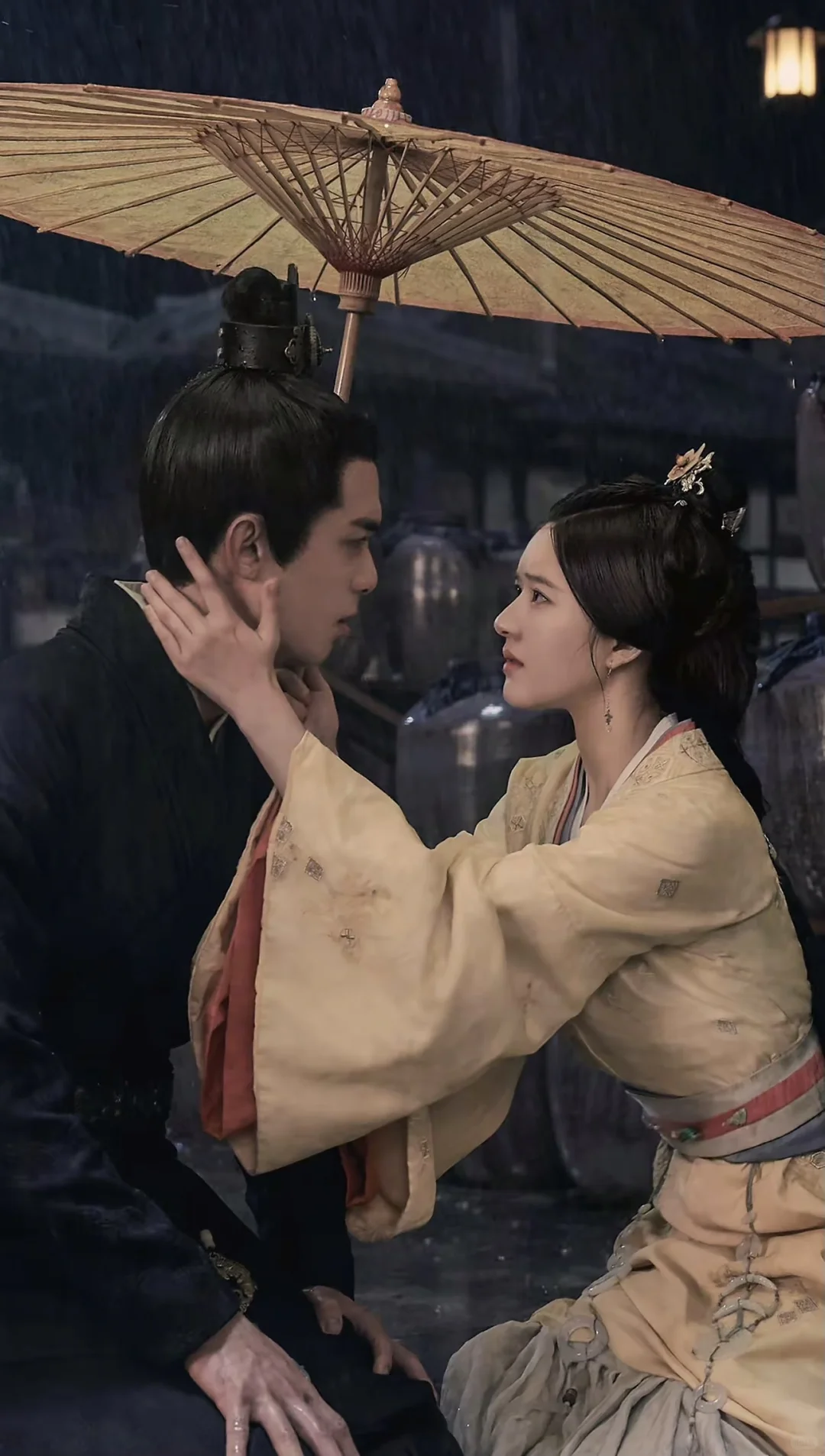
The umbrella shelters both of them, but the decisive action is hers: Shaoshang closes the distance and looks directly at him. The image makes mutual attention visible. It cannot prove that either character has shared enough truth.
Ask one question in every romantic scene: has Shaoshang been given enough truth to choose? A rescue can be loving and still postpone recognition. A declaration can be sincere and still demand that she accept somebody else's timetable.
The Cheng family makes pain social instead of private
Many costume romances isolate the heroine so the male lead becomes her only emotional world. Love Like the Galaxy is richer because the Cheng family remains loud, comic, unfair, loyal and capable of change.
Minor characters have appetites and embarrassing habits. Brothers, fathers, aunts and servants affect how conflict travels through the house. The fullness of these smaller roles is analytically important because the family feels inhabited rather than arranged around the leads.
The family does not exist only to traumatize Shaoshang before romance begins. It keeps testing whether repair is possible without pretending the early absence did no damage. Some people learn to see her. Others merely change tactics. The difference matters.
The Prisoner of Beauty makes a useful next comparison because its marriage begins as an alliance between hostile family histories. Where Shaoshang fights to be known inside a noisy household, Xiao Qiao has to create private trust inside a political arrangement that was designed before either spouse could speak honestly.
This is also what makes the Emperor, Empress and Consort Yue more than palace furniture. The imperial household offers alternative forms of adult attention, favoritism and authority. Court scenes can be unexpectedly funny because power does not erase personality.
The palace enlarges the house; it does not replace it
When Shaoshang enters palace life, the same questions return at higher stakes. Who defines proper behavior? Who corrects her publicly? Which adult sees talent and which sees disorder? Domestic injury becomes political literacy because she has spent her life detecting hidden power.
The drama is not a historical documentary. Its costume world, offices and family practices should not be used as direct evidence of one real dynasty. What it offers is a dramatic model: the skills created by a damaged home can protect a person in public while making private trust much harder.
WeTV's official synopsis identifies the Cheng family's wartime separation as the premise. That summary is useful for cast, episode count and release route. It cannot settle the moral question the series keeps reopening: whether a family that returns is entitled to behave as though it never left.
Why the revenge arc divides viewers
Ling Buyi's revenge gives the plot its darkest momentum, but it also tests whether the romance can survive a man treating truth as property.
The later story wants us to understand his injury, fear his methods and still believe in repair. That balance is difficult because sympathy can become narrative exemption.
My position is that the separation is necessary. Love cannot mean Shaoshang immediately absorbing the consequences of a revenge plan she was prevented from understanding. Ling Buyi must live after the dramatic act, lose access to the future he assumed and learn that sacrifice does not automatically cancel control.
The story is less convincing when external danger rushes emotional repair. It is stronger when changed behavior, not crisis, proves that the pair can meet again differently.
Love Like the Galaxy ending explained
Major spoilers begin here.
Ling Buyi completes the revenge that has organized his identity, but the method destroys trust and separates him from Shaoshang. Time, consequence and later cooperation make reconciliation possible. The main couple ends together; the family and surviving community gather beneath the stars rather than leaving them in an isolated romantic bubble.
That image matters. A healthy ending for Shaoshang cannot simply transfer her from one powerful household to one powerful man. It must place love inside a wider world of people who have learned, imperfectly, to know her.
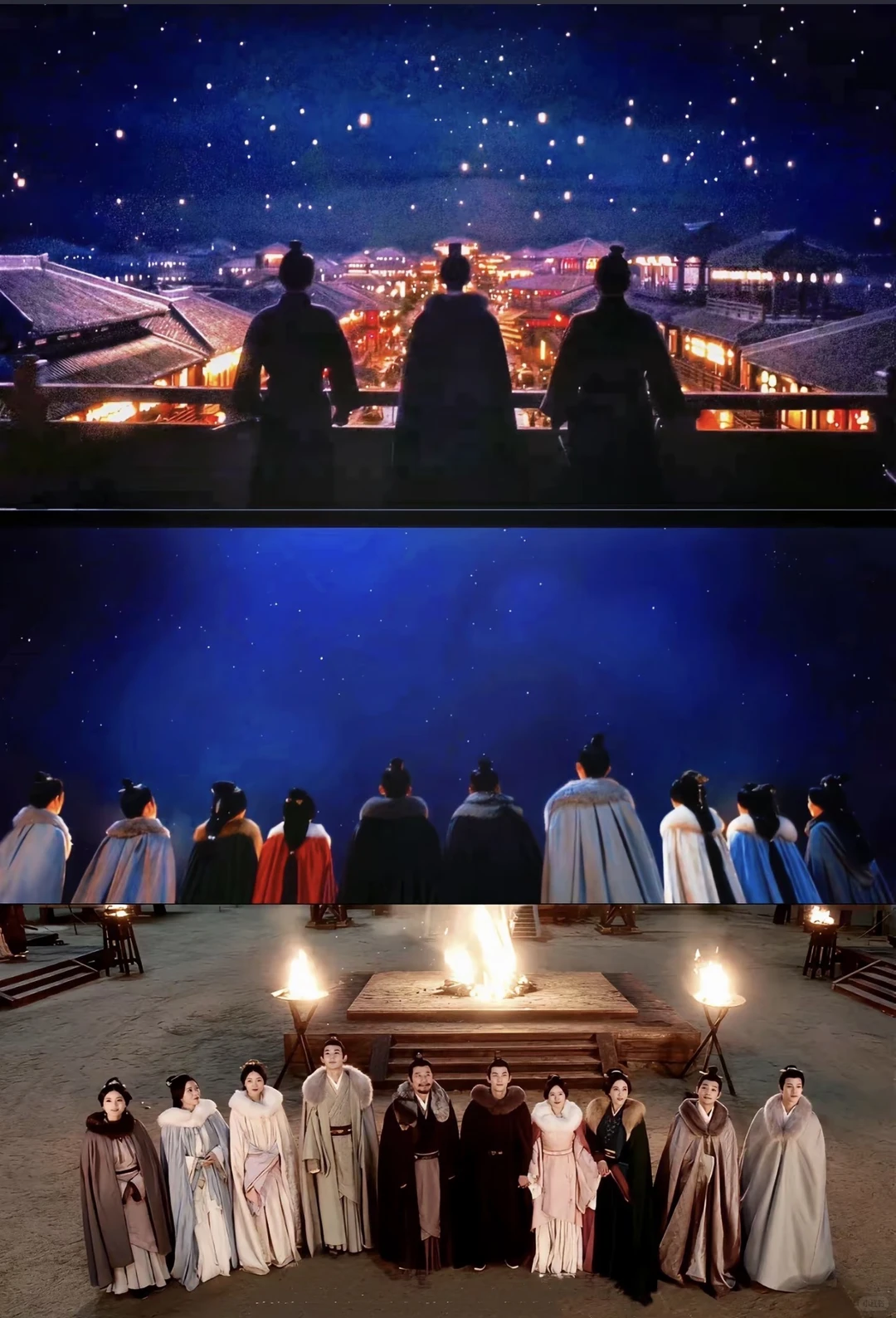
The final visual grammar is communal rather than private: the couple belongs inside a line of surviving relationships. The image supports that spatial conclusion; it does not prove that every damaged bond has been repaired.
The ending is happy, but not weightless. The pair does not return to innocence. They choose with more knowledge of what secrecy, revenge and abandonment cost.
Is 56 episodes too long?
Sometimes. The court plot expands unevenly, supporting romances do not all receive equal depth and later urgency can compress repair. But the length also allows something short dramas often fake: people remember how they were treated.
Watch in three emotional movements rather than waiting only for couple milestones:
- Home: learn why Shaoshang treats control as survival.
- Recognition: watch who observes her accurately and who merely rewards compliance.
- Consequence: decide whether love changes the methods created by family injury and revenge.
If the family scenes feel like interruptions to you, the drama will feel long. If they are the foundation, the romance becomes much more precise.
The family wound earns the long journey
Love Like the Galaxy succeeds because Cheng Shaoshang is never only the object of love. She is a person whose humor, engineering instinct, anger and refusal all grew in the same neglected house. The drama's best adults do not tame her. They become curious enough to learn what she eats.
That is the standard Ling Buyi eventually has to meet. Strength can rescue her body. Only honesty, observation and changed behavior can make a shared life possible. Story of Kunning Palace offers the darker companion question: what happens when two people recognize each other clearly but still use superior knowledge as permission to control? For a colder variation, My Journey to You turns recognition into a problem of rooms, gates and identities that can never be fully verified.
Find one scene where Shaoshang is finally known rather than corrected. Email Lijun a viewing note: name the episode and the action that changed your reading, without attaching a screen capture or someone else's artwork. Continue with Hidden Love to see Zhao Lusi work on a quieter contemporary scale, or browse the Chinese television collection for the next route.