Chinese porcelain figurines are small fired figures in which body, glaze, color and pose have to work as one object. My rule is blunt: if a figure needs an antique label, a lucky meaning and a claimed dynasty before it becomes interesting, the sculpture has already failed. Start with what the clay is doing. Follow the weight through the feet or seat, find the fold that turns a robe, and check whether the face still belongs to the body around it.
Chinese porcelain figurines: the figure comes before the label
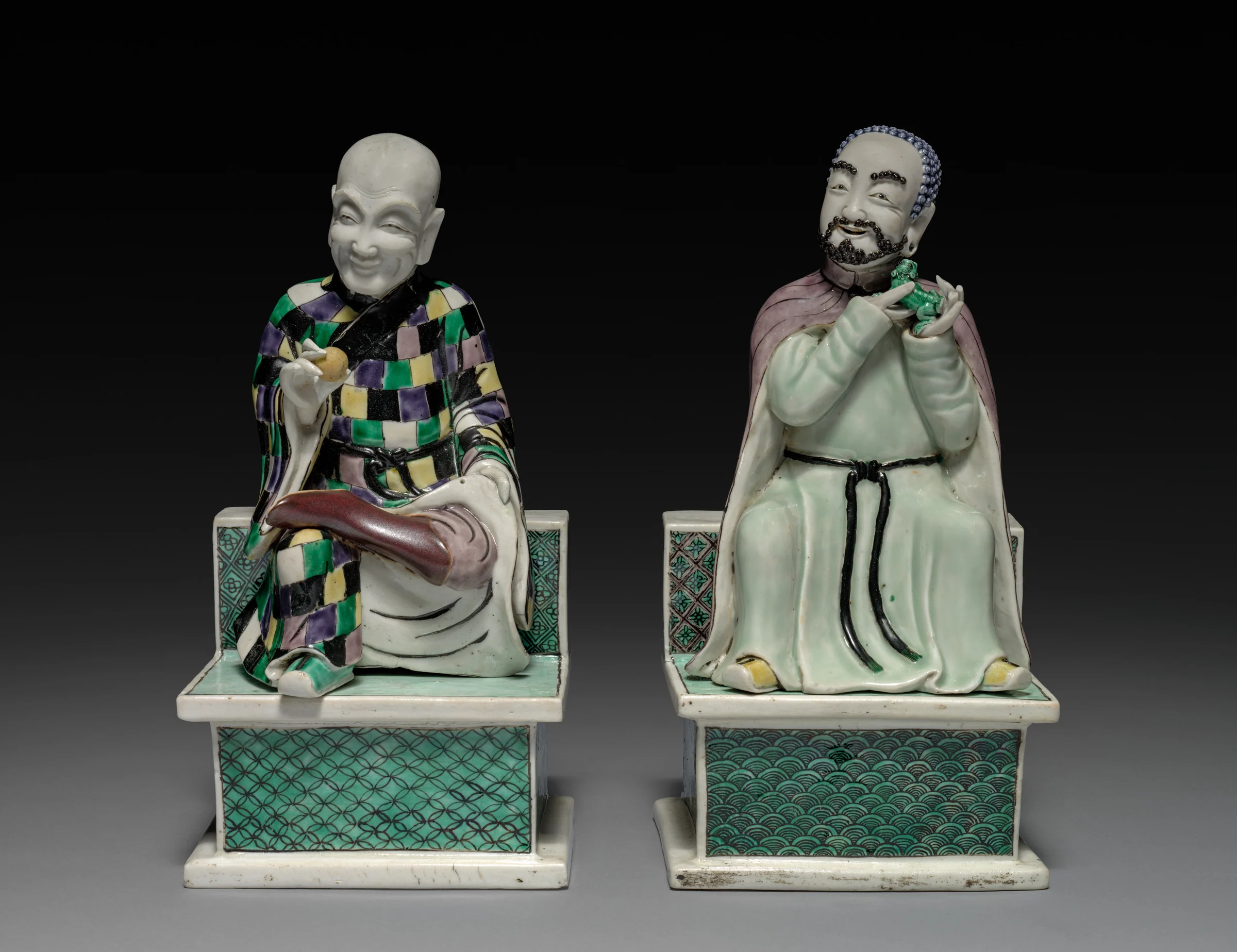
The pair above gives us a better entrance than a dynasty chart. The Cleveland Museum of Art records the two figures as Kangxi-period Jingdezhen porcelain with famille verte overglaze enamel. One lohan holds a peach; the other holds a small guardian lion. Their checked robes, bare chests, relaxed knees and broad smiles produce two distinct characters before you decode a single auspicious symbol.
That order matters. Symbol guides encourage people to identify the peach, announce longevity and stop looking. I would begin with the uneven rhythm of the robe panels, the way each hand completes a gesture and the difference between the two seated bodies. The peach is not a password. It is a prop inside a performance.
Chinese porcelain figurines were not one fixed category with one use. Museum records describe religious images, household decoration and objects that may have functioned as toys. Some figures were made for Chinese settings; others entered export markets. Some are white and depend on shadow. Others use strong enamel color to separate robe, face, attribute and base. The useful question is never simply “What does this Chinese statue mean?” It is “What kind of object is this, and what visual work is each part doing?”
Porcelain figurine, ceramic figure or porcelain doll?
The three phrases overlap in online listings, but they are not interchangeable.
| Term | What it can reasonably mean | What it does not prove |
|---|---|---|
| Chinese ceramic figurine | A small Chinese figure made from fired clay; the broadest useful category | Porcelain body, age, kiln or authenticity |
| Chinese porcelain figurine | A figure catalogued or materially established as porcelain | Dehua origin, imperial use or hand modeling |
| Chinese porcelain doll | Often a seller's description for a childlike or female figure; sometimes a true articulated doll | That every historic figurine was a play doll |
| Blanc de Chine figure | A documented Dehua white-porcelain object, or a carefully bounded style description | That any cream-colored figure came from Dehua |
| Antique or vintage figurine | A market-age claim that needs dates and provenance | Quality, rarity, investment value or exact period |
Ceramic is the larger family. Porcelain and stoneware are ceramic materials, but not every ceramic figure is porcelain. That is why the dedicated Chinese ceramics guide starts with body, glaze and firing rather than prestige names.
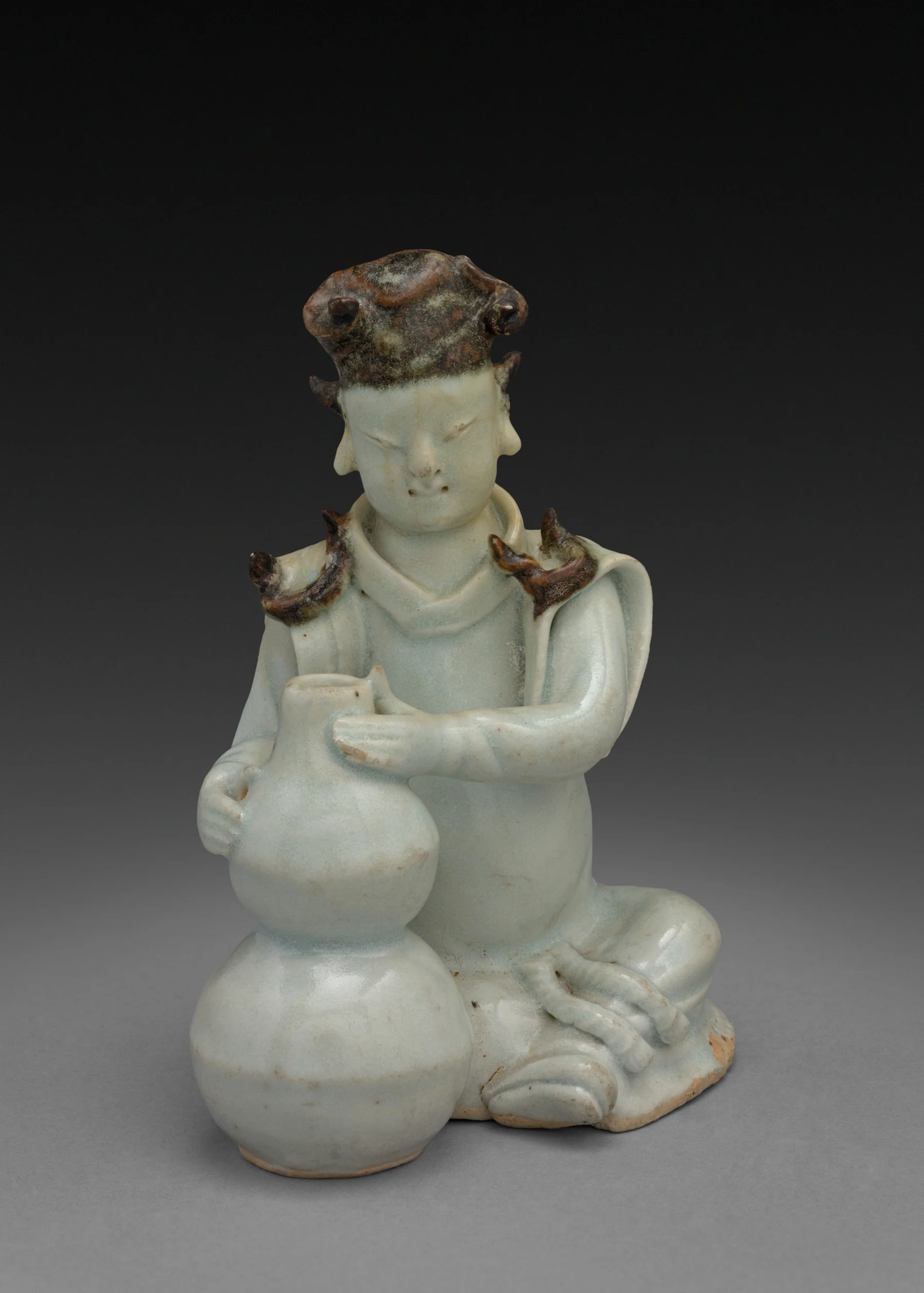
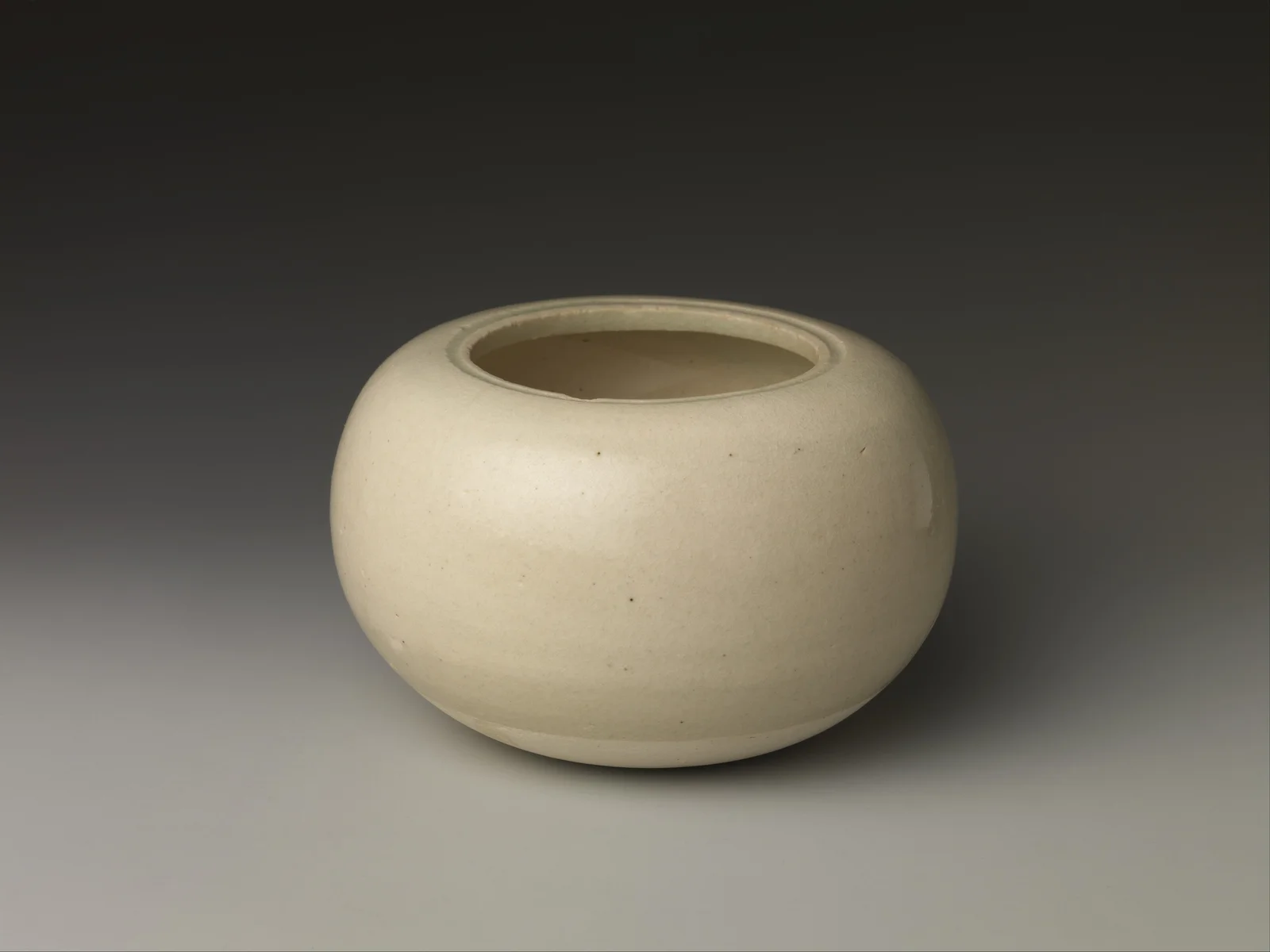
The museum identifies this seated potter as fourteenth-century southern Chinese porcelain with a pale qingbai glaze and dark iron-rich details. At only 13.5 centimetres high, it has the intimacy people now associate with a collectible figure. Yet the quietest decision is the best one: the gourd interrupts the symmetry, giving the hands somewhere to go and the seated body a reason to lean.
The record says the figure was probably used as a toy. “Probably” should stay visible. It is evidence-based interpretation, not permission to describe every small Chinese figure as a child's doll.
A figurine can be ordinary without being minor
Museum display tends to make every surviving object look ceremonial. The small human figure corrects that bias. It can represent work, play, domestic decoration or a familiar character rather than an emperor or deity.
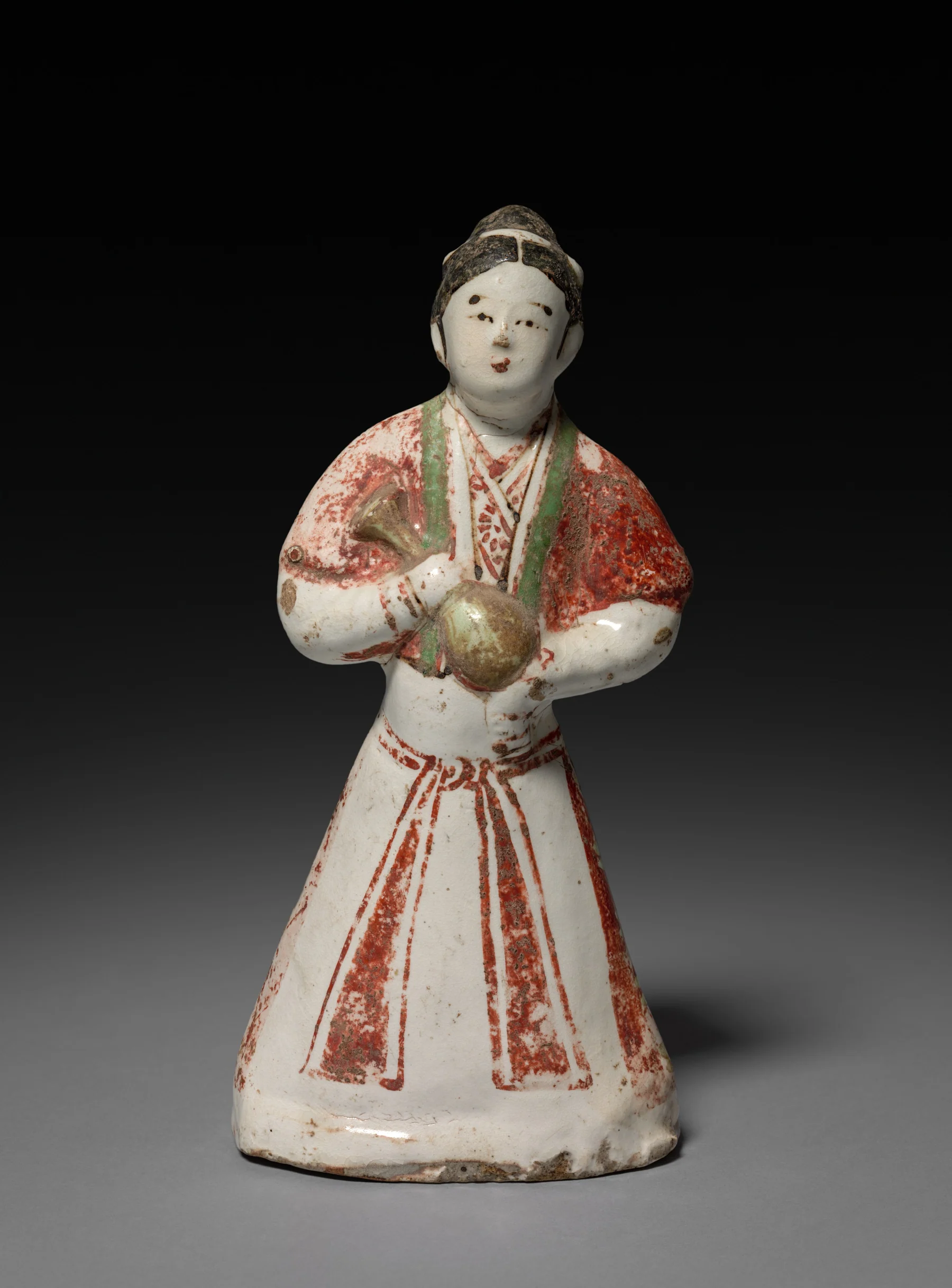
The Lady Holding a Vase is not porcelain. Cleveland catalogues it as Cizhou stoneware with white slip, transparent glaze and colored decoration, made in the Northern Song–Jin period. That apparent exception belongs here because it exposes the weakness of search language. An online seller might call any pale fired figure “Chinese porcelain.” A museum record forces us to notice a different body and surface system.
Her green vase sits high against the torso. Red bands organize the skirt; the face is compact and direct. Loss and wear are visible instead of digitally erased. I prefer that honesty to a listing that saturates the colors and calls damage “museum patina.” Condition is part of the present object, not proof of a glamorous age.
The museum notes that Cizhou kilns made practical wares outside the imperial court and also produced figurines that may have served as toys. That gives the figure a valuable job in this page: she breaks the habit of treating Chinese ceramic art as a parade of court commissions.
White Chinese porcelain figurines live or die by shadow
Color can divide a form quickly. White porcelain has fewer places to hide. A sleeve must separate from a torso through modeling; a knee has to emerge from the robe through a change of plane; the base must support the body without looking like leftover clay.
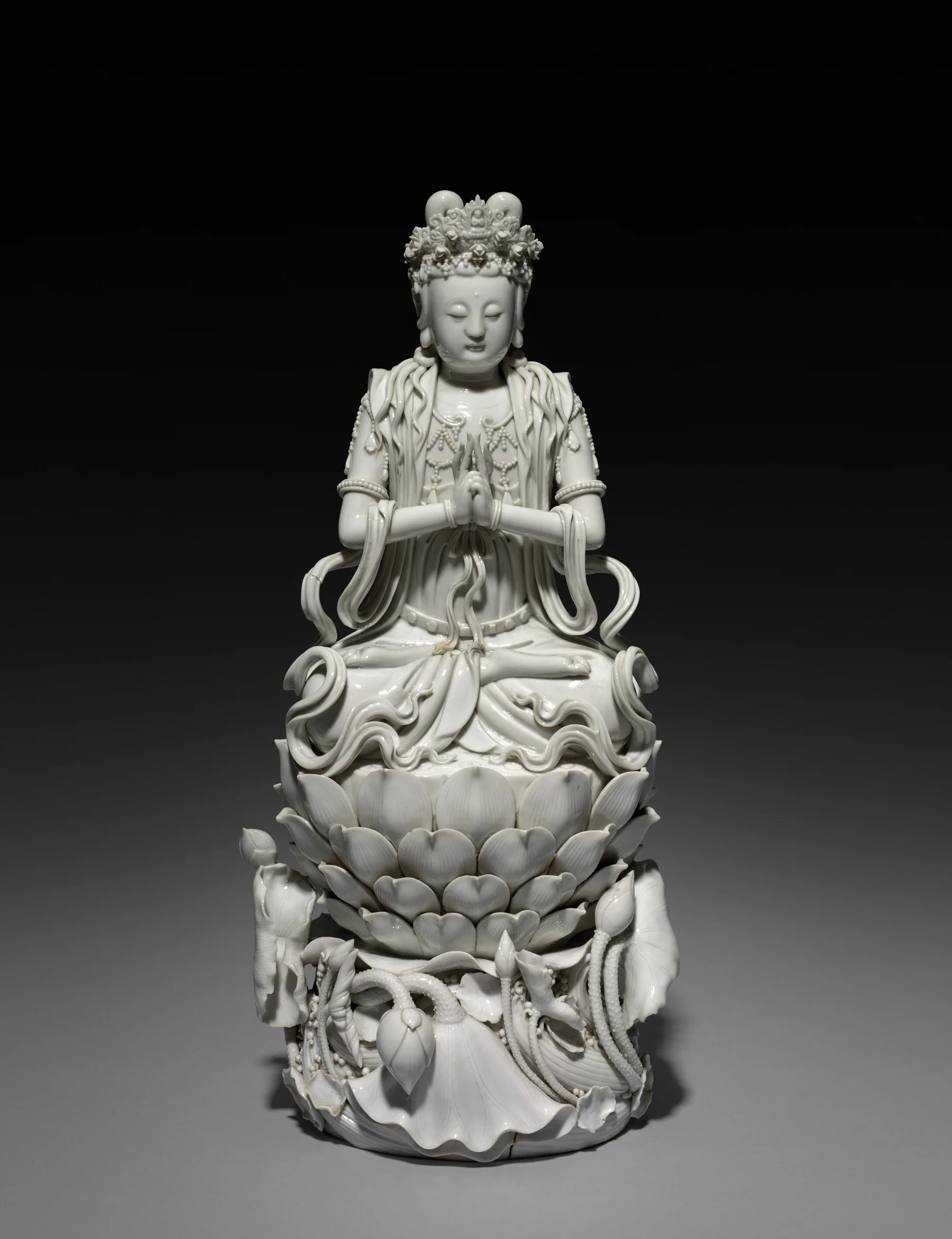
The Bodhisattva Guanyin of the South Sea is recorded as seventeenth-century white-glazed Dehua porcelain. The pedestal does serious work. Waves identify a setting, the lotus creates a transition and the central figure rises from that dense lower movement into a much calmer upper body.
Do not reduce this to “white means purity.” White is a visual condition, not a complete interpretation. Light gathers under sleeves, inside openings and between beads. Those shadows turn glaze and fired clay into legible structure. Our Dehua porcelain guide follows that problem much further: how a rigid body can suggest hanging cloth and measured movement.
Guanyin also needs a boundary. An image can help explain pose, attribute and modeled folds, but it cannot establish whether another object is Dehua, old, devotional or valuable. For the figure's changing identities and cultural place, use the separate Guanyin guide. Do not ask a sales photograph to perform religious history and authentication at once.
Painted figures should be read as color architecture
People sometimes treat enamel as decoration placed on top of “the real sculpture.” In a successful painted figure, color organizes the body. It tells the eye where one sleeve ends, where a sash turns and where an attribute separates from the robe.
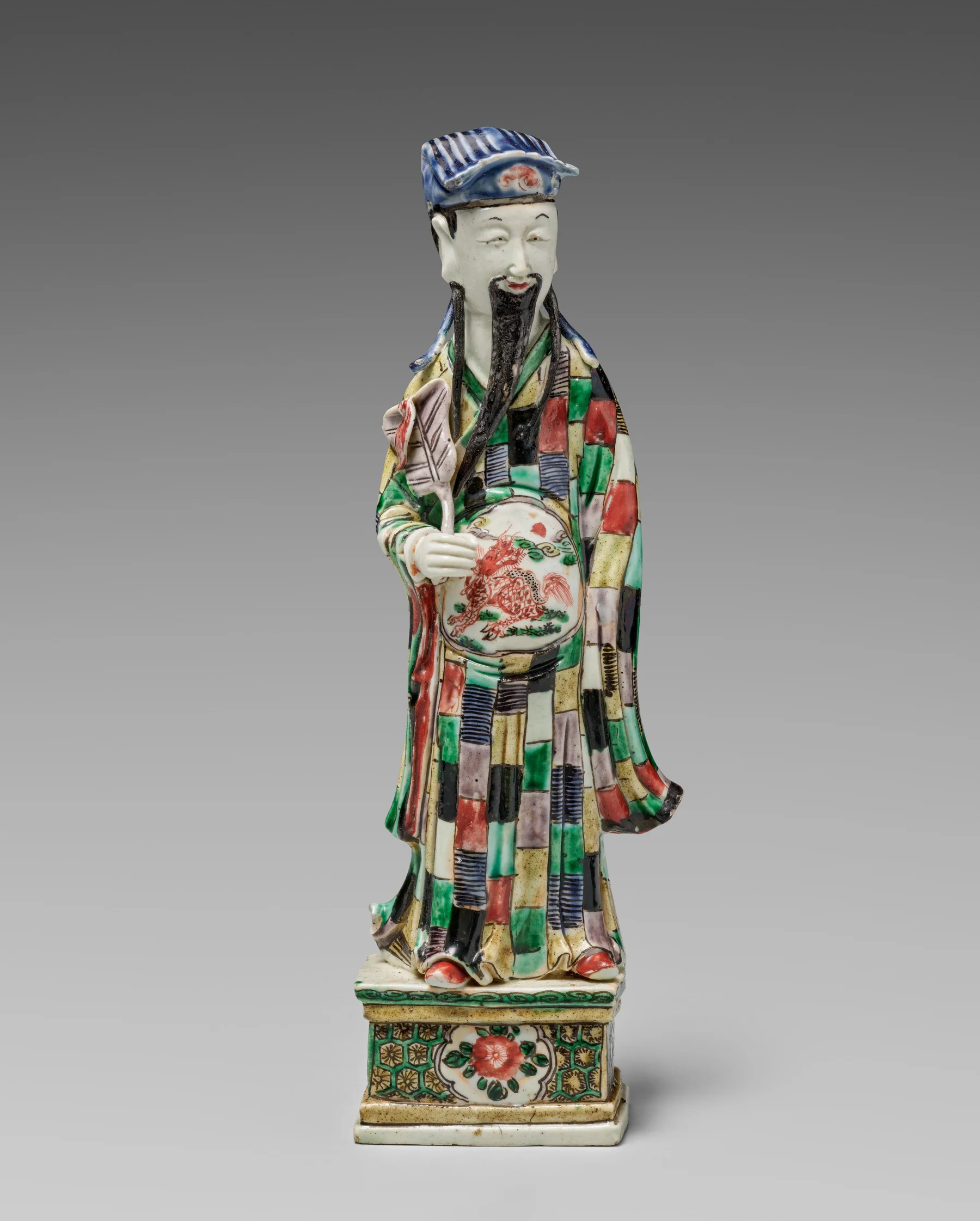
The museum titles this figure Daoist Immortal Lü Dongbin, while its description identifies Zhongli Quan represented as a scholar. That internal naming tension is worth preserving instead of silently resolving. Catalogues are researched records, but they are not magical certificates free from revision or disagreement.
Visually, the figure is more certain. A scholar's cap, rounded exposed belly, fan, scroll and patterned robes create several centers of attention. The potter did not use color to flatten the body into a diagram. Dark outlines, green passages and open areas keep the torso readable at a distance.
This is where the Chinese ceramic glazes guide helps. Glaze and enamel are not generic “paint.” Their position in the firing sequence and their relationship to the body affect color, gloss, wear and what can be seen at an edge or loss.
Five families of figures should not be collapsed into one shelf
You do not need a complete typology before looking, but these five routes prevent the most common confusion:
- White modeled figures. Dehua and related white figures rely on silhouette, folds, openings and glaze-shadow transitions.
- Polychrome porcelain figures. Overglaze colors may build costume, identity, attributes and visual rhythm.
- Ceramic toys and ordinary people. Small potters, attendants, children and animals can belong to daily or playful worlds rather than an altar.
- Religious and auspicious figures. Guanyin, lohan, Daoist immortals and guardian animals carry specific identities; their meanings should be tied to identified attributes and contexts.
- Export and decorative figures. Some were made for or circulated through overseas markets, where Chinese subjects could be reinterpreted, mislabeled or imitated.
The boundaries can overlap. A religious figure may also be decorative in one household and devotional in another. An export object can use a Chinese subject for a foreign market. The aim is not to force one answer. It is to stop “Chinese figurine” from becoming a bucket that erases material, use and audience.
That movement across markets belongs to the larger story of Chinese export porcelain. The important evidence is a documented route or object record, not a vague claim that a face “looks European” or “must have been made for export.”
A roof full of figures is not a shelf of figurines
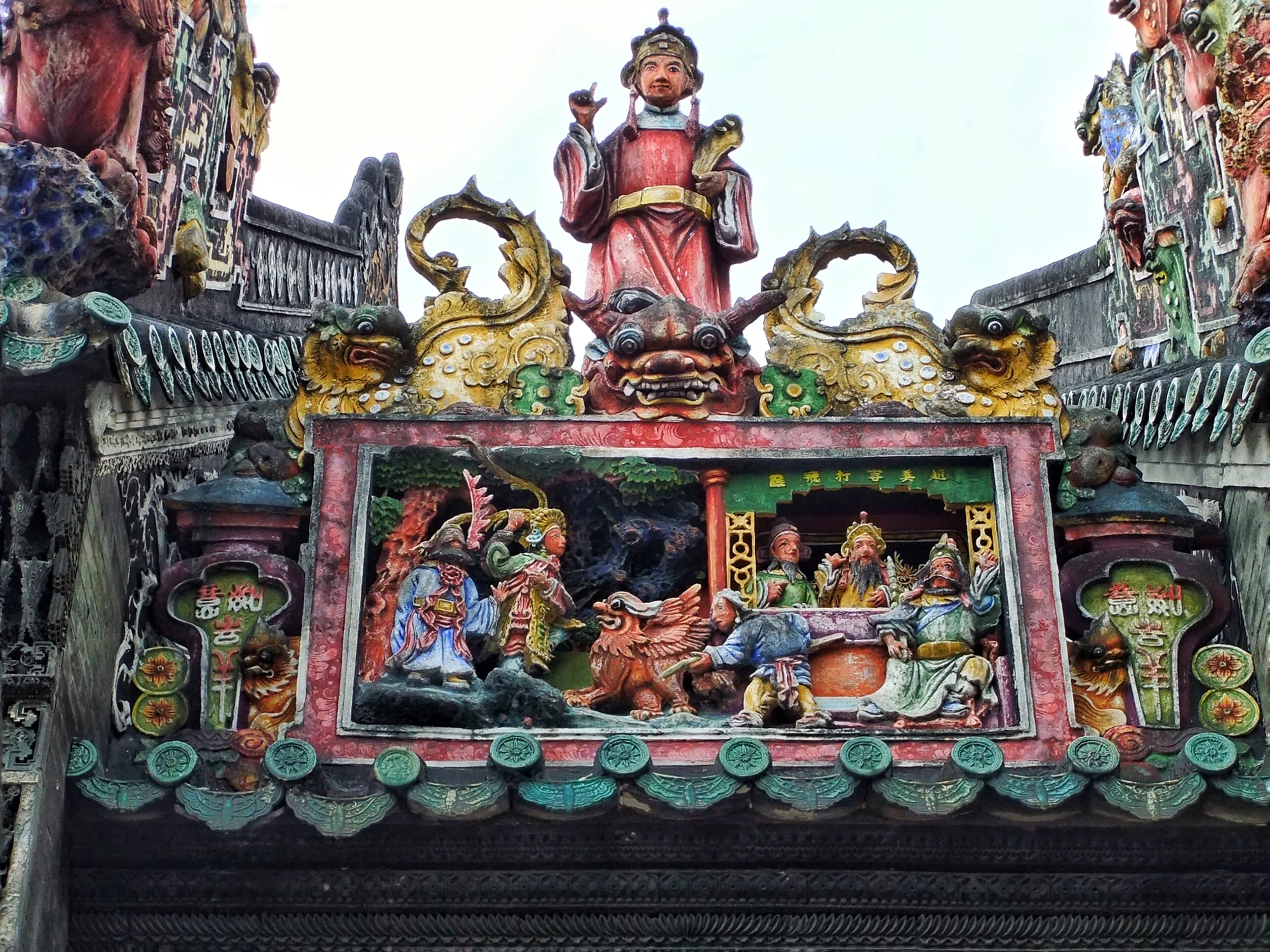
The photograph changes the scale completely. Figures, animals, frames and architectural surfaces lock into one roof program at Guangzhou's Chen Clan Ancestral Hall. The Guangzhou cultural authority lists ceramic sculpture among the building's wood, stone, brick, plaster and metal decorative arts.
This is ceramic sculpture, but it is not a porcelain figurine in the ordinary collecting sense. You cannot detach the central character from the roof without destroying the spatial argument. Weather, viewing angle, surrounding ornament and architecture participate in the work.
That difference is one reason I would not create a generic “ceramic sculpture” page and pour every fired figure into it. Search terms describe objects at different scales. A figurine is usually read in the round, in the hand, on a shelf or in a small ritual setting. Architectural ceramic sculpture is read across distance, structure and public space.
How to inspect a Chinese porcelain figure
Use a fixed route. It is slower than reading the mark first and far more reliable.
1. Read the silhouette
Blur your attention slightly. Does the figure still have a clear stance? Can you separate head, shoulders, hands and base? A strong silhouette survives before small decoration arrives.
2. Find the support
Look at feet, seat, rock, animal, wave or pedestal. The base is not merely a plinth. It explains how the figure's apparent weight reaches the ground. An awkward support often reveals a composition designed only for the flattering front view.
3. Follow one fold around the body
Do not praise “fine detail” in general. Choose one robe edge and see whether it continues logically around a knee, elbow or back. In white figures, that path creates shadow. In painted figures, a color boundary may reinforce or contradict it.
4. Separate body, glaze and added color
Ask what belongs to the fired clay body, what belongs to glaze and what appears to be overglaze enamel or later paint. Photographs may not settle the question, but the distinction improves the questions you ask.
5. Inspect projections and repairs
Fingers, attributes, ears, ribbons and animal legs are vulnerable. Check whether they are present, repaired, replaced or hidden by the camera angle. A pristine face says little about the condition of a projecting hand.
6. Demand the back and underside
A single frontal photograph is an advertisement, not an object record. The back can reveal hollow construction, joins, tooling and glaze coverage. The underside may show the base, firing opening, labels and marks. None authenticates the figure alone.
The Chinese ceramic marks guide explains why a mark is one piece of evidence rather than a secret answer key. Later workshops copied earlier reign marks; modern sellers can add convincing-looking stamps. Provenance, material examination and comparison with securely documented objects matter more.
Antique and vintage are claims, not styles
Searches for antique Chinese porcelain figurines and vintage Chinese porcelain figurines often lead to marketplaces. The adjective arrives before the evidence. Reverse that order.
Ask for:
- clear front, side, back and underside photographs;
- dimensions and weight;
- a condition report that names repairs and losses;
- ownership history and old labels where available;
- the seller's exact basis for kiln, date and maker claims;
- written return terms;
- independent specialist review when the price justifies it.
Do not use dirt as a clock. Artificial staining can be added; genuine old objects can be clean. Do not use a crackle network as a universal age test. Do not assume heavy means old, white means Dehua or a seal means the named maker touched the piece.
Most importantly, do not let a supposed bargain turn a visual question into an investment decision. This page can help you look. It cannot authenticate or value an object from photographs.
The best first figure is the one that keeps working after the story ends
If you are choosing a modern figure rather than evaluating an antique, ignore scarcity first. Put the object at the distance where it will actually live. Does the gesture still read? Does the base waste space? Do glossy highlights erase the face? Is there a fragile projection exactly where a hand will catch it during dusting?
Then remove the symbolic description. A peach can suggest longevity, a guardian lion can signal protection and a lotus can frame a Buddhist figure, but a weak object does not become strong because the meaning is positive. The material still has to carry the idea.
That is my firm answer to the search phrase “Chinese porcelain figurines.” The category becomes interesting when it stops being a shelf of lucky antiques and becomes a field of decisions: hard clay made to look soft, enamel made to divide movement, a tiny prop made to finish a gesture, a base made to hold a body in the world.
Continue with Chinese porcelain for the material vocabulary, or return to the broader Chinese art guide to compare ceramics with jade, painting and other traditions. If one figure has earned your attention, bring an authorized image to Moments and name the visible decision that survives without its price, age or sales label.