Chinese ceramics are often introduced as a parade of beautiful objects. That is the least interesting place to stop. A bowl is also geology, chemistry, muscle memory, fuel, logistics, appetite, fashion and risk held in one fired form. The calm surface is the final frame of a much more physical story.
What are Chinese ceramics?
Chinese ceramics are objects made from clay and other mineral materials, shaped and permanently transformed by firing. They include earthenware, stoneware and porcelain produced across many regions and periods of Chinese history.
That direct definition matters because two shortcuts distort the subject. The first treats every Chinese ceramic as porcelain. The second treats every piece of porcelain as blue and white. In reality, Chinese makers worked with red, gray, white and dark bodies; clear, green, black, cream, yellow, turquoise, red and multicolored surfaces; and forms made for kitchens, tombs, temples, tea tables, palaces, ships and ordinary storage rooms.
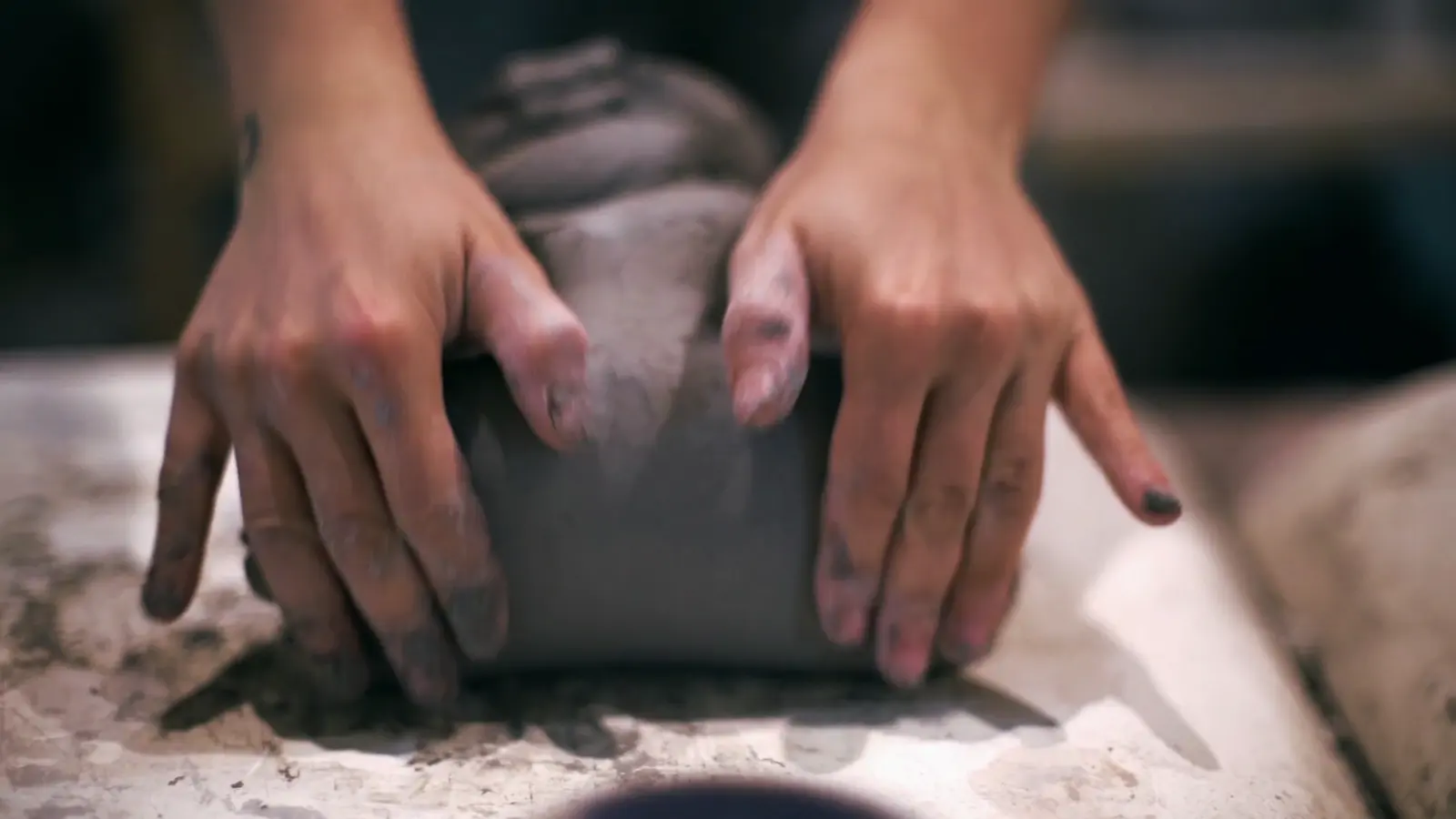
I will defend a well-designed working bowl against an impressive-looking vessel that is unpleasant to use. “Porcelain” names a material family, not an automatic promotion in taste. Start with what an object was built to do; then ask how its clay, shape and surface make that possible. The photograph above starts at the right place: a person preparing material that does not yet hold a stable form.
Pottery, stoneware and porcelain are related, not interchangeable
English-language museum labels commonly divide ceramics into earthenware, stoneware and porcelain. The categories are useful, but they are not three perfectly sealed boxes, and historical Chinese terminology developed through different technical and cultural traditions.
| Ceramic family | General material character | Chinese examples | What a beginner can notice |
|---|---|---|---|
| Earthenware | Usually lower-fired and more porous, often with a red, buff or gray body | Neolithic painted pottery, many tomb figures, roof and architectural ceramics | Body color, painted slip, surface wear and whether glaze covers the whole object |
| Stoneware | High-fired, dense and durable, often strongly shaped by iron-bearing clay and glaze chemistry | Longquan celadon, Jian tea bowls, many Cizhou wares, Yixing teapots | Glaze depth, exposed body, firing marks and the relationship between weight and use |
| Porcelain | Highly vitrified, generally pale-bodied and capable of great refinement | Jingdezhen blue and white, Dehua white ware, many imperial and export porcelains | Body refinement, translucency where thin, glaze fit, foot finishing and brushwork |
Firing temperature helps explain these families, but temperature alone is not the identity of an object. Clay recipe, mineral content, kiln atmosphere, wall thickness and degree of vitrification all matter. A heavy porcelain jar may not perform the internet's favorite translucency trick. A clear ring from a tapped vessel is not a certificate of authenticity.
The better habit is to ask what combination of body, glaze, forming method and firing produced the object in front of you.
The difference from other glossy Chinese objects is fundamental. Cloisonne uses enamel held by metal partitions on a metal body. Jade is worked from stone. A smooth surface and a vessel shape do not make either one ceramic. That distinction saves you from reading a whole display cabinet as “porcelain” merely because the colors look familiar.
The story begins below the surface
Clay is not a neutral material waiting for an artist's idea. It has particle size, plasticity, impurities, memory and limits. It can crack when drying, collapse when too wet, resist joining, warp in heat or react unexpectedly with glaze.
Makers wash, age, mix, knead or otherwise prepare clay to make its moisture and working character more consistent. Different ceramic centers developed around access to useful raw materials, water, fuel, transport and accumulated specialist knowledge. Geography was part of the technology.
Jingdezhen became exceptionally important for porcelain, but not because a single genius discovered a magic recipe. Its strength grew through ceramic materials, kiln experience, commercial networks and a deeply specialized production system. Porcelain stone and kaolin could be combined in varying formulations; one workshop might prepare materials while others formed bodies, painted decoration, applied glazes or managed firing.
The finished vessel hides that network so effectively that viewers often imagine one artist making everything alone. Sometimes an individual studio potter did control most stages. Large historic production centers often did not work that way.
Making is a chain of decisions
A simplified production sequence might run from material selection and clay preparation through forming, drying, trimming, decorating, glazing, kiln loading, firing and sorting. But a straight diagram can make the process look more obedient than it is.
Throwing on a wheel is only one forming method. Chinese ceramic objects have also been coiled, slab-built, molded, pressed, cast, carved, assembled from separately made parts and built for architecture. Handles, spouts, feet, lids and applied ornament create extra drying and joining problems. Large vessels demand a different relationship with gravity from a tea cup.
Drying is not dead time. Moisture must leave with enough control to reduce cracking and distortion. Trimming removes weight, clarifies the foot and sharpens transitions in the form. Decoration may be carved, incised, impressed, molded, painted, slipped, glazed or enameled at different moments in the firing sequence.
The step-by-step guide to how Chinese porcelain is made follows that chain from prepared clay to kiln sorting, including the stages that satisfying workshop videos usually leave out.
The underside is where this chain often remains easiest to read. A foot may reveal the color and texture of the body, the line where glaze stopped, the way the object was supported, and how confidently it was trimmed. Our Chinese ceramic marks guide shows why a mark belongs inside that larger physical record, never above it.
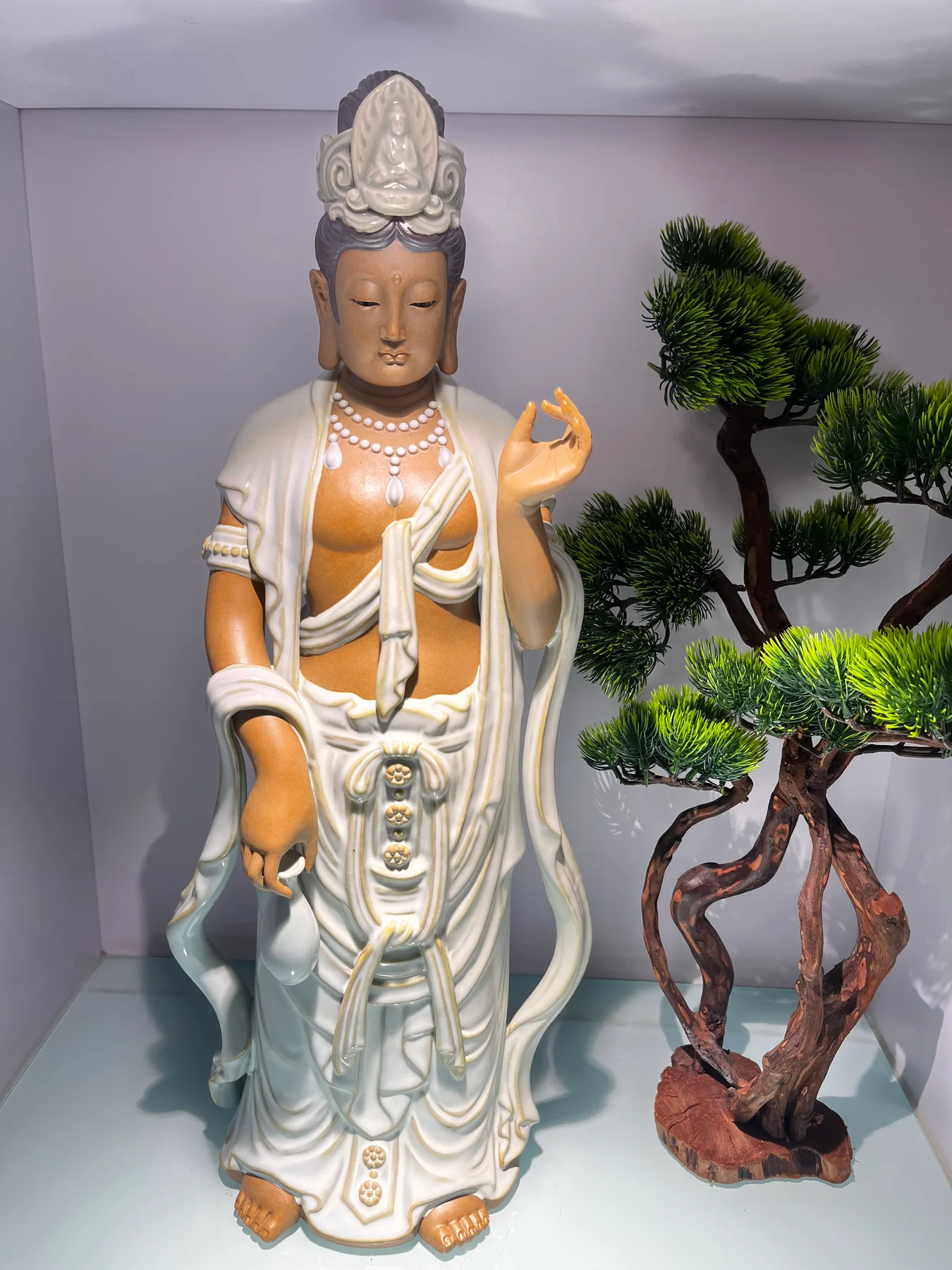
Our Culture Park photograph makes the forming problem visible. The fingers, projecting sleeve and thin robe edges do not behave like the thick central body. Drying and firing have to leave that whole arrangement intact. I find this more revealing than the vague compliment “delicate craftsmanship”: point to the hand, follow the sleeve back into the torso, and the compliment acquires a physical reason.
Kilns do not simply make clay hot
A kiln creates a controlled but never completely tame environment. Temperature rises and falls across time. Airflow, oxygen, fuel, ash, object placement and the behavior of neighboring pieces can change the result.
Oxidizing and reducing atmospheres can alter the appearance of color-producing minerals. Iron can contribute to celadon greens, browns, blacks and other effects depending on body, glaze and firing conditions. Copper reds are famous for being demanding. Ash may melt into a surface. A glaze can pool, crawl, craze, run, cloud or become unexpectedly clear.
Historic kiln forms responded to terrain, fuel and desired output. Long climbing kilns could use a slope and fire many chambers or a long interior; other kiln structures created different heat patterns and production rhythms. Kiln furniture, setters and protective containers helped makers stack objects, control contamination and increase capacity.
This is why a firing variation is not automatically a visual failure. An iron spot or dramatic glaze change may be rejected in one production system and prized in another. A leaking storage jar or unstable teapot is a different matter. Admiring an expressive surface does not excuse a failure of the object's intended job.
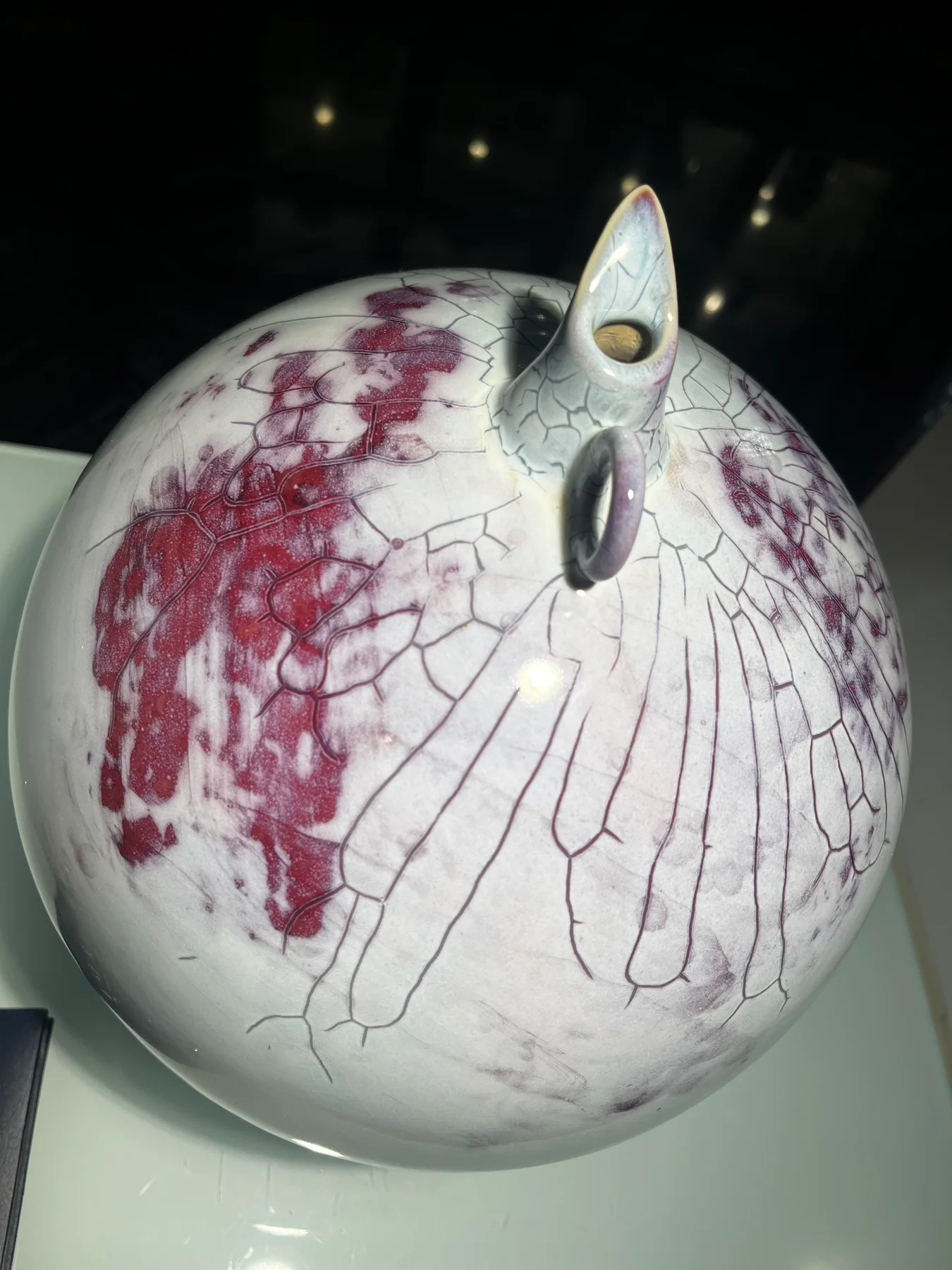
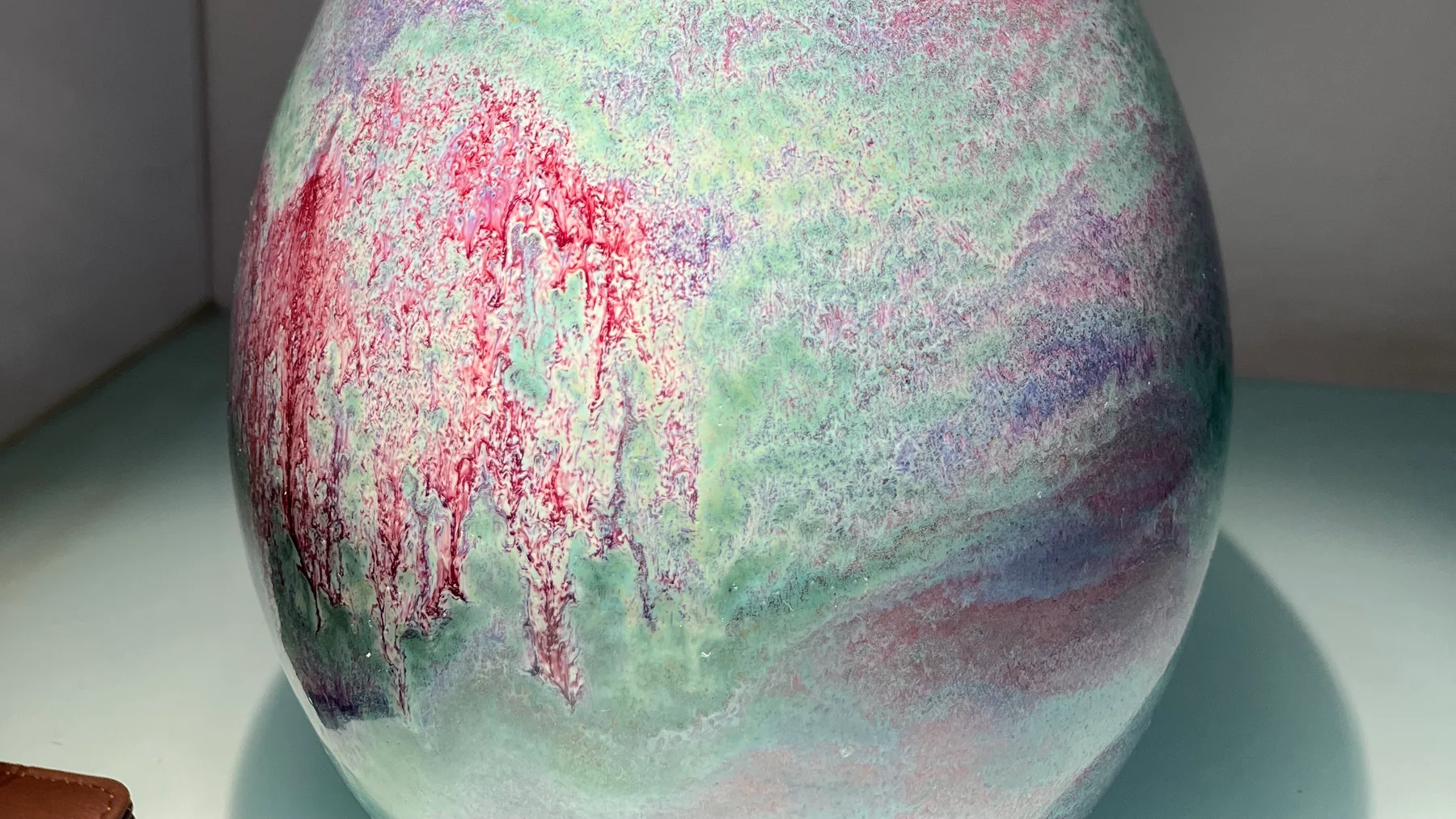
The rounded bird form in this archive photograph offers a precise looking exercise. Follow a purple run across the pale body, then compare its irregular edge with the controlled opening at the top. Surface movement and modeled form are cooperating without becoming identical. The photograph lets us discuss that relationship; it is not a chemical analysis of the glaze. For the mechanisms, continue to Chinese ceramic glazes.
Chinese ceramic history is not a row of dynasty boxes
Dynasties help organize dates, but they can make ceramic history look as if styles changed overnight when a ruler changed. The Metropolitan Museum's Chinese ceramics chronology is a useful object-led route through changing periods, materials and forms; it should be read as a map, not a row of sealed stylistic boxes. Kiln knowledge travels more slowly. Techniques overlap, disappear, return and get deliberately revived.
Early pottery already demonstrates control of clay, shape, pigment and firing. Later high-fired wares expanded the technical range. Tang-period sancai tomb wares used flowing lead glazes, while high-fired traditions continued developing in multiple regions. Song-period ceramic production is admired for extraordinary diversity: pale and dark glazes, carved and molded surfaces, restrained forms, bold popular decoration and highly specific regional kiln identities.
The Yuan and Ming periods saw Jingdezhen blue-and-white porcelain become increasingly important within broad trade and production networks. Qing-period workshops expanded technical and decorative possibilities through imperial commissions, domestic markets and export demand. Yet older forms and glazes did not vanish. They became references, revivals and sometimes arguments about taste.
History also looks different when ordinary fragments enter the frame. Archaeological sherds, kiln waste and shipwreck cargo can reveal scale, grades of quality and trade patterns that a gallery of flawless masterpieces cannot.
A few traditions that change how you see the field
There is no honest "top five" that can summarize Chinese ceramics, but several traditions make excellent doors into the subject.
The famous Five Great Kilns of Song China—Ru, Guan, Ge, Ding and Jun—work best as a comparison rather than a ranking. Together they show five different relationships among glaze, form, production scale, court taste and historical uncertainty. The group is a later canonical framework, not an official Song dynasty league table, and not every member was an imperial kiln.
Longquan celadon: color that feels structural
Longquan celadon is associated with green-glazed stoneware produced in Zhejiang and widely traded. The most compelling pieces do not feel as though green was painted onto a body. The glaze has optical depth, gathers in carved or molded areas and changes with thickness and firing.
Calling celadon "jade-like" can explain one dimension of its appeal, but it should not erase ceramic qualities. Glaze is not failed jade. Its pooled color, bubbles, crackle or softened edges belong to fire and glass-forming chemistry. Put it beside the stone objects in the Chinese jade guide and notice how differently the two materials produce a luminous edge.
Jian tea bowls: darkness as active surface
Jian bowls use iron-rich dark glazes that can develop streaks, spots and crystalline effects. Their surfaces respond to heat, chemistry and bowl position rather than behaving like printed patterns.
They also make more sense with tea. A dark bowl changes how foam, liquor and reflected light appear. The Chinese tea set guide follows that relationship between vessel and use.
Cizhou wares: graphic energy beyond court taste
Cizhou-related traditions include boldly painted, carved, cut-glaze and slip-decorated wares associated with northern production and broad markets. Their visual intelligence can be immediate: dark brushwork against a light ground, rhythmic plant forms, confident bands and images designed to survive the curve of a jar.
They are useful correctives to the idea that Chinese ceramic quality always means pale, delicate and imperial.
Dehua: white is not empty
Dehua in Fujian became known for refined white porcelain, including sculptural and devotional forms often called blanc de Chine in European collecting language. White surfaces make modeling, glaze tone and silhouette unusually exposed. Without color to distract the eye, a weak transition has nowhere to hide. The Dehua porcelain page follows that problem through full figures and the folds connecting their bodies.
Yixing: clay can remain visibly clay
Yixing stoneware teapots are commonly left unglazed, allowing clay color, texture, proportion and use to lead. Their relationship with tea culture is intimate, but online collecting culture also surrounds them with exaggerated claims. A famous-looking seal or story does not establish authorship.
Jingdezhen: the city as a production instrument
Jingdezhen's importance lies not only in individual objects. The city became a system capable of coordinating materials, specialist labor, kiln technology, court commissions, commercial production and overseas orders at remarkable scale.
That system could make disciplined repetition and wild variety at the same time. UNESCO's Jingdezhen Creative City profile places ceramic practice within the city's present-day cultural network. Our Jingdezhen porcelain guide takes the next step: what to notice in the work rather than treating the city name as a quality stamp.
Blue and white is a global conversation, not China's default setting
Blue-and-white porcelain places cobalt decoration beneath a transparent glaze on a pale body. The formula sounds simple. Its results depend on cobalt preparation, brush handling, body and glaze quality, kiln atmosphere and firing control.
The focused Chinese blue-and-white porcelain guide reads this system through identified Yuan and Ming objects, then uses our modern pattern archive to isolate borders, roundels, motifs and negative space without pretending those files are historical artifacts.
The blue can appear soft, smoky, violet, inky or nearly black. Brush lines can spread beneath glaze or remain sharply controlled. Decoration must anticipate a curved surface and the optical change produced by glaze and fire.
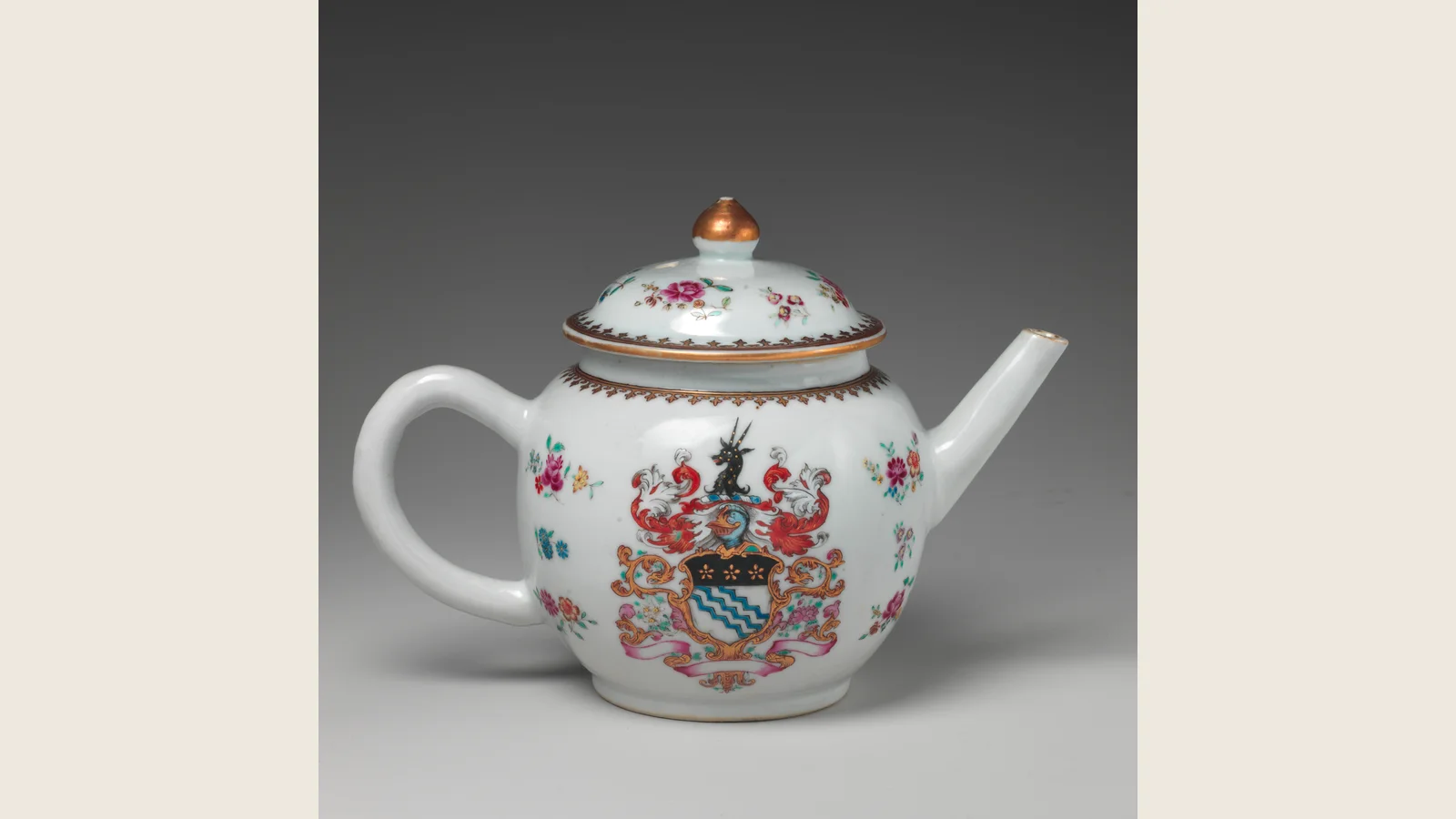
Cobalt and ceramic forms moved through long-distance exchange. Chinese workshops answered domestic and overseas demand; patrons requested unfamiliar shapes, coats of arms and visual subjects; makers interpreted them through local hands and production logic. Porcelain then influenced ceramic industries in Korea, Japan, Southeast Asia, the Middle East and Europe.
So "traditional Chinese design" was never sealed from the world. Some objects now treated as timeless national style were already products of negotiation across ports, courts and markets.
Choose a motif you recognize—a peony, fish or curling leaf—and follow how it fits the vessel. Does the border interrupt it? Does a handle force the painter to compress it? These are useful questions before interpretation. A flower on a plate and a flower winding around a bottle solve different compositional problems, even when their names match.
Ceramics belonged to life before they belonged to art history
Museums train us to see one object under one light. Historic users encountered ceramic groups: bowls stacked on a table, storage jars in a work space, roof tiles above a courtyard, ritual vessels arranged for an occasion, dishes moving through a meal.
A museum object and a family object can carry different forms of value. The museum emphasizes date, kiln, material, rarity and provenance. A household may remember who used the bowl, which New Year table it appeared on, or why a chipped cup was repaired instead of discarded.
Ceramics shaped food and tea habits because material and form affect action. A wide bowl cools differently from a narrow cup. A pouring vessel asks the hand to understand balance. A lid holds heat and aroma. A pale interior makes liquor color easier to read.
The object is not culturally complete until somebody uses, stores, offers, washes, repairs or refuses to throw it away.
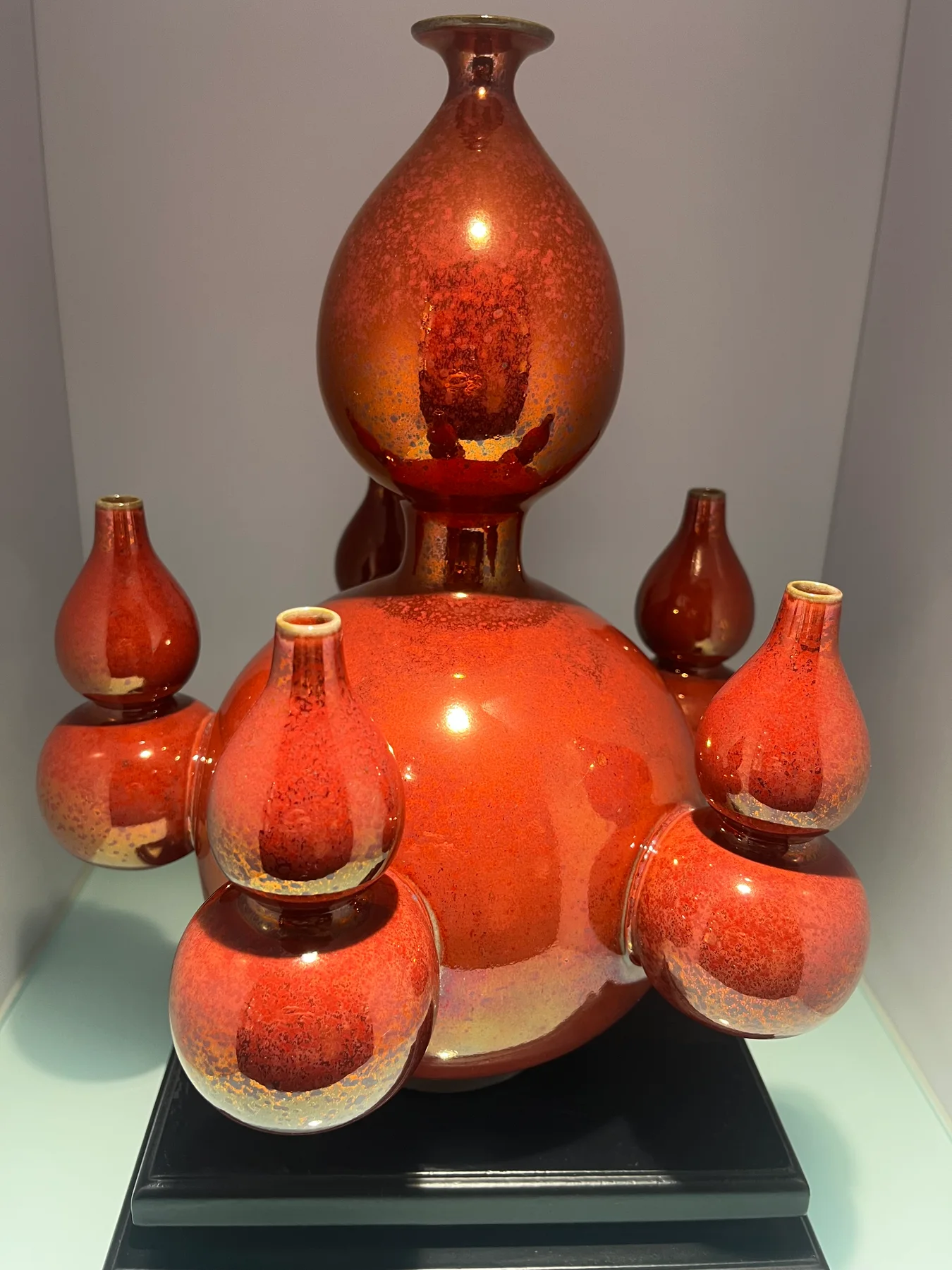
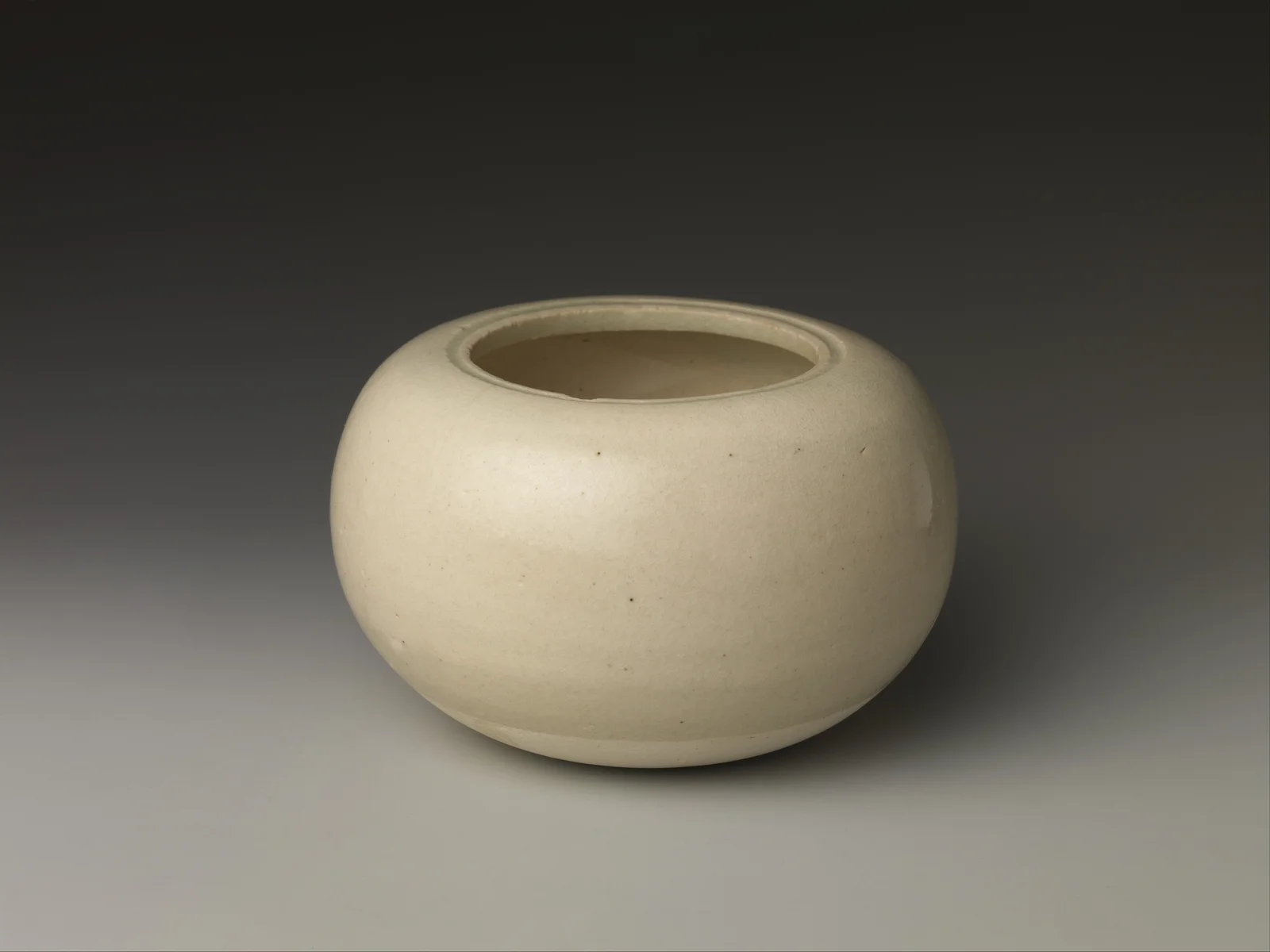
The display photograph offers a contrast with a working table. Shared glaze and repeated rounded shoulders turn these differently sized vessels into a coordinated group. That arrangement is doing a visual job; it does not tell us that the objects form a usable tea service. I would choose a display group for its changing heights and relationships, but choose tableware for the actions it must perform. A pleasing photograph should not make that decision on our behalf.
How to look at Chinese ceramics without guessing
Begin with the whole form before searching for a mark. Is the silhouette tense, heavy, soft or sharply controlled? Does the foot visually support the body? How do the neck, shoulder, wall and rim transition into one another?
Then move closer.
Look at the body
Where clay is exposed, notice color, grain and density. Is the wall thick or thin? Does the object's weight fit its size and purpose? Avoid turning one characteristic into a verdict: old and new makers both worked across wide ranges of refinement.
Look at the glaze
Notice transparency, opacity, pooling, bubbles, crackle, color variation and the line where glaze ends. Ask whether the surface effect follows form or ignores it. Crackle can be intentional, age-related, recreated or simply part of glaze fit; it is not automatic proof of age.
Look at the foot and underside
The underside may show trimming, kiln support, spur marks, adhered grit, exposed body and patterns of wear. Dirt arranged like stage makeup should make you more cautious, not more convinced.
Look at decoration as movement
Hand-painted lines reveal changes in pressure, speed and brush loading. Repeated motifs still vary. Printed and transfer-applied decoration produces different kinds of regularity, although historical workshops also used templates, molds and division of labor. "Irregular means handmade and old" is too simple.
Look for use, repair and later intervention
Wear should make sense for the way an object was handled. Repairs may be part of an object's history rather than damage to hide. Mounts, drilled holes, replacement lids, overpainting and later enamels can change both appearance and meaning.
For age, authenticity or value, photographs and quick online charts are not enough. Provenance, technical examination and comparison with securely documented objects matter. The more money involved, the less useful romantic certainty becomes.
What international readers often miss
The first missed point is translation. "Pottery," "stoneware," "porcelain," kiln names, ware names and Chinese historical categories do not always line up perfectly. A confident English label may hide an active scholarly debate.
The second is labor. Court or kiln labels can make objects sound institutionally self-created. Miners, clay processors, mold makers, throwers, decorators, glaze workers, kiln loaders, fire managers, merchants and transport workers disappear behind one elegant noun.
The third is hierarchy. "Imperial" is important, but it is not a universal synonym for artistically best. Court production could command extraordinary materials and specialists. Commercial and everyday wares could carry greater speed, humor, regional character or directness.
The fourth is copying. Chinese makers repeatedly studied earlier forms and glazes. A later revival can be technically ambitious and historically meaningful. A clearly identified modern reproduction can be useful. An object falsely sold as ancient is deception. These are not the same situation.
The fifth is that symbols do not float free. A dragon, lotus, phoenix, fish or peony changes meaning with period, patron, object and use. The Chinese symbols guide is a starting point, not a universal decoder ring.
Chinese ceramics are still being invented
Contemporary Chinese ceramic practice does not sit outside tradition. Studio potters, designers, factory workers and artists continue to use historic clays, forms, glazes and kiln knowledge while responding to urban life, digital fabrication, global art markets, environmental pressure and new domestic tastes.
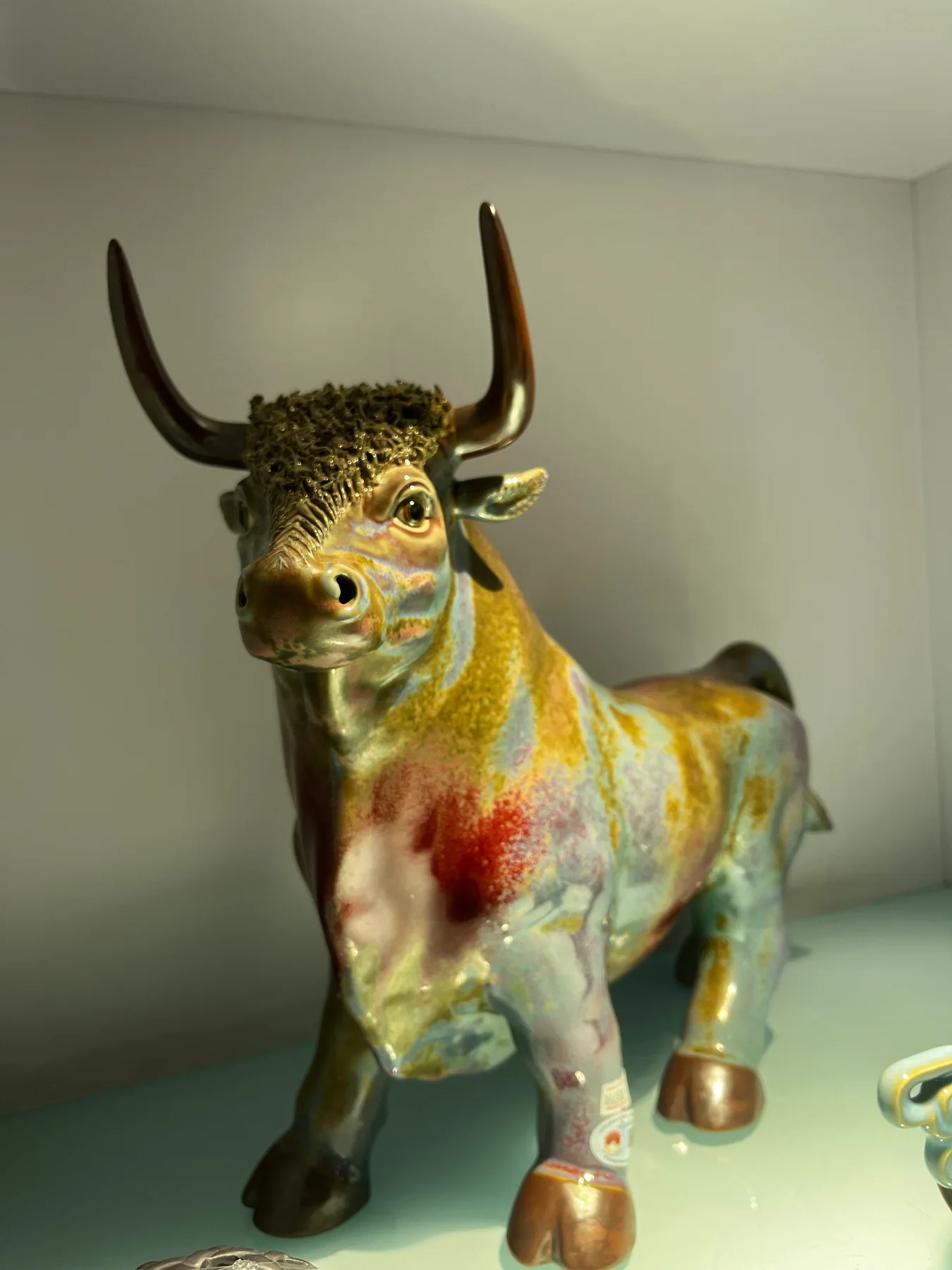
The bull in this Culture Park photograph refuses the idea that ceramics must end at a table setting. Its horns and forward-facing head establish the animal before you identify any glaze family. I like the friction between that assertive posture and the shifting color. The sculpture does not need to impersonate a flawless white porcelain antique to deserve a place in this subject.
Some makers pursue precise revivals. Others expose industrial molds, break the vessel apart, enlarge familiar forms, print with ceramic materials or treat kiln failure as data. Jingdezhen now contains heritage production, mass manufacture, artist residencies, education, tourism and experimental studios within the same urban ecosystem.
That mix can be uncomfortable, commercial and creatively productive. "Tradition versus modernity" is too clean a storyline. The more interesting question is who controls the materials, knowledge, labor and meaning when an old ceramic language enters a new market.
A better beginner route through Chinese ceramics
Do not try to memorize every dynasty, kiln and reign mark at once. Build visual memory in a more human order.
First, compare three bodies: one earthenware object, one stoneware object and one porcelain object. Second, choose a single glaze family, such as celadon or a dark iron glaze, and compare several examples. Third, stay with one vessel form across different periods. Fourth, connect an object to use through tea, food, storage, ritual or architecture. Finally, read the underside and provenance before reading market claims.
The dedicated Chinese porcelain guide goes deeper into porcelain bodies, blue and white, export production, marks and authentication limits. The broader Chinese art guide connects ceramics to calligraphy, painting, jade, bronze and contemporary practice.
Fire does not erase the hand
A finished ceramic object can look inevitable. It was not. The clay could have cracked, the wall could have folded, the cobalt could have bled, the glaze could have run, the kiln could have shifted the color, and the market could have wanted something else.
That is what gives Chinese ceramics their charge. They are not frozen symbols of refinement. They are records of people repeatedly negotiating with materials that never surrender complete control.
Bring one two-view object reading to East Moment's community: whole form, underside, body, glaze, wear and the exact limit of your conclusion. Return when another reader or museum record changes the biography; correction is part of looking closely.