Choose Chinese vegetable dishes by material behavior
Water, cell structure, bean-curd form and preservation decide the technique.
| Material family | Technique evidence | Shortcut to reject |
|---|---|---|
| Leafy greens | Fast heat or brief blanching preserves stem tenderness, leaf color and vegetable aroma. | Bright green proves perfect doneness or oil-free cooking. |
| Fresh tofu | Softness, water content and pore structure determine whether tofu is steamed, braised, fried or gently moved in sauce. | All tofu can be swapped one-for-one or blandness is its natural state. |
| Eggplant and fungi | Salt, oil, steam and cutting manage absorption, collapse and concentrated savor. | A vegetable dish is automatically light or vegan. |
| Vegetarian banquet | Bean, wheat, fungi and vegetable craft create layered textures within stated religious or restaurant traditions. | Mock meat represents every Buddhist practice or guarantees allergen-free food. |
Water content writes the first line of every tofu recipe
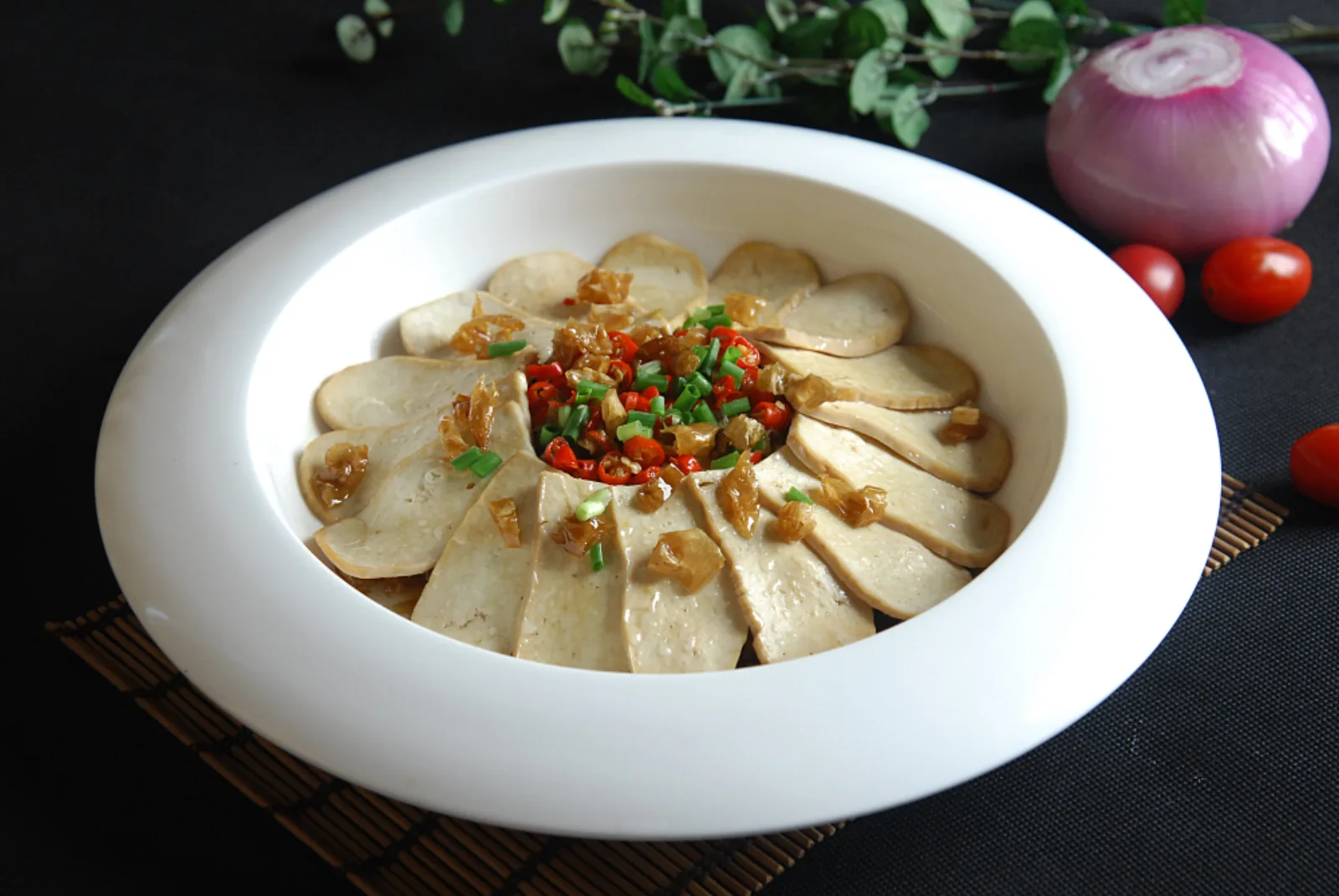
Silken tofu can collapse under aggressive stir-frying; firm tofu can brown and absorb sauce; pressed tofu slices cleanly; tofu skin layers protein-rich sheets; fermented tofu seasons rather than substitutes. The package name is not enough when naming conventions vary, so inspect firmness and intended use.
I choose form before flavor. A recipe asking soft tofu to behave like dry pressed bean curd has failed before the wok heats. Respect begins by giving the ingredient a task it can physically perform.
Tofu can remain tender inside one of China’s boldest sauces
Mapo tofu works through contrast: soft cubes, fermented broad-bean depth, aromatic chili, numbing pepper and often minced meat. The tofu should not disappear into the sauce or fracture into anonymous curds. Vegetarian versions can be excellent when they rebuild savor honestly rather than pretending the traditional meat element never existed.
This is why ‘tofu is bland’ reveals more about the explanation than the ingredient. Its surface and water content invite seasoning while its interior supplies calm. The dish needs both; total penetration would destroy the contrast.
The stem and leaf should finish in the same minute
Chinese leafy vegetables often combine sturdy stems and tender leaves. Separate them by cutting or add stems first. A hot pan, prepared aromatics and a small batch let water flash into steam instead of pooling. Blanching followed by seasoned oil or oyster-style sauce creates another controlled route.
Do not judge only by color. Under-cooked stems can remain fibrous while overused additives keep green unnaturally vivid. Bite the thickest section. Texture is evidence the camera cannot fake.
A vegetable can carry more oil than the meat beside it
Eggplant’s porous structure softens dramatically and can absorb fat and sauce. Salting, steaming, shallow frying or high-heat cooking change the load. Yuxiang eggplant may contain no fish yet use a fish-fragrant seasoning structure; it may also contain meat depending on recipe.
‘Vegetable’ is therefore not a nutrition verdict. Ask about oil, sugar, meat, stock and sauce. I still love a glossy eggplant dish; I simply refuse the dishonest halo that menu categories place around it.
Dried, pickled and fermented vegetables carry another season into the pan
Dried mushrooms concentrate aroma and require soaking and cleaning; mustard greens, radish and other pickles bring salt and acid; preserved vegetables can season meat, noodles or tofu. These ingredients record storage knowledge and trade, not an absence of fresh produce.
Rinse or soak according to product and taste before adding more salt. Keep the package and origin information. A jar’s rustic appearance cannot prove household production, microbial safety or age.
Temple cuisine deserves specificity, not a halo placed over every meatless plate
Buddhist communities differ across region, institution and time. Some practices avoid meat and pungent alliums; others vary. Restaurant ‘Buddha’s delight’ is a diaspora and commercial category with its own history, not a transparent summary of monastic life.
Name the restaurant or tradition being described. Wheat gluten, soy, fungi and knife work can create remarkable imitation forms, but imitation is only one branch. The deeper plant repertoire does not need meat’s silhouette to justify itself.
Vegetarian appearance cannot answer the ingredient list
Broth, oyster sauce, lard, dried shrimp, meat garnish and shared woks may enter dishes that look vegetable-forward. Tofu and soy sauces introduce soy; wheat gluten and many sauces introduce gluten; sesame and peanut are common. Ask directly and accept that cross-contact may be unavoidable.
Clear questions are more respectful than assumptions. State the restriction, not a vague preference, and let the kitchen say what it can safely do. Cultural curiosity never requires someone to gamble with an allergy.
Show the cut surface and the cooking liquid
A tofu cross-section reveals pores, firmness and sauce penetration. A vegetable stem reveals doneness. A wide shot shows whether plant dishes are central or pushed to the edge of the table. These images carry distinct evidence and should be captioned accordingly.
East Moment will not use one decorative bowl of bok choy across ten pages. Repeated imagery teaches readers that vegetables are interchangeable. They are not. The visual archive must preserve species, cut and place.
The best vegetable guide begins before the kitchen
Tender shoots, winter roots, water vegetables, gourds and regional fungi arrive with different calendars. Modern logistics extend availability, yet price and quality still change. Ask vendors or cooks what is actually good now instead of demanding a famous ingredient out of season.
A market photograph should name the vegetable rather than captioning a colorful abundance. Leaves, stems, flowers and roots carry specific labor and cooking behavior. When the name is uncertain, say so and preserve the image for later verification. Accuracy is more respectful than instant fluency.
The ingredient should leave the pan more itself, not less
Good Chinese vegetable cooking intensifies the material: cabbage sweetness, mustard bitterness, mushroom depth, tofu tenderness, eggplant silk. Sauce and heat should reveal those traits. If everything tastes identical, variety has become inventory.
My standard is unapologetic: plant food deserves the same technical attention as roast meat and seafood. It is not the responsible corner of the menu. It is one of the clearest places to see Chinese kitchen intelligence.