Phantom Blade Zero is worth playing if you want a directed single-player action game whose fights look composed rather than merely difficult. Its best idea is not the speed of the sword. It is the collision between disciplined human technique and a world that keeps corrupting bodies, loyalties and old martial rules. That collision is what S-GAME calls kungfupunk.
It is also why the game provokes the wrong first question. Asking whether it is “a Soulslike” reduces everything to stamina, checkpoints and boss difficulty. The more interesting question is whether all this machinery, bodily alteration and folk horror still leaves room for xia: a person deciding what power obliges him to do.
My answer is yes, but with a condition. Phantom Blade Zero remains wuxia when its spectacle exposes a moral cost, a damaged relationship or a choice. When it forgets those people and chases only the next beautiful execution, it becomes an exceptionally polished action game wearing wuxia’s silhouette. The page below is spoiler-light and written days after the official October 29, 2026 release, so it does not pretend to offer years of settled consensus.
Phantom Blade Zero makes kungfupunk work by breaking the martial body
The cleanest definition of kungfupunk is not “kung fu plus steampunk.” That formula makes it sound like a costume department. In Phantom Blade Zero, the useful meaning is more aggressive: traditional martial movement is forced to coexist with body modification, strange mechanisms, medical horror and weapons that feel one engineering decision away from becoming monsters.
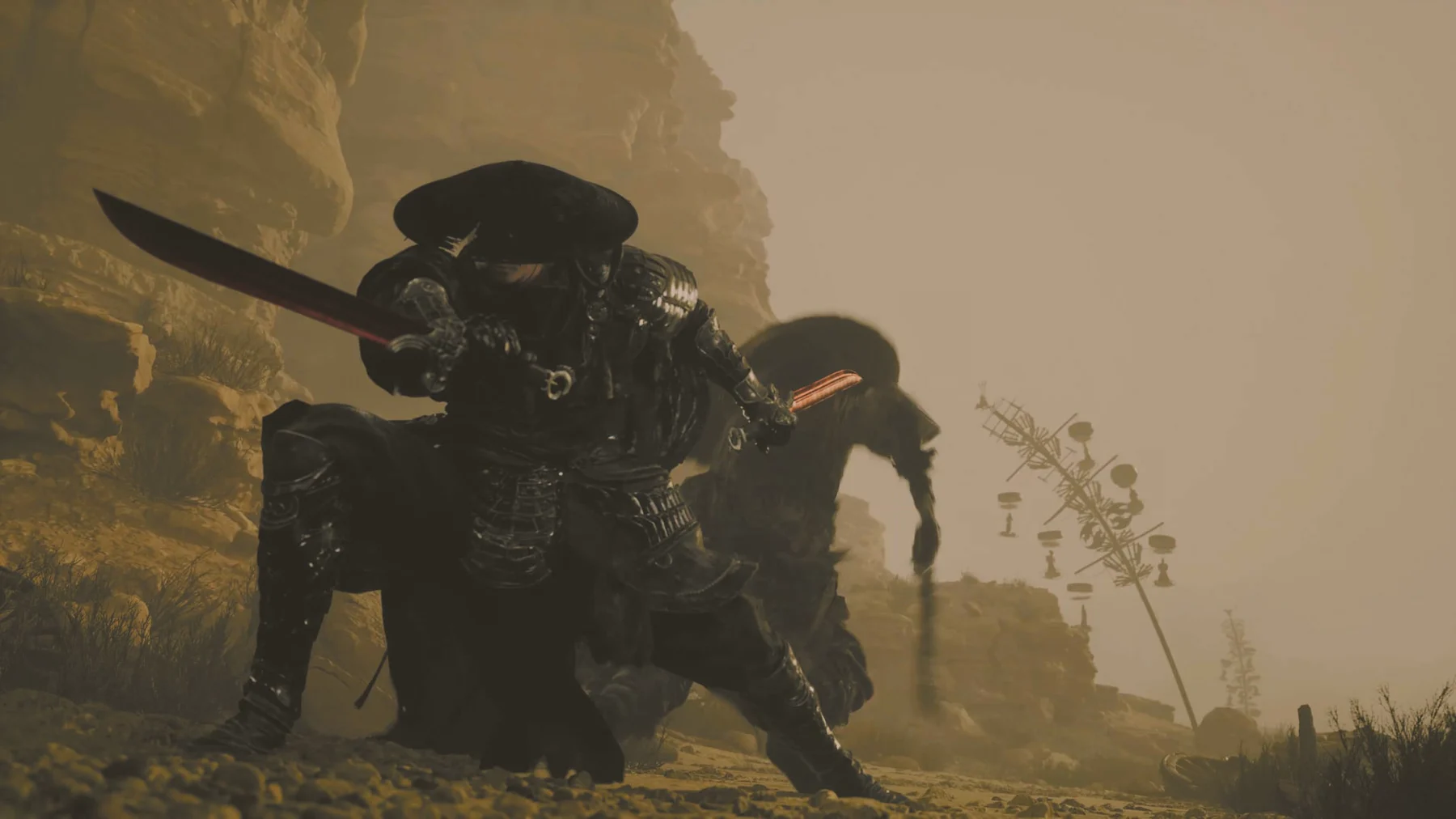
The result still begins with a human stance. Soul’s feet, shoulders, blade angle and distance from the opponent remain readable. Then the world adds something that should not belong: an articulated weapon, an altered body, an impossible burst of speed. Kungfupunk works when that intrusion makes the human technique more visible, not less.
This tension matters in Chinese martial storytelling. Wuxia has never required strict physical realism. Secret manuals, poison, internal power, concealed weapons and dangerous shortcuts have always disturbed the neat idea that decades of honest practice guarantee victory. The modern technology in Phantom Blade Zero changes the surface, but the underlying anxiety is familiar: what happens when someone can purchase, steal or endure a shortcut to power that another person spent a lifetime cultivating?
That is the argument I would keep. It is much stronger than defending every supernatural mechanism as “traditional.” The game does not need to be traditional in every object. It needs to make the violation of tradition meaningful.
The combat succeeds when a duel reads like a sentence
S-GAME’s official combat description emphasizes reactive parries and dodges, two main weapons and two secondary Phantom Edges. The list is useful, but it does not explain the pleasure. A good exchange has grammar: approach, invitation, refusal, reversal, consequence.
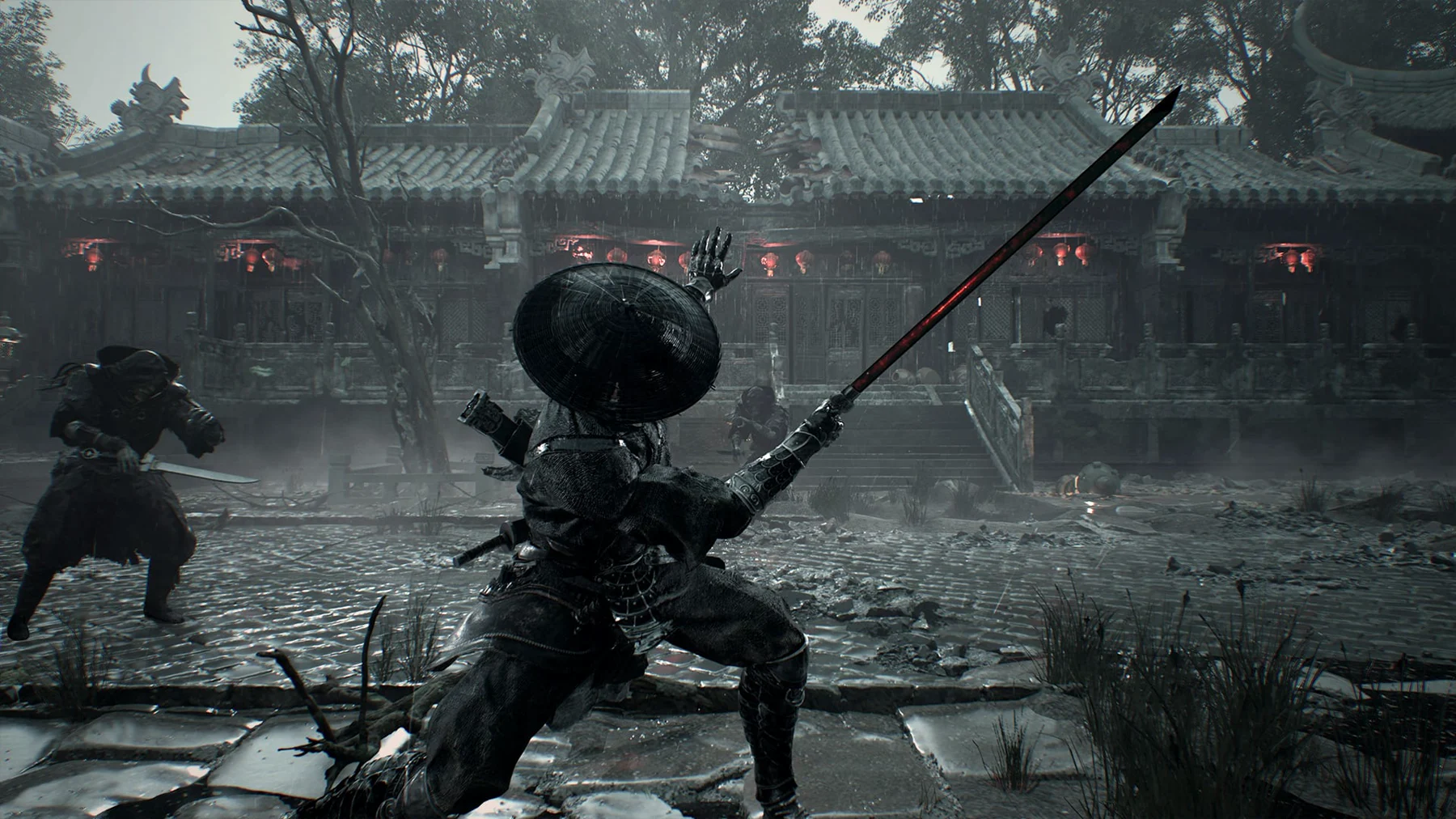
Against several enemies, position is punctuation. The player is not only waiting for a glowing attack to parry. Soul must decide which threat controls the space, whether a long animation will expose his back and when an aggressive counter will stop one opponent before the others close. The image above cannot prove controller responsiveness, but it shows the compositional problem clearly: the hero’s blade is only one line inside a circle of danger.
This is also why I resist the lazy “cinematic combat” compliment. Cinematic can mean readable motion with emotional rhythm. It can also mean the camera doing all the work while the player follows prompts. Phantom Blade Zero is strongest when the player has to earn the shot: the blade meets at the correct instant, the body turns through the opening and the camera records a decision rather than replacing one.
The practical question for action players is therefore not “Is it fast?” It is “Can I read why I lost?” Players who enjoy parry-led pressure, changing weapons and authored encounters have the clearest reason to begin. Players who want a fully open sandbox, loose physics experiments or a quiet role-playing simulation should look at Where Winds Meet instead.
Donnie Yen matters here as a motion standard, not a celebrity sticker
The official pre-order announcement says Donnie Yen has served as a creative consultant since 2023 and performed facial and motion capture for Mó Yuan. That distinction matters. A famous face in a trailer proves marketing reach. A performer helping shape movement can affect timing, weight, distance and the emotional attitude of a fight.
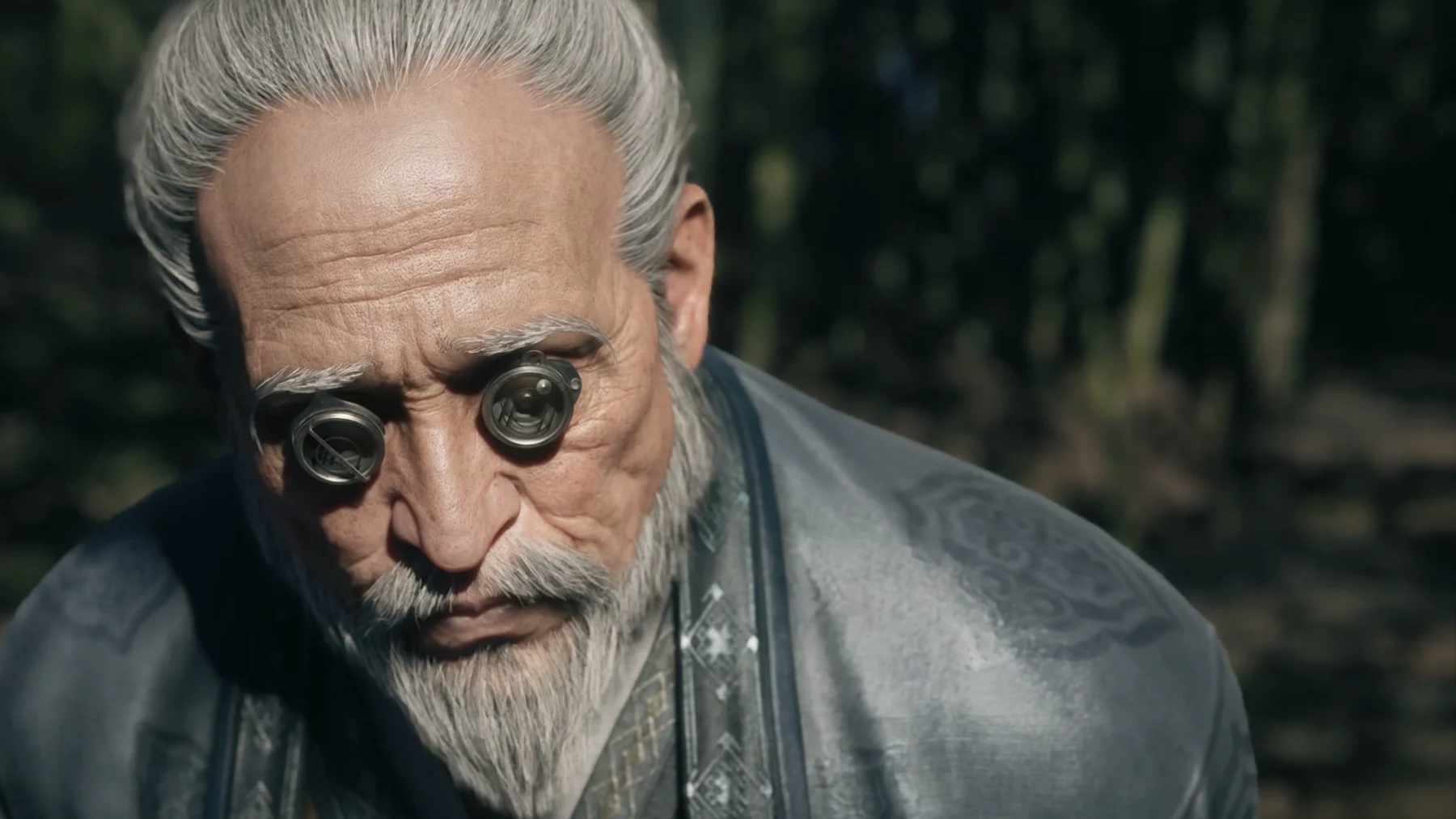
Yen’s best screen fights are not memorable because every movement is maximal. They use contrast. A character can look economical for several seconds, then end the exchange with frightening acceleration. The face and shoulders often reveal intention before the strike. That is exactly the discipline a game about extravagant weapons needs. Without restraint, every enemy becomes visual noise.
Mó Yuan’s mechanical eyepieces also place the collaboration inside the game’s central tension. The visible technology is not separate from the actor’s face; it interrupts it. The character design asks whether machinery extends perception or damages the person doing the seeing. That is a better use of a star than recreating one famous pose and moving on.
The honest boundary is important: the credit proves Yen’s stated role and performance capture, not that he personally designed every move, system or encounter. The article does not turn a collaboration into sole authorship.
Folk horror gives the blades something to fear
Many action games make horror a texture: darker corridors, louder music, more teeth. Phantom Blade Zero becomes more specific when horror enters ordinary relationships and recognizably human bodies.
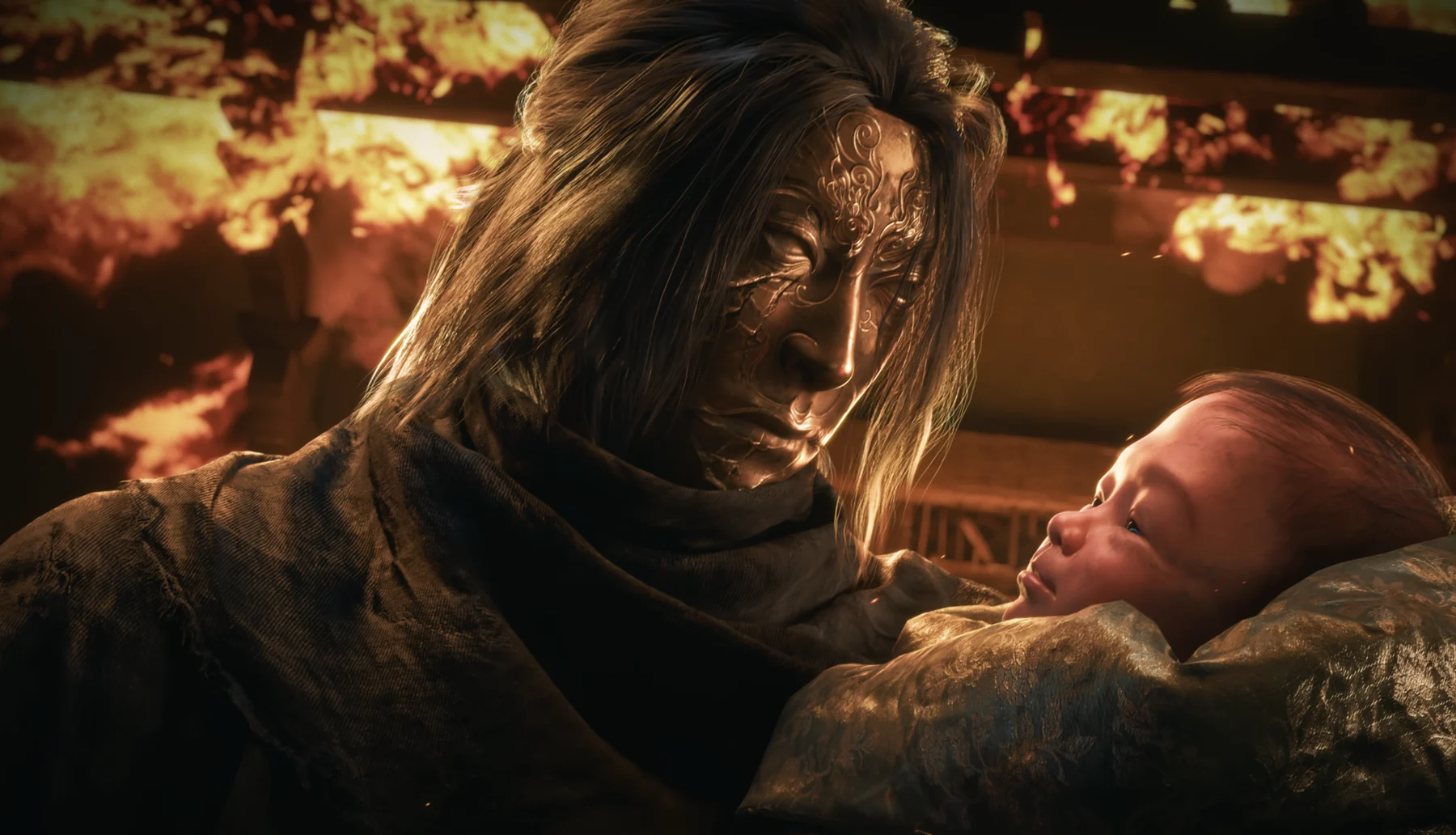
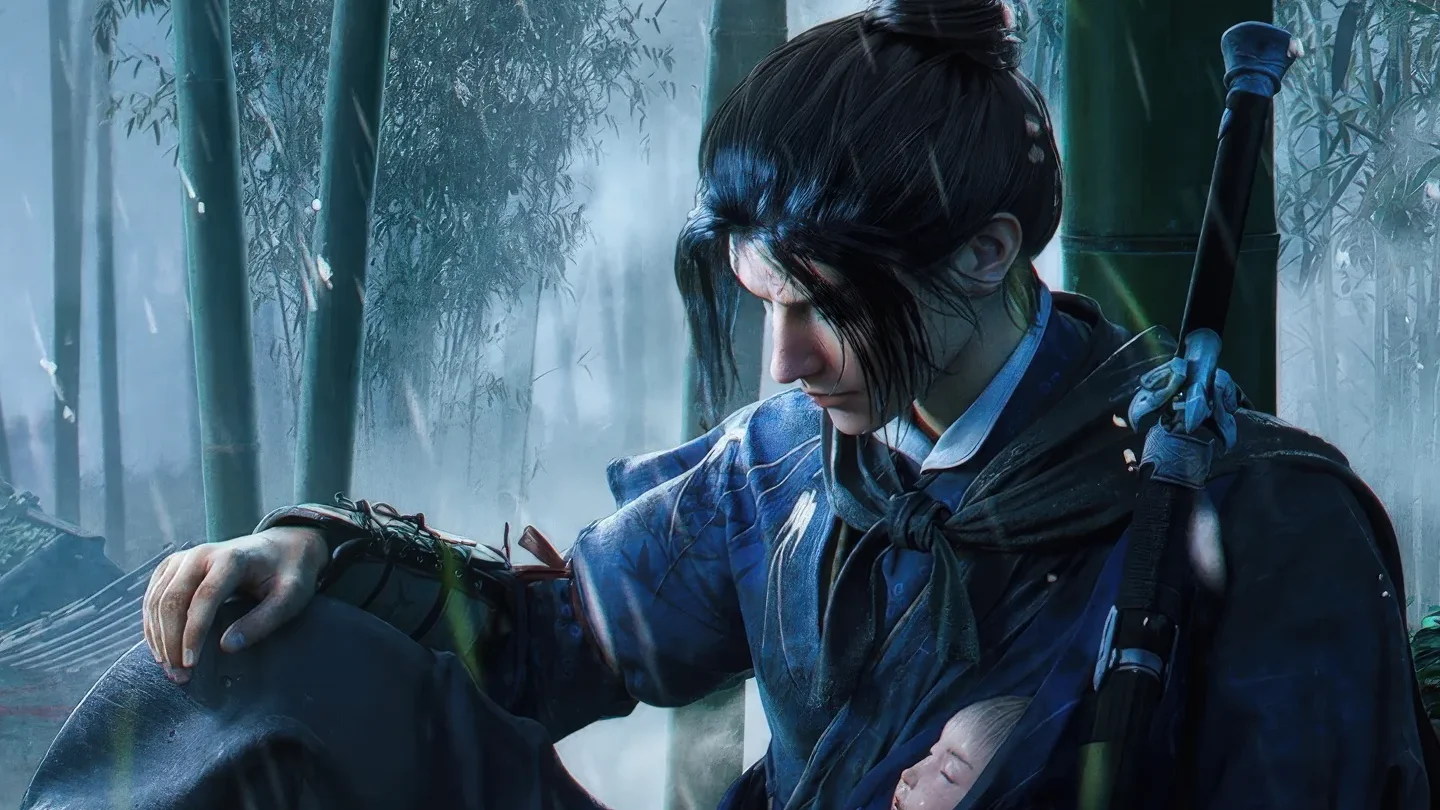
An armed monster is an obvious problem. A masked adult holding an infant is harder. The scene combines threat and care in one frame, forcing the viewer to delay judgment. Who is protecting whom? Is the mask hiding illness, identity or transformation? The image does not answer those questions, and that uncertainty is precisely its visual job.
Chinese folk horror often becomes powerful through damaged domestic order: an ancestral duty that will not stay buried, a body made wrong by a promise, a familiar ritual performed with one disturbing substitution. It does not need an encyclopedia of folklore in every room. It needs a rule the characters understand before the player does.
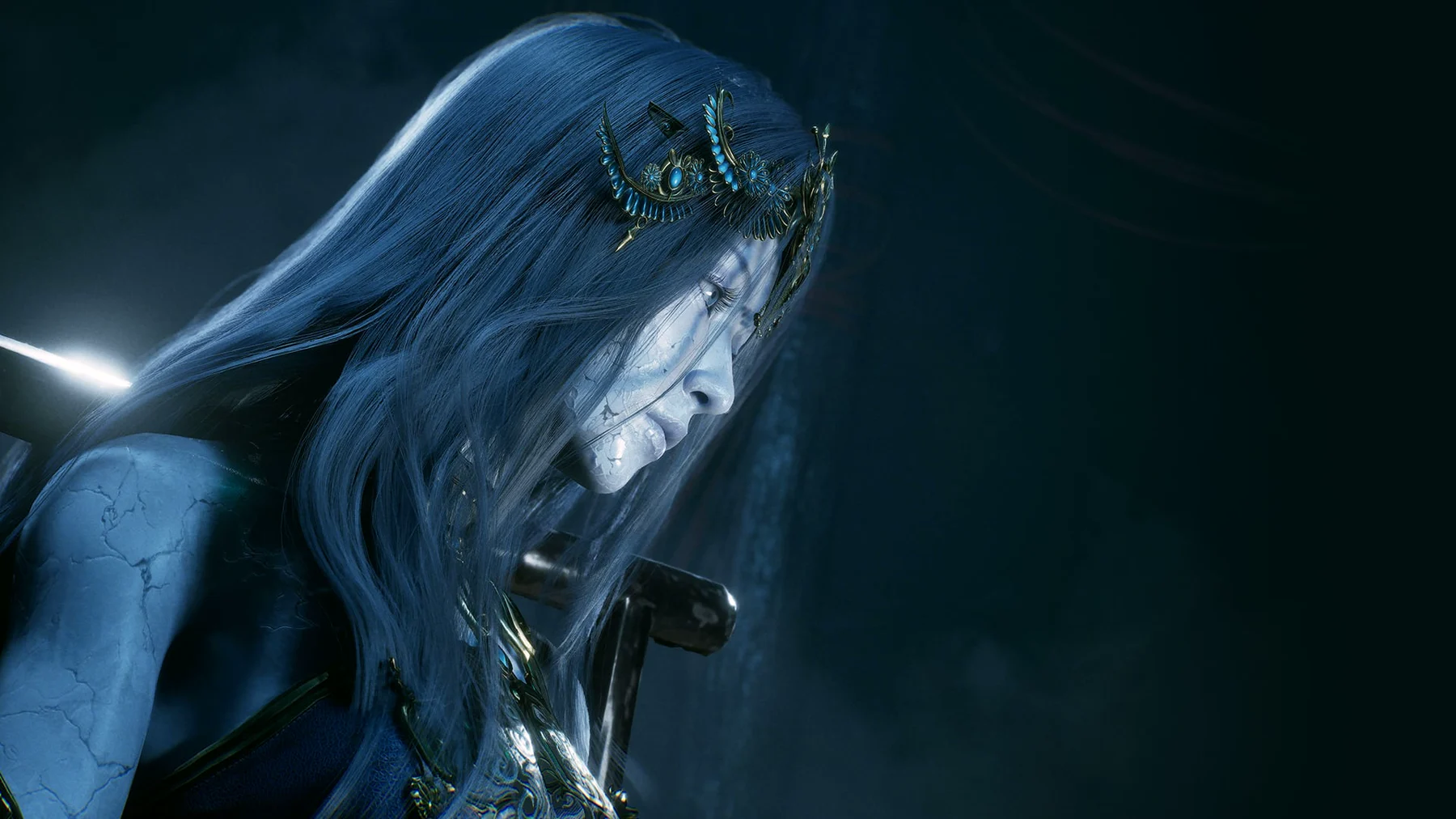
The cracked face pushes that logic further. The person is still visible beneath the alteration. That is more disturbing than a generic creature because the design asks the player to recognize continuity: this was, or may still be, someone. The best monsters in this world should not merely block the path. They should make Soul wonder which institution, technique or loyalty produced them.
Is Phantom Blade Zero really wuxia?
Yes, but not because it has swords, robes and tiled roofs. Those are identifiers, not proof.
A work becomes wuxia when martial ability places a person inside a network of obligation: master and student, killer and victim, clan and exile, promise and revenge, private justice and public order. The hero is not free simply because he can defeat everyone. His skill makes more demands on him.
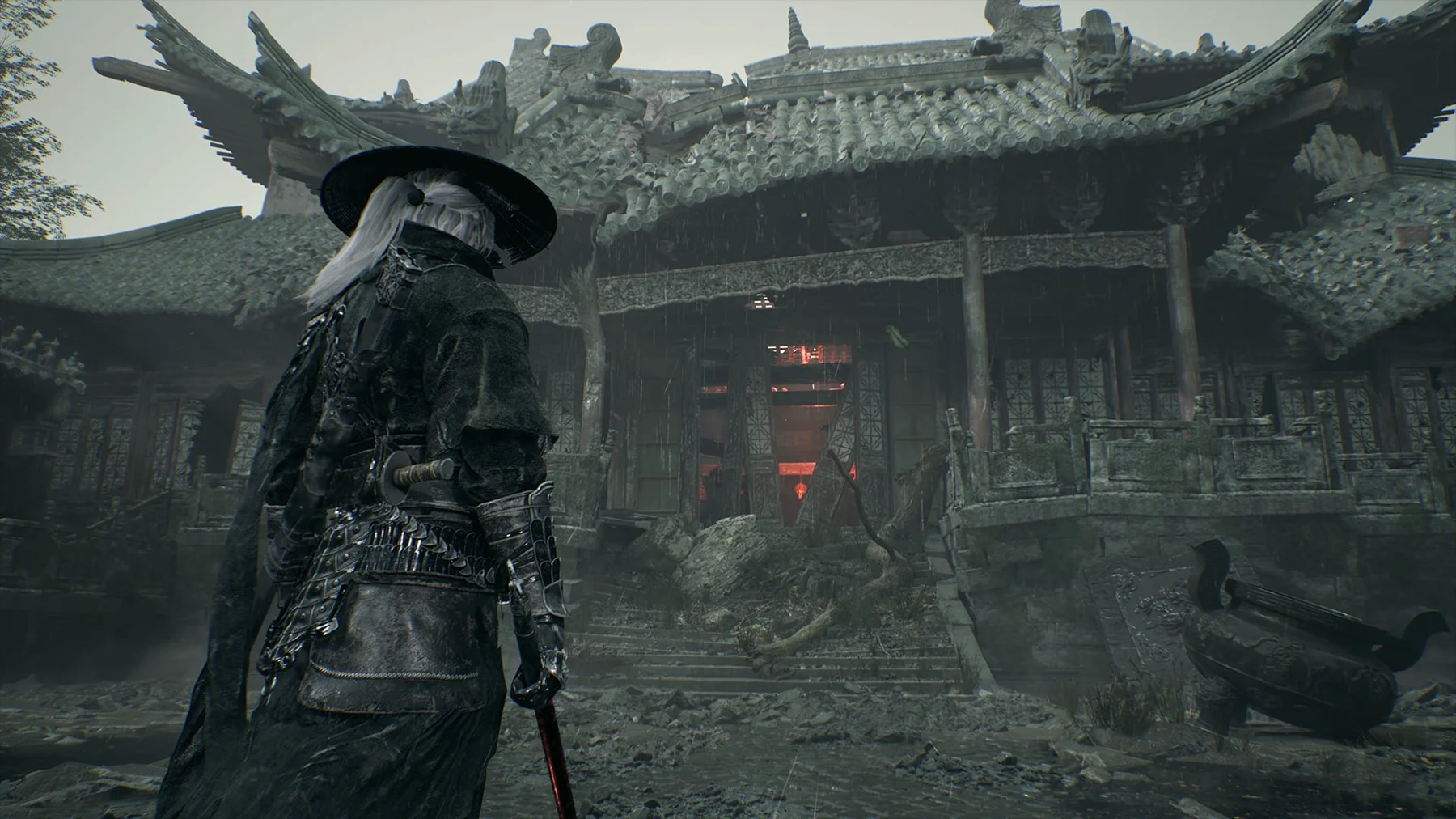
Architecture helps when it carries those demands. A ruined temple is not automatically Chinese depth. It matters if the building still contains someone’s authority, memory, debt or abandoned rule. I want this game to make each beautiful threshold costly. Entering should mean accepting another problem, not merely loading another arena.
The genre boundary becomes clearer beside other games. NARAKA: BLADEPOINT translates martial bodies into competitive readability but compresses long social obligations. Where Winds Meet gives the jianghu more room to become daily life. Phantom Blade Zero chooses concentration: a directed hero, dense encounters and a world in which bodies show the damage of power.
That is a valid form of wuxia. It resembles the severe, stylized end of the tradition more than a leisurely Jin Yong journey. Readers who want the broader cultural definition can use our guide to what wuxia means; readers who want to see choreography carrying ethics on film should continue to Hero.
The world is beautiful, but beauty must create orientation
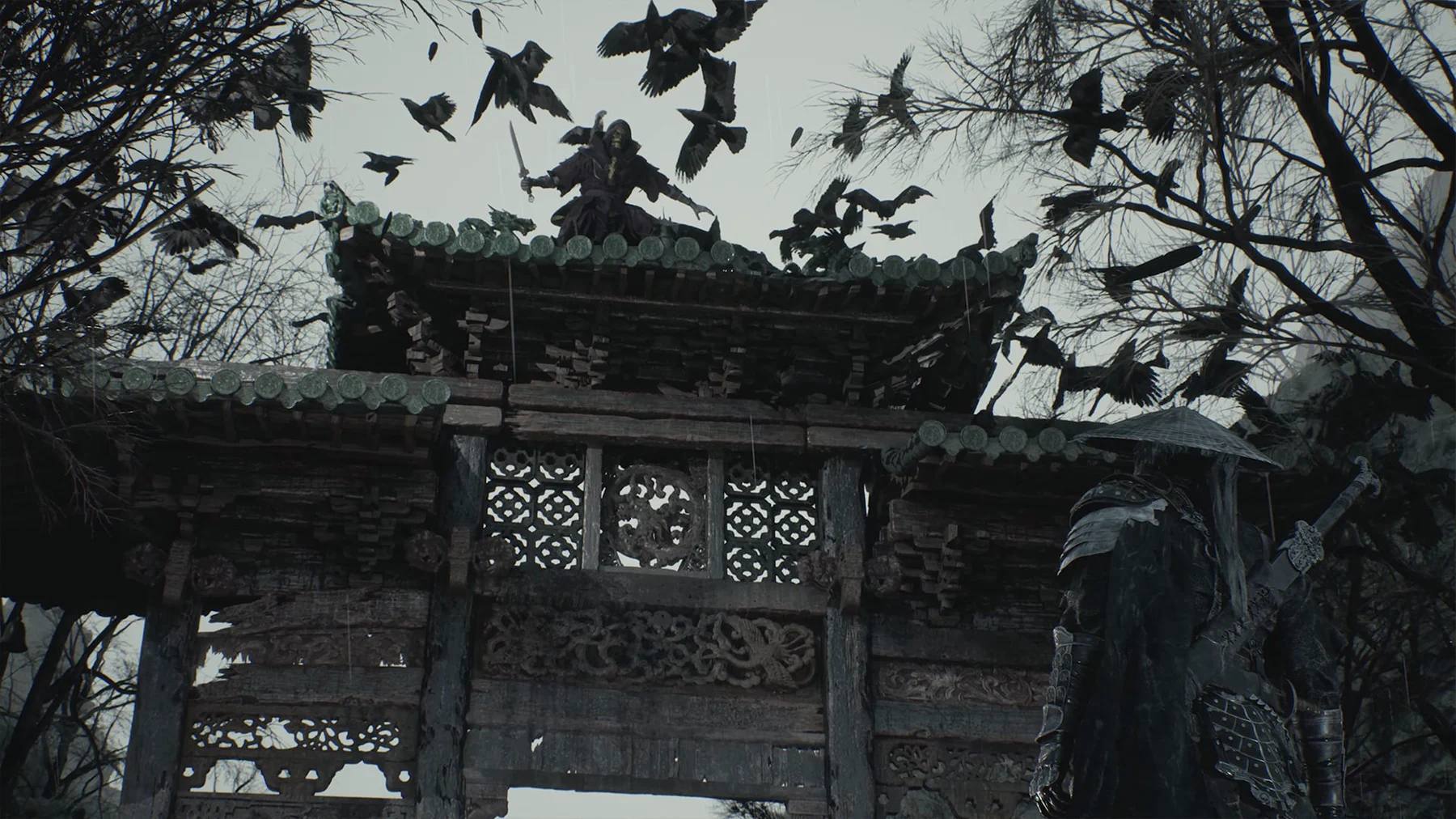
The official media is exceptionally controlled: gates, poles, temples, cliffs, crows, ash, red thread. The danger is that a sequence of perfect images can make places interchangeable.
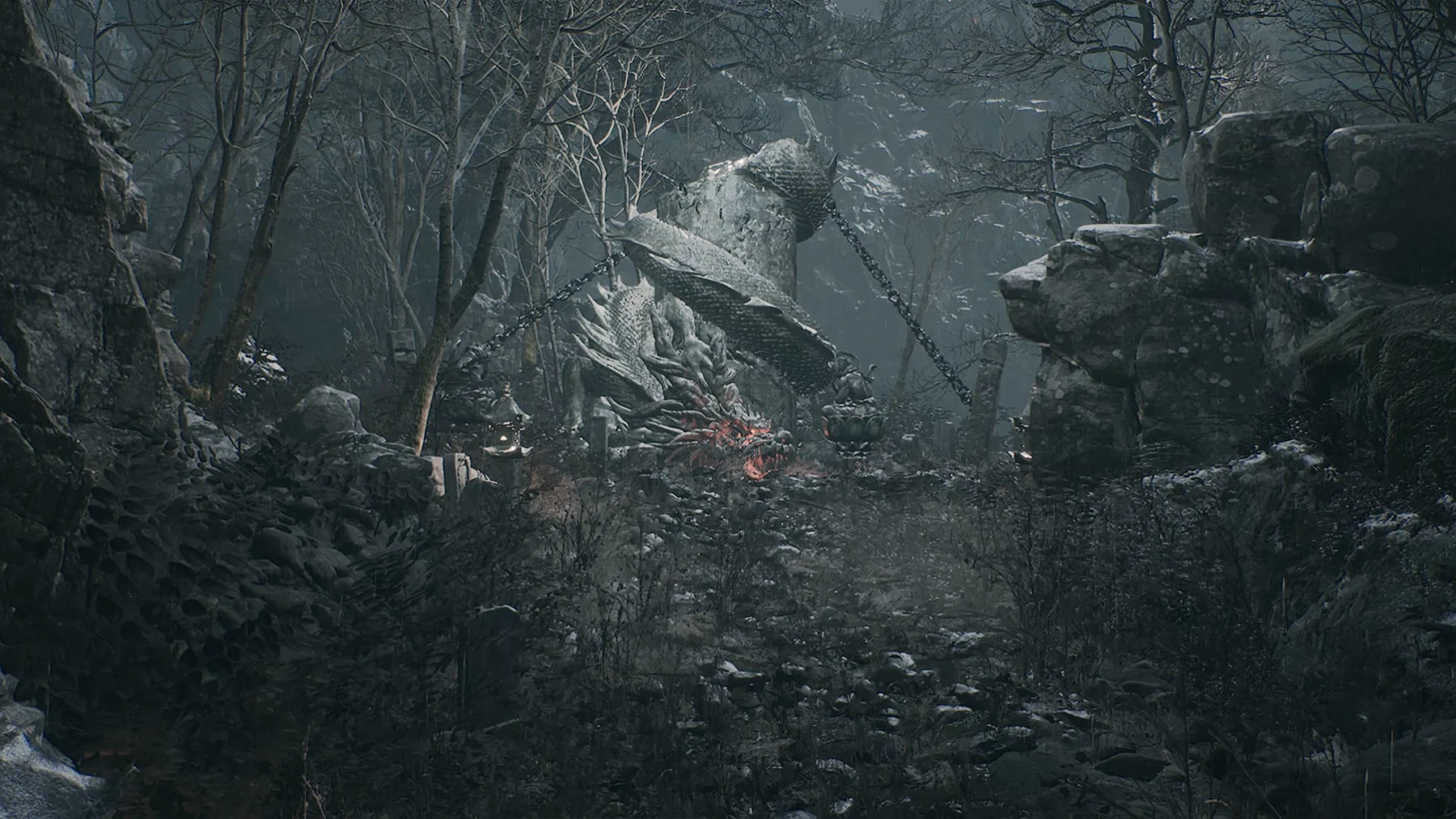
A landmark should do more than prove scale. It should help the player understand who built here, what power the place announces and how to return. The dragon pole above is visually specific enough to become orientation. If the surrounding route, faction and conflict reinforce that identity, the world will feel authored. If every landmark only introduces a boss, the environment will become a portfolio.
This is where a directed game has an advantage over a giant open world. It can control approach. The same gate can first appear as shelter, later as a trap and finally as evidence. A path can tighten before a duel. A distant structure can keep a destination in the player’s mind for an hour. The smaller promise allows sharper composition.
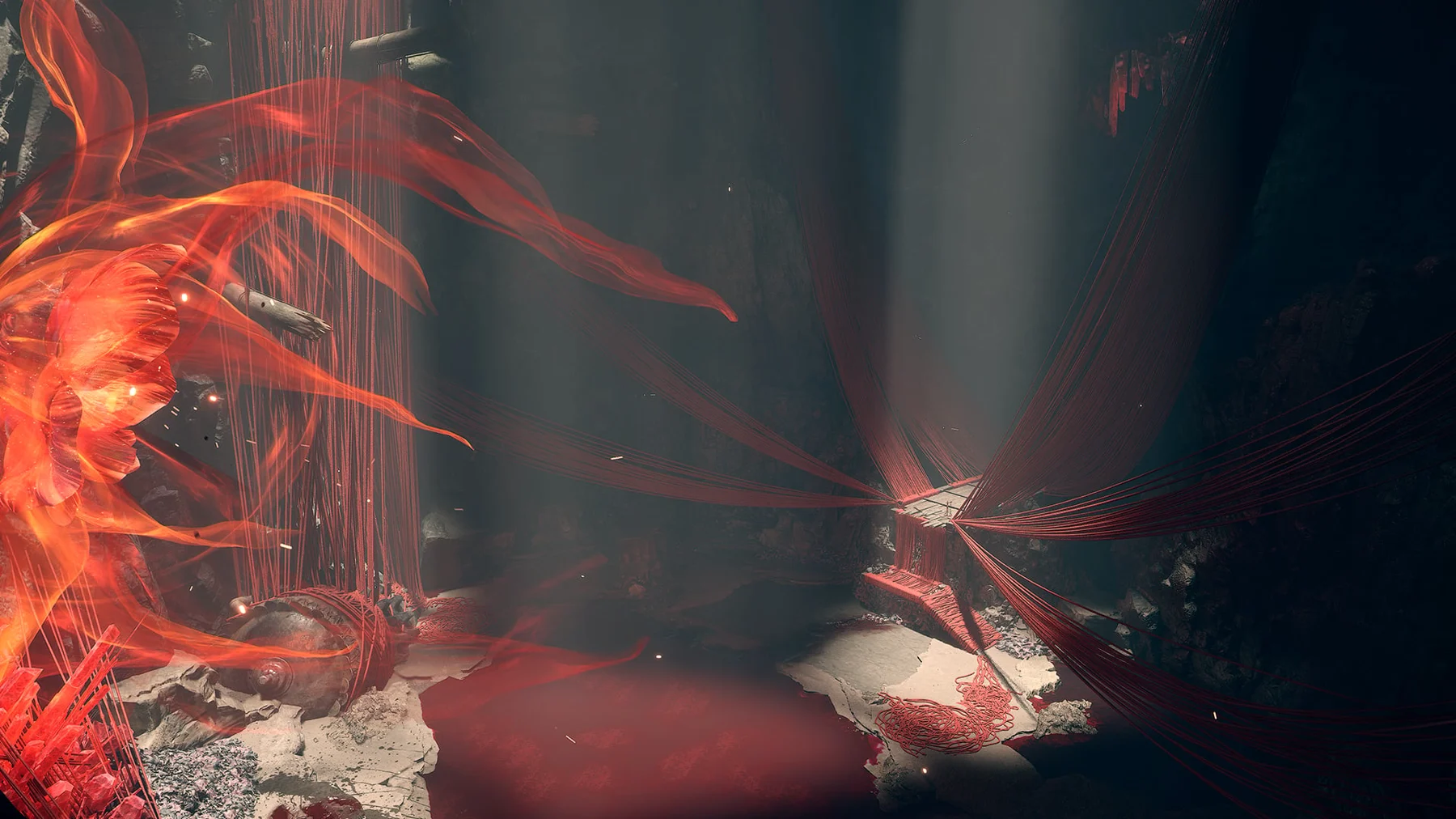
The red-thread image is almost abstract, but it earns a place because it shows how the game separates memory or nightmare from ordinary geography. It cannot prove what the thread means. It does prove that the visual language is willing to become nonliteral. The story must now make that abstraction emotionally precise.
Who should buy it now—and who should wait?
As of November 4, 2026, Phantom Blade Zero is newly released after its October 29 launch. S-GAME lists it for PlayStation 5, Steam and Epic Games Store. That timing creates one unavoidable limit: launch-week enthusiasm, storefront reviews and technical reports are still moving. A responsible page should not pretend six days is enough to settle lifetime reputation.
Buy it now if all four of these sound like your game:
- You want a single-player action campaign with authored encounters rather than an endless service loop.
- You enjoy parry and dodge timing, but want weapon variety and martial choreography to shape the rhythm.
- You are interested in wuxia that tolerates horror, machines and bodily transformation.
- You can accept that the game’s greatest strength may be direction rather than total freedom.
Wait if platform performance reports, patches or a discount determine your purchase. Also wait if you need a broad role-playing simulation with many social identities. The game’s official global demo tour reached more than 12,000 participants, which establishes international hands-on interest, not universal satisfaction or a final quality score.
My verdict: Phantom Blade Zero should be judged by what survives the parry
The most impressive move is not automatically the most important one. A perfect counter can sell a trailer. A character who remains in your mind after the blades stop can define a work.
That is my standard for Phantom Blade Zero. Kungfupunk is convincing when it turns altered bodies and impossible weapons into questions about discipline, inheritance and cost. Donnie Yen’s involvement matters when motion becomes character rather than decoration. Folk horror matters when it damages a relationship, not merely a face.
Begin with the game if you want a concentrated new doorway into Chinese action design. Then pay attention to what the camera shows immediately after a fight. Who was protected? What promise became harder? Which victory made the hero less free? If the game keeps answering those questions, it is not wuxia despite its punk machinery. It is wuxia because that machinery makes the old moral pressure newly visible.
For a broader starting route, compare it with the other globally known wuxia games rather than forcing every Chinese action title into one ranking.
For the wider context beyond wuxia, return to East Moment’s Chinese games guide, where each title is organized by the question it answers rather than by nationality alone.