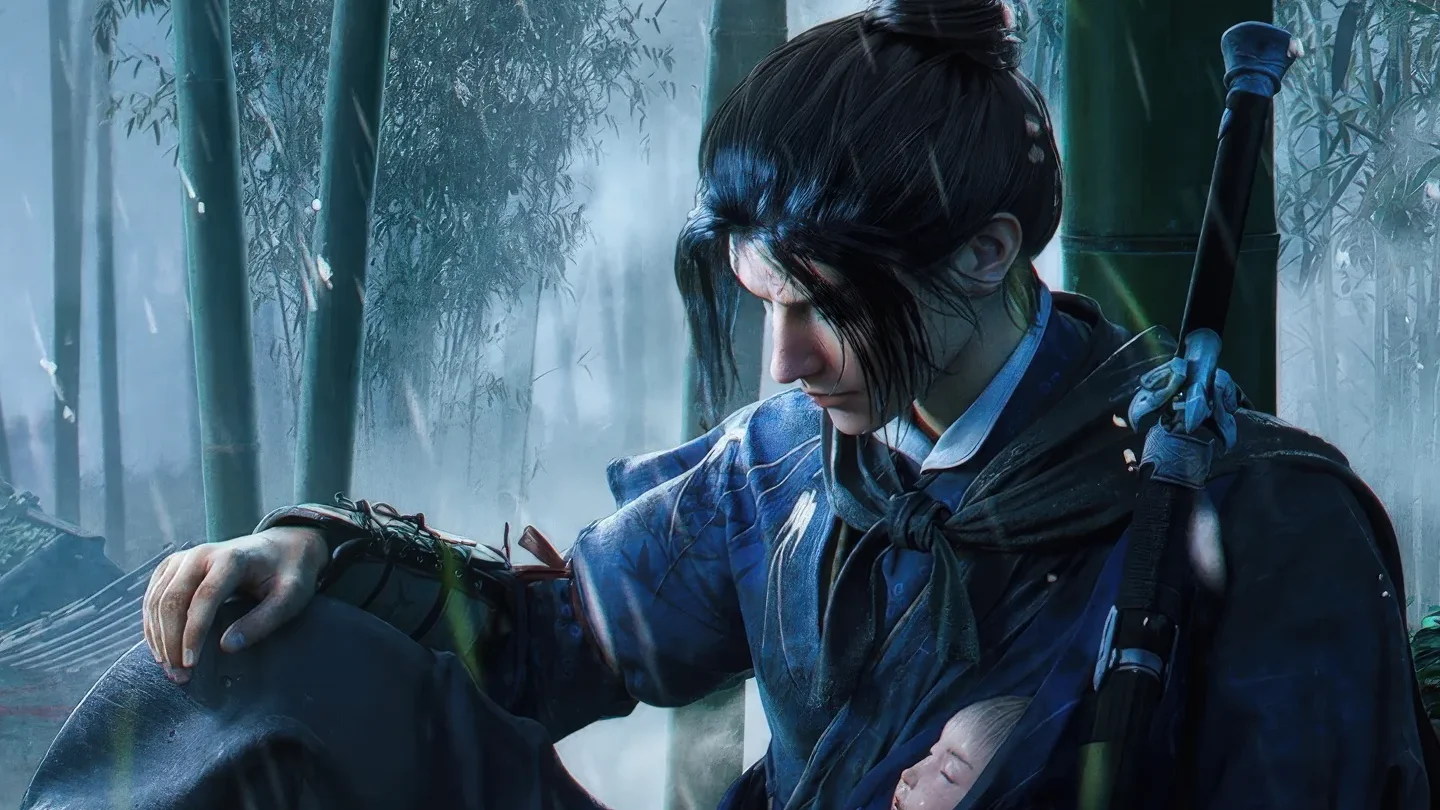
If you want the Chinese wuxia game with the clearest global footprint right now, begin with Where Winds Meet. If you want proven international competitive reach, choose NARAKA: BLADEPOINT. If you want prestige action choreography, Phantom Blade Zero is the new gateway. Wandering Sword is the smaller, quieter recommendation for players who would rather read a jianghu than conquer one.
That is a different answer from a list of every game wearing robes and carrying a sword. Global reach and genre purity are not the same axis. A title can be intensely wuxia and barely known outside a niche. Another can reach tens of millions by turning martial movement into a battle royale. I am not ranking market size and cultural depth as if they were interchangeable.
My test is simple: did the game give players outside China a meaningful doorway into wuxia, and what did they find on the other side? The strongest answers do not all look alike. Where Winds Meet turns wuxia into a place to inhabit. NARAKA turns it into globally legible competitive movement. Phantom Blade Zero turns choreography into a prestige action spectacle. Wandering Sword preserves the relationship-led jianghu for players who prefer intimacy to scale.
The wuxia games that reached the world did it through different doors
| Game | Evidence of global reach | What kind of wuxia it offers | Best place to start if you want… |
|---|---|---|---|
| Where Winds Meet | Worldwide PC and PS5 launch in November 2025; NetEase and Everstone later announced more than 100 million cumulative players across Chinese and global versions | Open-world wandering, historical texture, social encounters and extravagant martial skills | The broadest contemporary gateway into a lived jianghu |
| NARAKA: BLADEPOINT | Six million paid copies reported in 2021; publisher announcement of 40 million players after the free-to-play transition in 2023; continuing global esports and updates | Weapon duels, counters, aerial movement and Chinese martial-fantasy heroes inside competitive survival | A globally established multiplayer game where the body sells the fantasy |
| Phantom Blade Zero | Worldwide reveal, multilingual release on PS5, Steam and Epic, a global demo tour with more than 12,000 participants, and an October 29, 2026 release | Dark wuxia, folk horror and tightly authored action choreography | A new, visually ambitious single-player action spectacle |
| Wandering Sword | International PC release with English support and a durable overseas cult audience, but no comparable mass-market player claim | Companions, martial lineages and a relationship-led journey | A quieter single-player RPG where conversation carries weight |
The Where Winds Meet total requires a caveat. Reporting says it is cumulative and includes the earlier Chinese service as well as later global PC, console and mobile versions; NetEase did not publish a platform breakdown or an active-user definition. It still demonstrates scale, but it is not a claim that 100 million people were playing at once. The same care applies to NARAKA: 40 million means people who had joined by the publisher’s count after free-to-play, not the size of this week’s active population.
That distinction is useful rather than pedantic. A number can prove reach. It cannot prove that a game understands xia, the moral dimension of the martial hero. For that, the design itself has to speak.
Where Winds Meet is the strongest open-world gateway
Where Winds Meet is the obvious lead because it gives international players a large, current and explicitly wuxia world rather than asking them to translate the genre from a side system. Everstone sets the game in tenth-century China during the Five Dynasties and Ten Kingdoms period. The publisher's global launch announcement put the same basic proposition on mainstream PC and PlayStation storefronts: become a wandering sword master and decide how to move through a fractured world.
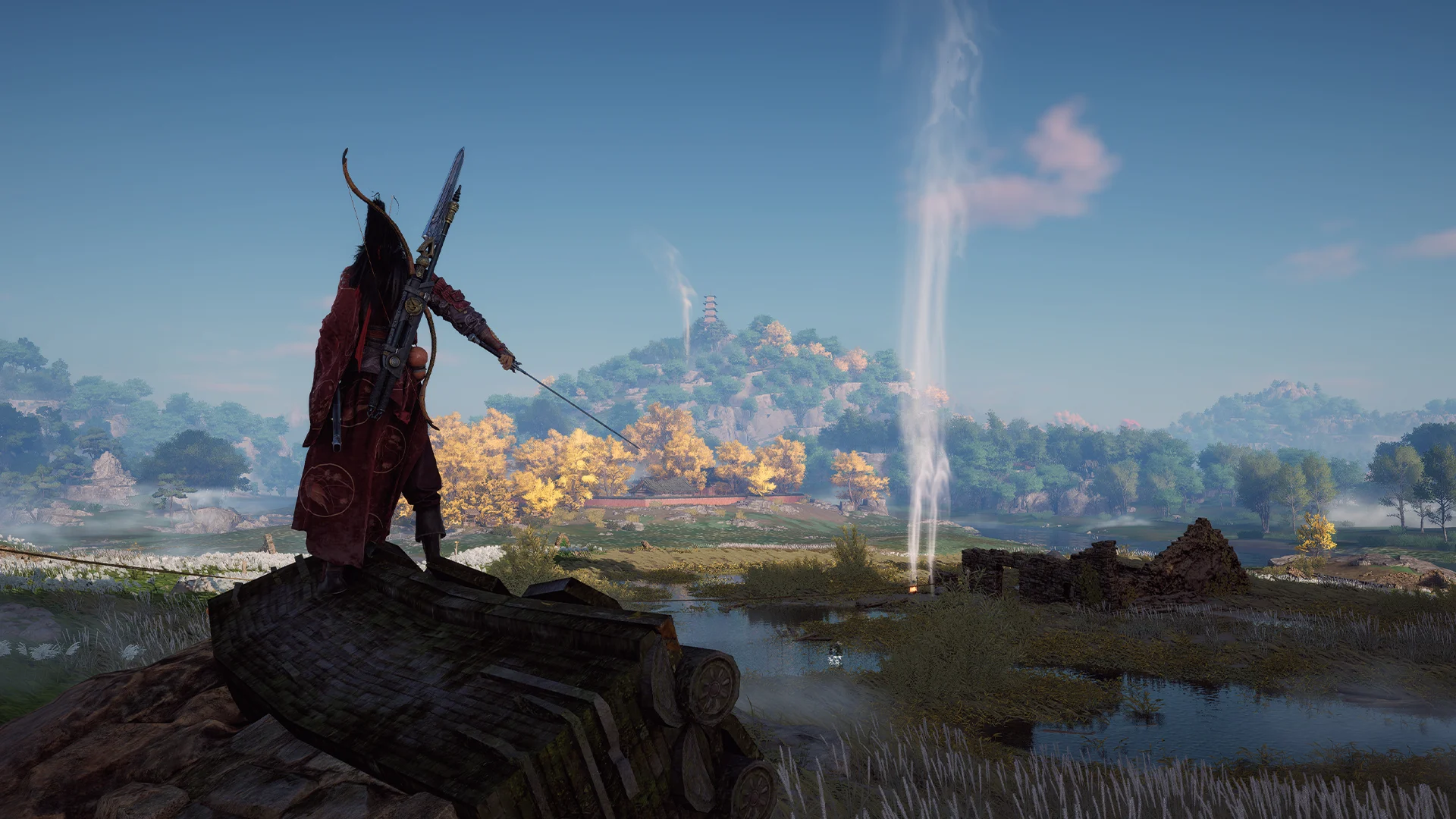
The attraction is not merely acreage. A convincing jianghu needs roads, settlements, occupations, gossip, illness, performance, crime, institutions and people who were already busy before the hero arrived. The hero image shows the scale of the invitation, but a wide view only becomes a world when the road leads to other lives. The strongest moments in this kind of game happen when movement slows long enough for another person’s problem to interrupt the fantasy of limitless freedom.
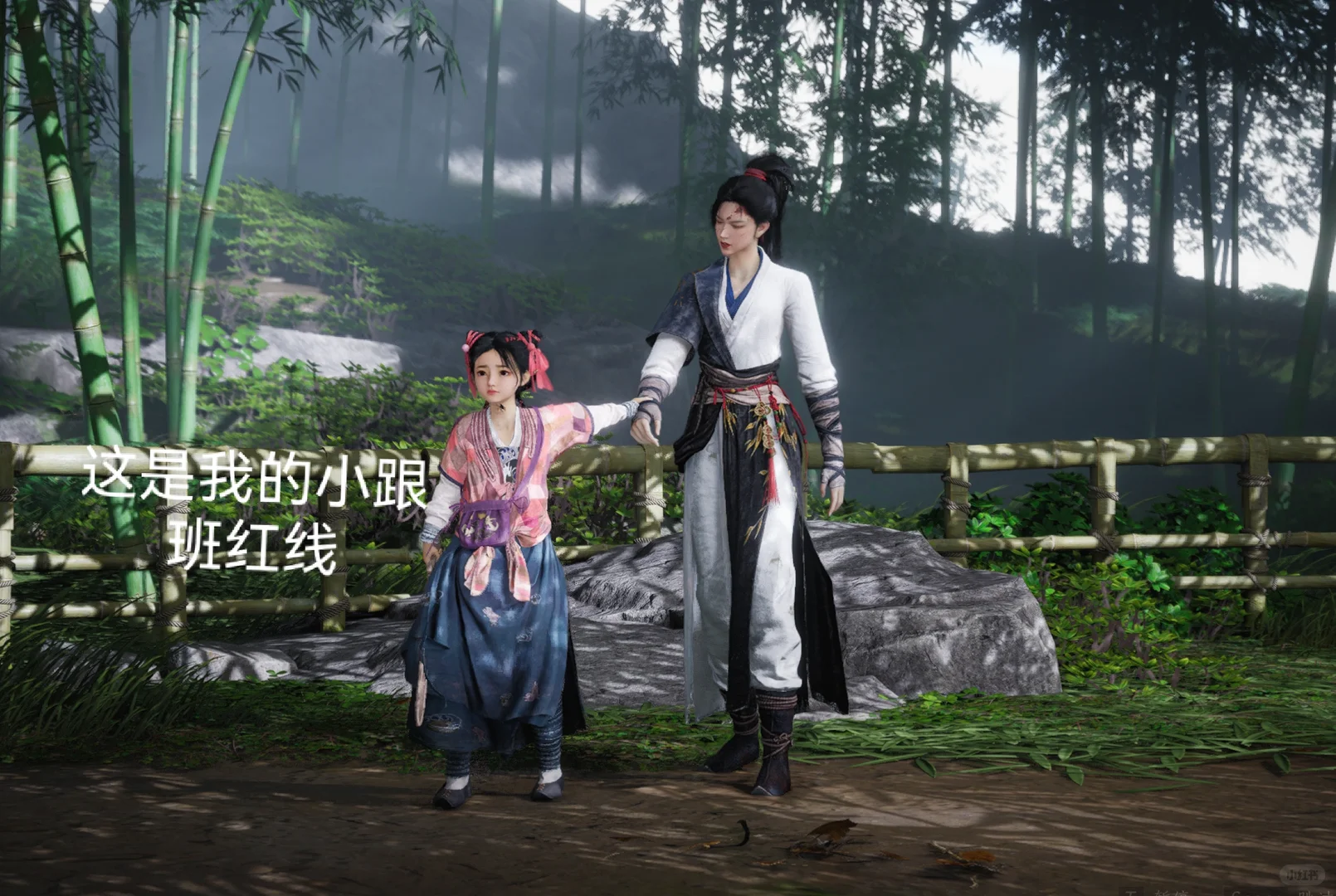
A child beside an armed wanderer changes the heroic silhouette: power now has somebody vulnerable standing next to it. The image proves the scene stages companionship, not that every quest remembers it equally well.
The game also understands that wuxia movement must feel slightly impossible. Rooftops, walls and water are invitations. Fans, umbrellas, spears and stranger techniques let the player treat the environment as part of the martial vocabulary. This is where the game travels especially well: you do not need to know a sect genealogy to enjoy a body refusing ordinary gravity.
Yet the broad gateway has a cost. Live-service menus, currencies and recurring activity can compete with the romance of wandering. The open world can also accumulate so many diversions that a personal obligation feels like one icon among fifty. That does not cancel the game’s achievement. It explains whom I would send elsewhere. Choose Where Winds Meet when you want one large world that teaches wuxia through place, motion and incident. Read our dedicated Where Winds Meet guide when you want the historical frame, cities and movement systems in more detail.
NARAKA: BLADEPOINT made wuxia movement internationally competitive
NARAKA: BLADEPOINT has the longest proven global reach in this group. It appeared at The Game Awards in 2019 as an internationally aimed melee title, sold millions while it was paid, then grew again after becoming free-to-play. Its importance is not that a battle royale represents the whole of wuxia. It plainly does not. Its importance is that it taught a global competitive audience to read Chinese martial-fantasy movement at match speed.
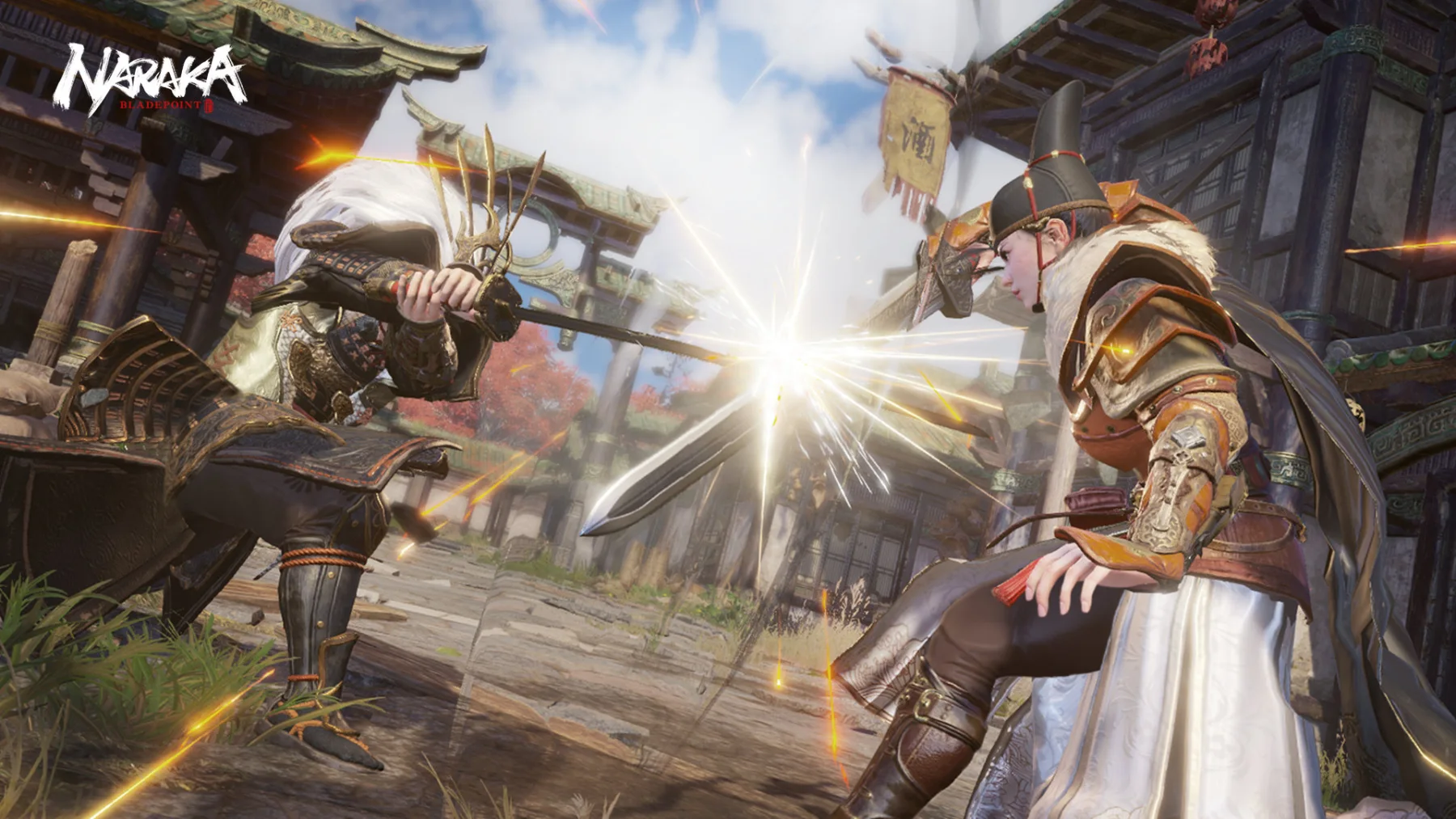
The official screenshot captures the game’s clearest promise: close-range weapons, a readable clash and architecture that keeps the duel inside a Chinese visual world. It cannot tell us who won or whether the combat remains balanced.
Most battle royales make distance a problem for guns. NARAKA makes distance a martial argument. Grappling, climbing, aerial pursuit, dodging, counters and weapon reach decide whether a player can force a duel on favorable terms. The parry is especially important. A red flash, a counter and the possibility of losing a weapon turn combat into anticipation rather than damage trading. Wuxia cinema has always made timing reveal character; NARAKA translates part of that pleasure into a system another player can punish.
Its heroes also carry recognizable Chinese references without behaving like a museum display. A fan can be a weapon. A poised hand form can sit beside supernatural abilities, elaborate costumes and the visual exaggeration of online competition.
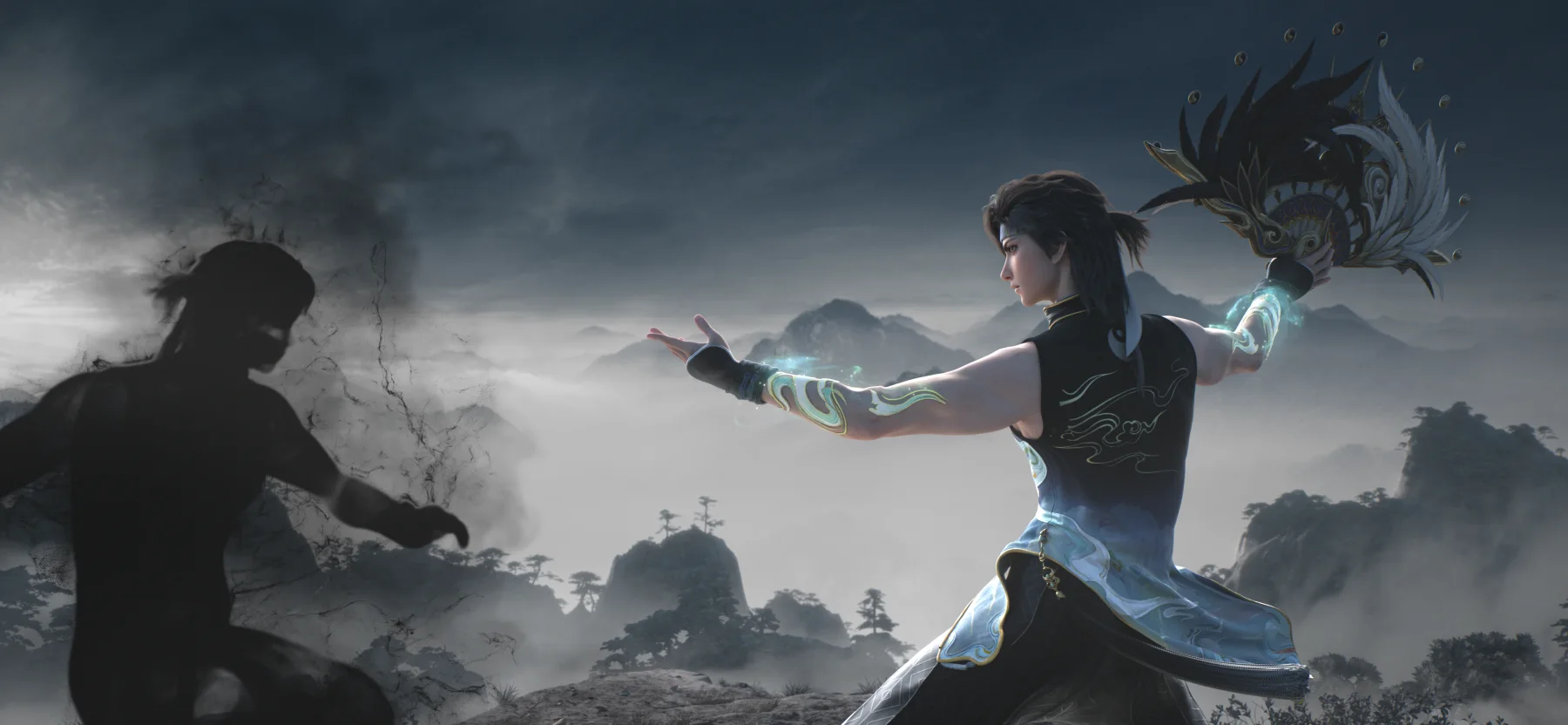
This official media image shows how the game borrows the balance, circularity and controlled silhouette associated with Chinese martial performance. It does not prove that the depicted form follows one complete traditional routine.
I would not recommend NARAKA as the best explanation of jianghu society. A match cannot give every teacher, debt and faction the slow development of a novel. It compresses martial identity into bodies, weapons, teams and survival. That compression is exactly why it travelled. Choose it when you want competitive mastery and can accept a steeper skill curve. Do not choose it expecting the contemplative rhythm of a Jin Yong adaptation.
Phantom Blade Zero turns wuxia choreography into a global event
Phantom Blade Zero arrived on October 29, 2026, so any verdict pretending to possess years of hindsight would be false. Its global visibility, however, is no longer speculative. S-GAME's official world-tour record says a playable demo passed through major international shows and reached more than 12,000 participants; the game then launched in numerous languages through PlayStation, Steam and Epic. The official description is unusually honest about its mixture: traditional wuxia, fantasy and folk horror, shaped into what the studio calls “kungfupunk.”
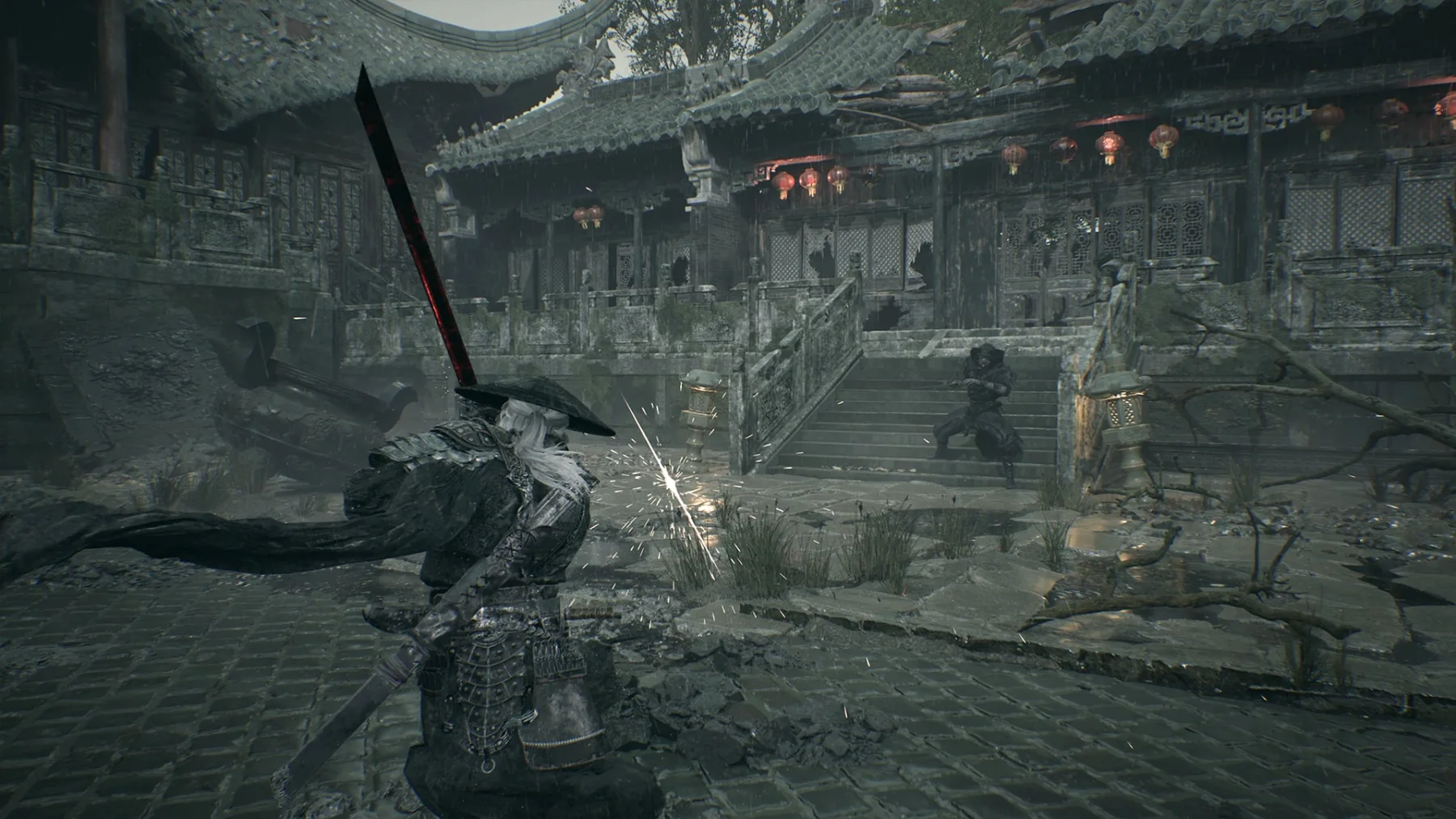
The official screenshot shows an encounter built around stance, distance and multiple threats inside a ruined courtyard. It proves the authored combat composition, not the difficulty or quality of the full campaign.
The game’s strongest export is choreography. It allows two main weapons and two “Phantom Edges,” then builds reactive parries, dodges and executions around a fast but readable silhouette. That is not simply speed. Good wuxia action creates a sentence: approach, feint, refusal, reversal, consequence. The audience understands the relation between fighters even when nobody explains the technique’s name.
S-GAME’s choice of Donnie Yen as creative consultant and as the performance actor for Mó Yuan makes sense in that context. Yen’s international screen career connects Hong Kong action grammar to a global audience already trained to notice rhythm, impact and bodily intention. His involvement is not proof that every encounter succeeds. It is evidence that the studio treated action design as authorship rather than decoration.
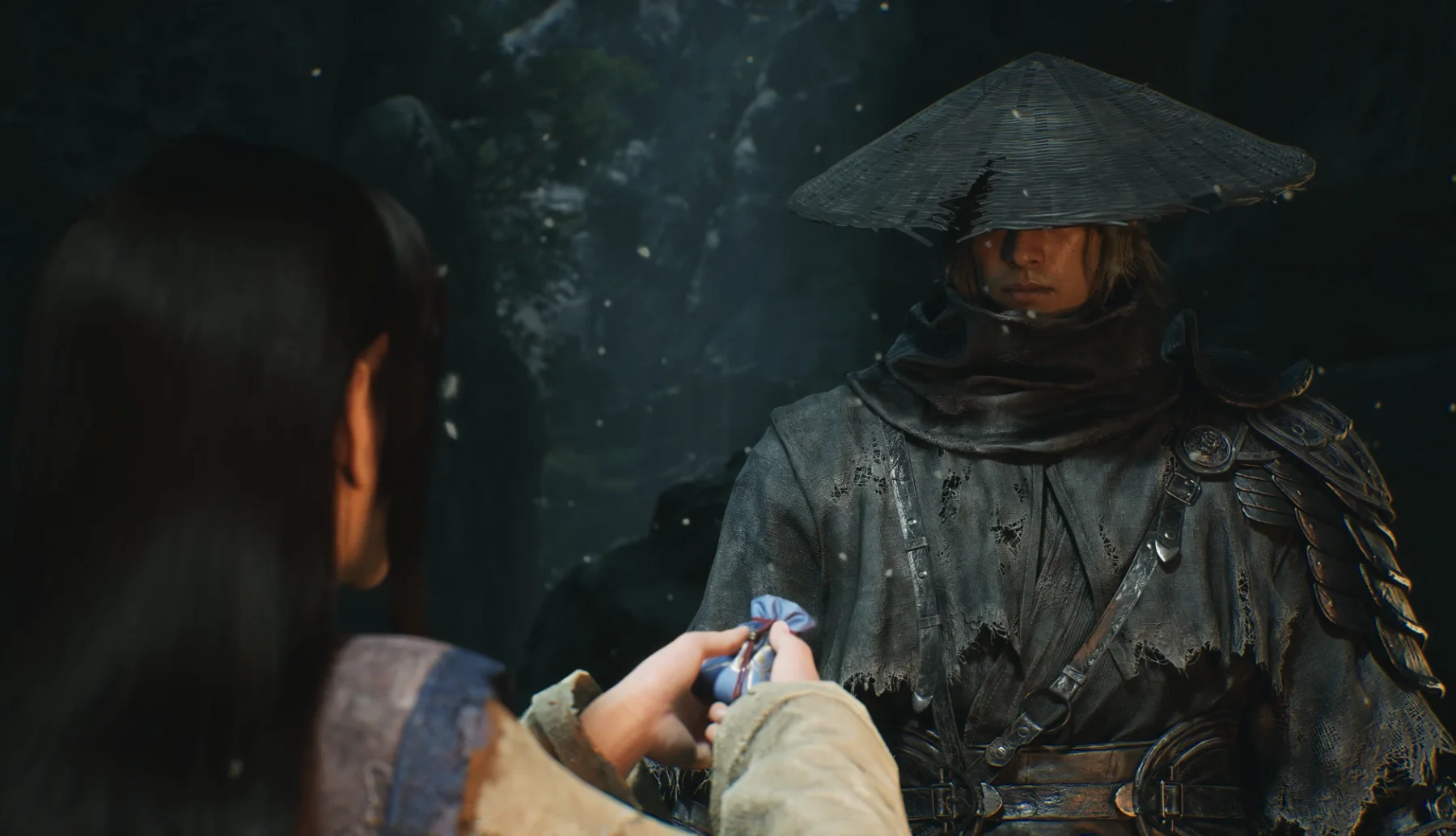
This official story still gives the armed protagonist a human-scale exchange instead of another execution pose. The object and relationship are visible; their narrative meaning is deliberately not inferred.
That second image matters because a martial hero needs something beyond technique. If every scene exists only to deliver another target, the game becomes stylish combat rather than wuxia drama. The question for Phantom Blade Zero is whether its people, loyalties and losses remain as memorable as its parries. Choose it for a directed single-player journey and high-end action spectacle. Its release is too recent for this page to present publisher-free lifetime totals as settled evidence; the official international rollout and demo history are enough to establish why global players know its name.
Wandering Sword is the smaller recommendation, not the global-impact equal
The earlier version of this guide gave Wandering Sword the same billing as far larger games. That was misleading. It has international admirers and English support, but it does not belong in the same reach tier as Where Winds Meet or NARAKA. I am keeping it because scale is not the only reason to recommend a game.
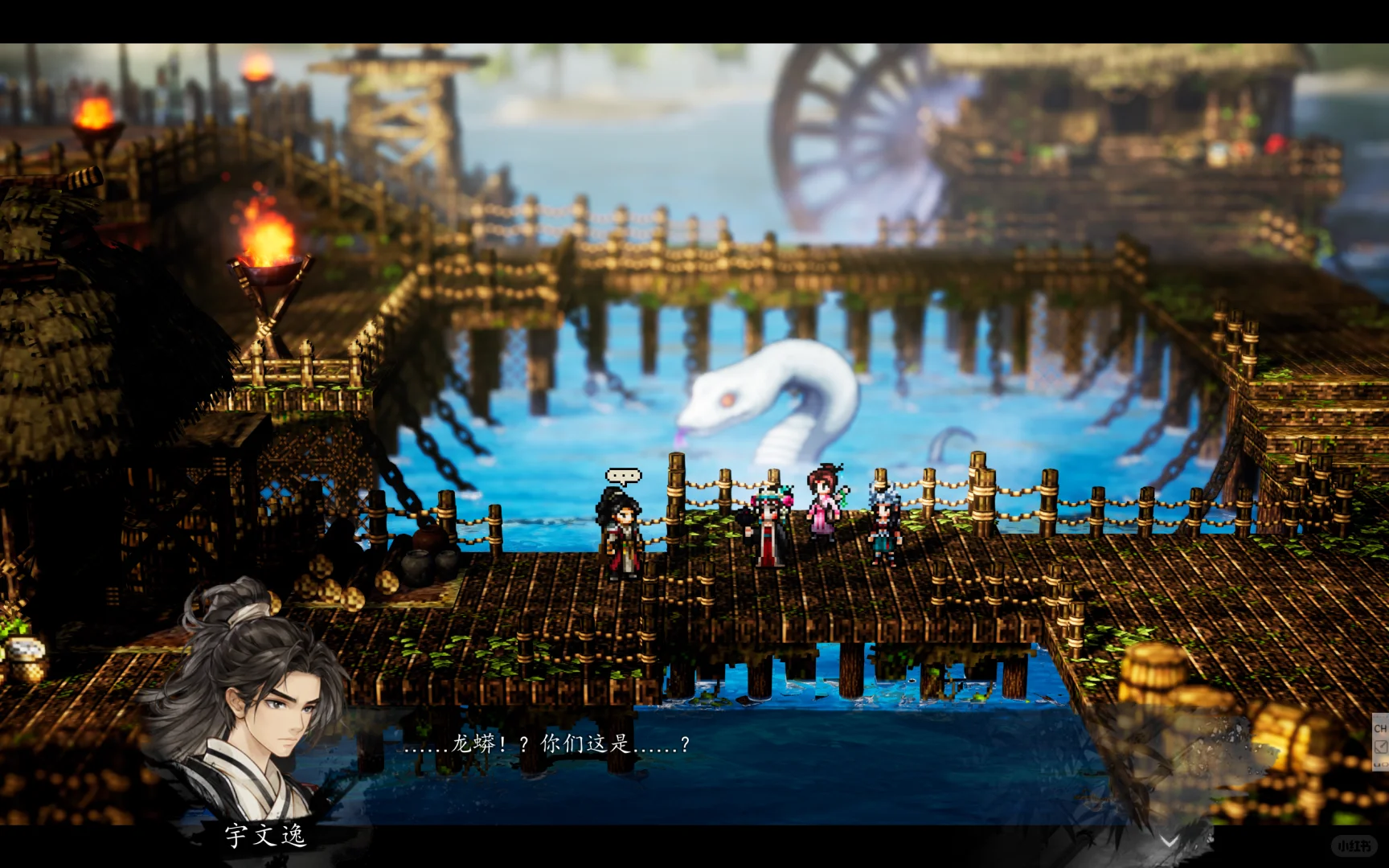
The portrait and dialogue box make conversation the center of a travel scene. They show a relationship-led presentation, not that every companion receives equal development.
Its 2.5D pixel-art landscape directs attention toward companions, martial lineages and the intervals between major fights. A portrait, a short conversation and a walk across a bridge can matter because the screen is not constantly competing for spectacle. Technique feels more meaningful when it came from a person, arrived at a particular point in the journey and altered how the protagonist belongs in the world.
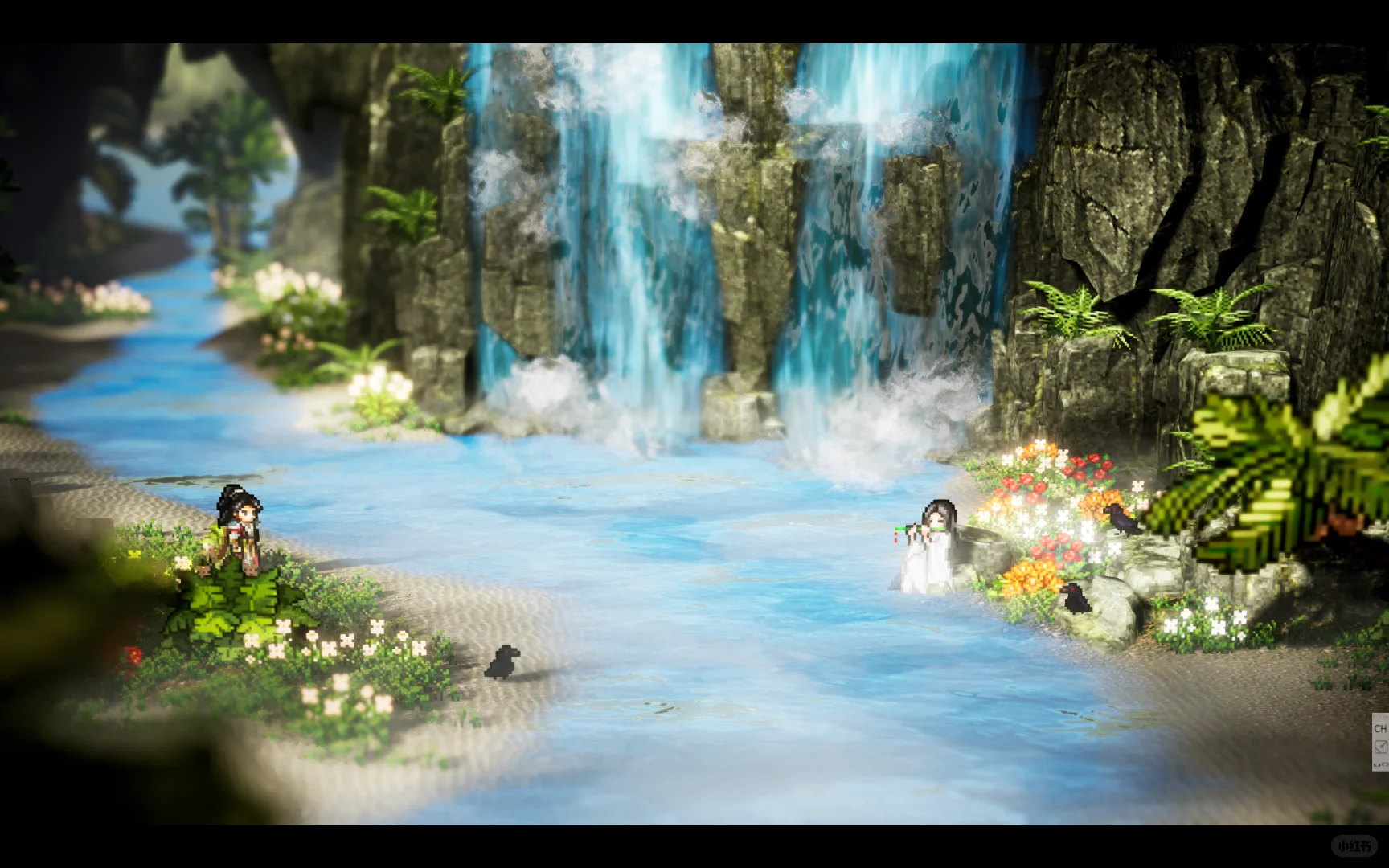
The figures remain small but legible inside a wide pixel-art landscape. The image proves the game’s visual scale, not the emotional meaning of this particular meeting.
Choose Wandering Sword when you want to read, recruit and trace relationships at a deliberate pace. It is the cult recommendation here, not evidence that overseas players know all Chinese wuxia RPGs equally well. That honesty makes the recommendation stronger.
Black Myth: Wukong is globally huge, but it is not the clean wuxia answer
This is where genre and influence must be separated. Black Myth: Wukong is one of the most globally visible Chinese games, and its staff combat can look martial. Its imaginative center is Journey to the West: gods, demons, transformations, yaoguai and mythic cosmology. Calling every Chinese action game “wuxia” erases the very cultural distinctions that make the work interesting.
Wuchang: Fallen Feathers presents a similar boundary from another direction. Its international visibility is real, and its weapons, clothing and historical fragments come from China. But dark fantasy, plague, monsters and Souls-like structure do more of the genre work than a classic jianghu of wandering heroes and social obligation.
The boundary is not a purity test. Creators mix traditions freely. It is a promise to the reader:
- Wuxia asks what a capable person owes other people inside the martial world.
- Xianxia pushes toward cultivation, spiritual hierarchy and transcendence.
- Chinese mythology brings gods, demons, legendary creatures and cosmological stories to the center.
- Martial fantasy or folk horror may borrow the body and weapons of wuxia while pursuing a darker supernatural mood.
For a fuller cultural explanation, read what wuxia actually means and then compare how a film such as Hero turns a fight into a political and moral position.
Which wuxia game should you play first?
Start with Where Winds Meet if you want the widest world and the clearest current gateway. Pick NARAKA: BLADEPOINT if competition, movement and weapon timing matter more than a long narrative. Choose Phantom Blade Zero if you want a concentrated single-player action production whose choreography carries the cultural argument. Save Wandering Sword for the moment when you want a smaller world with more room to read its people.
My own ranking of the entry points is therefore conditional:
- Best first open-world wuxia: Where Winds Meet.
- Most proven global multiplayer reach: NARAKA: BLADEPOINT.
- Strongest new prestige-action gateway: Phantom Blade Zero.
- Best quieter, relationship-led alternative: Wandering Sword.
The common thread is not bamboo, robes or the number of swords on screen. It is whether martial ability changes a relationship: between rivals, between a wanderer and a village, between teammates under pressure, or between a fighter and the promise he has not yet kept. That is where a Chinese martial-arts game begins to feel like wuxia rather than a costume set.
Use the broader Chinese games guide to compare these worlds with Chinese mythology, science fiction and competitive games. If one game gave you a sharper definition of wuxia, add that scene to the field project: name the game, describe the moment and explain what changed in your understanding.