Peking Opera: Watch the Body Before You Decode the Face
Understand Peking Opera through role types, painted faces, percussion, sleeves, weapons and empty-stage movement, then choose a first performance.
Read the deep guide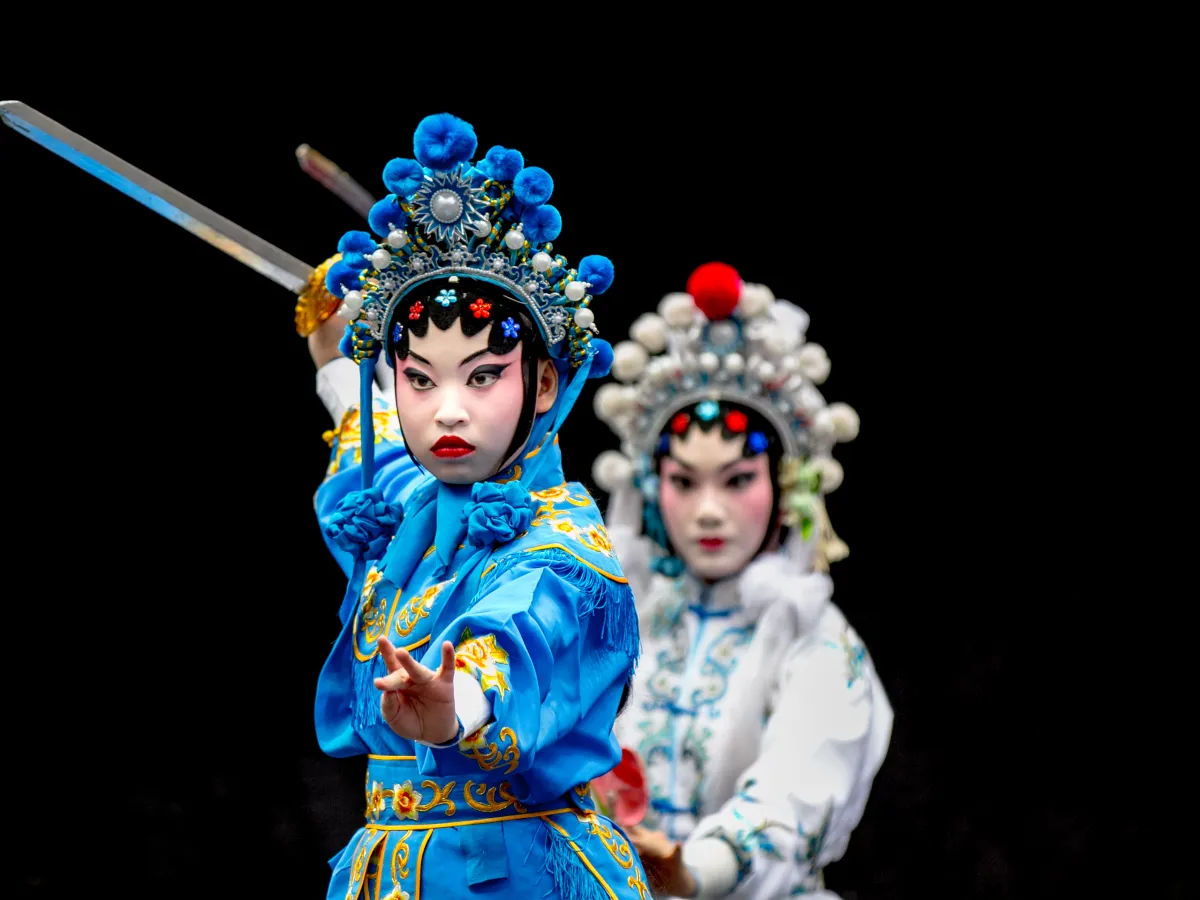
Voice · movement · costume · imagined space
Chinese performing arts understood through training, stage conventions, regional forms, material detail and the experience of watching performance unfold.
Watch what the performer makes visible12 published guides across 7 core paths.
Let the trained body build the world
Chinese performing arts do not need realistic scenery to make a world. A trained voice can stretch time, one sleeve can carry weather, a step can turn an empty floor into a journey and percussion can make a glance feel dangerous. Begin with what the performer does; costume and symbolism become meaningful only after the body has earned them.
UNESCO's heritage record supplies institutional context for the form, its transmission and safeguarding without replacing close attention to performers. UNESCO Peking Opera record
Published guides, organized by intent
A collection page must do more than list recent posts. Choose the question that brought you here, open a focused guide, then keep moving through works, people and related cultural context without returning to search.
4 published guides
Peking Opera builds space through trained bodies, Kunqu compresses pressure into breath and text, Cantonese Opera carries a language community, and Sichuan face-changing turns timing into character. Compare the work each form asks the audience to do.
Understand Peking Opera through role types, painted faces, percussion, sleeves, weapons and empty-stage movement, then choose a first performance.
Read the deep guide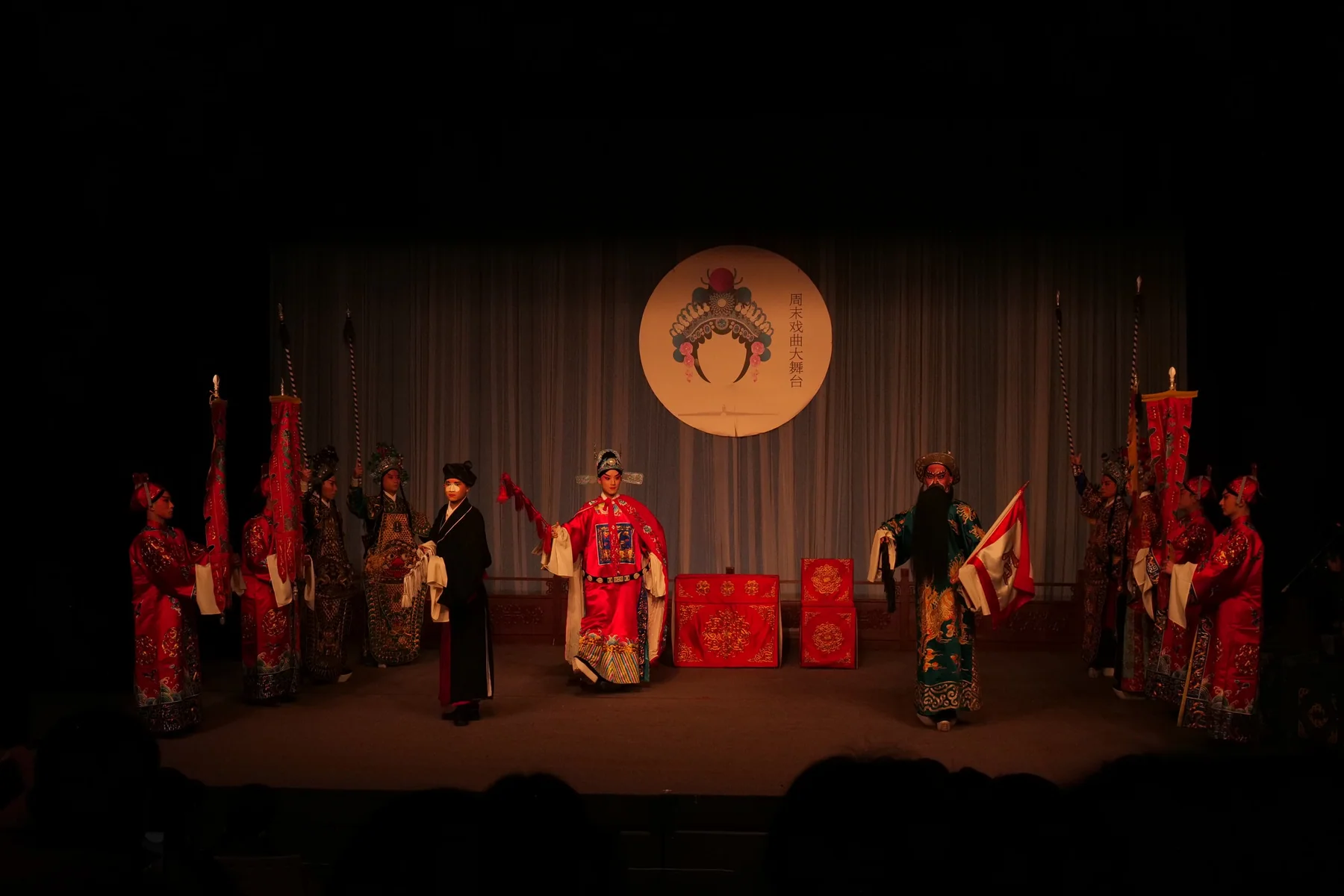
Understand Kunqu Opera through breath, melodic extension, classical text and restrained gesture, with a practical way to watch The Peony Pavilion.
Read the deep guide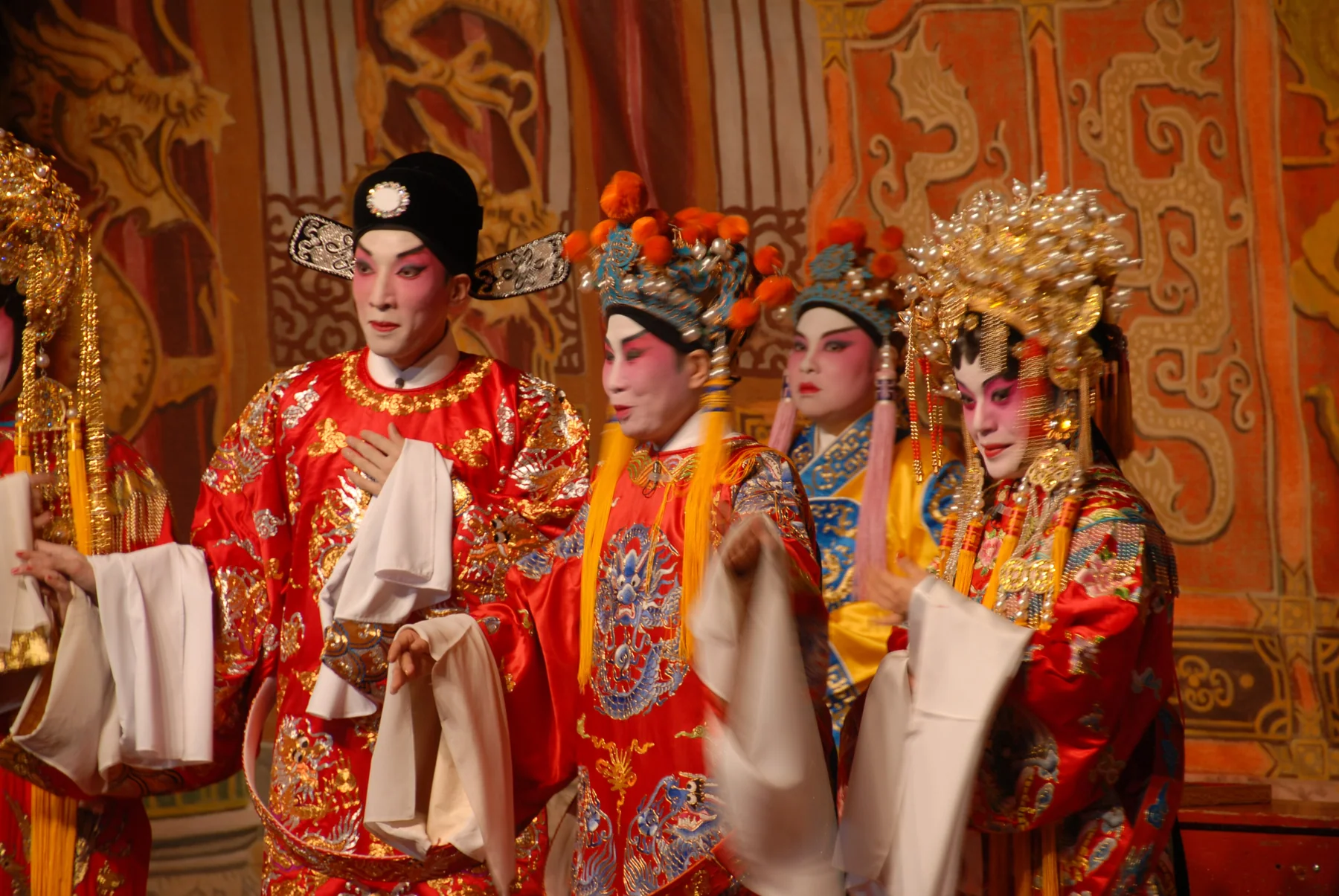
Learn why Cantonese Opera is more than Peking Opera in Cantonese: follow its language, civil and martial technique, temples, theatres and diaspora stages.
Read the deep guide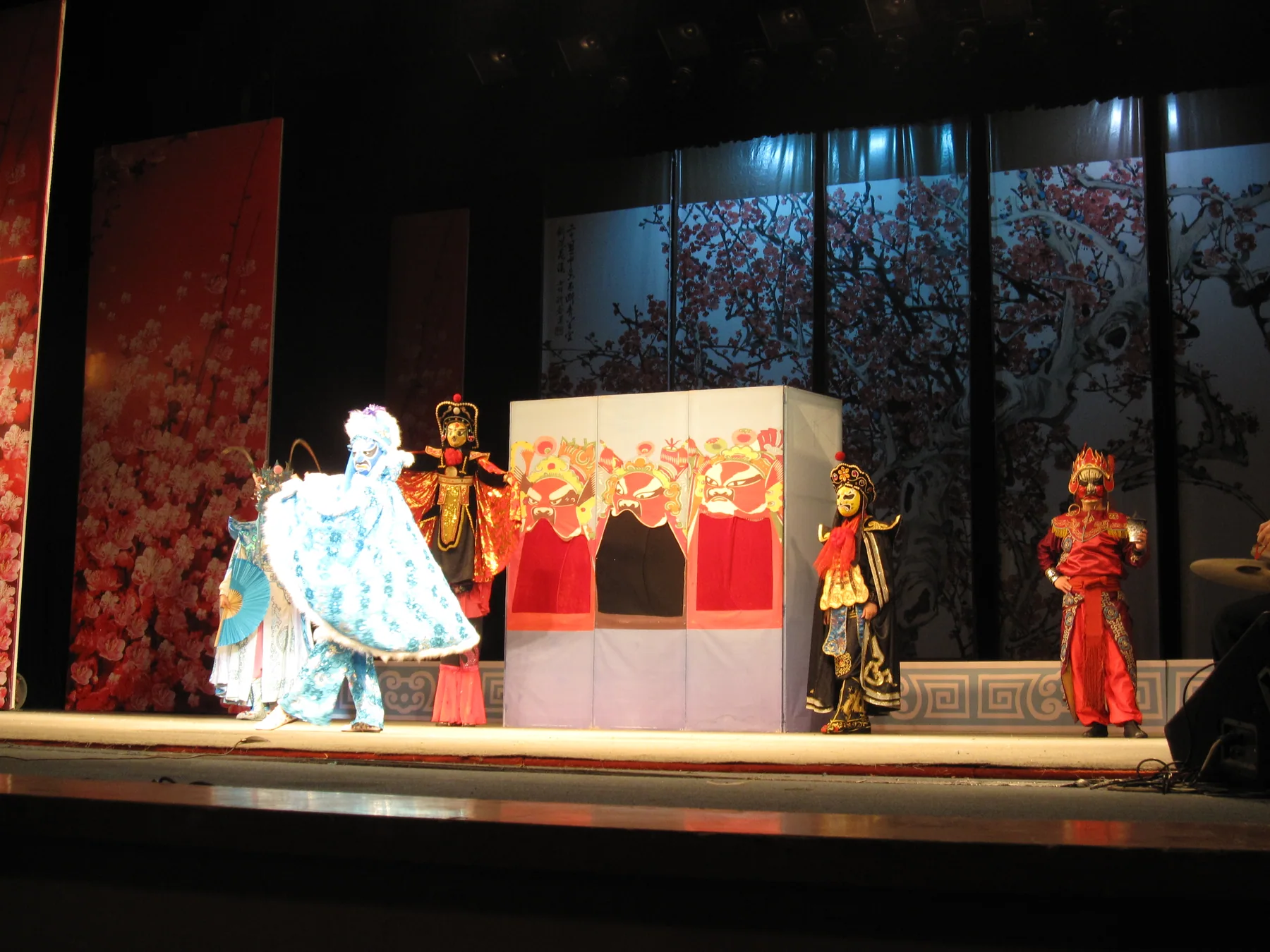
Understand Sichuan Opera face changing as timed dramatic action shaped by character, percussion, movement, audience attention and the wider Sichuan Opera form.
Read the deep guide3 published guides
Shadow puppetry transfers intention into an articulated figure, acrobatics exposes control through apparatus and recovery, and classical dance sends breath through a trained body while arguing with historical evidence. Read each form by the mechanism it asks the audience to notice.
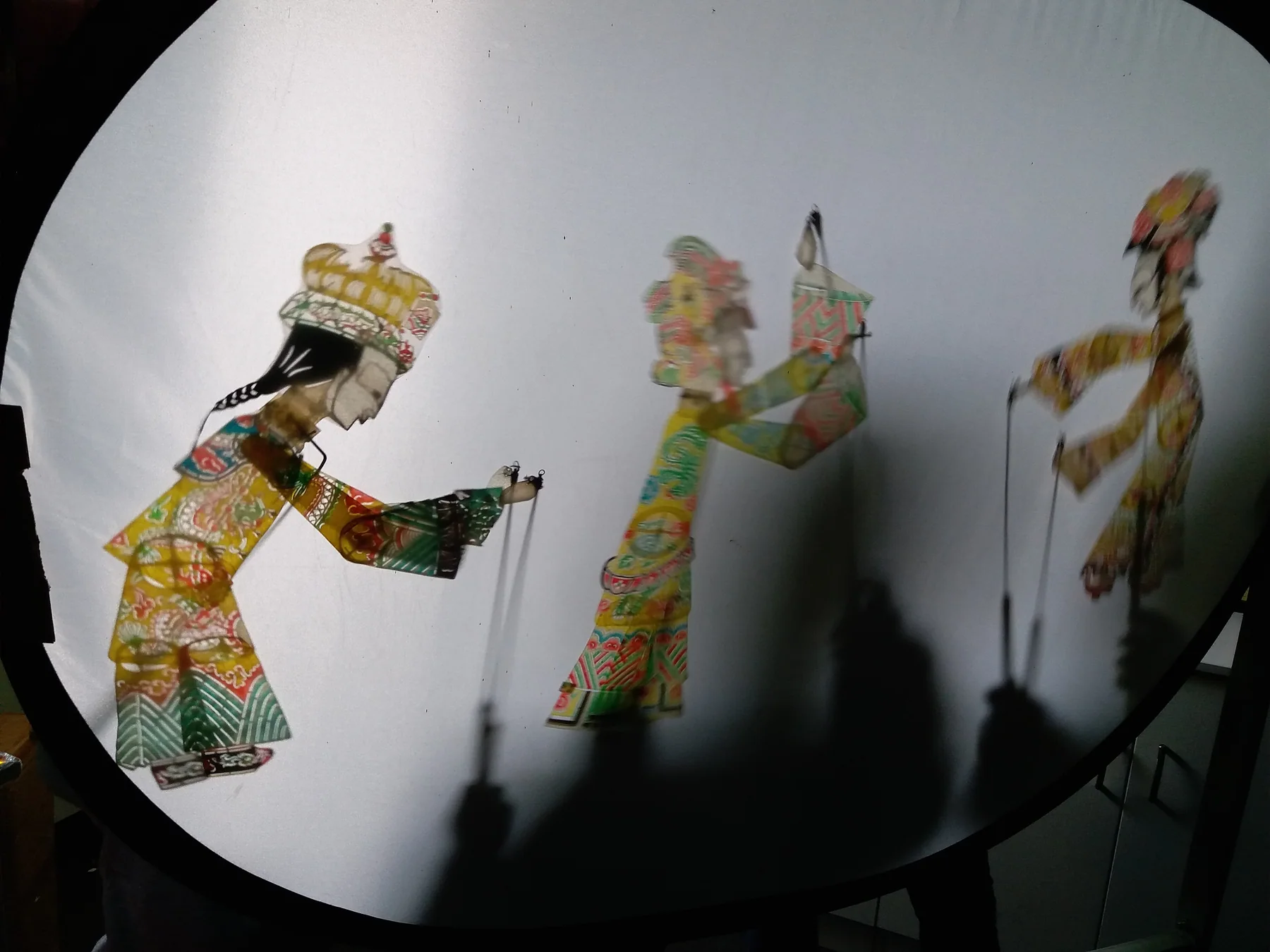
Understand Chinese shadow puppetry as a complete performance system of light, articulated figures, rods, voices, music and precise backstage coordination.
Read the deep guide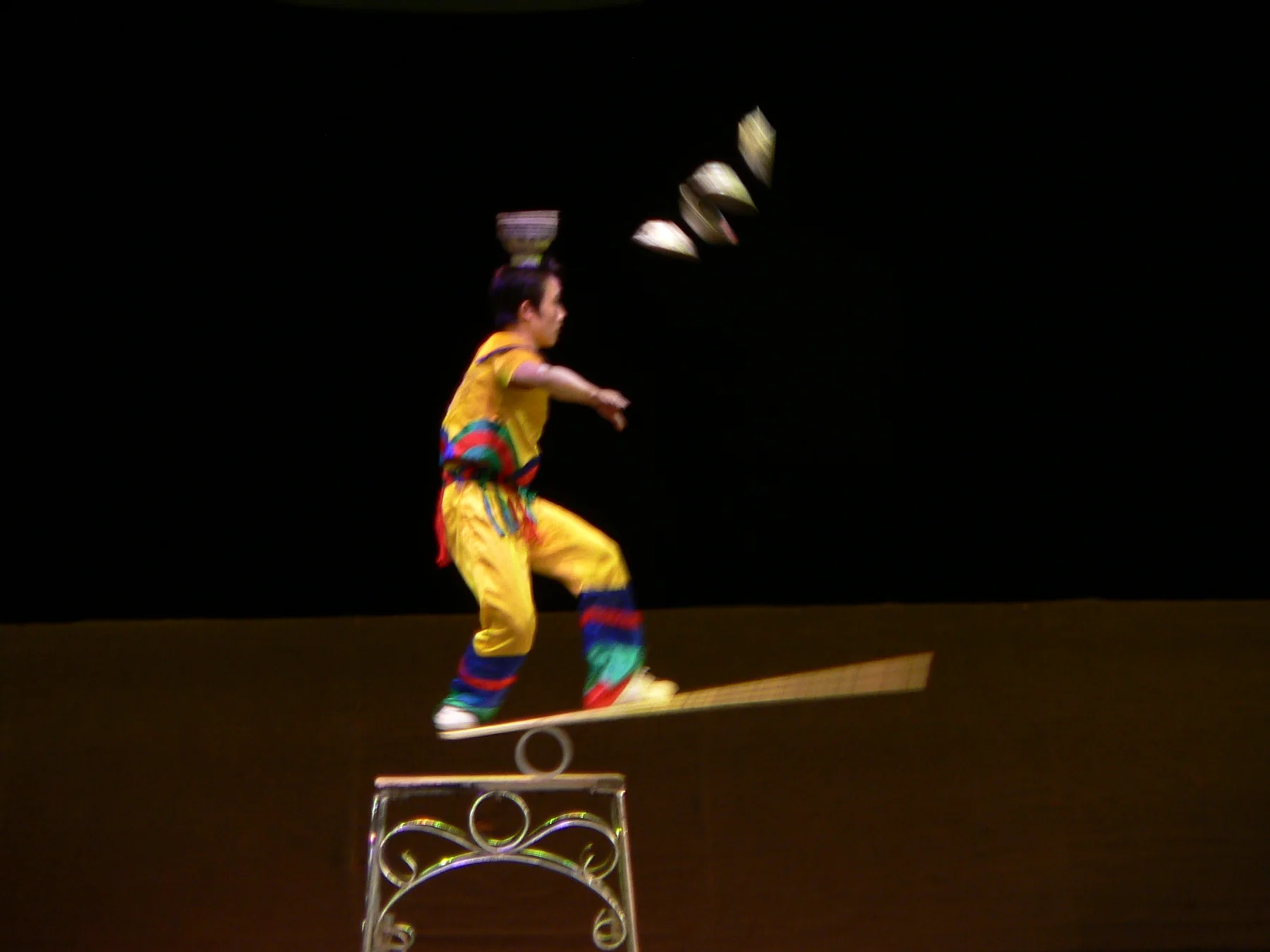
Learn how to watch Chinese acrobatics through apparatus control, balance, receiving, ensemble timing and recovery instead of danger and highlight tricks alone.
Read the deep guide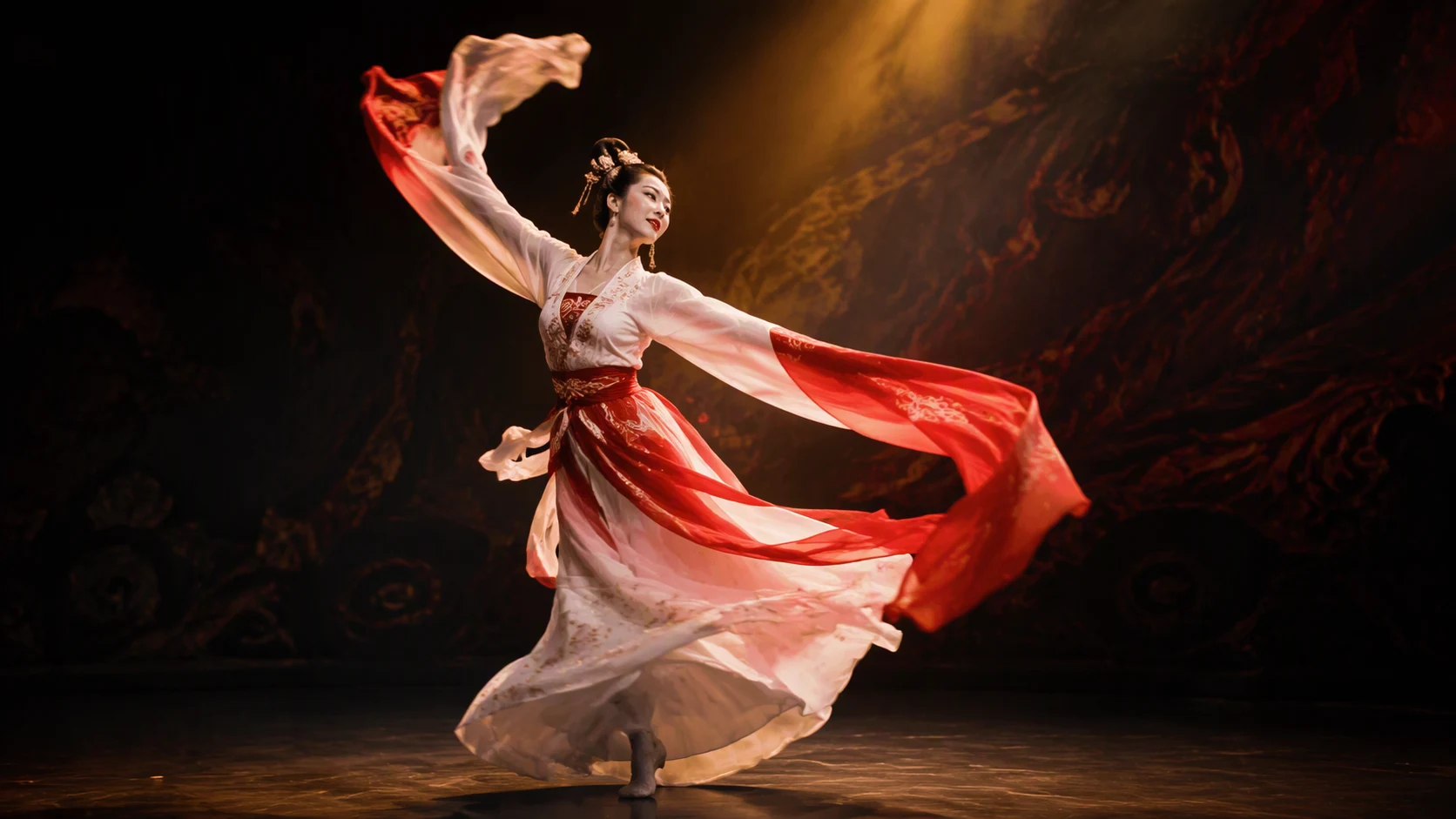
A visual guide to Chinese classical dance: shenyun, female dancers, flowing sleeves, breath, gaze, weight and the details that make a performance feel alive rather than merely pretty.
Read the deep guide5 published guides
Opera training enters cinema, garments alter gesture, literary journeys become staged worlds and wushu converts trained movement into public performance. These routes keep influence specific instead of calling every dramatic pose traditional.
Understand Farewell My Concubine's story, characters, opera, history and ending through a clear reading of performance, identity and betrayal.
Read the deep guide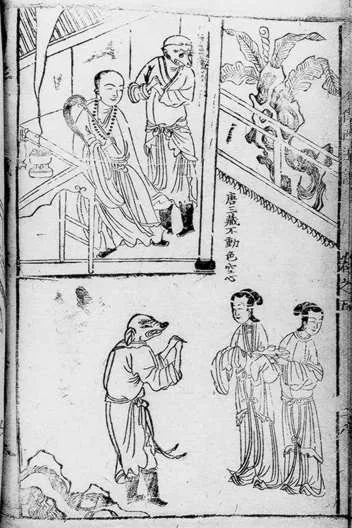
Understand Journey to the West through Sun Wukong, Tang Sanzang, Pigsy and Sandy: the story, characters, meaning, religion, adaptations and best reading route.
Read the deep guide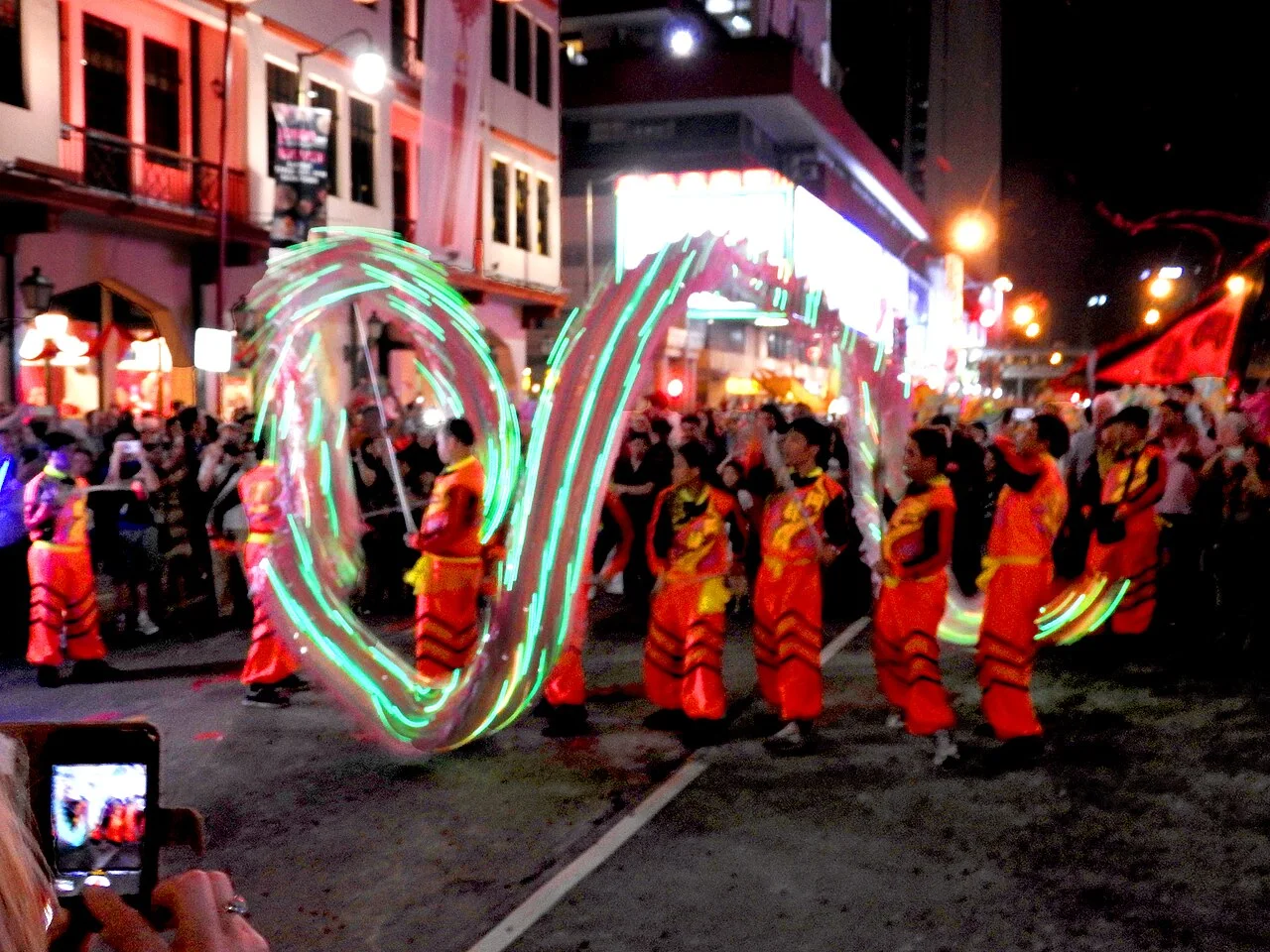
See how Chinese dragon dance performers use poles, spacing, a leading pearl, waves and spirals to turn many people into one continuous body.
Read the deep guide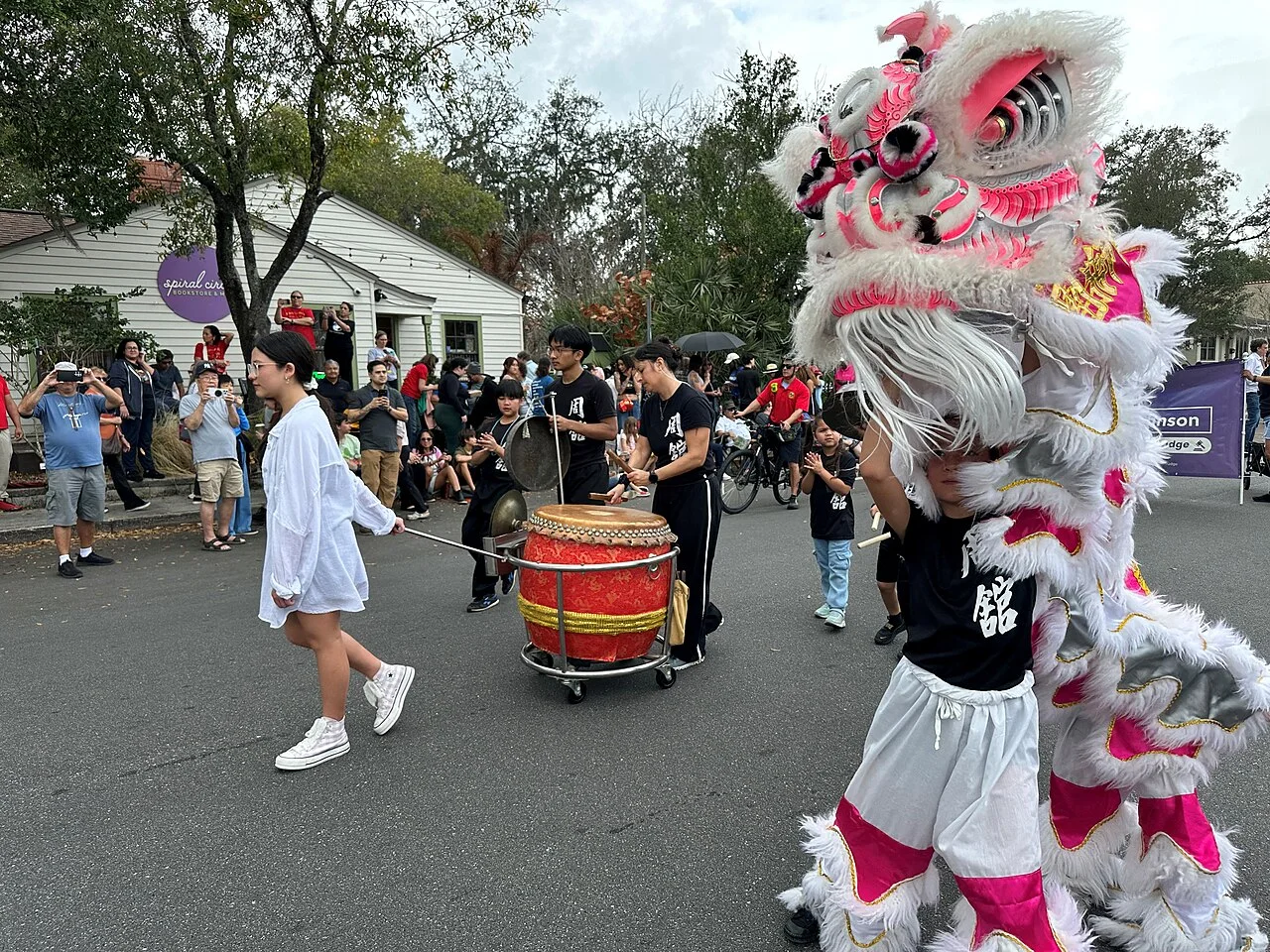
Understand Chinese lion dance through the hidden partnership, expressive head, drum cues, cai qing ritual, high poles and the difference from dragon dance.
Read the deep guide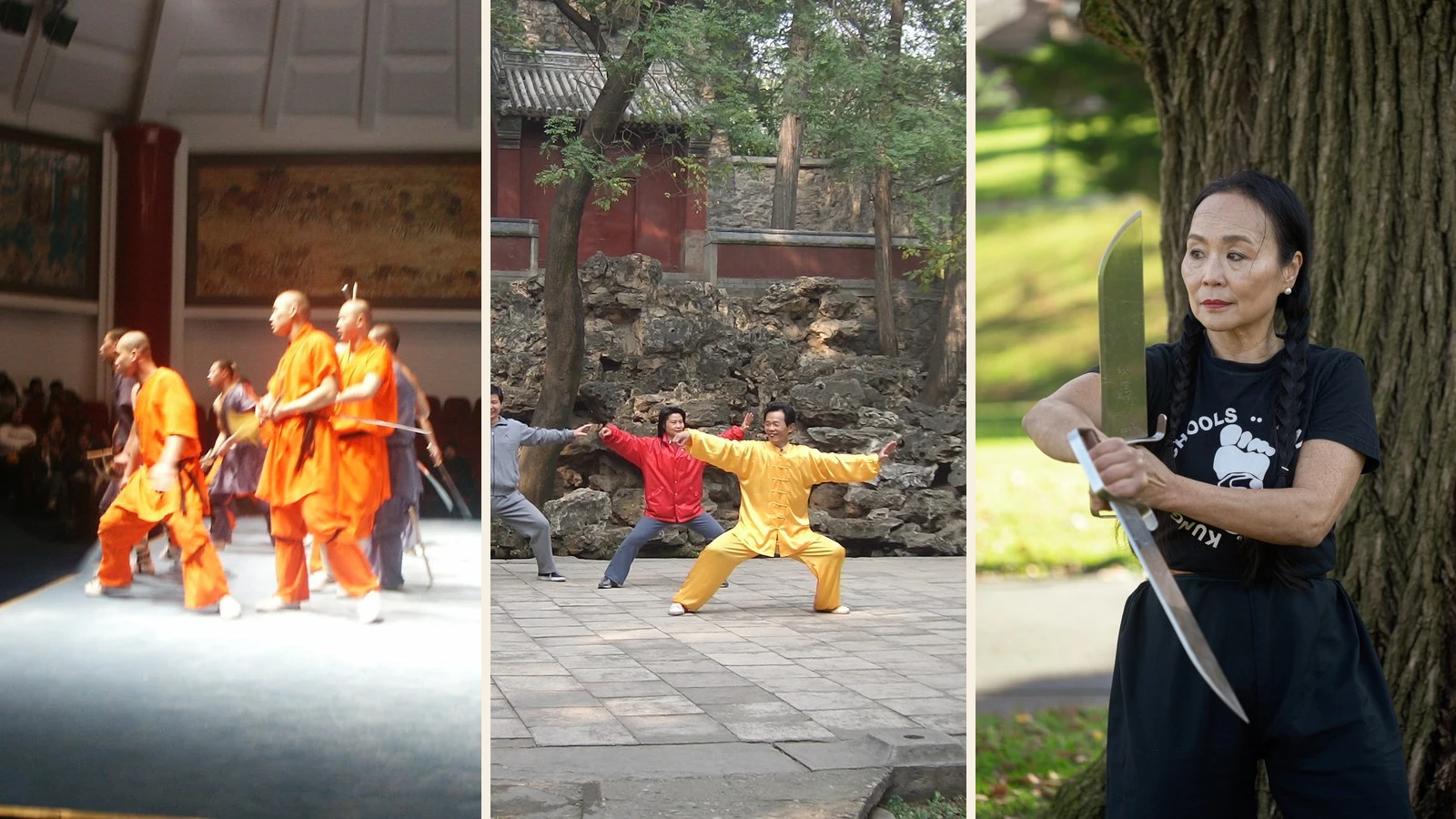
Wushu explained through its two competitive arenas: taolu routines and sanda fighting, with a clear guide to events, judging, culture and what each discipline proves.
Read the deep guideThe trained body builds the world
Chinese performing arts are often introduced through costume because costume photographs easily. Performance is harder and far more important. A trained voice stretches time; percussion changes the danger inside a glance; a sleeve carries weather; a step turns an empty floor into a journey; an audience completes scenery that was never physically built. Peking Opera is one powerful entrance, not the whole field. Regional opera, narrative song, dance, acrobatics, puppetry, shadow theatre, lion and dragon dance and contemporary stages all organize attention differently.
Peking Opera combines vocal types, stylized speech, movement, percussion, costume, makeup and role categories in a highly recognizable system. It is internationally visible, but Chinese opera includes many regional forms with different languages, melodies, instrumentation and performance textures. Treating one as the national template hides the communities that made the others audible.
The wider field also includes dance, acrobatics, puppetry, shadow performance, storytelling traditions and festival forms. Dragon and lion dance may occupy streets, temple events, competitions and global community celebrations rather than a proscenium stage. Contemporary artists may quote older vocabularies while changing music, duration, space or audience relation.
My entrance rule is therefore physical. Do not start with a list of symbolic meanings. Ask what the performer must do, how long the skill takes to acquire and what knowledge the audience supplies. Training prevents the form from becoming decorative heritage. The body is the archive that must appear on time.
Use the heritage record for transmission and institutional context while keeping regional diversity and close performance analysis visible. UNESCO: Peking Opera
To an unfamiliar listener, stylized vocal production can initially sound remote from ordinary speech. That distance is functional. Timbre, register, articulation and melodic contour distinguish role, age, temperament and dramatic pressure. Sung passages can suspend action; speech can sharpen it; percussion can announce a turn before the body completes it.
Role categories are systems of training and expectation, not personality quizzes. Costume, makeup and movement help identify the category, but the performer must animate it. A painted face does not act by itself. Watch how the eyes lead the head, how the hand prepares the sleeve and how a change in tempo alters authority.
I dislike introductions that tell newcomers only what colors mean. A color chart creates recognition without listening. Begin with thirty seconds of voice and movement. Notice attack, breath, pulse and the relation between singer and ensemble. Symbolism becomes useful after performance has made the role human.
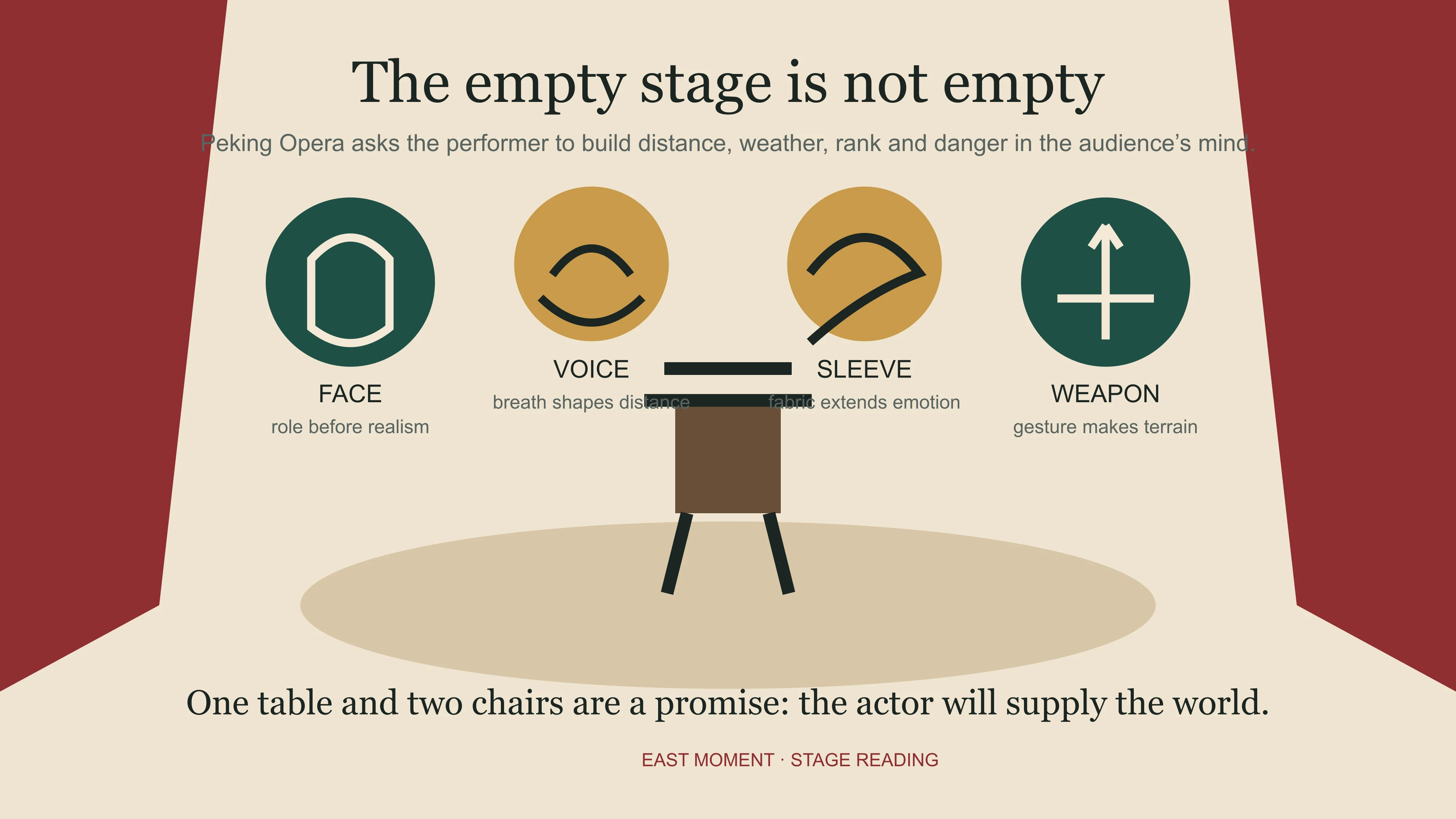
A realistic set supplies information materially. A stylized stage asks performers and viewers to build it together. Repeated pathways can establish distance. A table and chairs can become several locations. A whip can indicate riding. A weapon can extend line, rank and danger while remaining part of choreographed visual grammar.
This economy is not a lack of production value. It concentrates meaning in timing and control. The audience watches transformation happen rather than receiving a finished illusion. That makes small mistakes visible and great skill thrilling. Space appears because the performer persuades us to track an object that is not there.
The method also connects performing arts with Chinese film. Cinema can preserve gesture, magnify a face or cut across space, but it changes the audience's labor. Farewell My Concubine uses opera training and performance to carry identity and history while remaining a film with its own framing and editing. The two forms illuminate each other only when their different machines remain clear.
Shadow puppetry relocates acting into an articulated object. The audience sees a lit figure while operators, rods, voices and instruments coordinate behind the screen. The strongest viewing question is not what the silhouette symbolizes in isolation, but which joint, cue and change of direction made flat material behave like a character.
Acrobatics puts control under pressure. Apparatus, launch and danger attract attention, yet the receiving moment and recovery reveal whether the act owns the instability it created. Chinese classical dance presents another system: breath, torso, gaze, weight and fabric carry intention through a phrase while modern institutions and choreographers negotiate what historical images can and cannot supply.
I group these forms because the comparison sharpens their differences. The puppet transfers bodily intention into an object; the acrobat makes a physical constraint public; the dancer lets a trained body and costume extend time. Calling all three spectacular would be true and useless. Naming the control system gives a newcomer something real to watch.
The heritage record establishes the joined system of figures, rods, screen, light, voice and music; it does not make every regional troupe identical. UNESCO: Chinese shadow puppetry
Street performance has no neutral frame. Buildings, crowds, weather, procession routes, shopfronts and phones become part of the event. A dragon body requires coordinated people to send one movement across many sections. A lion condenses character into head, eyelids, mouth, footwork and the relation between performers sharing one body.
These forms can carry celebration, blessing, competition, martial association, community identity and tourism at once. Context decides which layer is active. The same visual vocabulary may appear at Lunar New Year, a business opening, a temple event or an international competition. Calling every appearance ancient tradition tells us almost nothing.
Images are strongest here when they show coordination and audience relation rather than only the finished creature. Look for the feet below the costume, the spacing between dragon holders, the musician setting tempo and the child learning where to stand. Those details prove that a symbol remains alive through collective labor.
Before a performance, learn only the minimum: form, region or language, broad role categories and the scene's immediate situation. Too much explanation can make the viewer hunt for correct symbols and miss timing. Let the body and sound establish their own evidence first.
During the performance, choose one channel at a time. Follow the feet through a passage, then listen to percussion, then watch how gaze and sleeve coordinate. Notice when the audience responds. A live tradition includes that knowledge in the room. Silence, applause, laughter and recognition all alter the event.
Afterward, write down one transformation: the moment an empty floor became distance, a prop became danger or a voice made time expand. That detail is a better beginning than declaring the performance colorful or exotic. Chinese performing arts deserve the precision we routinely grant film, music and sport. Training is not background; it is the event.
If language is unfamiliar, subtitles can clarify plot while hiding musical and rhetorical texture. Listen once without chasing every word. Notice repetition, lengthened syllables, percussion cues and audience response. Then return to a translated synopsis or program note. Understanding is not a race to eliminate strangeness; it is the patient work of learning which part of the experience belongs to story, which to vocal system and which to the shared knowledge already present in the room.
An empty stage is not an absence waiting for scenery. In Chinese opera, a turn, whip, sleeve, chair, vocal pattern or percussion cue can produce distance, weather, rank and danger through convention shared by performer and audience. The art is neither literal imitation nor mysterious symbolism. It is a trained economy: a small action carries a large world because body, music, costume and expectation arrive together.
That principle changes how an international viewer should watch. Do not begin by decoding every face color or costume motif as a fixed dictionary. Follow the action. Who enters, who controls tempo, what changes in the voice, how does percussion alter attention, and which gesture transforms the imagined space? Meaning grows from sequence and role type. A screenshot can identify costume and posture; it cannot prove rhythm, vocal force or the living exchange in the room.
The field extends beyond Peking Opera. Regional operas carry different languages, singing systems and local histories. Dance, storytelling, puppetry, acrobatics, music theatre and festival performance create other contracts with the audience. A national showcase can preserve visibility while flattening regional difference. East Moment keeps the specific form and place attached before drawing a wider cultural connection.
Recording a performance preserves evidence, not the whole art. Training requires teachers, time, bodies, rehearsal rooms, costume and instrumental knowledge. Performance requires venues, audiences and economic support. Understanding requires enough shared convention for a gesture to land. A heritage label can protect attention and still leave practitioners struggling to sustain the conditions that make the form alive.
Modern adaptation is therefore not automatically dilution. A new stage, camera grammar, subtitle or collaboration can open the form to another audience. It can also cut rhythm into attractive fragments and leave only costume. Judge the adaptation by what capacity survives: vocal system, embodied technique, dramatic relation, musical structure or audience imagination. Change is acceptable; empty visual quotation is not.
Bring one cue you learned to see or hear—a foot pattern, percussion turn, sleeve action, prop or vocal shift—and explain what world it created. That contribution lets newcomers enter without reducing performance to a symbol glossary. Return when another production changes the cue or when a practitioner corrects the reading. The community should make attention more trained, not merely more enthusiastic.
Translation has to serve performance rather than replace it. A surtitled line can identify plot while the voice carries role type, social distance, musical contour and physical effort the English cannot contain. Give the newcomer enough context to follow the action, then direct attention back to sound and body. Excess explanation can become another curtain between audience and stage. The best guide makes the next minute more watchable.
Film and digital video create preservation and discovery routes with their own grammar. Close-ups can reveal makeup and hand detail; editing can destroy the spatial continuity that made a feat intelligible. A viral fragment may rescue attention for a form and teach viewers to expect only its most spectacular second. Use clips as doors, then restore sequence, duration and the people producing live sound. Performance is an event before it is content.
Audience etiquette also shapes the event. Call-and-response, applause, tea-house conversation, festival movement or disciplined quiet create different performance rooms. A visitor should learn enough to participate without demanding that every venue resemble a Western theatre. The goal is not rigid rule-following. It is awareness that the audience contributes timing, energy and permission. Watching well is one of the arts the performance can teach.
Reader-built field guide
Name the form, performer or troupe when known, then describe the voice, rhythm, gesture or prop that changed what the audience could imagine.
What this builds: We will connect observations across opera, dance, festival performance and screen adaptation as the collection grows.