At a Chinese tea house, choose the room before you choose the tea. A public Chengdu teahouse, a Guangzhou morning-tea restaurant and a quiet leaf-focused studio can all serve tea, yet they sell different kinds of time. Decide whether you want conversation, food, serious tasting, privacy or simply a place to stop. Then ask how the house charges, who brews, what refills include and whether the table has a time limit.
This is the part most first-visit guides miss. They teach a list of gestures as if China had one tea-house script. It does not. The better question is not “How do I look knowledgeable?” It is “What is this room asking tea to do?” Once you can answer that, ordering becomes simple and etiquette stops feeling like theater.
A Chinese tea house is a way of organizing time
A tea house is not defined by carved screens, antique-looking furniture or a person performing with tiny cups. Those can be present. None is decisive. What matters is the agreement created by the room: how long people may stay, what they may do while sitting, how service arrives and what kind of attention the tea receives.
The UNESCO record on China's tea knowledge and social practices places drinking and sharing beside cultivation and processing. That broad frame is useful because it refuses to reduce tea to either a luxury product or a single ceremony. Tea travels through families, workplaces, shops, public rooms and skilled brewing tables.
My position is direct: the most revealing feature of a Chinese tea house is the kind of time it permits. A room where neighbors can sit for hours is doing different cultural work from a reservation-only studio built around one carefully sourced oolong. Neither is automatically more authentic. One protects public leisure; the other concentrates attention. A visitor should judge whether the room keeps its promise, not whether the decor matches an imagined ancient China.
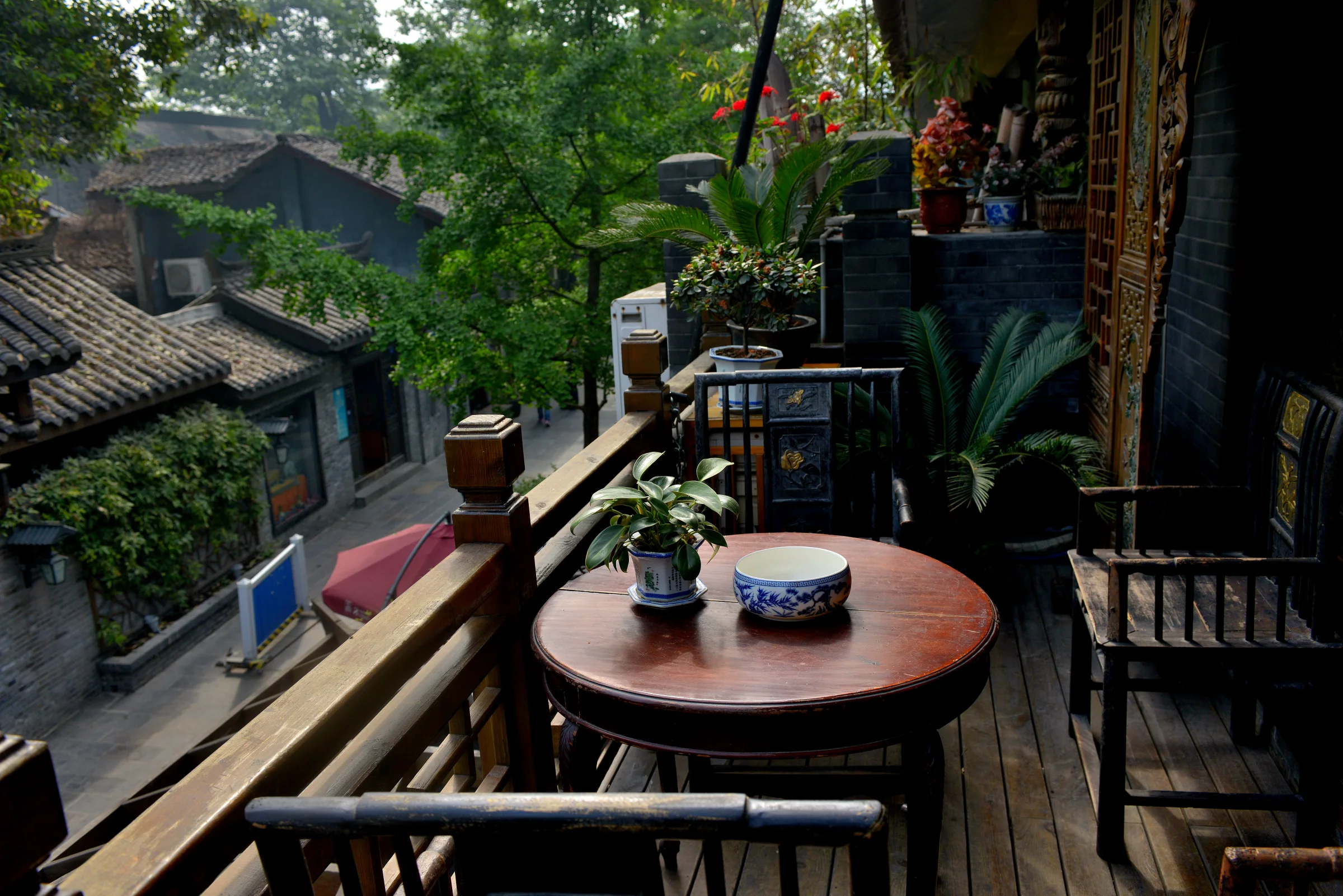
The street-facing balcony in the Hero makes the argument visible: the table faces both the tea and the neighborhood below. It proves one real Chengdu tea space can organize watching, resting and unhurried street time. It does not prove the venue's menu, prices, age or service rules.
Choose among four rooms, not one national model
The phrase Chinese tea house hides several businesses. Use this decision map before memorizing tea names.
| Room you are entering | What the visit is mainly for | What you should ask first | Wrong expectation to bring |
|---|---|---|---|
| Chengdu-style public teahouse | Sitting, talking, watching people, cards, opera or an unhurried break | Is tea charged per person or per bowl, and are hot-water refills included? | A silent tasting class with formal choreography |
| Guangzhou morning-tea restaurant or tea hall | Tea with shared Cantonese dim sum, family time or a social meal | How is the tea charge calculated, how are dishes ordered and is there a seating limit? | Tea as the only product on the table |
| Leaf-focused tea room or studio | Comparing a tea, learning from a brewer or buying with more attention | Who brews, which tea is being served, how much is included and whether a reservation is required | Cheap all-day seating regardless of service labor |
| Contemporary private tea room | Conversation, a meeting, a small group or aesthetic privacy | Is the room fee separate from tea, what is the minimum spend and how long is the booking? | A public neighborhood room open to any activity |
These categories overlap. A Chengdu venue may stage opera. A tea studio may also sell retail leaf. A Guangzhou restaurant may offer private rooms. The point is not to force every business into a box. It is to notice which part of the experience carries the bill and controls the pace.
Chengdu: public time can matter more than rare leaf
Chengdu makes the social logic unusually easy to see. GoChengdu's 2026 teahouse guide identifies old teahouses, an opera tea garden, a People's Park institution and a venue converted from a lacquerware factory. This is already enough to reject the idea of one “traditional Chengdu teahouse.” Even within one city, tea can accompany neighborhood rest, performance, tourism, snacks or craft display.
The city's 2026 consumption program separated traditional teahouses from new tea drinks and coffee, and linked fifty teahouses to a local experience season. That Ministry of Commerce report is not proof that every Chengdu tea house works alike. It does show that the city itself treats the traditional room as a distinct contemporary category, not a museum relic.
If your real goal is to understand this public rhythm, use the wider Chengdu culture guide and the practical travel guide to Chengdu before choosing a famous photo stop. A busy park table and a polished old-street balcony produce different experiences even when both serve a gaiwan.
Guangzhou: “drinking tea” can mean a meal and a relationship
In Guangzhou, translating yum cha as “drink tea” tells only half the truth. The city's 2026 regulation defines Guangzhou morning tea around tea served with Cantonese dim sum, social custom and traditional craft. The city's cultural authority also documents the familiar “one pot, two pieces” expression and the longer restaurant history around morning, afternoon and evening tea.
That changes the visitor's task. You are not simply selecting a leaf. You are joining a table where steamed dishes, pacing, sharing and conversation can be as important as the liquor in the cup. A full room may sound nothing like the quiet Western image of a tea room. It can be energetic, layered and meal-centered.
Do not export this Guangzhou pattern to all of China. And do not walk into a Guangzhou tea hall expecting the same service as a leaf-tasting studio. The local form is valuable precisely because it is specific.
How to order at a Chinese tea house the first time
Do not begin by asking for “the best tea.” That question invites price and status to replace your actual preference. Begin with the service agreement.
Ask four short questions:
- How is the table charged? Is there a tea charge per person, one pot for the table, a room fee, a minimum spend or a tasting set?
- Who controls the brewing? Does staff prepare every infusion, leave you a pot, set down a gaiwan or provide only hot water after the first service?
- What do refills mean? Does “refill” mean more hot water for the same leaves, a fresh pot of brewed tea or new leaf at an extra charge?
- How long is the seat yours? A public teahouse, restaurant table and private room may have completely different expectations.
These questions are not embarrassing. They are better etiquette than pretending to know the system and creating confusion later.
If the menu is only in Chinese, say what you want the cup to feel like. Ask for something light and fresh, fragrant, roasted, full-bodied or without strong bitterness. Staff can often work with that faster than with a badly pronounced prestige name. The main Chinese tea guide explains the six broad processing families; use it when you want to choose leaf, not when you only need a comfortable first order.
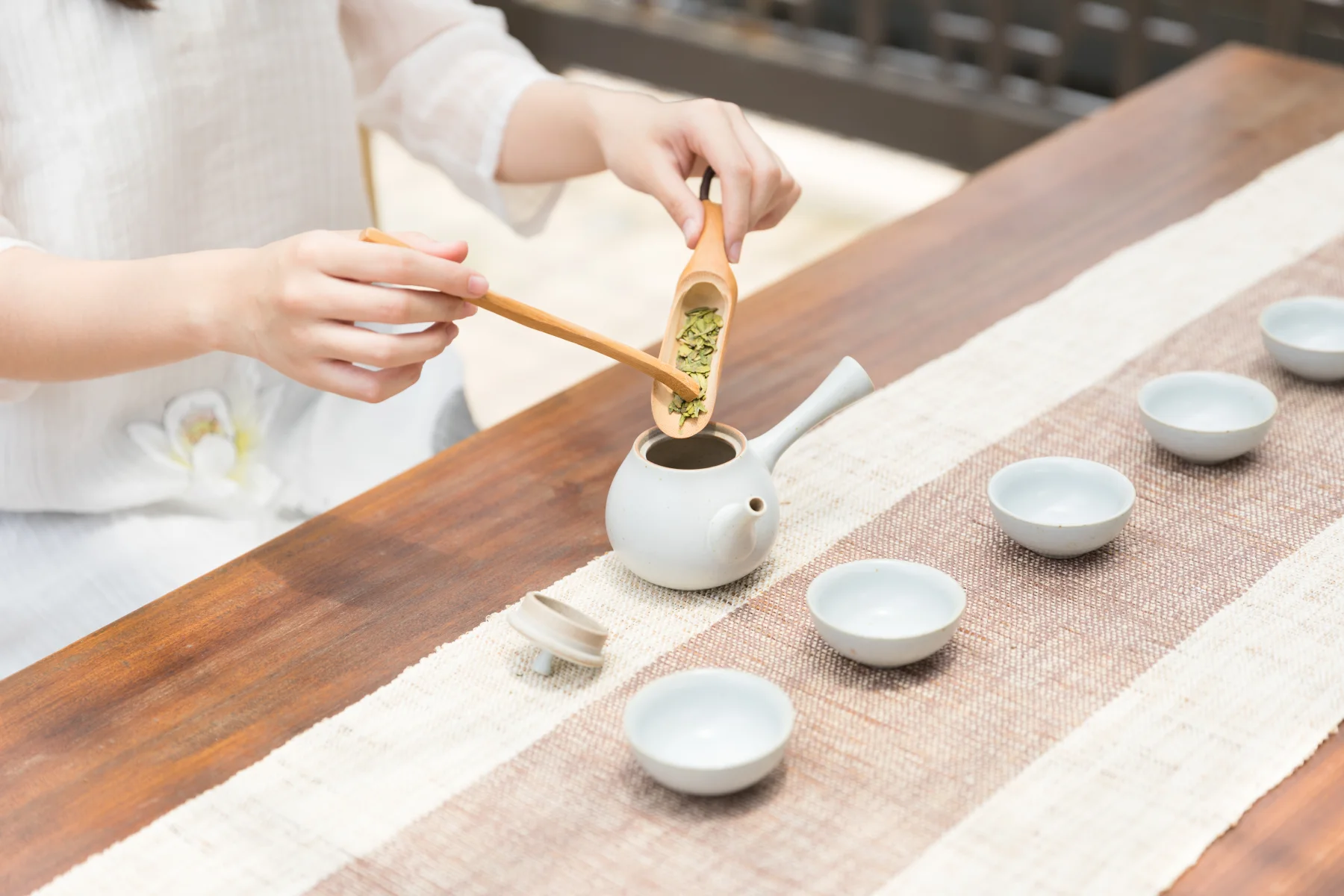
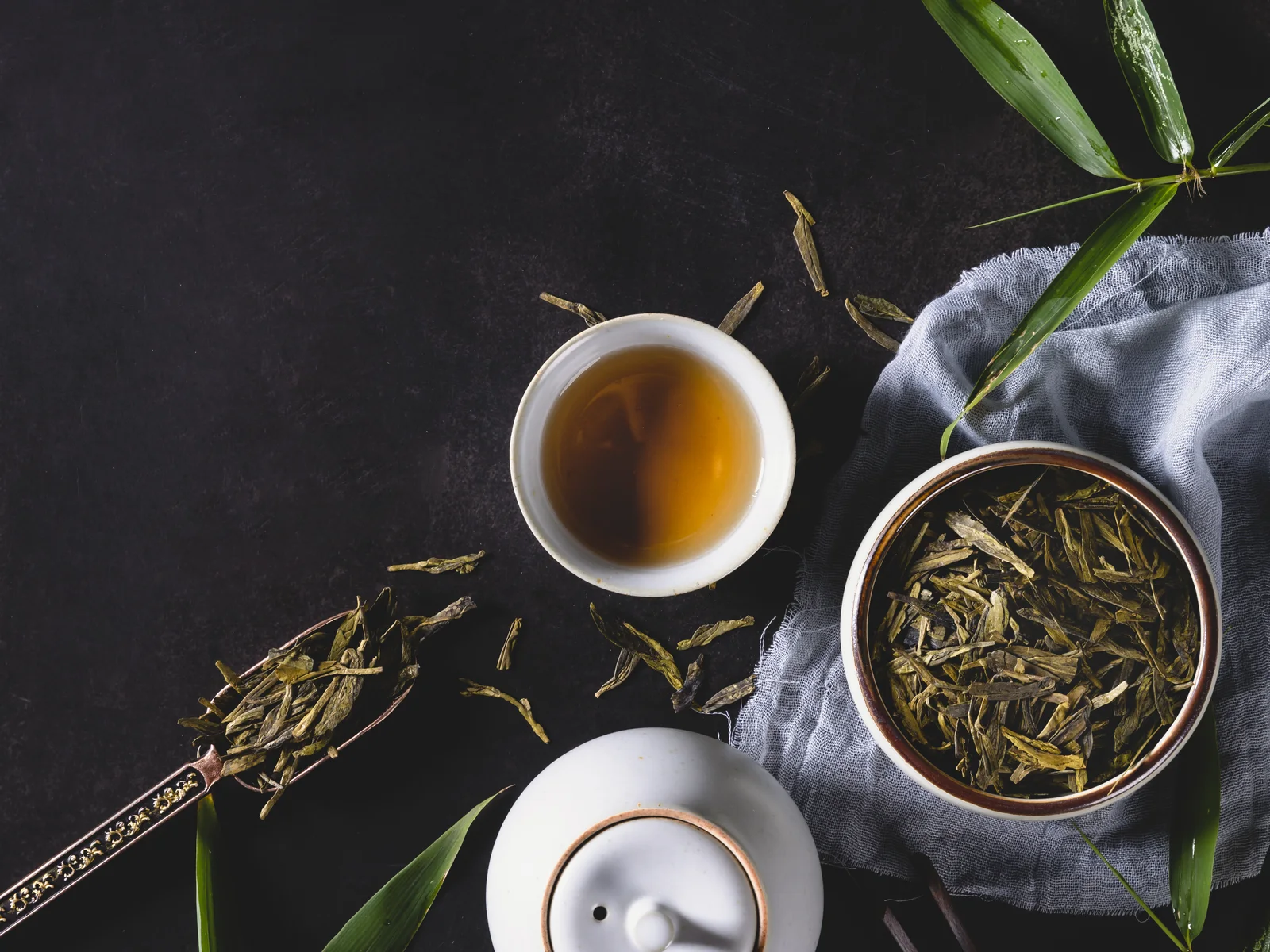
Several cups make the shared-table logic visible. The photograph proves that one pot can be prepared for more than one drinker. It cannot identify the tea, establish the correct dose or show how this particular venue charges.
Order for the table you actually have
One person who wants to read quietly does not need the same setup as four friends who will talk for two hours. A serious tasting does not need to become a meal. A family morning-tea table should not be judged by whether every infusion receives a lecture.
For one or two people, one tea is enough for a first visit. It lets you notice how the cup changes and whether the service makes sense. For a larger group, ask whether the pot's working volume matches the number of cups. Tiny cups can be divided quickly; a large restaurant pot may function more like a steady table drink.
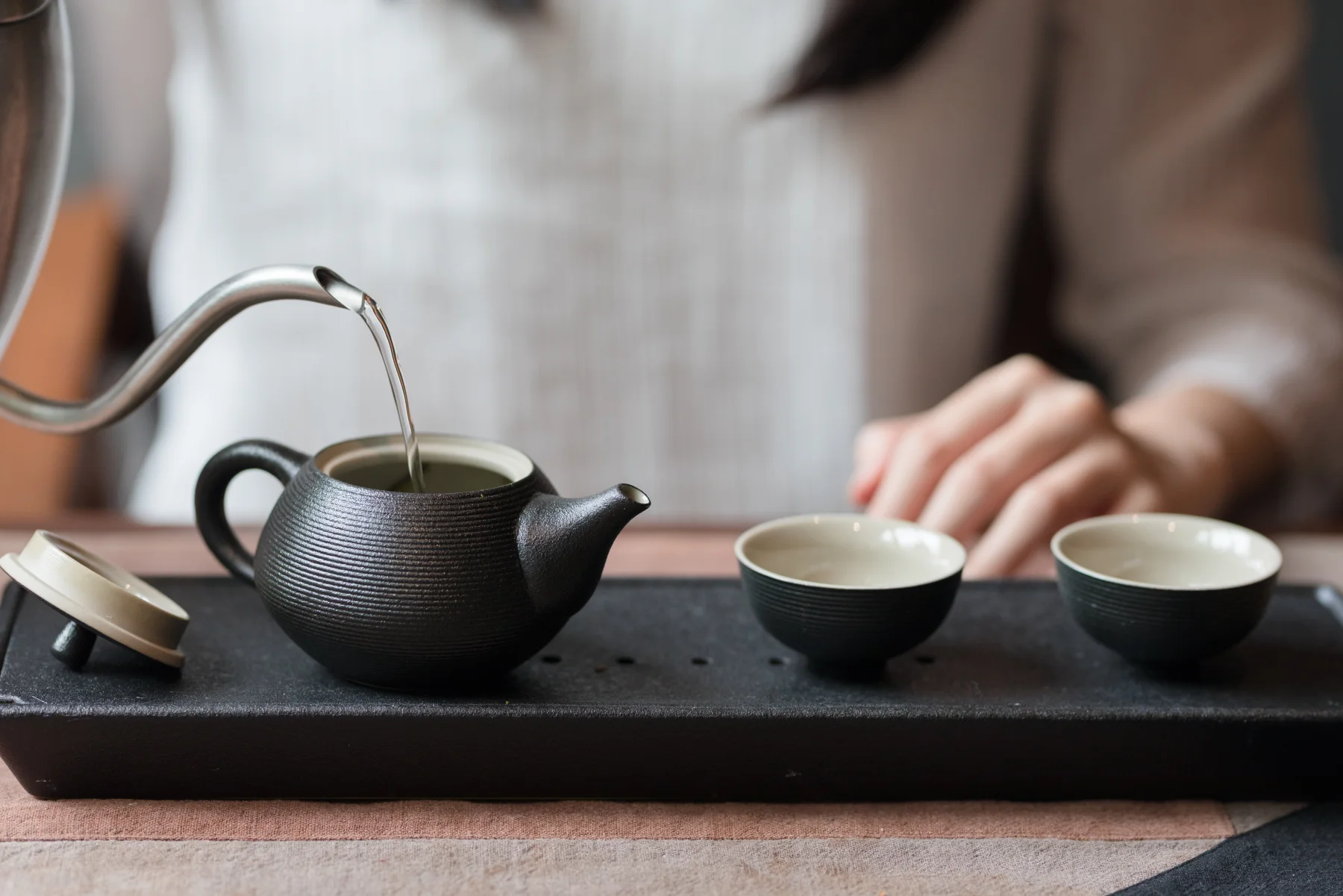
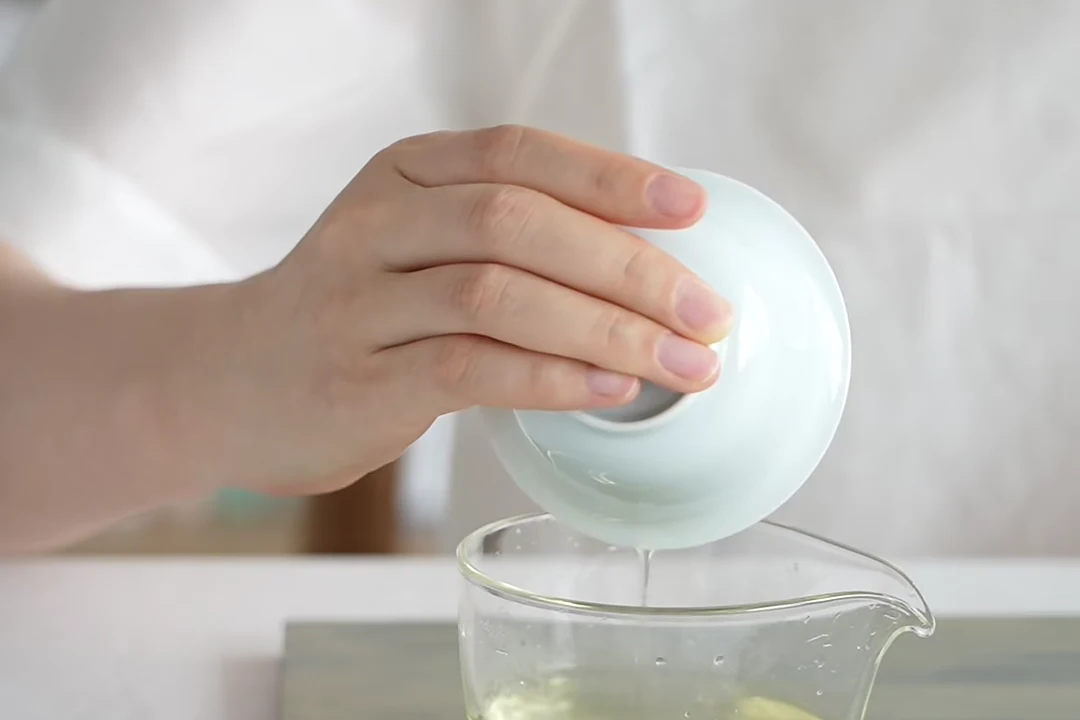
This image proves a service pot can be replenished beside more than one cup. It cannot tell us whether the water is a free refill, whether leaves are already inside or which brewing method the house follows.
Refills are where the house reveals its real rhythm
Visitors often focus on the first pour because it looks ceremonial. I watch what happens after the cups are empty. That is where the business model and the hospitality become visible.
In a casual public room, the crucial service may be reliable hot water. In a tasting studio, the brewer may control each short infusion and invite comparison. In a restaurant, tea service has to coexist with dishes, conversation and many tables. In a private room, a kettle and leaves may be left for the group to manage.
Never assume “unlimited tea.” Hot water, new leaf and a completely fresh pot are three different things. Ask before requesting more. If you want stronger tea, adding leaf is not always the answer; the house may prefer a longer infusion or a different vessel. If you want weaker tea, say so before the brewer continues the same rhythm.
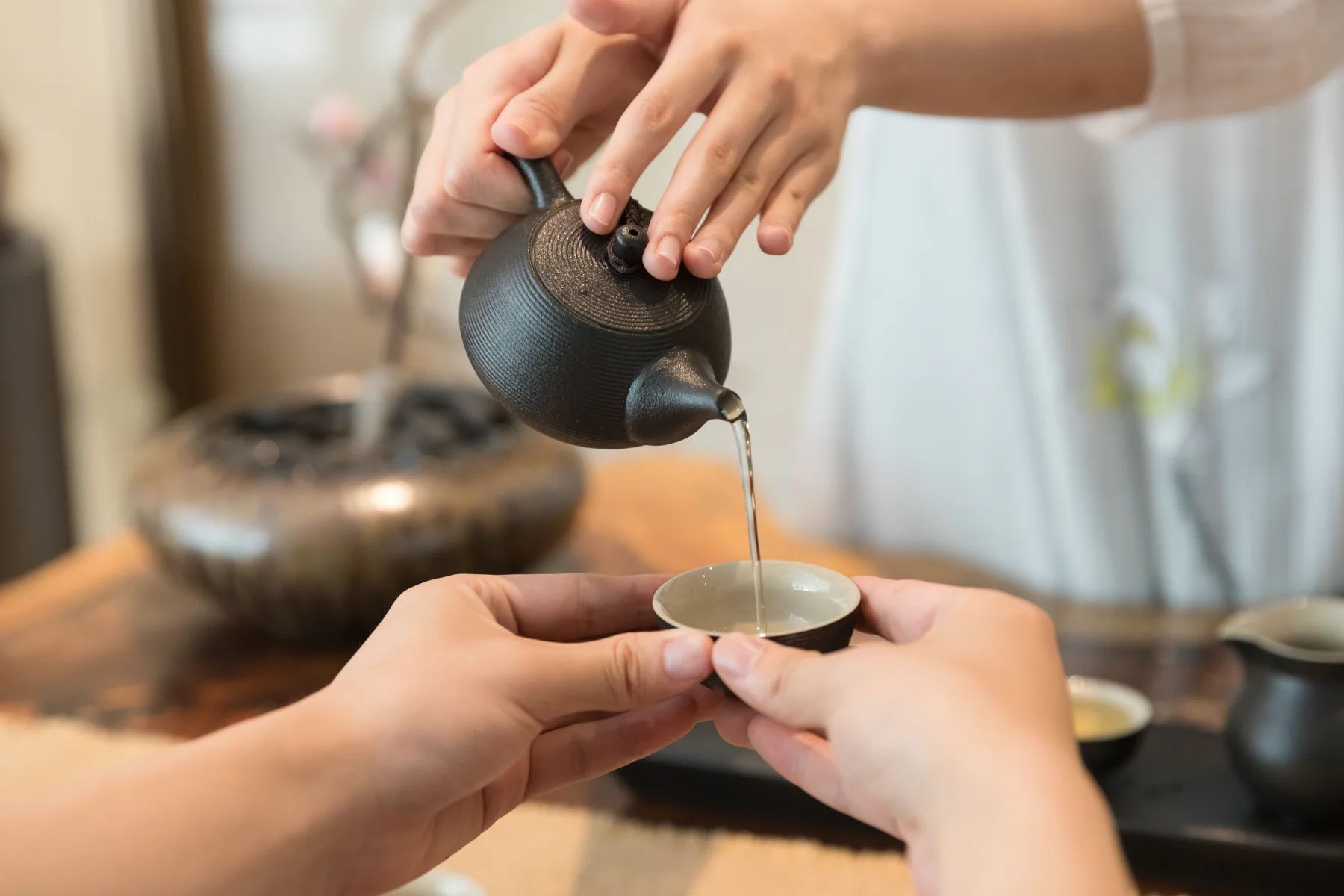
The receiving cup is the center of this service action. The photograph proves attention passing between two people. It does not establish one mandatory way to hold a cup or a universal host-and-guest hierarchy.
This is also why I resist the idea that a tea house must behave like a coffee chain. Coffee chains standardize speed, product names, cup sizes and individual orders. A strong tea house often depends on local permission: a table can be shared, a pot can remain active, conversation can outlast one drink and the server may read the room rather than execute one fixed sequence. That flexibility is the strength. It also makes the experience harder to franchise without flattening it.
Chinese tea house etiquette: use courtesy, not performance
Most first visits require less choreography than the internet suggests. Five rules are enough.
Let the house explain its system. Watch one round before moving lids, kettles or serving tools. If staff are brewing, do not seize control. If the tools are left to you, ask for the simplest instruction.
Keep shared tools clean. Do not place used personal cups against a common pouring vessel. Use serving tongs or the house's method when communal snacks or tools require them.
Notice who is still waiting. If you pour for the table, do not fill your own cup while someone else has none. This is not a secret ritual. It is ordinary attention made visible.
Do not turn local signals into national laws. In parts of Guangzhou tea-house practice, lifting or offsetting a pot lid can signal a need for water. That is documented as a local convention, not a commandment for every tea room in China. In an unfamiliar venue, asking is more respectful than performing a gesture you learned online.
Do not grade other guests. Someone reading, playing cards, talking loudly over dim sum or checking a phone is not automatically “doing tea wrong.” First identify the room. A neighborhood social space and a guided tasting have different standards of attention.
The same caution applies to the gaiwan. Lid position, grip and pouring method change with vessel, setting and purpose. A covered bowl is a tool, not a national etiquette exam.
Tea house, tea room, ceremony and milk-tea shop are not synonyms
English signage makes these boundaries messy, so read the business rather than the label.
- A tea house usually sells a place to remain as well as something to drink. Social time, service and seating are part of the product.
- A tea room can mean a smaller leaf-focused studio, a private room or simply an English branding choice. The term does not guarantee formal tasting.
- A gongfu tea session is a brewing practice built around repeated small infusions and attention to change. It may happen in a home, shop or tea house. The gongfu tea guide owns that method.
- A Chinese tea ceremony is an umbrella phrase. It may refer to skilled brewing, ordinary hospitality, a wedding family rite or public tea art. The ceremony guide separates those relationships.
- A new tea-drink or milk-tea shop mainly sells a prepared beverage for individual purchase. It can have seating, but the drink formula and turnover often matter more than keeping one pot alive at a shared table.
The fastest test is simple: What are you paying to continue? A cup, a pot, a tasting, a meal, a room or permission to occupy the table? The answer tells you more than the sign outside.
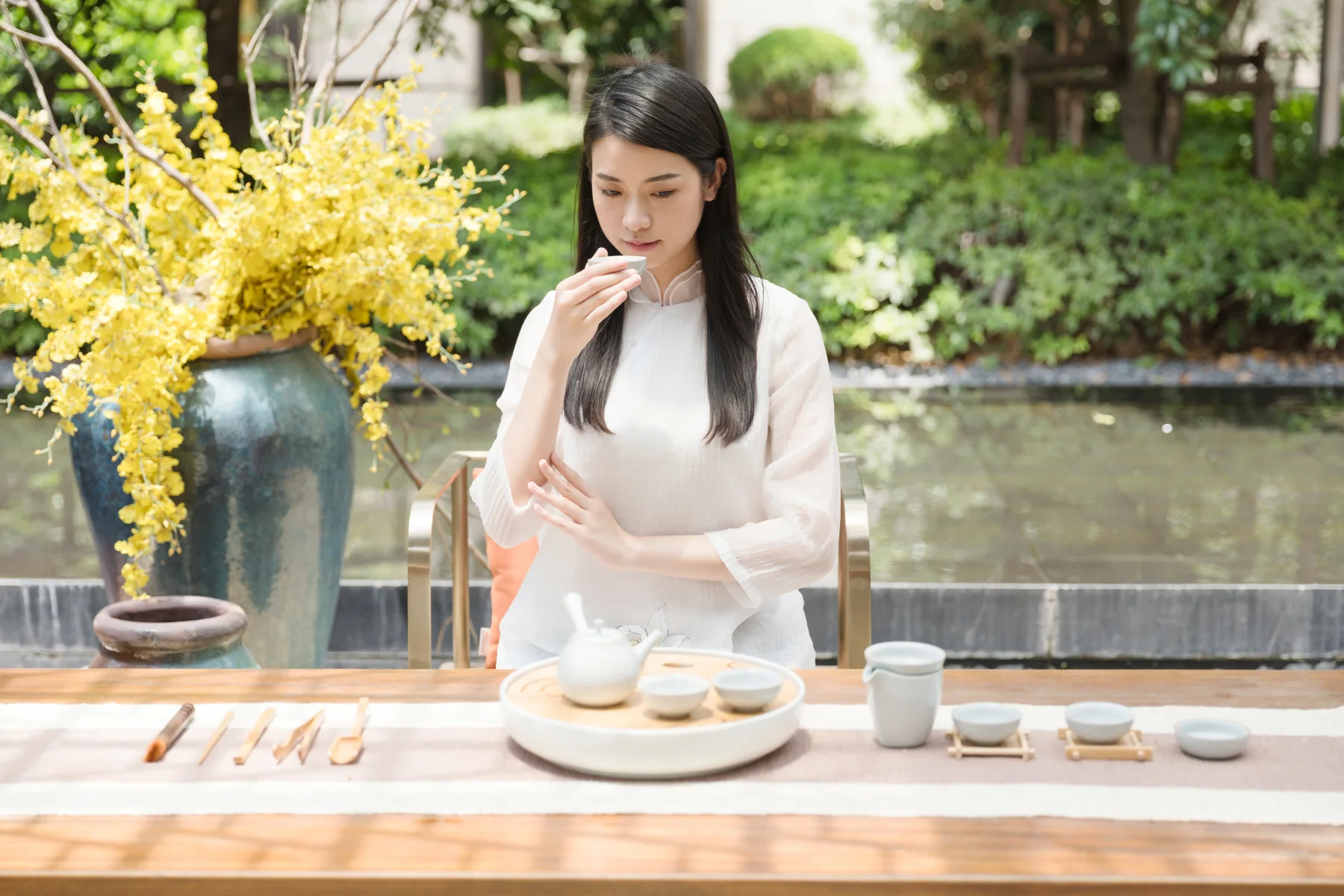
The quiet outdoor seat demonstrates a contemporary, attention-focused tea setting. It does not identify a city, prove the venue is public or show that formal dress or a complete tool set is required.
The best first visit has one clear purpose
Choose one reason to go. If you want people-watching and city rhythm, select a public room and do not over-order expensive leaf. If you want dim sum and family-style sharing, go to a Cantonese morning-tea restaurant and treat tea as part of the meal. If you want to understand one tea, reserve a smaller studio and ask the brewer to compare infusions. If you need a private conversation, confirm the room charge and time before arriving.
Then use this checklist:
- Before entering: Check whether the venue requires a reservation and whether food is central, optional or absent.
- Before ordering: Confirm tea charge, room fee or minimum spend, service style and included time.
- At the first pour: Watch whether staff divide the liquor, leave a pot or expect you to brew.
- After the first cup: Ask what a refill includes instead of assuming.
- Before settling in: Make sure your activity fits the room. A laptop, card game, loud meeting or long photo session may be welcome in one venue and disruptive in another.
- Before leaving: Check the bill for tea charge, dishes, room and added leaf. Ask calmly if a line is unclear.
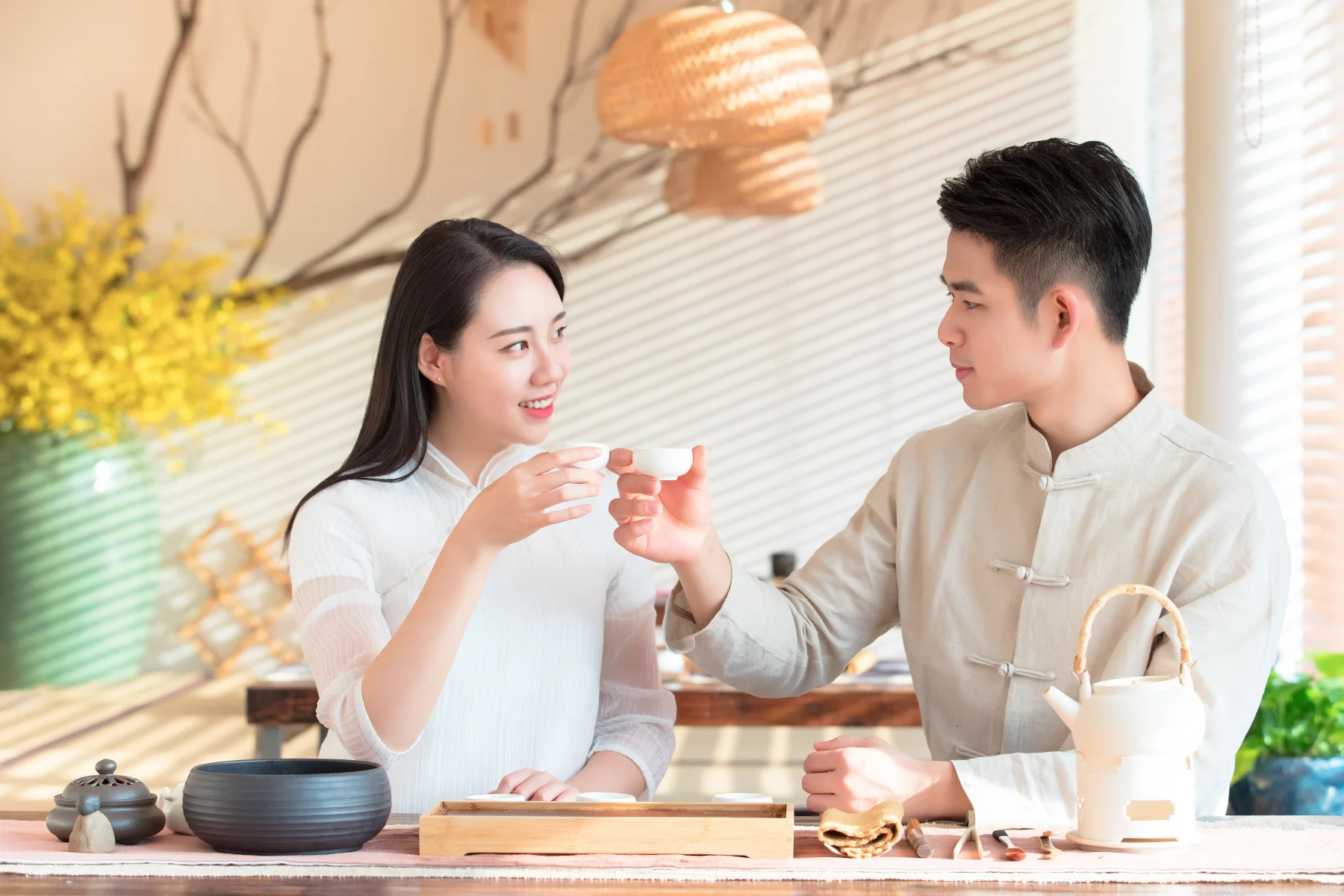
Two cups meeting across one table show tea acting as a relationship, not a solitary product. This staged photograph does not tell us who the people are, what they discussed or whether this gesture is customary in a named region.
I would rather see a visitor ask one honest question than imitate ten gestures. A good tea house does not require cultural cosplay. It makes its own rhythm legible: the table tells you whether to talk, taste, eat, wait or simply stay.
My final rule: judge the room by what it allows people to become
A Chinese tea house can turn strangers into table neighbors, relatives into an unhurried morning group, clients into conversation partners or one curious visitor into a more attentive drinker. That transformation is the real product. The tea matters, but the room decides what the tea is allowed to carry.
Choose the room before the leaf. Ask how time, service and refills work. Keep local customs local. And do not confuse expensive equipment with cultural depth.
Then tell me in the comments: Which detail told you what a tea house was really for: the chairs, the refill rhythm, the food, the conversation or the amount of time people were allowed to stay?
If you can document one specific visit, add a tea-room field note. Name the city and venue, explain how ordering and refills worked, and separate what you saw from what you inferred. That is how a useful map of Chinese tea-house life should grow: room by room, not rule by invented rule.