Choose Chinese desserts by texture and occasion
Grain, fat, filling, temperature and calendar explain more than sweetness level.
| Sweet family | Defining evidence | Flattening claim |
|---|---|---|
| Glutinous-rice sweets | Sticky-rice starch creates chew or a tender shell around fillings through boiling, steaming or pounding. | Sticky means gluten or every round rice sweet carries the same festival meaning. |
| Baked pastries | Crust fat, lamination or molded dough and dense fillings create region-specific pastry systems. | All Chinese pastry is ancient, lightly sweet or represented by one mooncake. |
| Fried sweets | Dough moisture, filling, coating and oil temperature build crisp surfaces around chew or paste. | Golden color proves fresh oil or sesame balls are hollow by accident. |
| Sweet soups and café desserts | Beans, seeds, fruit, dairy or coconut and temperature create spoonable textures eaten across seasons and modern city life. | Every sweet soup is medicinal or every mango dessert is timeless tradition. |
Sweetness can arrive at breakfast, on the street or inside a festival
A mooncake is exchanged around Mid-Autumn Festival; tangyuan can mark Lantern Festival or family reunion; an egg tart belongs to bakery and tea-house life; sweet soup can be an afternoon or late-night bowl. Placing them all after dinner creates a tidy menu but false social order.
Ask when, where and with whom the food is eaten. Occasion is part of the recipe because it determines portion, packaging, symbolism and expectation.
Chewy, flaky and silky tell more truth than ‘not too sweet’
Glutinous rice creates elastic chew; laminated pastry fractures; lotus or red-bean paste can be dense and smooth; tofu pudding trembles; sago gives small resistant pearls. Sugar level matters, but texture organizes memory and technique.
I want translations that let a reader anticipate the mouth, not protect the cuisine with a compliment. A dessert can be intensely sweet and still excellent. It can be mildly sweet and utterly dull. Restraint is not automatic quality.
Glutinous describes starch behavior, not gluten
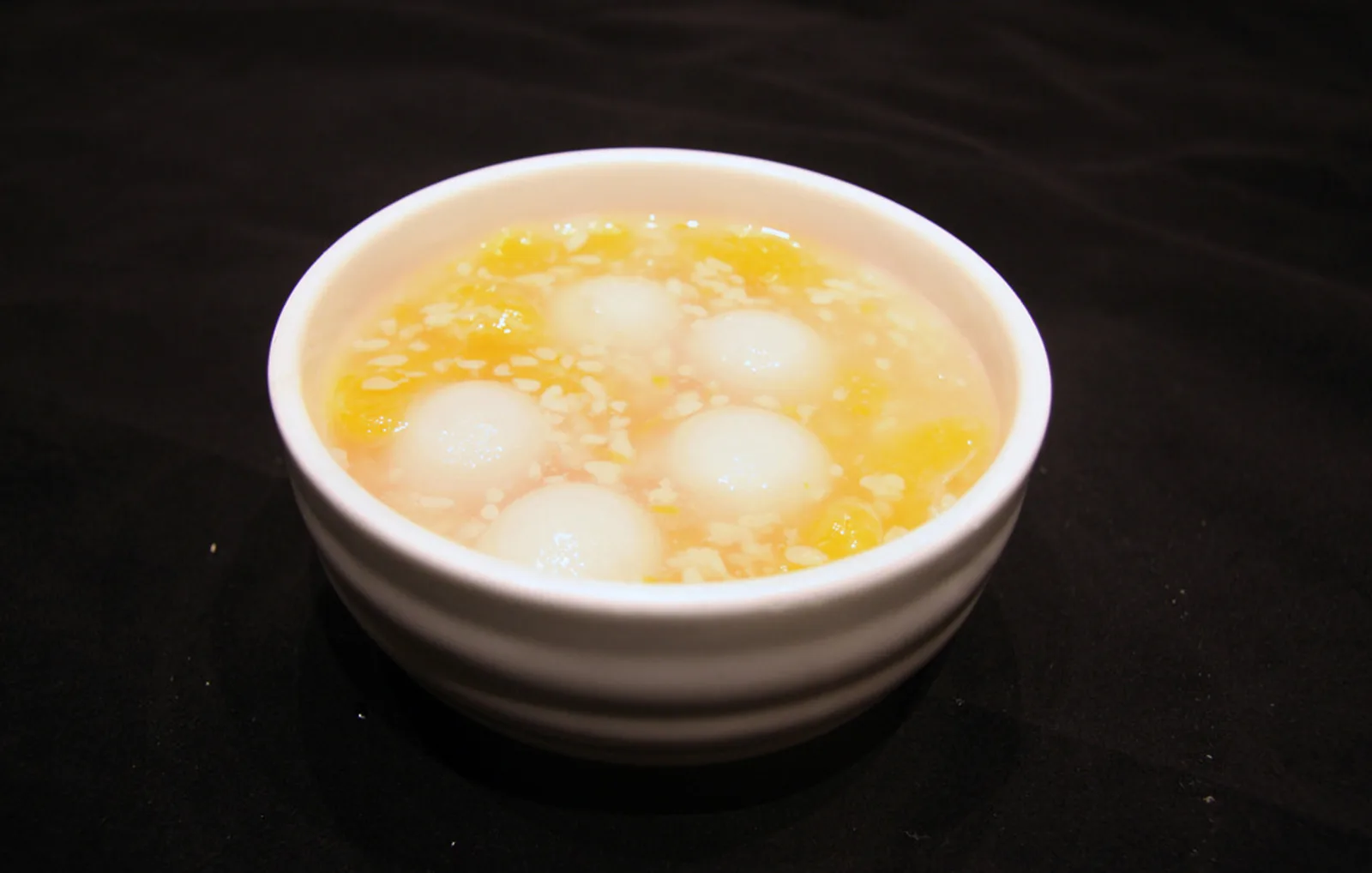
Glutinous rice contains no gluten by virtue of its name, though cross-contact and added ingredients still matter. Milling, hydration and heat determine whether a shell cracks, slumps or holds filling. Tangyuan and qingtuan require different doughs, colors and seasonal contexts.
Cut one piece. Filling flow, shell thickness and cooked center become visible. The exterior sphere is too polite to reveal the craft.
Egg tarts and mooncakes belong to different histories of oven, fat and city
Cantonese and Hong Kong egg tarts developed through colonial and local bakery exchanges, with puff or short crust and a just-set custard. Mooncakes divide into Cantonese, Suzhou and other regional forms with very different crusts and fillings. One beige round photograph cannot represent Chinese baking.
Show the layers and filling ratio. Packaging may carry gift culture, but the cut surface reveals whether the pastry delivers what the box promised.
A sesame ball is an engineered pocket, not a lump of dough
Glutinous-rice dough expands in oil while the cook manages a filling and a sesame-coated surface. Controlled pressure and temperature can enlarge the hollow space. Too-cool oil creates grease; too-hot oil colors the outside before structure stabilizes.
The decisive image is a broken ball showing shell thickness, cavity and filling. Perfect roundness is less useful than evidence that the exterior, chew and center reached balance.
A spoon can carry season, temperature and household patience
Red bean, mung bean, black sesame, almond-like kernels, snow fungus and fruit appear in different tong sui and regional sweet soups. Some are hot, some chilled, some old household forms and some modern café inventions. Ingredient names also require allergy precision.
Claims that a bowl removes heat, beautifies skin or repairs the body belong to cultural belief or marketing unless supported medically. We can record why families value it without promising an outcome.
Mango pomelo sago is allowed to be modern and still matter
Fruit, coconut or dairy, sago and refrigeration created a modern restaurant dessert associated with Hong Kong’s evolving food scene. Its recent history does not make it culturally shallow. Cities make tradition in the present tense.
I prefer that honesty to a fabricated imperial origin. A dessert born within living memory can carry migration, restaurant innovation and childhood nostalgia with full legitimacy.
Festival packaging can carry affection and waste at the same time
Mooncake boxes and other sweet gifts communicate relationship, status and reciprocity. They can also create oversized packaging and more food than households want. Share, freeze where appropriate, buy smaller boxes and choose fillings the recipient will eat.
Respect does not require pretending waste is tradition. The warmest gift is the one understood well enough to be enjoyed.
A small sweet can be rich without apologizing
Lotus paste, nuts, seeds, yolks, frying oil, coconut and dairy create density beyond sugar alone. Portion and sharing matter. A mooncake cut into wedges can serve a table; one egg tart may be the correct bakery pause. Comparison should use the amount people actually eat, not equal-sized laboratory blocks detached from custom.
Dietary needs deserve labels for sugar, allergens and ingredients, especially in packaged gifts. Traditional status does not make a food suitable for everyone. The courteous host offers information and an alternative without turning refusal into disrespect.
Warmth can reveal craft and conceal weak structure
A warm tart smells generous, but cooling shows whether the crust stays crisp and the custard sets cleanly. Fried sweets should not leave stale oil; rice sweets should not harden immediately. Taste across the intended service window instead of judging only the first hot bite.
I buy fewer pieces from a shop that turns them over quickly. A display of endless varieties may photograph well while half the tray waits past its best texture. Freshness is a production rhythm, not a lighting style.
Choose one texture and one occasion, then eat it where it belongs
A first exploration can pair one chewy rice sweet, one flaky pastry, one fried piece and one spoon dessert. Note temperature, filling, grain and social setting. This creates comparison without turning a living repertoire into a sugar marathon.
Chinese desserts deserve pages as technically exact as tea and noodles. Sweet food is not an afterthought, and neither are the memories people attach to a warm tangyuan or bakery box carried home on the train.