Fujian dishes and regional styles by subregion
Start with a city and ecology. The Min cuisine label is a useful family name, not proof of one provincial palate.
| Subregion | Evidence | Boundary |
|---|---|---|
| Fuzhou and the Min River | Broths, fish balls, red yeast rice, sweet-sour balance and jasmine-tea agriculture connect river basin and coast. | Fuzhou banquet dishes summarize southern or western Fujian. |
| Quanzhou and Xiamen | Maritime trade, oysters, rice noodles, peanut and fermented condiments meet Minnan language and temple-city life. | Every dish associated with Taiwan or Southeast Asia has one simple Minnan origin. |
| Western Fujian | Hakka communities, mountain agriculture, preserved foods and stuffed dishes connect Fujian to Guangdong and Jiangxi. | Western Fujian is a minor variation of the coast. |
| Northern mountains | Wuyi landscapes, tea, fungi, bamboo shoots and river valleys create another ingredient and trade system. | Tea tourism alone explains northern Fujian food. |
Mountains create corridors; the sea opens them outward
Fujian's mountains divide watersheds and communities, while the Min, Jiulong and other rivers connect interior production to coastal cities. A long, indented coast supports fisheries and ports. This geography helps explain strong city and language differences within a relatively small province. Seafood may travel inland dried or preserved; mountain products descend toward markets; tea and ceramics move outward. 'Coastal cuisine' is therefore only half the story. Fujian cooking is a system of narrow corridors, and the most interesting dishes often show where mountain, river and port meet.
Clarity is a technical achievement, not weak flavor
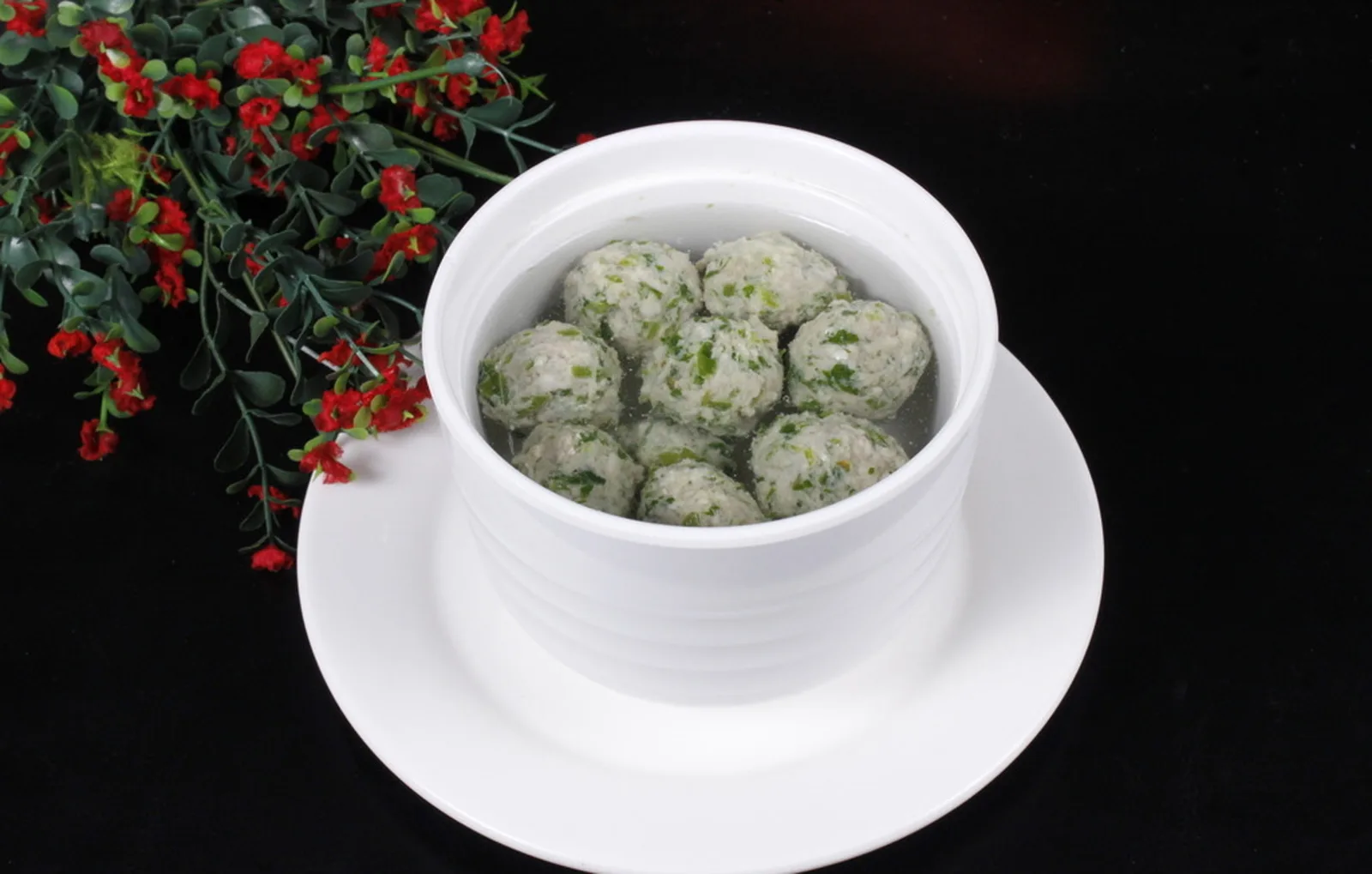
Fuzhou cooking is associated with broths and a measured sweet-sour register. Good broth requires extraction, skimming, ingredient timing and restraint; clear appearance does not mean little happened. Fish balls offer a related test: the wrapper should have elastic life and the filling should remain distinct, not merge into a commercial rubber sphere. Buddha Jumps Over the Wall represents expensive banquet assembly, but it should not eclipse the everyday intelligence visible in a bowl of yanpi wontons or carefully balanced soup.
Red yeast rice is ingredient, process and regional signal
Fujian red yeast rice and products made from it can contribute color, aroma and fermented depth to meat, seafood and sauces. The English phrase 'red wine lees' may refer to different preparations, so a guide should identify the actual ingredient rather than treating every red dish as the same tradition. Fermented products also require honest sourcing and safety boundaries. The culinary point is not an exotic red color; it is how fermentation brings sweetness, acidity and savory depth into a broth or braise without making the dish taste like added dye.
Quanzhou and Xiamen taste maritime, commercial and local
Southern Fujian tables use oysters, squid, fish, rice noodles, peanut, alliums, fermented sauces and soup formats shaped by port-city markets. Quanzhou's long maritime history invites grand claims about foreign influence; evidence should be narrower. Trade creates access and contact, while local cooks decide what survives. Xiamen's tourist snackscape is another filter, making some foods highly visible and others nearly invisible. Compare an oyster preparation, a noodle or rice product and a home-style soup before declaring that Minnan cuisine is one sweet or seafood-heavy flavor.
Fujian's Hakka interior changes the preservation logic
Western Fujian belongs to the dispersed Hakka cultural geography linking parts of Guangdong, Jiangxi and Fujian. Stuffed tofu, preserved vegetables and braised or salted foods enter another agricultural and household context from the coast. Tulou tourism can reduce Hakka life to architecture and one communal meal. Food requires the same care as the buildings: identify who cooked, which county or village tradition is represented and whether a restaurant version has been designed for tour groups. Community identity cannot be inferred from a round building and a plate of pork.
Wuyi tea belongs beside food, not above it
Northern Fujian's Wuyi Mountains are famous for rock oolong, but tea grows inside a broader food landscape of bamboo shoots, fungi, river fish, preserved foods and mountain agriculture. Tea can enter eggs, smoked foods or restaurant concepts, yet many pairings are modern choices rather than timeless rules. The useful connection is hospitality and trade: tea creates rhythms of serving, conversation and exchange. Do not use a photogenic pot to claim that every local meal follows gongfu practice. Ask how tea actually participates at this table.
Minnan food moved through families, ports and colonial economies
Fujian migrants, especially from Minnan and Fuzhou-speaking areas, built communities across Taiwan, Southeast Asia, North America, Europe and elsewhere. Foods traveled through dialect networks and then became local: popiah, noodle forms, soups and ritual foods changed ingredients, names and service. The direction was never one-way; return migration and trade carried tastes back. Calling every resemblance 'Fujian influence' is too easy. Identify the migration group, port, period and local collaborators. A recipe is evidence only when attached to people and institutions.
Seafood needs exact doneness and exact language
Fujian seafood can be steamed, stir-fried, fried, braised, made into balls or folded into soup. Each method asks different evidence: species and freshness for steaming, knife and heat for stir-fry, paste texture for fish balls, extraction and timing for soup. Generic 'fresh seafood' prose does no work. A diner should ask what fish or shellfish is present and how texture signals doneness. I would rather eat one accurately cooked local shellfish than an expensive mixed platter whose sauce makes every species anonymous.
Build a Fujian meal around liquid, not only luxury
Choose one broth or soup, one seafood or river ingredient, one rice or wheat form, and a mountain or preserved vegetable. If a red-fermented preparation is available, add it as a contrast rather than ordering several. In Fuzhou, fish balls or yanpi can reveal texture; in Minnan areas, oysters and rice noodles offer another route; inland, preserved vegetables or Hakka stuffed foods change the logic. Buddha Jumps Over the Wall is meaningful in its banquet context, but it is a poor first and only lens for daily Fujian food.
Return as the county map replaces the one-menu myth
Fujian's dialect and county differences mean a useful guide can keep becoming more precise. Save the dish characters, local pronunciation, city or county and whether the food came from a home, snack shop, banquet or tourist venue. East Moment will connect Fuzhou, Quanzhou, Xiamen, Longyan, Sanming and northern mountain routes through evidence rather than ranking them. Return because the province becomes clearer as the map gains small distinctions: a broth's sour note, a rice noodle's thickness or a preserved vegetable's exact name.