Buy modern Da Hong Pao as a clearly described Wuyi rock-tea product, not as a share of the famous mother bushes. A blend is not automatically inferior, and a single-cultivar claim is not automatically superior. The decisive test is whether the seller explains what is in the bag and whether roast gives way to tea structure by infusions two and three.
I love the red-robe story. I refuse to let it price the tea for me. The legend belongs on the mountain; the buying decision belongs in the gaiwan. Once the packet is open, an emperor, a cliff and a photographed old bush cannot rescue scorched leaf or an empty third infusion.
This is the tension that makes Da Hong Pao worth writing about. Its fame is not fake, yet fame is the easiest part of the product to counterfeit. The only honest move is to take off the robe first: identify what the modern bag claims to contain, then watch whether its fire steps aside and lets material, texture and finish appear.
Da Hong Pao tea is a modern Wuyi product, not mother-bush access
Da Hong Pao, or Big Red Robe tea, is the best-known name within Wuyi rock tea. The protected mother bushes are real historical landmarks, but they are not a realistic retail category. A packet sold today may contain tea from a propagated line, a blend of Wuyi materials, a producer's house style or merely a vaguely named roasted oolong. Those products are not equivalent.
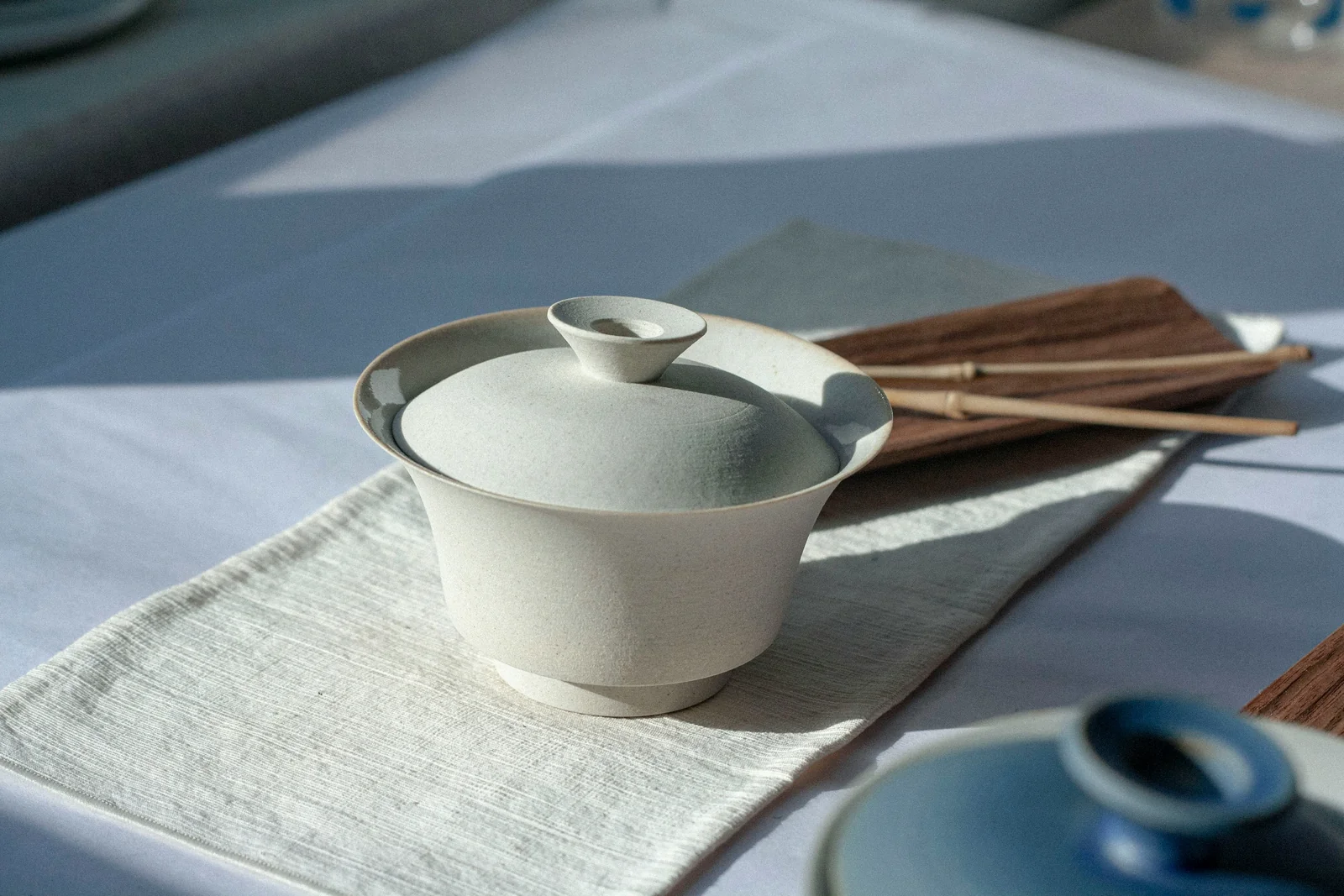
For a first purchase, choose a 15-25 gram sample from a seller who states the production area, material or blend, harvest, roast level, last roast date and storage. Brew 6 grams in a 100-milliliter porcelain gaiwan with 98°C / 208°F water. Read the first infusion for clean roast, the second for body and leaf character, and the third for continuity. If charcoal still explains the entire cup in round three, the roast is hiding the tea rather than developing it.
First determine what “Da Hong Pao” means on this bag
The name is used at several commercial levels. The buyer's first job is not to choose the most romantic story; it is to identify the claim.
| Claim on the product | What it may reasonably mean | What it does not prove |
|---|---|---|
| Historic mother bushes | The protected old bushes associated with Jiulongke and Da Hong Pao history | That ordinary retail tea was harvested from them |
| Propagated line or cultivar claim | Tea made from plant material represented as descended or selected from a recognized Da Hong Pao line | Mother-bush harvest, a prestigious garden or superior processing |
| Commercial blend | Multiple Wuyi materials combined for balance, continuity or a producer's house profile | Inferior quality merely because it is blended |
| House style | A producer-defined expression sold under the famous name | One fixed cultivar recipe shared by every producer |
| Vague Wuyi-style product | A roasted twisted oolong borrowing familiar market language | Wuyishan origin, geographical-indication compliance or traceable material |
The useful seller answer is specific: “a blend of named Wuyi materials made for this roast profile,” for example, is more informative than “authentic ancient-tree Da Hong Pao.” Precision is stronger evidence than prestige vocabulary.
The Standardization Administration of China lists GB/T 18745-2006, Product of Geographical Indication - Wuyi Rock Tea, as the operative national standard on this page's review date. GB/T 18745-2026 was published on March 31, 2026 and takes effect on April 1, 2027. It is inaccurate to present the 2026 edition as already operative.
Wuyi rock-tea making also appears within UNESCO's record of China's traditional tea-processing techniques and associated social practices. That recognition belongs to a living body of knowledge and community practice. It does not turn an unverifiable retail bag into heritage tea by association.
The mother bushes are history, not a shopping tier
The old bushes on the Wuyi cliff are real. Their scarcity, protection and famous auction stories also make them unusually effective marketing symbols. That symbolism creates a simple buying rule: normal retail quantities cannot plausibly be direct harvests from a handful of protected bushes.
Treat mother-bush photographs and robe legends as cultural history. One familiar legend says tea restored an official or scholar to health and a red robe was placed over the bushes in gratitude; other versions connect the robe to imperial recognition. The variations matter because they show that this is a legend tradition, not a complete botanical chain of custody.
Modern Da Hong Pao does not become fraudulent merely because it is not mother-bush tea. Fraud begins when a seller uses the landmark to encourage an impossible inference about the packet.
A blend can be better than a badly made single-variety tea
Many buyers assume that a named single cultivar must rank above a blend. That rule does not survive the cup. Blending can combine aroma, body, finish and batch consistency; it can also hide weak material. A single-variety tea can reveal a distinctive direction; it can also be thin, over-roasted or poorly stored.
| Product type | Potential strength | Main risk | What to ask |
|---|---|---|---|
| Clearly named single material | A more legible plant-material expression | Name used as a quality guarantee | Production area, harvest and why this roast suits the material |
| Disclosed blend | Balance, continuity and a deliberate house profile | Blend formula used to obscure cheap or stale components | Which materials or sensory roles make up the blend |
| Undisclosed “classic Da Hong Pao” | May still be pleasant and affordable | Buyer cannot tell whether the name means origin, recipe or branding | What exactly “Da Hong Pao” denotes for this lot |
Do not collapse Da Hong Pao, Rougui, Shuixian and all Wuyi rock tea into synonyms. They may share regional processing knowledge and overlapping roast directions, but cultivar and product claims still matter. A 2023 study of rock tea made from 16 tea-plant varieties under one experienced maker found meaningful differences in aroma direction among the varieties. Its ten-person panel evaluated roasted, floral, fruity, woody, sweet and nutty attributes. That supports a bounded conclusion: plant material can affect the cup. It does not produce a universal ranking, and its covered-cup laboratory protocol is not our household recipe.
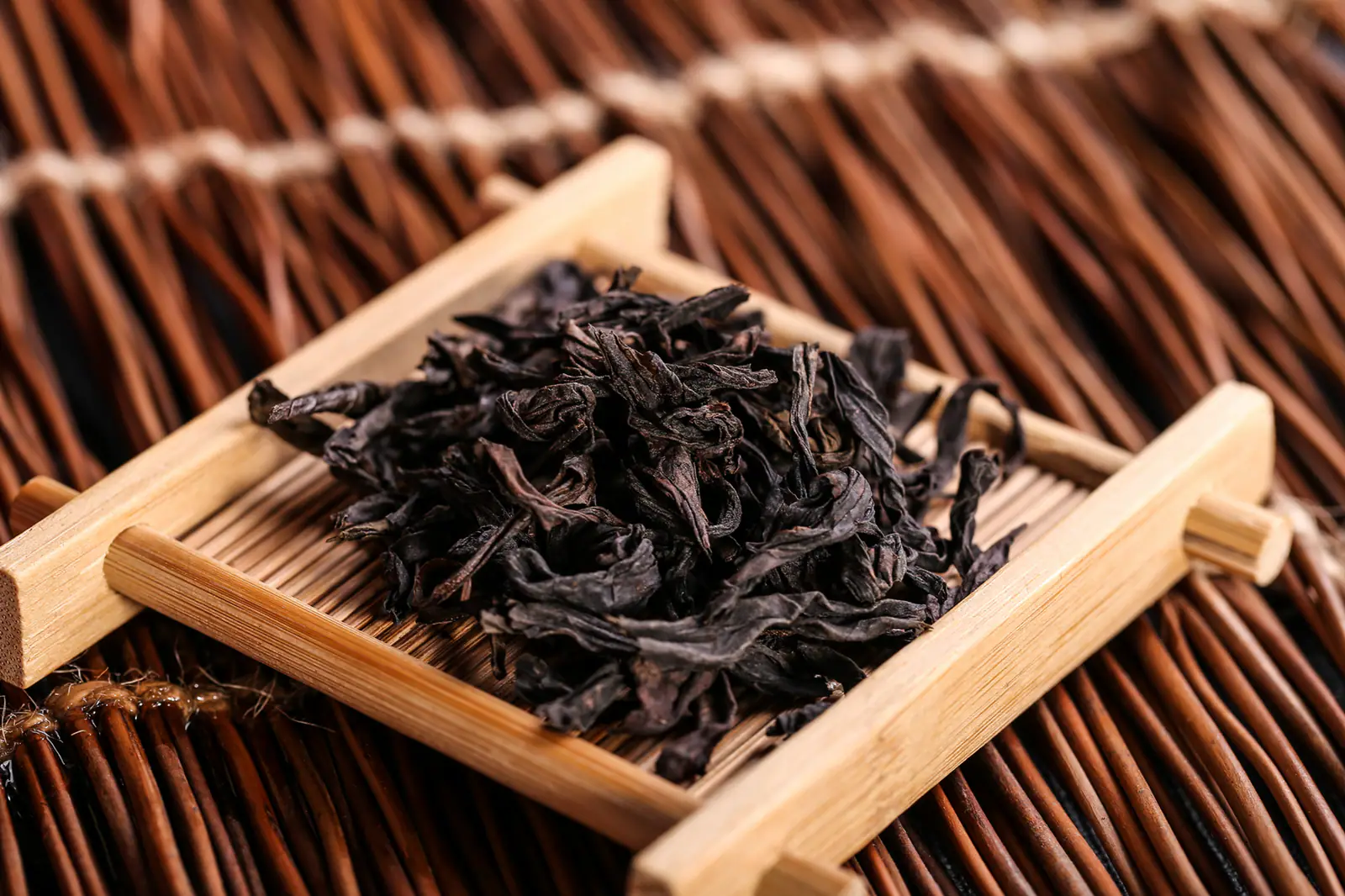
The photograph above can show dark, twisted, roasted-leaf morphology. It cannot identify Wuyi origin, Da Hong Pao material, roast date or quality. Dry leaf should trigger questions, not close the case.
Roast must retreat, not merely become weaker
Roast is not a cosmetic flavor added after the “real tea.” It changes aroma chemistry, bitterness, astringency and the relationship between fragrance and body. It also makes easy marketing: dark leaves, dark liquor and the word “charcoal” look serious even when the cup is empty. A weaker charcoal taste in cup three is not enough. I want the space left by the fire to be occupied by something: fruit, wood, spice, sweetness, texture or a finish that returns.
A 2021 peer-reviewed study compared 12 Wuyi rock teas across four cultivars - Shuixian, Qizhong, Dahongpao and Rougui - at low, moderate and sufficient roasting levels. Six professional assessors confirmed the roast categories, and chemical measurements were run in triplicate. In this sample set, roasting level materially changed volatile and nonvolatile profiles; moderate roasting reduced bitterness and astringency and formed a softer flavor, while stronger roasting reduced fresh and brisk character.
The study does not establish one perfect roast level. Cultivars and starting materials require different handling, and the experimental categories cannot be turned into universal factory temperatures or firing counts. The practical conclusion is still strong: judge roast by what it allows the underlying tea to become, not by darkness or the number of firings. One firing can be sufficient, and several firings do not automatically mean high roast.
| Roast signal | Productive result | Warning sign |
|---|---|---|
| First aroma | Clean toasted grain, warm wood, fruit, spice or floral lift | Ashtray smoke, burnt oil, sour heat or stale cupboard odor |
| Liquor | Fire joins body and finish | Dark color with watery middle; roast sits above the liquor |
| Infusions two and three | Roast recedes; fruit, sweetness, texture or cooling fragrance becomes clearer | The same charcoal note simply becomes weaker |
| After swallowing | Returning sweetness, salivation or a clean structured finish | Sandpaper dryness, burnt bitterness or an empty stop |
Use three infusions as a controlled buying test
This is a repeatable home comparison, not a laboratory authentication method. Keep the vessel, water, dose and pour speed constant. If comparing two samples, label the cups and alternate the tasting order.
Start with:
- 6.0 grams of leaf per 100 milliliters of working vessel volume
- 98°C / 208°F water
- a plain porcelain gaiwan or neutral porcelain pot
- 10 seconds of water contact for the first infusion, then 12 and 15 seconds
- a complete decant after every infusion
Count contact time from the beginning of the pour and record when the last liquid leaves the vessel. If your pour takes eight seconds, a nominal “10-second steep” that starts timing after filling is not comparable with one timed from first contact.
| Round | Read first | Pass | Reject or investigate |
|---|---|---|---|
| Infusion 1 | Roast cleanliness and top aroma | Fire is clean; aroma has more than one direction | Burnt, musty, sour or perfumed smell; dark liquor treated as success |
| Infusion 2 | Body and material | Liquor gains shape; fruit, flower, wood or spice connects to texture | Strong nose over thin liquid; immediate dry grip with no middle |
| Infusion 3 | Roast-to-leaf transition | Fire steps back and sweetness, structure or changing aroma remains | Charcoal still explains everything; tea collapses or turns hollow |
| Cooled liquor | Finish without heat | Clean sweetness or fragrance remains legible | Stale oil, smoke, sourness or coarse dryness becomes clearer |
| Spent leaf | Smell, flexibility and damage | Clean-smelling, pliable material with a plausible mix of intact and broken leaf | Scorched edges, papery fragments, persistent sourness or storage odor |
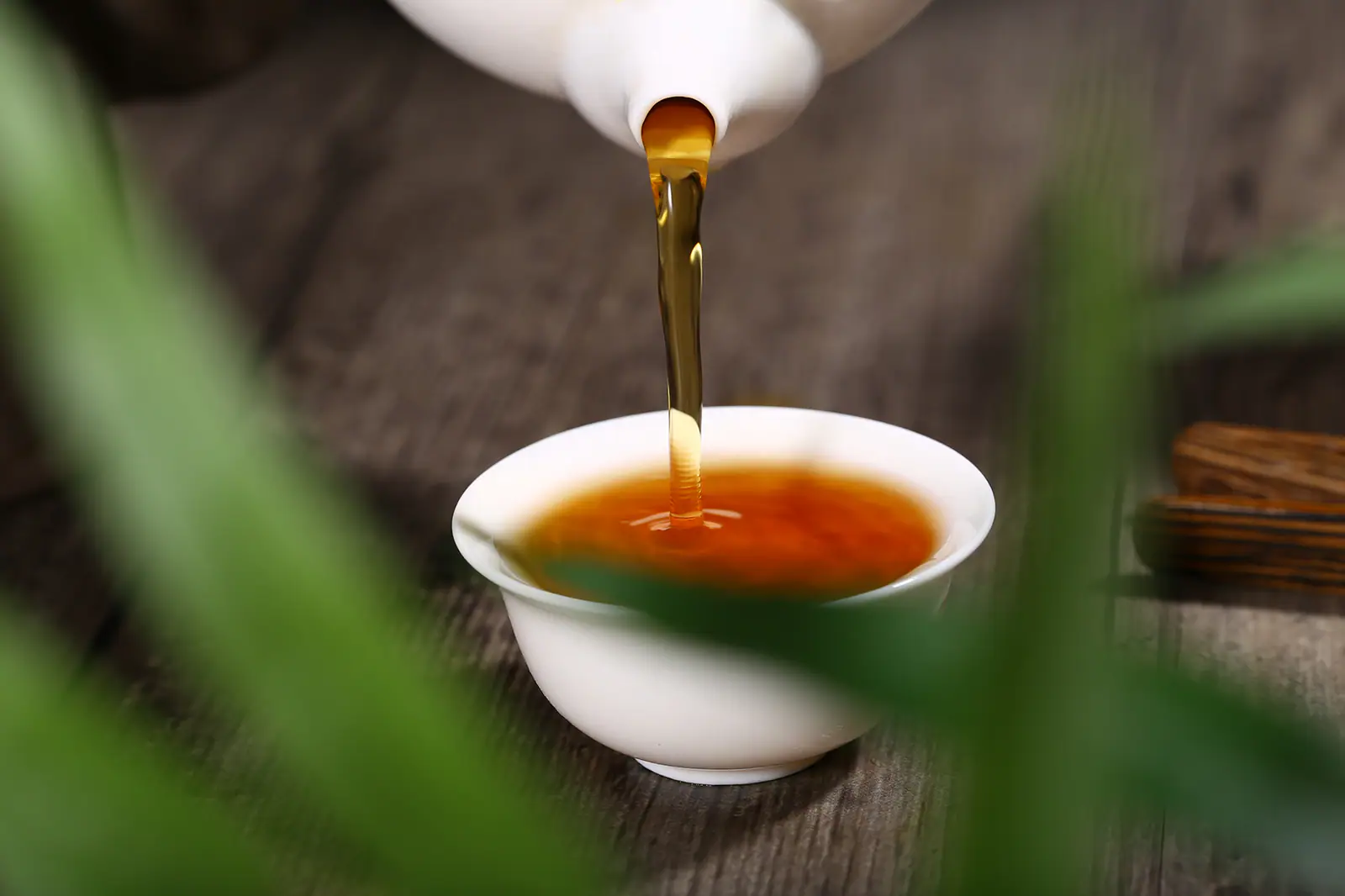
The pour photograph documents liquor and full decanting only. Amber color cannot prove Da Hong Pao identity, roast level, age or origin.
Diagnose one problem at a time
| Symptom | Most likely practical explanations | Change first |
|---|---|---|
| All roast, no leaf | Very recent roast, aggressive roast or weak base material | Shorten the first infusion; if round three is still only fire, reject the tea |
| Strong aroma, thin liquor | Low dose, quick collapse or aroma-led weak material | Increase by 0.5 g per 100 ml in a later session; keep time fixed |
| Dry and bitter from round one | Infusion too long, excessive broken leaf or roast/processing fault | Decant faster; if dryness remains at shorter contact, blame the tea |
| Flat and woody | Stale storage, odor exposure, low extraction or exhausted leaf | Confirm hot water and dose; do not revive a stale tea with longer and longer steeps |
| Sour when hot and cool | Water or vessel contamination, storage or processing fault | Retest with clean water and porcelain; reject persistent sourness |
| Pleasant first cup, sudden collapse | Surface aroma without enough soluble structure | Repeat at the same ratio; do not compensate with an extreme dose |
Change one variable between sessions. Adjusting dose, temperature and time together produces a different cup but teaches you nothing about the cause.
Tea-soup and spent-leaf color are not roast meters
A five-stage spent-leaf comparison, moving from under-fired to high fire, gives me a useful visual vocabulary for roast. I use it to decide what to inspect, never as a verdict by itself: camera exposure, cup depth, infusion parameters and the identity of the lot can all change what the eye thinks it sees.
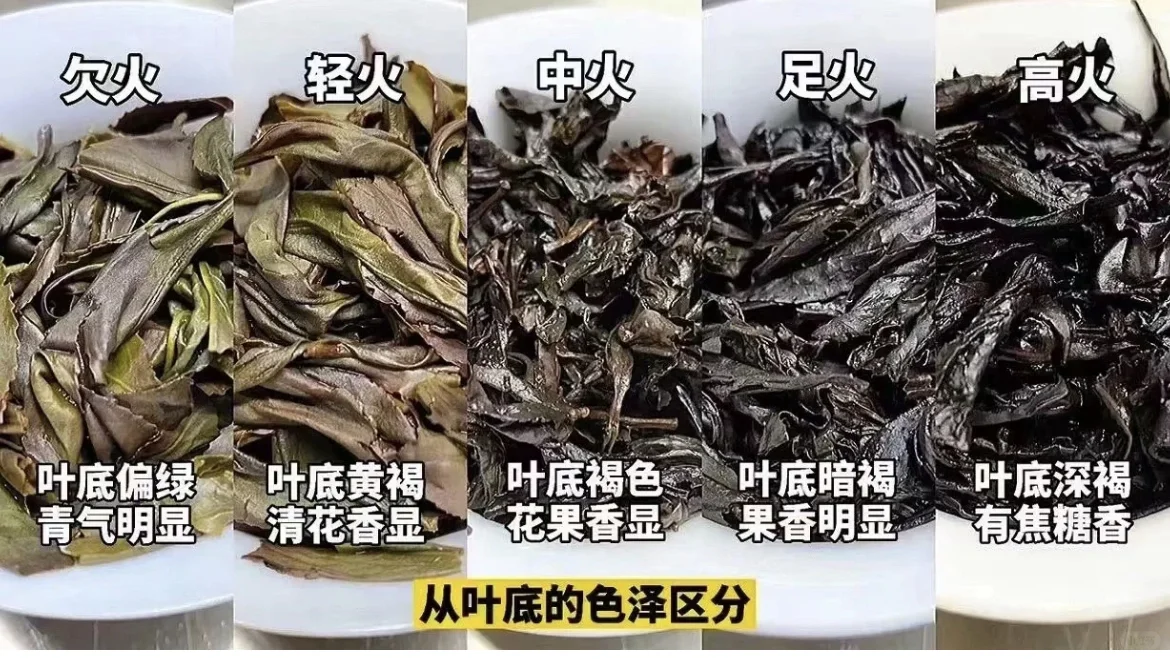
Use spent leaf for bounded observations:
- smell it warm and again when nearly cool for smoke, sourness, stale oil or clean leaf aroma;
- press a cooled piece to judge whether it is pliable, papery or scorched;
- note fragmentation and whether the leaf opened evenly;
- compare samples only when dose, water, time, vessel, lighting and camera are controlled.
Do not use spent leaf alone to authenticate cultivar, cliff-garden tier, origin, grade or quality. “Green leaf with red edge,” dark brown leaf and the bumpy appearance sometimes called hamabei can all be overinterpreted. A camera can record appearance; it cannot reconstruct provenance.
“Rock rhyme” describes an experience, not an origin certificate
Yan yun, often translated as rock rhyme, can be a useful sensory phrase when it points to a combination of structure, fragrance, mineral or stony associations, roast integration and a finish that returns. It becomes useless when treated as a mystical laboratory test for a cliff garden.
No taste word can establish a production zone. Water composition, roast, storage, brewing and expectation all affect mineral impressions. Use “rock rhyme” to describe a cup after you have recorded the physical evidence. Never use it to replace traceability.
Brewing Da Hong Pao without hiding it
Near-boiling water is the correct default for a twisted Wuyi-style oolong. Lower temperature can reduce roughness, but it can also make a weak tea seem polite by extracting less of everything.
For a fuller daily cup, use 4 grams per 250 milliliters, 95-98°C water and about 2 minutes, then decant completely. For gongfu brewing, use the controlled starting point above. If the leaf is heavily broken, reduce contact time before reducing temperature. If it is intact but thin, test a slightly higher dose in the next session.
Do not rely on a quick rinse to remove caffeine. Da Hong Pao contains caffeine, and roast does not make it caffeine-free. This tea is food and cultural practice, not a treatment for weight, blood pressure, digestion or disease.
For a detailed leaf-form method, use the oolong brewing guide.
Ask these seven questions before paying a premium
- Where was this lot produced? “Fujian” and “Wuyi style” are not the same claim as Wuyishan traceability.
- What does Da Hong Pao mean here? Cultivar or propagated line, disclosed blend, house style or branding?
- What is the material or blend description? A seller may protect a recipe while still explaining its structure.
- Which harvest year and season? “Old bush” is not a date.
- What roast direction was intended? Ask what the producer wanted the roast to do, not only whether it is light, medium or high.
- When was the last roast? Recent fire and rested fire can present differently.
- How was it packed and stored? Airtight, dry and odor-free matters more than ceremonial packaging.
Reject the listing when it implies mother-bush harvest at an ordinary price, asks you to infer a prestigious origin tier from “mineral” flavor, uses dark liquor as proof of quality, repeats “traditional high fire” without a roast date or material description, or refuses a small sample while demanding a large premium.
For a first purchase, buy two clearly described samples from one transparent seller: a moderate-roast house blend and a named-material tea at a similar price. Brew them side by side. The goal is not to prove that one category always wins; it is to learn whether disclosure and cup structure agree.
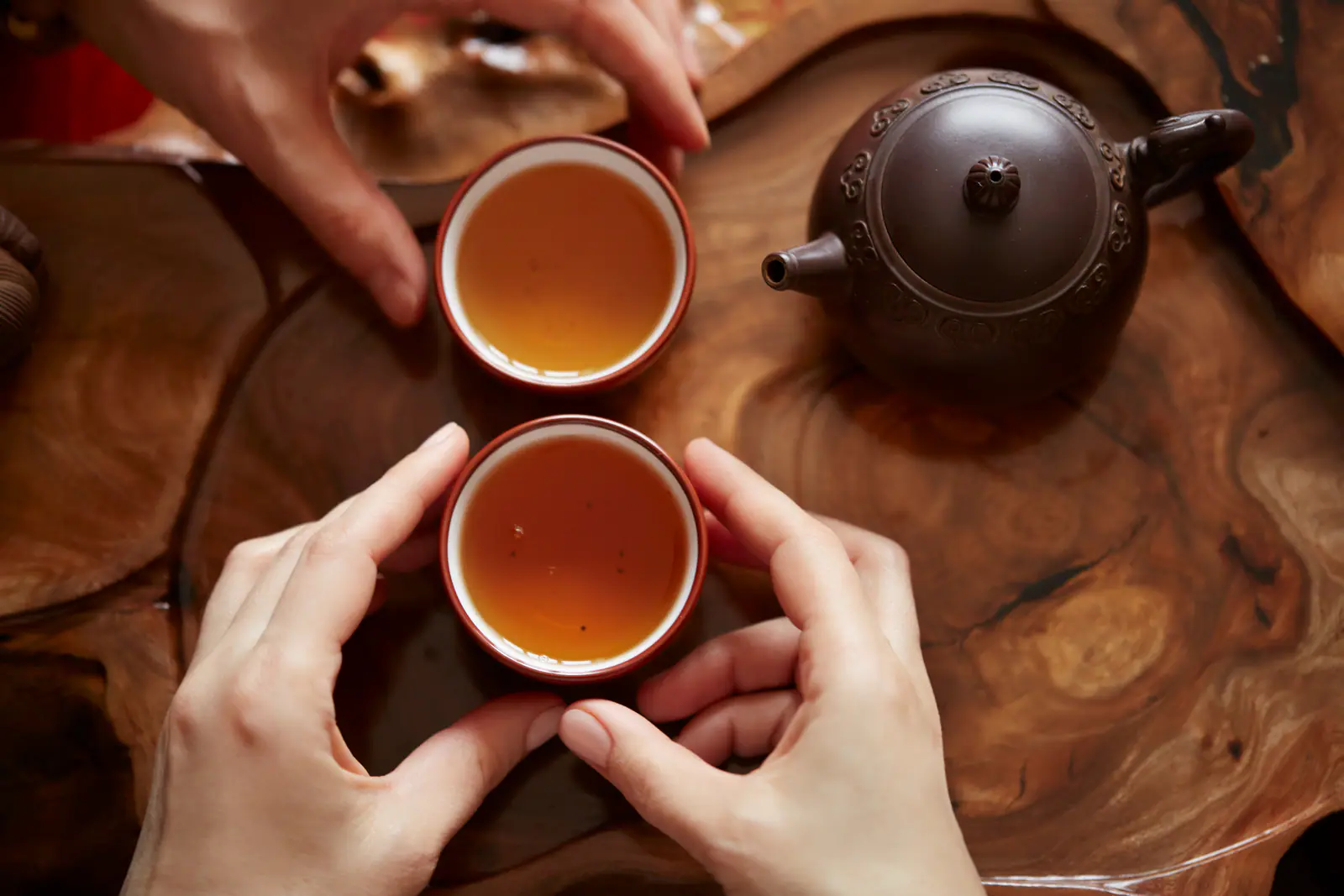
Take off the robe before you decide
The mother bushes explain why Da Hong Pao became famous. They do not explain what is inside a modern packet. The buying decision belongs to the present: a precise product claim, a disclosed roast and storage history, and a cup that becomes more legible after the first infusion.
If roast gives way to body, changing aroma and a clean finish by infusions two and three, the tea has something to say. If the story grows while the cup disappears, you are buying the robe rather than the tea.
Record the seller's exact material claim, the last roast date and what replaced the fire in cup three. If the answer is “nothing,” say it plainly. Add that three-part record to the Da Hong Pao roast-retreat audits on Moments and return when another reader tests the same kind of claim. Famous tea becomes useful when we stop trading legends and start comparing what survived the cup.
Compare Tieguanyin and Phoenix Dancong, continue through the oolong tea collection or return to Chinese tea culture.