Choose Phoenix Dancong tea by the honesty of its label and the structure of infusions two and three, not by the loudest fragrance in the bag. A good tea moves: aroma enters the liquor, bitterness gives way to sweetness, and roast recedes rather than covering the leaf. “Single bush,” “high mountain,” an aroma name and a photograph of an old trunk are claims to investigate, not quality certificates.
That conclusion removes the category's biggest distraction. Phoenix Dancong has names that practically write the sales copy themselves: Honey Orchid, Gardenia, Almond, Ginger Flower and the unforgettable Duck Shit Aroma. Enjoy the names. Laugh at them if you want. Then make the tea prove itself after the first fragrant lid has cooled.
Phoenix Dancong tea turns an aroma name into a contract
Phoenix Dancong, or Fenghuang Dancong, is a strip-shaped oolong tradition associated with the Fenghuang Mountain area of Chaozhou, Guangdong. China's GB/T 30357.6-2017, Oolong Tea—Part 6: Dancong, supplies a national product framework. The official China-EU geographical-indication profile places Fenghuang Single Cluster Tea in Chao'an District and the Phoenix Mountain production area.
Neither source turns every word on a retail label into the same level of evidence.
| Label term | Useful meaning | What still needs proof |
|---|---|---|
| Phoenix / Fenghuang | Regional tradition associated with Chaozhou and Fenghuang Mountain | Exact production area and the batch's chain of custody |
| Dancong | Established tea category with a history of selecting distinctive plants and making lineages separately | That this commercial batch came from one literal bush |
| Mi Lan Xiang, Ya Shi Xiang and other names | Aroma-family, plant-line or market vocabulary that organizes expectation | Exact cultivar usage, place, ingredients and sensory result in this batch |
| Single-bush batch | A specific claim that one bush's material was kept separate | Harvest and processing records, quantity and producer explanation |
| Old bush / old tree | An age claim that may affect price | How age was established and whether the pictured tree supplied this tea |
| High mountain | A broad elevation and place claim | Named zone, credible altitude record and relevance to this lot |
Translate dancong literally if you want to understand the history. Do not buy it literally unless the seller is making and supporting a batch-level claim. An aroma name is a contract of attention: it tells you what direction to look in, while the production area, harvest, roast and cup decide whether the seller kept the promise.
I reject the premium when a seller translates dancong as “single bush” but cannot say whether that phrase describes this batch, a plant lineage or merely the category. English drama around the name is not traceability.
The mountain is context, not a flavor guarantee
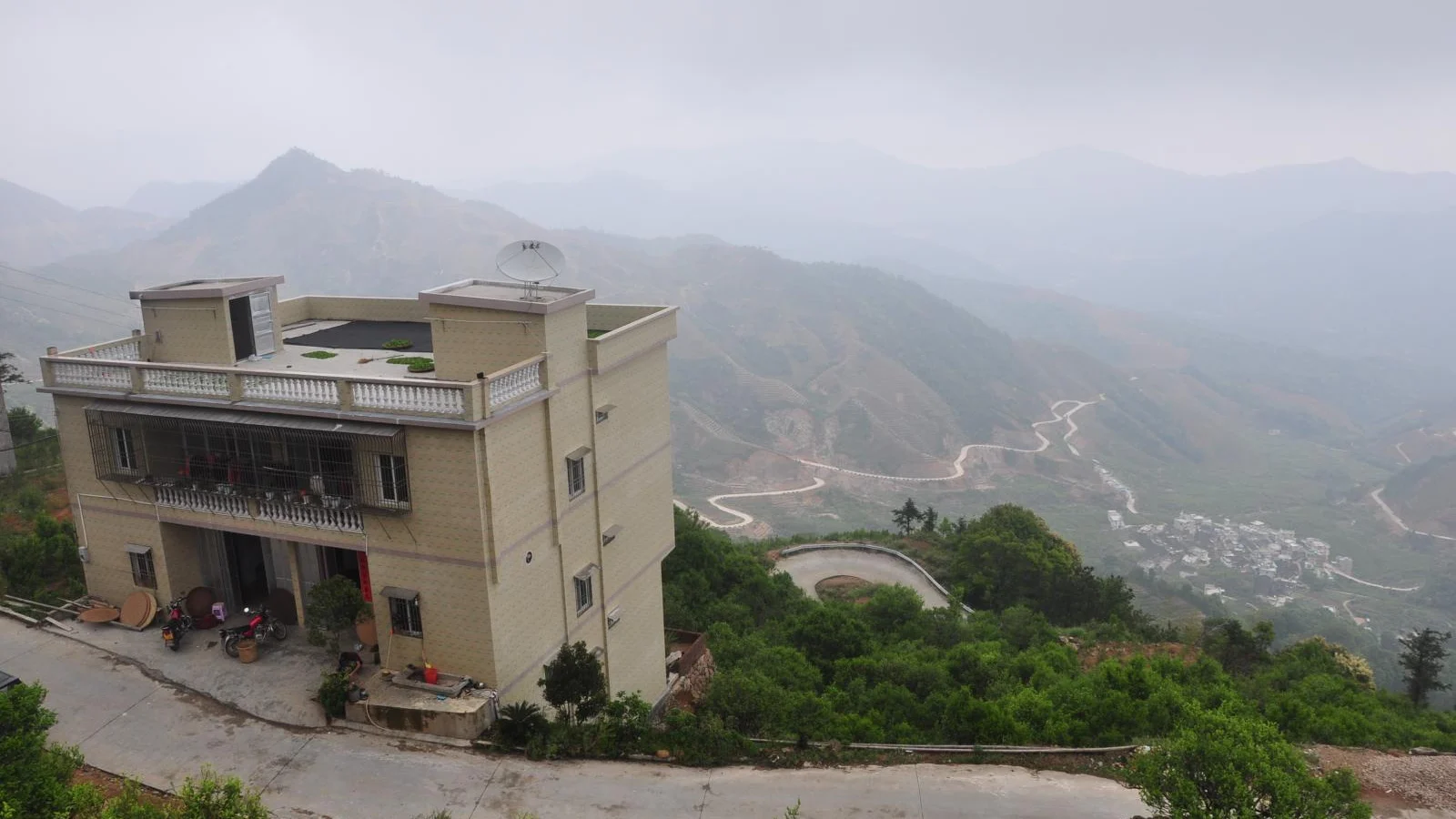
This 2011 photograph documents Phoenix Mountain in Chao'an: steep roads, homes, ridges and cultivated slopes occupy the same frame. It is useful because it corrects the fantasy of tea growing on an untouched, empty peak. It does not identify a garden, bush, altitude or packet of tea.
Place still matters. Plant material, weather, elevation, cultivation and local processing knowledge all enter the regional system. But “mountain taste” is too vague to authenticate a cup, and a misty landscape photograph is especially weak evidence for a premium price.
Aroma names overlap more than sales pages admit
Mi Lan Xiang is commonly translated as Honey Orchid Aroma. Ya Shi Xiang is literally Duck Shit Aroma, though the tea is marketed for floral, creamy or fruit-like associations rather than anything suggested by the joke. Huang Zhi Xiang and Zhi Lan Xiang bring other floral comparisons. These are sensory and lineage labels, not ingredient lists.
They are also not isolated chemical boxes. A 2020 study examined nine Fenghuang Dancong aroma types and reported 122 volatile compounds, 22 shared across all nine, with calculated similarity ranging from 46.79% to 95.94% in that dataset. A 2024 study of five teas across four aroma types likewise found shared and differentiating compounds.
The useful conclusion is modest but important: aroma families can share substantial chemistry while differing in proportions and sensory expression. A name directs attention; it does not guarantee that every drinker, producer and harvest will smell the same flower.
I dislike tasting notes that turn every cup into a florist's inventory. If the fragrance never enters the liquor, changes no texture and leaves no clean finish, naming three more flowers does not make the tea deeper.
The studies also cannot tell whether an unknown retail tea was flavored. A static floral smell is a reason to ask the seller about ingredients and process, not laboratory proof of addition.
Read dry leaf for condition, not identity
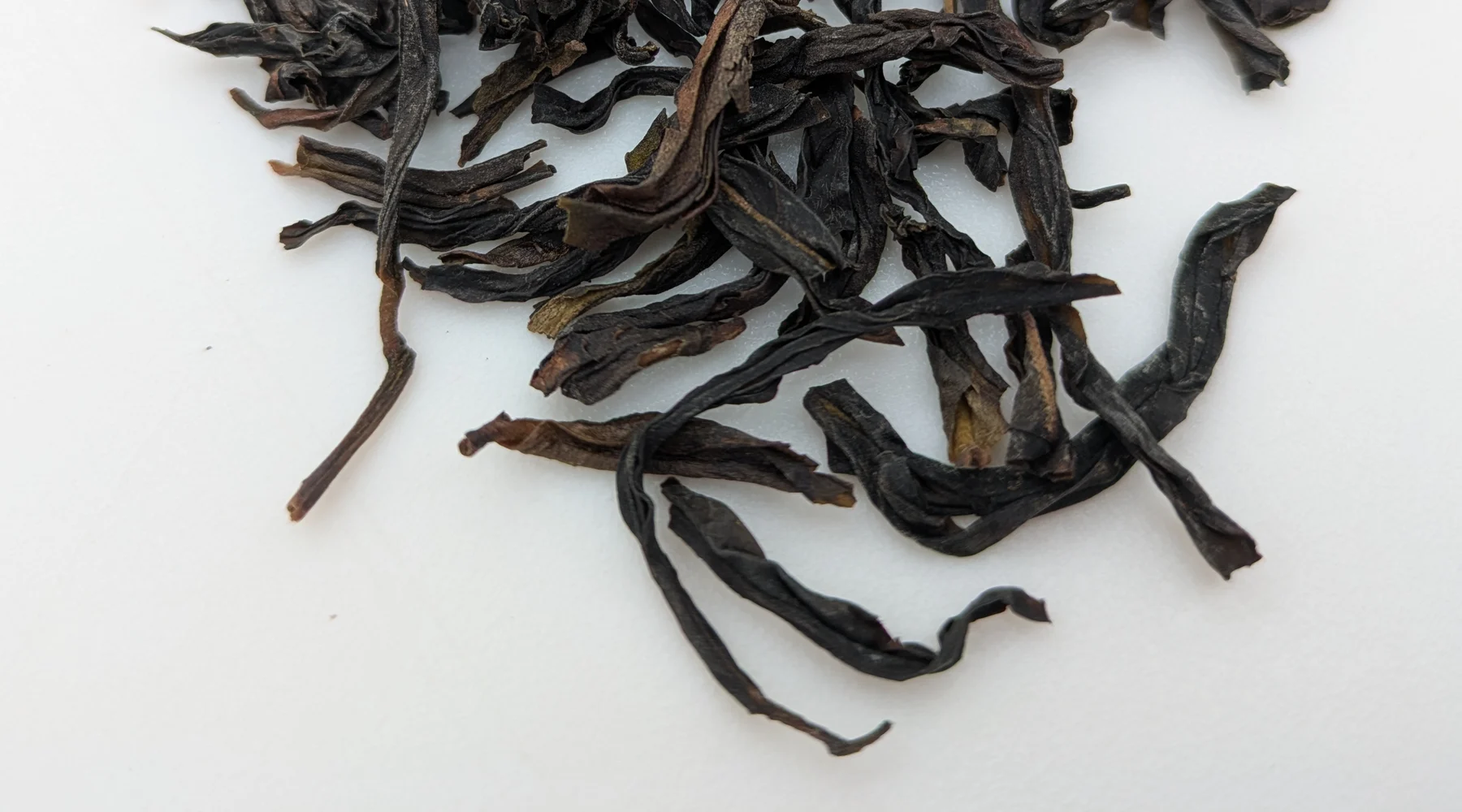
The hero image is a documented retail tea labeled “Duck Shit Aroma Phoenix Dancong,” made in Guangdong and sold in Berkeley. Its long, dark, twisted strips are a useful real example. They are not a universal appearance standard and do not independently verify its mountain origin.
Dry leaf can still screen a purchase:
- Long strips should not be reduced to excessive crumbs unless the product is sold as broken material.
- Smell for clean roast, fruit, flowers, honey, wood or fresh leaf character according to style.
- Reject damp storage, stale oil, cardboard, ash without tea underneath or perfume that feels detached from leaf.
- Do not rank quality from darkness. Oxidation, roast, photography and storage all affect color.
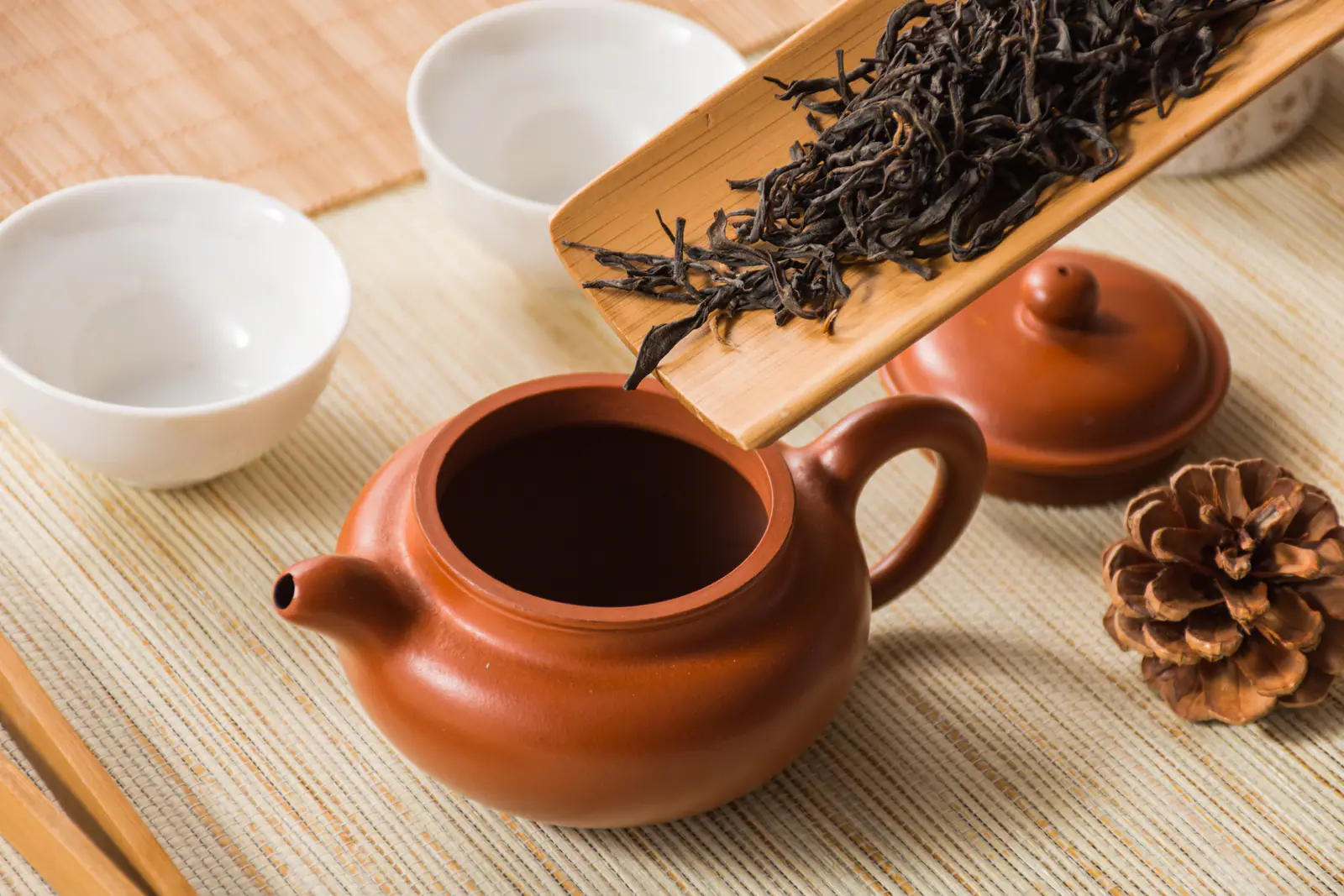
This close view shows the extraction problem clearly: long strips occupy space unevenly and broken tips can release faster than intact leaves. Leaf shape can guide the pour, but it cannot identify cultivar, clay, maker or origin.
Fragrance is built during processing
Dancong is oolong, not a flower-scented green tea. The processing logic includes withering, repeated leaf agitation and resting, fixation, rolling, drying and, depending on the product, further roasting or refiring.
Peer-reviewed oolong research on bruising and withering shows that characteristic aroma formation changes through those stages. Dancong-specific studies find different volatile profiles among named types. Together they support a process-based explanation of fragrance. They do not justify the claim that all strong Dancong aroma is “completely natural,” because that conclusion still depends on the ingredients and handling of the actual batch.
Roast should work as structure, not camouflage. Fresh fire can temporarily dominate a tea. A well-integrated roast becomes less obvious across infusions and leaves fruit, flowers, body or mineral impressions underneath. If every cup tastes only of char, the firing story has replaced the tea.
Brew three diagnostic infusions before chasing longevity
The page's brewing numbers are an East Moment comparison baseline, not a national-standard recipe.
Fixed porcelain baseline
- Leaf: 6.0 g of reasonably intact strip leaf
- Working water volume: 100 ml, measured with leaf in the vessel
- Water: 95°C / 203°F, same water for every sample
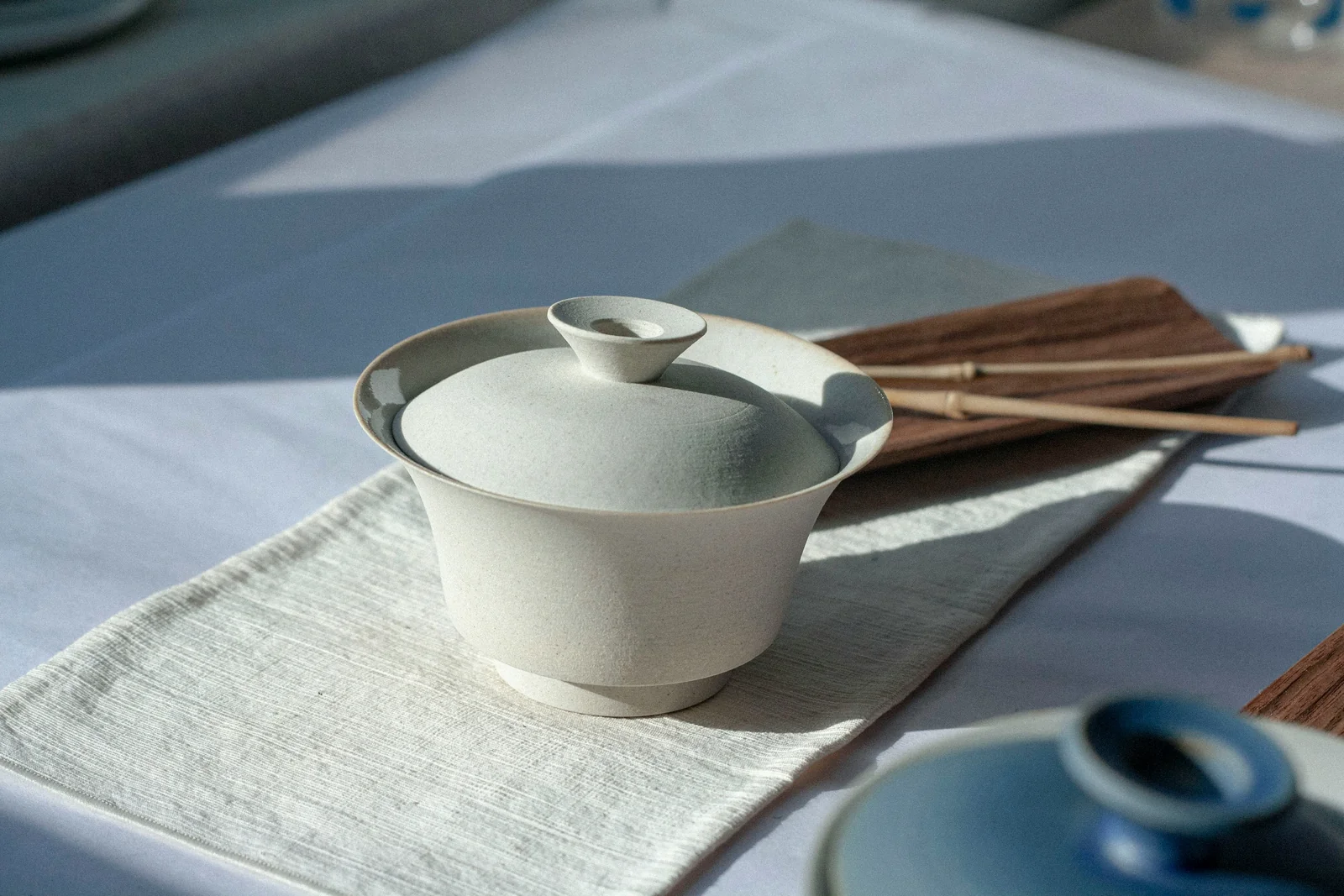
- Vessel: thin porcelain gaiwan with a measured emptying time
- Rinse: none for the controlled first comparison
Timing starts when water first reaches the leaf. More importantly, record two times: when decanting starts and when the gaiwan is empty. “Five seconds” is meaningless if one vessel takes another ten seconds to drain.
| Infusion | Start decanting | What to judge |
|---|---|---|
| 1 | 5 seconds | Clean opening aroma, roast level, broken-leaf bitterness and obvious storage faults |
| 2 | 7 seconds | Whether aroma enters the liquor; body; bitterness-to-sweetness transition |
| 3 | 10 seconds | Whether the tea gains coherence or collapses after its opening scent |
Increase later infusions only when the liquor becomes thinner. Do not promise a fixed number of “good steeps.” Vessel, material, dose and personal stopping point make that claim too easy to manipulate.
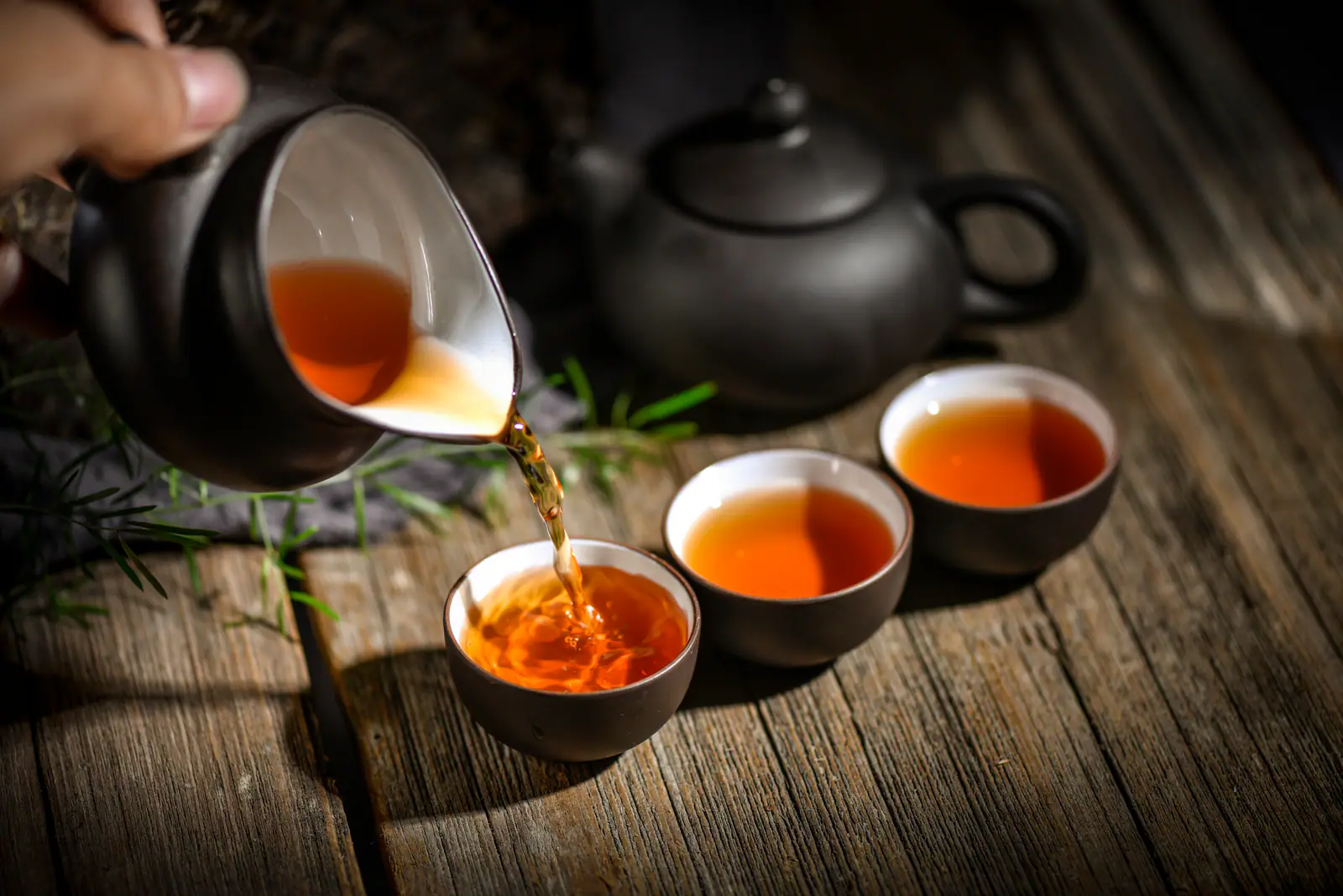
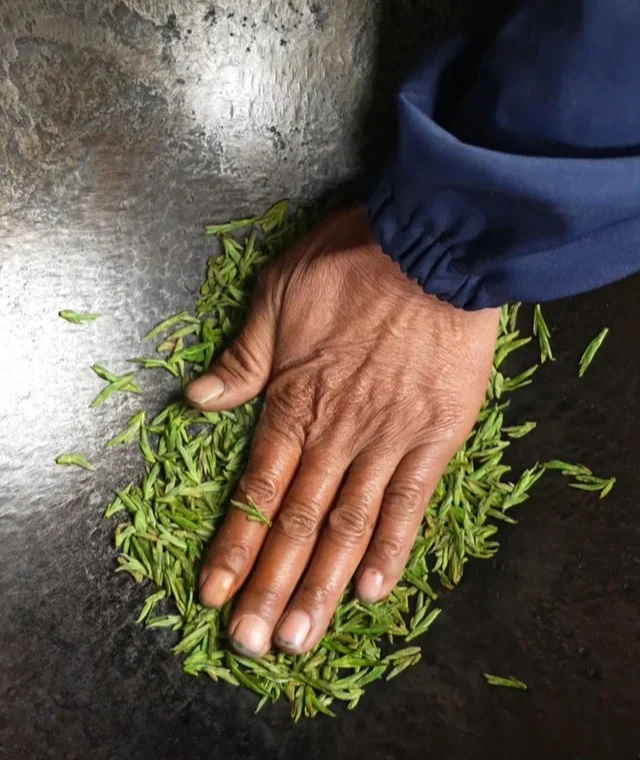
The photograph shows why complete, even distribution matters. It does not prove the tea is Dancong, and liquor color cannot establish aroma type, age or quality.
The first lid flirts; the third cup tells the truth
The best Dancong is not necessarily the least bitter. It is the tea whose bitterness has a job and then gets out of the way. I have no patience for a Dancong that wins the sniffing contest and disappears the moment it is swallowed. That is perfume theatre, not a complete cup.
| Signal | Worth continuing | Reason to reject or downgrade |
|---|---|---|
| Aroma | Changes from lid to liquor and from infusion to infusion | Loud dry aroma disappears in water or remains unnaturally identical |
| Bitterness | Arrives cleanly, then releases into sweetness or salivation | Rough, throat-catching dryness accumulates without resolution |
| Body | Carries aroma rather than feeling like scented hot water | Thin center with only a fragrant surface |
| Roast | Recedes and reveals tea underneath | Char, ash or baked flatness dominates every cup |
| Finish | Returns after swallowing and remains clean near cooling | Sour storage, stale oil or perfume becomes clearer as the cup cools |
| Later infusion | Changes while retaining identity | The tea collapses immediately after an explosive first aroma |
Taste each cup hot, warm and near cool. The lid is useful for aroma; the liquor and finish decide whether that aroma belongs to a complete tea.
Fix bitterness before blaming the category
Dancong often becomes bitter because high leaf dose meets a slow vessel and an imprecise “quick steep.” Correct one variable at a time.
| Result | First variable to inspect | Next controlled change | Tea-level concern |
|---|---|---|---|
| Bitter before aroma reaches the liquor | Total contact time, including pouring | Start decanting 3–5 seconds earlier | Roughness still accumulates with a genuinely fast complete pour |
| Fragrant lid, thin cup | Extraction too low or water too soft | Extend the next infusion modestly before adding leaf | Aroma remains detached from body across sensible settings |
| Fragrant but severely drying | Broken leaf or dose too high | Keep temperature; reduce dose by 0.5 g | Dryness does not resolve or becomes throat-catching |
| Roast dominates | Recent or heavy firing | Use the same recipe across three cups and let the sample rest before retesting | Only ash, char or baked flatness remains |
| Sour or damp | Storage or processing fault | Confirm in a clean porcelain vessel with fresh water | Sour cellar, mildew or dirty-fermentation odor persists |
| Weak by infusion three | Under-dose, old tea or aroma-only material | Extend time once | No body or finish appears even after adequate extraction |
Do not automatically cool the water to 80°C. Lower heat can mute both aroma and defect while leaving the extraction imbalance unsolved. First shorten total contact time; then test dose; only then compare a modest temperature reduction while holding everything else still.
For the general timing framework, use the oolong brewing guide. If the gaiwan itself is the bottleneck, the gaiwan guide explains working volume and decant speed.
Price is the easiest story and the weakest test
A 100-yuan tea can be direct, cheerful and useful as a daily drink. A 500-yuan tea can be finer, deeper and more persistent. It can also be five times more expensive because a mountain name, old-tree claim and beautiful box were stacked on top of one loud opening aroma. Price tells you how much proof to demand; it does not supply the proof.
I would rather buy an inexpensive tea whose fragrance enters the liquor and changes honestly than a prestigious tea that performs for the lid and abandons the mouth. When paying more, demand more than intensity: demand a cleaner transition from bitter to sweet, more dimensional body, a longer finish and a label whose place, season and roast details remain stable under questions.
Buy the explanation behind the aroma name
Ask these seven questions:
- What exact Chaozhou production area is claimed?
- Is the aroma name being used as a cultivar, propagated line, sensory family or house product name?
- What are the harvest season and year?
- What are the oxidation and roast directions, and when was the last firing?
- Is “single bush” literal for this batch or simply the category translation?
- What supports any tree-age, altitude or old-bush claim?
- Is any flavoring or non-tea ingredient used?
Reject the premium when the seller stacks “high mountain,” “old tree,” “single bush” and a famous aroma name but cannot explain one of them precisely. Also reject a price argument built only on a trunk photograph, liquor color, claims of ten or more infusions or the statement that bitterness automatically proves altitude.
I insist that every prestige word increase the seller's burden of proof. The more expensive the mountain story becomes, the less patience I have for missing harvest dates, vague roast history and photographs that cannot be tied to the tea in the bag.
The strongest buying evidence is boring: a consistent producer identity, exact lot description, dated harvest, disclosed roast, small sample and a seller whose answer remains the same after a follow-up question.
Start with contrast, not a prestige flight
For a useful first comparison, buy 10–20 g each of Mi Lan Xiang and Ya Shi Xiang from the same seller and similar price level. Add a third named type only if its harvest and roast are comparably documented. Brew all samples with the fixed porcelain protocol.
Record only five fields: label meaning, first aroma, best infusion, bitterness-to-sweetness transition and finish near cooling. This prevents aroma vocabulary from becoming a competition to name the most fruit.
Mi Lan Xiang is not universally “richer,” and Ya Shi Xiang is not automatically “younger” or “more floral.” Those may describe particular products, not permanent category law.
Chaozhou gongfu is extraction control with a social purpose
Phoenix Dancong belongs naturally beside Chaozhou gongfu tea: small vessels, generous leaf, hot water, fast decanting and small cups turn a rapidly changing tea into a shared sequence.
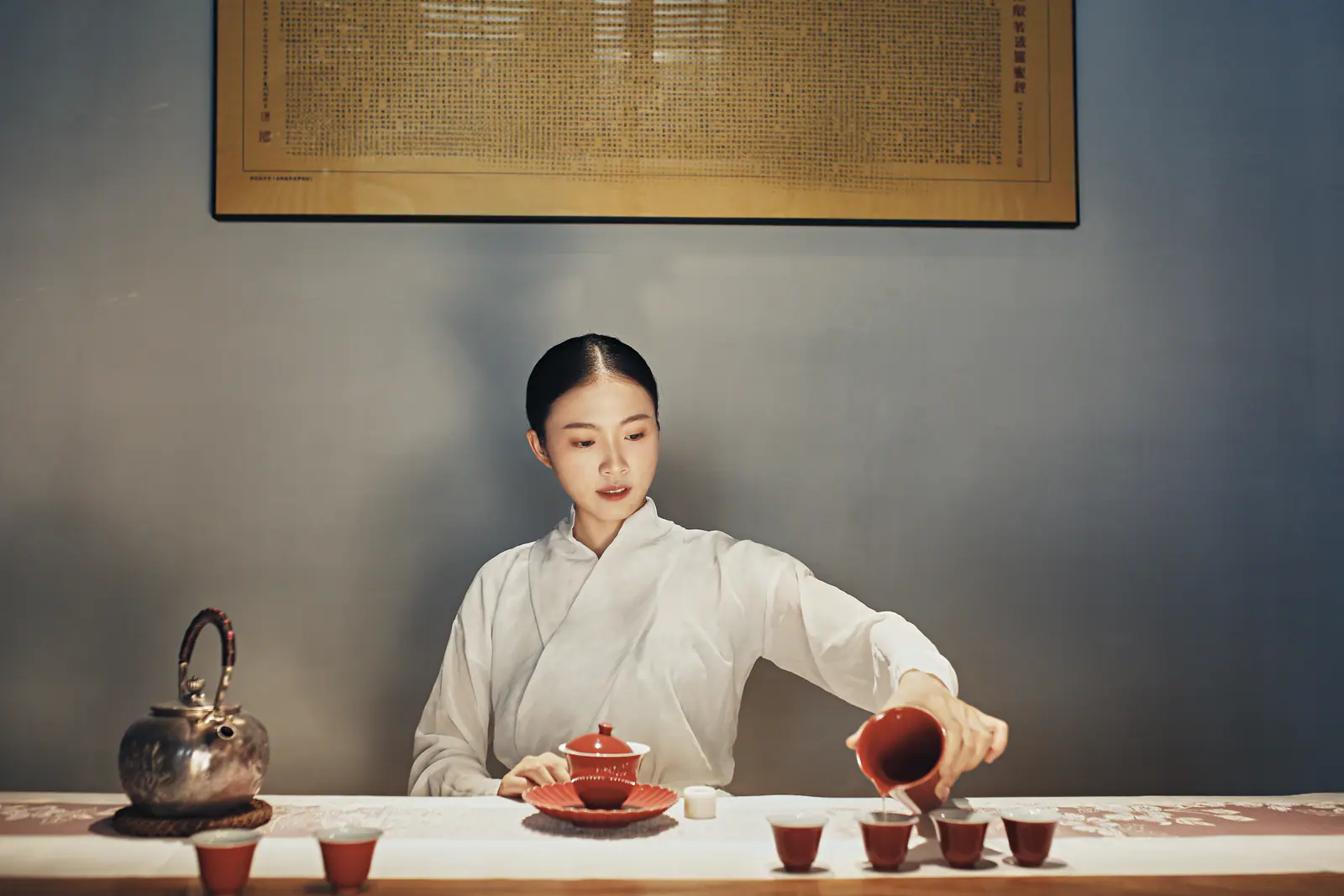
The point is not to perform twenty-one steps for an audience. The useful inheritance is attention: know the vessel, finish the pour, divide the liquor evenly and notice what changes before the next conversation carries you away.
Continue through the Chinese oolong tea guide or its oolong tea collection to place Dancong beside rolled Tieguanyin and Wuyi rock tea. Compare the different label risks in Tieguanyin tea and Da Hong Pao tea.
The buying rule remains simple: aroma earns attention; transparent labeling and a coherent third infusion earn the money.
Photograph the front and back label, then write one line for each of the first three infusions: where the aroma lived, what the bitterness did, and what remained after swallowing. Put that evidence—not another list of fruit names—into a Dancong label audit on Moments. Come back when someone posts the same aroma name from another seller. That comparison is where this category becomes genuinely interesting.