Shou Mei tea is the best-value white tea when you want mature-leaf body, easy strong brewing and a product you can inspect without paying for bud rarity. Start with loose tea. Buy a cake only when the seller shows its interior and separates harvest year, pressing year and storage history. The decisive evidence is a clean, complete second infusion, not brown leaves, dark liquor, a date on the wrapper or a story about medicinal age.
Shou Mei tea: mature leaf is the style, not a failed grade
Shou Mei (寿眉) is a Chinese white-tea name often translated as Longevity Eyebrow. The translation is cultural language, not a health promise. The tea is associated with a greater share of mature leaves and stems than the bud-focused material of Silver Needle or the bud-and-young-leaf balance of White Peony.
The authorized real photograph in the opening shows broad leaf, stems and mixed natural color. It cannot establish origin, cultivar, harvest year, storage or quality. That limit matters because mature leaf and aged tea are different facts:
| Term | What it describes | What it does not establish |
|---|---|---|
| Mature leaf | The developmental stage of the harvested material | Years of storage |
| Fresh Shou Mei | A recent production made in the Shou Mei style | Green color or bud abundance |
| Aged Shou Mei | Time since production under a particular storage history | Better quality |
| Compressed Shou Mei | Tea pressed into a cake or another shape | Age, interior grade or clean storage |
A current-year Shou Mei can be broad and brown-olive. An older white tea can contain buds. Treating every dark mature leaf as old white tea collapses four separate questions into one sales story.
Resolve the product name before comparing prices
China's official platform lists GB/T 22291-2017, White Tea and GB/T 32743-2016, Technical Specification for White Tea Processing, as current. Fuding and Zhenghe also have separate official geographical records. Those documents define frameworks and claims; they do not authenticate the packet in front of you.
Shou Mei and Gong Mei are distinct product names in current Chinese terminology. Retailers may still use them interchangeably or present one as a universal higher grade. Do not force every producer and origin into one simple hierarchy. Ask which applicable standard or written producer specification defines the name on this batch.
| Listing claim | Evidence to request | What the words alone cannot prove |
|---|---|---|
Shou Mei / 寿眉 |
Producer, material description and batch | Origin or cup quality |
Fuding Shou Mei |
Traceable production and packing chain | That every Fuding lot tastes better |
Zhenghe Shou Mei |
Traceable production and packing chain | That appearance proves origin |
Gong Mei grade |
Applicable grade definition for this lot | A universal upgrade over Shou Mei |
Old tree, wild or high mountain |
Identified garden and producer records | Value from language alone |
Use an evidence ladder, not one beautiful photograph
| Evidence level | A useful record can support | What remains unproven |
|---|---|---|
| Category | White tea and Shou Mei identity | Protected origin |
| Origin | Named area, producer, packer and traceability | Present cup quality |
| Batch | Harvest, packing or pressing and storage history | Fair price |
| Cup | Clean aroma, body, persistence and material agreement | Legal origin without records |
A premium product needs these levels to agree. A standard number printed on a listing cannot authenticate the tea. A good cup does not retroactively prove a protected origin.
What the dry leaf can tell you
Spread a weighed sample on white paper under neutral light. Inspect the ordinary handful, not the seller's arranged surface.
| Visible or aromatic sign | Reasonable interpretation | Do not infer |
|---|---|---|
| Broad leaves and stems | Agreement with mature-leaf emphasis | Age or inferior quality |
| Mixed olive, tan and brown | Visible lot variation | Storage duration from color |
| Some breakage | Broad dry leaf is fragile | Fraud by itself |
| Heavy dust and mostly tiny fragments | Possible rough handling or interior-cake breakage | Exact cause without records |
| Clean hay, herb, fruit or honey direction | A plausible clean starting point | Added-aroma absence without testing |
| Persistent must, damp cardboard, sour cellar or stale oil | Storage rejection signal | A desirable aged aroma |
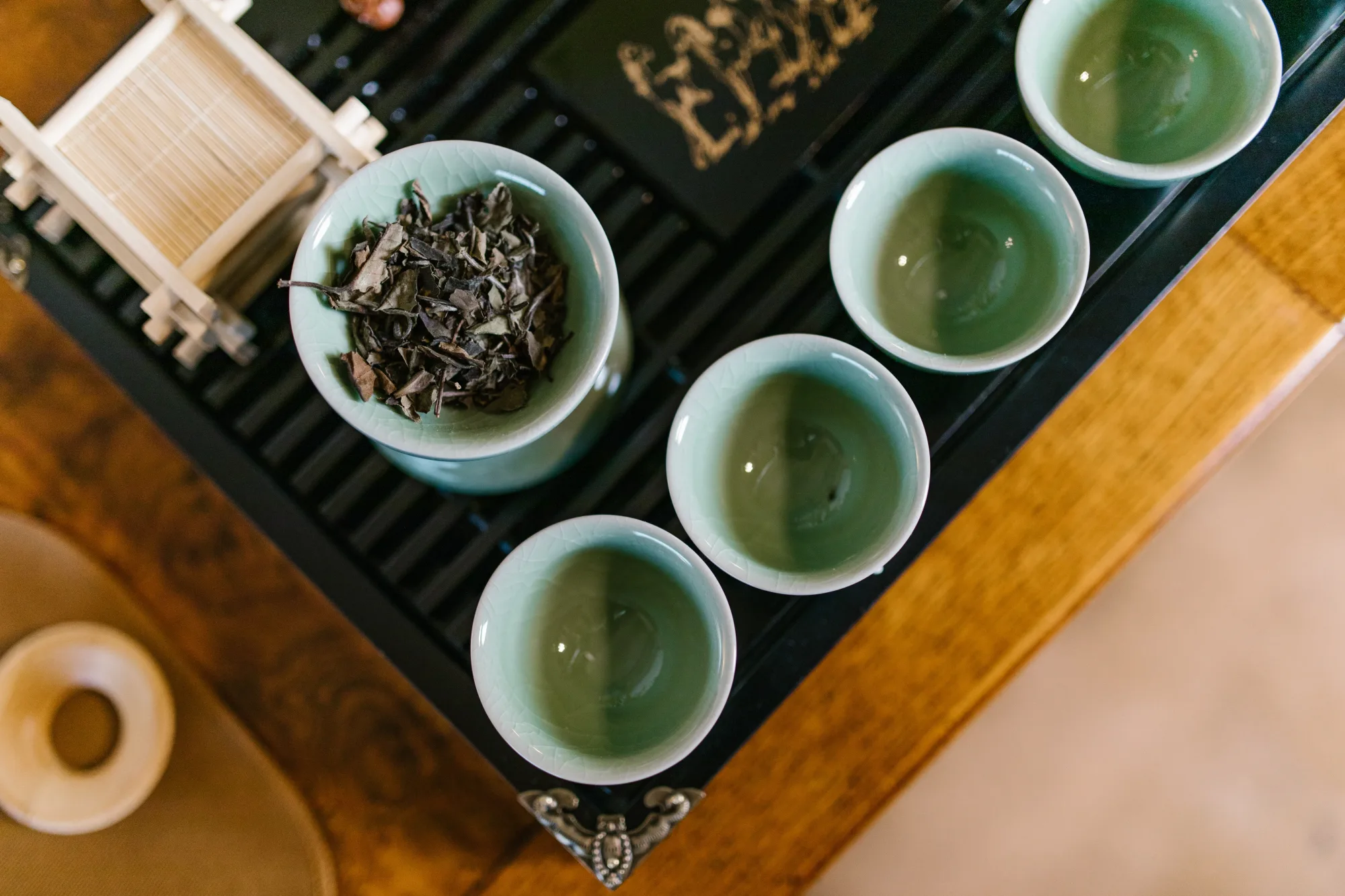
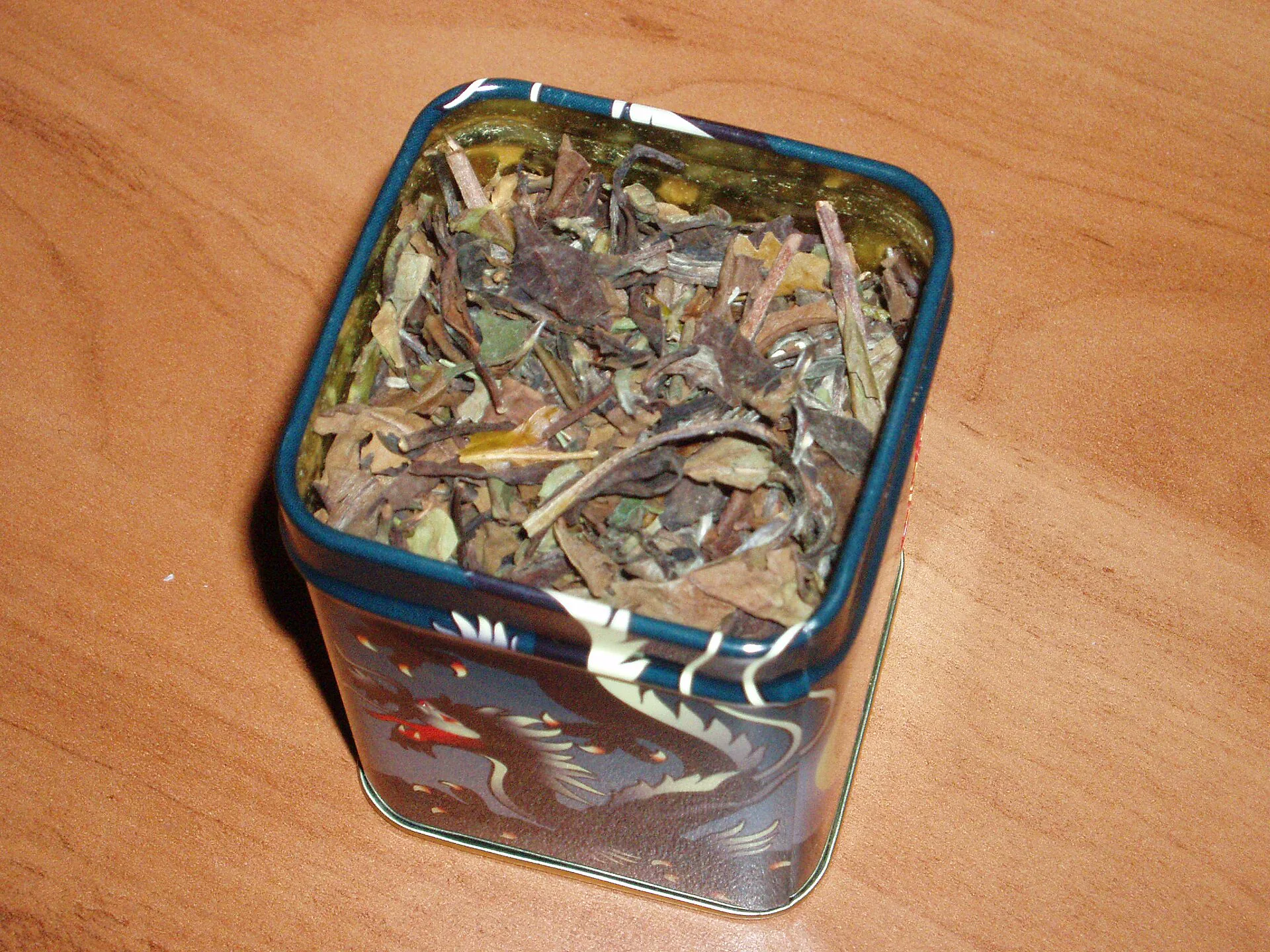
This authorized archive photograph is useful for practising the inspection itself: look across the whole handful for broad leaves, stems, fragments and color variation. The image alone cannot identify Shou Mei, authenticate origin, date the tea or judge storage; those claims still require the listing record and the cup.
Color is weak evidence. Heat, oxidation during manufacture, material maturity, storage and photography can all change what brown looks like.
Rustic material still demands controlled work
White tea is often summarized as withering and drying. In practice, material depth, airflow, humidity, temperature, weather, time and final drying all require decisions. Mature leaves can be physically substantial, but that does not make careless processing harmless. Good Shou Mei may look rustic. It should still taste clean. Traditional, sun withered and minimal processing do not excuse smoke, perfume, sourness or damp storage.
Run one fixed three-infusion test
Use a fixed baseline before adapting the recipe. These are East Moment household comparison numbers, not a national standard, laboratory protocol or universal ideal.
- Measure 4.0 g of tea for 100 ml of working vessel volume.
- Use neutral porcelain and 95 C / 203 F water.
- Infuse for 25 seconds, then 40 seconds, then 70 seconds.
- Start timing when water first touches the tea and include pouring time.
- Empty the vessel completely after each infusion.
- Taste every cup hot, warm and nearly cool.
- Keep water, vessel, dose and pour speed unchanged between samples.
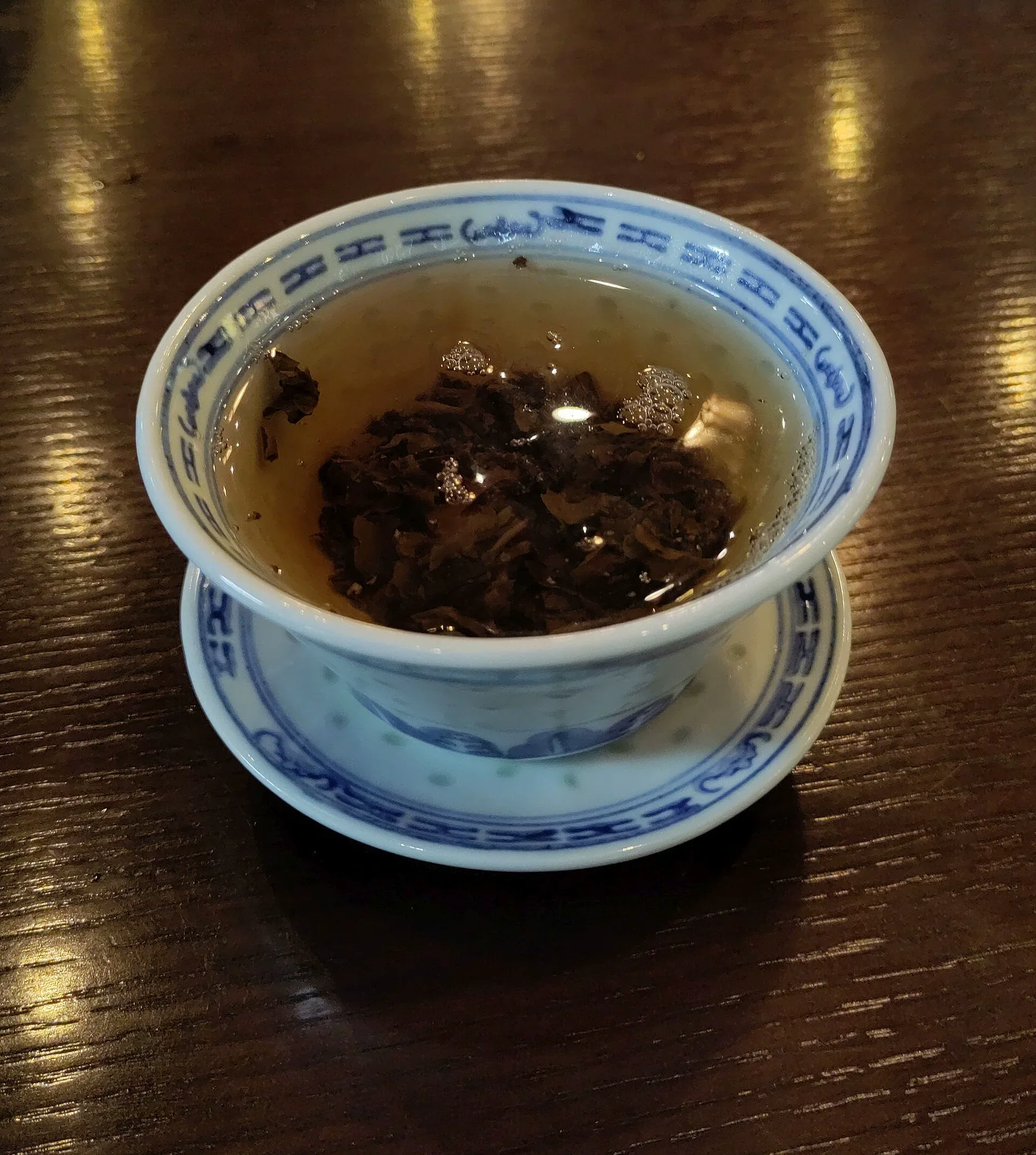
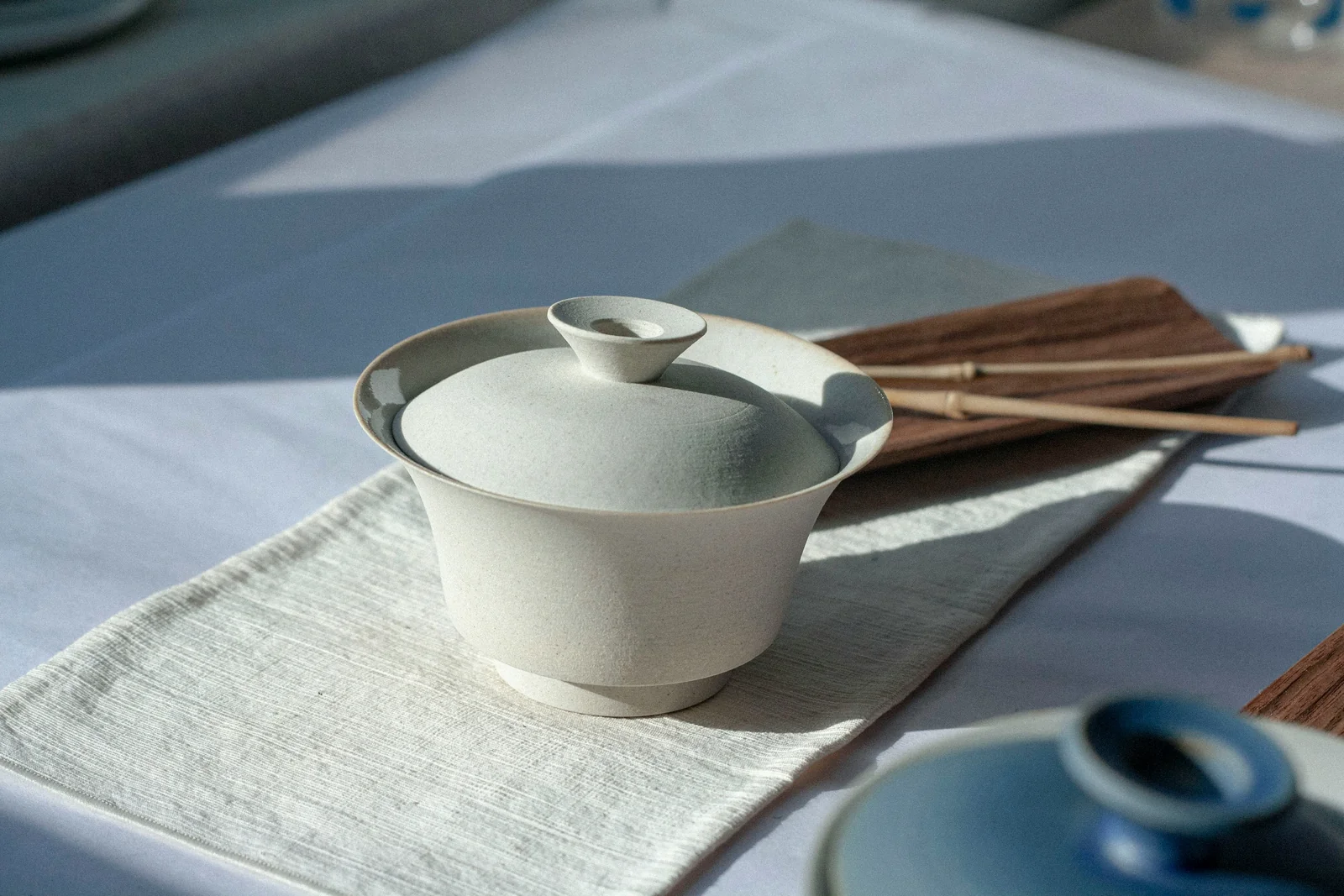
Shou Mei brewed in a gaiwan. Photograph by Fritzober, CC BY-SA 4.0, via Wikimedia Commons. It documents that source session, not the baseline above; liquor color is not a universal target.
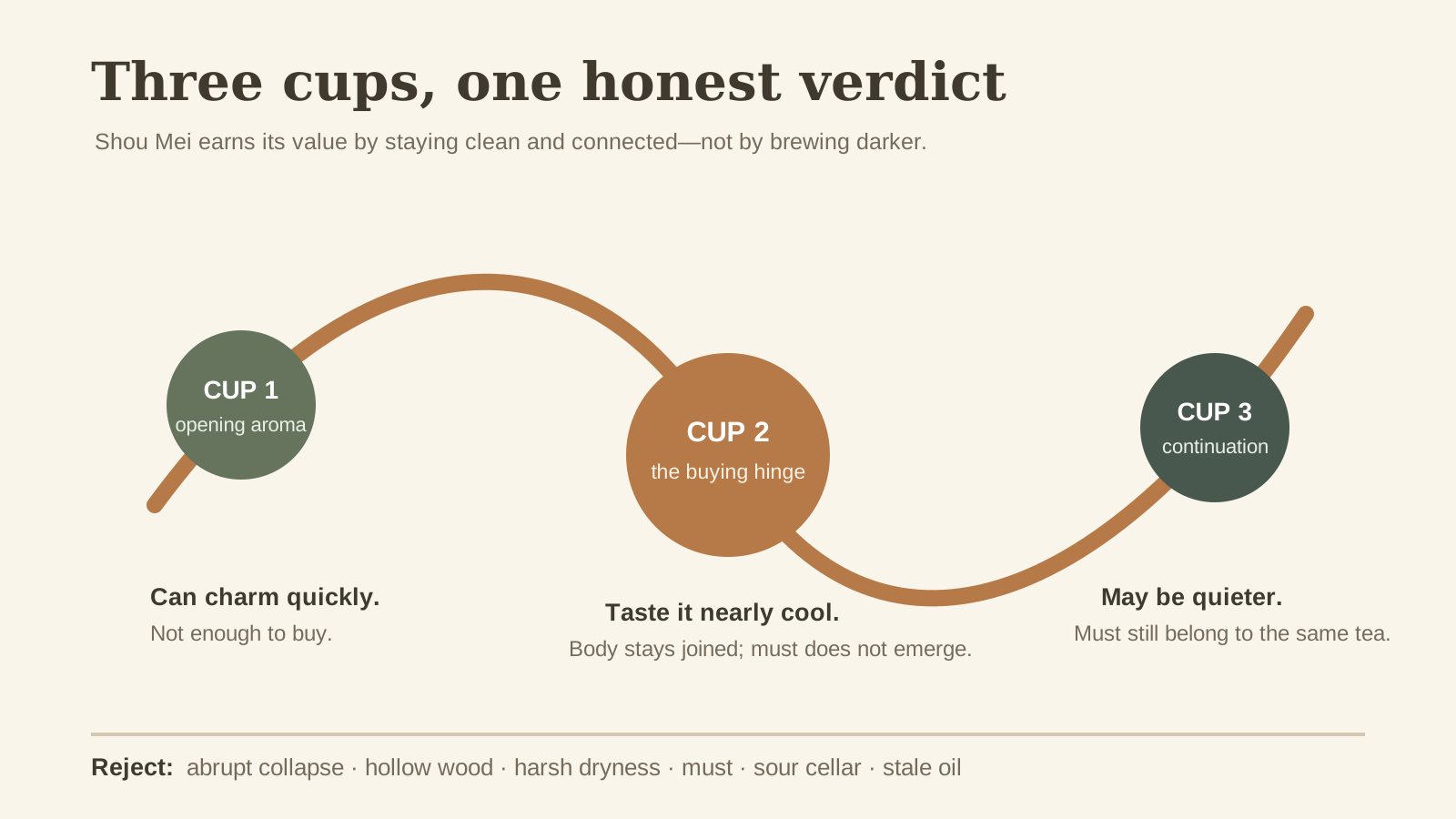
| Checkpoint | A useful result | Warning sign |
|---|---|---|
| Infusion 1, warm | Clean herb, hay, fruit, honey or dry-wood direction with body | Loud aroma over thin liquor |
| Infusion 2, warm | Flavor remains joined to texture and a clean finish | Abrupt collapse, hollow wood or harsh dryness |
| Infusion 2, nearly cool | Sweet or clean return without storage odor | Must, cellar, sourness or stale oil emerges |
| Infusion 3 | A weaker but recognizable continuation | Only color or roughness remains |
| Cooled opened leaf | Material broadly agrees with the listing | Unexplained dust, mixed material or foreign odor |
Infusion two is the purchasing hinge. The first cup can flatter surface aroma and easy extraction. The second reveals whether the lot has enough clean structure for repeated drinking.
Diagnose the cup one variable at a time
| Result at the baseline | First controlled change | What the repeat tells you |
|---|---|---|
| Bitter or drying | Shorten early infusions by 10 seconds | Improvement points to excessive contact time |
| Still rough | Lower water to 90 C / 194 F | Improvement shows this lot needs gentler heat |
| Thin but clean | Increase dose to 5.0 g | Improvement points to dose; no improvement weakens value |
| Woody and hollow | Return to 95 C and keep the short timing | Improvement suggests the original extraction was too cool or long |
| Flat or papery | Repeat from a newly opened portion with known water | Persistence is a freshness or storage warning |
| Smoky or perfumed | Repeat in clean porcelain | Persistence requires seller disclosure, not romantic language |
| Sour, musty or cellar-like | Repeat once with clean vessel and known water | Persistence is a rejection signal |
Change only one variable per repeat. Lowering dose, temperature and time together may make a softer cup, but it cannot identify the cause.
Loose tea is the safer first purchase
Choose loose Shou Mei first when you are learning the style or assessing an unfamiliar seller. Loose material lets you inspect the actual distribution of leaf, stems, fragments and odor. It is easier to sample repeatedly and easier to compare gram for gram.
Buy a cake when compression suits your storage or drinking routine and the evidence is transparent. China's official platform lists GB/T 31751-2015, Compressed White Tea, as current, but that framework does not reveal what sits inside a particular retail cake.
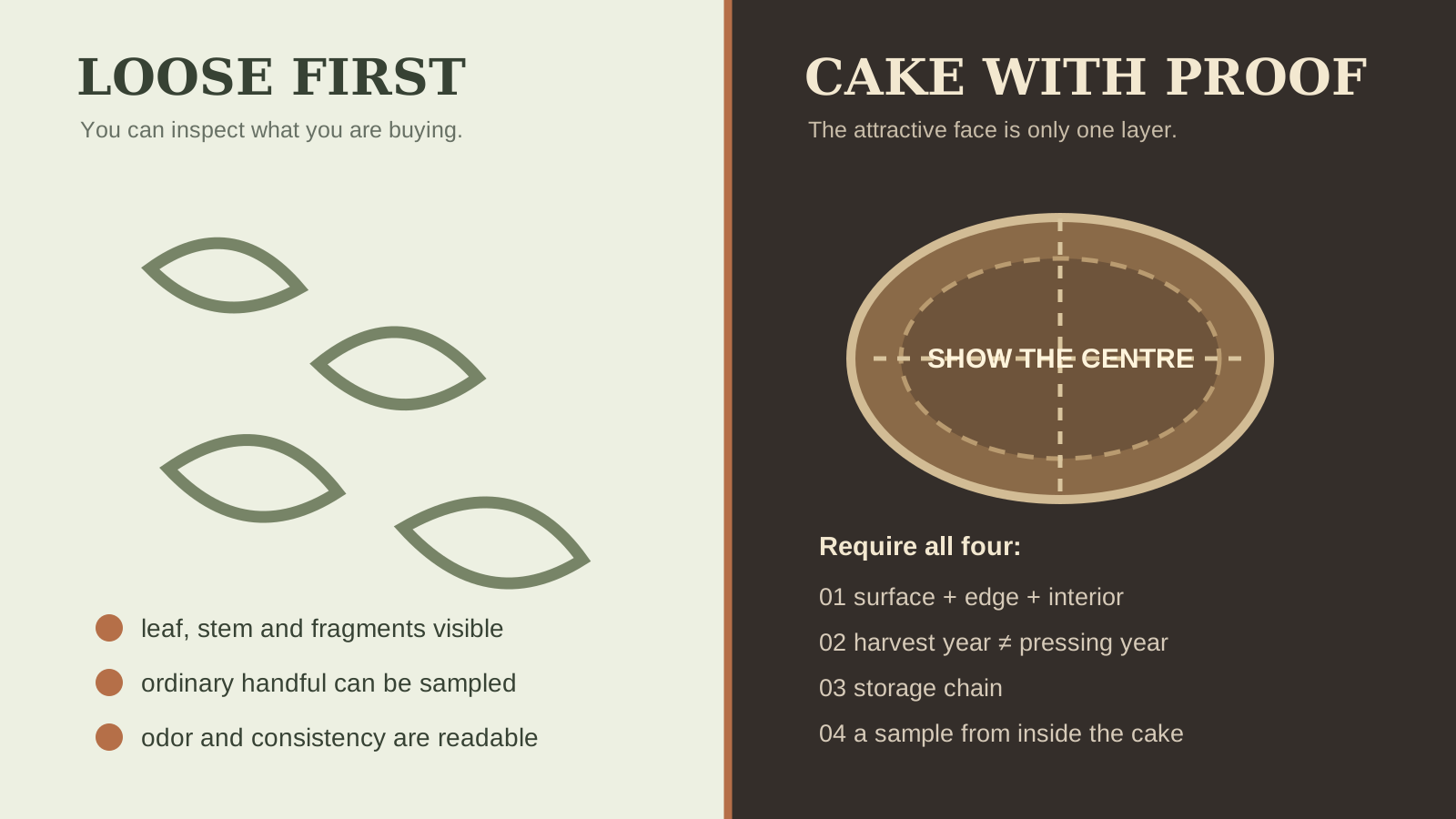
I begin with loose Shou Mei because it lets the tea be ordinary in front of me: broad leaf, stems, fragments and all. A cake raises the evidence burden. If I cannot see the edge and centre, separate harvest year from pressing year and taste a piece taken from inside, I am being asked to buy the wrapper's confidence rather than the tea.
Before buying a cake, require:
- A clear surface view, edge view and interior cross-section from the actual lot.
- The harvest year and pressing year stated separately.
- Producer, packer, cake weight and batch identity.
- Storage locations, packaging changes and any humid-storage history.
- A sample cut from more than the attractive outer surface.
- A conventional brewed and cooled sample before any boiling demonstration.
A decorative wrapper proves packaging. A neat cake face proves only the face. Neither proves the center, year or storage.
Inspect the opened leaf after infusion two
Cool the leaves, spread them on a white plate and select ten representative pieces rather than the ten prettiest. Record:
- broad leaves, buds, stems and fragments;
- flexible material versus brittle debris;
- whether the mixture broadly matches the seller's description;
- pieces that remain tightly compressed or hydrate at a very different rate;
- sour, musty, perfumed, smoky or stale odor as the leaf cools.
Opened leaf is excellent for testing agreement. It cannot prove Fuding, Zhenghe, cultivar, harvest year, artificial aging or clean storage history. Keep the wrapper, invoice, seller description and your brewing notes with the photographs.
Choose fresh or aged by the cup, not the calendar
Fresh Shou Mei may show hay, meadow herbs, melon rind, dried flowers or gentle fruit. A well-stored older lot may move toward honey, dried fruit, date-like, dry-wood or herb-like directions. These are possibilities, not authentication notes.
A 2024 metabolomics study compared first-grade Bai Mudan samples described as coming from Zhenghe, Fuding and Jinggu across stated storage durations. It supports the bounded conclusion that production area and storage duration can affect measured white-tea chemistry. It does not date an unknown Shou Mei, prove that older is better or turn brown leaf and dark liquor into clocks.
Choose fresh Shou Mei when you want a clearer view of leaf and current craft at a lower evidence burden. Pay an aged-tea premium only when the original identity, harvest, packing or pressing, storage chain and present clean cup are documented.
Jujube aroma, medicine aroma and old white tea are sensory or sales language. They are not a calendar, a medical benefit or proof of natural storage.
Brewing beyond the comparison test
For daily gaiwan brewing, begin near the fixed test and adjust one variable after tasting. Mature leaf often handles high heat well, but open material also extracts quickly. Fully decant between infusions.
For a 250 ml mug, begin with 3.0 g, 95 C / 203 F water and 3 minutes, then strain. For a thermos, first prove the tea clean with short conventional infusions; use a low dose and test a limited standing time before committing a full flask. Long hot contact amplifies both sweetness and defects.
Boiling is a later preparation option for a known clean tea, not an authenticity test. Brew an unknown aged cake conventionally and taste it nearly cool before simmering. Boiling cannot wash away moldy, sour or cellar-like storage.
Ask eight questions before buying
- Is this explicitly Shou Mei, and which standard or producer specification defines it?
- Who produced, packed and sold this batch, and what origin is claimed?
- What harvest year and material standard are documented?
- Is it loose or compressed; if compressed, what is the pressing year?
- Are the surface, edge, interior and opened-leaf photographs from this lot?
- Where and how was it stored, and was it ever repacked?
- What evidence supports any
aged,wild,old treeor geographical premium? - Can you buy enough sample for two controlled three-infusion sessions?
Reject the premium when the seller cannot separate harvest year from pressing year, will not show a cake interior, substitutes brown color for storage records, or answers every question with medicine aroma, old tree, master storage or wrapper age.
Reject the tea itself when persistent must, damp cardboard, sour cellar, stale oil, smoke or perfume remains after one clean-vessel repeat. Do not attempt to rescue doubtful storage by rinsing harder or boiling longer.
The buying verdict
Buy Shou Mei when you want full mature-leaf extraction, practical daily brewing and a lower-cost way to understand white tea. Begin with transparent loose material. Require more evidence, not less, when a cake or old date raises the price.
The winning lot is the one whose identity is documented, ordinary dry leaf looks clean, second infusion remains complete and cooled opened material agrees with the listing. Pay for traceability and repeatable drinking quality, not brown color or an old-date story.
Shou Mei's broad leaves and later picking standard do not turn it into a caffeine-free herbal drink. Treat the amount of dry leaf, water temperature, infusion time and number of rounds as real intake variables instead of trusting the softer sound of an aged-tea story. Pregnancy, caffeine sensitivity and medical decisions require attention to total intake and, where appropriate, qualified guidance; neither a brown liquor nor the name shou (“longevity”) is a health claim.
Continue through the Chinese white tea collection, compare Silver Needle and White Peony, or use the Chinese tea brewing guide to measure working vessel volume and pouring time.