A porcelain tea set is not complete because the box contains twelve matching pieces. It is complete when water moves cleanly from brewer to pitcher to cup, every hand can use it without anxiety, the glaze can be cleaned, and the seller can show that the ware was made for food contact. My rule is blunt: function chooses the set; beauty earns the right to remain.
A porcelain tea set should begin with the tea session, not the box
The phrase “porcelain tea set” often produces a seductive photograph: one pot, six cups, a pitcher, a strainer, a tray, tiny tools and perhaps a decorative container, all repeating the same glaze. It looks finished before any water has entered it.
That photograph is exactly where buying mistakes begin.
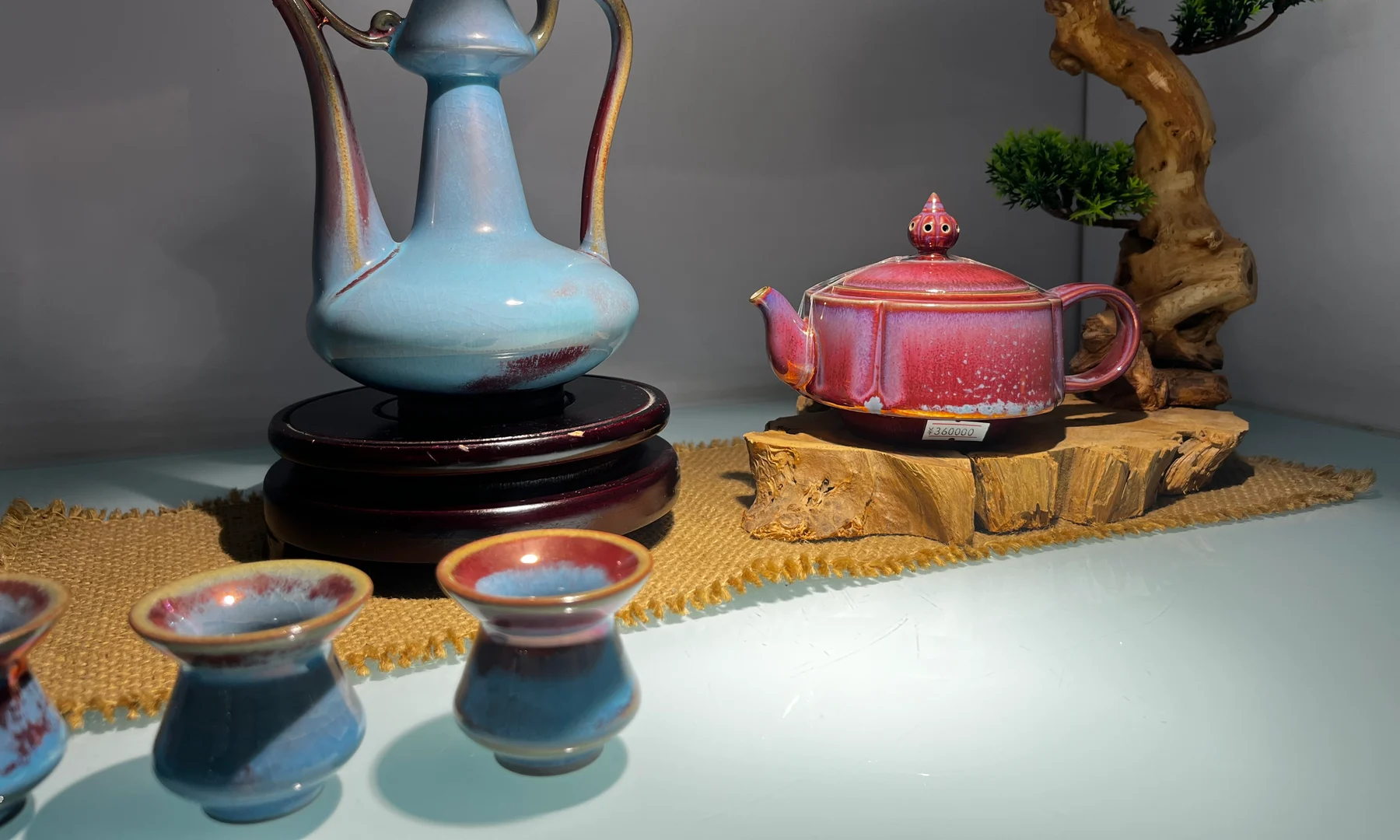
I have stood in front of shelves of Chinese ceramic ware where the glaze was so alive that I wanted the entire color family. At the Jun Ceramic Culture Park, blue opened into purple, red gathered at the rim, and gold-like specks caught the display light. My first emotional response was not analytical at all. It was: I want this color on my table.
Then I looked again. One pot had a dramatic loop handle. Another placed decoration close to the lid. A large set arranged tiny cups around a much more visually dominant vessel. These photographs prove form and surface. They do not tell me working capacity, pour speed, balance when full or whether a decorative object was certified for hot tea.

That second look is the beginning of a good purchase. The existing Chinese tea set guide owns the broad question of what equipment a Chinese tea setup needs. This page asks the narrower material question: if the set is porcelain, which forms work, what should match, what should remain optional, and what evidence must survive the beauty of the glaze?
Buy three jobs before you buy twelve pieces
Most useful small-session sets have three jobs:
- brew in a gaiwan or teapot;
- stop and equalize extraction in a fairness pitcher, when the tea will be divided;
- drink from one or more cups.
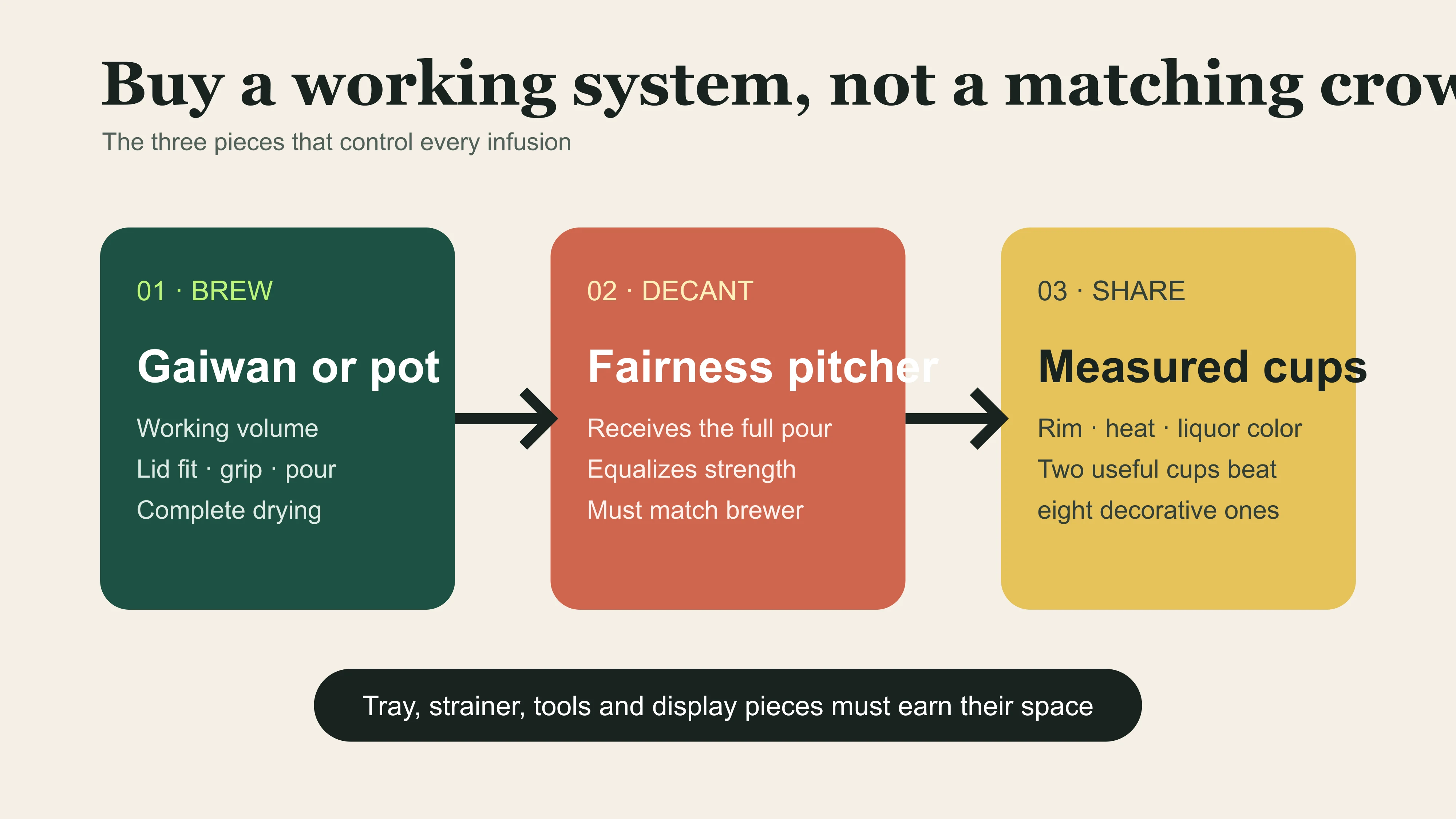
For one person, the middle step may be unnecessary. I often prefer the honesty of a small brewer and one comfortable cup to a crowded tray built for imaginary guests. For two or three people, the pitcher becomes useful because one complete decant gives everyone tea of similar strength. For a larger table, spare cups matter more than matching tongs.
| Real situation | Useful porcelain core | What is still optional |
|---|---|---|
| One daily drinker | Small gaiwan or pot + one cup | Pitcher if direct pouring works; tray if the table tolerates drips |
| Two or three drinkers | Brewer + pitcher + measured cups | Strainer only if the brewer releases troublesome leaf fragments |
| Repeated hosting | Brewer + larger pitcher + enough replaceable cups | Display stand, tea pet and decorative jars |
| Gift | A demonstrably usable core with traceable food-use information | Oversized packaging and pieces chosen only to increase the count |
The most common lived complaint in the Chinese tea discussions I reviewed was not “my set lacks one more accessory.” It was the opposite: too much ware, an awkward central brewer, a lid that burns the fingers, a cup that looks lovely but drinks badly. I recognize that frustration. A matching object that never gets used is not part of the tea set. It is packaging that escaped the box.
Porcelain changes the decision through its glazed surface
“Porcelain” is not a magic quality grade. It identifies a ceramic material and firing tradition, while the finished experience still depends on body, glaze, thickness, shape and workmanship. The Chinese porcelain guide explains that larger material history; the how Chinese porcelain is made guide follows forming, glazing and firing.
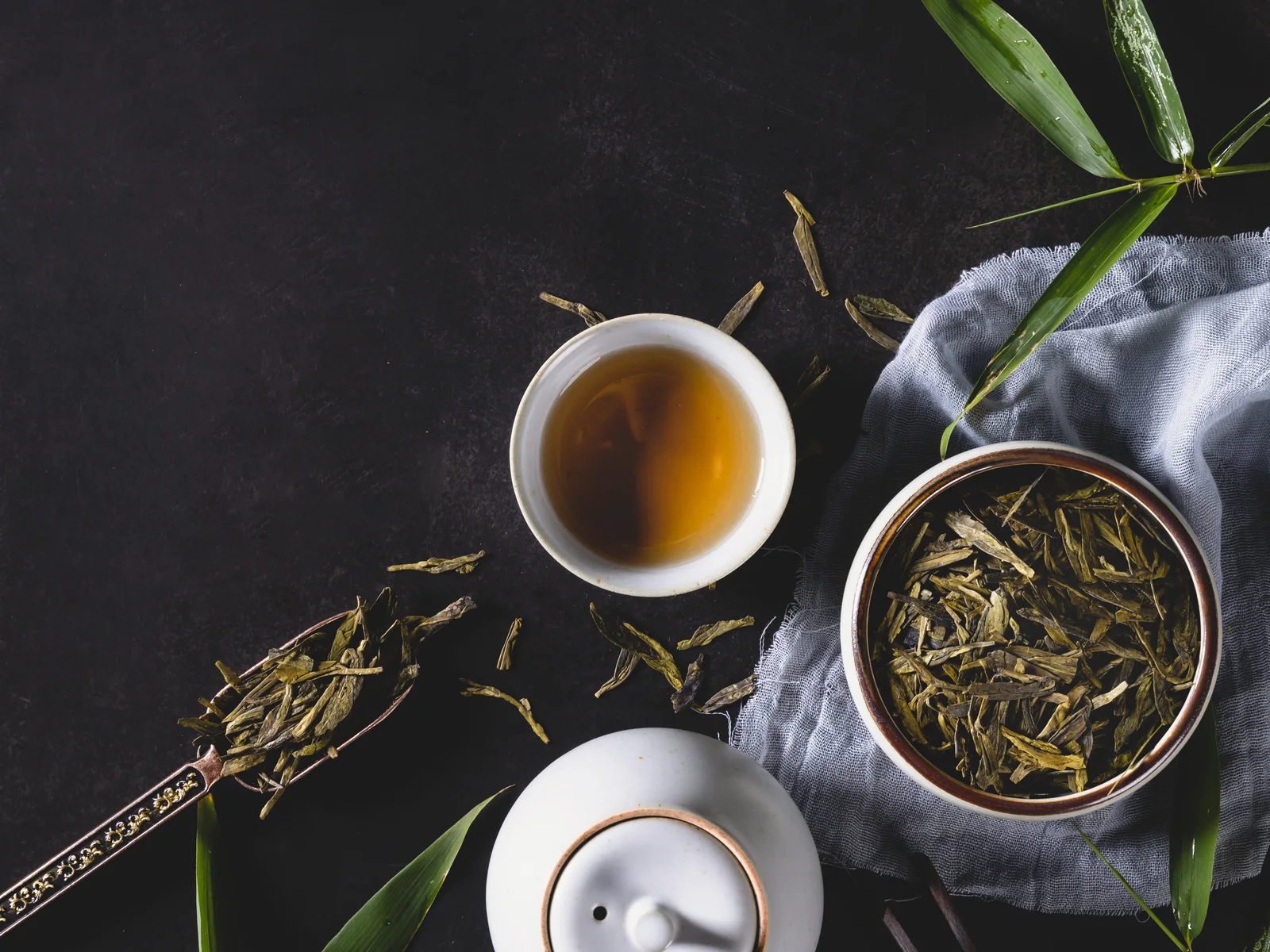
For a tea buyer, the most useful property is the glazed food-contact surface. A smooth, well-finished interior is easy to inspect between teas and usually easier to clean than an absorbent unglazed body. Pale interiors also make liquor color and residue visible. This is why a plain white porcelain gaiwan remains such a powerful reference vessel: it refuses to distract from the leaf.
But “neutral” should not become another empty sales word. A seller cannot prove flavor neutrality from the word porcelain. You can compare the new brewer with a familiar glazed reference using the same water, leaf, ratio and timing. You can inspect whether odor remains after washing. You can check whether crazing, unglazed seams or applied decoration create cleaning problems.
The emotional part still matters. A reactive Jun-style glaze can make a tea table feel less clinical. A clean white set can make green liquor look luminous. Blue-and-white decoration can bring historical visual language into an ordinary afternoon. The mistake is not choosing beauty. The mistake is allowing beauty to answer questions it cannot answer.
Capacity must flow through the entire porcelain tea service set
Retail listings love brim capacity because it produces a larger number. Tea sessions live below the brim.
Leaves need room. A gaiwan lid needs an adjustable gap. Fingers need a safe contact zone. A pot needs enough headroom that the lid does not weep constantly. The useful number is working capacity: how much water you can brew and pour under real conditions.
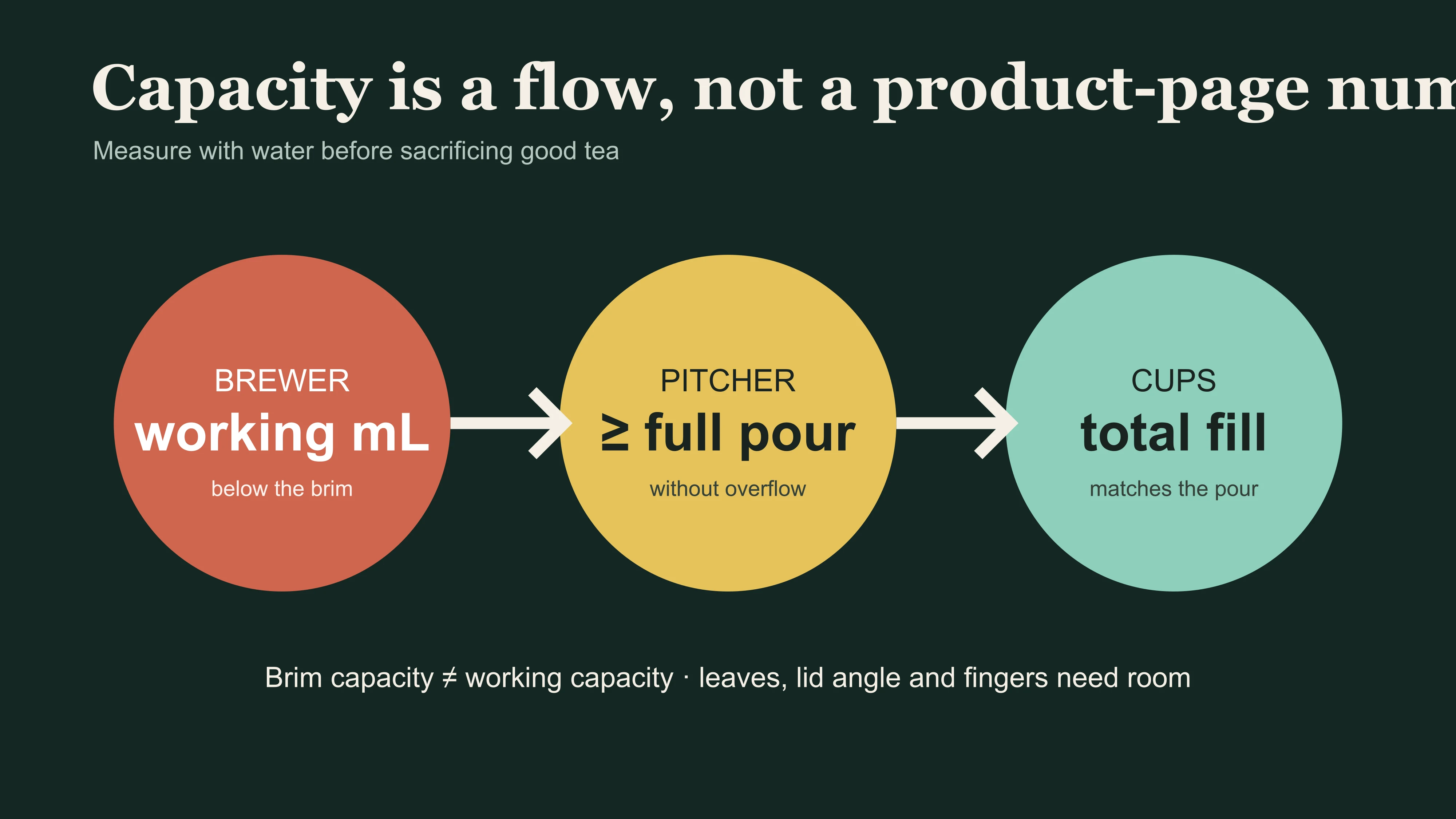
Use this order:
- fill the brewer with cool water to the line you would actually use;
- measure that water in milliliters or grams for a household approximation;
- pour it into the intended pitcher without filling the pitcher dangerously high;
- divide it among the cups to their comfortable drinking line, not their rims;
- leave room for leaf displacement and retained liquor.
If a 110 ml listing produces only an 85–95 ml comfortable working fill for your hands and lid angle, the pitcher and cups must match the latter. Two 45 ml cups may make more sense than six tiny cups. Conversely, a 150 ml pitcher is not generous if the brewer actually releases more than it can receive.
This is where “porcelain tea service sets” and “porcelain teapot sets” can hide a structural mismatch. The manufacturer matched the pattern. You must still verify the volume chain.
Gaiwan or teapot: choose the failure you would rather manage
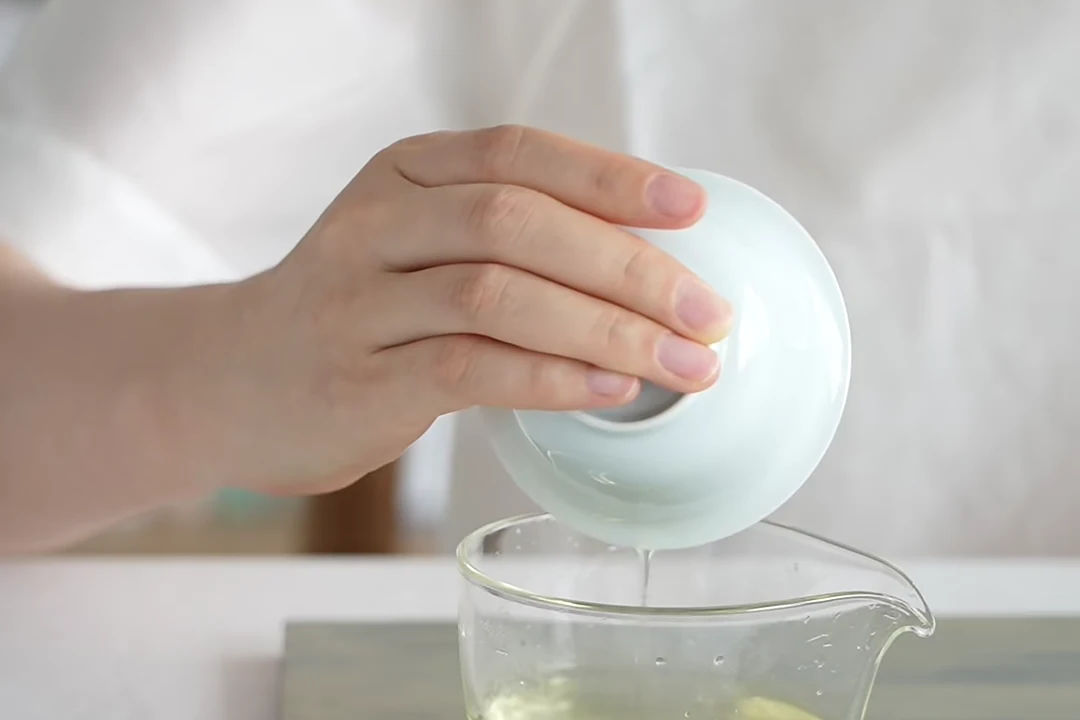
A porcelain gaiwan is visually honest. Lift the lid and the whole interior is available: leaf expansion, liquor color, residue and cleanliness. Change the lid gap and you change the filter and pour. Wide access makes washing and drying straightforward.
Its weakness is equally honest: the fingers sit close to hot porcelain. A narrow saucer, a lid knob that becomes hot, a thick awkward wall or a bowl too wide for the hand can turn every infusion into tension. “All gaiwans are the same” is something people say before they use three different shapes.
A porcelain teapot moves the hand away from the rim. That can feel calmer. But it adds hidden relationships: lid fit, lid vent, internal filter, spout height, handle clearance, center of gravity and retained liquid. A beautiful pot can pour down its own body, trap broken leaf behind a filter, or become wrist-heavy when full.

My decision is simple:
- choose a gaiwan when you want maximum access, visual leaf inspection and flexible control;
- choose a pot when your grip strongly prefers a handle and the pot passes a complete water test;
- do not buy both merely because the set includes both.
The spout, lid and handle form one moving sentence
The pot is not three attractive parts. It is one action.
When the handle rotates upward, the lid must remain controlled. When the pot tilts, the spout must begin and stop cleanly. The full center of gravity must not pull the wrist sideways. Fingers must clear the hot body and any decorative metal. A lid chain may prevent a fall but can also strike glaze or complicate cleaning.
The British Museum records a Dehua porcelain teapot whose porcelain spout was later replaced in silver. That object is historical evidence that teapot parts live different mechanical lives: a body can survive while a vulnerable spout breaks and is repaired. The Met's Qing porcelain teapots likewise show that Chinese porcelain tea vessels were specific designed objects, not timeless versions of today's boxed “traditional set.”
Before buying online, ask for four unedited views: lid seated, lid removed, interior and base. Ask for a short continuous pour video with the pot filled—not a dry hand rotation. After delivery, use water and time three full pours. One lucky pour is not evidence.
Cup rims control the last centimeter of the experience
The cup is where the set touches the mouth. It deserves more attention than the decorative tray.
A flared rim can feel open and cool quickly. A straighter wall can hold heat longer. A thick rounded lip may feel soft or clumsy depending on scale. A tiny foot can look elegant but feel unstable on an uneven tea mat. A dark interior can hide the exact liquor color that a pale cup makes obvious.
The Chinese tea cups guide gives the full rim, fill and cooling method. For a set purchase, keep one stricter rule: never accept the advertised cup count without the measured cup fill. Six cups that each hold a comfortable 20 ml tell a different hosting story from four cups at 40 ml.
I would rather own two cups whose rims I enjoy every day than eight that make every sip feel like an obligation to use the whole set.
Run the water test before the return window closes
Tea is too expensive to be the first diagnostic liquid. Use cool water.
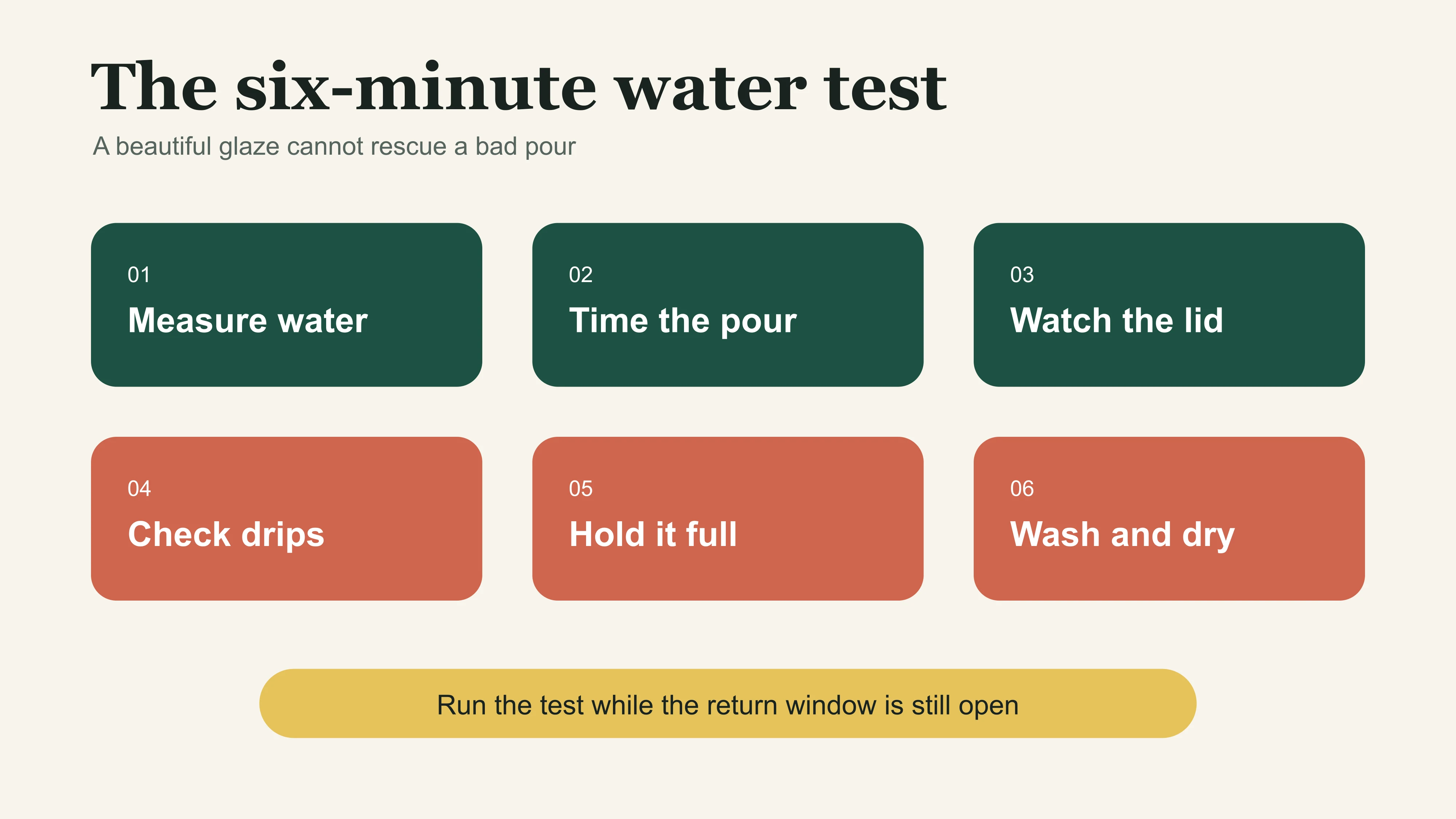
- Measure working capacity. Record the comfortable fill, not brim capacity.
- Time three complete pours. Watch consistency, not the best attempt.
- Watch lid behavior. Does it rattle, bind, fall forward or leak excessively?
- Check the stop. Does the stream end, or does tea keep running down the spout?
- Hold it full. Test wrist balance, handle clearance, saucer stability and finger contact.
- Wash and dry it. Can you reach every interior surface? Does water remain in a hollow handle, filter or decorative seam?
Then use one familiar tea and compare the new set with your known reference. Keep leaf mass, water, temperature and timing as similar as practical. Do not declare the new glaze “sweetening” tea because one infusion was warmer or slower.
Glaze names describe appearance and tradition—not automatic performance
White porcelain, blue-and-white, celadon, famille rose, Dehua white ware, Jun-inspired glazes and modern crystalline surfaces can all appear on tea ware. These names may refer to different combinations of body, glaze, decoration, place, history and modern marketing.
At the culture park, the Jun-style surfaces were impossible to ignore. Color pooled at rims, shifted across curves and opened into crackled networks. This is why Jun ware has emotional power: the surface does not behave like a printed pattern.
Yet a kiln tradition does not choose your daily brewer. A large sculptural pot can be a strong ceramic artwork and a poor vessel for one-person tea. A plain Jingdezhen white gaiwan can be visually quiet and function brilliantly. The Chinese ceramic glazes guide helps separate visible glaze behavior from confident but unsupported claims.
My position is not neutral: daily ware must work first. If two vessels function equally well, choose the glaze that makes you want to return to the table. That desire matters because the best tea set is the one that keeps participating in your life.
Food-use safety requires evidence beyond glaze color
This is the point where confidence must stop pretending.
The FDA explains that some traditional or improperly made glazed ceramicware can leach lead, and it specifically calls for caution with antique, damaged, excessively worn, unknown-source or decorative-only ware. The agency also states that washing or boiling cannot remove lead from pottery. FDA guidance and its China ceramicware agreement use leach testing for lead and cadmium; visual inspection alone is not certification.
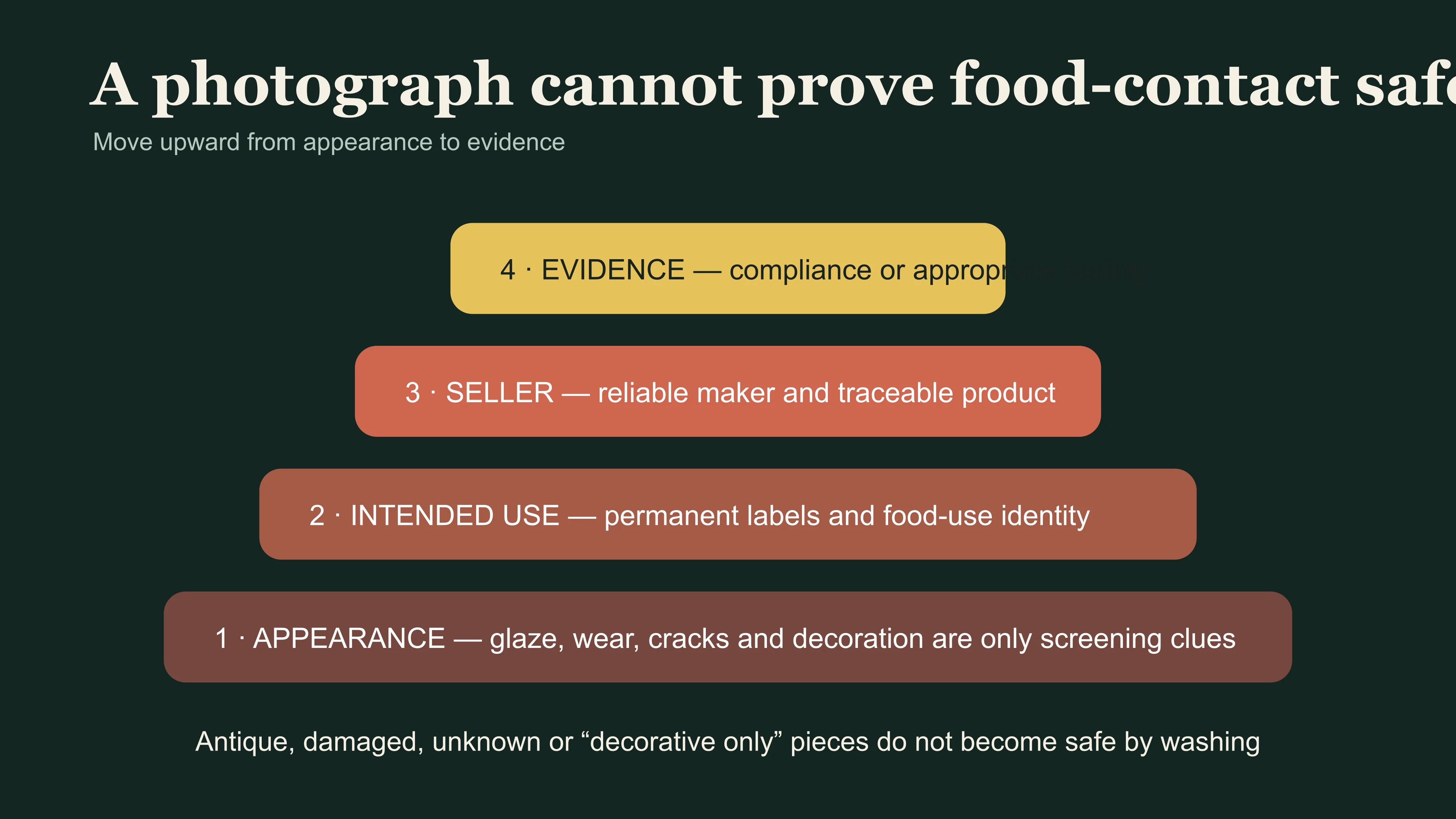
For a new everyday set:
- confirm it is sold for food and drink use, not decoration;
- keep the maker, seller, product identity and warnings;
- ask for relevant food-contact compliance information when the source or decoration raises concern;
- do not use pieces labeled “Not for Food Use” for tea;
- treat antique, flea-market, damaged and unknown pieces as a different evidence problem;
- do not claim safety from the words “lead-free,” “high-fired,” “natural glaze” or “traditional” without traceable support.
The FDA's guidance on lead-glazed traditional pottery is explicit that washing or boiling cannot remove lead from pottery. This page cannot tell whether your individual vessel leaches a toxic element. A photograph cannot. A seller's aesthetic story cannot. Appropriate product evidence or testing answers that question.
Choose by scenario, not by status
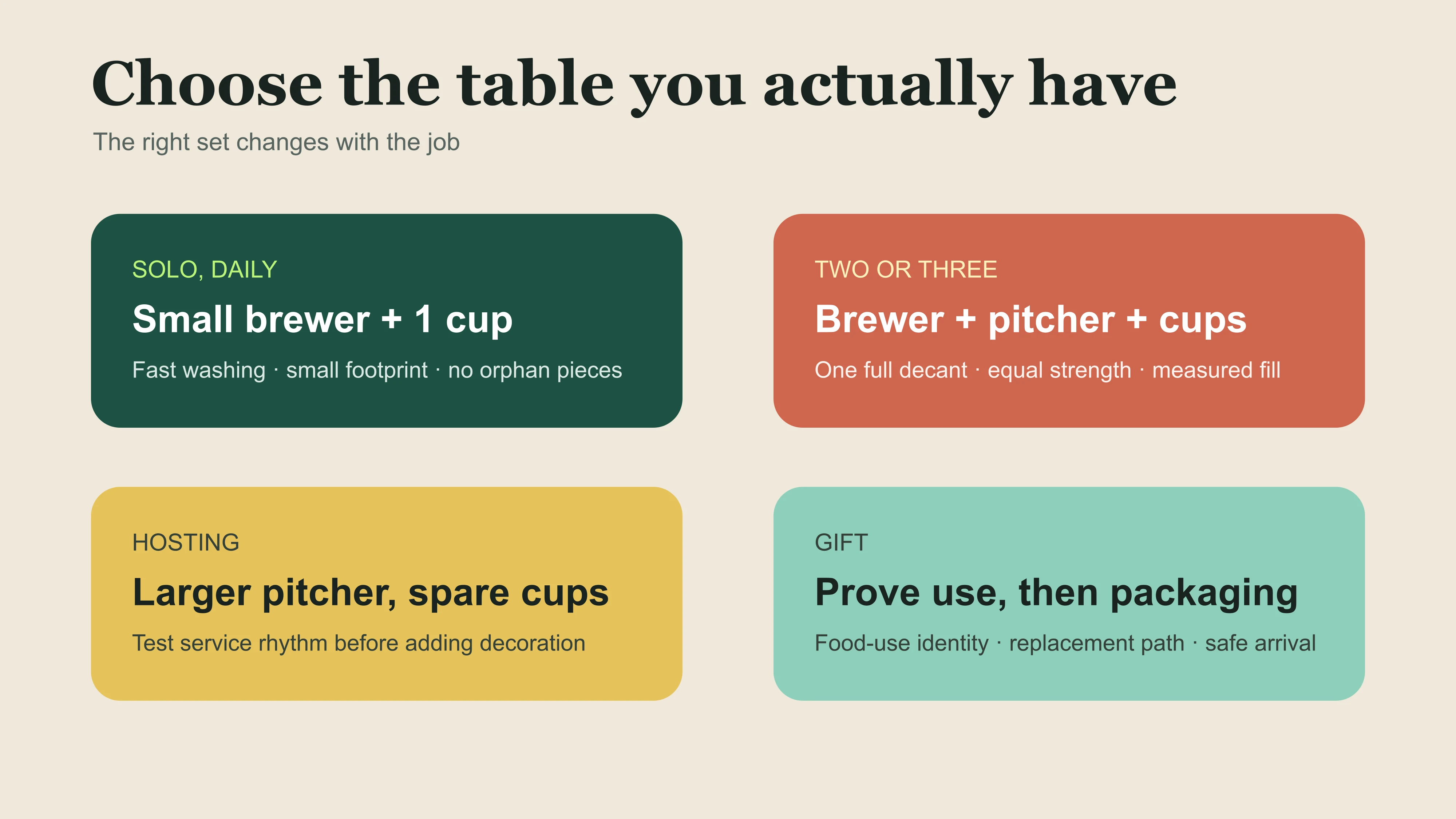
For one person: buy the smallest useful system. A 70–110 ml working brewer and one cup may be enough, but your hand and tea style decide the exact size.
For two or three: add a pitcher that receives the entire infusion and cups whose combined comfortable fill matches the yield.
For hosting: prioritize replacement cups, an easy-to-hold pitcher and a repeatable service rhythm. A rare sculptural cup is a poor host if nobody can replace it after one accident.
For a gift: demand food-use identity, useful measured capacity, secure packaging and a path for replacing a broken lid or cup. A gift is not improved by forcing the recipient to store six unexplained tools.
This is also where price becomes clearer. Pay more for better forming, a controlled pour, comfortable geometry, traceable decoration, skilled painting or a maker whose work you understand. Do not pay simply because the listing says “imperial,” “master,” “ancient method,” “rare kiln change” or “collector grade.” Those claims require their own evidence.
My porcelain tea set verdict
Porcelain gives tea something valuable: a surface we can see, clean, compare and return to. It also gives makers an enormous visual language—from quiet white to blue-and-white narrative painting to the moving color of Jun-style glaze.
The best set holds those two truths together. It must be physically clear and emotionally alive.
My buying order is fixed:
- define how many people actually drink;
- choose gaiwan or pot by the hand and cleaning reality;
- measure the brewer, pitcher and cups as one capacity chain;
- test the pour, stop, balance and drying;
- verify food-use identity and seller evidence;
- only then choose the glaze that makes the table feel like yours.
If a set reverses that order, it becomes expensive scenery. If it passes, the beauty is no longer superficial. The color follows your hand through hundreds of infusions and becomes part of memory.
Return through the Chinese tea guide or bring that evidence to Moments: one full-set photograph, the maker or food-use mark, the real working fill, one complete pour and the divided cups. Do not show us only what the box promised. Show us what the water proved.