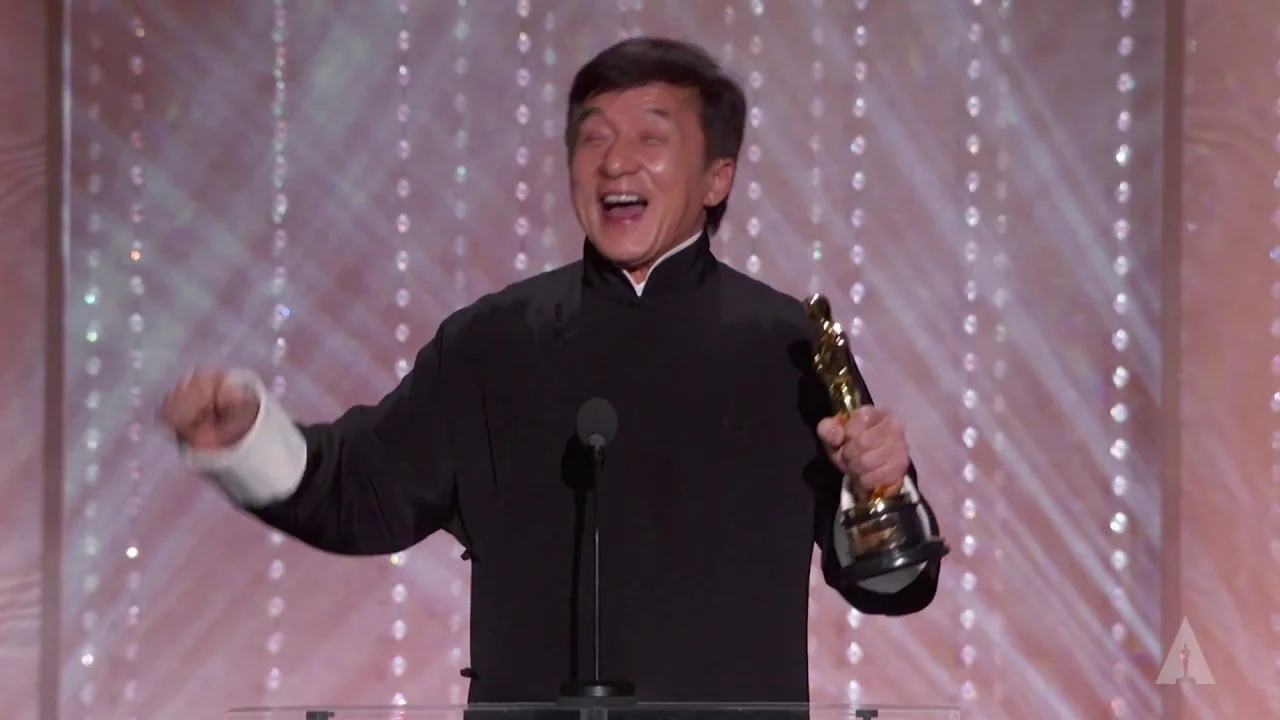
Jackie Chan Explained: Why the Pain Is Part of the Joke
Which Jackie Chan movie should you watch first? A personal guide to his best films, stunt comedy, props, pain, age and changing screen legacy.
Read the deep guide
Work · discipline · influence · public memory
Chinese celebrities understood through their work, public influence, industries and the cultural conversations forming around them.
Begin with why the person matters99 published guides across 6 core paths.
Return the famous name to the work
Chinese celebrities deserve more than a polished biography and much less than invasive gossip. Begin with the role, song, movement, image or public act that made the person matter, then test whether the influence survives beyond a hot-search cycle. Fame is the question here, never the answer.
Institutional film records and preservation context for separating screen history from celebrity noise. China Film Archive
Published guides, organized by intent
A collection page must do more than list recent posts. Choose the question that brought you here, open a focused guide, then keep moving through works, people and related cultural context without returning to search.
4 published guides
Jackie Chan, Michelle Yeoh, Wang Yibo and Jackson Yee reached different audiences through physical risk, screen authority, dance discipline and difficult role choices. Fame becomes useful only when the work remains attached.
Which Jackie Chan movie should you watch first? A personal guide to his best films, stunt comedy, props, pain, age and changing screen legacy.
Read the deep guide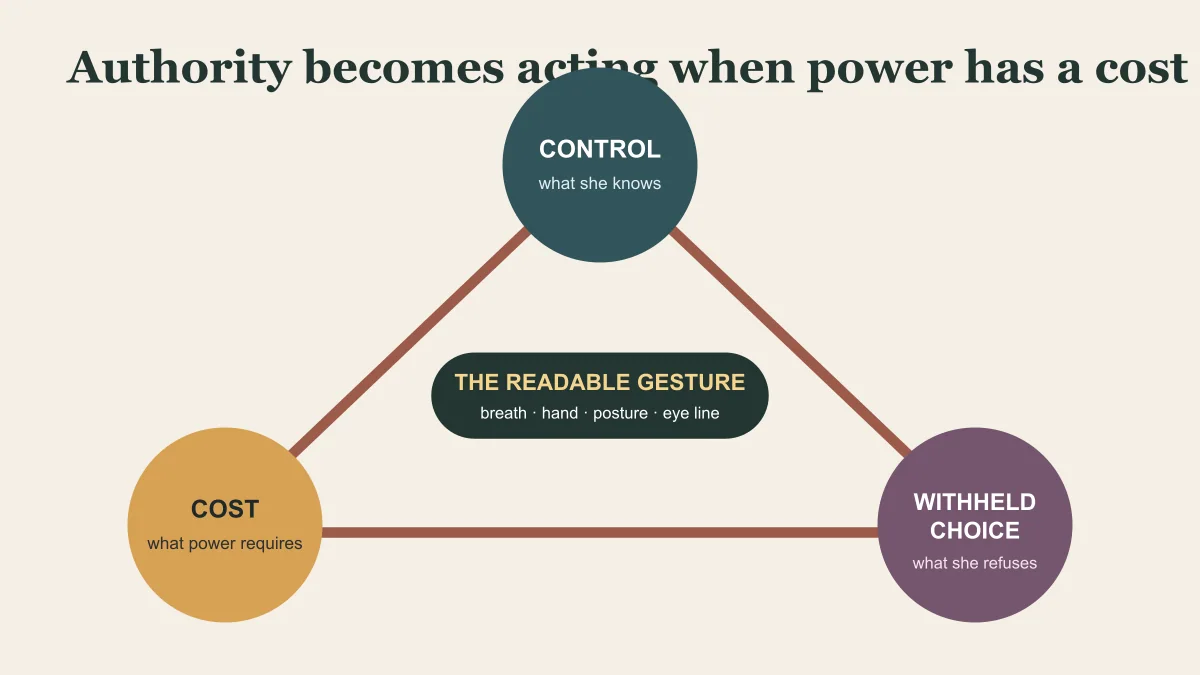
Meet Michelle Yeoh, choose her best movies and see how Hong Kong action, Crouching Tiger and Everything Everywhere built a uniquely physical actor.
Read the deep guide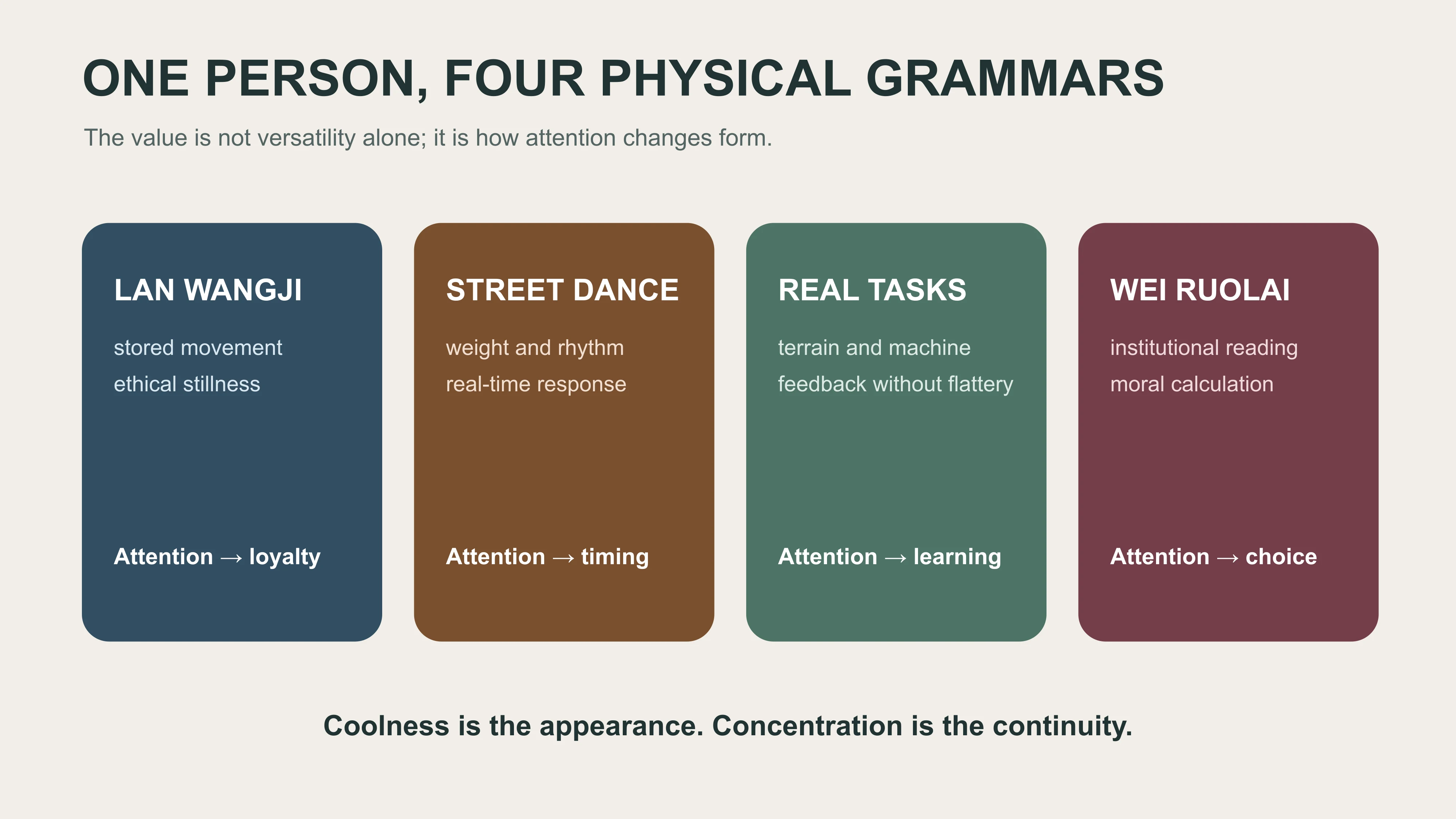
Who is Wang Yibo beyond The Untamed? A grounded guide to his acting, street dance, music and real-world curiosity, with the best place to start.
Read the deep guide
Who is Jackson Yee? A critical guide to Yi Yangqianxi's TFBOYS years, dance, songs, Better Days, Full River Red and Big World, with a clear watch route.
Read the deep guide3 published guides
Jay Chou, Faye Wong and Zhou Shen occupy different emotional rooms. Listen for phrasing, production and the memories people attach to songs before reducing their influence to charts.

A deeply personal Jay Chou guide covering songs, hip-hop influence, films, variety shows, basketball, tennis and the memories that began with an eleven-year-old listener.
Read the deep guide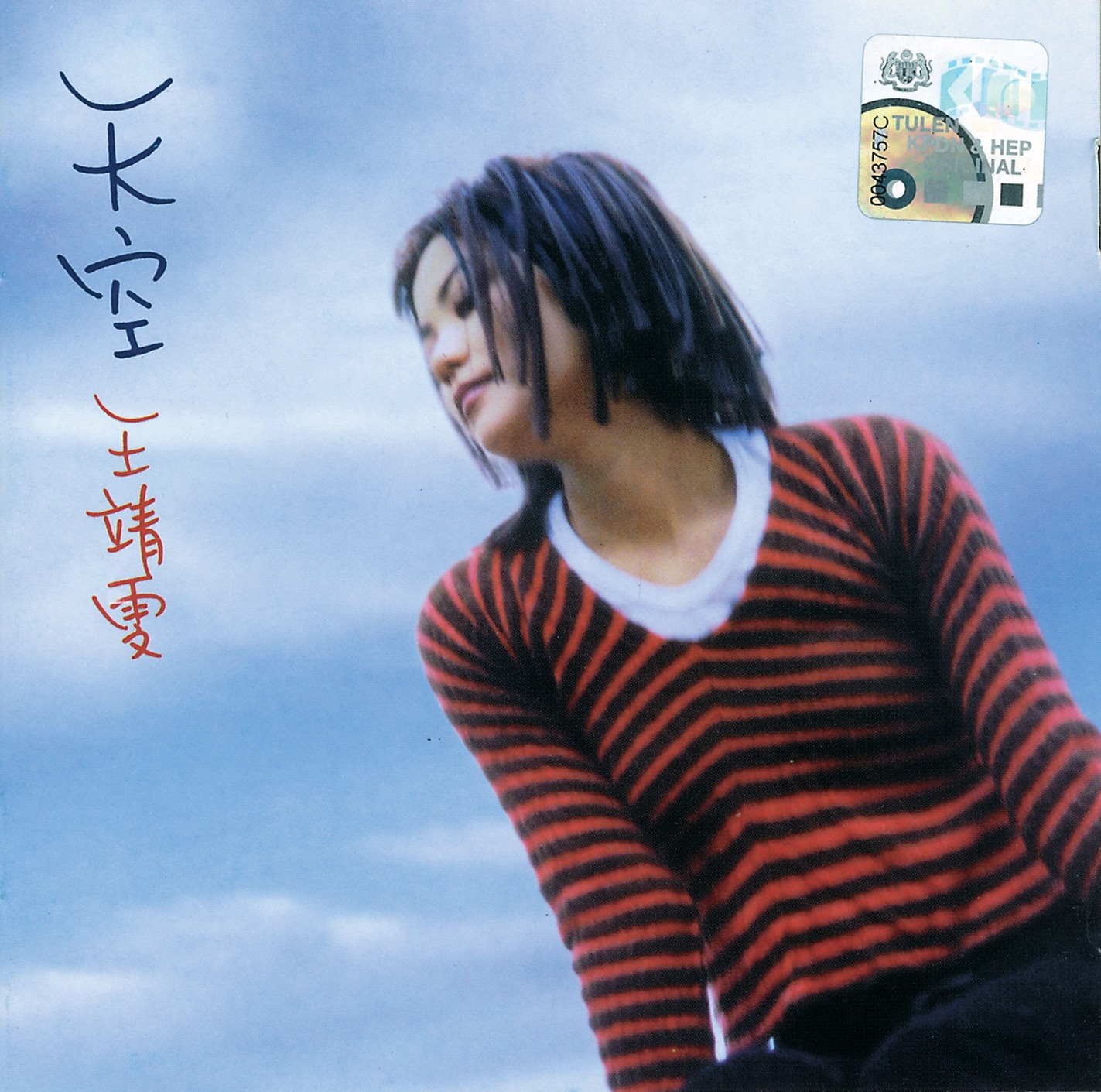
A listening guide to Faye Wong's voice, phrasing, artistic independence and screen image, with a practical route through her songs and albums.
Read the deep guide
A close guide to Zhou Shen's voice, Big Fish, Rubia, Dalabengba and Shenself—plus the labels, humor and dramatic intelligence most profiles miss.
Read the deep guide4 published guides
Zhang Yimou, Wong Kar-wai, Guo Pei and Ai Weiwei became public figures through radically different acts of making. Follow frame, garment, material and consequence before the celebrity label flattens them.
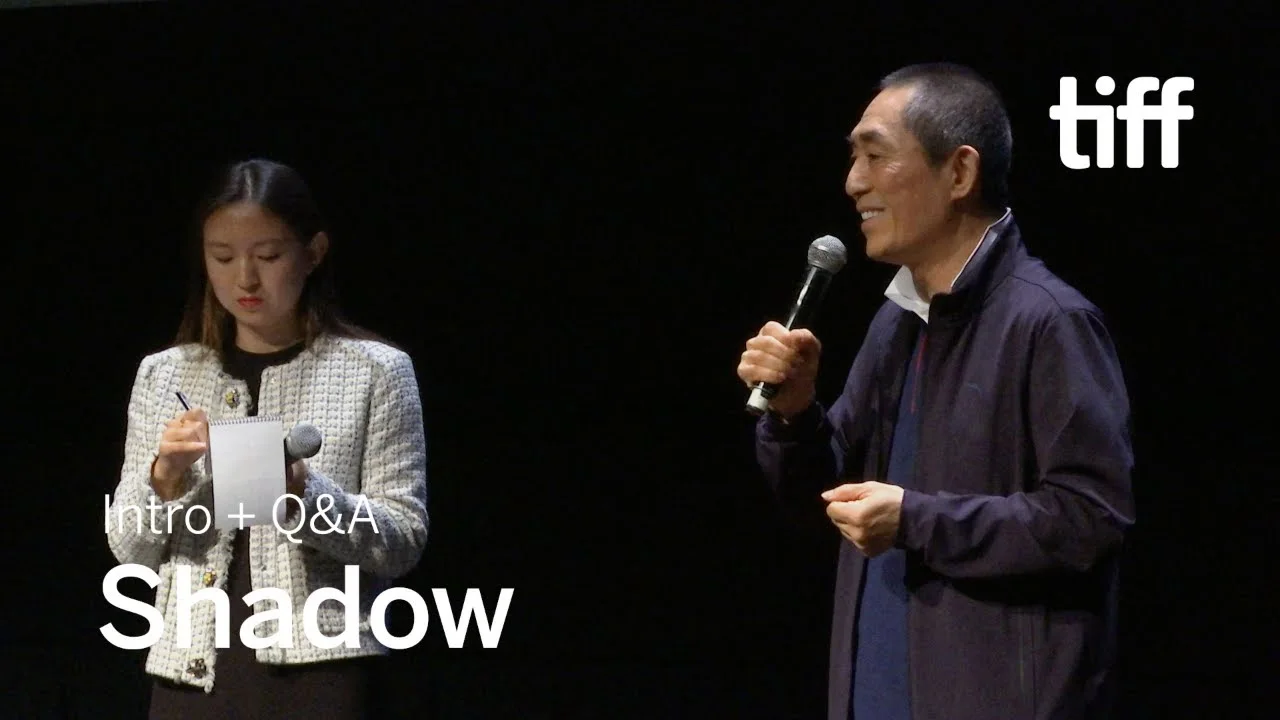
Understand Zhang Yimou through Red Sorghum, Raise the Red Lantern, To Live, Hero and Shadow: his visual method, contradictions and best viewing route.
Read the deep guide
Understand Wong Kar Wai's movies and style through time, repetition, Hong Kong space and collaborators—with a practical route from Chungking Express onward.
Read the deep guide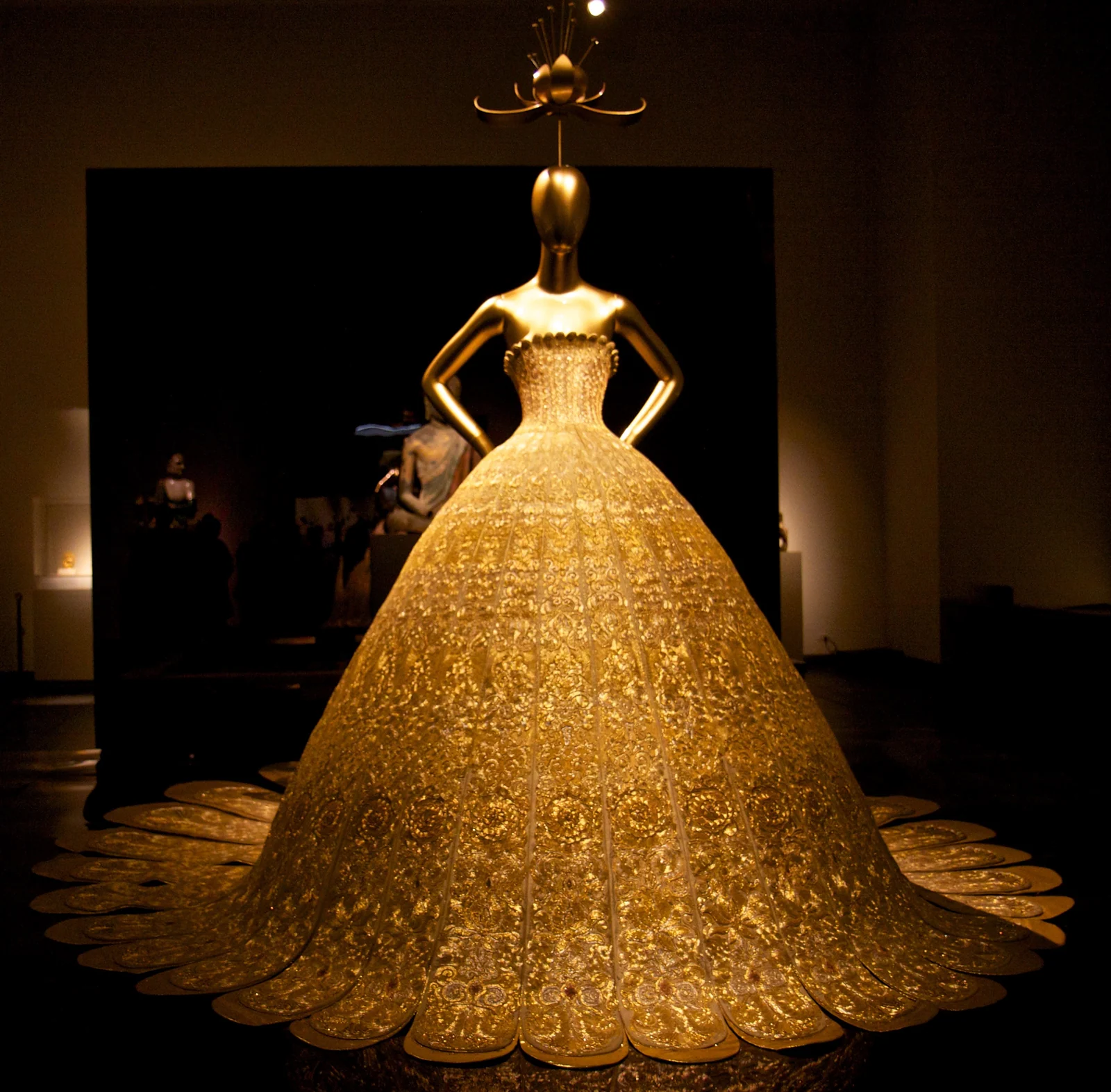
A close guide to Guo Pei: the engineering, embroidery, weight and cultural imagination behind her couture, beyond Rihanna's famous yellow cape.
Read the deep guide
Understand Ai Weiwei through Sunflower Seeds, Dropping a Han Dynasty Urn and his use of scale, repetition, labor and public evidence.
Read the deep guideFame returned to the work
Chinese celebrities are searchable because attention has already gathered around them. That does not make attention the subject. Birthdays, heights, endorsements, relationship rumors and follower counts are easy to copy and almost impossible to remember. East Moment begins with the role, song, film, garment, athletic discipline or public act that earned sustained interest. Then we examine how industry, platform circulation and audience memory enlarged the person. Fame is evidence of visibility; it is never evidence of quality, character or cultural importance by itself.
The category includes actors, musicians, directors, artists, designers, athletes and creators whose work circulates across Chinese-language and global media. Some are famous primarily through one medium; others move among television, film, music, fashion, variety programmes, live stages and social platforms. Those routes create different kinds of recognition and should not be collapsed into one popularity ranking.
A performer may be known internationally for one streaming drama while domestic audiences remember a longer television career. A musician may carry generational memory that current platform metrics cannot measure. A director can be famous without being visually recognizable. An artist may be influential inside institutions while remaining outside mass celebrity. Search volume records curiosity, not one shared cultural position.
I therefore use celebrity as an organizing door, not an explanatory category. Once you enter, choose the craft. If the person acts, watch a complete scene. If they sing, hear phrasing and production. If they direct, compare recurring decisions. If they design or make art, examine material and process. Public image becomes meaningful only after it is placed beside the work it amplifies or distorts.
Institutional film history can anchor credited screen work and preservation context; it does not certify popularity, private character or every online claim. China Film Archive
Platform attention compresses a person into whatever can be recognized in one glance: a face, pairing, controversy, brand look or short scene. The compression can introduce strong work to new viewers. It can also reward repetition until the public image becomes more familiar than any complete performance. A celebrity profile fails when it reproduces that compression in longer sentences.
Fandom adds care, translation, memory and remarkable archival labor. Fans identify stages, performances, interviews and details casual coverage misses. Fandom can also turn criticism into disloyalty and imagined intimacy into entitlement. Both facts must remain visible. Respecting fans does not mean repeating promotional consensus; respecting the person does not mean granting strangers ownership over a private life.
My strongest test is duration. What remains when the trending topic ends? A scene can remain. A song can enter ordinary speech and private memory. A costume can change what younger designers believe is possible. A public action can alter an industry conversation. If nothing survives except recognition, the page should say less rather than manufacture significance.
Chow Yun-fat, Stephen Chow, Tony Leung, Michelle Yeoh, Maggie Cheung, Andy Lau and Jackie Chan occupy memories built through repeated films, television broadcasts, songs and decades of public presence. Wang Yibo, Xiao Zhan, Yang Mi, Zhao Liying, Jackson Yee and other current stars move through a faster environment of streaming, clips, fandom coordination and global subtitles. The evidence of influence is different because the distribution systems are different.
Nostalgia can make older work seem automatically deeper, while current heat can make every new project appear historically decisive. Both reactions are lazy. A classic must still survive close viewing. A current performer deserves time and the possibility of change. I compare scenes and career decisions, not eras as moral categories.
The richest profiles hold past and present together without forcing closure. Wang Yibo is not only one drama: performance, dance, street culture, motorcycles and work outside the polished stage make the public figure fuller. Jay Chou is not only a discography: school memories, phone ringtones, films, television travel and the sound of songs in ordinary shops explain cultural scale. A person becomes real when different capacities remain connected.
East Moment can say that a performance is thin, a career choice is repetitive, a song is forgettable or a public image is obscuring the work. Those are editorial judgments tied to observable material. We do not need relationship speculation, body policing or rumors presented as personality. Sharp criticism becomes stronger when its evidence is public and relevant.
The profile should also admit contradiction. A beloved work can contain weak choices. A commercially successful figure can take artistic risks. A performer may be generous in one public context without that proving a complete private character. Certainty belongs to the claim we can support, not to the emotional confidence of the writer.
Choose the person whose work answers your question. Follow one finished role, song, film or object, then move into the profession hub and collaborators around it. That path turns celebrity curiosity into cultural understanding. It also gives the reader a reason to return when the next work changes the judgment rather than merely adding another headline.
Recognition means a face or name can be identified. Influence means later work, style, language or behavior changed because of it. Character is a much larger claim about a person, and public fragments rarely prove it. Celebrity writing becomes dishonest when these three levels collapse. A viral appearance can establish visibility. A role, song, design or athletic performance may establish craft. Repeated public conduct can support a bounded judgment. None gives strangers access to a complete private self. East Moment stays sharp by making smaller claims with better evidence.
This distinction matters especially across generations. Chow Yun-fat on public transport can complicate the distance of stardom, but one encounter does not prove every private virtue. Andy Lau's long professional respect and disciplined public image deserve context through decades of work, not the empty phrase 'good person.' Wang Yibo's dance, acting, street culture and willingness to try unfamiliar tasks create a richer public portrait than one drama or endorsement. The page must show the work and the repeated choice that produced the impression.
Fame also distributes power unevenly. Brands, studios, platforms, fan groups and entertainment media all benefit from making the person continuously visible. The celebrity may use that visibility to finance risk, widen representation or support a cause; the same machinery can narrow every action into marketable personality. I want the point where the person pushes back against the assigned image. That is where public influence becomes an argument rather than a number.
Gossip offers instant conflict because it borrows the emotional force of intimacy without doing the work of understanding. Remove it and the writer has to find a better tension: an actor choosing safety after a breakthrough, a musician resisting a successful formula, a model negotiating authorship inside somebody else's image, or a director whose scale begins to flatten uncertainty. Those tensions are public, consequential and visible in the work. They also survive after the hot search disappears.
A responsible profile can still be personal and decisive. I can say a performance moved me, a public persona feels painfully engineered or a career has become cautious. I must then show the scene, release pattern, collaboration or repeated decision that earns the sentence. The boundary is simple: criticize what the person made or publicly did; do not invent motive, diagnosis or private certainty. Precision gives emotion more force because the reader can test it.
Use this hub as a switchboard. Enter through curiosity about a name, then leave through the profession and the work. Return only when a new film, album, competition, exhibition or documented public decision changes the case. That rhythm rejects daily celebrity churn. It also creates a better community question: not 'who is trending,' but 'which piece of work made this person matter to you, and does it still hold up when watched or heard in full?'
A complete celebrity route should also reveal the industry around the person. Casting, labels, variety programmes, fashion houses, sports federations, galleries and platform recommendation produce different forms of fame. The same public gesture has a different meaning when it promotes a film, protects a carefully built brand or interrupts the role an industry assigned. Naming those systems turns vague influence into a pathway the reader can inspect.
The final test is memory without ownership. We can write about the song heard in ordinary shops, the hairstyle that summons a television era or the performance that changed how a role is imagined. We cannot turn that attachment into entitlement to the person's relationships, body or private thoughts. Keeping this boundary does not make East Moment cautious. It lets us be far more certain about the thing that actually belongs to public culture: the work and the meaning people made with it.
Different professions also produce different evidence of longevity. An athlete's public window may be physically short; a director's influence may become visible only across decades; an actor can be rediscovered through restoration; a creator may disappear from one platform while their phrase survives everywhere. Compare the time appropriate to the work. Current heat and historical memory are not competing scores on one chart, and the hub must never pretend they are.
Global recognition requires another boundary. An international award, fashion appearance or streaming hit can open a genuine new audience without becoming the final measure of Chinese significance. Domestic memory may rest on another role entirely. Diaspora viewers may encounter the person through a third route. A strong profile keeps these publics separate long enough to explain how the same career means different things, then connects them through the work rather than declaring one market's attention the universal verdict.
Reader-built field guide
Bring one complete role, song, film, performance or object and the exact choice that stayed with you. No gossip, ranking wars or private-life speculation.
What this builds: We will revisit profiles when new work genuinely changes the argument, not whenever a name trends for an afternoon.