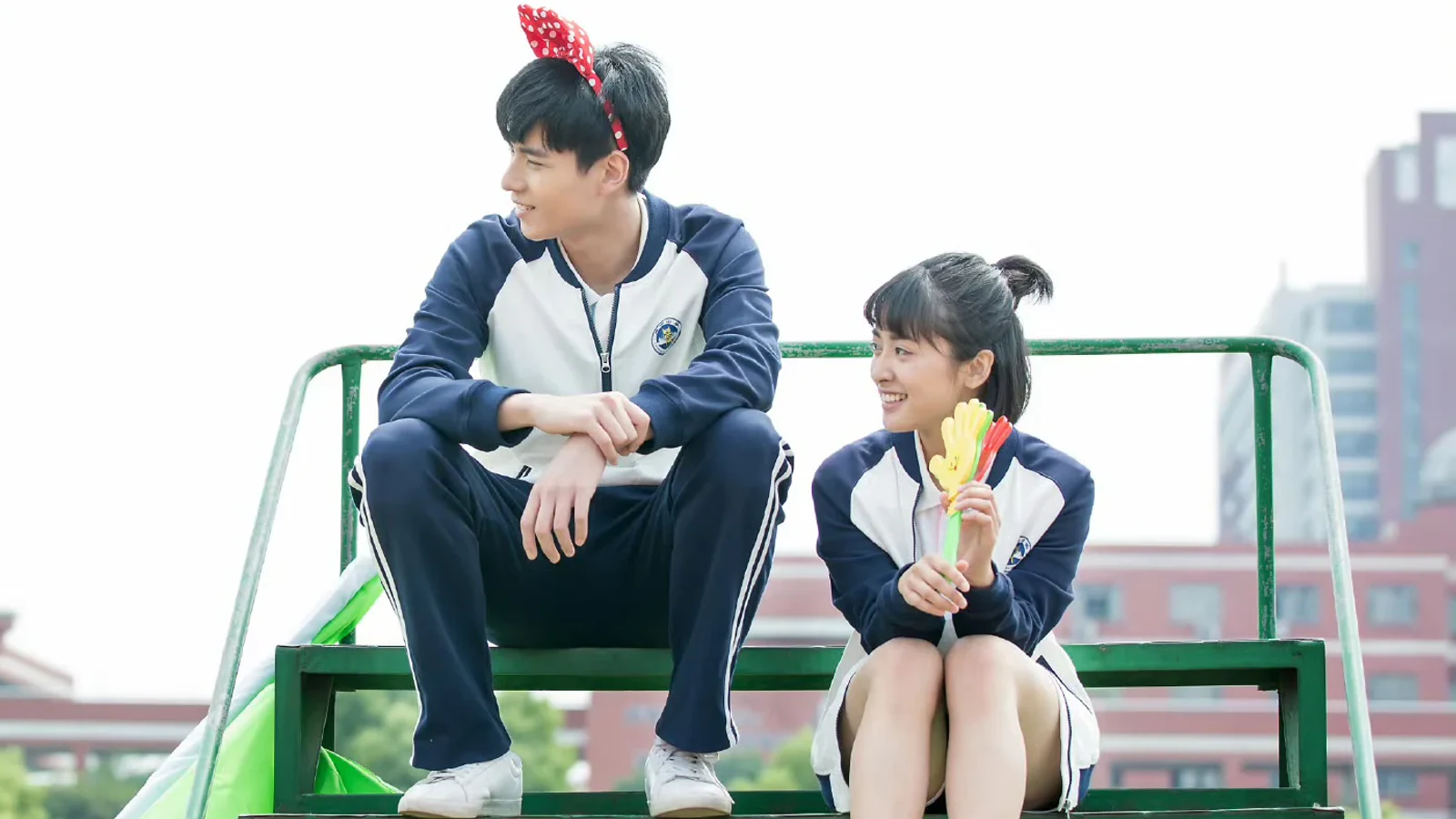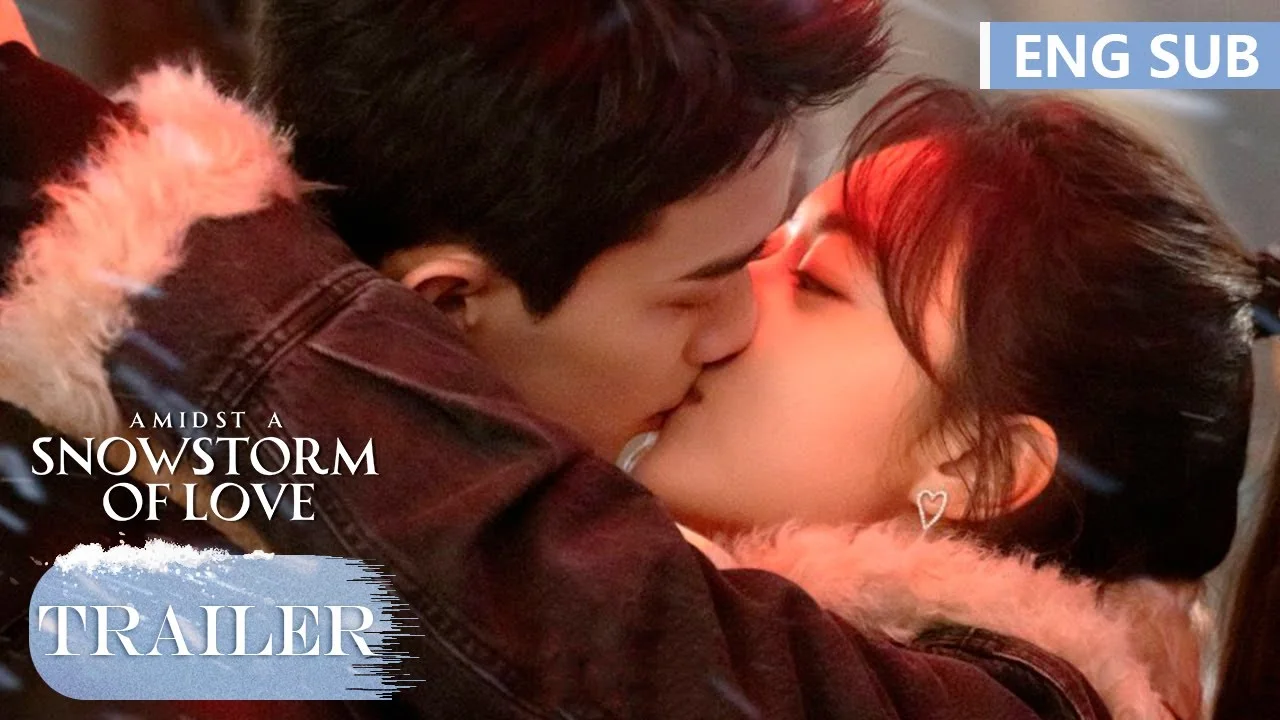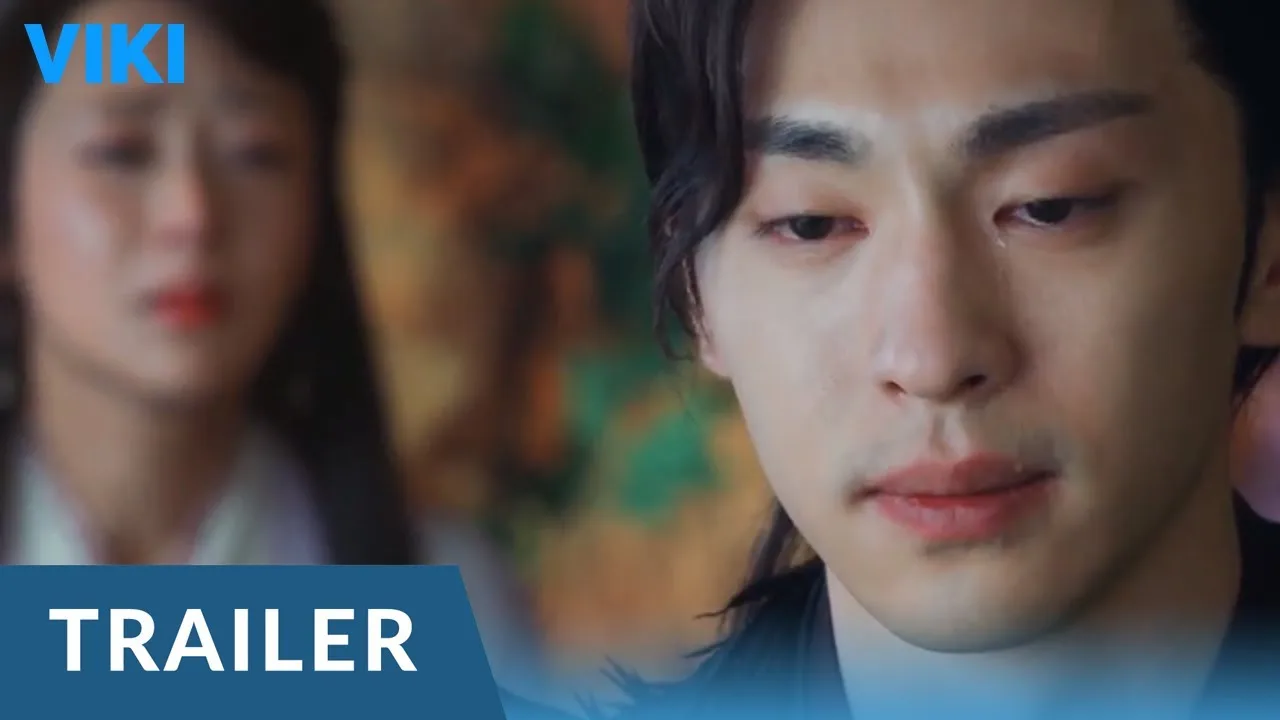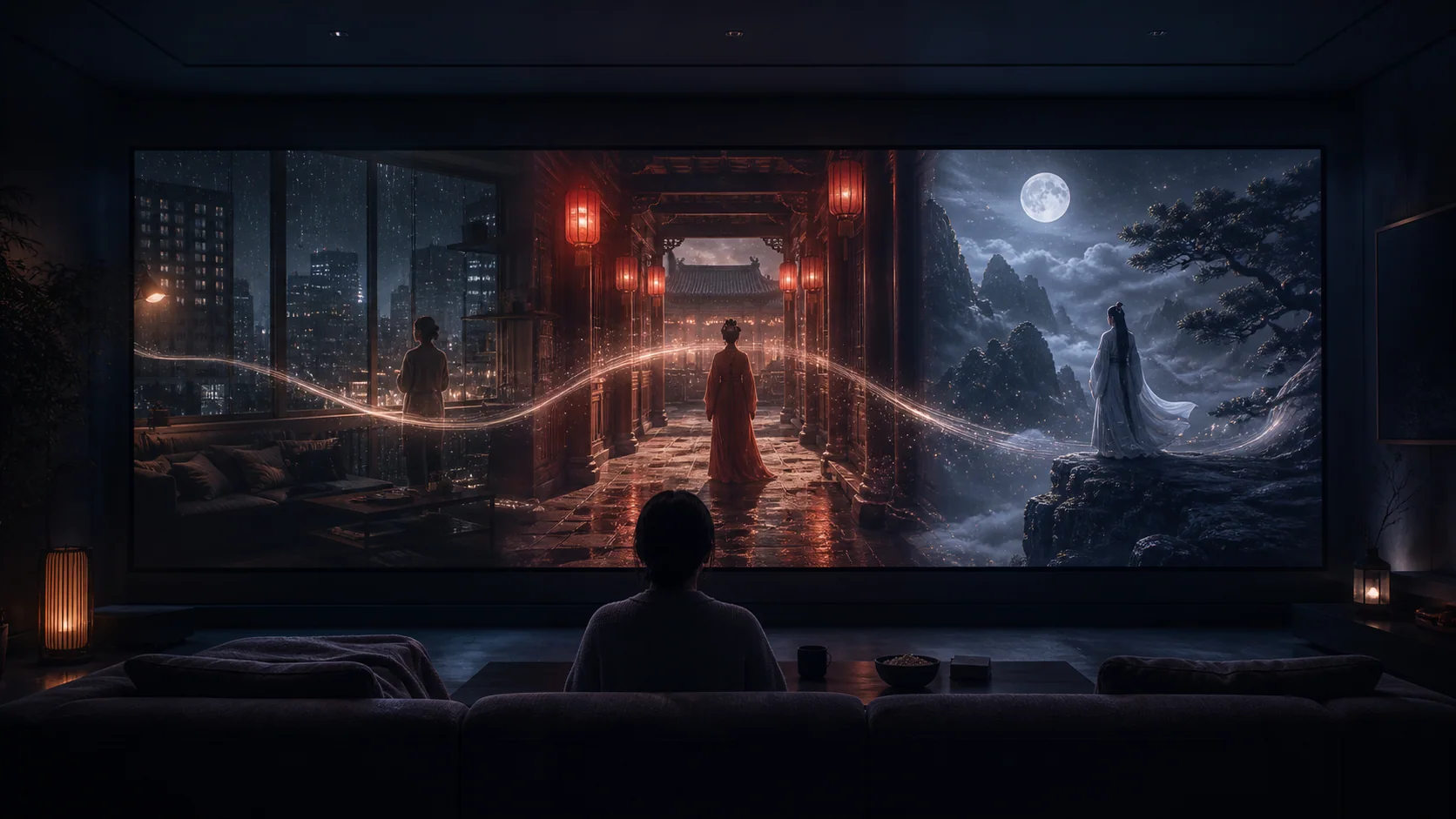
The best Chinese drama is not the one with the highest score. It is the one whose emotional contract matches what you can give it now: patience for political detail, appetite for fantasy, tolerance for melodrama, or the desire to watch two people become kinder in ordinary time.
The best Chinese dramas ask for different kinds of attention
Tencent Video's official The Untamed trailer and Netflix's official Love Between Fairy and Devil page identify two of the very different viewing contracts in this guide: moral-political patience on one side, romantic fantasy transformation on the other.
Do not begin with fifty titles. Begin with the feeling you want and the viewing effort you can honestly sustain.
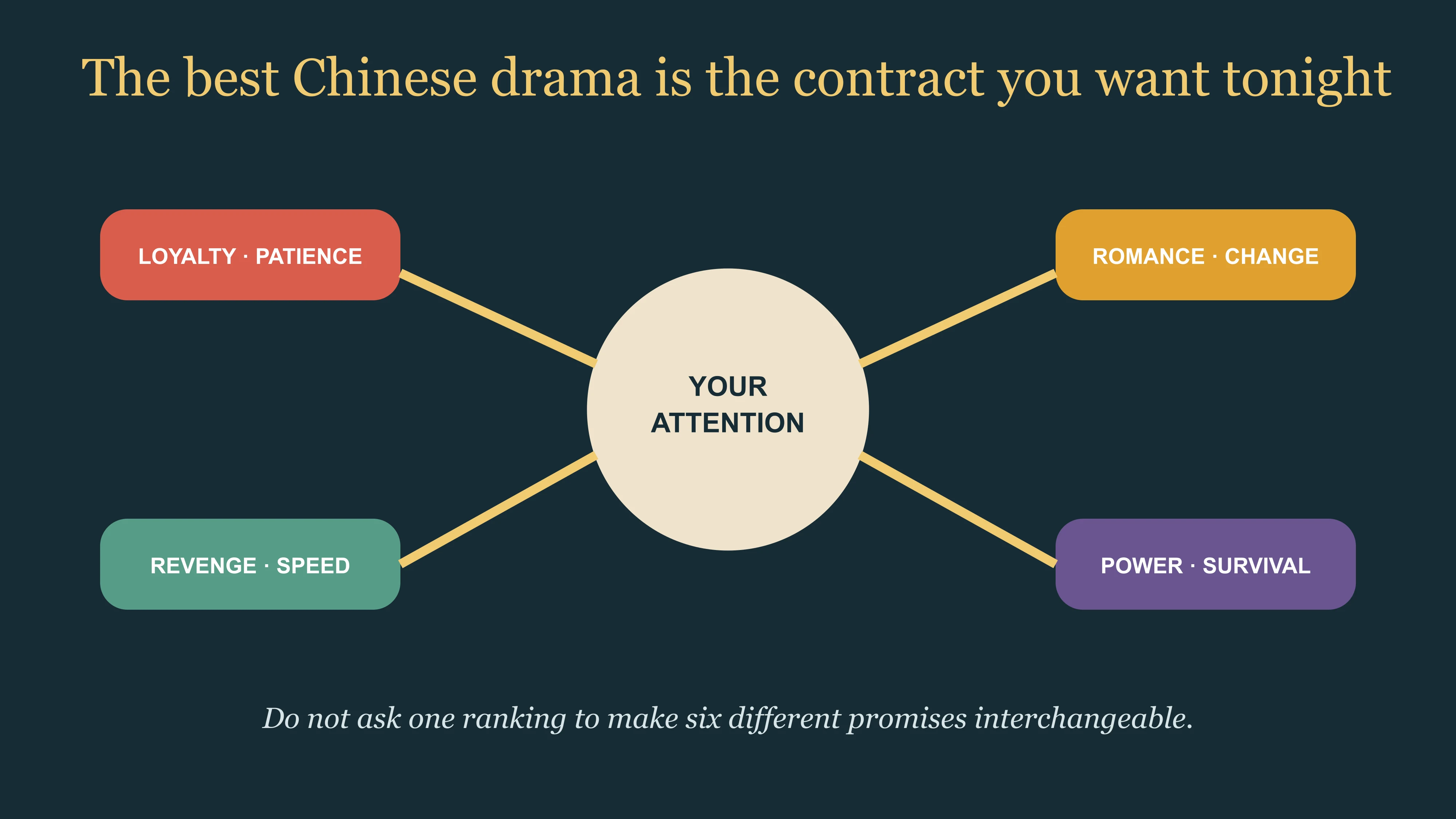
This compass belongs inside the decision, not on the cover. The cover now shows a face inside an actual drama world; the diagram helps choose which emotional contract to enter next.
| You want... | Start with... | What it asks from you |
|---|---|---|
| loyalty that must be read between lines | The Untamed | patience through an initially dense world |
| fantasy romance with moral growth | Love Between Fairy and Devil | acceptance of a bright, comic opening tone |
| a gentle contemporary love story | Hidden Love | attention to boundaries and changing agency |
| revenge delivered at operatic speed | The Double | tolerance for theatrical excess |
| political strategy with emotional consequence | Nirvana in Fire | sustained attention to names and factions |
| women surviving a palace system | Empresses in the Palace | a long watch and comfort with cruelty |
| a woman turning work into social power | The Story of Ming Lan or Wild Bloom through the Zhao Liying guide | patience for ambition expressed through labor, posture and the space a woman earns |
These are not the only best Chinese dramas. They are six reliable doors into different strengths of the form. Streaming catalogs change by country, so verify availability locally rather than choosing a show only because an old list says "on Netflix."
How to choose a Chinese drama when you do not know the titles
Start with the kind of attention you want to spend, not the genre label you think you should like.
| Your real question | Best entry route | Why this route works |
|---|---|---|
| “I want romance, but I do not want empty sweetness.” | Hidden Love or Love Between Fairy and Devil | Both make tenderness change the characters; one stays intimate, the other uses fantasy and power |
| “I want a plot that rewards concentration.” | Nirvana in Fire or The Untamed | Names, alliances and memory become emotional evidence instead of decoration |
| “I want a woman to outthink a room.” | The Double, Empresses in the Palace or The Story of Ming Lan | Each turns observation into survival, but with a different tolerance for theatricality and cruelty |
| “I want visual spectacle.” | Till the End of the Moon or Love Between Fairy and Devil | The production design carries real information, though the writing earns that beauty unevenly |
| “I want a contemporary reset.” | Meet Yourself, When I Fly Towards You or Put Your Head on My Shoulder | The stakes are social and emotional rather than dynastic or cosmic |
| “I want one completed weekend watch.” | Choose a shorter modern series before a 50-episode palace or xianxia epic | Completion is part of the recommendation; an unfinished long drama cannot become a good first impression through reputation alone |
I use this table because “best Chinese drama” is often a disguised problem of trust. A new viewer is not only asking for quality. They are asking whether a show will respect their time, whether the subtitles will carry the social detail, and whether the ending will pay back the patience the opening requests.
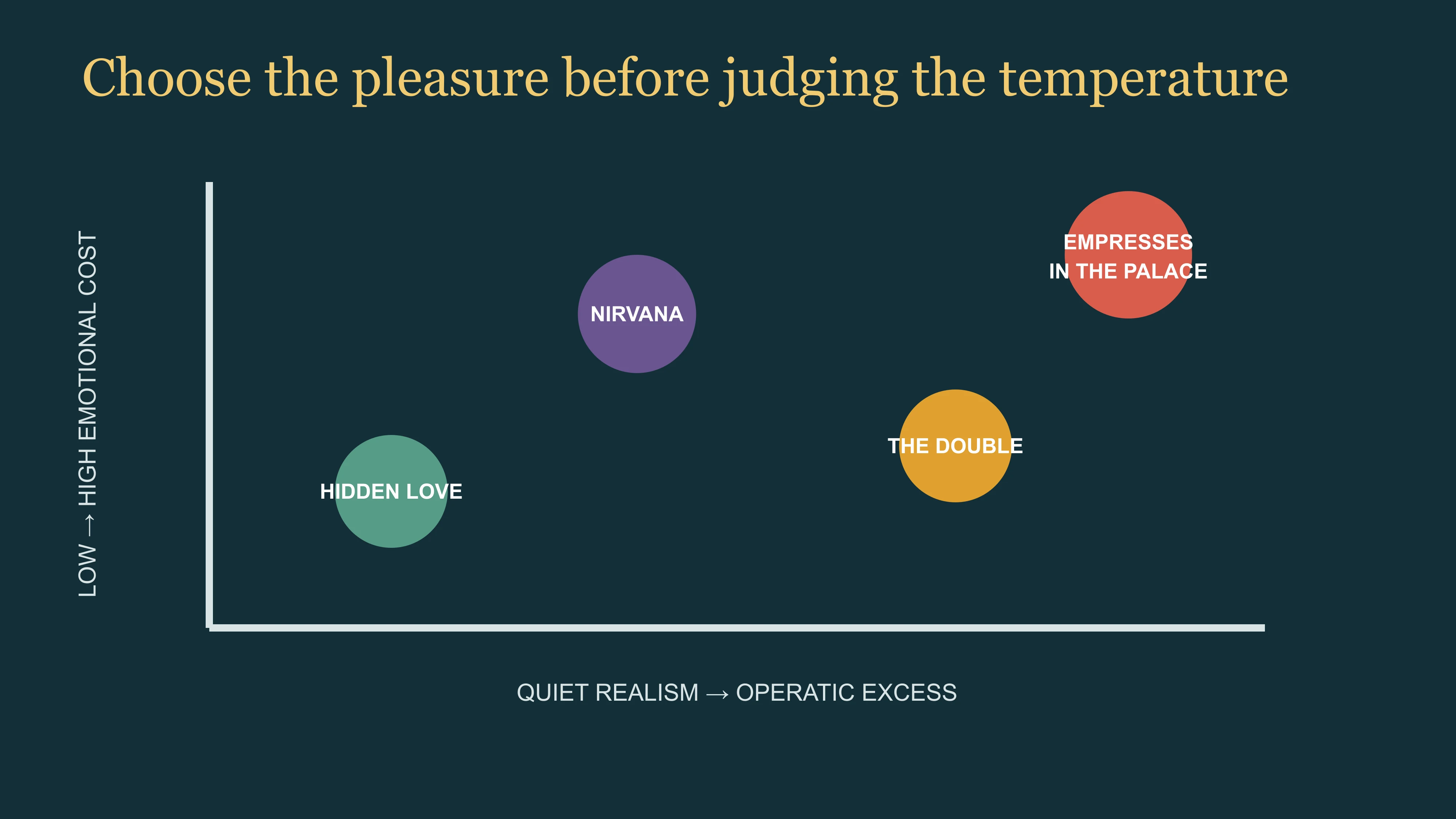
That is why my list does not rank every title on one ladder. A politically dense historical drama can be the best choice for one night and a terrible choice for another. A gentle romance can be artistically modest yet exactly right for someone who needs a story that does not turn every feeling into war. Recommendation becomes useful when it admits the reader's present condition.
Before you start, record three limits: maximum episode length you can sustain, tolerance for tragic separation, and whether you need a finished ending now. Those limits are not anti-art. They are the terms under which attention becomes honest.
The Untamed is for loyalty that cannot speak plainly
The Untamed endures because devotion is rarely delivered as a clean declaration. It lives in who returns, who remembers, who stands beside a person when public language has made that person impossible to defend.
The opening can feel crowded with clans, names, rules and a timeline that withholds orientation. Stay long enough and that density becomes emotional structure. Reputation, memory and truth stop aligning.
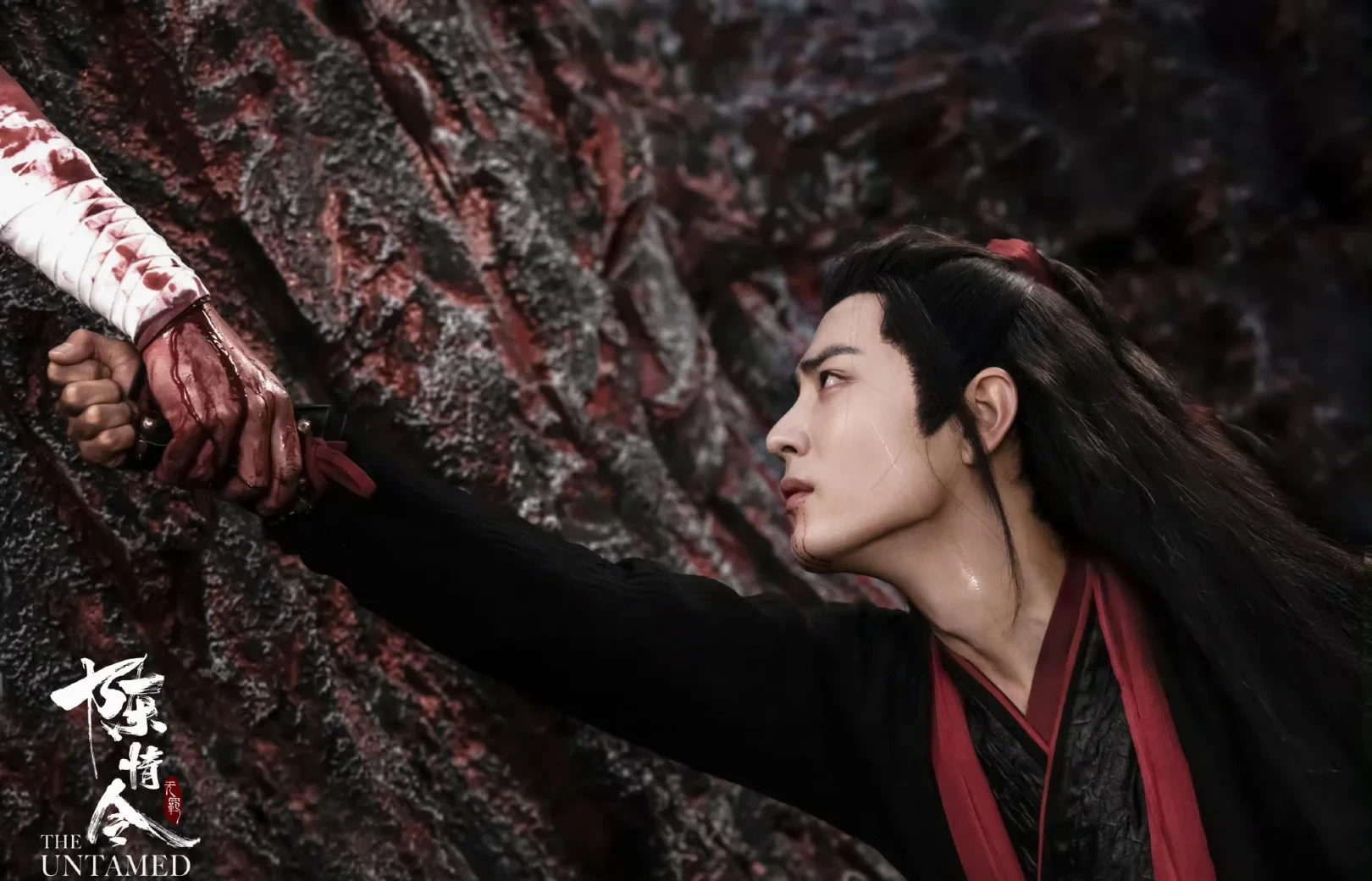
This is the image that corrects the lazy “beautiful men in ancient robes” description. Wei Wuxian is framed below a bloodied hand, looking up rather than posing for the viewer. The composition makes loyalty feel like a debt carried in the body. One still cannot prove the whole relationship, but it can show why the drama's beauty is inseparable from injury and consequence.
Wei Wuxian remains a classic character to me because brightness does not protect him from moral isolation, and pain does not remove his appetite for life. That human response is more useful than saying the series is "popular overseas."
Read the full The Untamed guide when you want the relationship, censorship context and narrative structure without reducing the show to labels.
Love Between Fairy and Devil is for people who distrust cute beginnings
The first episodes use body-swapping comedy, a bright heroine and broad fantasy rules. Viewers who equate softness with stupidity may leave too soon.
The drama works because the swap is not a gimmick pasted onto romance. Each character is forced to inhabit consequences the other has been able to ignore. Power learns sensation. Kindness gains boundaries.
Chinese audience discussion around Xiao Lanhua often defends the coherence of her personality beneath the voice and styling. That disagreement identifies the real test: do you judge a woman by the visual code attached to her, or by the choices she makes when power becomes available?
The Love Between Fairy and Devil guide follows that transformation closely.
Hidden Love is for tenderness that must earn adulthood
Netflix's official Hidden Love series page confirms the title, year, principal cast and coming-of-age romance frame. Hidden Love is easiest to dismiss as an attractive romance built from glances, small gifts and an idealized male lead. Its value lies in the transition from private adolescent admiration to an adult relationship that must become mutual.
The age gap makes boundaries part of the viewing task. A good reading does not romanticize every early feeling as destiny. It notices when Sang Zhi gains the ability to choose, refuse and speak without living inside an older person's interpretation of her.
Choose this when you want emotional quiet rather than plot machinery. The Hidden Love guide explains why the romance works best when agency replaces fantasy.
The Double is for revenge served hotter than realism
The Double announces its appetite immediately: betrayal, replacement identity, dangerous attraction and revenge moving with the confidence of opera.
Do not choose it for procedural realism. Choose it because the camera, costumes and performances understand the pleasure of a woman entering a room with knowledge other people believe she lacks.
The danger is repetition. A triumphant entrance only remains triumphant if the cost accumulates. The show's push-pull chemistry can keep me watching, but chemistry alone cannot carry every episode. The The Double guide separates productive theatricality from empty acceleration.
Nirvana in Fire is for revenge that becomes smaller than memory
At first, Nirvana in Fire appears to offer an elegant revenge machine. Mei Changsu sees the board more clearly than everyone around him, and political moves land with satisfying precision.
Then revenge becomes the smaller story. The deeper wound is that restoring truth cannot restore the bodies, friendships or unbroken self that injustice destroyed.
This is why Chinese audience memory still circles back to pain for Mei Changsu rather than only admiration for his intelligence. The show rewards close attention to political detail, but feeling is not the prize added after the puzzle. It is what makes the puzzle matter.
Use the Nirvana in Fire guide to enter the factions without losing the human scale.
Empresses in the Palace is for viewers ready to watch adaptation become survival
Lijun has already made her position clear: Empresses in the Palace is a classic. Its continued life comes from rewatchability. A glance that seemed incidental becomes evidence on the second viewing; a polite sentence reveals the threat it had been carrying.
The palace is not merely a luxurious background. It is a system that converts intimacy, fertility, friendship and taste into political resources. Zhen Huan's intelligence matters because it adapts. The cost matters because adaptation changes the person doing it.
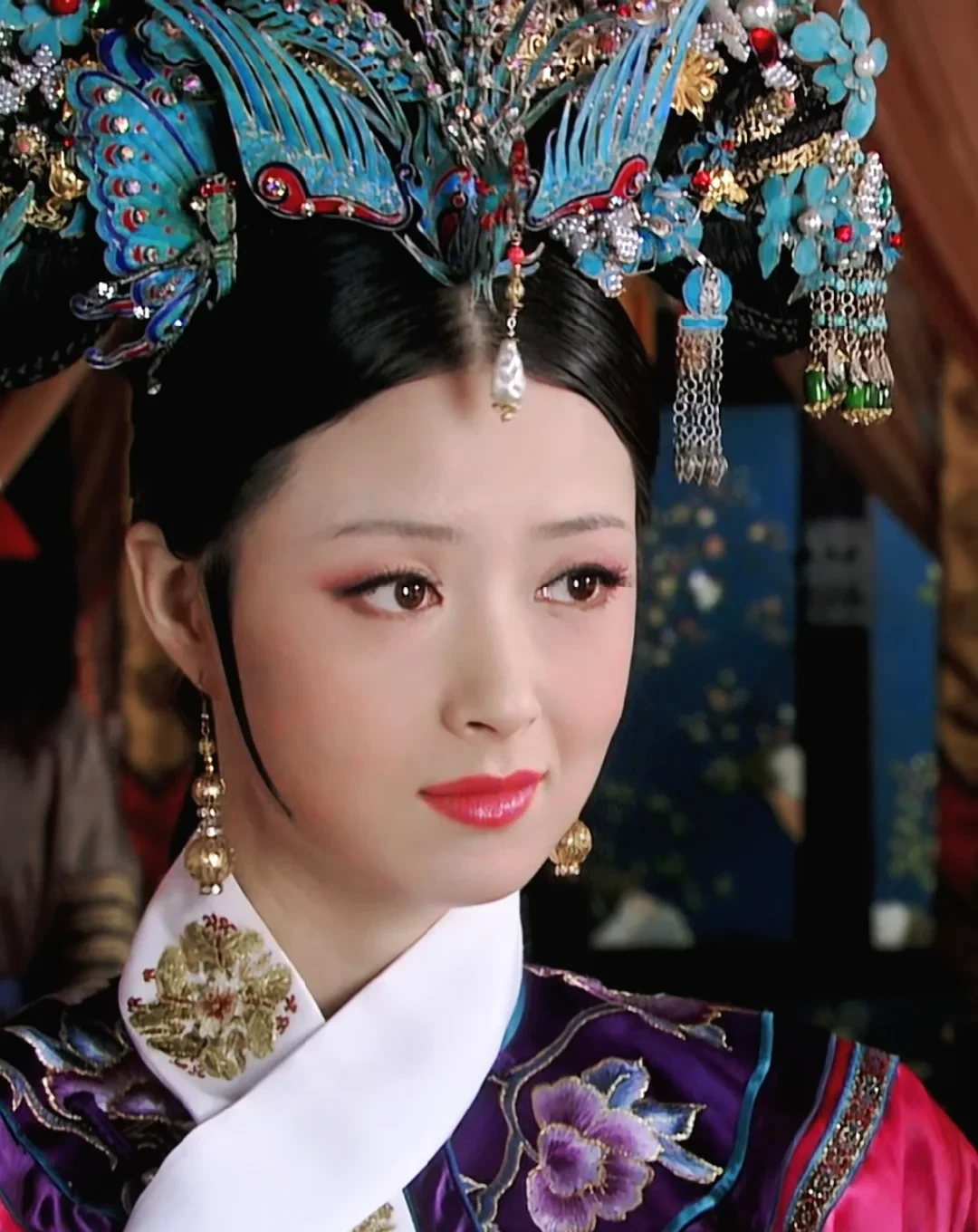
Hua Fei's blue phoenix headdress is so excessive that it stops being decoration and becomes visible rank. The image cannot prove that the series is a classic or explain her complete tragedy. It does expose the palace's visual argument: beauty is issued as armour, and armour is never the same thing as safety.
I keep discovering “only noticed on rewatch” moments in these dramas. They do not prove universal greatness, but they explain how a series remains socially alive rather than resting as a completed prestige title.
The Empresses in the Palace guide follows Sun Li's performance and the show's afterlife in Chinese everyday language. Her actor route then removes the palace costume and tests the same room-changing control in Nothing Gold Can Stay, Shadow and contemporary workplace drama.
What should you watch after these six?
If The Untamed works for you, move toward another relationship-heavy fantasy rather than chasing identical costumes. If Love Between Fairy and Devil works, try a romance where the heroine's agency is tested under a different power system. If Nirvana in Fire works, choose historical politics with consequences, not merely more strategists.
For current romance, The First Frost offers adults whose old pain changes how closeness is negotiated. For a visually forceful recent costume drama, The Prisoner of Beauty is a useful test of whether production beauty supports or hides the relationship. For female ambition and craft, Flourished Peony provides a different entry from palace survival.
Return to the Chinese TV shows collection for those complete routes. Do not make completion a duty. Drop a show when its emotional contract no longer works; return when your patience or appetite changes.
Bring that recommendation to East Moment's community by feeling rather than stars. Tell us what the series gives, what it asks in return and which slow beginning is actually worth surviving; return after the finale to say whether the contract held.
Best Chinese dramas are chosen by the promise they keep
A “best Chinese dramas” list fails when it ranks prestige, popularity and personal comfort as though they were one measurement. I use a simpler contract: what does the opening ask the viewer to care about, and does the ending pay that attention back?
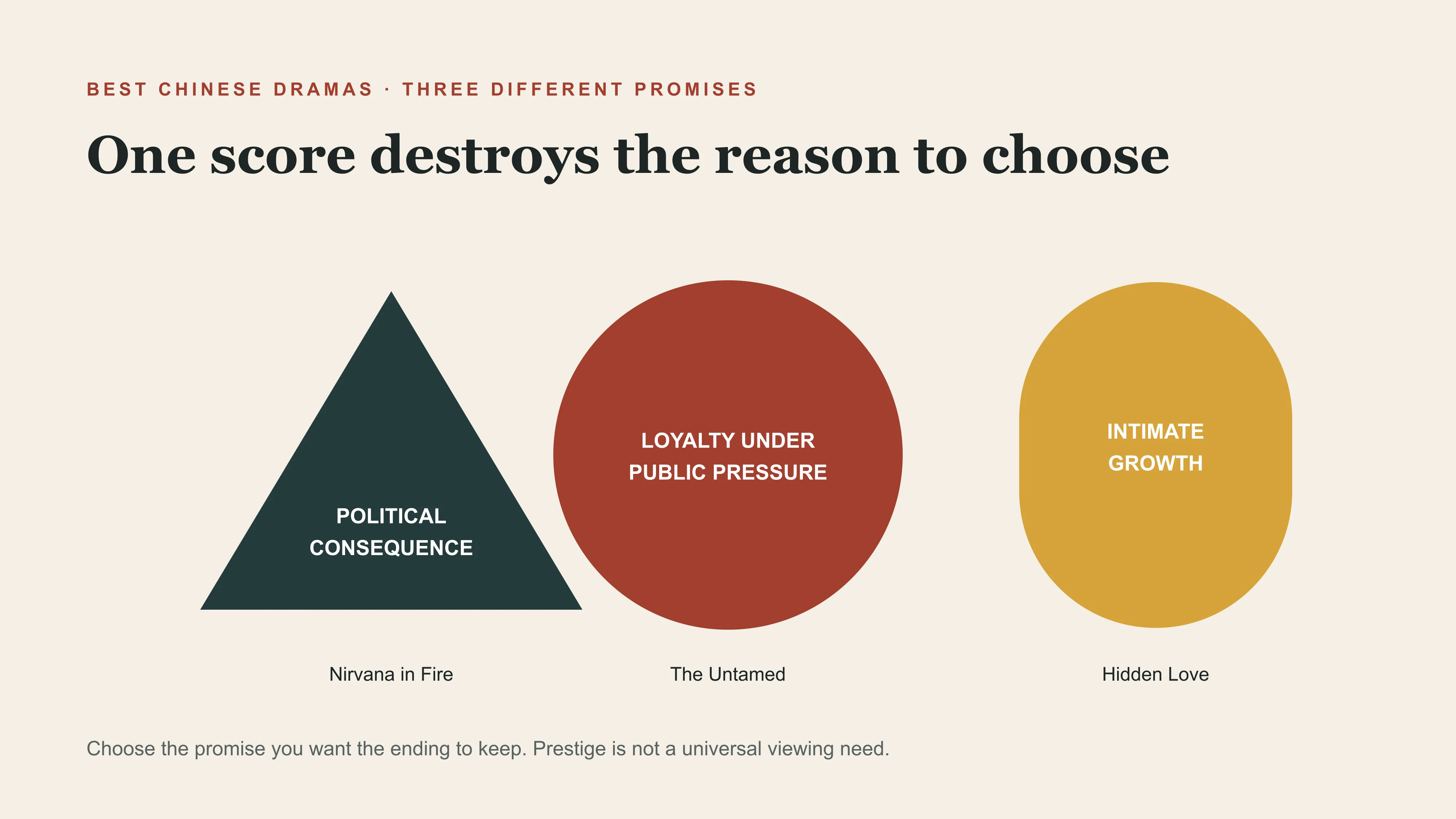
Empresses in the Palace promises that a gesture, gift or line of protocol can become dangerous later. Nirvana in Fire promises strategic justice constrained by a failing body. The Untamed promises that public judgment and private loyalty will collide across time. Hidden Love promises emotional development at intimate scale. These are different viewing contracts; none should win simply because it is longer, sadder or more expensive.
The four routes I would actually recommend
- For political consequence: start with Nirvana in Fire, then watch Empresses in the Palace. The first organises information like strategy; the second makes domestic space political.
- For loyalty under public pressure: start with The Untamed. Accept early naming density, but demand that later choices repay it.
- For contemporary emotional scale: choose Hidden Love or Meet Yourself. One concentrates on growing recognition; the other lets grief alter the rhythm of an entire community.
- For revenge as performance: choose The Double, then ask whether spectacle reveals evidence or merely delays it.
- For female ambition built through work: use Zhao Liying's The Story of Ming Lan for domestic strategy or Wild Bloom for industrial force. Her performance route makes the comparison through posture, labor and who is allowed to occupy the room.
- For intelligence that still looks human: begin with Zhang Ruoyun in Joy of Life, then use Ordinary Greatness to remove the costume, privilege and verbal advantage. The Zhang Ruoyun guide follows what happens when a fast mind has to listen, misread and work inside an ordinary institution.
- For a famous image being forced to change: use the Yang Mi guide to move from Eternal Love and commercial-star efficiency into the colder performance tests of In the Name of the Brother and This Thriving Land. Reinvention matters only when the new social world changes voice, posture and decision.
When to stop watching
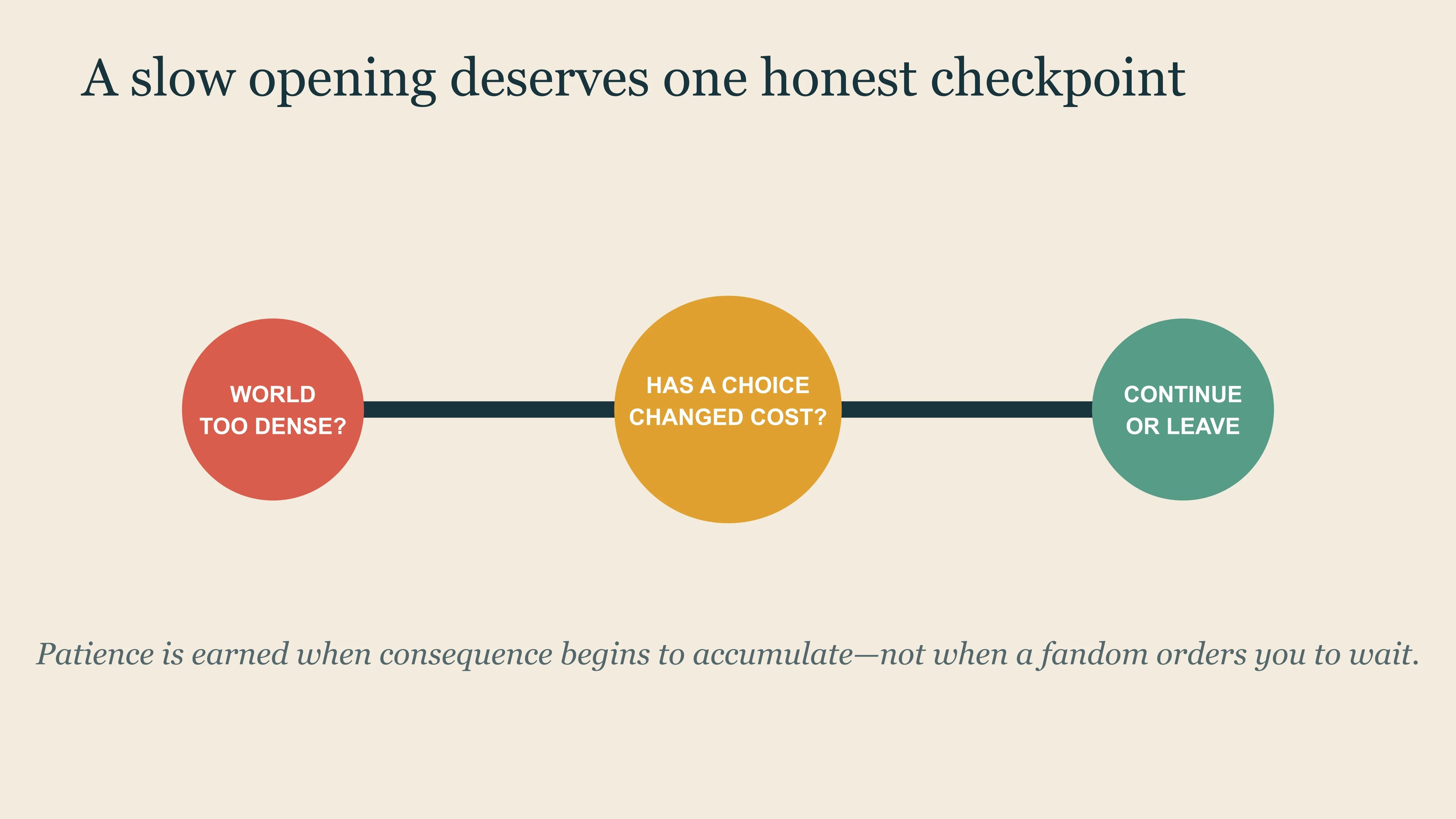
Patience is not a moral virtue owed to a series. Continue after a slow opening only when at least one relationship, rule or withheld fact begins accumulating consequence. Stop when episodes repeat the same misunderstanding without changing power, knowledge or choice.
This is deliberately harsher than “give it ten episodes.” Time is the viewer's contribution. A drama must earn it.
Availability is part of the recommendation
A perfect title is useless if the reader cannot legally watch it with intelligible subtitles. Platforms and regions change, so East Moment treats current official availability as a maintained fact, not permanent decoration. The Chinese television collection should remain the parent route; individual guides carry the deeper argument and current entry point.
My list will never be neutral. I prefer dramas where consequences accumulate and characters cannot return unchanged to the emotional pose that made them attractive. Use the discussion prompt to name the promise one series made to you—and the exact episode where it kept or broke that promise.
A best-drama list needs a rejection rule
I remove a title from the top tier when it repeatedly substitutes misunderstanding for changed power, when a supposedly intelligent character becomes foolish only to prolong the plot, or when the final episodes erase the consequences that made the middle compelling.
Popularity does not protect a drama from that judgment. Nor does historical costume. A large production can be emotionally weightless; a small contemporary series can observe work and friendship with devastating precision.
The list also separates best entry point from greatest achievement. A newcomer may need Hidden Love before Nirvana in Fire, not because it is objectively superior but because its social information is easier to read. Recommendation is route design. The destination changes with the reader.
That is the value East Moment can add beyond a database: a reason to start, a condition for continuing and permission to stop.
The list will also change when a completed drama earns a place, when legal availability disappears, or when a rewatch exposes a broken ending. “Best” is a maintained editorial judgment, not a permanent search-engine trophy. Readers should return because the route becomes more accurate, not because the list grows without limit.
For current costume-drama tests, use Flourished Peony for work and horticultural knowledge, The Prisoner of Beauty for power inside a political marriage, and Lighter and Princess for technical charisma and emotional debt. The Liu Yifei profile offers a performer-first route through stillness, labour and screen authority.